
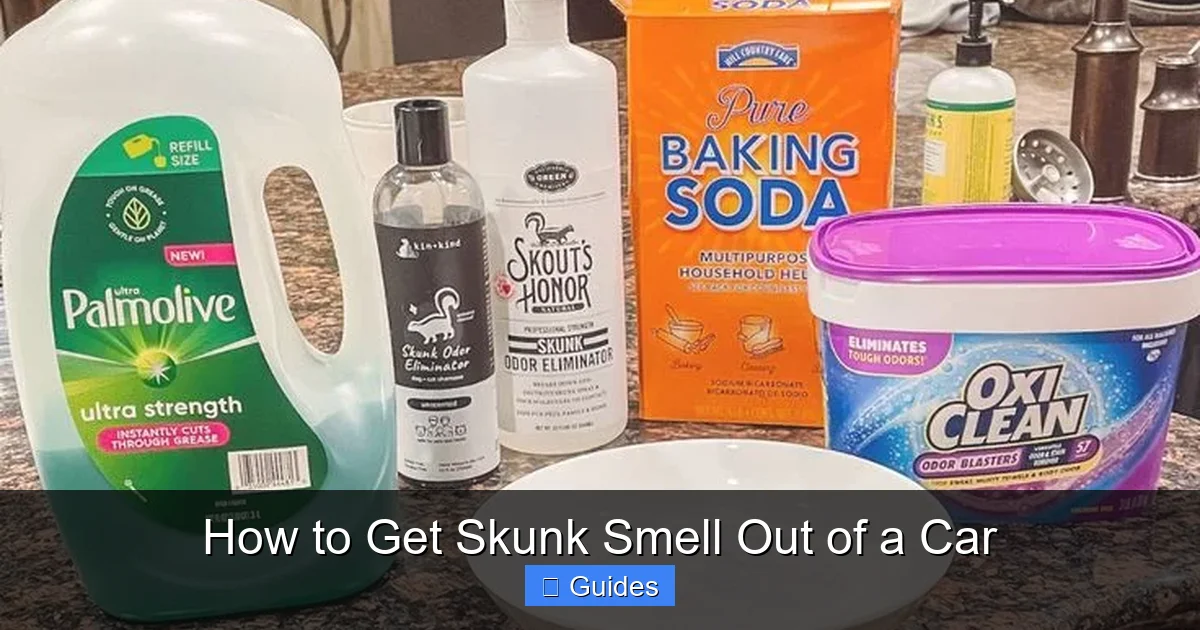
Getting skunk smell out of a car is tough but doable with the right steps. This guide walks you through proven methods using common household ingredients and professional-grade solutions to neutralize—not just mask—the foul odor. Act fast, ventilate well, and repeat treatments if needed for best results.
In This Article
- 1 Key Takeaways
- 2 📑 Table of Contents
- 3 Why Skunk Smell Is So Hard to Remove
- 4 Immediate Steps to Take After Exposure
- 5 DIY Cleaning Solutions That Actually Work
- 6 Step-by-Step Interior Cleaning Process
- 7 When to Call in the Professionals
- 8 Prevention Tips to Avoid Future Incidents
- 9 Common Mistakes to Avoid
- 10 Final Thoughts: Patience Pays Off
- 11 Frequently Asked Questions
- 11.1 Can I use Febreze or other air fresheners to get rid of skunk smell?
- 11.2 How long does skunk smell last in a car if untreated?
- 11.3 Is it safe to use hydrogen peroxide on colored upholstery?
- 11.4 Will washing the outside of my car remove the skunk smell?
- 11.5 Can I drive my car while it still smells like skunk?
- 11.6 Does rain make skunk smell worse in a car?
Key Takeaways
- Act quickly: The sooner you treat the skunk smell, the easier it is to remove. Delaying allows the odor to seep deeper into fabrics and surfaces.
- Ventilate immediately: Open all windows and doors to air out the car and reduce concentration of the smell before cleaning.
- Use odor-neutralizing solutions: Avoid masking sprays—opt for enzymatic or peroxide-based cleaners that break down skunk oils at the molecular level.
- Clean all interior surfaces: Skunk spray lingers on seats, carpets, floor mats, and even air vents—don’t skip any area.
- Replace cabin air filter: The HVAC system can trap and recirculate the smell; swapping the filter helps restore fresh airflow.
- Test cleaners first: Always spot-test cleaning solutions on hidden areas to avoid discoloration or damage to upholstery.
- Consider professional help: If home remedies fail, an auto detailer with ozone treatment equipment may be your best bet.
📑 Table of Contents
Why Skunk Smell Is So Hard to Remove
Skunk spray isn’t just stinky—it’s scientifically designed to be persistent. A skunk’s defensive secretion contains sulfur-based compounds called thiols, which are highly volatile and cling to surfaces like glue. These molecules bind strongly to fabrics, plastics, and even metal, making them resistant to simple wiping or spraying. What’s worse? Thiols can react with moisture in the air to form new, equally smelly compounds over time. That’s why opening your car door days later might still unleash that eye-watering stench.
Unlike everyday odors from food or pets, skunk smell isn’t something you can just “cover up” with air fresheners. Masking agents only provide temporary relief and often mix with the skunk odor to create an even more unpleasant scent. To truly eliminate the problem, you need to neutralize the thiol molecules at their source. This requires chemical reactions—not just surface cleaning. Understanding this science is the first step toward effective removal.
Immediate Steps to Take After Exposure
The moment you realize your car has been sprayed—or you’ve driven through a skunk’s territory and brought the smell inside—time is critical. Every minute counts because skunk oils begin bonding to interior materials almost instantly. Your first priority should be containment and ventilation.
Visual guide about How to Get Skunk Smell Out of a Car
Image source: getsmellout.com
Ventilate the Vehicle Immediately
Pull over safely, turn off the engine, and open all windows and doors. Let fresh air circulate for at least 15–20 minutes. If possible, park in direct sunlight—heat helps volatilize some of the odor compounds, making them easier to remove later. Avoid running the air conditioning or heater during this phase, as it can pull the smell deeper into the HVAC system.
Remove Contaminated Items
Take out any removable items that may have absorbed the odor: floor mats, seat covers, blankets, or child car seats. Place them in sealed plastic bags if you plan to clean them later, or dispose of them if heavily soaked. Don’t forget items like sunglasses, phone cases, or loose clothing left in the car—they can harbor the smell too.
Identify the Source
Try to pinpoint where the skunk spray landed. Was it on the exterior (bumper, wheel well) that transferred inside via tires or wind? Or did the skunk spray directly into an open window or sunroof? Knowing the entry point helps you focus your cleaning efforts. If the spray hit the exterior only, you may still need to clean the interior if the odor migrated through vents or open windows.
DIY Cleaning Solutions That Actually Work
Forget commercial “odor eliminators” that promise miracles but deliver little. The most effective home remedies rely on chemistry that breaks down thiols. Below are three trusted, budget-friendly formulas you can mix with ingredients likely already in your pantry or garage.
Visual guide about How to Get Skunk Smell Out of a Car
Image source: wigglywisdom.com
The Classic Hydrogen Peroxide Mix
This is the gold standard for skunk odor removal. Mix 1 quart (32 oz) of 3% hydrogen peroxide, ¼ cup of baking soda, and 1 teaspoon of liquid dish soap (like Dawn) in a non-metallic container. Important: Never store this mixture—it can build pressure and explode. Use it immediately after mixing.
Apply the solution to affected areas using a spray bottle or sponge. Let it sit for 5–10 minutes, then blot (don’t rub) with clean towels. For carpets and upholstery, work in small sections and avoid over-saturating. Repeat if needed. This formula oxidizes thiols, converting them into odorless sulfonic acids.
Vinegar Rinse for Residual Odor
If a faint smell remains after peroxide treatment, white distilled vinegar can help. Fill a spray bottle with undiluted vinegar and mist lightly over cleaned surfaces. Let it air-dry—vinegar’s acetic acid neutralizes lingering alkaline compounds. Don’t worry about the vinegar smell; it dissipates completely within hours. For extra punch, add a few drops of lemon essential oil (optional).
Ammonia Alternative (Use with Caution)
In a pinch, a diluted ammonia solution (1 part clear household ammonia to 10 parts water) can break down skunk oils. However, ammonia is toxic—never mix it with bleach (it creates deadly chloramine gas), and always wear gloves and work in a well-ventilated area. Rinse thoroughly after use, as residual ammonia can attract dirt and cause discoloration.
Step-by-Step Interior Cleaning Process
Now that you have your cleaning solution, it’s time to tackle every nook and cranny. Skunk smell doesn’t discriminate—it clings to fabric, plastic, rubber, and even glass. A thorough, methodical approach ensures no spot is missed.
Visual guide about How to Get Skunk Smell Out of a Car
Image source: wigglywisdom.com
Vacuum First
Before applying any liquid cleaner, vacuum all interior surfaces: seats, carpets, floor mats, seat gaps, and under seats. Use an upholstery attachment to get into crevices. This removes loose debris and prepares surfaces for deeper cleaning. Empty the vacuum canister or replace the bag immediately afterward to prevent the smell from lingering in your vacuum.
Clean Upholstery and Carpets
Apply your chosen cleaner (e.g., hydrogen peroxide mix) to stained or smelly areas. For fabric seats, use a soft-bristle brush to gently agitate the solution. For leather or vinyl, wipe with a damp cloth—avoid soaking, as excess moisture can damage adhesives or cause mold. Blot with dry microfiber towels until damp, not wet. Allow to air-dry completely with windows open.
Tackle Hard Surfaces
Wipe down dashboard, door panels, center console, and steering wheel with a cloth dampened in your cleaning solution. Pay special attention to air vents—use a cotton swab or soft brush to clean slats where odor can accumulate. Don’t forget the roof liner; if the smell is strong there, lightly mist with vinegar and blot dry.
Address the HVAC System
The cabin air filter is a major culprit in recirculating skunk smell. Locate it (usually behind the glove box or under the hood) and replace it with a new one. Then, run the AC on high with windows closed for 10–15 minutes while spraying an odor-neutralizing product (like an enzymatic cleaner) into the external air intake (typically near the windshield wipers). This flushes the system. Finally, set the climate control to “fresh air” mode and drive with windows down to purge residual odor.
When to Call in the Professionals
Sometimes, despite your best efforts, the skunk smell persists. This usually happens when the odor has penetrated deep into padding, insulation, or the HVAC ducts. In these cases, professional auto detailing is your best option.
Ozone Treatment
Many detailers offer ozone shock treatment, which generates ozone (O₃) molecules that break down odor-causing compounds at the molecular level. The car is sealed in a chamber or tent while ozone circulates for 30–60 minutes. This method is highly effective but should only be performed by trained technicians—ozone is hazardous to breathe and can damage rubber or electronics if misused.
Enzymatic Steam Cleaning
Professional steam cleaners use high-temperature steam combined with enzymatic cleaners to penetrate deep into fibers and dissolve organic residues. This is especially useful for older vehicles with thick carpeting or cloth seats. Reputable detailers will also treat the HVAC system and replace the cabin filter as part of the service.
Cost Considerations
Professional skunk odor removal typically costs between $150 and $400, depending on your location and vehicle size. While pricey, it’s often cheaper than trying multiple ineffective DIY products or replacing upholstery. Check reviews and ask if they guarantee odor elimination—many offer follow-up treatments if the smell returns.
Prevention Tips to Avoid Future Incidents
Once your car is smelling fresh again, take steps to reduce the chances of a repeat encounter. Skunks are most active at dawn and dusk, especially in spring and fall. Here’s how to stay ahead:
- Park smart: Avoid parking near woodpiles, dense shrubs, or underbrush where skunks nest. Garage parking is ideal.
- Use motion-activated lights: Skunks dislike bright, sudden light. Install outdoor lighting near driveways or parking areas.
- Seal entry points: Ensure your car’s windows, sunroof, and vents are closed when parked overnight.
- Keep trash secured: Don’t leave food waste or open garbage bags near your parking spot—skunks are attracted to easy meals.
- Carry a skunk kit: Keep a small bottle of hydrogen peroxide mix and gloves in your trunk for emergencies.
Common Mistakes to Avoid
Even with good intentions, it’s easy to make errors that worsen the problem. Steer clear of these pitfalls:
- Using bleach: Bleach doesn’t neutralize thiols and can react with skunk compounds to create toxic gases.
- Over-wetting interiors: Excess moisture leads to mold, mildew, and musty smells—worse than skunk!
- Skipping the cabin filter: Many people forget this step, allowing the smell to linger in the AC system.
- Relying on air fresheners: They mask but don’t eliminate odor—and can create a nauseating mix with skunk smell.
- Ignoring safety: Always wear gloves and eye protection when handling cleaning chemicals, especially peroxide or ammonia.
Final Thoughts: Patience Pays Off
Removing skunk smell from a car isn’t a one-and-done task. It often takes multiple treatments, patience, and persistence. But with the right approach—starting fast, using science-backed cleaners, and addressing every surface—you can restore your car to its pre-skunk state. Remember: the goal isn’t to hide the odor, but to destroy it at the source. And once you’ve succeeded, you’ll have a story to tell (and maybe a newfound respect for these striped little defenders of the night).
Frequently Asked Questions
Can I use Febreze or other air fresheners to get rid of skunk smell?
No, air fresheners like Febreze only mask the odor temporarily. They don’t break down the thiol compounds in skunk spray, so the smell will return once the fragrance fades. For real results, use an odor-neutralizing cleaner instead.
How long does skunk smell last in a car if untreated?
If left untreated, skunk smell can linger for weeks or even months. The oils penetrate deep into materials and may reactivate with heat or humidity, causing the odor to resurface unexpectedly.
Is it safe to use hydrogen peroxide on colored upholstery?
Hydrogen peroxide can bleach or fade dark fabrics. Always test it on a hidden area first (like under a seat). For colored interiors, consider using an enzymatic cleaner or consult a professional.
Will washing the outside of my car remove the skunk smell?
Washing the exterior helps if the spray landed on the body, but it won’t eliminate odor that’s already inside the cabin. You must clean the interior and HVAC system separately.
Can I drive my car while it still smells like skunk?
Yes, but it’s uncomfortable and may trigger headaches or nausea. Keep windows open when possible and avoid using the AC until the odor is fully removed to prevent spreading it further.
Does rain make skunk smell worse in a car?
Rain itself doesn’t worsen the smell, but moisture can reactivate dormant thiol compounds, making the odor more noticeable. Ensure your car is thoroughly dried after cleaning to prevent this.

At CarLegit, we believe information should be clear, factual, and genuinely helpful. That’s why every guide, review, and update on our website is created with care, research, and a strong focus on user experience.