

To safely disengage 4WD in your Toyota 4Runner, shift the transfer case lever from 4H to 2H while driving straight under 50 mph or while completely stopped. Always verify the 4WD indicator light is off to confirm you’re back in two-wheel drive and avoid drivetrain binding.
In This Article
- 1 Simple Steps To Get Your Toyota 4Runner Out Of 4 Wheel Drive
- 1.1 Key Takeaways
- 1.2 📑 Table of Contents
- 1.3 Understanding Your Toyota 4Runner’s 4WD System
- 1.4 Step-by-Step Guide to Get Your Toyota 4Runner Out of 4 Wheel Drive
- 1.5 Troubleshooting Common 4WD Disengagement Problems
- 1.6 When and How to Use 4WD Properly
- 1.7 Maintaining Your 4WD System for Smooth Operation
- 1.8 Safety Tips and Best Practices
- 1.9 Frequently Asked Questions
- 1.9.1 How do I get my Toyota 4Runner out of 4 wheel drive?
- 1.9.2 Can I shift my Toyota 4Runner out of 4 wheel drive while driving?
- 1.9.3 Why won’t my Toyota 4Runner come out of 4 wheel drive?
- 1.9.4 What are the steps to disengage 4Lo on a Toyota 4Runner?
- 1.9.5 Do I need to manually unlock hubs to get my Toyota 4Runner out of 4WD?
- 1.9.6 What should I do if the 4WD light remains on after getting out of 4 wheel drive?
Simple Steps To Get Your Toyota 4Runner Out Of 4 Wheel Drive
Picture this: you’ve just had an amazing day exploring a muddy trail in your Toyota 4Runner. The 4 wheel drive system handled everything like a champ. But now you’re back on smooth, dry pavement, and you hear a slight binding noise when turning. A little warning light on the dash is still on. Your heart sinks a bit. You forgot to shift out of 4 wheel drive.
If this has happened to you, don’t worry. You’re not alone. Getting a Toyota 4Runner out of 4 wheel drive is usually straightforward, but it can cause anxiety if you’re new to it or if something feels stuck. I’ve been there myself, fumbling with levers and buttons after a long off-road day. This guide is here to walk you through the process, calm your nerves, and get you back to smooth, efficient 2WD driving.
Knowing how to properly disengage your 4Runner’s 4 wheel drive isn’t just about convenience; it’s crucial for protecting your vehicle’s drivetrain and ensuring safe on-road handling. Let’s dive in and make you a pro at switching back to two-wheel drive.
Key Takeaways
- Stop or slow down: Shift only when stopped or moving under 5 mph.
- Consult your manual: Procedures vary by model year and trim.
- Follow the correct sequence: For 4L, shift to neutral first.
- Avoid dry pavement: Shifting on asphalt can damage drivetrain components.
- Confirm the shift: Listen for clicks and check dashboard indicators.
- Practice safely: Test in an open, off-road area before needing it.
📑 Table of Contents
Understanding Your Toyota 4Runner’s 4WD System
Before you start yanking on levers or mashing buttons, it helps to know what you’re working with. Not all 4Runners have the same system, and the method to get out of 4 wheel drive depends entirely on which one you have.
The Two Main Types: Part-Time and Full-Time 4WD
Most Toyota 4Runner models use a part-time 4WD system. This is a “use it when you need it” setup. It’s designed for off-road or slippery conditions. Driving on dry, paved roads in part-time 4WD can cause damage due to something called “driveline bind.” Your mission is to get your Toyota 4Runner out of 4 wheel drive as soon as you hit good traction.
Some higher trims, like those with the Multi-Terrain Select system, offer a full-time 4WD option. This system can often be left engaged on all surfaces because it uses a center differential to manage wheel speed differences. But even here, you’ll need to know how to switch modes.
How the 4WD System Engages and Disengages
At its core, shifting out of 4 wheel drive means telling the transfer case to stop sending power to the front wheels. This can be done mechanically with a lever, electronically with buttons, or through a sophisticated computer interface. The feel and process are different, but the goal is the same: a smooth transition back to two-wheel drive.
Identifying Your 4Runner’s Controls
Take a quick look at your center console. Do you see a sturdy, horizontal lever? That’s a traditional manual transfer case shifter. Do you see a cluster of buttons labeled “4HI,” “4LO,” or with a dial showing terrain modes? That’s an electronic system. Knowing this is your first step to successfully get your Toyota 4Runner out of 4 wheel drive.
Step-by-Step Guide to Get Your Toyota 4Runner Out of 4 Wheel Drive
This is the heart of the matter. Follow these steps carefully, tailored to your specific system. Remember, patience is key. Rushing can lead to grinding gears or a stuck system.
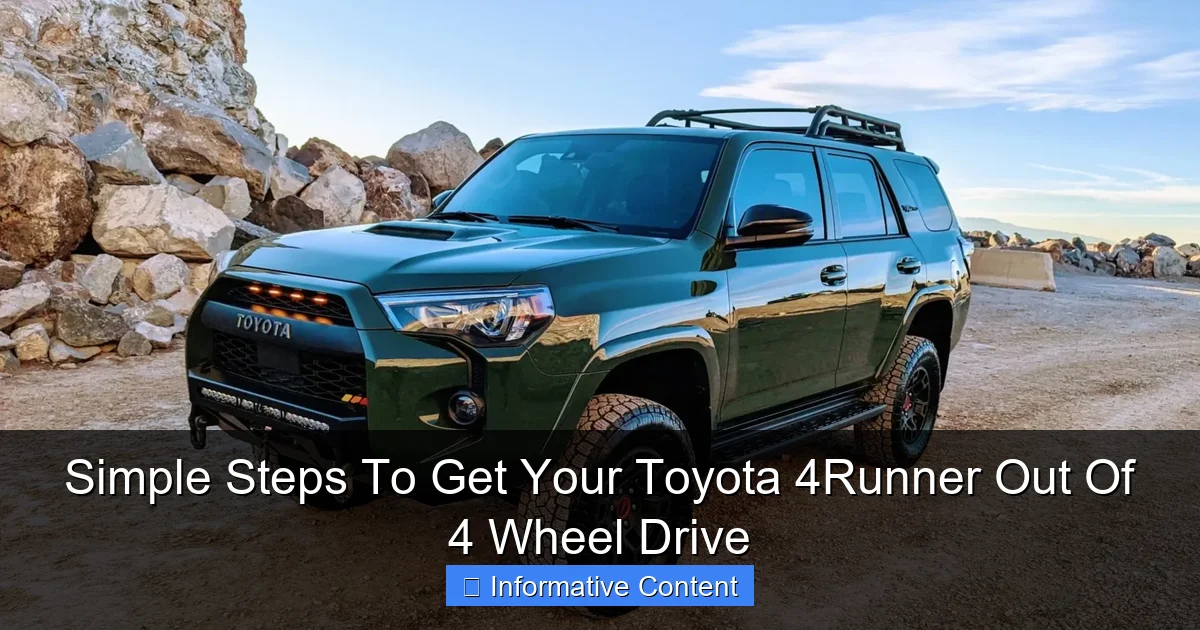
Visual guide about How To Get Toyota 4runner Out Of 4 Wheel Drive
Image source: bringatrailer.com
For Models with a Manual 4WD Lever (Most Common)
If your 4Runner has a physical lever on the console, this is for you. I personally drive an older model with this lever, and it has a satisfying, mechanical feel.
- Step 1: Slow Down and Straighten Out. Reduce your speed to 3-5 mph. It’s easiest to disengage 4WD when moving slowly. Ensure your wheels are pointing straight ahead to relieve any driveline tension.
- Step 2: Shift the Transmission to Neutral (N). This is crucial! With your foot on the brake, move your automatic transmission shifter to Neutral. This takes load off the transfer case gears.
- Step 3: Pull the 4WD Lever Back. Firmly but smoothly pull the manual lever from “4H” (4WD High) straight back to “2H” (2WD High). You should feel a distinct clunk. This is the sound of success—the transfer case disengaging the front axle.
- Step 4: Return to Drive. Shift your automatic transmission back to “D” (Drive). The “4WD” or “4×4” light on your dashboard should turn off. You have now successfully gotten your Toyota 4Runner out of 4 wheel drive.
Pro Tip: If the lever feels stiff, try gently rocking the vehicle back and forth by alternating between Drive and Reverse while stopped (with the brake applied). This can help unstick the gears.
For Models with an Electronic Push-Button System
Newer 4Runners often use dash-mounted buttons. This system uses an electric motor to engage the transfer case.
- Step 1: Come to a Complete Stop or Slow Roll. For most electronic systems, you can shift from 4HI to 2HI while moving at low speeds (under 50 mph). Check your manual, but a slow roll of 1-3 mph is a safe bet.
- Step 2: Press the “2WD” or “4HI” Button. Simply press the button that selects two-wheel drive. You might need to press and hold for a second. Listen for a quiet whirring or clicking sound from under the vehicle.
- Step 3: Verify on the Dash. The indicator light will change from “4HI” to “2WD.” This process is usually seamless, making it simple to get your Toyota 4Runner out of 4 wheel drive.
For Models with Multi-Terrain Select (MTS) or Crawl Control
These advanced systems, found on TRD Pro and Limited trims, use a rotary dial. Getting out of 4 wheel drive here is about returning to a basic mode.
- Step 1: Ensure You’re in a Compatible Mode. If you’re in “4LO” with Crawl Control active, you must first turn off Crawl Control.
- Step 2: Shift to “H4F” (High Range, Full-Time). Turn the dial from a specific mode (like Mud/Sand) to “H4F.” This is often the full-time 4WD position for on-road use.
- Step 3: Shift to “H2” (2WD High). To fully disengage, you may need to stop, shift the transmission to Neutral, and then turn the dial to “H2.” Your owner’s manual is your best friend here for the exact sequence.
Troubleshooting Common 4WD Disengagement Problems
Sometimes, despite your best efforts, the system resists. Here’s what might be happening and how to fix it.
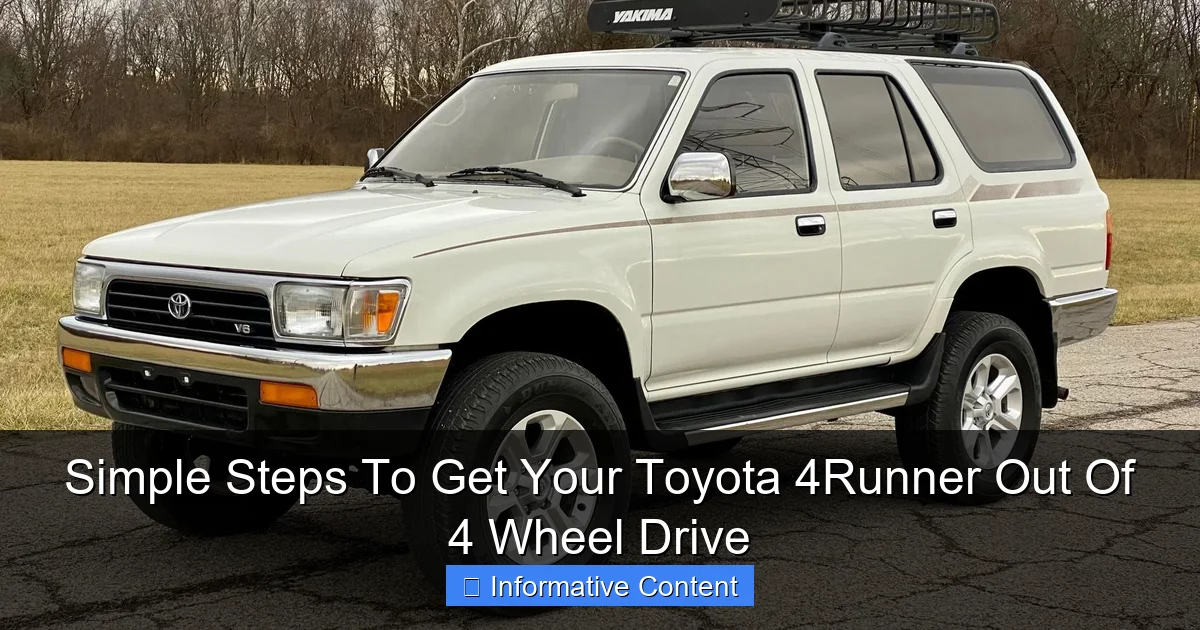
Visual guide about How To Get Toyota 4runner Out Of 4 Wheel Drive
Image source: bringatrailer.com
The 4WD is Stuck Engaged
This is the most common fear. If you can’t get your Toyota 4Runner out of 4 wheel drive, try this sequence:
- Drive in a tight “S” pattern on a loose, low-traction surface like gravel or dirt. This allows the wheels to slip slightly and relieves binding in the driveline.
- Reverse for 10-15 feet in a straight line, then try disengaging again.
- For manual levers, ensure the transmission is truly in Neutral. Double-check it!
Grinding Noises When Shifting
A grinding sound usually means the gears in the transfer case aren’t meshing. Stop immediately. Do not force it. Go back to Step 1: slow right down, ensure the transmission is in Neutral, and try again with slow, steady pressure. Forcing it is a sure way to damage your Toyota 4Runner’s 4 wheel drive system.
Dashboard Lights Won’t Change
If you’ve shifted but the 4WD light remains on, it could be a sensor issue. Try cycling the system: re-engage 4WD, drive a few feet, and then attempt to disengage again. If the light persists, there may be a faulty switch, actuator, or position sensor that needs professional diagnosis.
| Problem | Likely Cause | Immediate Action |
|---|---|---|
| Lever won’t move from 4H | Driveline binding, vehicle not in N, system under load | Rock vehicle, ensure N, drive on loose surface |
| Button press does nothing | Actuator motor stalled, electrical fault | Turn vehicle off, wait 60 seconds, restart and try |
| 4LO won’t disengage | Procedure not followed correctly | STOP. Shift trans to N, then shift lever/button from 4LO to 4HI, then to 2WD |
| Binding sensation on pavement | Driving in part-time 4WD on dry pavement | Get off pavement immediately to disengage 4WD |
When and How to Use 4WD Properly
Understanding when to use 4WD is just as important as knowing how to get out of it. This prevents unnecessary wear and those sticky situations.

Visual guide about How To Get Toyota 4runner Out Of 4 Wheel Drive
Image source: file.kelleybluebookimages.com
Off-Road Scenarios That Demand 4 Wheel Drive
Engage 4HI when you encounter loose surfaces where traction is low: deep sand, gravel roads, snow-covered paths, or muddy trails. Use 4LO for extreme situations like rock crawling, deep mud, or steep descents where you need maximum torque and slow speed control. The key is to anticipate the need and engage before you get stuck.
The Golden Rule for On-Road Driving
For part-time 4WD systems, dry pavement is a no-go zone. The system needs wheel slip to operate without binding. If the road is consistently slippery (like packed snow or ice), 4HI is okay. But the moment you see bare asphalt, plan to get your Toyota 4Runner out of 4 wheel drive. Full-time systems like “H4F” are the exception and are designed for all surfaces.
Maintaining Your 4WD System for Smooth Operation
A well-maintained system rarely gets stuck. Think of this as preventative care to ensure you can always get your Toyota 4Runner out of 4 wheel drive easily.
Regular Transfer Case and Differential Fluid Changes
This is non-negotiable. Old, degraded fluid can lead to increased friction and difficulty shifting. Follow your owner’s manual interval (often every 30,000-60,000 miles). Fresh fluid keeps gears happy and makes disengagement smooth.
Exercise the System Monthly
If you don’t go off-road often, your 4WD system can get “stiff” from lack of use. Once a month, on a safe loose surface, engage 4HI, drive a short distance, and disengage it. This cycles the actuators and coats the internal parts with fresh lubricant, preventing them from seizing.
Inspect Driveline Components
During oil changes, have a mechanic check the front axle boots, CV joints, and the transfer case actuator for leaks or damage. A damaged CV joint can sometimes hinder the disengagement process.
Safety Tips and Best Practices
Your safety and your vehicle’s health depend on respecting the 4WD system. Here are final, critical takeaways.
Always Consult Your Owner’s Manual
Your specific model year might have unique nuances. The manual has the exact, manufacturer-approved steps to get your Toyota 4Runner out of 4 wheel drive. Keep it in your glovebox.
Listen to Your Vehicle
Unusual noises, harsh vibrations, or a feeling of resistance are your 4Runner talking to you. Don’t ignore them. If something feels wrong during the shift, stop and troubleshoot rather than forcing it.
Practice in a Safe Environment
Find an empty parking lot after a rain or on a grassy field. Practice engaging and disengaging 4WD. Familiarity builds confidence, so when you’re on a real trail, you won’t be stressed about how to get your Toyota 4Runner out of 4 wheel drive later.
Getting your Toyota 4Runner out of 4 wheel drive is a fundamental skill for any owner. It bridges the gap between adventurous capability and daily drivability. Whether you have a classic manual lever or a modern electronic dial, the principles are the same: reduce load, follow the steps, and be patient. By understanding your system, maintaining it well, and using it wisely, you’ll protect your investment and enjoy every mile—both on and off the road. So next time that trail ends, shift back to 2WD with confidence and let your 4Runner carry you home smoothly.
Frequently Asked Questions
How do I get my Toyota 4Runner out of 4 wheel drive?
First, ensure the vehicle is moving straight at a slow speed or is completely stopped. Then, shift the transfer case lever or electronic switch from 4Hi or 4Lo back to 2Hi to disengage the system.
Can I shift my Toyota 4Runner out of 4 wheel drive while driving?
Yes, you can usually shift from 4Hi to 2Hi while driving at moderate speeds on dry pavement. However, shifting from 4Lo requires stopping or moving very slowly to prevent drivetrain damage.
Why won’t my Toyota 4Runner come out of 4 wheel drive?
This often occurs due to drivetrain binding from turning on high-traction surfaces. To resolve it, drive straight on a loose surface like gravel or reverse briefly to relieve tension before attempting to shift.
What are the steps to disengage 4Lo on a Toyota 4Runner?
Come to a complete stop, shift the transmission into neutral, then move the transfer case lever from 4Lo to 4Hi or 2Hi. Always consult your owner’s manual for model-specific instructions.
Do I need to manually unlock hubs to get my Toyota 4Runner out of 4WD?
Most newer 4Runners feature automatic locking hubs, so no manual intervention is needed. After shifting the transfer case out of 4WD, the hubs will disengage as you drive forward.
What should I do if the 4WD light remains on after getting out of 4 wheel drive?
This may signal an incomplete disengagement; try gently rocking the vehicle or shifting between 4Hi and 2Hi while moving straight. If the light stays on, have a mechanic inspect the system for faults.

At CarLegit, we believe information should be clear, factual, and genuinely helpful. That’s why every guide, review, and update on our website is created with care, research, and a strong focus on user experience.