
Installing a front license plate on your Hyundai Tucson is simple and essential for legal compliance. This guide walks you through every step—from gathering tools to securing the plate—ensuring a clean, damage-free installation that looks great and stays put.
In This Article
- 1 Key Takeaways
- 2 📑 Table of Contents
- 3 Why You Need a Front License Plate on Your Hyundai Tucson
- 4 What You’ll Need: Tools and Materials
- 5 Step-by-Step Installation Guide
- 6 Tips for a Clean and Professional Look
- 7 Troubleshooting Common Issues
- 8 Legal Requirements and State Laws
- 9 Conclusion
- 10 Frequently Asked Questions
- 10.1 Do all Hyundai Tucson models have pre-drilled holes for the front license plate?
- 10.2 Can I install a front license plate without drilling into the bumper?
- 10.3 What size screws do I need for the Hyundai Tucson front license plate?
- 10.4 Will installing a front license plate damage my Tucson’s bumper?
- 10.5 Can I use a decorative license plate frame on my Tucson?
- 10.6 What should I do if my front license plate keeps falling off?
Key Takeaways
- Check local laws first: Many states require a front license plate, so verify your state’s regulations before skipping installation.
- Use the factory mounting bracket: The Tucson often includes pre-drilled holes and a bracket—use them to avoid drilling into the bumper.
- Gather the right tools: You’ll typically need a screwdriver, drill (optional), license plate screws, and possibly a license plate frame.
- Avoid damaging the bumper: Use plastic anchors or self-tapping screws designed for plastic to prevent cracking or stripping.
- Ensure proper alignment: Mount the plate level and centered for a clean, professional appearance.
- Consider a no-drill option: If you prefer not to drill, adhesive mounts or bracket adapters can work—but check durability.
- Test for stability: After installation, gently tug the plate to ensure it’s secure and won’t rattle or fall off.
📑 Table of Contents
Why You Need a Front License Plate on Your Hyundai Tucson
If you’re driving a Hyundai Tucson, you might be wondering whether you really need that front license plate. After all, it’s not the most glamorous part of your vehicle. But here’s the truth: in many states, it’s not just recommended—it’s the law. Over 30 U.S. states require both front and rear license plates, and getting pulled over for a missing front plate can result in a fine, points on your license, or even a court appearance.
Beyond legal compliance, there are practical reasons to install a front license plate. It helps law enforcement identify your vehicle quickly, supports traffic monitoring systems, and can even assist in recovering your car if it’s stolen. Plus, some parking garages and toll systems use front plate recognition, so skipping it could cause headaches down the road.
The good news? Installing a front license plate on a Hyundai Tucson is straightforward, especially since many models come with pre-drilled holes and a factory-designed mounting location. Whether you’re a DIY enthusiast or someone who just wants to get it done quickly, this guide will walk you through the entire process—safely, efficiently, and without damaging your vehicle.
What You’ll Need: Tools and Materials

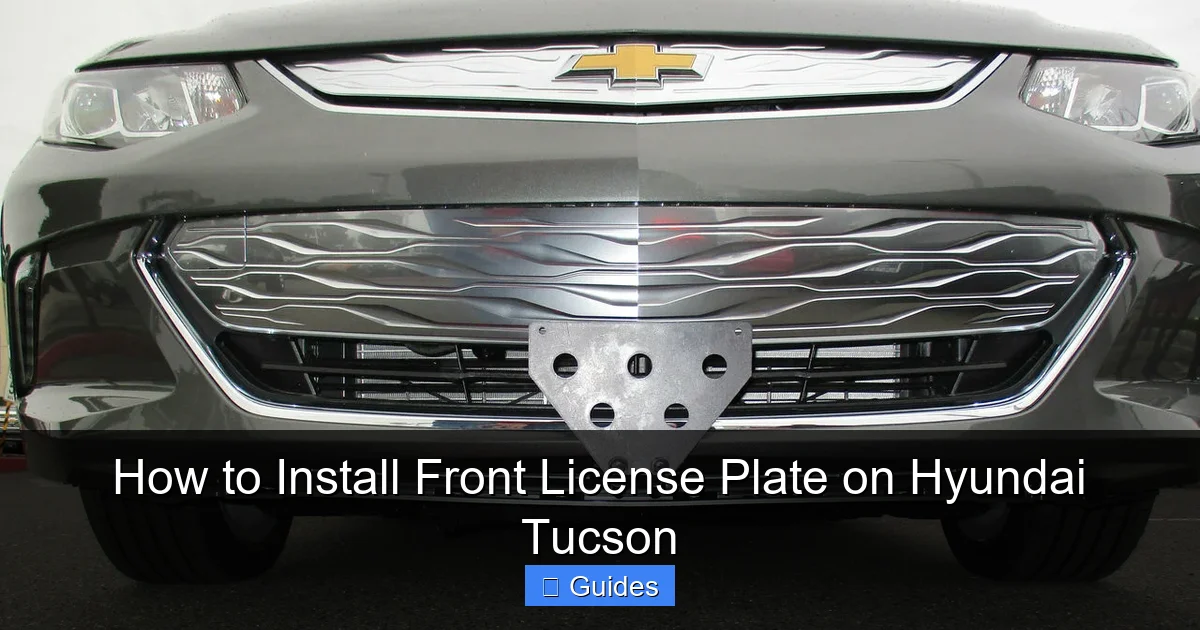
Visual guide about How to Install Front License Plate on Hyundai Tucson
Image source: i.ytimg.com
Before you start, it’s important to gather all the necessary tools and materials. Having everything ready will save time and prevent frustration mid-installation. Most of these items are inexpensive and easy to find at auto parts stores, hardware stores, or online.
Essential Tools
- Phillips or flathead screwdriver: Depending on the screws provided, you’ll need one of these to tighten the plate.
- Drill (optional): Only if your Tucson doesn’t have pre-drilled holes or if you’re using self-tapping screws.
- Measuring tape or ruler: Helps ensure the plate is centered and level.
- Marker or pencil: For marking drill points if needed.
- Socket wrench or nut driver (optional): Useful if your bracket uses nuts instead of screws.
Materials and Parts
- Front license plate: Issued by your state’s DMV.
- License plate screws: Usually included with the plate, but you may need longer ones if using a frame.
- License plate frame (optional): Adds style and can protect the plate edges. Choose one that fits your Tucson’s aesthetic.
- Plastic anchors or self-tapping screws: If drilling into the bumper, use screws designed for plastic to avoid cracking.
- Mounting bracket (if not included): Some Tucsons come with a bracket; if not, you can buy one from Hyundai or a third-party seller.
- Adhesive license plate mount (alternative): For a no-drill option, though less secure.
Optional but Helpful Items
- Thread locker (e.g., Loctite): Prevents screws from loosening over time due to vibration.
- Rubbing alcohol and cloth: Cleans the mounting surface for better adhesion if using adhesive.
- Zip ties (for temporary hold): Can help hold the plate in place while you secure it.
Pro tip: If you’re unsure whether your Tucson has pre-drilled holes, check the front bumper near the grille. Many 2016–2024 models have two small indentations or holes specifically for the license plate bracket. If you see them, you’re in luck—no drilling required!
Step-by-Step Installation Guide
Visual guide about How to Install Front License Plate on Hyundai Tucson
Image source: cdn11.bigcommerce.com
Now that you’ve got your tools and materials ready, it’s time to install the front license plate. Follow these steps carefully to ensure a secure, professional-looking installation.
Step 1: Locate the Mounting Area
Start by examining the front bumper of your Hyundai Tucson. Look for two small holes or indentations on the lower part of the bumper, usually centered below the grille. These are the factory-designed mounting points for the license plate bracket. If you don’t see them, your model may not have pre-drilled holes—don’t worry, we’ll cover that scenario later.
If your Tucson came with a license plate bracket, it should be tucked away in the glove compartment, trunk, or with the owner’s manual. If you can’t find it, you can purchase an OEM (original equipment manufacturer) bracket from a Hyundai dealer or online retailer like Amazon or HyundaiPartsDeal.com.
Step 2: Attach the Bracket (If Needed)
If your Tucson has pre-drilled holes, simply align the bracket with them and secure it using the provided screws. Use a screwdriver to tighten them—don’t over-tighten, as this can crack the plastic bumper.
If there’s no bracket, you’ll need to install one. Most brackets are L-shaped and attach directly to the bumper. Hold it in place, mark the screw holes with a pencil, and then drill pilot holes if necessary. Use plastic anchors or self-tapping screws designed for automotive use to avoid damaging the bumper.
Step 3: Position the License Plate
Once the bracket is secure, place your license plate over it. Make sure the plate is level and centered. Use a measuring tape to check that both sides are equidistant from the edges of the grille or bumper. A crooked plate not only looks bad but can also be a distraction to other drivers.
If you’re using a license plate frame, attach it to the plate first, then mount the entire assembly to the bracket. Frames can add a nice touch—just make sure they don’t cover any important information like the state name or registration sticker.
Step 4: Secure the Plate
Insert the screws through the plate (and frame, if used) and into the bracket. Tighten them evenly, alternating between top and bottom screws to avoid warping the plate. Again, don’t overtighten—snug is enough. If you’re concerned about vibration loosening the screws over time, apply a small drop of thread locker to the threads before inserting.
For extra security, some drivers use nylon lock nuts on the back of the bracket. These resist loosening and are especially useful if you drive on rough roads or frequently wash your car.
Step 5: Final Check
Once everything is tightened, give the plate a gentle tug to make sure it’s secure. It shouldn’t wobble or move. Step back and look at it from different angles to confirm it’s level and centered. If it looks good, you’re all set!
Alternative: No-Drill Installation
If you’re hesitant to drill into your bumper—or if your Tucson doesn’t have pre-drilled holes—consider a no-drill solution. Adhesive license plate mounts use strong double-sided tape or industrial-grade adhesive to stick the plate directly to the bumper.
To use this method:
- Clean the mounting area with rubbing alcohol to remove dirt and grease.
- Peel off the backing from the adhesive mount.
- Press the plate firmly onto the bumper, holding it in place for 30–60 seconds.
- Let the adhesive cure for at least 24 hours before driving.
While convenient, adhesive mounts are less secure than screw-mounted plates and may not hold up in extreme weather or high-speed driving. They’re best for temporary use or in states where front plates aren’t strictly enforced.
Tips for a Clean and Professional Look

Visual guide about How to Install Front License Plate on Hyundai Tucson
Image source: cars.showlikes.com
Installing the plate is one thing—making it look good is another. A well-mounted license plate enhances your Tucson’s appearance and shows attention to detail. Here are some tips to achieve a clean, professional finish.
Choose the Right Frame
A license plate frame can add personality, but it should complement your vehicle, not clash with it. Hyundai offers OEM frames in black, chrome, or body-color finishes that match the Tucson’s design. Third-party options range from minimalist to flashy—choose one that reflects your style without being overly distracting.
Avoid frames that are too wide or tall, as they can interfere with sensors or cameras. The Tucson has forward-facing sensors for features like forward collision warning and adaptive cruise control. Make sure your frame doesn’t block these.
Keep It Level and Centered
A crooked plate is an eyesore. Use a level or the grille as a reference point to ensure the plate is perfectly horizontal. Measure from the edges of the grille to the sides of the plate to confirm symmetry. Even a small misalignment can be noticeable, especially on a sleek SUV like the Tucson.
Use Matching Screws
If your bracket came with black screws but your frame is chrome, consider replacing them with matching hardware. Black oxide or stainless steel screws in a finish that matches your frame or bumper give a cohesive look. You can find these at auto parts stores or online.
Protect the Bumper
When drilling or screwing into the bumper, go slowly and use the right bit size. Plastic can crack if you apply too much pressure. If you’re unsure, practice on a scrap piece of plastic first. Using plastic anchors also helps distribute the load and prevents stripping.
Maintain Over Time
Over time, screws can loosen due to road vibration. Check your plate every few months and tighten if needed. If you live in a snowy area, road salt can corrode screws—consider using stainless steel hardware to prevent rust.
Troubleshooting Common Issues
Even with careful installation, you might run into a few hiccups. Here’s how to solve the most common problems.
The Plate Wobbles or Rattles
This usually happens when screws are loose or the wrong size. Check that all screws are tight and that they’re long enough to grip the bracket securely. If the holes are stripped, try using slightly larger screws or inserting plastic anchors.
Holes Don’t Line Up
If your bracket or plate doesn’t align with the holes, double-check the model year and trim of your Tucson. Some trims have different bumper designs. You may need a different bracket or minor adjustments. In rare cases, gently bending the bracket can help—but be careful not to break it.
Adhesive Mount Fails
If your no-drill mount falls off, the surface may not have been clean enough, or the adhesive wasn’t strong enough. Re-clean the area with alcohol, let it dry completely, and try a higher-quality adhesive like 3M VHB tape. For permanent security, switch to a screw-mounted solution.
Plate Blocks Sensors
If your plate or frame is too close to the grille, it might interfere with the Tucson’s front sensors. Look for warning lights on your dashboard, such as “Forward Collision Warning Off” or “Check Cruise Control.” If this happens, reposition the plate slightly lower or switch to a slimmer frame.
Rust or Corrosion
Over time, especially in humid or salty environments, screws can rust. Replace them with stainless steel or coated screws. Applying a small amount of dielectric grease can also prevent corrosion.
Legal Requirements and State Laws
Before you even think about skipping the front plate, it’s crucial to know your state’s laws. As of 2024, the following states require both front and rear license plates:
- Alabama
- Alaska
- Arizona
- Arkansas
- California
- Colorado
- Connecticut
- Delaware
- Florida
- Georgia
- Idaho
- Illinois
- Indiana
- Iowa
- Kansas
- Kentucky
- Louisiana
- Maine
- Maryland
- Massachusetts
- Michigan
- Minnesota
- Mississippi
- Missouri
- Montana
- Nebraska
- Nevada
- New Hampshire
- New Jersey
- New Mexico
- New York
- North Carolina
- North Dakota
- Ohio
- Oklahoma
- Oregon
- Pennsylvania
- Rhode Island
- South Carolina
- South Dakota
- Tennessee
- Texas
- Utah
- Vermont
- Virginia
- Washington
- West Virginia
- Wisconsin
- Wyoming
That’s 40 out of 50 states! Only a handful—like Michigan, Arizona, and Florida—allow drivers to display only a rear plate, though some have exceptions for certain vehicles.
Penalties vary by state but typically include fines ranging from $25 to $200. In some cases, you might get a warning first, but repeated offenses can lead to higher fines or court appearances. If you’re traveling across state lines, make sure your plate setup complies with the strictest state you’ll be driving in.
Even if your state doesn’t require a front plate, consider installing one anyway. It’s a small effort for added safety, security, and peace of mind.
Conclusion
Installing a front license plate on your Hyundai Tucson doesn’t have to be a chore. With the right tools, a little patience, and this guide, you can have it mounted securely and looking great in under 30 minutes. Whether you use the factory bracket, drill your own holes, or opt for an adhesive solution, the key is to do it properly the first time.
Remember: it’s not just about avoiding a ticket. A properly installed front plate supports vehicle identification, enhances safety, and keeps you compliant with the law. Plus, a clean, centered plate just makes your Tucson look more polished and complete.
So grab your screwdriver, check your state’s requirements, and get that plate on. Your Tucson—and your driving record—will thank you.
Frequently Asked Questions
Do all Hyundai Tucson models have pre-drilled holes for the front license plate?
Most Hyundai Tucson models from 2016 to 2024 come with pre-drilled holes or indentations on the front bumper for the license plate bracket. However, some trims or model years may vary, so it’s best to inspect your bumper or consult your owner’s manual.
Can I install a front license plate without drilling into the bumper?
Yes, you can use adhesive-mounted brackets or no-drill kits that attach with strong double-sided tape. While convenient, these are less secure than screw-mounted plates and may not be suitable for high-speed or long-term use.
What size screws do I need for the Hyundai Tucson front license plate?
Most Hyundai Tucson models use standard M6 or #12 screws, typically 1 inch long. If using a frame, you may need slightly longer screws. Always check the bracket and plate thickness before purchasing.
Will installing a front license plate damage my Tucson’s bumper?
If done correctly, no. Using the factory bracket and appropriate screws for plastic minimizes risk. Avoid over-tightening and use plastic anchors if drilling to prevent cracking or stripping.
Can I use a decorative license plate frame on my Tucson?
Yes, but make sure it doesn’t block any sensors, cameras, or important plate information. Choose a slim, non-reflective frame that complements your vehicle’s design.
What should I do if my front license plate keeps falling off?
Check that the screws are tight and the correct size. If the holes are stripped, use plastic anchors or slightly larger screws. For adhesive mounts, ensure the surface is clean and the adhesive is rated for automotive use.

At CarLegit, we believe information should be clear, factual, and genuinely helpful. That’s why every guide, review, and update on our website is created with care, research, and a strong focus on user experience.