
Jump starting your 2017 Alfa Romeo Giulia doesn’t have to be stressful—if you follow the right steps. With proper preparation, correct cable connections, and safety precautions, you can revive a dead battery quickly and safely without damaging your car’s sensitive electronics.
So, you’re standing in the parking lot, keys in hand, and your beautiful 2017 Alfa Romeo Giulia won’t start. The dashboard lights flicker weakly, the engine cranks slowly—or not at all. Sound familiar? A dead battery is one of the most common reasons your Giulia might refuse to fire up, especially after a long night with the lights on, a cold morning, or simply because the battery has reached the end of its life.
But don’t panic. Jump starting your Alfa Romeo Giulia 2017 is absolutely possible—and safer than you might think—if you follow the right procedure. Unlike older cars, modern vehicles like the Giulia come packed with sophisticated electronics, sensors, and computer systems that require extra care during a jump start. That’s why it’s crucial to use the correct jump points and follow a precise sequence to avoid frying your car’s delicate wiring or onboard systems.
In this guide, we’ll walk you through everything you need to know about how to jump start your 2017 Alfa Romeo Giulia safely and effectively. Whether you’re using another car or a portable jump starter, we’ll cover the tools, steps, and safety tips to get you back on the road quickly. Plus, we’ll explain why the Giulia’s unique jump-starting setup matters and how to avoid common mistakes that could cost you time, money, or even damage your car.
In This Article
- 1 Key Takeaways
- 2 📑 Table of Contents
- 3 Why the 2017 Alfa Romeo Giulia Needs Special Jump Start Care
- 4 Tools and Equipment You’ll Need
- 5 Step-by-Step Guide: How to Jump Start Your 2017 Alfa Romeo Giulia
- 5.1 Step 1: Park the Vehicles Safely
- 5.2 Step 2: Locate the Remote Jump Points
- 5.3 Step 3: Connect the Jumper Cables in the Correct Order
- 5.4 Step 4: Start the Donor Vehicle (or Activate the Jump Starter)
- 5.5 Step 5: Attempt to Start Your Giulia
- 5.6 Step 6: Disconnect the Cables in Reverse Order
- 5.7 Step 7: Drive to Recharge the Battery
- 6 Safety Precautions and Common Mistakes to Avoid
- 7 What to Do After Jump Starting: Next Steps
- 8 When to Call a Professional
- 9 Conclusion
- 10 Frequently Asked Questions
- 10.1 Can I jump start my 2017 Alfa Romeo Giulia with a portable jump starter?
- 10.2 Where are the jump points on a 2017 Alfa Romeo Giulia?
- 10.3 What happens if I connect the jumper cables in the wrong order?
- 10.4 Why won’t my Giulia start even after a jump?
- 10.5 How long should I drive after jump starting?
- 10.6 Can a jump start damage my Giulia’s electronics?
Key Takeaways
- Use a compatible jump starter or donor vehicle: Ensure the assisting vehicle or portable jump starter matches or exceeds your Giulia’s 12-volt system to avoid electrical damage.
- Locate the correct jump points: The 2017 Giulia uses remote jump points under the hood—not the battery terminals directly—to protect the electrical system.
- Follow the exact connection sequence: Connect positive first, then negative, and ground the final clamp to the engine block—never to the battery.
- Let the engine run after jump starting: Drive for at least 20–30 minutes to allow the alternator to fully recharge the battery.
- Check for underlying issues: A dead battery could signal a failing alternator, parasitic drain, or aging battery—get it tested.
- Use a portable jump starter as backup: Compact lithium-ion jump starters are ideal for emergencies and eliminate the need for another vehicle.
- Never jump start a damaged or leaking battery: Swollen, cracked, or leaking batteries can explode—seek professional help instead.
📑 Table of Contents
Why the 2017 Alfa Romeo Giulia Needs Special Jump Start Care
The 2017 Alfa Romeo Giulia isn’t just a stylish Italian sports sedan—it’s a high-tech machine with a complex electrical architecture. Under the hood, you’ll find a 12-volt lead-acid battery, but unlike many older vehicles, the Giulia doesn’t allow direct access to the battery terminals for jump starting. Instead, Alfa Romeo designed remote jump points to protect the vehicle’s sensitive electronics from voltage spikes and incorrect connections.
This design choice is intentional. Modern cars rely heavily on electronic control units (ECUs), infotainment systems, and advanced driver assistance features. A sudden surge of power from a jump start, if done incorrectly, can damage these components. That’s why Alfa Romeo engineered specific jump points that isolate the battery and direct power safely into the system.
Additionally, the Giulia’s battery is often located in the trunk (on some trims) or tucked away under the hood in a hard-to-reach spot. This makes direct terminal access impractical and risky. The remote jump points—usually found near the front of the engine bay—are your gateway to a safe and effective jump start.
Understanding this setup is key. If you try to clamp jumper cables directly onto the battery terminals (especially if you manage to locate them), you risk short-circuiting, damaging the battery management system, or even causing a fire. The remote points are there for a reason—use them.
Tools and Equipment You’ll Need
Before you even think about connecting cables, make sure you have the right tools on hand. Jumping a car isn’t just about having jumper cables—it’s about having the right kind and knowing how to use them safely.
Quality Jumper Cables
Not all jumper cables are created equal. For the Giulia, you’ll want a set that’s at least 4 to 6 gauge in thickness—thicker cables can carry more current, which is essential for starting a modern engine with high electrical demands. Look for cables that are at least 10 to 15 feet long to give you flexibility, especially if the donor vehicle can’t get too close.
Visual guide about How to Jump Start Alfa Romeo Giulia 2017
Image source: platform.cstatic-images.com
Avoid cheap, flimsy cables with thin wires and weak clamps. These can overheat, fail to deliver enough power, or even spark dangerously. Invest in a reputable brand with solid copper wiring and insulated, spring-loaded clamps. Some premium sets even come with surge protection or built-in voltage indicators—great extras for peace of mind.
Portable Jump Starter (Highly Recommended)
If you frequently drive in remote areas or want to avoid relying on another vehicle, a portable jump starter is a game-changer. These compact, battery-powered devices can jump start your Giulia without needing a second car. Look for a model with at least 1000 peak amps and lithium-ion technology for reliability and portability.
Many modern jump starters also include USB ports for charging phones, LED flashlights, and even air compressors—making them multi-functional emergency tools. Some even have safety features like reverse polarity protection, short-circuit prevention, and automatic shutoff, which are especially helpful if you’re not confident with manual connections.
Safety Gear
Safety should always come first. Wear safety glasses to protect your eyes from sparks or battery acid. Gloves—preferably rubber or insulated—can prevent shocks and protect your hands from sharp edges or hot engine parts. Also, make sure both vehicles are in park (or neutral with the parking brake on) and turned off before connecting anything.
Owner’s Manual
Yes, we know—reading the manual isn’t the most exciting part of car ownership. But the Alfa Romeo Giulia’s manual contains vital information about jump starting, including diagrams of the remote jump points and warnings about electrical systems. Keep it in your glove compartment or download the digital version from Alfa Romeo’s website. It could save you from a costly mistake.
Step-by-Step Guide: How to Jump Start Your 2017 Alfa Romeo Giulia
Now that you’re prepared, let’s get into the actual process. Follow these steps carefully to jump start your Giulia safely and effectively.
Step 1: Park the Vehicles Safely
Position the donor vehicle (or place the portable jump starter nearby) so the two cars are close enough for the jumper cables to reach—but not touching. Turn off both engines, engage the parking brakes, and put both vehicles in park (or neutral for manuals). Remove the keys to prevent accidental starting.

Visual guide about How to Jump Start Alfa Romeo Giulia 2017
Image source: egmcartech.com
Make sure the area is well-ventilated and away from flammable materials. Avoid jump starting in the rain or on wet surfaces if possible, as moisture increases the risk of electrical shock.
Step 2: Locate the Remote Jump Points
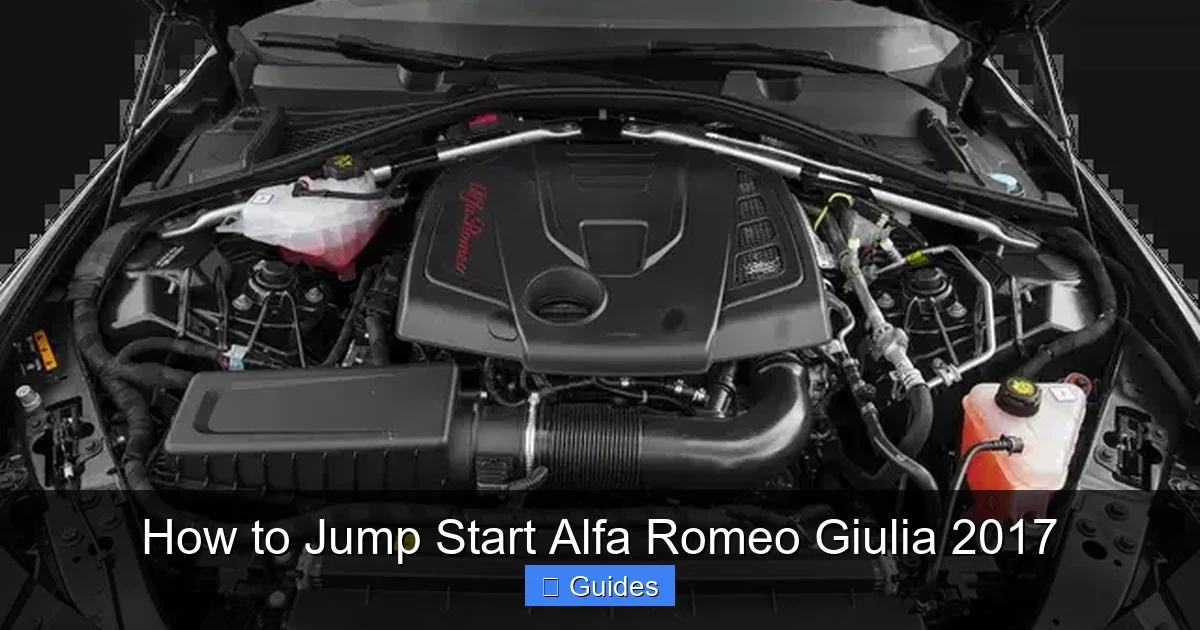
Open the hood of your Giulia and look for the remote jump points. On the 2017 model, you’ll typically find a red plastic cover labeled “+” near the front of the engine bay, close to the firewall. This is the positive jump point. Remove the cover to reveal a metal stud or terminal.
The negative (ground) jump point is usually a bare metal bolt or stud on the engine block or chassis nearby—often near the strut tower or firewall. It’s not the negative terminal of the battery. Never connect the negative clamp to the battery’s negative post unless specifically instructed by a technician.
If you’re unsure, consult your owner’s manual or look for a diagram under the hood. Some Giulia models have a small label or sticker indicating the jump points.
Step 3: Connect the Jumper Cables in the Correct Order
This is where many people go wrong. The sequence matters—a lot. Follow this exact order:
- Connect the red (positive) clamp to the positive jump point on your Giulia (the one under the red cover).
- Connect the other red clamp to the positive terminal of the donor vehicle’s battery (or the positive terminal on a portable jump starter).
- Connect the black (negative) clamp to the negative terminal of the donor vehicle’s battery (or the negative terminal on the jump starter).
- Connect the final black clamp to the grounded metal point on your Giulia’s engine block—not the battery. This completes the circuit safely and prevents sparks near the battery, which could ignite hydrogen gas.
Double-check all connections. Loose or reversed clamps can cause sparks, damage electronics, or fail to deliver power.
Step 4: Start the Donor Vehicle (or Activate the Jump Starter)
If using another car, start the donor vehicle and let it run for 2–3 minutes. This allows the alternator to begin charging the dead battery through the cables. If using a portable jump starter, turn it on and follow the manufacturer’s instructions—many have a “boost” or “start” button.
Never rev the donor engine excessively. A steady idle is sufficient. High RPMs can cause voltage spikes that harm your Giulia’s electronics.
Step 5: Attempt to Start Your Giulia
Now, try starting your Alfa Romeo Giulia. Turn the key or press the start button. If it cranks but doesn’t start immediately, wait 30 seconds and try again. Don’t crank for more than 10 seconds at a time—over-cranking can drain the donor battery or damage the starter.
If the engine starts, leave it running. Do not turn it off immediately. Keep the jumper cables connected for another 2–3 minutes to allow the Giulia’s alternator to begin recharging the battery.
Step 6: Disconnect the Cables in Reverse Order
Once your Giulia is running smoothly, it’s time to disconnect—but again, order matters. Follow this sequence:
- Remove the black clamp from the grounded point on your Giulia.
- Remove the black clamp from the donor vehicle’s negative terminal (or jump starter).
- Remove the red clamp from the donor vehicle’s positive terminal (or jump starter).
- Remove the red clamp from the positive jump point on your Giulia.
Store the cables neatly and replace the red cover on the jump point. Close the hood securely.
Step 7: Drive to Recharge the Battery
Your Giulia is running, but the battery may still be weak. Drive for at least 20–30 minutes to allow the alternator to fully recharge it. Avoid short trips or turning off the engine too soon—this can leave you stranded again.
If the car dies shortly after disconnecting, or if you need multiple jump starts in a short period, there’s likely an underlying issue. More on that later.
Safety Precautions and Common Mistakes to Avoid
Jump starting seems simple, but it’s easy to make dangerous mistakes—especially with a high-end car like the Giulia. Here’s how to stay safe and protect your vehicle.
Never Connect to the Battery Terminals Directly
Unless you’re certain of the procedure and have accessed the actual battery (which is often in the trunk on Giulia models), avoid connecting cables directly to the battery posts. The remote jump points are designed to isolate the system and prevent voltage spikes. Bypassing them risks damaging the battery management system, ECU, or infotainment unit.

Visual guide about How to Jump Start Alfa Romeo Giulia 2017
Image source: cdn.shopify.com
Don’t Let the Clamps Touch Each Other
When connecting or disconnecting, keep the red and black clamps separated. If they touch while connected to a live battery, you’ll create a short circuit—resulting in sparks, melted cables, or even a fire. Always hold the insulated handles, not the metal parts.
Avoid Jump Starting a Damaged Battery
If the battery is swollen, cracked, leaking fluid, or smells like rotten eggs (sulfur), do not attempt to jump start it. These are signs of internal damage or overheating. A damaged battery can explode when power is applied. Call a professional or roadside assistance instead.
Don’t Use a Mismatched Vehicle
While most 12-volt systems are compatible, avoid using a vehicle with a significantly higher voltage (like a truck with a 24-volt system) or a much larger engine. Excessive current can overwhelm your Giulia’s electrical system. Stick to similar-sized cars or use a portable jump starter designed for passenger vehicles.
Watch for Warning Lights After Jump Starting
After a successful jump start, your Giulia may display warning lights on the dashboard—such as the battery, check engine, or ABS light. This is normal and often temporary. Drive for 15–20 minutes and see if they clear. If they persist, have the vehicle scanned for codes at a dealership or repair shop.
What to Do After Jump Starting: Next Steps
Getting your Giulia started is just the first step. To avoid repeat issues, take these actions after a jump start.
Test the Battery and Charging System
A dead battery doesn’t always mean the battery is bad. It could be a failing alternator, a parasitic drain, or simply an old battery nearing the end of its 3–5 year lifespan. Visit an auto parts store or Alfa Romeo service center to have the battery and charging system tested. Many stores offer free testing.
The test will check the battery’s voltage, cold cranking amps (CCA), and the alternator’s output. If the alternator isn’t producing enough power, your battery will keep dying—even after a jump start.
Consider Replacing the Battery
If your battery is more than 4 years old or fails the test, replace it. The 2017 Giulia typically uses a 12-volt AGM (Absorbent Glass Mat) battery, which is more durable and efficient than standard lead-acid types. AGM batteries are better at handling frequent starts and stops and are common in modern performance cars.
When replacing, make sure the new battery matches the original specifications. Using the wrong type can affect performance and trigger warning lights.
Prevent Future Dead Batteries
To avoid another jump start scenario, adopt these habits:
- Turn off lights, infotainment, and accessories when the engine is off.
- Use a battery maintainer if the car sits unused for more than a week.
- Avoid short trips that don’t allow the battery to fully recharge.
- Keep the battery terminals clean and free of corrosion.
- Check for software updates—Alfa Romeo occasionally releases updates that improve battery management.
When to Call a Professional
Sometimes, a jump start isn’t enough—or it’s too risky to attempt on your own. Here’s when to call for help.
Repeated Dead Batteries
If your Giulia needs jump starts more than once in a short period, there’s likely an underlying issue. It could be a faulty alternator, a parasitic drain (like a stuck relay or aftermarket device), or a battery that can no longer hold a charge. A technician can perform a load test and electrical diagnosis.
No Access to Jump Points
If you can’t locate the remote jump points or the covers are damaged, don’t force it. Incorrect connections can cause serious damage. Call roadside assistance or a tow to a service center.
Electrical Smells or Smoke
If you smell burning, see smoke, or notice melted cables during a jump start, disconnect immediately and step back. This could indicate a short circuit or battery failure. Do not attempt to restart the car.
Warranty Concerns
If your Giulia is still under warranty, avoid DIY jump starts unless absolutely necessary. Some warranties require that electrical work be performed by certified technicians. Improper jump starting could void coverage for related repairs.
Conclusion
Jump starting your 2017 Alfa Romeo Giulia doesn’t have to be a nerve-wracking experience. With the right knowledge, tools, and caution, you can revive a dead battery safely and get back on the road with confidence. The key is respecting the Giulia’s advanced electrical system by using the designated remote jump points, following the correct cable sequence, and avoiding common pitfalls.
Remember: preparation is everything. Keep a quality set of jumper cables or a portable jump starter in your trunk, along with safety gear and your owner’s manual. And if you’re ever unsure, don’t hesitate to call for professional help—your Giulia is too valuable to risk.
By following this guide, you’re not just learning how to jump start your car—you’re protecting its performance, longevity, and your own peace of mind. So the next time your Giulia won’t start, take a deep breath, follow the steps, and enjoy the ride.
Frequently Asked Questions
Can I jump start my 2017 Alfa Romeo Giulia with a portable jump starter?
Yes, a portable jump starter is a safe and convenient option for the Giulia. Just make sure it’s compatible with 12-volt systems and has enough peak amps (at least 1000) to handle the engine. Follow the same connection sequence using the remote jump points.
Where are the jump points on a 2017 Alfa Romeo Giulia?
The positive jump point is under a red cover near the front of the engine bay. The negative (ground) point is a bare metal bolt on the engine block or chassis—never the battery terminal. Consult your owner’s manual for exact locations.
What happens if I connect the jumper cables in the wrong order?
Reversing the order can cause sparks, short circuits, or damage to the car’s electronics. Always connect positive first, then negative, and ground the final clamp to the engine block—not the battery.
Why won’t my Giulia start even after a jump?
If the car still won’t start, the issue may not be the battery. It could be a faulty starter, fuel pump, ignition system, or immobilizer problem. Have it diagnosed by a professional.
How long should I drive after jump starting?
Drive for at least 20–30 minutes to allow the alternator to recharge the battery fully. Avoid turning off the engine too soon, or the battery may not have enough charge to restart.
Can a jump start damage my Giulia’s electronics?
Yes, if done incorrectly. Using the wrong jump points, reversing polarity, or connecting to a high-voltage source can damage sensitive systems. Always follow the manufacturer’s procedure and use the remote jump points.

At CarLegit, we believe information should be clear, factual, and genuinely helpful. That’s why every guide, review, and update on our website is created with care, research, and a strong focus on user experience.