
Featured image for how do i know if my jeep has vari lok
Image source: thecarhow.com
Determining if your Jeep has Vari-Lok is straightforward and crucial for proper maintenance! The quickest ways involve checking your vehicle’s build sheet online, inspecting the axle tag for specific codes like “DSF” or “DSA,” or decoding your VIN. Confirming this feature ensures you use the correct differential fluid, preventing costly damage and optimizing performance.
Ever found yourself on a challenging trail, one wheel spinning helplessly in the air, while your Jeep struggles for traction? Or perhaps you’re simply curious about the specific capabilities tucked away in your vehicle’s drivetrain. Understanding your Jeep’s differential setup is crucial for maximizing its performance, both on and off the pavement. Among the various traction-enhancing systems, the Vari-Lok differential stands out as a sophisticated solution, offering improved grip without the abruptness of traditional lockers. But how do you know if your beloved Jeep is equipped with this clever piece of engineering?
For many Jeep enthusiasts and owners, identifying the exact specifications of their vehicle can be a bit of a detective mission. Manufacturer options often vary by trim level, year, and even specific build configurations, making it challenging to pinpoint features like the Vari-Lok differential. Whether you’re planning your next off-road adventure, performing maintenance, or simply want to speak confidently about your Jeep’s capabilities, knowing whether you have Vari-Lok is incredibly valuable. This comprehensive guide will equip you with all the necessary tools and knowledge to perform an easy check and confidently answer the question: “Does my Jeep have Vari-Lok?”
From diving into your vehicle’s official documentation to practical visual inspections and even performance tests, we’ll cover every angle. We’ll break down what Vari-Lok is, why it matters, and how you can definitively determine its presence in your Jeep. Get ready to peel back the layers of your Jeep’s engineering and discover the secrets of its differential system. Let’s embark on this journey to uncover whether your Jeep is powered by the ingenious Vari-Lok technology.
In This Article
- 1 Key Takeaways
- 2 Understanding What Vari-Lok Is and Why It Matters
- 3 Decoding Your Jeep’s Build Sheet or Window Sticker
- 4 The Visual Inspection: Looking for Vari-Lok Clues Underneath
- 5 Performance-Based Testing: The Practical Approach to Identifying Vari-Lok
- 6 Consulting Online Resources and Jeep Communities
- 7 Vari-Lok Axle Compatibility and Common Jeep Models
- 8 Conclusion: Confidently Knowing Your Jeep’s Capabilities
- 9 Frequently Asked Questions
- 9.1 How can I visually check if my Jeep has Vari-Lok differentials?
- 9.2 Can I use my Jeep’s VIN to determine if it has Vari-Lok?
- 9.3 Which Jeep models or trim levels typically come with Vari-Lok?
- 9.4 What physical markings or components should I look for on the differential itself to confirm Vari-Lok?
- 9.5 Where can I find information about Vari-Lok in my Jeep’s owner’s manual or build sheet?
- 9.6 Are there any driving signs or performance aspects that indicate my Jeep has Vari-Lok?
Key Takeaways
- Decode your VIN: Use an online Jeep VIN decoder for factory options.
- Locate differential sticker: Search for a “Vari-Lok” or “Limited Slip” decal.
- Check build sheet: This document definitively lists your Jeep’s features.
- Inspect differential cover: Look for special markings or tags specific to LSD.
- Consult your owner’s manual: Factory documentation confirms drivetrain specifics.
- Understand Vari-Lok: It’s a traction-enhancing limited-slip differential.
Understanding What Vari-Lok Is and Why It Matters
Before we delve into the “how-to” of identifying Vari-Lok, it’s essential to understand what this technology is and the significant role it plays in your Jeep’s performance. The Vari-Lok differential is a crucial component designed to enhance traction by intelligently distributing power, particularly when one wheel loses grip. It’s a key feature for many Jeep models, offering a superior driving experience in diverse conditions.
The Basics of Differential Systems
Every vehicle has a differential, which is a mechanical device that allows the wheels on the same axle to rotate at different speeds. This is essential for turning corners, as the outer wheel needs to travel a greater distance than the inner wheel. Without a differential, your tires would scrub and bind during turns, leading to poor handling and excessive wear. However, a standard open differential has a significant drawback: when one wheel loses traction (e.g., on ice, mud, or in the air), all the power is sent to that wheel, leaving the vehicle stuck. This is where limited-slip differentials, like Vari-Lok, come into play, offering a much-needed improvement over standard open differentials.
How Vari-Lok Stands Apart: A Viscous Coupling Marvel
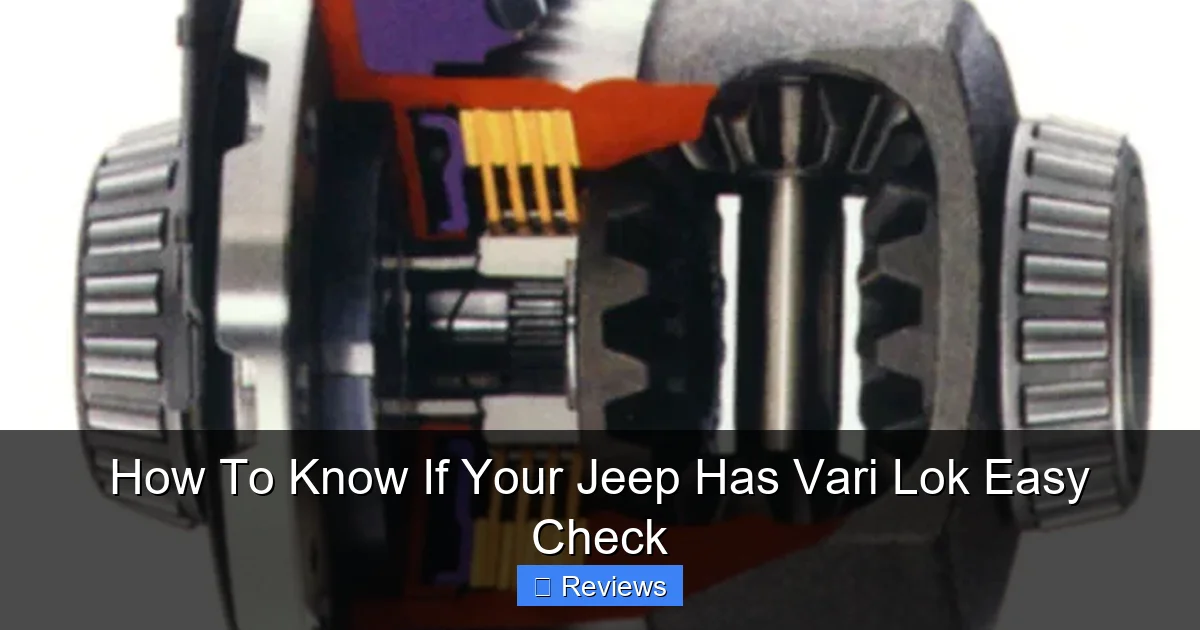
Vari-Lok is a type of limited-slip differential (LSD) that utilizes a viscous coupling to manage torque distribution. Unlike traditional clutch-type LSDs or automatic lockers, Vari-Lok operates smoothly and progressively. Inside the Vari-Lok unit, a series of interleaved plates rotate within a silicone-based fluid. When there’s a speed difference between the two wheels on the axle (i.e., one wheel starts to spin faster than the other), the viscous fluid heats up and thickens. This thickening creates resistance between the plates, effectively “locking” the differential and transferring torque from the spinning wheel to the wheel with more traction. The beauty of Vari-Lok is its seamless engagement; it’s always working, but only intervenes when necessary, providing a gradual and controlled transfer of power. This characteristic makes Vari-Lok incredibly effective for maintaining momentum and control in slippery or uneven terrain, making your Jeep a formidable off-road machine.
The Benefits of Vari-Lok for Off-Roaders and Daily Drivers
The advantages of having Vari-Lok are substantial, impacting both off-road prowess and everyday driving. For off-road enthusiasts, Vari-Lok significantly improves traction on loose surfaces, rocks, mud, and uneven trails, preventing a single spinning wheel from halting your progress. It allows your Jeep to maintain forward momentum even when encountering articulation challenges where one or more wheels might momentarily lift off the ground. This enhanced grip means less wheel spin, better control, and a more confident driving experience in demanding conditions. Knowing you have Vari-Lok can greatly influence your approach to obstacles and the types of trails you feel comfortable tackling.
But the benefits of Vari-Lok aren’t limited to the wilderness. For daily drivers, Vari-Lok contributes to improved stability and safety, especially in adverse weather conditions like rain, snow, or ice. When driving on slippery roads, Vari-Lok helps prevent wheel spin, providing more controlled acceleration and reducing the likelihood of skidding. This means a more secure feeling behind the wheel and better predictability in challenging driving environments. Essentially, Vari-Lok makes your Jeep more capable, more predictable, and safer across a wider range of driving scenarios. Understanding its presence helps you fully appreciate and utilize your Jeep’s inherent strengths, making the effort to identify Vari-Lok well worth it.
Decoding Your Jeep’s Build Sheet or Window Sticker
The most accurate and often the easiest way to determine if your Jeep has Vari-Lok is by consulting its official documentation. Chrysler (now Stellantis) provides detailed build sheets for all its vehicles, which list every option, package, and component installed at the factory. This document is a goldmine of information and offers definitive proof regarding the presence of a Vari-Lok differential.
Visual guide about how do i know if my jeep has vari lok
Image source: adventurejeep.com
Accessing Your Official Jeep Documentation
Your Jeep’s window sticker, which you likely received when the vehicle was new, is the first place to check. This sticker outlines the standard features and optional equipment, often using specific codes or descriptions for differentials. If you don’t have the original window sticker, don’t despair! Chrysler offers an online portal where you can access your vehicle’s build sheet using its Vehicle Identification Number (VIN). Simply visit the official Mopar or Jeep customer service website, locate the “build sheet” or “equipment listing” section, and enter your VIN. Within moments, you’ll have access to a comprehensive list of everything your Jeep was built with. This is an absolutely reliable method to check for Vari-Lok.
Key Codes and Options to Look For
When reviewing your build sheet or window sticker, you’ll need to know what terminology or codes indicate the presence of Vari-Lok. Jeep typically uses specific option codes for various differential types. For instance, you might see codes like “DSA” (Anti-Spin Differential Rear Axle) or “DMH” (Vari-Lok Differential). The exact codes can vary slightly depending on the model year and specific Jeep model (e.g., Grand Cherokee, Commander, Liberty), but the “anti-spin” or “Vari-Lok” descriptions are usually quite explicit. Look for sections related to “Axles,” “Drivetrain,” or “Suspension/Driveline” components. If Vari-Lok is installed, it will be clearly listed as an option, often alongside the axle ratio (e.g., “3.73 Rear Axle Ratio w/ Vari-Lok Differential”). This direct confirmation removes all doubt about your Jeep’s Vari-Lok status.
Interpreting Build Sheet Language for Vari-Lok
Sometimes, the language on a build sheet might not be as straightforward as “Vari-Lok Differential.” You might see terms like “Limited Slip Differential,” “Anti-Spin Differential,” or even specific axle codes that are known to include Vari-Lok. For example, some Quadratrac II or Quadra-Drive II systems on certain Grand Cherokees inherently include Vari-Lok differentials at both the front and rear axles. If your build sheet mentions these advanced 4WD systems, it’s a strong indicator that you likely have Vari-Lok. Pay close attention to any mention of “traction control,” “off-road package,” or “heavy-duty differential” as these might be bundled with a Vari-Lok system. Cross-referencing these terms with online Jeep forums or owner’s manuals for your specific model year can help clarify any ambiguities. Getting this official documentation is the most definitive way to know if your Jeep came factory-equipped with Vari-Lok, providing peace of mind and accurate information for any future modifications or maintenance concerning your Vari-Lok system.
The Visual Inspection: Looking for Vari-Lok Clues Underneath
While the build sheet provides definitive proof, a visual inspection can sometimes offer strong clues or even confirmation if you know what to look for. Identifying Vari-Lok through visual means can be challenging because the differences are often internal to the differential housing. However, some external factors or common knowledge about specific axle types can guide your investigation. Always prioritize safety when working under your vehicle: ensure it’s on a level surface, in park with the parking brake engaged, and ideally supported by jack stands if you’re lifting it.
Visual guide about how do i know if my jeep has vari lok
Image source: i.ytimg.com
Identifying Your Axle Type
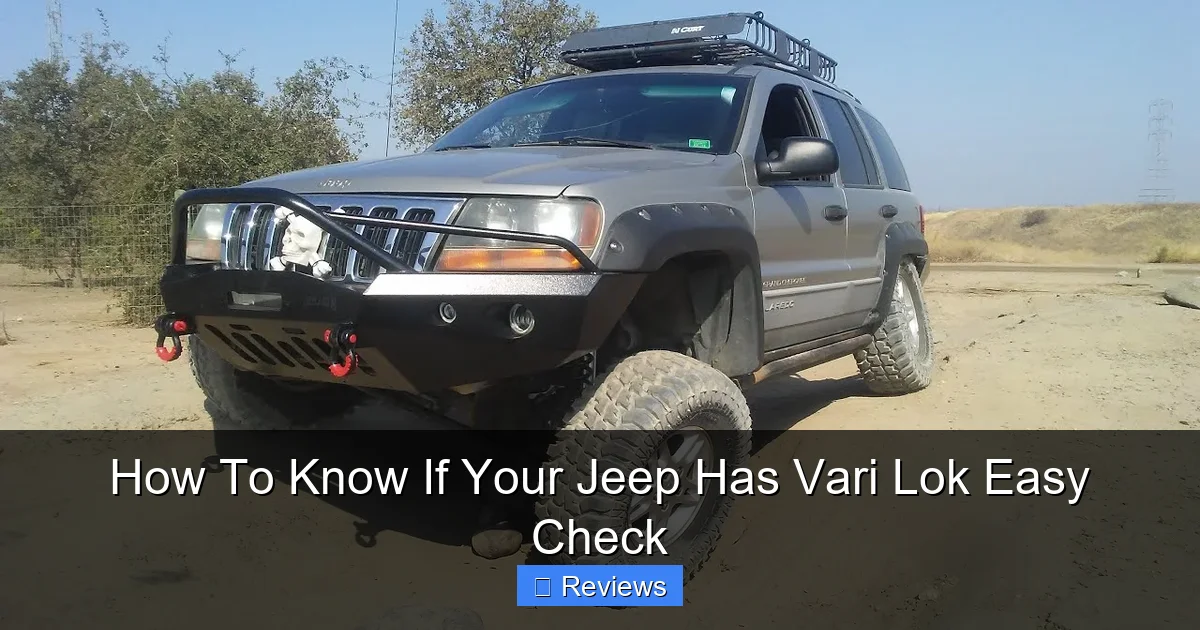
The first step in any visual inspection is to identify the type of axles your Jeep has. Different Jeep models and trims come with various axle manufacturers and designs, such as Dana 30, Dana 44, Dana 35, Chrysler 8.25, and various Corporate axles. Vari-Lok was typically offered on certain corporate axles (like the Chrysler 8.25″ or 8.9″ for rear, and sometimes specific front axles) found in models like the Jeep Grand Cherokee (WJ, WK, WK2), Commander (XK), and Liberty (KJ, KK). Knowing your axle type can narrow down the possibilities. For instance, if you have a base model with a very common, simple axle, the likelihood of Vari-Lok being present might be lower. Conversely, if your Jeep is a higher trim or equipped with an off-road package, it increases the chances. Visual identification of axles usually involves looking at the shape of the differential cover and counting the number of bolts on it. Online resources and Jeep manuals provide diagrams for common axle identification.
External Differences (or Lack Thereof) on Vari-Lok Equipped Axles
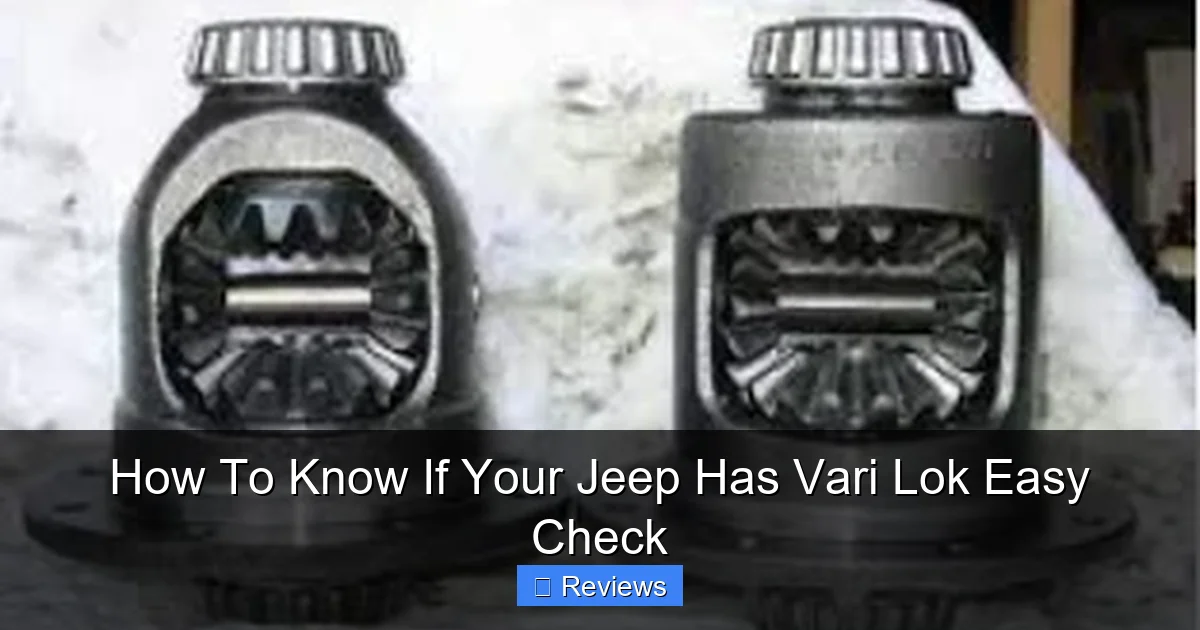
Unfortunately, Vari-Lok units are internal components within the differential housing, meaning there are rarely obvious external markings or distinct housing shapes that scream “Vari-Lok inside!” Unlike aftermarket lockers that might have external air lines or electrical wires, Vari-Lok is completely self-contained. Therefore, you won’t typically find special badges, unique differential covers, or external components that directly indicate its presence. The differential housing will generally look identical to a non-Vari-Lok equipped axle of the same type. This is why relying solely on visual inspection without other evidence can be misleading. However, sometimes there might be a small tag attached to one of the differential cover bolts that indicates a specific type of fluid is required, or it might hint at a limited-slip unit. These tags are rare and often lost, but worth a quick glance.
The Drain Plug and Housing Shape: Subtle Indicators
While direct external markers for Vari-Lok are scarce, some very subtle clues might exist, primarily related to maintenance. For certain Vari-Lok equipped axles, the differential housing might have a unique drain plug or fill plug location compared to an older, non-LSD version of the same axle, but this is highly model-specific and not a universal indicator for Vari-Lok. More importantly, the type of fluid recommended for your differential can be a strong clue. Vari-Lok, being a viscous coupling unit, often requires specific differential fluids, sometimes with or without friction modifiers, depending on the exact design and model year. If your owner’s manual or a service sticker under the hood specifies a unique fluid for your differentials (especially if it mentions “limited slip additive” or a specific synthetic blend), it could be an indirect indicator of a Vari-Lok or similar limited-slip device. However, this is more of a maintenance hint than a direct visual confirmation of Vari-Lok itself. Ultimately, for conclusive evidence, relying on the build sheet or an internal inspection is far more reliable than external visual cues for identifying Vari-Lok.
Performance-Based Testing: The Practical Approach to Identifying Vari-Lok
If official documentation is unavailable and visual cues are inconclusive, you can sometimes infer the presence of a Vari-Lok differential through practical, performance-based tests. These tests are designed to observe how your Jeep’s drivetrain reacts when one wheel loses traction, which is precisely the scenario where Vari-Lok is designed to engage. While not as definitive as a build sheet, these methods can provide strong indications. Always perform these tests safely, ideally in a controlled environment, and with an understanding of your vehicle’s limits. Ensure your Jeep has plenty of space and that you’re not putting yourself or others in danger.
Visual guide about how do i know if my jeep has vari lok
Image source: adventurejeep.com
The “One Wheel Up” Test for Traction Devices
One classic test for any limited-slip differential, including Vari-Lok, is the “one wheel up” test. This involves getting one wheel on an axle (either front or rear, if you suspect Vari-Lok on both) into a situation where it has minimal or no traction, while the other wheel on the same axle has good traction.
Here’s how to safely attempt it:
- Method 1: Jacking Up a Wheel. With your Jeep on a level surface, securely block the wheels that will remain on the ground. Use a sturdy floor jack to lift one wheel of the axle you’re testing (e.g., the front passenger wheel or the rear driver’s wheel) completely off the ground. Ensure the vehicle is stable and supported by jack stands for safety. With the transmission in neutral (or in Drive/Reverse for an automatic, with the engine running and a spotter ready to quickly apply the brake), try to spin the lifted wheel by hand.
- What to Look For:
- Open Differential: If you have an open differential without Vari-Lok, the lifted wheel will spin freely with little to no effort, and the wheel on the ground will remain stationary.
- Vari-Lok (or other LSD): If your Jeep has Vari-Lok, you will feel significant resistance when trying to spin the lifted wheel. The Vari-Lok viscous coupling will attempt to transfer torque to the wheel on the ground, making it difficult to spin the lifted wheel by hand. You might even notice the vehicle trying to move slightly if you’re not careful. The amount of resistance indicates the effectiveness of the Vari-Lok unit.
- Method 2: Slippery Surface Test. Find a very slippery, low-traction surface (like wet grass, loose gravel, or shallow mud) where you can place just one wheel of an axle, while the other wheel remains on a higher traction surface (e.g., pavement). Gently attempt to accelerate.
- What to Look For:
- Open Differential: The wheel on the slippery surface will spin excessively, and the vehicle will likely struggle to move forward or only move very slowly as the power is wasted on the spinning wheel.
- Vari-Lok: The wheel on the slippery surface might spin momentarily, but the Vari-Lok will engage, transferring power to the wheel with traction. The Jeep should then move forward more effectively, demonstrating the Vari-Lok’s ability to maintain momentum.
Remember, these tests demonstrate the *functionality* of a limited-slip differential. While it strongly suggests the presence of Vari-Lok, it doesn’t definitively identify it over other types of limited-slip mechanisms without further investigation. However, if your build sheet mentioned a factory-installed LSD, and these tests confirm its function, you can be reasonably confident it’s Vari-Lok.
Real-World Driving Scenarios and Vari-Lok Engagement
Beyond controlled tests, you can often feel the Vari-Lok working during typical driving in challenging conditions. Pay attention to how your Jeep behaves in these scenarios:
- Accelerating on Ice or Snow: If you accelerate moderately on a patch of ice or snow where one wheel might have less grip than the other, an open differential will cause that wheel to spin wildly, often triggering traction control (if present) to cut engine power. With Vari-Lok, you’ll feel a much smoother and more controlled acceleration, with less frantic wheel spin as power is subtly transferred.
- Cornering on Loose Gravel: When taking a turn on a gravel road, an open differential might allow the inside wheel to spin out more easily if you apply too much power. Vari-Lok will help maintain traction and stability, allowing for a more composed turn.
- Climbing a Mild Incline with Uneven Traction: If you’re climbing a dirt path where one side of the vehicle encounters loose dirt or a small rut while the other is on firm ground, an open differential would likely result in the wheel on the loose surface spinning. With Vari-Lok, your Jeep should continue to push forward, even if slowly, as power is redirected to the wheel with better grip.
What Vari-Lok Feels Like When It Works
The beauty of Vari-Lok is its subtlety. Unlike traditional lockers that can engage with an audible thunk or sudden jolt, Vari-Lok’s engagement is typically smooth and almost imperceptible to the driver. You won’t usually feel a harsh lock-up. Instead, what you’ll notice is a consistent, unwavering forward motion where an open differential would have left you stuck. You might feel a gentle pull or shift as the torque transfers, but it’s generally a smooth operation. If you experience clunking, binding, or a sudden loss of steering control during engagement, it’s more indicative of a different type of locker or potentially an issue with your differential. Vari-Lok’s progressive nature is its hallmark, providing reliable traction without compromising ride quality or control, a distinct advantage when your Jeep ventures off the beaten path.
Consulting Online Resources and Jeep Communities
In the digital age, a wealth of information is available at your fingertips, and the Jeep community is one of the most passionate and helpful out there. If you’re still unsure about your Vari-Lok status after checking your build sheet or performing a visual inspection, turning to online resources and fellow enthusiasts can often provide the clarity you need. These platforms are invaluable for confirming details about your Jeep’s specific configuration, especially when dealing with nuanced options like Vari-Lok.
Jeep Forums and Enthusiast Websites
Jeep-specific forums and enthusiast websites are treasure troves of information. Sites like JeepForum.com, JLWranglerForums.com (for newer models), GrandCherokeeForum.com, and numerous others are populated by thousands of experienced owners and mechanics. These communities are often categorized by model year and trim, making it easy to find information relevant to your specific Jeep. By simply searching for “Vari-Lok [Your Jeep Model Year] [Your Jeep Model]” you’ll likely uncover discussions about its availability, common identification methods, and performance characteristics. If you can’t find an existing thread, don’t hesitate to create a new post asking for help. Provide your VIN, model year, trim level, and any information you’ve already gathered. Experienced members can often interpret codes, provide insights based on their own Jeeps, or point you towards obscure documents. The collective knowledge of the Jeep community can be incredibly effective in helping you ascertain if your Jeep has Vari-Lok.
Using Your VIN for Online Decoders
Beyond the official Mopar build sheet access, several third-party websites offer VIN decoder services. While some may require a small fee for comprehensive reports, many provide basic equipment lists for free. These decoders parse your VIN and display factory-installed options, which will typically include details about your differentials. Search online for “Jeep VIN decoder” and try a few different sites. Look for specific entries related to your axles or traction systems. Just as with the official build sheet, you’ll be looking for keywords such as “Vari-Lok,” “Limited Slip Differential,” “Anti-Spin Differential,” or specific axle codes known to be associated with Vari-Lok. Always cross-reference information from multiple sources if possible, especially with third-party decoders, to ensure accuracy. If multiple decoders consistently show Vari-Lok, it’s a very strong indicator of its presence in your Jeep.
Connecting with Local Jeep Clubs
Finally, don’t underestimate the power of in-person networking. Local Jeep clubs and off-road groups are excellent resources. Attend a club meeting or a local trail run, and talk to other Jeep owners. Many experienced members have likely gone through the same process of identifying their vehicle’s features. They might be able to offer specific advice, help you interpret your build sheet, or even physically look at your Jeep with you. Some might have specialized knowledge of certain model years or common quirks that online resources don’t always cover. Connecting with these communities not only helps you identify Vari-Lok but also opens up a world of shared experiences, trail wisdom, and camaraderie, enhancing your entire Jeep ownership experience. This personal connection can often provide the most tailored and helpful advice for your specific Jeep, including verifying if your Vari-Lok is still functioning as intended after years of use.
Vari-Lok Axle Compatibility and Common Jeep Models
Understanding which Jeep models and years typically offered Vari-Lok can significantly narrow down your search and provide context for your findings. Vari-Lok was a premium feature, often included as part of advanced 4×4 systems or as a standalone option on higher trim levels. Knowing its common applications helps you set expectations and interpret your build sheet more accurately. It’s not a universal feature across all Jeeps; its availability was strategic, targeting models designed for enhanced capability.
Which Jeep Models Offered Vari-Lok?
Vari-Lok technology, or similar viscous-coupled limited-slip differentials, has been featured in several prominent Jeep models over the years, particularly those equipped with more sophisticated 4×4 systems. Here are some of the common models and generations where you might find Vari-Lok:
- Jeep Grand Cherokee (WJ Generation, 1999-2004): This generation is perhaps the most well-known for its integration of Vari-Lok. It was a key component of the Quadra-Drive system, which featured Vari-Lok differentials at both the front and rear axles, working in conjunction with the Quadra-Trac II transfer case.
- Jeep Grand Cherokee (WK Generation, 2005-2010): Vari-Lok continued to be an option, particularly with the Quadra-Drive II system, offering enhanced traction on this platform as well.
- Jeep Grand Cherokee (WK2 Generation, 2011-2021): While the technology evolved, similar forms of electronically controlled limited-slip differentials that function much like Vari-Lok were available, often under the Quadra-Trac II or Quadra-Drive II packages, sometimes referred to as “ELSD” (Electronic Limited Slip Differential), which often still employ a viscous or clutch pack mechanism with electronic control.
- Jeep Commander (XK Generation, 2006-2010): Being mechanically similar to the WK Grand Cherokee, the Commander also offered Vari-Lok as part of its Quadra-Drive II system.
- Jeep Liberty (KJ, KK Generations): Some Liberty models, especially those with off-road packages, could be optioned with a limited-slip differential, which in some cases was a form of Vari-Lok for the rear axle.
It’s important to note that even within these models, Vari-Lok was an *option*, not a standard feature on all trim levels. It was typically found on Laredo, Limited, Overland, or specific off-road-oriented trims. Base models often came with open differentials.
Vari-Lok Axle Specifications and Limitations
When equipped with Vari-Lok, Jeeps typically utilized specific axle types capable of housing the unit. For instance, the WJ Grand Cherokee often featured Dana 44 (rear) and Dana 30 (front) axles, both specifically designed to incorporate the Vari-Lok unit. Later generations might use Chrysler-manufactured corporate axles (e.g., 8.25″ rear, 8.9″ rear) that were similarly adapted. While Vari-Lok is highly effective, it’s not a full locker. It provides a progressive lock-up, meaning it never fully locks the differential like an air locker or mechanical locker would. This is generally an advantage for smooth driving and reduced driveline stress, but it also means there are extreme situations where a full locker might provide superior traction (e.g., when a wheel is completely airborne for an extended period). Vari-Lok is most effective when there is at least some friction on the “slipping” wheel to activate the viscous fluid. Understanding these limitations is crucial for setting realistic expectations for your Vari-Lok equipped Jeep’s performance.
Maintenance Considerations for Vari-Lok Differentials
A key aspect of owning a Jeep with Vari-Lok is understanding its specific maintenance requirements. Because it’s a viscous unit, Vari-Lok differentials often require specific types of differential fluid. Unlike open differentials that might use standard gear oil, Vari-Lok units often necessitate a fluid without friction modifiers (or with a specific type of friction modifier) to allow the viscous coupling to work correctly. Using the wrong fluid can lead to premature wear, reduced effectiveness, or even damage to the Vari-Lok unit. Always consult your owner’s manual or a reputable Jeep service manual for the correct fluid specifications for your particular axle and Vari-Lok unit. Regular fluid changes at recommended intervals are critical to ensure the longevity and optimal performance of your Vari-Lok differential, keeping your Jeep ready for any challenge that comes its way. Neglecting this maintenance can lead to a “worn out” Vari-Lok that no longer effectively transfers power, making the effort to identify Vari-Lok useful for future service.
| Jeep Model & Generation | Typical Years | Associated 4WD System | Common Vari-Lok Axles | Key Indicator Phrases |
|---|---|---|---|---|
| Grand Cherokee (WJ) | 1999-2004 | Quadra-Drive, Quadra-Trac II | Front: Dana 30 Vari-Lok, Rear: Dana 44 Vari-Lok | “Quadra-Drive”, “Vari-Lok Differentials” |
| Grand Cherokee (WK) | 2005-2010 | Quadra-Drive II | Front: Dana 30/32/Chrysler, Rear: Chrysler 8.25″/8.9″ Vari-Lok | “Quadra-Drive II”, “ELSD (Electronic Limited Slip Differential)” |
| Grand Cherokee (WK2) | 2011-2021 | Quadra-Drive II, Selec-Terrain | Front & Rear: ELSD (electronic limited slip differential) often incorporating viscous coupling principles | “Quadra-Drive II”, “ELSD”, “Electronic Limited Slip Rear Axle” |
| Commander (XK) | 2006-2010 | Quadra-Drive II | Front: Dana 30/32/Chrysler, Rear: Chrysler 8.25″/8.9″ Vari-Lok | “Quadra-Drive II”, “ELSD” |
| Liberty (KJ, KK) | 2002-2012 | Selec-Trac, Command-Trac | Rear: Chrysler 8.25″ LSD (sometimes Vari-Lok type) | “Limited Slip Rear Differential”, “Anti-Spin Differential” |
Note: This table provides general guidance. Specific availability of Vari-Lok (or similar ELSDs) can vary greatly by trim, package, and model year. Always verify with your vehicle’s build sheet.
Conclusion: Confidently Knowing Your Jeep’s Capabilities
Understanding the intricacies of your Jeep’s drivetrain, especially whether it’s equipped with a Vari-Lok differential, is far more than just trivia; it’s fundamental to truly knowing and leveraging your vehicle’s capabilities. We’ve explored multiple avenues, from the most definitive source – your official build sheet – to practical performance tests and the collective wisdom of the Jeep community. Each method offers a piece of the puzzle, and by combining them, you can confidently determine if your Jeep has the remarkable Vari-Lok technology.
The Vari-Lok differential transforms your Jeep’s ability to tackle challenging terrain, offering a significant advantage over open differentials by seamlessly and progressively transferring power to the wheels with traction. This means greater control, enhanced safety, and a more enjoyable driving experience, whether you’re navigating a snowy commute or conquering a rocky trail. Knowing you have Vari-Lok allows you to approach obstacles with greater confidence, understand its operational nuances, and ensure proper maintenance for its longevity.
So, take the time to run that VIN, peek under your Jeep, and even perform a gentle test. The effort invested in identifying Vari-Lok will pay dividends in your understanding and appreciation of your vehicle. Armed with this knowledge, you’re not just a Jeep owner; you’re an informed enthusiast, ready to make the most of every adventure your Vari-Lok equipped Jeep can offer. Go forth and explore, knowing precisely what your trusty Jeep is capable of!
Frequently Asked Questions
How can I visually check if my Jeep has Vari-Lok differentials?
You’ll need to inspect the differential housing directly, often looking for specific stickers, tags, or a unique casting on the differential cover that might indicate a Vari-Lok unit. Compare your differential’s appearance to online images of known Vari-Lok differentials for your specific Jeep model.
Can I use my Jeep’s VIN to determine if it has Vari-Lok?
Yes, checking your vehicle’s VIN is one of the most reliable ways to confirm factory-installed options. You can often get a detailed build sheet from a Jeep dealership or use reputable online VIN decoders that list specific features like Vari-Lok.
Which Jeep models or trim levels typically come with Vari-Lok?
Vari-Lok was often included in specific off-road packages or higher trim levels, particularly for models like the Grand Cherokee (e.g., Overland or Trailhawk trims) and some Commanders. It’s less common on base models, so checking your specific trim and year is important as options varied.
What physical markings or components should I look for on the differential itself to confirm Vari-Lok?
Some Vari-Lok differentials may have a specific metal tag attached to one of the differential cover bolts with a code indicating the type of differential. Alternatively, the differential case might have a distinct shape or casting number that a qualified mechanic can identify as a Vari-Lok unit.
Where can I find information about Vari-Lok in my Jeep’s owner’s manual or build sheet?
Your Jeep’s original owner’s manual, usually in the specifications or drivetrain section, might mention the type of differentials installed. A factory build sheet, often obtainable from a dealer using your VIN, is the most accurate source as it explicitly lists all factory-installed options, including the presence of Vari-Lok.
Are there any driving signs or performance aspects that indicate my Jeep has Vari-Lok?
While not a definitive check, a Jeep equipped with Vari-Lok will generally offer improved traction and stability in low-traction situations compared to an open differential. You might notice less wheel spin on slippery surfaces, but a physical inspection or VIN check is necessary for conclusive proof.

At CarLegit, we believe information should be clear, factual, and genuinely helpful. That’s why every guide, review, and update on our website is created with care, research, and a strong focus on user experience.