
Want your motorcycle to roar with a deeper, louder exhaust note? This guide breaks down the best ways to enhance your bike’s sound—from simple slip-on replacements to full exhaust systems, tuning, and maintenance. Whether you’re a weekend rider or a daily commuter, these tips will help you achieve that aggressive, throaty rumble safely and legally.
If you’ve ever ridden behind a Harley-Davidson or a Ducati Panigale and felt that deep, rumbling growl shake your chest, you know the power of a well-tuned motorcycle exhaust. That sound isn’t just for show—it’s a signature of performance, personality, and pride. But if your bike sounds more like a lawnmower than a beast, don’t worry. You’re not stuck with that tinny, high-pitched whine forever.
Making your motorcycle exhaust sound deeper and louder is one of the most popular mods among riders. It’s not just about turning heads (though that’s a nice bonus). A deeper exhaust note can improve your bike’s presence on the road, making you more noticeable to drivers and enhancing your overall riding experience. Plus, let’s be honest—there’s something deeply satisfying about rolling up to a stoplight with a throaty idle that says, “I mean business.”
But here’s the thing: not all sound mods are created equal. Some are simple bolt-ons that take 20 minutes. Others require professional tuning and mechanical know-how. And while louder sounds great in theory, you’ve got to balance performance, legality, and engine health. In this guide, we’ll walk you through the best, safest, and most effective ways to make your motorcycle exhaust sound deeper and louder—without blowing your budget or your engine.
In This Article
- 1 Key Takeaways
- 2 📑 Table of Contents
- 3 Why Does Exhaust Sound Matter?
- 4 1. Upgrade to a Performance Slip-On Muffler
- 5 2. Install a Full Exhaust System
- 6 3. Modify or Remove the Baffle (dB Killer)
- 7 4. Use Exhaust Wrap or Heat Management
- 8 5. Maintain Your Exhaust System
- 9 6. Consider Legal and Community Impact
- 10 Conclusion
- 11 Frequently Asked Questions
- 11.1 Will a louder exhaust damage my motorcycle engine?
- 11.2 Can I make my exhaust louder without replacing parts?
- 11.3 Are slip-on mufflers worth it just for sound?
- 11.4 Do I need a tune after installing a full exhaust system?
- 11.5 Is it illegal to remove the baffle from my muffler?
- 11.6 What’s the difference between a slip-on and a full exhaust system?
Key Takeaways
- Upgrade to a performance slip-on muffler: Easy to install and instantly deepens exhaust tone without major modifications.
- Install a full exhaust system: Replaces headers, mid-pipe, and muffler for maximum sound and performance gains.
- Tune your ECU after modifications: Ensures proper air-fuel ratio and prevents engine damage from lean conditions.
- Use a dB killer or baffle removal (where legal): Reduces backpressure and increases volume—check local noise laws first.
- Maintain your exhaust system regularly: Clean carbon buildup and inspect for leaks to preserve sound quality.
- Choose the right materials and design: Stainless steel and megaphone-style mufflers often produce deeper tones than stock aluminum units.
- Consider legal and community impact: Louder isn’t always better—respect noise ordinances and neighbors.
📑 Table of Contents
Why Does Exhaust Sound Matter?
Before we dive into the how, let’s talk about the why. Why do riders care so much about exhaust sound? It’s not just vanity. Sound is a direct reflection of your bike’s performance and character. A deeper, richer tone often indicates better airflow, improved combustion, and a more aggressive engine profile. It’s the auditory equivalent of a muscle car’s V8 roar.
From a practical standpoint, a deeper exhaust can also improve rider awareness. Studies have shown that louder, lower-frequency sounds are more easily detected by drivers, especially in urban environments with lots of background noise. That means you’re less likely to be missed at intersections or lane changes. Of course, this only works if the sound is within legal limits and not so obnoxious that it draws unwanted attention from law enforcement.
But beyond safety and performance, there’s an emotional component. Riding is as much about feeling as it is about function. That deep rumble connects you to the machine in a way few other experiences can. It’s the sound of freedom, power, and individuality. So when you modify your exhaust, you’re not just changing a part—you’re shaping your bike’s identity.
The Science Behind Exhaust Sound
To understand how to make your motorcycle exhaust sound deeper and louder, it helps to know a little about how exhaust systems work. When your engine fires, it creates pulses of hot gas that travel through the exhaust manifold, down the headers, through the mid-pipe, and out the muffler. Each component affects the sound in different ways.
The muffler is the biggest player in sound control. Stock mufflers are designed to reduce noise using baffles, chambers, and sound-absorbing materials like fiberglass. While this keeps the bike quiet and street-legal, it also muffles the natural tone of the engine. Performance mufflers, on the other hand, use less restrictive designs—like straight-through perforated cores or chambered resonators—to allow gases to flow more freely. This reduces backpressure and lets the engine “breathe,” which not only improves performance but also deepens the exhaust note.
The length and diameter of the exhaust pipes also matter. Longer pipes can enhance low-end torque and produce a deeper tone, while shorter, wider pipes tend to create a sharper, higher-pitched sound. That’s why sport bikes often sound more aggressive than cruisers—their exhaust systems are tuned for high-RPM performance.
Finally, the engine’s firing order and displacement play a role. V-twin engines, like those in Harley-Davidson and Ducati bikes, naturally produce a deeper, more rhythmic sound due to their uneven firing intervals. Inline-four engines, common in Japanese sport bikes, tend to have a higher-pitched, smoother tone. But even within these categories, exhaust modifications can dramatically shift the sound profile.
1. Upgrade to a Performance Slip-On Muffler
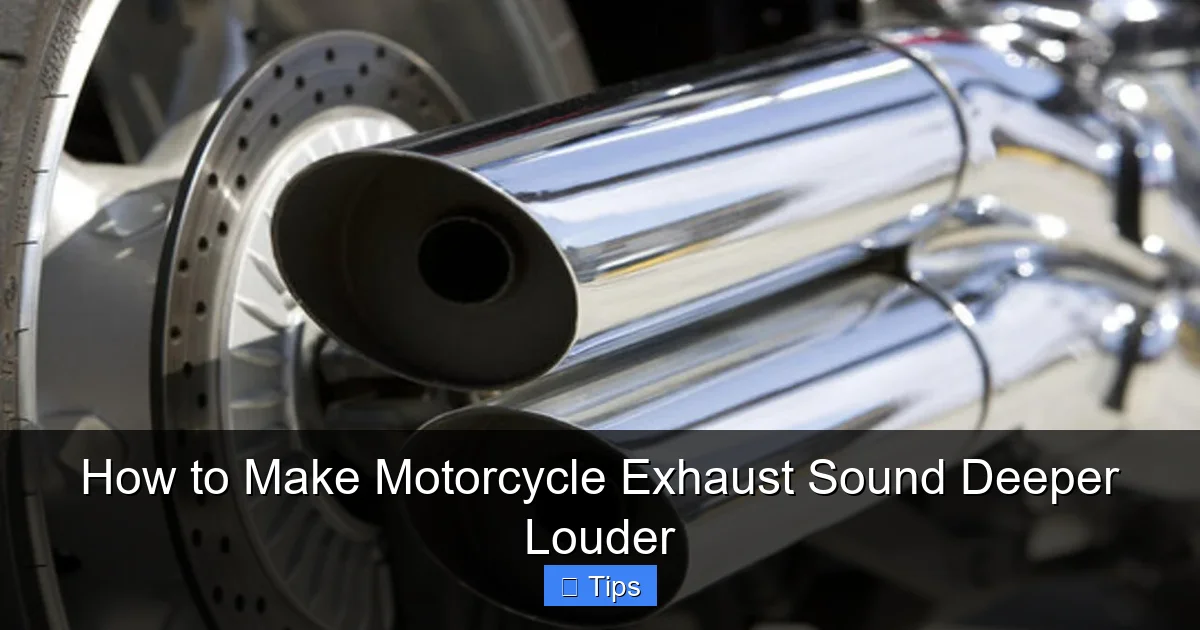
Visual guide about How to Make Motorcycle Exhaust Sound Deeper Louder
Image source: motorbikeinsider.com
If you’re looking for the easiest and most cost-effective way to make your motorcycle exhaust sound deeper and louder, a slip-on muffler is your best bet. These are bolt-on replacements for your stock muffler that don’t require cutting or welding. You simply remove the old muffler and slide the new one into place, securing it with clamps or bolts.
Slip-ons are popular because they’re affordable (usually $150–$400), easy to install, and make an immediate difference in sound. Brands like Vance & Hines, Yoshimura, Akrapovic, and Two Brothers Racing offer a wide range of options tailored to different bike models and sound preferences.
Choosing the Right Slip-On
When shopping for a slip-on, consider three main factors: sound, material, and design.
First, sound. Most manufacturers provide sound clips or decibel ratings. Look for mufflers described as “deep,” “throaty,” or “aggressive.” Avoid ones labeled “quiet” or “street legal only” if your goal is a louder tone. Some slip-ons come with removable baffles or dB killers—small inserts that reduce noise. Removing these will make the exhaust louder, but again, check local laws before doing so.
Second, material. Stainless steel and titanium slip-ons are more durable and resistant to corrosion than aluminum. They also tend to produce a richer, more resonant sound. Titanium is lighter and has a unique, high-end tone, but it’s also more expensive.
Third, design. Megaphone-style mufflers (wide at the end) often produce a deeper, more booming sound, while shorty or slash-cut designs can be sharper. Some slip-ons feature internal baffling that’s tuned for low-end growl, which is ideal for cruisers and touring bikes.
Installation Tips
Installing a slip-on is usually straightforward, but a few tips can make the process smoother:
– Always disconnect the battery before starting.
– Use a torque wrench to tighten clamps to the manufacturer’s specs—over-tightening can crack the muffler or damage the header.
– Apply anti-seize compound to bolts to prevent seizing, especially if you live in a humid or salty climate.
– Check for exhaust leaks after installation. You can do this by spraying soapy water around the joints and looking for bubbles when the engine is running.
One thing to keep in mind: while slip-ons improve sound, they don’t always increase performance. Since they only replace the muffler, they don’t reduce backpressure as much as a full system. But for most riders, the sound upgrade is worth it on its own.
2. Install a Full Exhaust System
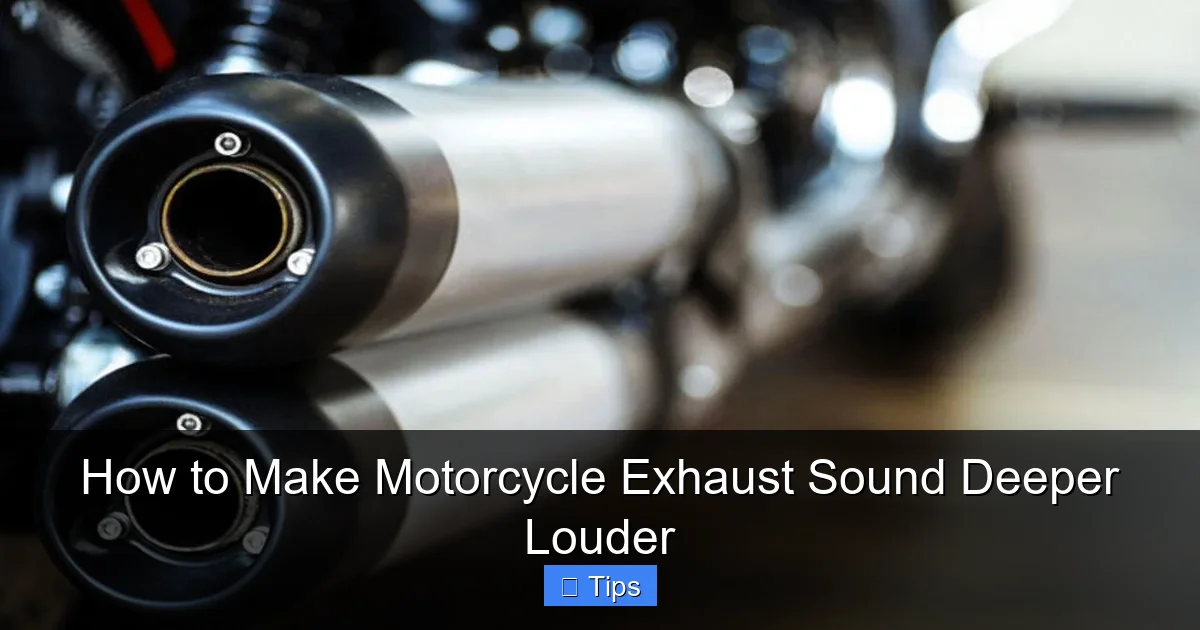
Visual guide about How to Make Motorcycle Exhaust Sound Deeper Louder
Image source: motorbikeinsider.com
If you’re serious about making your motorcycle exhaust sound deeper and louder—and you want real performance gains—a full exhaust system is the way to go. Unlike slip-ons, which only replace the muffler, full systems include headers, mid-pipes, and the muffler. This allows for optimized exhaust flow from the engine all the way to the tailpipe.
Full systems are more expensive ($500–$2,000+) and require more installation work, but the results are dramatic. You’ll notice not just a deeper, more aggressive sound, but also improved throttle response, better fuel efficiency, and in some cases, a 5–10 horsepower increase.
Types of Full Exhaust Systems
There are two main types of full exhaust systems: 4-into-1 and 2-into-1 (or 2-into-2 for V-twins).
– **4-into-1 systems** combine all four exhaust headers into a single pipe before the muffler. These are common on inline-four sport bikes and are great for high-RPM performance and a sharp, resonant sound.
– **2-into-1 or 2-into-2 systems** are typical on V-twin and parallel-twin engines. They maintain separate headers for each cylinder bank, which helps preserve the engine’s natural sound character while improving flow.
Some systems also feature crossover pipes, which balance pressure between cylinder banks and can enhance low-end torque and sound depth.
Performance and Tuning Considerations
One critical point: when you install a full exhaust system, you must tune your bike’s ECU (Engine Control Unit). Stock fuel maps are calibrated for the factory exhaust’s backpressure and airflow. Removing that restriction can cause the engine to run lean (too much air, not enough fuel), which leads to overheating, detonation, and potential engine damage.
A proper tune adjusts the air-fuel ratio to match the new exhaust. This can be done via a fuel controller (like a Power Commander), a flash tune, or a custom dyno tune. Many exhaust manufacturers offer pre-loaded maps for popular bikes, but a custom tune is always best for optimal performance and safety.
Installation and Maintenance
Installing a full system is more involved than a slip-on. You’ll need to remove the stock headers, which may require disconnecting the fuel tank, fairings, or other components. It’s a job best left to experienced mechanics or DIYers with the right tools.
After installation, inspect the system regularly for cracks, loose clamps, or carbon buildup. High-performance exhausts run hotter and can degrade faster if not maintained. Use high-temperature exhaust paint to protect against rust and discoloration.
3. Modify or Remove the Baffle (dB Killer)

Visual guide about How to Make Motorcycle Exhaust Sound Deeper Louder
Image source: motorbikeinsider.com
The baffle—also called a dB killer or sound insert—is a removable piece inside the muffler that reduces noise. Many performance mufflers come with one, and removing it is a quick way to make your motorcycle exhaust sound deeper and louder.
This is a popular mod because it’s free (if you already have a muffler with a removable baffle) and reversible. You can pop it back in for quiet rides or long trips.
How to Remove the Baffle
Most baffles are held in place by a small screw or clip. Use a screwdriver or Allen key to remove it, then gently pull the baffle out. Some are threaded and need to be unscrewed. Be careful not to damage the internal components.
Once removed, start the bike and listen. You’ll notice an immediate increase in volume and a deeper tone. However, be aware that removing the baffle can make the exhaust sound harsh or raspy, especially at low RPMs. It may also cause the engine to run slightly lean, so monitor performance and consider a tune if needed.
Legal and Practical Considerations
Here’s the catch: removing the baffle may make your bike illegal in your area. Many states and countries have strict noise limits (often 80–95 dB measured at a specific distance). Riding without a baffle can result in fines, especially in residential areas or during noise enforcement campaigns.
Also, consider your riding environment. A loud exhaust might be fun on a track or open highway, but it can be annoying in traffic or near homes. Some riders keep a spare baffle in their saddlebag and swap it in when needed.
4. Use Exhaust Wrap or Heat Management
You might not think of heat management as a sound mod, but it plays a surprising role. Exhaust wrap—a fiberglass or titanium tape wrapped around headers—helps retain heat inside the exhaust system. This improves exhaust gas velocity, which can enhance low-end torque and deepen the sound.
Benefits of Exhaust Wrap
– **Reduces underhood temperatures**, which can improve engine performance and longevity.
– **Prevents heat damage** to nearby components like fuel lines or wiring.
– **Improves exhaust scavenging**, leading to better flow and a richer tone.
Wrap is especially useful on older bikes or those with tight engine bays. It’s also popular in racing applications where every degree of heat retention counts.
Installation Tips
– Clean the headers thoroughly before wrapping.
– Soak the wrap in water to make it easier to handle.
– Wrap tightly and evenly, overlapping each layer by 50%.
– Secure the ends with stainless steel zip ties or wire.
– Avoid wrapping near gaskets or sensors.
Note: Wrap can make headers look worn over time and may void some warranties. It also requires reapplication every few years as it degrades.
5. Maintain Your Exhaust System
Even the best exhaust mods won’t sound good if your system is dirty or damaged. Regular maintenance is key to preserving that deep, loud tone.
Cleaning and Inspection
Over time, carbon buildup can accumulate inside the muffler and headers, muffling the sound. Use a carbon cleaner spray or take the system to a shop for ultrasonic cleaning.
Inspect for rust, cracks, or loose clamps. A small leak can drastically change the sound and reduce performance. Listen for hissing or popping noises, especially at startup.
Protecting the Finish
Polished stainless steel or chrome mufflers can tarnish or rust. Use a metal polish every few months to keep them looking and sounding great. For titanium systems, a light coat of ceramic coating can prevent discoloration from heat.
6. Consider Legal and Community Impact
Let’s be real: louder isn’t always better. While a deep, loud exhaust can be thrilling, it can also be a nuisance. Many cities have noise ordinances that limit motorcycle sound levels. Riding a bike that’s too loud can lead to tickets, impoundment, or even community backlash.
Know Your Local Laws
Check your state or country’s noise regulations. In the U.S., for example, California has some of the strictest laws, with a limit of 80 dB at 50 feet. Some areas require a functioning muffler or prohibit modifications that increase noise.
Ride Responsibly
Even if your bike is legal, consider when and where you rev it. Avoid blasting your exhaust in residential neighborhoods, near schools, or late at night. A little respect goes a long way in maintaining a positive image for motorcyclists.
Conclusion
Making your motorcycle exhaust sound deeper and louder is one of the most rewarding mods you can do. Whether you go with a simple slip-on, a full system upgrade, or just remove the baffle, the right changes can transform your bike’s personality and performance.
But remember: sound is just one part of the equation. Always prioritize safety, legality, and engine health. Tune your bike after major mods, maintain your exhaust system, and ride with respect.
At the end of the day, the perfect exhaust note is the one that makes you smile every time you twist the throttle. So experiment, listen, and find the sound that fits your ride—and your style.
Frequently Asked Questions
Will a louder exhaust damage my motorcycle engine?
Not necessarily, but running too loud without proper tuning can cause the engine to run lean, leading to overheating or damage. Always tune your ECU after major exhaust changes.
Can I make my exhaust louder without replacing parts?
Yes, you can remove the baffle (if removable) or use exhaust wrap to enhance sound. However, these methods may affect legality and performance.
Are slip-on mufflers worth it just for sound?
Absolutely. Slip-ons are affordable, easy to install, and make a noticeable difference in tone—perfect for riders who want a deeper sound without major modifications.
Do I need a tune after installing a full exhaust system?
Yes. A full exhaust changes airflow and backpressure, so your bike’s fuel map must be adjusted to prevent lean conditions and ensure optimal performance.
Is it illegal to remove the baffle from my muffler?
It depends on your location. Many areas have noise laws that require a functioning muffler. Removing the baffle may make your bike illegal—check local regulations first.
What’s the difference between a slip-on and a full exhaust system?
A slip-on only replaces the muffler, while a full system includes headers, mid-pipe, and muffler. Full systems offer greater sound and performance gains but cost more and require tuning.

At CarLegit, we believe information should be clear, factual, and genuinely helpful. That’s why every guide, review, and update on our website is created with care, research, and a strong focus on user experience.