
Popping the hood on a Volvo XC90 is simple once you know where to look, but it’s not always intuitive for new owners. This guide walks you through every step, from locating the interior release lever to safely propping the hood open, ensuring you can access your engine bay with confidence.
In This Article
- 1 Key Takeaways
- 2 📑 Table of Contents
- 3 Introduction: Why Knowing How to Pop the Hood Matters
- 4 Understanding the Volvo XC90 Hood Release System
- 5 Step-by-Step Guide: How to Pop the Hood on a Volvo XC90
- 6 Model Year Differences: What to Expect
- 7 Common Issues and Troubleshooting Tips
- 8 Safety Tips and Best Practices
- 9 Conclusion: Confidence Under the Hood
- 10 Frequently Asked Questions
- 10.1 Where is the hood release lever on a Volvo XC90?
- 10.2 Why won’t my XC90 hood open after pulling the lever?
- 10.3 Do I need a tool to open the Volvo XC90 hood?
- 10.4 Can I open the hood while the engine is running?
- 10.5 Is the hood release the same on all XC90 models?
- 10.6 What should I do if the support rod won’t stay in place?
Key Takeaways
- Locate the interior hood release lever: Found on the lower left side of the dashboard, near the driver’s door—pull it firmly to release the primary latch.
- Find the secondary safety latch: After opening the hood slightly, reach under the front edge to feel for a small lever or button that must be pressed to fully open the hood.
- Use the hood support rod: The XC90 uses a manual support rod—lift it from its clip and insert it into the designated slot on the underside of the hood to keep it secure.
- Check for model year differences: Older XC90s (2003–2014) may have slightly different latch mechanisms than newer models (2015+), so always refer to your owner’s manual.
- Ensure the vehicle is parked safely: Always pop the hood when the car is off, in park (or gear for manuals), and on level ground to prevent accidents.
- Inspect the hood latch area regularly: Dirt, ice, or debris can jam the mechanism—clean it periodically to ensure smooth operation.
- Never force the hood open: If it doesn’t release easily, double-check the steps or consult a professional to avoid damaging components.
📑 Table of Contents
- Introduction: Why Knowing How to Pop the Hood Matters
- Understanding the Volvo XC90 Hood Release System
- Step-by-Step Guide: How to Pop the Hood on a Volvo XC90
- Model Year Differences: What to Expect
- Common Issues and Troubleshooting Tips
- Safety Tips and Best Practices
- Conclusion: Confidence Under the Hood
Introduction: Why Knowing How to Pop the Hood Matters
Whether you’re checking your oil, topping off windshield washer fluid, or inspecting the battery, being able to access your Volvo XC90’s engine bay is essential for routine maintenance. Yet, for many new or even long-time Volvo owners, figuring out how to pop the hood can feel like solving a minor automotive mystery. Unlike some vehicles with obvious exterior handles or push-button releases, the XC90 relies on a two-step internal system that’s secure but not always intuitive.
The good news? Once you understand the process, it becomes second nature. This guide is designed to demystify the hood release mechanism on the Volvo XC90, covering everything from the initial pull of the interior lever to safely propping the hood open. We’ll walk you through each step with clarity, offer practical tips based on real-world experience, and highlight common pitfalls to avoid. Whether you drive a first-generation XC90 from the early 2000s or a sleek 2023 model, this guide applies to all variants—with minor adjustments noted where necessary.
Understanding the Volvo XC90 Hood Release System
Visual guide about How to Pop the Hood on a Volvo Xc90
Image source: cvr.centracdn.net
Before diving into the step-by-step process, it helps to understand how the hood release system works on the XC90. Unlike sports cars or trucks that may use electronic hood releases or external levers, Volvo prioritizes safety and security by designing a two-stage mechanical system. This means you’ll need to perform two distinct actions: first, release the primary latch from inside the cabin, and second, disengage a secondary safety latch once the hood is slightly lifted.
The primary release is located inside the vehicle, typically on the driver’s side footwell area. When pulled, it triggers a cable that unlocks the main hood latch. However, this only allows the hood to rise about an inch—just enough to access the secondary latch. This secondary latch is a safety feature designed to prevent the hood from flying open accidentally while driving. It’s usually a small lever or push-button located directly under the front edge of the hood, centered near the grille.
This dual-latch system is common across many modern vehicles, but Volvo’s implementation is particularly clean and hidden. There’s no visible external handle, and the interior lever blends seamlessly into the dashboard trim. That’s why many owners—especially those new to Volvo—initially struggle to find it. But once you know where to look, it’s straightforward.
How the Hood Latch Mechanism Works
The hood latch on the XC90 consists of two main components: the primary latch and the secondary safety latch. The primary latch is engaged when the hood is closed and is released by pulling the interior lever. This lever is connected via a Bowden cable to the latch assembly under the hood. When you pull the lever, the cable pulls a small arm inside the latch, allowing the hood to pop open slightly.
The secondary latch, often called the “safety catch,” is a spring-loaded mechanism that prevents the hood from opening fully unless manually disengaged. It’s designed to activate if the primary latch fails—such as in a collision—so the hood doesn’t swing open and obstruct the driver’s view. To release it, you must reach under the front edge of the hood and feel for a small lever or button, usually positioned in the center. Pressing or sliding this lever allows the hood to open completely.
It’s worth noting that the exact design of the secondary latch can vary slightly between model years. Older XC90s (2003–2014) often have a small metal lever that you push to the side, while newer models (2015 and later) may use a plastic push-button or a recessed lever. Regardless of the design, the principle remains the same: you must disengage it manually after the primary latch is released.
Why Volvo Uses This Design
Volvo’s decision to use a hidden, two-stage hood release system aligns with the brand’s core values of safety, security, and minimalist design. By eliminating external handles, Volvo reduces the risk of tampering or accidental opening. It also gives the front end a cleaner, more aerodynamic appearance—something that’s especially important on a premium SUV like the XC90.
Additionally, the secondary safety latch adds an extra layer of protection. In the event of a frontal impact, the primary latch could potentially fail due to deformation or cable damage. The secondary latch acts as a backup, ensuring the hood remains closed unless intentionally opened. This is a thoughtful engineering detail that reflects Volvo’s commitment to passive safety.
From a maintenance perspective, this system is also durable. The cables and latches are designed to last the life of the vehicle with minimal upkeep. However, like any mechanical component, they can wear over time or become obstructed by dirt, ice, or debris—especially in colder climates. Regular inspection and cleaning can help prevent issues down the road.
Step-by-Step Guide: How to Pop the Hood on a Volvo XC90
Visual guide about How to Pop the Hood on a Volvo Xc90
Image source: images.simplepart.com
Now that you understand how the system works, let’s walk through the actual process of popping the hood on your Volvo XC90. Follow these steps carefully, and you’ll have access to your engine bay in under a minute.
Step 1: Ensure the Vehicle Is Safe and Secure
Before attempting to open the hood, make sure your XC90 is parked on a flat, level surface. Turn off the engine and engage the parking brake. If you have an automatic transmission, shift into “Park.” For manual transmissions, leave the car in gear (usually first or reverse) and apply the parking brake. This prevents the vehicle from rolling while you’re working under the hood.
It’s also a good idea to allow the engine to cool if you’ve been driving recently. Hot components like the exhaust manifold or turbocharger can cause burns, and opening the hood too soon can release trapped heat unexpectedly. If you’re performing maintenance like an oil check, wait at least 10–15 minutes after turning off the engine to let things settle.
Step 2: Locate the Interior Hood Release Lever
The first step to popping the hood is finding the interior release lever. On all Volvo XC90 models, this lever is located on the lower left side of the dashboard, just above the driver’s footwell and near the door panel. It’s typically a small, black or gray plastic lever, about the size of a finger, and may be labeled with a hood icon or the word “HOOD.”
If you’re having trouble spotting it, look just to the left of the steering column, slightly below knee level. It’s often tucked behind a small panel or integrated into the trim, so you may need to crouch down or use a flashlight to see it clearly. On some older models, the lever is recessed and blends into the surrounding plastic, making it easy to overlook.
Once you’ve located it, grasp the lever firmly with your fingers. You’ll need to pull it toward you in a smooth, steady motion. Don’t yank it—there’s no need for excessive force. A firm pull is usually enough to release the primary latch. You should hear a distinct “click” or feel a slight resistance give way, indicating the latch has been disengaged.
Step 3: Move to the Front of the Vehicle
After pulling the interior lever, walk to the front of the XC90. You’ll notice that the hood has lifted slightly—usually about 1 to 2 inches—revealing a small gap between the hood and the front grille. This confirms that the primary latch has been released successfully.
If the hood doesn’t lift at all, double-check that you pulled the correct lever. Some Volvos have similar-looking levers for the fuel door or trunk release, so make sure you’re not confusing them. Also, ensure the vehicle is fully off—some models won’t allow the hood to release if the ignition is in the “on” position.
Step 4: Locate and Release the Secondary Safety Latch
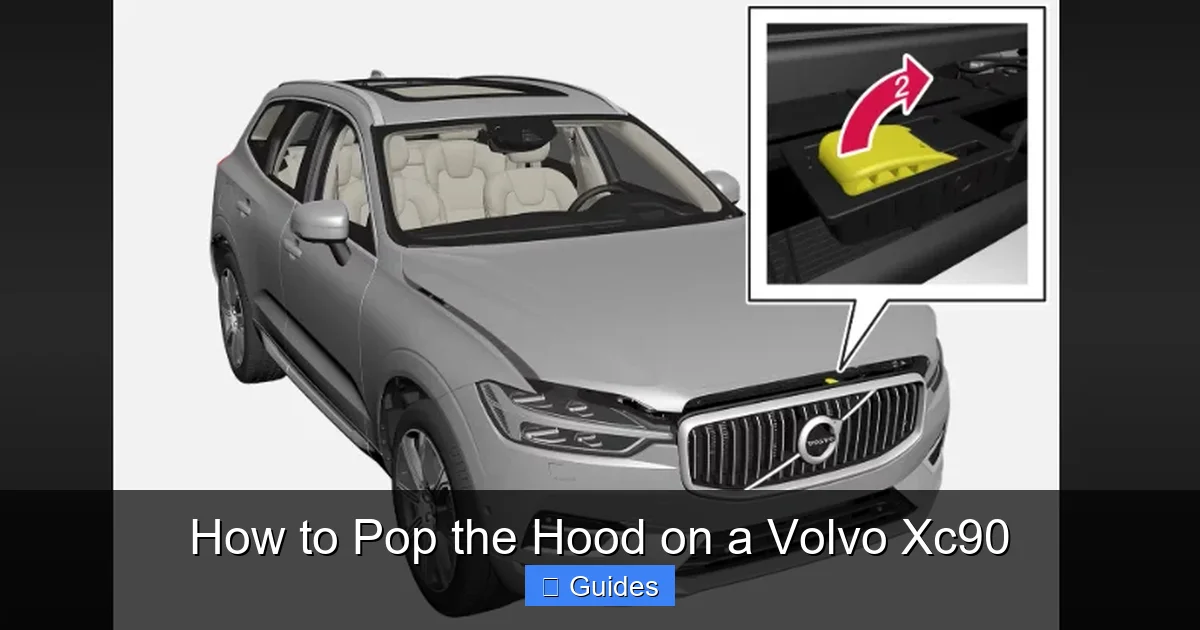
Now comes the crucial second step: releasing the secondary safety latch. Reach under the front edge of the hood, right in the center, near the Volvo logo or grille. You’re looking for a small lever, button, or sliding mechanism—usually made of black plastic or metal.
On older XC90s (2003–2014), this is typically a small metal lever that you push to the left or right. On newer models (2015+), it’s often a recessed push-button or a plastic tab that you slide sideways. The exact design varies, but the location is consistent: center-front, under the hood.
Use your fingers to feel around the area. You may need to apply gentle pressure to locate it, especially if it’s recessed. Once you find it, press, slide, or push it in the correct direction (usually to the side). You should feel or hear a second “click” as the safety latch disengages.
If you’re having trouble finding it, try shining a flashlight into the gap between the hood and the grille. The latch is usually visible once the hood is slightly raised. Avoid using tools like screwdrivers or pliers—this can damage the mechanism or scratch the paint.
Step 5: Lift the Hood Fully
With both latches released, you can now lift the hood fully. Grasp the underside of the hood near the front edge and lift it upward in a smooth, controlled motion. The hood is counterbalanced with springs, so it should rise easily without requiring much effort.
As you lift, be mindful of any cables or hoses that may be routed along the hinges. These are typically secured with clips, but it’s good practice to avoid pulling or twisting them unnecessarily.
Step 6: Secure the Hood with the Support Rod
The Volvo XC90 uses a manual support rod to hold the hood open—there’s no gas strut or automatic lift system. Once the hood is fully open, locate the support rod on the underside of the hood. It’s usually clipped into a bracket near the center or off to one side.
Unclip the rod and extend it fully. Then, insert the tip into the designated slot on the hinge assembly or body panel. You’ll hear a click when it’s securely in place. Make sure the rod is fully engaged before letting go of the hood—this prevents it from falling unexpectedly.
Never rely on the hood’s weight alone to keep it open. A sudden gust of wind or accidental bump could cause it to slam shut, potentially injuring your hands or damaging the hood. Always use the support rod.
Model Year Differences: What to Expect
Visual guide about How to Pop the Hood on a Volvo Xc90
Image source: gioinauan.com
While the basic process of popping the hood is consistent across all Volvo XC90 models, there are some subtle differences between generations that are worth noting.
First-Generation XC90 (2003–2014)
The original XC90, introduced in 2002 for the 2003 model year, features a more traditional hood release system. The interior lever is located in the same position—lower left dashboard—but may be slightly larger or more prominent than on newer models. The secondary latch is typically a metal lever that you push to the side, often requiring a bit more force.
One quirk of older XC90s is that the hood may feel heavier to lift, as the counterbalance springs can weaken over time. If you notice the hood sagging or not staying open, the springs may need replacement. Additionally, some owners report that the secondary latch can become stiff in cold weather, especially if ice builds up around the mechanism.
Second-Generation XC90 (2015–Present)
The redesigned XC90, launched in 2015, features a more modern and refined hood release system. The interior lever is smaller and more integrated into the dashboard trim, making it slightly harder to spot at first glance. The secondary latch is often a plastic push-button or recessed slider, designed for a smoother, quieter operation.
Newer models also benefit from improved weather sealing and corrosion resistance, reducing the likelihood of latch issues in harsh climates. However, the support rod mechanism remains largely unchanged—still manual and requiring manual engagement.
One advantage of the newer design is better ergonomics. The hood opens to a more comfortable height, and the support rod is easier to reach and insert. Some owners also appreciate the cleaner aesthetic, with fewer visible components under the hood.
Electric and Hybrid Variants
For XC90 plug-in hybrid models (like the T8 Twin Engine), the hood release process is identical to the standard gasoline versions. There are no electronic hood releases or additional safety interlocks—Volvo maintains the same mechanical system for consistency and reliability.
However, hybrid owners should be extra cautious when working under the hood. High-voltage components, such as the traction battery and electric motor, are present and should only be serviced by qualified technicians. Always disconnect the 12V battery before performing any maintenance near electrical systems.
Common Issues and Troubleshooting Tips
Even with a well-designed system, issues can arise when popping the hood on a Volvo XC90. Here are some common problems and how to resolve them.
Hood Won’t Release After Pulling the Interior Lever
If you pull the interior lever and nothing happens, the primary latch may be stuck. This can happen due to dirt, ice, or corrosion in the latch mechanism. Try spraying a small amount of silicone-based lubricant (like WD-40 Specialist Silicone Lubricant) into the latch area under the hood. Avoid using oil-based lubricants, as they can attract dirt.
If the cable has broken or become disconnected, you may need to access the latch from underneath the vehicle or consult a mechanic. In rare cases, the lever itself may be faulty and require replacement.
Secondary Latch Is Hard to Find or Operate
If you can’t locate the secondary latch, make sure the hood is lifted enough to access the gap. Use a flashlight and feel carefully with your fingers. If it’s stiff, apply a small amount of lubricant and work it back and forth gently.
In cold weather, ice can freeze the latch shut. Use a de-icing spray or warm water (not boiling) to thaw it. Never use a heat gun or open flame, as this can damage paint or plastic components.
Support Rod Won’t Stay in Place
If the support rod keeps slipping out of its slot, the clip or hinge may be worn. Inspect the rod and slot for damage or deformation. You can sometimes bend the rod slightly to create a tighter fit, but if it’s severely damaged, replacement is the best option.
Alternatively, some owners use a small bungee cord or hood prop strap as a temporary fix, but this is not recommended for long-term use.
Hood Feels Loose or Rattles When Closed
This could indicate worn latch components or loose hood hinges. Check the tightness of the hinge bolts and inspect the latch for wear. Over time, the striker plate (the part the latch hooks onto) can become misaligned. Adjusting it slightly can restore a secure fit.
Safety Tips and Best Practices
Popping the hood is a simple task, but it’s important to follow safety guidelines to avoid injury or damage.
– Always ensure the vehicle is off and secured before opening the hood.
– Never attempt to open the hood while the engine is running or hot.
– Use the support rod every time—don’t rely on the hood’s weight.
– Keep hands and fingers clear of the latch area when closing the hood.
– Inspect the latch and hinges periodically for wear or corrosion.
– If you’re unsure or encounter resistance, consult your owner’s manual or a professional.
Conclusion: Confidence Under the Hood
Knowing how to pop the hood on a Volvo XC90 is a fundamental skill for any owner. It opens the door to routine maintenance, troubleshooting, and a deeper understanding of your vehicle. While the process may seem tricky at first, it’s designed with safety and reliability in mind—and once you’ve done it a few times, it becomes second nature.
By following the steps outlined in this guide, you can access your engine bay with confidence, whether you’re checking fluids, replacing wiper blades, or simply satisfying your curiosity. Remember to respect the two-stage latch system, use the support rod, and keep the mechanism clean and lubricated. With a little practice, you’ll be popping the hood like a pro—no mystery, no stress, just smooth, safe access every time.
Frequently Asked Questions
Where is the hood release lever on a Volvo XC90?
The hood release lever is located on the lower left side of the dashboard, just above the driver’s footwell and near the door panel. It’s a small plastic lever that you pull toward you to release the primary latch.
Why won’t my XC90 hood open after pulling the lever?
If the hood doesn’t lift after pulling the interior lever, the primary latch may be stuck due to dirt, ice, or a broken cable. Try lubricating the latch or checking for obstructions. If the issue persists, consult a mechanic.
Do I need a tool to open the Volvo XC90 hood?
No, you don’t need any tools. The entire process uses manual levers and a support rod. However, a flashlight can help you locate the secondary latch more easily.
Can I open the hood while the engine is running?
No, it’s not recommended. Always turn off the engine and engage the parking brake before opening the hood to ensure safety and prevent accidental activation of systems.
Is the hood release the same on all XC90 models?
Yes, the basic process is the same across all model years, though the design of the secondary latch may vary slightly between older and newer XC90s. Always refer to your owner’s manual for model-specific details.
What should I do if the support rod won’t stay in place?
If the support rod slips out, check for wear or damage. You can try bending it slightly for a tighter fit, but replacement is the safest long-term solution. Never work under a hood that isn’t securely supported.

At CarLegit, we believe information should be clear, factual, and genuinely helpful. That’s why every guide, review, and update on our website is created with care, research, and a strong focus on user experience.