
Resetting the check engine light on your BMW isn’t just about turning off a warning—it’s about understanding what caused it in the first place. This guide walks you through safe, effective methods to clear the light, from using an OBD2 scanner to manual resets, while emphasizing the importance of diagnosing the root issue to prevent future problems.
In This Article
- 1 Key Takeaways
- 2 📑 Table of Contents
- 3 Understanding the BMW Check Engine Light
- 4 Why the Check Engine Light Comes On in BMWs
- 5 Tools You’ll Need to Reset the Check Engine Light
- 6 Step-by-Step Guide: How to Reset Check Engine Light on BMW
- 7 Common Mistakes to Avoid When Resetting the Light
- 8 When to See a Professional
- 9 Preventing Future Check Engine Light Issues
- 10 Conclusion
- 11 Frequently Asked Questions
- 11.1 Can I reset the check engine light on my BMW without a scanner?
- 11.2 Will resetting the check engine light improve my BMW’s performance?
- 11.3 How long does it take for the check engine light to reset after clearing codes?
- 11.4 Why does my BMW’s check engine light keep coming back?
- 11.5 Can I pass an emissions test with the check engine light on?
- 11.6 Is it safe to drive my BMW with the check engine light on?
Key Takeaways
- Diagnose before resetting: Always scan for trouble codes before clearing the check engine light to identify and fix the underlying problem.
- Use an OBD2 scanner: A compatible scanner is the most reliable and recommended method to reset the light on modern BMWs.
- Avoid battery disconnection: Simply disconnecting the battery can cause electronic system glitches and is not a safe or effective long-term solution.
- Drive cycle matters: After resetting, complete a proper drive cycle to allow the car’s computer to relearn and confirm repairs.
- Know your BMW model: Older models (pre-2000) may allow manual resets, while newer ones require diagnostic tools due to advanced electronics.
- Prevent future warnings: Regular maintenance and using quality fuel and parts reduce the chances of the light returning.
- Seek professional help when needed: If the light returns repeatedly, consult a BMW specialist to avoid costly damage.
📑 Table of Contents
- Understanding the BMW Check Engine Light
- Why the Check Engine Light Comes On in BMWs
- Tools You’ll Need to Reset the Check Engine Light
- Step-by-Step Guide: How to Reset Check Engine Light on BMW
- Common Mistakes to Avoid When Resetting the Light
- When to See a Professional
- Preventing Future Check Engine Light Issues
- Conclusion
Understanding the BMW Check Engine Light
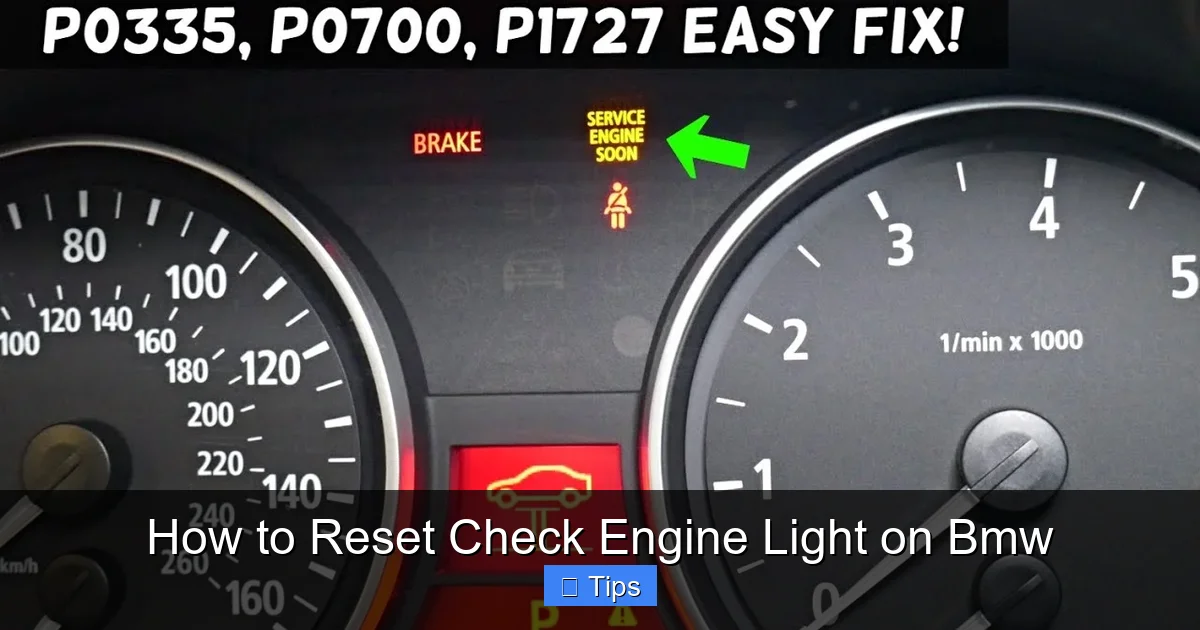
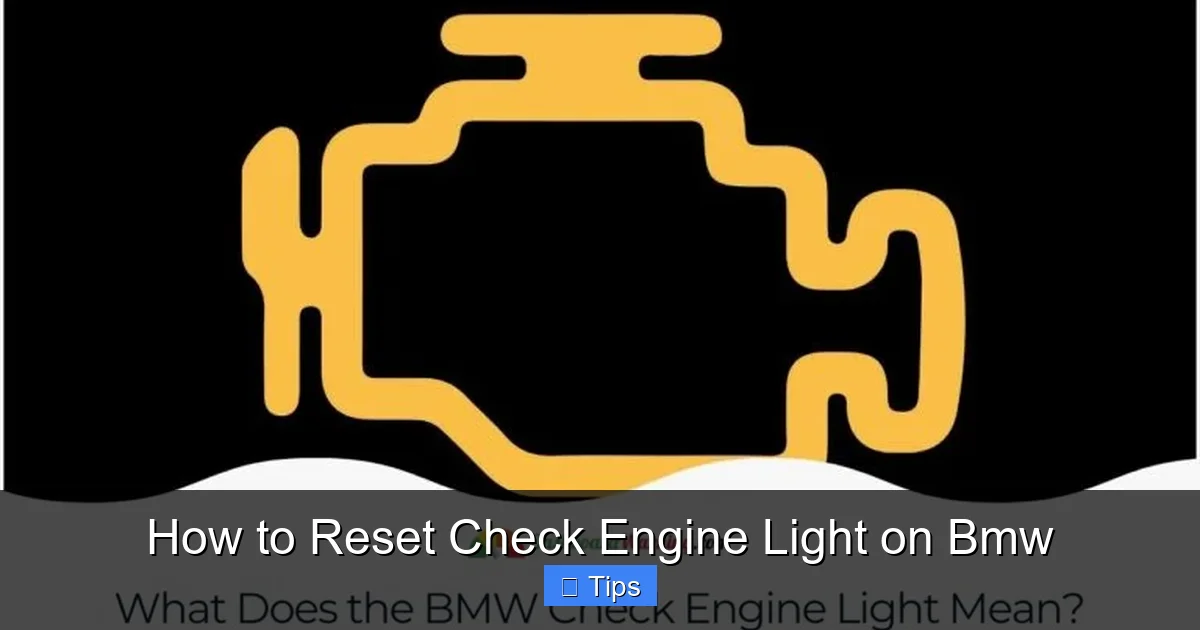
The check engine light—also known as the malfunction indicator lamp (MIL)—is one of the most misunderstood warning signals in any vehicle, especially in high-performance machines like BMWs. When that little orange or yellow engine icon flashes or stays lit on your dashboard, it’s easy to panic. But before you rush to reset it, it’s crucial to understand what it’s actually telling you.
Unlike a simple oil change reminder, the check engine light is directly connected to your BMW’s onboard diagnostic system (OBD2). This system continuously monitors engine performance, emissions, fuel efficiency, and various sensors. If something goes out of the expected range—like a faulty oxygen sensor, loose gas cap, or misfiring spark plug—the computer logs a trouble code and triggers the light.
Now, here’s the important part: the light itself isn’t the problem. It’s a symptom. Resetting it without addressing the root cause is like turning off a smoke alarm while your kitchen is still on fire. You might silence the alarm, but the danger remains.
BMW vehicles, especially models from 2000 onward, are packed with sophisticated electronics and strict emissions controls. That means even minor issues—like a slightly loose fuel filler cap—can trigger the light. But it also means that ignoring it could lead to reduced fuel economy, increased emissions, or even engine damage over time.
So, the first step in learning how to reset check engine light on BMW isn’t reaching for a tool—it’s understanding why it came on in the first place.
Why the Check Engine Light Comes On in BMWs
Visual guide about How to Reset Check Engine Light on Bmw
Image source: i.ytimg.com
BMW owners often assume that a check engine light means a major mechanical failure. While that can be true, more often than not, the cause is something relatively minor. Let’s break down the most common reasons this light appears in BMW models.
Faulty Oxygen (O2) Sensors
One of the top culprits is a malfunctioning oxygen sensor. These sensors monitor the amount of unburned oxygen in the exhaust system and help the engine control unit (ECU) adjust the air-fuel mixture. A failing O2 sensor can cause poor fuel economy, rough idling, and increased emissions. In BMWs, especially those with high mileage, these sensors wear out over time.
For example, a 2012 BMW 328i with 90,000 miles might throw a P0135 code, indicating an issue with the upstream O2 sensor. If left unchecked, this can lead to catalytic converter damage—a much more expensive repair.
Loose or Damaged Gas Cap
It sounds almost too simple, but a loose, cracked, or missing gas cap is one of the most frequent causes of the check engine light. The gas cap maintains pressure in the fuel system. If it’s not sealed properly, fuel vapors escape, triggering an evaporative emissions system (EVAP) fault.
This is especially common after refueling. You might have tightened the cap, but not enough. BMW’s system is sensitive—so much so that even a cap that feels tight might not be sealed correctly. A quick fix? Remove the cap, inspect it for damage, and reinstall it firmly until you hear it click.
Misfiring Engine or Faulty Spark Plugs
Engine misfires occur when one or more cylinders fail to ignite the air-fuel mixture properly. This can be caused by worn spark plugs, bad ignition coils, or fuel injector issues. In BMWs, especially turbocharged models like the N54 or N55 engines, misfires are fairly common as the engine ages.
A misfire not only triggers the check engine light but can also cause rough driving, hesitation, and reduced power. Ignoring it can damage the catalytic converter, which is not only expensive to replace but also critical for emissions compliance.
Mass Airflow (MAF) Sensor Issues
The MAF sensor measures how much air enters the engine and helps the ECU determine how much fuel to inject. A dirty or failing MAF sensor can cause poor acceleration, stalling, and reduced fuel efficiency.
In BMWs, the MAF sensor is located between the air filter and the throttle body. Over time, it can get coated with dirt or oil, especially if the air filter hasn’t been changed regularly. Cleaning it with MAF-specific cleaner can often resolve the issue.
Catalytic Converter Problems
The catalytic converter reduces harmful emissions by converting pollutants into less harmful gases. If it becomes clogged or fails, it can cause reduced engine performance, poor fuel economy, and a lit check engine light.
In older BMWs, catalytic converter failure is often a result of prolonged misfires or using low-quality fuel. A P0420 code (catalyst system efficiency below threshold) is a common indicator.
Vacuum Leaks
Vacuum leaks occur when unmetered air enters the engine, disrupting the air-fuel ratio. This can be caused by cracked hoses, a faulty intake manifold gasket, or a damaged PCV valve.
In BMWs, vacuum leaks often show up as rough idle, hesitation, or a P0171/P0174 code (system too lean). These leaks are tricky to find but can usually be traced using a smoke machine or by spraying carb cleaner around suspected areas while the engine is running.
Tools You’ll Need to Reset the Check Engine Light
Visual guide about How to Reset Check Engine Light on Bmw
Image source: i.ytimg.com
Now that you understand why the light comes on, let’s talk about how to reset it. The good news? You don’t need to be a mechanic to do it yourself. But you do need the right tools.
OBD2 Scanner (Recommended)
The most effective and safest way to reset the check engine light on a BMW is by using an OBD2 (On-Board Diagnostics) scanner. This handheld device plugs into your car’s OBD2 port—usually located under the dashboard near the driver’s side footwell—and communicates with the vehicle’s computer.
Modern BMWs (2000 and newer) require an OBD2 scanner because they use complex electronic systems that can’t be reset manually. A good scanner will:
– Read and clear trouble codes
– Display live data (like engine RPM, coolant temperature, and fuel trim)
– Perform system resets (like throttle body adaptation or battery registration)
Popular options include the Foxwell NT510, Autel MaxiCOM, or even budget-friendly Bluetooth scanners like the BAFX Products OBD2 reader that work with smartphone apps.
BMW-Specific Diagnostic Tools (For Advanced Users)
For deeper diagnostics and resets, especially on newer models (F and G series), you might need BMW-specific software like ISTA (Integrated Service Technical Application) or INPA. These tools offer full access to the car’s modules, including the ECU, transmission, and ABS.
However, these tools require a Windows laptop, a compatible interface cable (like an ENET or ICOM), and some technical know-how. They’re typically used by professional technicians or serious DIY enthusiasts.
Multimeter (For Battery-Related Resets)
If you’re attempting a manual reset by disconnecting the battery (not recommended, but we’ll cover it), a multimeter can help you check the battery voltage and ensure the car’s electrical system is stable afterward.
Basic Hand Tools
You might also need a socket wrench or screwdriver to access the battery terminals or OBD2 port, depending on your BMW model.
Step-by-Step Guide: How to Reset Check Engine Light on BMW
Visual guide about How to Reset Check Engine Light on Bmw
Image source: dashboardwarning.com
Now, let’s get into the actual process. Below are the most reliable methods to reset the check engine light on your BMW, ranked from best to least recommended.
Method 1: Using an OBD2 Scanner (Best Practice)
This is the gold standard for resetting the check engine light on any modern BMW.
Step 1: Locate the OBD2 Port
In most BMWs, the OBD2 port is under the dashboard on the driver’s side, near the steering column. It’s a 16-pin connector, usually covered by a small panel. Open it and plug in your scanner.
Step 2: Turn On the Ignition
Turn the key to the “ON” position (or press the start button without pressing the brake) so the dashboard lights up. Do not start the engine.
Step 3: Power On the Scanner
Turn on your OBD2 scanner. Most will automatically detect the vehicle and begin communicating with the ECU.
Step 4: Read the Trouble Codes
Navigate to the “Read Codes” or “Scan” option. The scanner will display any stored trouble codes (e.g., P0420, P0171). Write these down—they’re crucial for diagnosing the problem.
Step 5: Clear the Codes
Once you’ve addressed the issue (e.g., tightened the gas cap, replaced a spark plug), go to the “Clear Codes” or “Erase DTCs” option. Confirm the action. The scanner will reset the check engine light.
Step 6: Verify the Reset
Turn off the ignition, wait 10 seconds, then turn it back on. The check engine light should be off. If it returns, the problem wasn’t fully resolved.
Method 2: Drive Cycle Reset (After Repairs)
Sometimes, even after clearing codes, the light may return if the car hasn’t completed a “drive cycle.” This is a series of driving conditions that allow the ECU to relearn and confirm that repairs were successful.
For BMWs, a typical drive cycle includes:
– Cold start (engine below 50°F)
– Idle for 2–3 minutes
– Drive at 30–40 mph for 5 minutes
– Accelerate to 55 mph and cruise for 10 minutes
– Decelerate without braking (coast in gear)
– Repeat 2–3 times
After completing this, the ECU will recheck systems. If no faults are detected, the light should stay off.
Method 3: Disconnecting the Battery (Not Recommended)
Some people try to reset the light by disconnecting the battery for 10–15 minutes. While this can clear temporary codes, it’s not reliable and comes with risks.
Why It’s Risky:
– BMWs have complex electronics that rely on constant power. Disconnecting the battery can reset adaptive settings, cause radio codes to lock, or trigger other warning lights.
– It doesn’t always clear all codes—especially permanent ones.
– You may need to perform additional resets (like throttle body adaptation or window initialization) afterward.
If you must do this:
1. Turn off the engine and remove the key.
2. Disconnect the negative terminal of the battery.
3. Wait 15–30 minutes.
4. Reconnect the terminal.
5. Turn on the ignition and check if the light is off.
But again, this is a last resort. Use an OBD2 scanner whenever possible.
Method 4: Using BMW iDrive (Limited Functionality)
Some newer BMWs (2015 and later) allow limited diagnostics through the iDrive system. You can check for service messages, but you cannot clear check engine codes via iDrive. It’s more for informational purposes.
To access:
– Go to “Vehicle Info” > “Service” > “Check Control Messages”
– You’ll see warnings, but no option to reset engine codes.
So while iDrive is helpful, it won’t help you reset the check engine light.
Common Mistakes to Avoid When Resetting the Light
Even with the right tools, it’s easy to make mistakes that can cause more problems. Here are some common pitfalls to avoid.
Resetting Without Fixing the Problem
This is the biggest mistake. Clearing the code without addressing the root cause is like putting a bandage on a broken bone. The light will likely return, and you could be ignoring a serious issue.
For example, if your BMW has a P0300 code (random misfire), resetting the light won’t fix the worn spark plugs or bad coil. You’ll just be chasing the same problem.
Using the Wrong Scanner
Not all OBD2 scanners work well with BMWs. Generic scanners may read basic codes but miss manufacturer-specific ones. Always use a scanner that supports BMW protocols (like CAN or K-line).
Ignoring Pending Codes
Some scanners show “pending” codes—issues that haven’t yet triggered the light but are being monitored. Don’t ignore these. They’re early warnings.
Skipping the Drive Cycle
After clearing codes, the ECU needs time to relearn. Skipping the drive cycle can cause the light to return or prevent monitors from completing, which can fail an emissions test.
Using Low-Quality Fuel or Parts
Using cheap fuel, aftermarket sensors, or incorrect oil can trigger the light again. BMWs are engineered for premium fuel and high-quality parts. Skimping here can cause long-term issues.
When to See a Professional
While many check engine light issues can be resolved at home, there are times when you should visit a BMW specialist.
The Light Flashes Continuously
A flashing check engine light indicates a severe misfire that can damage the catalytic converter within minutes. Pull over safely, turn off the engine, and call for help.
The Light Returns Immediately
If the light comes back right after resetting, there’s likely a persistent issue—like a failing sensor or internal engine problem—that needs professional diagnosis.
You’re Uncomfortable with Diagnostics
If you’re unsure about reading codes or performing repairs, don’t guess. A certified BMW technician has the tools and expertise to pinpoint the issue quickly.
Your BMW Is Under Warranty
If your car is still under warranty, DIY repairs could void it. Let the dealer handle it to avoid complications.
Preventing Future Check Engine Light Issues
The best way to deal with the check engine light is to prevent it from coming on in the first place. Here are some proactive tips:
Follow the Maintenance Schedule
BMW publishes a detailed maintenance schedule. Stick to it—especially for spark plugs, air filters, and fuel filters.
Use Premium Fuel
BMWs are designed for 91+ octane fuel. Using lower-octane fuel can cause knocking and trigger sensors.
Inspect the Gas Cap Regularly
Make it a habit to check the gas cap after every fill-up. Ensure it’s tight and the seal isn’t cracked.
Keep the Engine Clean
Regularly clean the MAF sensor and throttle body to prevent buildup.
Address Warning Lights Promptly
Don’t ignore other dashboard lights (like oil or battery warnings). They can be early signs of bigger issues.
Conclusion
Learning how to reset check engine light on BMW is more than just a handy skill—it’s about taking control of your vehicle’s health. While the light can be alarming, it’s often a sign of a manageable issue that you can address with the right tools and knowledge.
The key is to always diagnose first. Use an OBD2 scanner to read the codes, fix the underlying problem, and then reset the light properly. Avoid shortcuts like disconnecting the battery, and always complete a drive cycle to ensure the repair sticks.
Remember, your BMW is a precision machine. Treating it with care—through regular maintenance, quality parts, and timely repairs—will keep that check engine light off and your driving experience smooth.
So the next time that little engine icon appears, don’t panic. Grab your scanner, stay calm, and tackle it like a pro.
Frequently Asked Questions
Can I reset the check engine light on my BMW without a scanner?
While it’s possible to reset the light by disconnecting the battery, this method is not recommended for modern BMWs. It can cause electronic glitches and doesn’t always clear all codes. An OBD2 scanner is the safest and most effective tool.
Will resetting the check engine light improve my BMW’s performance?
Resetting the light itself won’t improve performance—only fixing the underlying issue will. If the light was caused by a misfire or faulty sensor, repairing it can restore power, fuel economy, and smooth operation.
How long does it take for the check engine light to reset after clearing codes?
The light turns off immediately after clearing codes with a scanner. However, the ECU needs to complete a drive cycle (usually 30–100 miles of varied driving) to confirm the repair and prevent the light from returning.
Why does my BMW’s check engine light keep coming back?
If the light returns after resetting, the original problem wasn’t fully resolved. Common causes include a failing sensor, recurring misfire, or a deeper mechanical issue. A professional diagnosis is recommended.
Can I pass an emissions test with the check engine light on?
No. Most states require the check engine light to be off and all emissions monitors to be complete to pass an emissions test. Resetting the light and completing a drive cycle is usually necessary.
Is it safe to drive my BMW with the check engine light on?
It depends. A steady light usually means a minor issue and is safe to drive for a short time. A flashing light indicates a severe misfire and can damage the catalytic converter—stop driving immediately and seek help.

At CarLegit, we believe information should be clear, factual, and genuinely helpful. That’s why every guide, review, and update on our website is created with care, research, and a strong focus on user experience.