
Resetting the distance to empty (DTE) on your Nissan Rogue is simple and ensures accurate fuel range estimates. This guide walks you through the process for different model years, explains why it matters, and offers tips to maintain reliable readings.
In This Article
- 1 Key Takeaways
- 2 📑 Table of Contents
- 3 Understanding Distance to Empty (DTE) in the Nissan Rogue
- 4 Why You Should Reset Distance to Empty After Refueling
- 5 How to Reset Distance to Empty on a Nissan Rogue (Step-by-Step Guide)
- 6 Common Issues and Troubleshooting Tips
- 7 Best Practices for Maintaining Accurate DTE Readings
- 8 How DTE Helps with Fuel Efficiency and Trip Planning
- 9 Conclusion: Make Resetting DTE a Habit
- 10 Frequently Asked Questions
- 10.1 How do I reset the distance to empty on a Nissan Rogue?
- 10.2 Does the DTE reset automatically after refueling?
- 10.3 Why won’t my DTE reset even after holding the button?
- 10.4 How often should I reset the distance to empty?
- 10.5 Can a faulty fuel sensor affect the DTE reading?
- 10.6 Does driving style affect the distance to empty?
Key Takeaways
- Why Reset DTE Matters: Resetting the distance to empty helps maintain accurate fuel range predictions, especially after refueling or long trips.
- Step-by-Step Process: The reset method varies slightly by model year—older Rogues use the odometer/trip button, while newer ones use the steering wheel controls.
- Automatic vs. Manual Reset: Some models reset automatically after refueling, but manual reset ensures precision, especially if you top off frequently.
- Common Mistakes to Avoid: Forgetting to reset after refueling or pressing the wrong button sequence can lead to incorrect DTE readings.
- When to Reset: Best practice is to reset DTE every time you fill up your tank for the most reliable range estimate.
- Troubleshooting Tips: If the DTE won’t reset, check your vehicle’s software, battery, or consult the owner’s manual for model-specific instructions.
- Benefits Beyond Fuel Tracking: Accurate DTE helps with trip planning, fuel efficiency monitoring, and reducing anxiety about running out of gas.
📑 Table of Contents
- Understanding Distance to Empty (DTE) in the Nissan Rogue
- Why You Should Reset Distance to Empty After Refueling
- How to Reset Distance to Empty on a Nissan Rogue (Step-by-Step Guide)
- Common Issues and Troubleshooting Tips
- Best Practices for Maintaining Accurate DTE Readings
- How DTE Helps with Fuel Efficiency and Trip Planning
- Conclusion: Make Resetting DTE a Habit
Understanding Distance to Empty (DTE) in the Nissan Rogue
The Nissan Rogue is one of the most popular compact SUVs on the road today, known for its reliability, fuel efficiency, and user-friendly technology. One feature that many drivers rely on is the Distance to Empty (DTE) display—a real-time estimate of how many miles you can drive before your fuel tank runs dry. This number appears on your dashboard, usually near the fuel gauge or in the driver information center.
But here’s the thing: the DTE isn’t a fixed number. It changes based on your driving habits, road conditions, fuel level, and even weather. For example, if you’ve been driving aggressively or hauling heavy loads, your fuel consumption increases, and the DTE drops faster. Conversely, highway cruising at a steady speed can improve efficiency and extend your range.
That’s why resetting the distance to empty Nissan Rogue is such an important habit. Think of DTE like a smart calculator—it learns from your recent driving patterns. If you don’t reset it after filling up, it might still be basing its estimate on your last trip, which could have been stop-and-go city driving. After a full tank, you want that number to reflect your current conditions, not yesterday’s commute.
Resetting DTE gives you a fresh start. It tells your vehicle’s computer to begin calculating range based on your most recent fuel level and driving style. This ensures the number you see is as accurate as possible, helping you avoid unexpected stops at the gas station.
Why You Should Reset Distance to Empty After Refueling
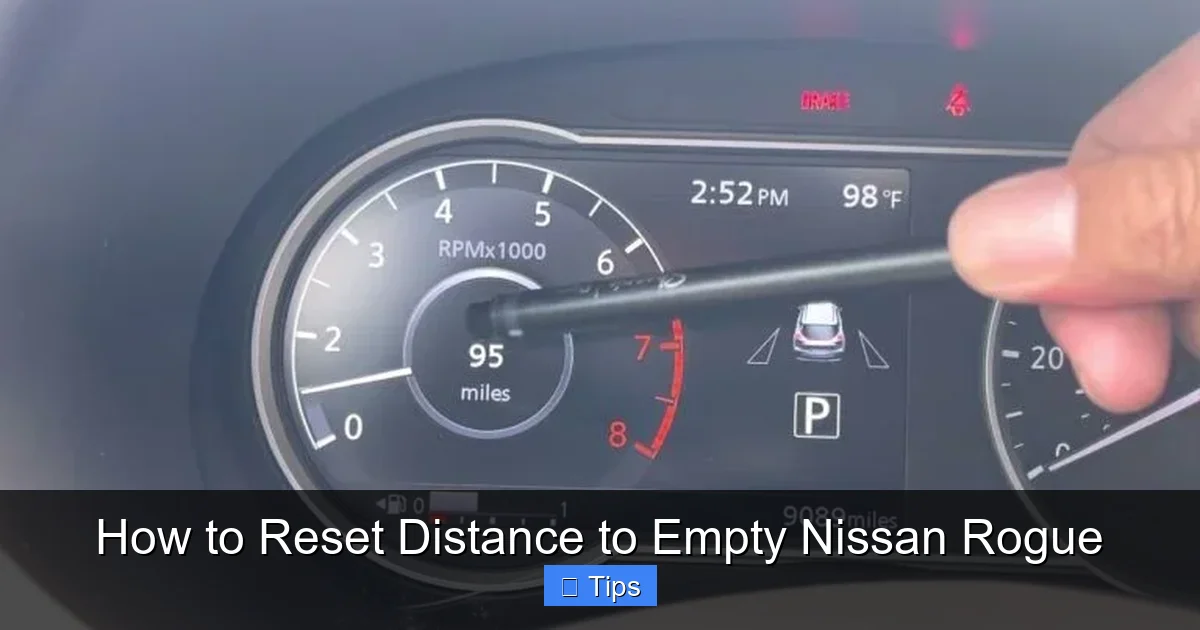
Visual guide about How to Reset Distance to Empty Nissan Rogue
Image source: thecarhow.com
You might be wondering: “Do I really need to reset the DTE every time I fill up?” The short answer is yes—especially if you want the most accurate range estimate. Let’s break down why this small step makes a big difference.
First, consider how DTE works. Your Nissan Rogue uses data from the fuel level sensor and your recent driving patterns to calculate how far you can go. If you’ve just driven 200 miles in heavy traffic with frequent stops, your average fuel economy might be around 22 mpg. But after refueling, you’re starting fresh. If you reset the DTE, the system will now base its estimate on your new fuel level and begin tracking your current driving behavior.
Without a reset, the system might still be factoring in that inefficient city driving. So even though you have a full tank, the DTE could show a lower number than expected. This can lead to unnecessary anxiety—like thinking you only have 100 miles left when you actually have 250.
Another reason to reset is consistency. If you’re tracking your fuel economy over time—maybe you’re trying to improve efficiency or compare different driving routes—resetting DTE ensures each trip starts with a clean slate. This makes your data more reliable and meaningful.
Let’s say you take a weekend road trip. You fill up before leaving, but forget to reset the DTE. The system still remembers your last week of short commutes. As you cruise down the highway at 65 mph, your actual fuel economy improves to 30 mpg. But because the DTE wasn’t reset, it might not reflect this improvement right away. You could end up stopping for gas earlier than needed, wasting time and money.
Resetting also helps with trip planning. If you’re driving to a remote area with few gas stations, knowing your true range is crucial. A properly reset DTE gives you confidence that you can make it to your destination or the next fuel stop without stress.
How to Reset Distance to Empty on a Nissan Rogue (Step-by-Step Guide)
Visual guide about How to Reset Distance to Empty Nissan Rogue
Image source: thecarhow.com
Now that you understand why resetting DTE matters, let’s get into the how. The exact steps depend on your Nissan Rogue’s model year and trim level, but the process is generally straightforward. Below, we’ll cover the most common methods for both older and newer models.
For 2014–2019 Nissan Rogue Models
If you drive a 2014 to 2019 Nissan Rogue, you’ll likely use the trip odometer button to reset the DTE. Here’s how:
1. Turn on your vehicle (you don’t need to start the engine, but the ignition should be in the “ON” position).
2. Locate the trip odometer button on your instrument cluster. It’s usually on the right side of the speedometer, labeled “TRIP” or “ODO/TRIP.”
3. Press and hold the trip button for about 3–5 seconds.
4. While holding the button, watch the DTE display. It should begin to flash or reset to zero.
5. Release the button once the DTE resets. The display should now show a new range based on your current fuel level.
Pro tip: Make this a habit every time you fill up. It only takes a few seconds but ensures your DTE is accurate.
For 2020–2024 Nissan Rogue Models
Newer Nissan Rogue models (2020 and later) come with updated infotainment systems and steering wheel controls. The DTE reset process uses the steering wheel buttons:
1. Turn on the ignition.
2. Use the arrow buttons on the left side of your steering wheel to navigate to the “Drive Info” or “Trip Computer” menu.
3. Scroll through the options until you find “Distance to Empty” or “Fuel Range.”
4. Press and hold the “OK” or “Enter” button for 3–5 seconds.
5. The DTE should reset, and a new range will appear based on your current fuel level.
Some trims may also allow you to reset DTE through the touchscreen. Go to “Settings” > “Vehicle” > “Trip Computer” and look for the reset option.
Automatic Reset Feature
Many newer Nissan Rogues have an automatic DTE reset feature. After you refuel and drive a short distance (usually 0.2–0.5 miles), the system may automatically reset the DTE based on the new fuel level. However, this isn’t always instant or accurate—especially if you only add a small amount of gas.
For the most reliable results, we recommend manually resetting the DTE every time you fill up. This ensures the system starts fresh and gives you the best possible estimate.
Common Issues and Troubleshooting Tips
Visual guide about How to Reset Distance to Empty Nissan Rogue
Image source: thecarhow.com
Even with clear instructions, sometimes the DTE won’t reset as expected. Don’t panic—this happens more often than you’d think. Here are some common issues and how to fix them.
DTE Won’t Reset After Holding the Button
If you’ve followed the steps but the DTE isn’t changing, try these fixes:
– Make sure the ignition is on. The vehicle doesn’t need to be running, but the dashboard must be powered.
– Hold the button longer—some models require up to 10 seconds.
– Try cycling the ignition off and on again, then repeat the reset process.
– Check if your vehicle has a software update available. Outdated firmware can cause glitches in the instrument cluster.
DTE Resets But Shows an Unrealistic Number
Sometimes the DTE resets but displays a number that seems too high or too low. This usually means the system is still using old driving data.
Solution: Drive normally for 5–10 minutes after resetting. The DTE will gradually adjust based on your current driving style. Avoid aggressive acceleration or braking during this time to help the system calibrate.
Battery or Electrical Issues
If your Nissan Rogue has recently had a dead battery or electrical work, the DTE might behave erratically. This is because the vehicle’s computer lost power and may need time to relearn driving patterns.
Tip: After a battery replacement, drive the vehicle for at least 20–30 miles under normal conditions. This helps the system recalibrate fuel economy and DTE calculations.
Fuel Sensor Problems
In rare cases, a faulty fuel level sensor can cause incorrect DTE readings. If your DTE fluctuates wildly or doesn’t change after refueling, have your fuel system checked by a certified Nissan technician.
Best Practices for Maintaining Accurate DTE Readings
Resetting the DTE is just one part of the equation. To keep your fuel range estimates as accurate as possible, follow these best practices:
Reset After Every Fill-Up
Make it a rule: every time you pump gas, reset the DTE. This ensures the system starts fresh and reflects your current fuel level and driving conditions.
Drive Normally After Resetting
Avoid extreme driving—like rapid acceleration or hard braking—for the first 10–15 minutes after resetting. This gives the system time to learn your typical driving style.
Use the Same Fuel Grade
Switching between regular, mid-grade, and premium fuel can affect engine performance and fuel economy. Stick to the recommended fuel type for your Rogue to maintain consistent DTE readings.
Keep Your Tires Properly Inflated
Underinflated tires increase rolling resistance, which reduces fuel efficiency. Check your tire pressure monthly and inflate to the recommended PSI (found on the driver’s door jamb).
Reduce Excess Weight
Carrying unnecessary items in your trunk or cargo area adds weight and lowers fuel economy. Remove heavy objects when possible to improve efficiency and extend your DTE.
Plan for Conditions
Cold weather, strong winds, and hilly terrain can all reduce fuel economy. If you’re driving in challenging conditions, expect your DTE to drop faster than usual—even with a reset.
How DTE Helps with Fuel Efficiency and Trip Planning
Beyond just telling you how far you can go, the DTE is a powerful tool for improving your driving habits and planning efficient trips.
Monitoring Fuel Economy
By resetting the DTE and tracking your mileage between fill-ups, you can calculate your actual fuel economy. For example, if you reset the DTE after filling up and drive 300 miles before refueling, and you added 10 gallons of gas, your average mpg is 30.
This data helps you identify trends. Are you getting better mileage on highways? Does your DTE drop faster in winter? Use this info to adjust your driving or route choices.
Reducing Range Anxiety
Range anxiety—the fear of running out of gas—is real, especially on long trips. A properly reset DTE gives you confidence. If it shows 150 miles and the next gas station is 120 miles away, you can drive with peace of mind.
Optimizing Refuel Stops
When traveling, use the DTE to plan your stops. Instead of filling up every 200 miles, wait until your DTE drops to 50–75 miles. This reduces the number of stops and saves time.
Eco-Driving Tips
Watch how your DTE changes in real time. If you notice it dropping quickly, ease off the accelerator, avoid sudden stops, and use cruise control on highways. These small changes can significantly extend your range.
Conclusion: Make Resetting DTE a Habit
Resetting the distance to empty Nissan Rogue might seem like a small task, but it has a big impact on your driving experience. It ensures your fuel range estimate is accurate, helps you plan trips confidently, and supports better fuel efficiency.
Whether you drive a 2015 Rogue with a trip button or a 2023 model with steering wheel controls, the process is quick and easy. Just a few seconds after filling up can save you from unnecessary stress and unexpected stops.
Make it a habit. Reset the DTE every time you refuel. Drive normally for a few minutes afterward. And use the information it provides to drive smarter, not harder.
Your Nissan Rogue is designed to be efficient and reliable. By taking a moment to reset the DTE, you’re getting the most out of its technology—and enjoying every mile of the journey.
Frequently Asked Questions
How do I reset the distance to empty on a Nissan Rogue?
For 2014–2019 models, press and hold the trip odometer button for 3–5 seconds. For 2020 and newer models, use the steering wheel controls to navigate to the trip computer and hold the OK button. The DTE will reset and display a new range.
Does the DTE reset automatically after refueling?
Some newer Nissan Rogue models may reset DTE automatically after driving a short distance post-refuel. However, this isn’t always accurate, so manually resetting is recommended for the best results.
This could be due to the ignition not being on, a software glitch, or a need to hold the button longer. Try turning the ignition on, holding the button for up to 10 seconds, or restarting the vehicle.
How often should I reset the distance to empty?
You should reset the DTE every time you refuel your Nissan Rogue. This ensures the fuel range estimate is based on your current fuel level and driving conditions.
Can a faulty fuel sensor affect the DTE reading?
Yes, a malfunctioning fuel level sensor can cause inaccurate DTE readings. If your DTE fluctuates or doesn’t change after refueling, have your fuel system inspected by a technician.
Does driving style affect the distance to empty?
Absolutely. Aggressive driving, frequent stops, and high speeds reduce fuel efficiency and lower the DTE. Smooth, steady driving improves range and helps maintain accurate DTE readings.

At CarLegit, we believe information should be clear, factual, and genuinely helpful. That’s why every guide, review, and update on our website is created with care, research, and a strong focus on user experience.