
Resetting the electronic throttle control system in your Dodge Charger can resolve poor acceleration, rough idle, and check engine lights. This guide walks you through simple, safe methods—including key cycling, battery disconnection, and using an OBD2 scanner—to restore smooth performance and drivability.
If your Dodge Charger feels sluggish, hesitates when you press the gas, or suddenly drops into “limp mode,” the issue might be with the electronic throttle control (ETC) system. Don’t panic—this is more common than you think, and in many cases, it can be fixed with a simple reset. The ETC system is a modern marvel that replaces old-school throttle cables with electronic sensors and motors, giving your car smoother performance and better fuel efficiency. But like any advanced tech, it can sometimes get confused or out of sync, especially after battery changes, software glitches, or even extreme weather.
Resetting the electronic throttle control system in your Dodge Charger is often the quickest and most cost-effective solution. Whether you’re a DIY enthusiast or just trying to avoid an expensive trip to the dealership, this guide will walk you through every step. We’ll cover everything from basic key cycling to using diagnostic tools, all explained in plain English. No engineering degree required. By the end, you’ll know exactly how to reset your ETC system safely and confidently—and get back to enjoying that Charger power.
In This Article
- 1 Key Takeaways
- 2 📑 Table of Contents
- 3 What Is the Electronic Throttle Control System?
- 4 Common Symptoms That Indicate a Throttle Control Issue
- 5 Method 1: The Key Cycle Reset (Quick & Easy)
- 6 Method 2: Battery Disconnection Reset (Full System Reset)
- 7 Method 3: Using an OBD2 Scanner (Professional-Grade Reset)
- 8 Post-Reset Driving Tips and Best Practices
- 9 When to See a Mechanic
- 10 Conclusion
- 11 Frequently Asked Questions
- 11.1 How often should I reset the electronic throttle control system?
- 11.2 Will resetting the ETC void my warranty?
- 11.3 Can I reset the ETC while the engine is running?
- 11.4 Why does my Charger go into limp mode after a reset?
- 11.5 Do I need a special tool to reset the throttle control?
- 11.6 How long does it take for the ETC to relearn after a reset?
Key Takeaways
- Understand the electronic throttle control (ETC) system: It replaces mechanical throttle cables with sensors and motors for precise engine control.
- Recognize symptoms of a faulty ETC: Hesitation, stalling, limp mode, or illuminated warning lights often signal a need for reset.
- Try the key cycle method first: Turn the key on and off several times to allow the system to relearn throttle position.
- Disconnect the battery for a full reset: This clears adaptive memory and resets the ECU, but may require radio code re-entry.
- Use an OBD2 scanner for advanced resets: Professional tools can clear codes and perform throttle relearn procedures.
- Always drive gently after a reset: Avoid hard acceleration for the first 10–15 miles to let the system adapt.
- Consult a mechanic if problems persist: Underlying mechanical or sensor issues may require professional diagnosis.
📑 Table of Contents
- What Is the Electronic Throttle Control System?
- Common Symptoms That Indicate a Throttle Control Issue
- Method 1: The Key Cycle Reset (Quick & Easy)
- Method 2: Battery Disconnection Reset (Full System Reset)
- Method 3: Using an OBD2 Scanner (Professional-Grade Reset)
- Post-Reset Driving Tips and Best Practices
- When to See a Mechanic
- Conclusion
What Is the Electronic Throttle Control System?
The electronic throttle control (ETC) system, also known as “drive-by-wire,” is a critical part of modern Dodge Chargers. Unlike older vehicles that used a physical cable to connect the gas pedal to the throttle body, today’s Chargers rely on sensors and electronic signals. When you press the accelerator, a sensor sends a signal to the engine control unit (ECU), which then tells a small motor in the throttle body how much to open. This allows for precise control over engine power, better fuel economy, and smoother driving.
This system includes several key components: the accelerator pedal position sensor, the throttle body with its motor and position sensors, and the ECU. All of these work together to ensure your engine responds exactly how you want it to. But because it’s all electronic, the system needs to “learn” your driving habits and calibrate itself over time. If something disrupts this learning process—like a dead battery, software glitch, or sensor error—the ETC can malfunction.
One of the most common issues is the system entering “limp mode,” where the engine limits power to protect itself. You might notice the car won’t go faster than 30–40 mph, or the check engine light comes on. Other signs include rough idling, hesitation during acceleration, or the car stalling unexpectedly. These symptoms don’t always mean a major repair is needed. Often, a simple reset can restore normal function and get your Charger running like new again.
Common Symptoms That Indicate a Throttle Control Issue
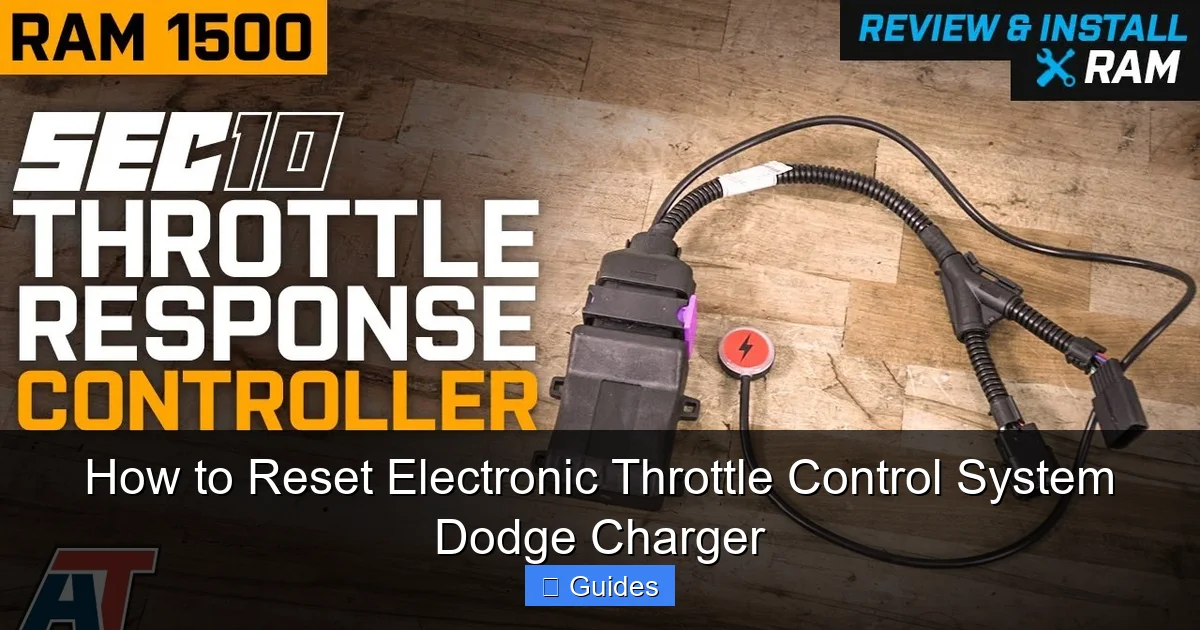
Visual guide about How to Reset Electronic Throttle Control System Dodge Charger
Image source: i.ytimg.com
Knowing when to reset your electronic throttle control system starts with recognizing the warning signs. While some symptoms can point to other problems, a combination of them often points directly to the ETC. The most obvious sign is a sudden loss of power or the car feeling “lazy” when you press the gas. You might press the accelerator and feel nothing happen for a second or two—this hesitation is a red flag.
Another common symptom is the check engine light coming on. While this light can mean many things, if it’s paired with poor acceleration or rough idling, the throttle system is a likely culprit. You might also see a “Service Electronic Throttle Control” message on your dashboard, especially in newer Charger models. This is your car’s way of saying, “Hey, something’s wrong with the throttle—please check it.”
Stalling or rough idling is another telltale sign. If your Charger shakes or nearly dies when you’re stopped at a light, the throttle body might not be opening and closing properly. In some cases, the car might even shut off completely. And don’t ignore limp mode—when the ECU restricts engine power to prevent damage, it’s usually because it detected a problem with the throttle system.
Other subtle signs include delayed response when shifting from park to drive, or the car feeling jerky during acceleration. Even a slight decrease in fuel efficiency can be a clue. If you’ve noticed any of these issues—especially after a battery replacement, software update, or long period of inactivity—it’s worth trying a throttle reset before assuming the worst.
Method 1: The Key Cycle Reset (Quick & Easy)
Visual guide about How to Reset Electronic Throttle Control System Dodge Charger
Image source: quadratec.com
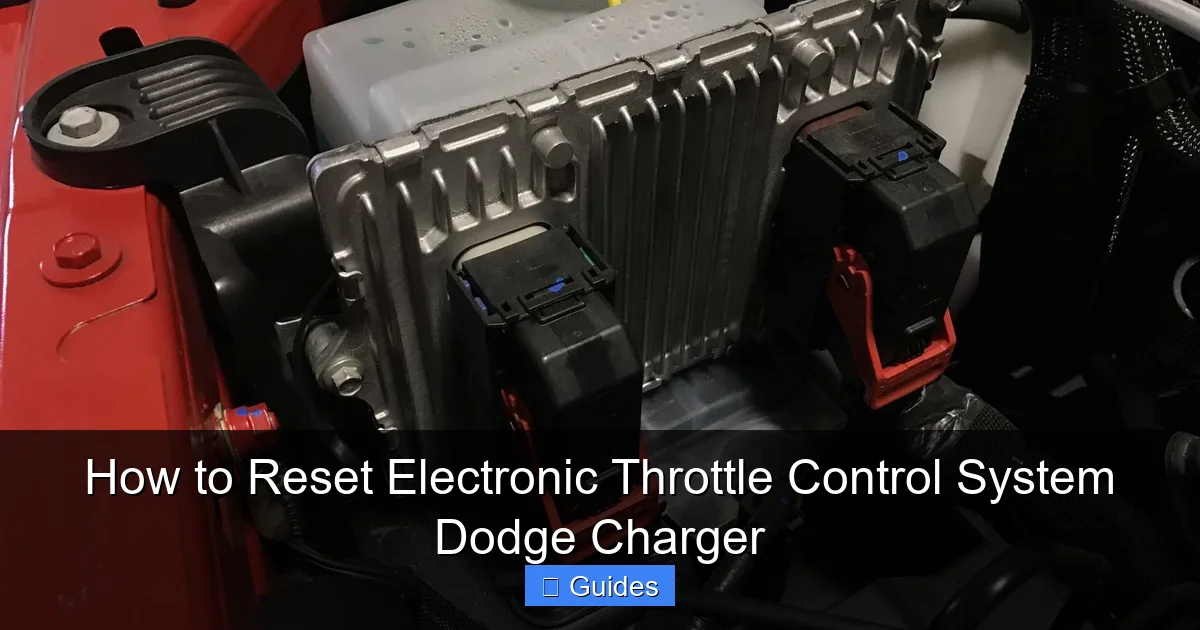
The key cycle method is the simplest way to reset the electronic throttle control system in your Dodge Charger. It’s a great first step because it requires no tools and takes less than five minutes. This method works by cycling power to the ECU, which forces it to relearn the throttle’s default position. It’s especially effective after minor glitches or when the car has been sitting for a while.
Step-by-Step Instructions
- Turn the ignition key to the “ON” position (but don’t start the engine). You should see the dashboard lights come on.
- Wait about 10 seconds. This gives the ECU time to power up and recognize the throttle sensors.
- Turn the key back to the “OFF” position and wait another 10 seconds.
- Repeat this cycle two more times (for a total of three on/off cycles).
- On the fourth time, start the engine and let it idle for about 30 seconds.
- Turn the engine off, wait 10 seconds, then restart it normally.
After completing these steps, take your Charger for a short, gentle drive. Avoid hard acceleration or high speeds for the first 10–15 minutes. This allows the ECU to relearn your driving patterns and recalibrate the throttle response. In many cases, this simple reset resolves hesitation, rough idle, or limp mode issues.
Tips for Best Results
- Make sure the battery is fully charged before starting. A weak battery can interfere with the reset.
- Don’t press the accelerator during the key cycles—this can confuse the system.
- If the problem persists after three attempts, try the battery disconnection method next.
- This method works best for minor glitches. If your Charger has a persistent code or mechanical issue, a deeper reset may be needed.
Many Dodge Charger owners have successfully used this method after jump-starting their car or replacing the battery. It’s a safe, non-invasive way to give the ETC system a fresh start. And because it doesn’t require any special tools, it’s perfect for roadside fixes or quick troubleshooting at home.
Method 2: Battery Disconnection Reset (Full System Reset)
Visual guide about How to Reset Electronic Throttle Control System Dodge Charger
Image source: i.ytimg.com
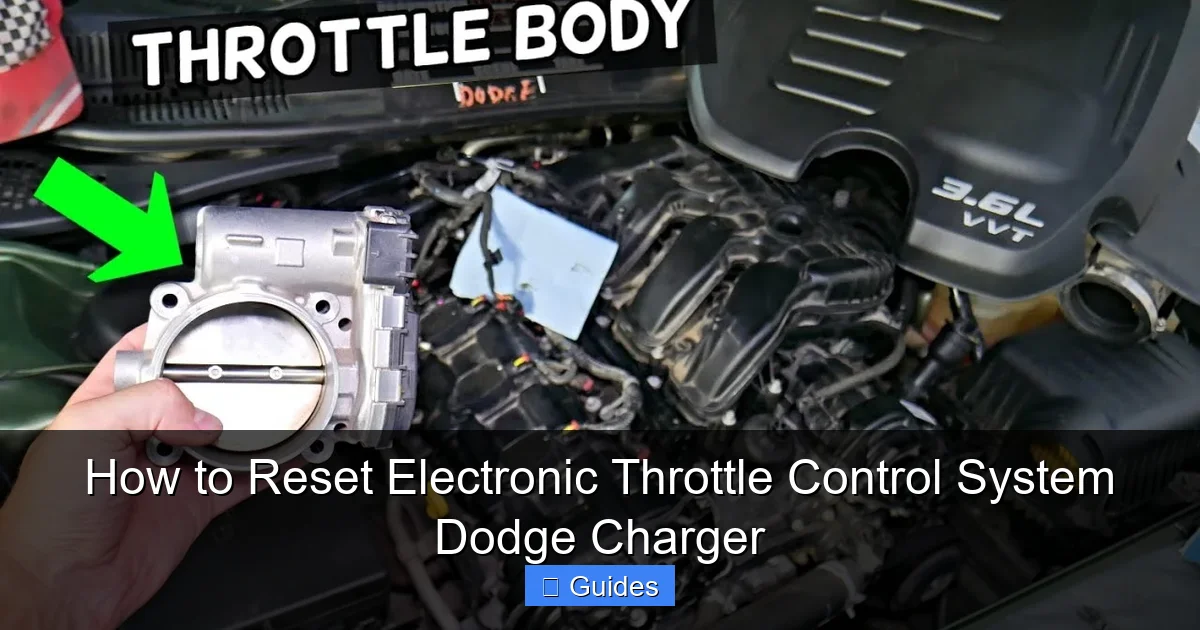
If the key cycle method doesn’t work, the next step is a full system reset by disconnecting the battery. This method clears the ECU’s adaptive memory, including throttle position data, fuel trims, and learned driving habits. It’s more thorough than the key cycle and often resolves stubborn ETC issues. However, it does come with a few trade-offs, so it’s important to follow the steps carefully.
Step-by-Step Instructions
- Turn off the engine and remove the key from the ignition.
- Open the hood and locate the battery. In most Dodge Chargers, it’s on the driver’s side near the front.
- Use a wrench to loosen the negative (black) battery terminal. Always disconnect the negative cable first to avoid short circuits.
- Once the negative cable is off, wait at least 15 minutes. This ensures all capacitors in the ECU discharge completely.
- After 15 minutes, reconnect the negative cable and tighten it securely.
- Turn the ignition to “ON” (don’t start the engine) and wait 30 seconds.
- Turn it off, wait 10 seconds, then start the engine.
- Let the car idle for 5–10 minutes to allow the ECU to relearn basic parameters.
After the reset, drive the car gently for the first 10–15 miles. Avoid rapid acceleration, hard braking, or high RPMs. This “relearning period” is crucial—the ECU needs time to adapt to your driving style and recalibrate the throttle response.
What to Expect After the Reset
- The check engine light may turn off, but it could come back if the underlying issue isn’t fixed.
- Your radio, clock, and power settings may reset. You might need to re-enter a radio code if your Charger has one.
- Some drivers notice improved throttle response and smoother acceleration after the reset.
- If the problem returns within a few days, there may be a deeper issue with a sensor or wiring.
This method is especially useful after battery replacements or if the car has been sitting unused for weeks. It’s a powerful reset that mimics what a mechanic might do with a diagnostic tool. Just be prepared for minor inconveniences like resetting your radio presets or clock.
Method 3: Using an OBD2 Scanner (Professional-Grade Reset)
For the most precise and effective reset, using an OBD2 scanner is the way to go. This method allows you to not only reset the ETC system but also read and clear diagnostic trouble codes (DTCs), monitor live data, and perform a throttle relearn procedure. While it requires a small investment in a scanner, it’s a valuable tool for any Dodge Charger owner who wants to stay on top of maintenance.
Choosing the Right OBD2 Scanner
Not all scanners are created equal. For Dodge Chargers, especially newer models, you’ll want a scanner that supports Chrysler-specific protocols and can perform throttle relearn functions. Look for models like the BlueDriver, Autel MaxiCOM, or Foxwell NT510. These devices can access manufacturer-specific codes and reset procedures that generic scanners can’t.
Basic code readers can clear check engine lights, but they won’t reset the throttle system properly. A professional-grade scanner, on the other hand, can initiate a “throttle position relearn” or “accelerator pedal relearn” sequence. This tells the ECU to recalibrate the throttle sensors based on actual pedal and throttle positions.
Step-by-Step OBD2 Reset Process
- Locate the OBD2 port under the dashboard, usually near the driver’s knee. Plug in your scanner.
- Turn the ignition to “ON” (don’t start the engine) and power on the scanner.
- Follow the scanner’s menu to access “Throttle Relearn” or “ETC Reset.” This option may be under “Service Functions” or “Special Functions.”
- The scanner will guide you through a series of steps, which may include pressing the accelerator to certain positions or holding it down for a few seconds.
- Once complete, the scanner will confirm the reset was successful.
- Clear any stored trouble codes and turn off the ignition.
- Start the engine and let it idle for 5 minutes, then drive normally.
This method is the closest you can get to a dealership-level reset without visiting one. It’s especially useful if your Charger has a persistent code like P2135 (Throttle/Pedal Position Sensor Correlation) or P2101 (Throttle Actuator Control Motor Circuit Range/Performance).
Benefits of Using an OBD2 Scanner
- Precise control over the reset process.
- Ability to diagnose other potential issues.
- No need to disconnect the battery, preserving radio and clock settings.
- Can be reused for future maintenance and troubleshooting.
- Some scanners offer smartphone apps for real-time monitoring.
While the upfront cost of a good scanner is around $100–$200, it pays for itself over time. You’ll save on diagnostic fees and gain peace of mind knowing you can handle many issues at home.
Post-Reset Driving Tips and Best Practices
After resetting your electronic throttle control system, how you drive matters. The ECU needs time to relearn your habits and adjust the throttle response. Rushing this process can lead to poor performance or even trigger the same issues again. Think of it like a reset phone—it needs a few hours of normal use to optimize itself.
Drive Gently for the First 10–15 Miles
Avoid aggressive driving immediately after a reset. No hard launches, rapid acceleration, or high-speed runs. Instead, drive smoothly and steadily. This allows the ECU to build a new baseline for throttle input, fuel delivery, and shift points. If you floor it right away, the system might misinterpret your driving style and cause hesitation or jerking.
Monitor for Warning Lights
Keep an eye on your dashboard. If the check engine light or “Service Electronic Throttle Control” message comes back on, there may be an underlying issue. A reset fixes glitches, but it won’t repair a faulty sensor, damaged wiring, or mechanical problem. If symptoms return within a day or two, it’s time to dig deeper.
Check for Other Issues
Sometimes, throttle problems are caused by unrelated issues. A dirty throttle body, for example, can mimic ETC faults. If your Charger still feels off after a reset, consider cleaning the throttle body with a carb cleaner. Also, check for loose vacuum hoses, a weak battery, or corroded connectors. These small issues can throw off the entire system.
Schedule Regular Maintenance
To prevent future ETC problems, stick to your Charger’s maintenance schedule. Replace air filters, spark plugs, and fuel filters as recommended. Keep the battery terminals clean and tight. And if you live in a cold climate, protect your car from extreme temperatures—cold weather can affect sensor performance.
By following these best practices, you’ll not only extend the life of your electronic throttle control system but also enjoy smoother, more reliable performance from your Dodge Charger.
When to See a Mechanic
While most ETC issues can be resolved with a reset, some problems require professional attention. If you’ve tried all three methods and your Charger still hesitates, stalls, or goes into limp mode, it’s time to see a mechanic. There could be a deeper issue with the throttle body motor, a faulty pedal position sensor, or damaged wiring.
Also, if your scanner shows persistent codes like P0121 (Throttle Position Sensor Range/Performance) or P0222 (Throttle Position Sensor 2 Low Input), these often point to hardware failures. In such cases, replacing the sensor or throttle body may be necessary. A certified Dodge technician can perform a full diagnostic and ensure the repair is done correctly.
Don’t ignore warning signs. Continuing to drive with a malfunctioning ETC system can lead to unsafe conditions, reduced fuel efficiency, or even engine damage. When in doubt, it’s always better to get it checked out.
Conclusion
Resetting the electronic throttle control system in your Dodge Charger is a straightforward process that can save you time, money, and frustration. Whether you use the simple key cycle method, a full battery reset, or a professional OBD2 scanner, you now have the tools to restore smooth performance and get back on the road with confidence.
Remember, the ETC system is designed to adapt to your driving, so a reset gives it a fresh start. But if problems persist, don’t hesitate to consult a professional. With the right approach, your Charger will continue to deliver the power and precision you love—mile after mile.
Frequently Asked Questions
How often should I reset the electronic throttle control system?
You only need to reset the ETC system when you notice performance issues like hesitation, rough idle, or warning lights. There’s no regular schedule—only reset it when symptoms appear or after events like a battery replacement.
Will resetting the ETC void my warranty?
No, resetting the electronic throttle control system using standard methods like key cycling or battery disconnection will not void your warranty. These are basic troubleshooting steps recommended by many manufacturers.
Can I reset the ETC while the engine is running?
No, never attempt to reset the ETC system while the engine is running. Always turn off the engine and remove the key before performing any reset procedure to avoid electrical damage or safety risks.
Why does my Charger go into limp mode after a reset?
If your Charger enters limp mode after a reset, it may indicate an unresolved issue with a sensor, wiring, or the throttle body itself. The reset cleared the error temporarily, but the underlying problem still exists and needs diagnosis.
Do I need a special tool to reset the throttle control?
Not necessarily. Basic resets can be done with just the ignition key or by disconnecting the battery. However, an OBD2 scanner provides the most accurate and complete reset, especially for persistent issues.
How long does it take for the ETC to relearn after a reset?
The ECU typically relearns throttle behavior within 10–15 miles of normal driving. Avoid aggressive driving during this period to allow the system to adapt smoothly and accurately.

At CarLegit, we believe information should be clear, factual, and genuinely helpful. That’s why every guide, review, and update on our website is created with care, research, and a strong focus on user experience.