
Resetting the flat tire warning on your Infiniti Q50 is simple once you know the right steps. This guide walks you through the TPMS reset process, explains why the light comes on, and offers troubleshooting tips to keep your tires in top shape.
In This Article
- 1 Key Takeaways
- 2 📑 Table of Contents
- 3 Why Does the Flat Tire Warning Light Come On?
- 4 How the Infiniti Q50 TPMS System Works
- 5 When Should You Reset the Flat Tire Warning?
- 6 Step-by-Step Guide to Reset the Flat Tire Warning on Infiniti Q50
- 7 Troubleshooting Common TPMS Issues
- 8 Tips for Maintaining Your TPMS System
- 9 Conclusion
- 10 Frequently Asked Questions
- 10.1 How do I reset the tire pressure light on an Infiniti Q50?
- 10.2 Why does my Infiniti Q50 tire pressure light keep coming back on?
- 10.3 Can I drive with the TPMS light on?
- 10.4 Do I need a scan tool to reset the TPMS on an Infiniti Q50?
- 10.5 How often should I check my tire pressure?
- 10.6 What PSI should my Infiniti Q50 tires be?
Key Takeaways
- Understand the TPMS System: The Tire Pressure Monitoring System alerts you when tire pressure is too low, helping prevent unsafe driving conditions.
- Check Tire Pressure First: Always verify that all tires—including the spare—are inflated to the recommended PSI before attempting a reset.
- Use the Correct Reset Method: The Infiniti Q50 uses a button-based reset procedure, not a scan tool, for most model years.
- Drive After Reset: After resetting, drive the car for at least 10–15 minutes to allow the system to recalibrate and confirm normal pressure.
- Address Persistent Warnings: If the light returns, there may be a slow leak, sensor issue, or damaged TPMS sensor requiring professional inspection.
- Seasonal Changes Matter: Cold weather can cause pressure drops, so check and reset the system more often in winter months.
- Keep Records: Note when you reset the system and any changes in tire condition to track patterns over time.
📑 Table of Contents
Why Does the Flat Tire Warning Light Come On?
If you’ve ever been driving your Infiniti Q50 and suddenly seen a yellow or orange light shaped like a tire cross-section with an exclamation point, you’ve encountered the Tire Pressure Monitoring System (TPMS) warning. This isn’t just a random alert—it’s your car’s way of saying, “Hey, something’s off with your tires.” But what exactly triggers it?
The TPMS is designed to monitor the air pressure in each of your tires. When the pressure in one or more tires drops below the recommended level—usually by 25% or more—the system kicks in and illuminates the warning light on your dashboard. This can happen for several reasons: a slow leak from a nail or puncture, temperature changes (cold weather causes air to contract), or even just natural air loss over time.
It’s important to note that the TPMS doesn’t just detect flats. It’s sensitive enough to catch underinflation, which can affect fuel efficiency, tire wear, and handling. For example, if you park your Q50 overnight in 30°F weather and wake up to a chilly morning, the air inside your tires may have contracted enough to trigger the light—even if there’s no actual damage.
Another common cause is a recent tire rotation or replacement. If a technician didn’t properly reset the system after servicing, the light may stay on. Similarly, if you’ve installed new tires or replaced a TPMS sensor, the system needs to be recalibrated to recognize the new components.
Understanding why the light appears is the first step toward fixing it. Ignoring it can lead to reduced traction, longer braking distances, and even tire failure at high speeds. So, while it might seem like a minor annoyance, that little light is actually a crucial safety feature.
How the Infiniti Q50 TPMS System Works

Visual guide about How to Reset Flat Tire Warning on Infiniti Q50
Image source: brakeexperts.com
The Infiniti Q50 uses a direct TPMS system, which means each wheel has a sensor mounted inside the tire (usually attached to the valve stem) that measures air pressure and temperature in real time. These sensors transmit data wirelessly to the car’s onboard computer, which then displays the status on the dashboard.
Unlike older indirect systems that rely on wheel speed sensors to detect underinflation, the direct TPMS in the Q50 is far more accurate. It can tell you exactly which tire is low and by how much. Some higher trims even show individual tire pressures on the multi-information display, giving you precise readings without needing a separate gauge.
Each sensor has a unique ID, and the system must “learn” these IDs during setup or after tire service. This is why a reset is necessary after rotating tires or replacing sensors—the car needs to reassign which sensor corresponds to which wheel position (front left, rear right, etc.).
The system operates on radio frequency (RF) signals, typically around 315 MHz or 433 MHz depending on the model year and region. These signals are sent periodically—usually every few minutes—or immediately when a significant pressure change is detected. The car’s receiver picks up these signals and processes them to determine if a warning is needed.
One thing to keep in mind is that TPMS sensors are battery-powered and have a limited lifespan—usually 5 to 10 years. Once the battery dies, the sensor stops transmitting, and the system may show a “sensor fault” or fail to reset properly. In such cases, replacement is necessary.
The Q50’s TPMS also includes a self-diagnostic feature. If the system detects a malfunction—like a missing signal or inconsistent data—it may flash the warning light or display a message like “TPMS Error” or “Check Tire Pressure System.” This indicates a deeper issue that may require professional diagnosis.
When Should You Reset the Flat Tire Warning?
Visual guide about How to Reset Flat Tire Warning on Infiniti Q50
Image source: tech-outdoors.com
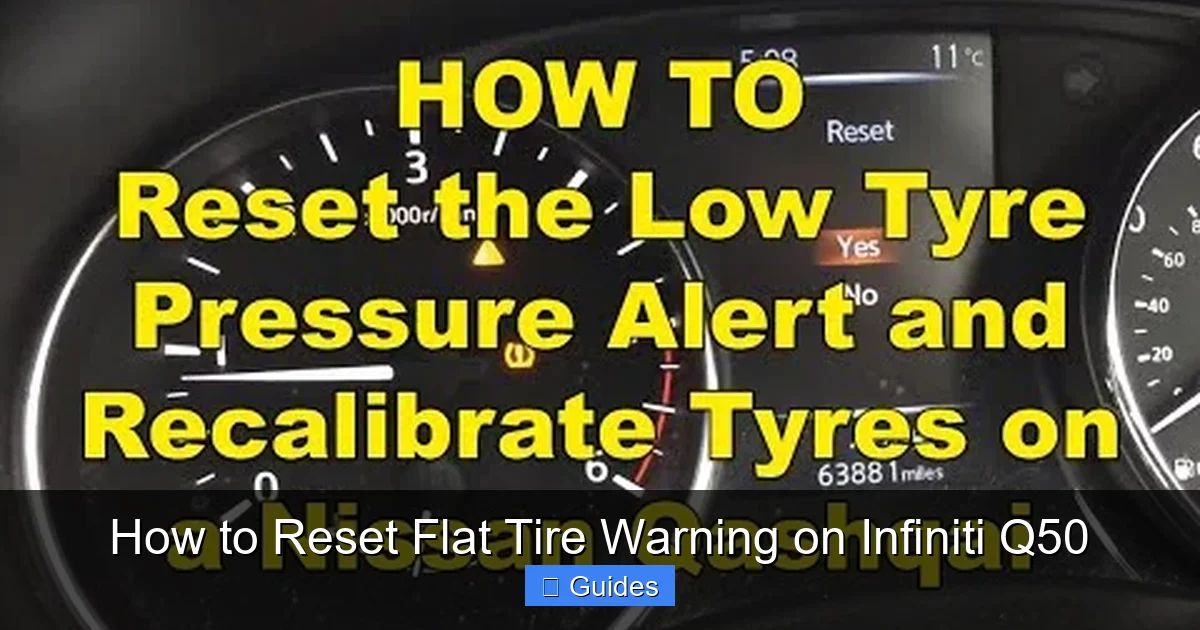
You don’t need to reset the TPMS every time the light comes on—only when you’ve addressed the underlying issue. Here are the most common scenarios when a reset is necessary:
After inflating low tires: If you’ve checked your tires and found one or more underinflated, you’ll need to add air to reach the recommended PSI (usually found on a sticker inside the driver’s door jamb). Once all tires are properly inflated, the system may not automatically clear the warning. A manual reset ensures the light goes off and the system recognizes the corrected pressure.
After a tire rotation: Rotating your tires changes their positions on the vehicle. Since each TPMS sensor is assigned to a specific wheel location, the system needs to be reset to relearn which sensor is where. Without a reset, the dashboard might show incorrect pressure readings or keep the warning light on.
After replacing a tire or sensor: If you’ve had a flat repaired, a tire replaced, or a TPMS sensor swapped out, the system must be reset to recognize the new components. This is especially important if the new sensor has a different ID or if the tire was mounted on a different wheel.
After seasonal temperature changes: Cold weather can cause tire pressure to drop significantly—about 1 PSI for every 10°F decrease in temperature. If you’ve added air to compensate for winter conditions, a reset helps the system adapt to the new baseline.
After using the spare tire: Some Q50 models include a full-size spare with its own TPMS sensor. If you’ve driven on the spare and then switched back to your regular tires, the system may still be reading the spare’s pressure. A reset clears this confusion.
It’s also a good idea to reset the system during routine maintenance, such as oil changes or tire inspections, even if the light isn’t on. This ensures the TPMS is functioning correctly and prevents false alerts down the road.
Step-by-Step Guide to Reset the Flat Tire Warning on Infiniti Q50
Visual guide about How to Reset Flat Tire Warning on Infiniti Q50
Image source: carnewsbox.com
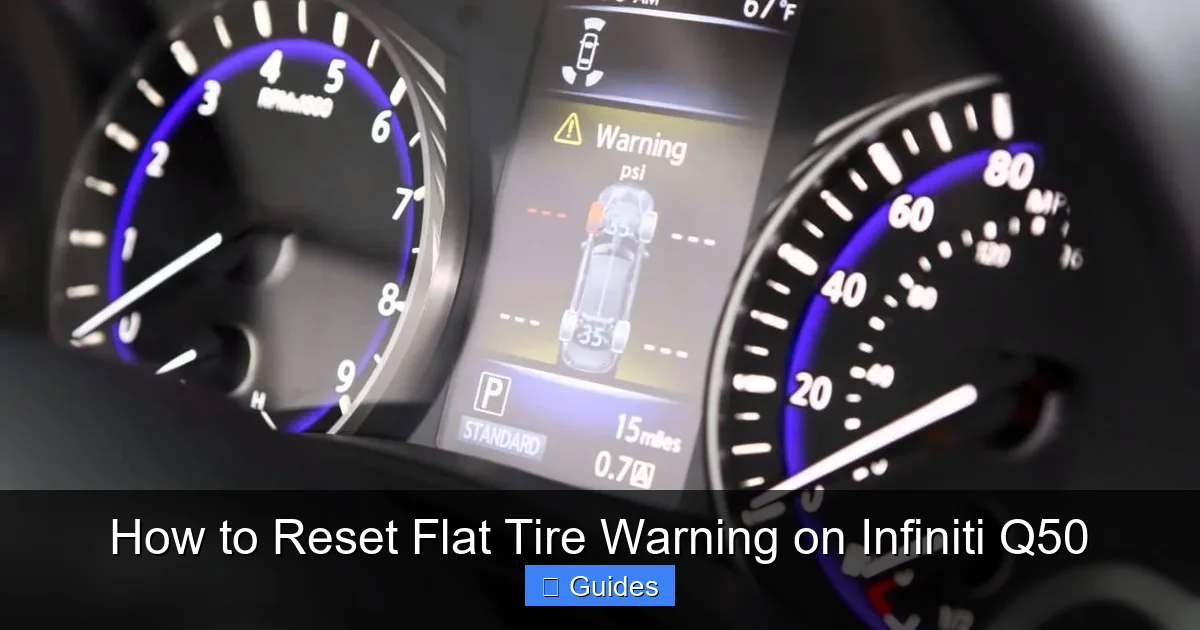
Resetting the flat tire warning on your Infiniti Q50 is a straightforward process that you can do yourself in under 10 minutes. Here’s a detailed, step-by-step guide to help you get it done safely and correctly.
Step 1: Ensure All Tires Are Properly Inflated
Before you even think about resetting the system, make sure all four tires—and the spare, if equipped—are inflated to the correct pressure. The recommended PSI for your Q50 can be found on a sticker inside the driver’s side door jamb. It’s usually around 32–35 PSI for most models, but always check the label for your specific trim and tire size.
Use a reliable digital tire pressure gauge to check each tire. Don’t rely on the gas station air pump’s built-in gauge—they’re often inaccurate. If any tire is low, inflate it to the correct level. Wait a few minutes after inflating, as pressure can fluctuate slightly as the tire cools.
Pro tip: Check tire pressure when the tires are cold—meaning the car hasn’t been driven for at least three hours. Driving heats up the tires and increases pressure, giving you a false reading.
Step 2: Turn the Ignition to the “ON” Position
Sit in the driver’s seat and insert the key into the ignition. Turn it to the “ON” position—this powers up the dashboard and electronic systems—but don’t start the engine yet. You should see all the warning lights briefly illuminate, including the TPMS light.
If your Q50 has a push-button start, press the “Start” button twice without pressing the brake pedal. This will turn on the ignition and activate the dashboard.
Step 3: Locate the TPMS Reset Button
The TPMS reset button is typically located under the steering column, near the fuse box. It’s a small, unmarked button—often black or gray—that you’ll need to press with a pen, paperclip, or your fingernail.
On most Infiniti Q50 models from 2014 to 2020, the button is situated just below the steering wheel, to the left of the steering column. You may need to crouch down or use a flashlight to spot it. It’s usually recessed to prevent accidental presses.
If you can’t find it, consult your owner’s manual. The exact location can vary slightly depending on the model year and trim level.
Step 4: Press and Hold the Reset Button
Once you’ve located the button, press and hold it for about 3 to 5 seconds. You should see the TPMS warning light on the dashboard begin to blink. This indicates that the system is in reset mode.
Keep holding the button until the light blinks three times, then release it. On some models, the light may stay on solid for a few seconds before turning off completely.
If the light doesn’t blink or respond, try pressing the button again. Make sure the ignition is on and the car is in park (for automatic transmissions).
Step 5: Start the Engine and Drive
After releasing the button, start the engine. The TPMS light should now be off. If it remains on, repeat the reset process.
Once the engine is running, drive the car for at least 10 to 15 minutes at a speed of 30 mph or higher. This allows the TPMS sensors to transmit updated pressure data and the system to confirm that all tires are properly inflated.
During this drive, avoid sudden stops or sharp turns. The system needs stable conditions to complete the calibration.
Step 6: Verify the Reset Was Successful
After your drive, check the dashboard. The TPMS warning light should be off. If it’s still on, there may be an underlying issue—such as a slow leak, faulty sensor, or incorrect tire pressure.
You can also check the multi-information display (if equipped) to see individual tire pressures. They should all be within the recommended range.
If the light comes back on after a few days, inspect your tires for damage or leaks. You may need to visit a tire shop for further diagnosis.
Troubleshooting Common TPMS Issues
Even after following the reset steps, you might still encounter problems with the TPMS system. Here are some common issues and how to resolve them.
The Light Won’t Turn Off After Reset
If the TPMS light remains on after a proper reset, double-check tire pressures. One tire might still be underinflated, or the spare tire could be low. Also, ensure the reset was completed correctly—sometimes the button needs to be held longer or pressed multiple times.
If pressures are correct and the light persists, there could be a faulty sensor. TPMS sensors can fail due to battery depletion, corrosion, or physical damage. A professional scan tool can diagnose which sensor is malfunctioning.
The Light Flashes Then Stays On
A flashing TPMS light usually indicates a system malfunction, not just low pressure. This could mean a sensor isn’t transmitting, the receiver is faulty, or there’s an electrical issue.
In this case, avoid driving long distances and have the system inspected by a qualified technician. Continuing to drive with a malfunctioning TPMS can compromise safety.
Only One Tire Shows Low Pressure
If the display shows one tire is low but it reads normal when checked with a gauge, the sensor might be sending incorrect data. This can happen if the sensor is damaged or the signal is being interfered with (e.g., by aftermarket wheels or electronic devices).
Try rotating the tires and resetting the system. If the issue follows the tire, the sensor may need replacement.
The Light Comes On in Cold Weather
Cold temperatures cause air to contract, lowering tire pressure. If the light appears in winter, inflate the tires to the recommended PSI and reset the system. Consider using nitrogen inflation, which is less affected by temperature changes.
Aftermarket Wheels Cause Issues
If you’ve installed custom wheels, they may not be compatible with the original TPMS sensors. Some aftermarket wheels require special valve stems or sensor mounts. In such cases, you may need to purchase new sensors or have the originals transferred.
Tips for Maintaining Your TPMS System
To keep your Infiniti Q50’s TPMS working smoothly, follow these maintenance tips:
Check tire pressure monthly: Even if the light isn’t on, inspect your tires regularly. Underinflation can occur gradually and go unnoticed.
Rotate tires every 5,000 to 7,500 miles: This ensures even wear and gives you a chance to check all sensors and valves.
Inspect valves and stems: Look for cracks, leaks, or corrosion around the valve stems. Damaged valves can cause slow leaks and sensor failure.
Avoid overinflation: While underinflation is dangerous, overinflating tires can lead to a harsh ride and increased wear in the center of the tread.
Replace sensors when needed: Most TPMS sensors last 5–10 years. If your car is older and the light frequently comes on, consider replacing the sensors.
Use a TPMS diagnostic tool: If you’re comfortable with DIY maintenance, a basic TPMS tool can help you read sensor IDs and troubleshoot issues.
Keep records: Note when you reset the system, any tire changes, and pressure readings. This helps identify patterns and prevent future problems.
Conclusion
Resetting the flat tire warning on your Infiniti Q50 is a simple but essential task that every owner should know how to do. By understanding how the TPMS system works, when to reset it, and how to troubleshoot common issues, you can keep your tires safe, your car efficient, and your drives worry-free.
Remember, the warning light is there for a reason—it’s protecting you from unsafe driving conditions. Don’t ignore it. Instead, take a few minutes to check your tires, follow the reset steps, and get back on the road with confidence.
With regular maintenance and a little know-how, your Q50’s TPMS will serve you well for years to come. Stay safe, stay informed, and keep those tires properly inflated.
Frequently Asked Questions
How do I reset the tire pressure light on an Infiniti Q50?
Turn the ignition to “ON,” locate the TPMS reset button under the steering column, press and hold it until the light blinks, then start the engine and drive for 10–15 minutes to complete the reset.
Why does my Infiniti Q50 tire pressure light keep coming back on?
The light may return due to a slow leak, faulty sensor, incorrect tire pressure, or temperature changes. Check all tires and consider having the sensors inspected if the issue persists.
Can I drive with the TPMS light on?
You can drive short distances, but it’s not safe for long trips. Low tire pressure reduces handling, increases braking distance, and can lead to tire failure.
Do I need a scan tool to reset the TPMS on an Infiniti Q50?
No, most Q50 models use a manual reset button. A scan tool is only needed for advanced diagnostics or sensor programming.
How often should I check my tire pressure?
Check tire pressure at least once a month and before long trips. Cold weather and seasonal changes can cause pressure drops.
What PSI should my Infiniti Q50 tires be?
The recommended PSI is usually 32–35, but always check the sticker inside the driver’s door jamb for the exact specification for your model and tire size.

At CarLegit, we believe information should be clear, factual, and genuinely helpful. That’s why every guide, review, and update on our website is created with care, research, and a strong focus on user experience.