
Is your Jeep Cherokee gas cap light stuck on? Don’t panic—this common issue is often simple to fix. This guide walks you through easy steps to reset the light, whether it’s due to a loose cap, sensor glitch, or EVAP system error.
In This Article
- 1 Key Takeaways
- 2 📑 Table of Contents
- 3 Why Is the Gas Cap Light On in Your Jeep Cherokee?
- 4 Step-by-Step Guide to Reset the Jeep Cherokee Gas Cap Light
- 4.1 Step 1: Turn Off the Engine and Locate the Gas Cap
- 4.2 Step 2: Remove and Reinstall the Gas Cap
- 4.3 Step 3: Start the Engine and Drive
- 4.4 Step 4: Use the Ignition Reset Method (Older Models)
- 4.5 Step 5: Use an OBD-II Scanner to Reset the Light
- 4.6 Step 6: Inspect the EVAP System (If the Light Returns)
- 5 Common Mistakes to Avoid When Resetting the Gas Cap Light
- 6 When to See a Mechanic
- 7 Preventing the Gas Cap Light from Coming Back
- 8 Conclusion
- 9 Frequently Asked Questions
Key Takeaways
- Check the gas cap first: A loose, damaged, or missing gas cap is the most common cause of the gas cap light.
- Tighten the cap properly: Turn it until you hear 3–4 clicks to ensure a secure seal.
- Drive a few miles after tightening: The light may turn off automatically after a short drive cycle.
- Use the OBD-II scanner method: For persistent lights, a diagnostic tool can reset the system and read trouble codes.
- Inspect the EVAP system: If the light returns, there may be a leak or faulty component in the evaporative emissions system.
- Reset via ignition cycle (older models): Some older Jeep Cherokees allow a manual reset by turning the key on and off multiple times.
- Visit a mechanic if needed: If DIY fixes fail, a professional diagnosis ensures no hidden issues remain.
📑 Table of Contents
Why Is the Gas Cap Light On in Your Jeep Cherokee?
You’re driving your Jeep Cherokee, everything feels normal—until that little gas pump icon with an exclamation point lights up on your dashboard. It’s not the check engine light, but it’s still alarming. What does it mean? And more importantly, how do you make it go away?
The gas cap light, often called the “Check Gas Cap” or “EVAP System” warning, is part of your vehicle’s onboard diagnostics. It’s designed to alert you when there’s a problem with the evaporative emissions control system—specifically, when fuel vapors aren’t being contained properly. And yes, it’s usually triggered by something as simple as a loose or improperly sealed gas cap.
But don’t ignore it. Even though it might seem minor, a persistent gas cap light can mean your Jeep isn’t running as efficiently as it should. It could also prevent you from passing an emissions test in states that require them. The good news? In most cases, resetting the light is quick, easy, and doesn’t require a trip to the dealership.
What Triggers the Gas Cap Light?
The Jeep Cherokee uses a network of sensors and valves to monitor the fuel system, especially the part that captures fuel vapors before they escape into the atmosphere. This is known as the EVAP (Evaporative Emission Control) system. When the system detects a leak—even a tiny one—it triggers the gas cap warning light.
Common causes include:
– A gas cap that wasn’t tightened after refueling
– A worn or cracked gas cap seal
– A damaged or missing gas cap
– A loose or disconnected EVAP hose
– A faulty purge or vent valve
– A small leak in the fuel tank or filler neck
In over 80% of cases, the issue is the gas cap itself. That’s why the first step is always to check it.
Is It Safe to Drive with the Gas Cap Light On?
Yes, it’s generally safe to drive your Jeep Cherokee with the gas cap light on—but it’s not ideal. While your engine will still run normally, an unsealed fuel system can lead to:
– Increased emissions
– Slightly reduced fuel efficiency
– Potential damage to the EVAP system over time
– Failure during an emissions inspection
So while you won’t strand yourself on the highway, it’s best to address the issue within a day or two.
Step-by-Step Guide to Reset the Jeep Cherokee Gas Cap Light
Visual guide about How to Reset Jeep Cherokee Gas Cap Light
Image source: jeepfixes.com
Now that you understand why the light comes on, let’s get it turned off. Follow these steps in order—they’re designed to solve the problem from simplest to most involved.
Step 1: Turn Off the Engine and Locate the Gas Cap
First, safely pull over and turn off your Jeep. Make sure the engine is cool before touching the gas cap. Open the fuel door—on most Jeep Cherokees, it’s on the driver’s side rear quarter panel. You may need to press a button inside the cabin or use the key fob to unlock it.
Once open, inspect the gas cap. Look for:
– Cracks or warping in the plastic
– A missing or damaged rubber seal
– Dirt or debris stuck in the threads
If the cap looks damaged, replace it immediately. Jeep recommends using an OEM (original equipment manufacturer) gas cap to ensure a proper seal. Aftermarket caps may not fit correctly and can trigger the light again.
Step 2: Remove and Reinstall the Gas Cap
Unscrew the gas cap completely. Wipe the threads on both the cap and the filler neck with a clean, dry cloth. Dirt or moisture can prevent a tight seal.
Now, screw the cap back on. Turn it clockwise until you hear it click. Keep turning—most Jeep Cherokees require 3 to 4 solid clicks to fully seat the cap. This ensures the O-ring creates a proper vacuum seal.
Pro tip: Don’t overtighten. While it’s important to get a good seal, forcing the cap can damage the threads or the seal itself.
Step 3: Start the Engine and Drive
Close the fuel door and start your Jeep. Let it idle for a minute, then take it for a short drive—about 5 to 10 miles. Drive normally, including stops, starts, and highway speeds if possible.
Why drive it? The Jeep’s onboard computer needs to run a self-test called a “drive cycle” to verify the EVAP system is sealed. This test usually takes place under specific conditions: steady speeds, moderate acceleration, and engine warm-up.
After the drive cycle completes, the gas cap light should turn off automatically. On many models, this happens within one or two trips.
Step 4: Use the Ignition Reset Method (Older Models)
If your Jeep Cherokee is a 2014 or older model, you may be able to reset the light manually using the ignition key. This method doesn’t work on newer models with advanced diagnostics, but it’s worth a try.
Here’s how:
1. Turn the ignition to the “ON” position (but don’t start the engine).
2. Wait 3 seconds.
3. Turn the ignition back to “OFF.”
4. Repeat this cycle 3 times in a row.
5. On the third cycle, leave the key in the “ON” position.
6. Wait for the gas cap light to flash or turn off (this may take up to 10 seconds).
7. Turn the key to “OFF” and start the engine.
If the light is off, great! If not, move to the next step.
Step 5: Use an OBD-II Scanner to Reset the Light
If the light is still on after driving and trying the ignition method, it’s time to use an OBD-II (On-Board Diagnostics) scanner. This tool plugs into your Jeep’s diagnostic port—usually located under the dashboard, near the driver’s knee.
You can buy a basic scanner for $20–$50, or borrow one from an auto parts store (many offer free code reading).
Steps:
1. Turn off the engine.
2. Plug the OBD-II scanner into the port.
3. Turn the ignition to “ON” (don’t start the engine).
4. Follow the scanner’s prompts to read trouble codes.
5. Look for codes like P0455 (large EVAP leak), P0456 (small EVAP leak), or P0442 (minor leak detected).
6. If the code relates to the gas cap, clear the codes using the scanner’s “Clear” or “Erase” function.
7. Turn off the ignition, unplug the scanner, and start the engine.
The gas cap light should now be off. If it comes back on after a few days, there may be a deeper issue.
Step 6: Inspect the EVAP System (If the Light Returns)
If the light keeps coming back, the problem likely isn’t the gas cap—it’s something in the EVAP system. This system includes:
– The charcoal canister (absorbs fuel vapors)
– Purge valve (controls vapor flow to the engine)
– Vent valve (allows air into the system)
– Hoses and seals
A small leak in any of these components can trigger the light. Common signs of a faulty EVAP system include:
– A strong fuel smell near the vehicle
– Difficulty starting the engine
– Reduced fuel economy
– The gas cap light returning within hours or days
To inspect:
– Check all EVAP hoses for cracks, splits, or loose connections.
– Listen for hissing sounds near the fuel tank or under the hood.
– Use a smoke machine (available at repair shops) to detect tiny leaks.
If you’re not comfortable doing this yourself, take your Jeep to a trusted mechanic. They can perform a smoke test and pinpoint the exact source of the leak.
Common Mistakes to Avoid When Resetting the Gas Cap Light
Visual guide about How to Reset Jeep Cherokee Gas Cap Light
Image source: jeepfixes.com
Even simple fixes can go wrong if you’re not careful. Here are some common mistakes Jeep owners make—and how to avoid them.
Ignoring the Gas Cap
Many people assume the light is a glitch and ignore it. But in most cases, the gas cap is the culprit. Always check it first before assuming a bigger problem.
Not Tightening the Cap Enough
“Hand-tight” isn’t enough. You need to hear those clicks. If you only turn it a quarter turn, the seal won’t be secure. Always tighten until you hear 3–4 solid clicks.
Using the Wrong Gas Cap
Cheap aftermarket caps may look the same, but they often don’t meet OEM specifications. A poor seal can trigger the light again. Stick with a genuine Mopar gas cap or a high-quality equivalent.
Clearing Codes Without Fixing the Problem
Using an OBD-II scanner to clear the code without addressing the root cause is a temporary fix. If the gas cap is loose or damaged, the light will return. Always fix the issue before resetting.
Driving Aggressively After Reset
The EVAP system test requires normal driving conditions. Hard acceleration, short trips, or idling won’t complete the drive cycle. Drive normally for at least 10–15 minutes to allow the system to reset.
When to See a Mechanic
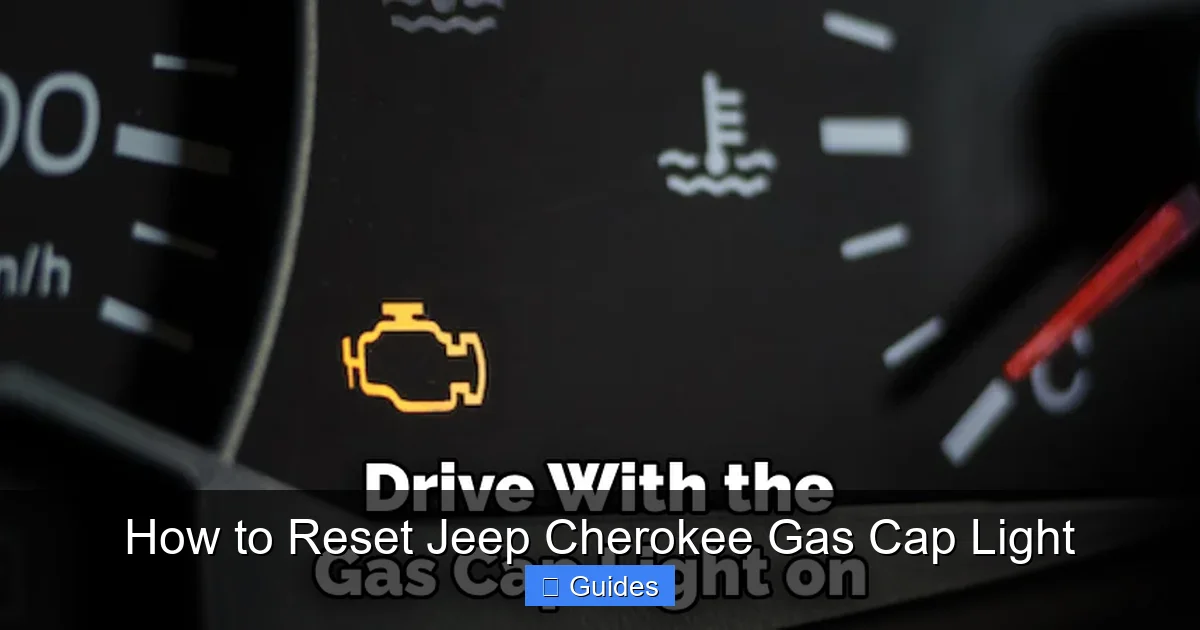
Visual guide about How to Reset Jeep Cherokee Gas Cap Light
Image source: jeepfixes.com
Most gas cap light issues can be resolved at home. But if you’ve tried everything and the light keeps coming back, it’s time to see a professional.
Visit a mechanic if:
– The gas cap is tight and undamaged, but the light won’t turn off
– You smell fuel near the vehicle
– The OBD-II scanner shows recurring EVAP codes
– Your Jeep fails an emissions test
– You notice a drop in fuel efficiency or performance
A certified technician can perform a full EVAP system diagnosis, including a smoke test, to find hidden leaks or faulty components. While this may cost $100–$200, it’s worth it to ensure your Jeep is running safely and efficiently.
Preventing the Gas Cap Light from Coming Back
Once you’ve reset the light, take steps to keep it off for good.
Always Tighten the Cap Properly
Make it a habit: after every fill-up, tighten the gas cap until you hear the clicks. Don’t rush it.
Inspect the Cap Regularly
Every few months, check the gas cap for wear. The rubber seal can degrade over time, especially in extreme temperatures.
Use Quality Fuel
Low-quality or contaminated fuel can damage the EVAP system. Stick to reputable gas stations.
Replace the Gas Cap Every 5 Years
Even if it looks fine, the seal can lose elasticity over time. Consider replacing the gas cap every 5 years as preventive maintenance.
Keep the Fuel Door Closed
Dirt and moisture can get into the filler neck if the fuel door is left open. Always close it securely.
Conclusion
The Jeep Cherokee gas cap light might seem like a minor annoyance, but it’s your vehicle’s way of saying something’s not quite right. In most cases, the fix is as simple as tightening or replacing the gas cap. With the steps in this guide, you can reset the light yourself—no mechanic required.
Remember: check the cap first, drive normally after tightening, and use an OBD-II scanner if needed. And if the problem persists, don’t hesitate to get professional help. A healthy EVAP system means better fuel economy, lower emissions, and a smoother-running Jeep.
So the next time that little light pops up, don’t stress. You’ve got this.
Frequently Asked Questions
Why won’t my Jeep Cherokee gas cap light turn off?
The light may stay on if the gas cap isn’t tightened properly, the seal is damaged, or there’s a leak in the EVAP system. Try tightening the cap fully and driving for 10–15 miles. If it persists, use an OBD-II scanner to check for trouble codes.
Can I drive my Jeep with the gas cap light on?
Yes, it’s safe to drive short distances, but it’s not recommended long-term. An unsealed fuel system can increase emissions and reduce fuel efficiency. Address the issue within a day or two.
How many clicks should the gas cap make?
You should hear 3 to 4 solid clicks when tightening the gas cap. This ensures the O-ring creates a proper seal and the EVAP system can hold pressure.
Will the gas cap light reset itself?
Yes, in many cases. After tightening the cap and completing a drive cycle (normal driving for 10–15 miles), the light often turns off automatically as the system confirms the seal is intact.
Do I need a special tool to reset the gas cap light?
Not always. Most lights reset after driving. But if it stays on, an OBD-II scanner can clear the code and help diagnose the issue. Basic scanners are affordable and easy to use.
Is a loose gas cap bad for my engine?
Not directly, but it can affect the EVAP system, reduce fuel economy, and increase emissions. It may also cause your Jeep to fail an emissions test. Always tighten the cap after refueling.

At CarLegit, we believe information should be clear, factual, and genuinely helpful. That’s why every guide, review, and update on our website is created with care, research, and a strong focus on user experience.