
Resetting the 2015 Nissan Altima airbag light often requires fixing the underlying fault first, not just clearing the code. Common triggers include faulty seat belt sensors, loose connections under the seats, or a depleted backup battery in the SRS computer. After addressing the root cause, you can use an OBD2 scanner with SRS functionality or, in some cases, a specific ignition key cycle procedure to successfully turn the warning light off.
In This Article
- 1 Key Takeaways
- 2 📑 Table of Contents
- 3 Reset the 2015 Nissan Altima Airbag Light Fast: Your Complete Guide
- 4 Understanding Your Altima’s Airbag System and Warning Light
- 5 Common Reasons the Airbag Light Stays On
- 6 The Essential First Step: Retrieving Diagnostic Trouble Codes (DTCs)
- 7 Method 1: The Basic Reset for Minor Glitches
- 8 Method 2: The Seat Sensor and Connection Check
- 9 Method 3: Using an OBD-II Scanner to Clear the Codes
- 10 When to Absolutely Seek Professional Help
- 11 Keeping Your Airbag System Healthy: Proactive Tips
- 12 Conclusion: Safety First, Savings Second
- 13 Frequently Asked Questions
- 13.1 Why is my 2015 Nissan Altima airbag light on?
- 13.2 Can I reset the airbag light myself on a 2015 Altima?
- 13.3 What is the fastest way to reset the 2015 Nissan Altima airbag light?
- 13.4 Will disconnecting the battery reset the airbag light?
- 13.5 Is it safe to drive with the airbag light on?
- 13.6 How do I permanently fix the airbag light on my Altima?
Key Takeaways
- Diagnose first: The light indicates a fault, not just a reset need.
- Check connectors: Loose under-seat connections are a common culprit.
- Use an OBD2 scanner: A professional-grade tool is required to clear SRS codes.
- Address the root cause: Resetting without fixing the problem is unsafe.
- Seek professional help: For complex issues, consult a certified mechanic immediately.
- Safety is paramount: Never bypass or ignore the airbag warning light.
📑 Table of Contents
- Reset the 2015 Nissan Altima Airbag Light Fast: Your Complete Guide
- Understanding Your Altima’s Airbag System and Warning Light
- Common Reasons the Airbag Light Stays On
- The Essential First Step: Retrieving Diagnostic Trouble Codes (DTCs)
- Method 1: The Basic Reset for Minor Glitches
- Method 2: The Seat Sensor and Connection Check
- Method 3: Using an OBD-II Scanner to Clear the Codes
- When to Absolutely Seek Professional Help
- Keeping Your Airbag System Healthy: Proactive Tips
- Conclusion: Safety First, Savings Second
Reset the 2015 Nissan Altima Airbag Light Fast: Your Complete Guide
You’re driving your trusty 2015 Nissan Altima, maybe heading to work or running errands, when you see it. That little icon on your dashboard that looks like a person sitting with a ball in their lap. The airbag light. It’s glowing amber, and it’s not going away. Your first thought might be panic. “Is my car safe? Is this going to cost me a fortune at the dealership?” I’ve been there. That sudden, unwelcome dashboard guest can turn a good day into a worrisome one in an instant.
Take a deep breath. In many cases, resetting the airbag light on your 2015 Altima is something you can handle yourself. This light, formally called the Supplemental Restraint System (SRS) warning light, is your car’s way of telling you it has detected a potential issue with the airbag system. It doesn’t always mean the airbags are broken; sometimes it’s a glitch, a loose connection, or a sensor that just needs to be reset. This guide is here to walk you through the process, step-by-step, in plain English. We’ll cover what the light means, the common causes, and the methods to reset it fast, saving you time, stress, and potentially a big repair bill.
Understanding Your Altima’s Airbag System and Warning Light
Before you dive into resetting anything, it’s crucial to understand what you’re dealing with. The airbag system in your 2015 Nissan Altima is a complex network of sensors, modules, and wiring. It’s designed to deploy the front, side, and curtain airbags in a fraction of a second during a collision. The computer that controls all of this is the SRS control unit.
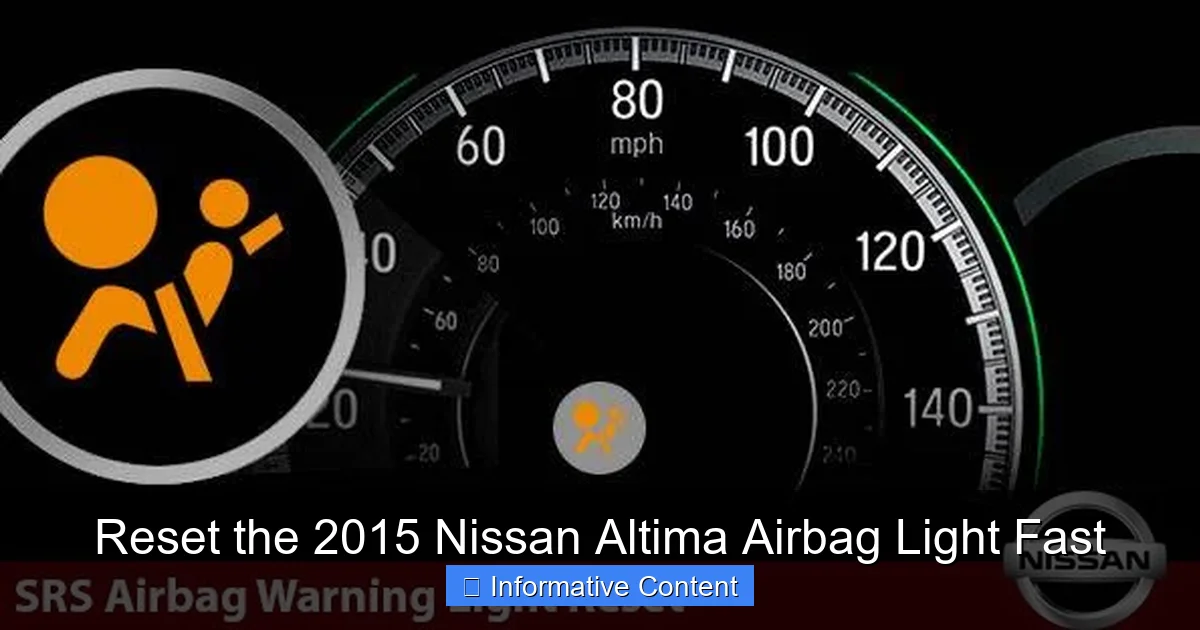
Visual guide about reset airbag light 2015 Nissan Altima
Image source: enginepartsdiagram.com
When you start your car, this system runs a self-check. If everything passes, the airbag light will illuminate for a few seconds and then turn off. If it stays on or flashes, the control unit has found a problem and has stored a specific Diagnostic Trouble Code (DTC) in its memory. The light itself is a generic alert; the DTC is the specific clue to what’s wrong.
What That Glowing Light Really Means
It’s easy to assume the worst, but the light indicates a system fault, not necessarily that the airbags are disabled (though that can be a consequence). The system may have deactivated the airbags as a safety precaution to prevent accidental deployment. This means addressing the light isn’t just about clearing a dashboard annoyance—it’s about restoring a critical safety feature of your vehicle.
Common Reasons the Airbag Light Stays On
Figuring out the “why” is half the battle. Here are the most frequent culprits for that persistent light in a 2015 Altima:
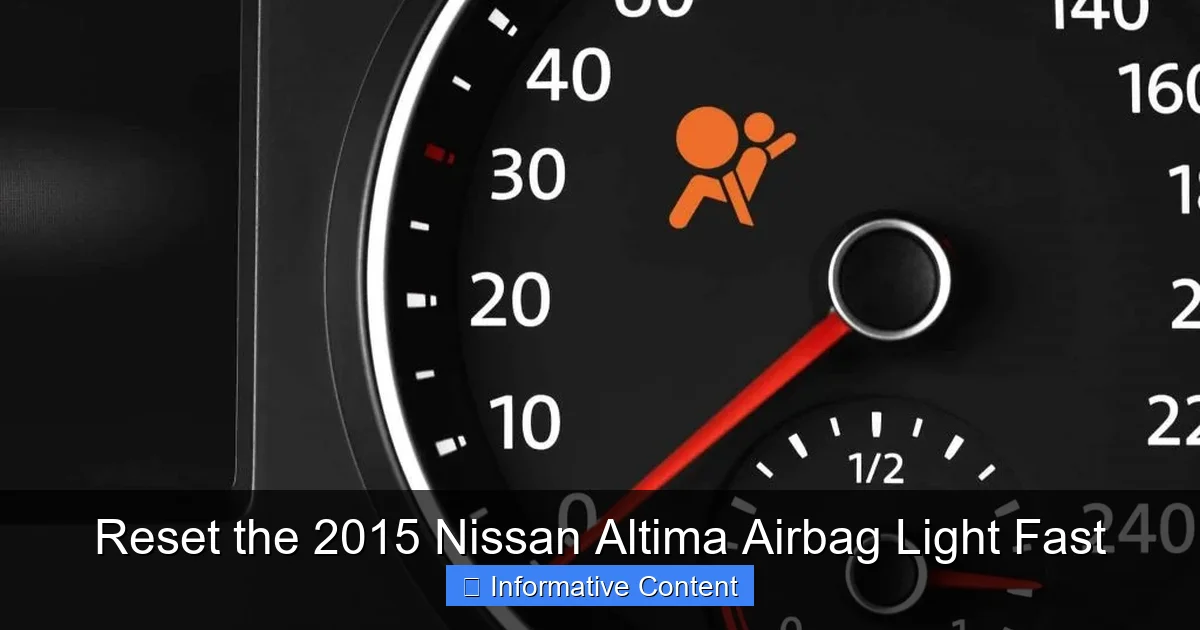
Visual guide about reset airbag light 2015 Nissan Altima
Image source: safetyrestore.com
- Faulty Occupant Classification Sensor (OCS): This sensor in the passenger seat determines if an adult, child, or no one is sitting there. It adjusts airbag deployment accordingly. Spills, heavy objects, or sensor failure can trigger the light.
- Loose Connections Under the Seats: The driver and passenger seats have wiring harnesses for side-impact airbags and seatbelt pre-tensioners. If you’ve recently moved the seats for cleaning or had work done, a plug may have come slightly loose.
- Depleted SRS Backup Battery: The SRS control unit has a small capacitor that provides power for deployment if the main battery is severed in a crash. Over 8-10 years, this can fail and trigger a light.
- Faulty Clock Spring (Spiral Cable): This component behind the steering wheel maintains electrical contact with the driver’s airbag as you turn the wheel. Wear and tear can break its circuits.
- Previous Accident or Impact: Even a minor fender-bender can trigger sensors that need to be reset.
- Simple System Glitch: Sometimes, a voltage spike or software hiccup can cause a temporary code.
The Essential First Step: Retrieving Diagnostic Trouble Codes (DTCs)
You wouldn’t guess a medicine without knowing the symptoms, right? The same goes for your Altima. Resetting the light without diagnosing the cause is like putting a bandage on a splinter without removing it—the problem will come back. To do this right, you need to read the SRS codes.
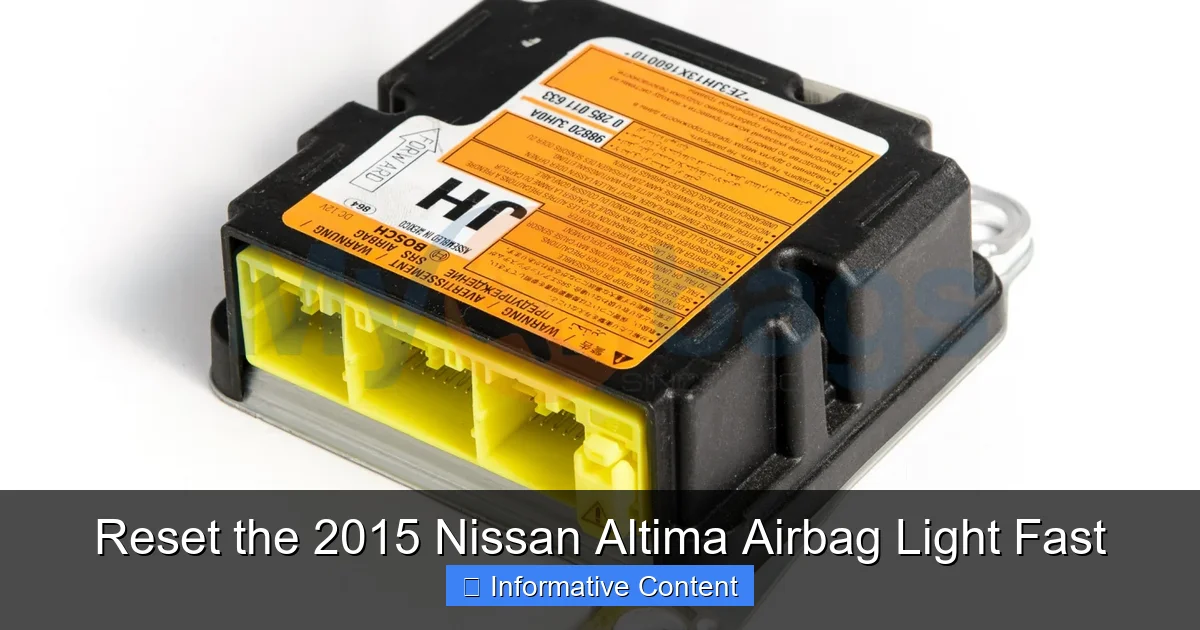
Visual guide about reset airbag light 2015 Nissan Altima
Image source: forum.myairbags.com
Why a Professional Scan Tool is Necessary
Unlike the check engine light, the SRS system typically requires a more advanced OBD-II scanner. A basic $20 code reader from the auto parts store usually won’t cut it. You need a scanner capable of accessing the SRS or body control module. Many parts stores offer free check engine light scans, but they often cannot read SRS codes. You have a few options:
- Purchase a Mid-Range Scanner: Tools like the ANCEL AD310 or higher models from Autel or Launch can read SRS codes for home mechanics.
- Visit a Trusted Mechanic: An independent shop can usually pull the codes for a small diagnostic fee (often $50-$100). This is a worthwhile investment to know exactly what you’re facing.
- Borrow or Rent a Tool: Some auto parts stores loan or rent more advanced scanners.
Once you have the scanner, the process is simple: locate the OBD-II port under the dashboard near your knees, plug in the scanner, turn the ignition to “ON” (without starting the engine), and follow the tool’s prompts to read “SRS” or “Airbag” codes. Write down any codes you find (e.g., “B1025” – Occupant Classification System Fault).
Method 1: The Basic Reset for Minor Glitches
If your diagnostic scan reveals a history code or a simple glitch (and you’ve checked for obvious issues like loose seat connections), this basic power cycle can sometimes clear the light. It’s the easiest and first thing to try.
- Ensure Safety: Park on a level surface, put the car in Park, and engage the parking brake.
- Disconnect the Battery: Using a 10mm wrench, disconnect the NEGATIVE (black) terminal from your car’s battery. Tuck the cable away so it cannot accidentally touch the terminal.
- Drain Residual Power: Wait at least 15-20 minutes. This is critical. It allows the SRS control unit’s capacitor to fully discharge and the computer’s memory to clear.
- Reconnect and Test: Reconnect the negative battery terminal tightly. Turn the ignition to “ON” (do not start). Observe the dashboard. The airbag light should illuminate and then turn off after a few seconds. Start the engine and see if the light remains off.
Tip: After reconnecting the battery, you may need to reset your power windows (by rolling them all the way down and up) and your radio presets.
Method 2: The Seat Sensor and Connection Check
Given how common seat-related issues are, this is a vital physical inspection. I once spent an hour diagnosing an airbag light only to find the plug under my passenger seat was halfway out after my nephew had been fiddling with the seat adjuster.
Step-by-Step Seat Inspection
- Move the front seats fully forward and then fully back to access the rear.
- Look underneath each seat. You will see one or two yellow-colored connectors. Yellow is the automotive standard color for airbag/SRS components.
- Carefully unplug each yellow connector. Inspect the pins for any bending, corrosion, or debris.
- Spray a small amount of electrical contact cleaner (not WD-40) on the pins and plug them back in until you hear a firm, audible click.
- Repeat for the other seat.
- Start the car and see if the light has turned off. If it was a loose connection, this often solves it immediately.
Important Safety Note: Always have the ignition OFF and the key removed when handling SRS connectors. This minimizes any remote chance of accidental deployment.
Method 3: Using an OBD-II Scanner to Clear the Codes
If the basic reset didn’t work and you’ve addressed the physical issue (like a loose connection or a repaired sensor), you’ll need to clear the stored code from the SRS module’s memory. This is where your capable scanner comes in.
The Clearing Process
- Plug your OBD-II scanner into the port.
- Turn the ignition to the “ON” position (engine off).
- Navigate the scanner’s menu. Select “SRS” or “Airbag System.”
- Choose “Read Codes” to confirm the code you are addressing is still present.
- Select the “Clear Codes” or “Erase Codes” function.
- Follow the on-screen prompts. The scanner will confirm when codes are cleared.
- Turn the ignition off, wait 10 seconds, and then start the car. The airbag light should perform its normal start-up sequence and then turn off.
If the light comes back on immediately, the underlying problem has not been fixed. The code will return, often within one ignition cycle. This is your car telling you the fault is still active.
When to Absolutely Seek Professional Help
While DIY spirit is great, your safety is paramount. There are times when calling a professional is the only right move.
- The Light Comes Back After Clearing: A persistent code means a persistent problem that needs professional diagnosis and repair.
- Codes Point to Major Components: If your scanner shows codes for the clock spring, impact sensors, or the SRS control unit itself, the repair often involves delicate disassembly of your steering wheel or dashboard. This is not for beginners.
- You’re Uncomfortable or Unsure: The airbag system contains pyrotechnic charges. If you have any doubt, let a certified Nissan technician handle it.
- After Any Accident: If the light came on after a collision, the system needs a full professional inspection, even if the damage seems minor.
Estimated Cost Table for Professional Repairs
If you do need to go to a shop, here’s a rough idea of what common fixes might cost (parts and labor). Prices vary by region and shop.
| Component/Service | Estimated Repair Cost Range |
|---|---|
| Diagnostic Fee | $50 – $120 |
| Occupant Classification Sensor (OCS) Repair/Reset | $150 – $400 |
| Clock Spring (Spiral Cable) Replacement | $250 – $500 |
| SRS Control Unit Replacement | $500 – $900+ |
| Seatbelt Pre-tensioner or Side Airbag Sensor | $200 – $600 |
Keeping Your Airbag System Healthy: Proactive Tips
A little prevention goes a long way. Here’s how to avoid future airbag light headaches:
- Be Mindful of Under-Seat Cables: When vacuuming or adjusting seats, be careful not to kick or snag the yellow wiring harnesses.
- Avoid Spills on Seats: Liquid seeping into the passenger seat can damage the Occupant Classification Sensor. Clean spills promptly.
- Use Caution with Aftermarket Modifications: Installing aftermarket seats or steering wheels can interfere with the SRS system if not done correctly.
- Battery Health: A weak car battery can cause voltage fluctuations that confuse the SRS computer. Replace an old battery promptly.
Conclusion: Safety First, Savings Second
Seeing the airbag light on in your 2015 Nissan Altima can be unsettling, but as you’ve learned, it’s not an automatic ticket to a huge repair bill. Start with the simple checks: inspect the connections under your seats and try a battery disconnect reset. Arm yourself with knowledge by investing in a good code reader or a cheap professional diagnosis to get the specific fault code. Often, the fix is straightforward.
Remember, the goal isn’t just to turn off a light; it’s to ensure one of your car’s most important safety systems is fully operational. If your DIY efforts don’t resolve it, or if the codes point to complex components, don’t hesitate to take your Altima to a qualified technician. Driving with a functioning airbag system provides peace of mind that’s truly priceless. Now, you’re equipped with the knowledge to tackle this issue confidently and get back on the road safely.
Frequently Asked Questions
Why is my 2015 Nissan Altima airbag light on?
The airbag light, or SRS (Supplemental Restraint System) light, typically illuminates due to a fault in the system. Common causes include a problem with the seat belt sensors, a faulty airbag clock spring, or a previous minor impact that triggered a sensor error.
Can I reset the airbag light myself on a 2015 Altima?
Yes, you can often reset the airbag light yourself if the underlying issue has been resolved. For many 2015 Altima owners, this involves a specific sequence of turning the ignition key on and off, though using an OBD2 scanner with SRS capability is the most reliable method.
What is the fastest way to reset the 2015 Nissan Altima airbag light?
The fastest and most definitive way to reset the airbag light is by using a professional-grade OBD2 diagnostic scanner that can access the SRS module. Simply clearing the fault codes with this tool will reset the light, provided the actual problem is fixed.
Will disconnecting the battery reset the airbag light?
Disconnecting the car battery for a period of time may reset the airbag light on some vehicles, but it is not a guaranteed fix for the 2015 Nissan Altima. The SRS system often retains codes in non-volatile memory, so a proper scanner is usually required for a successful reset.
Is it safe to drive with the airbag light on?
It is not safe to drive with the airbag light illuminated, as it indicates a malfunction in the supplemental restraint system. This means your airbags may not deploy in the event of a collision, putting you at greater risk of injury.
How do I permanently fix the airbag light on my Altima?
To permanently fix the airbag light, you must first diagnose and repair the specific fault causing the SRS warning. After the repair, you must then use an appropriate scanner to clear the diagnostic trouble codes and reset the 2015 Nissan Altima airbag light.

At CarLegit, we believe information should be clear, factual, and genuinely helpful. That’s why every guide, review, and update on our website is created with care, research, and a strong focus on user experience.