
Resetting the tire pressure monitoring system (TPMS) on your 2017 Honda Civic is simple and takes just a few minutes. Whether you’ve recently rotated your tires, replaced a sensor, or simply filled your tires to the correct PSI, knowing how to reset the system ensures your dashboard warning light turns off and your safety isn’t compromised.
In This Article
- 1 Key Takeaways
- 2 📑 Table of Contents
- 3 Why Tire Pressure Matters in Your 2017 Honda Civic
- 4 Understanding the TPMS Warning Light
- 5 Step-by-Step Guide: How to Reset Tire Pressure on Honda Civic 2017
- 6 Troubleshooting Common TPMS Reset Issues
- 7 Maintaining Your TPMS for Long-Term Reliability
- 8 When to Seek Professional Help
- 9 Conclusion
- 10 Frequently Asked Questions
Key Takeaways
- Understand the TPMS warning light: A flashing or steady TPMS light means your tire pressure is low or a sensor isn’t working—don’t ignore it.
- Check tire pressure first: Always inflate tires to the recommended PSI (found on the driver’s door jamb) before resetting.
- Use the TPMS reset button: Located under the steering wheel, this button initiates the reset process after proper inflation.
- Drive to complete the reset: After pressing the button, drive at 20+ mph for 10+ minutes to allow sensors to sync.
- Battery changes may affect sensors: If the TPMS light stays on after a battery replacement, a reset is often needed.
- Use a TPMS tool for advanced issues: If the reset fails, a professional scan tool may be required to diagnose faulty sensors.
- Regular maintenance prevents issues: Check tire pressure monthly and before long trips to avoid false warnings.
📑 Table of Contents
Why Tire Pressure Matters in Your 2017 Honda Civic
Your 2017 Honda Civic is equipped with a Tire Pressure Monitoring System (TPMS) designed to keep you safe on the road. This system continuously checks the air pressure in each of your tires and alerts you with a warning light on the dashboard if one or more tires are significantly underinflated. Proper tire pressure isn’t just about avoiding that annoying dashboard light—it’s critical for your safety, fuel efficiency, and tire longevity.
Underinflated tires can overheat, wear unevenly, and even blow out at high speeds. Overinflated tires reduce traction and make your ride harsher. The TPMS helps you catch these issues early, but it only works if you know how to respond when the light comes on. That’s where learning how to reset tire pressure on Honda Civic 2017 becomes essential. Whether you’ve just filled your tires after a cold night or replaced a damaged sensor, resetting the system ensures your car’s computer recognizes the correct pressure and turns off the warning light.
Understanding the TPMS Warning Light
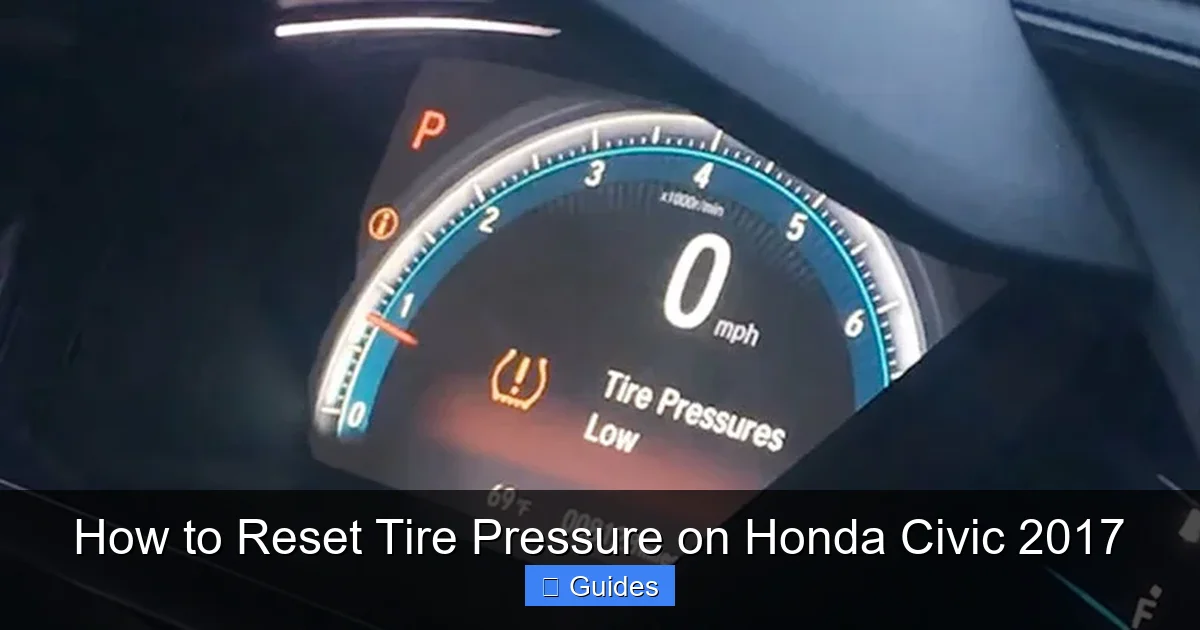
The TPMS warning light looks like a horseshoe with an exclamation point inside and usually appears on your dashboard as a yellow or amber symbol. When it illuminates, it means one or more of your tires has dropped below the recommended pressure threshold—typically around 25% below the ideal PSI. However, the light can also come on due to a malfunctioning sensor, a dead sensor battery, or after a tire rotation or repair.

Visual guide about How to Reset Tire Pressure on Honda Civic 2017
Image source: i.redd.it
Types of TPMS Lights
- Steady light: Indicates low tire pressure in one or more tires. Check and inflate your tires immediately.
- Flashing light (for more than a minute): Suggests a system malfunction, such as a faulty sensor or communication error. This requires further diagnosis.
- Light turns off after driving: Sometimes, cold weather causes temporary pressure drops. If the light goes off after driving and warming up, no action may be needed—but always double-check pressure.
It’s important not to ignore the TPMS light, even if your tires look fine. Visual inspection isn’t reliable—a tire can be significantly underinflated and still appear normal. Always use a tire pressure gauge to verify the actual PSI.
Step-by-Step Guide: How to Reset Tire Pressure on Honda Civic 2017
Resetting the TPMS on your 2017 Honda Civic is a straightforward process that you can do yourself in under 15 minutes. Follow these steps carefully to ensure the system resets correctly and the warning light turns off.
Visual guide about How to Reset Tire Pressure on Honda Civic 2017
Image source: hondatheotherside.com
Step 1: Check and Adjust Tire Pressure
Before attempting any reset, make sure all four tires are inflated to the correct pressure. The recommended PSI for your 2017 Honda Civic is typically 32 PSI for all tires, but always check the sticker on the driver’s side door jamb for the exact specification. This sticker lists the correct pressure for both front and rear tires, which may differ slightly depending on your trim level or tire size.
Use a reliable digital or analog tire pressure gauge to check each tire. Remove the valve cap, press the gauge firmly onto the valve stem, and read the pressure. If a tire is low, use an air compressor to inflate it to the recommended level. Don’t forget the spare tire—some models include a TPMS sensor in the spare, and it should also be checked periodically.
Pro Tip: Check tire pressure when the tires are “cold,” meaning the car hasn’t been driven for at least three hours. Driving heats up the tires and increases pressure, giving a false reading.
Step 2: Locate the TPMS Reset Button
The TPMS reset button is located under the steering column, near the driver’s left knee. You’ll need to crouch down slightly to see it. It’s a small, rectangular button labeled “TPMS” or “Tire Pressure.” It may be black or gray and is often recessed to prevent accidental presses.
If you’re having trouble finding it, consult your owner’s manual—Honda provides a diagram showing its exact location. Some drivers use a flashlight to spot it more easily, especially in low-light conditions.
Step 3: Turn the Ignition to the “ON” Position
Do not start the engine. Instead, turn the key to the “ON” position (or press the start button without pressing the brake pedal if your Civic has keyless ignition). This powers up the vehicle’s electrical systems, including the TPMS module, without engaging the engine.
You’ll see the dashboard lights illuminate, including the TPMS warning light. Wait a few seconds to ensure all systems are active before proceeding.
Step 4: Press and Hold the TPMS Reset Button
With the ignition on, press and hold the TPMS reset button for about 3 to 5 seconds. You should see the TPMS warning light on the dashboard begin to blink slowly (about once per second). This indicates that the system is in reset mode and is ready to relearn the tire pressures.
If the light doesn’t blink, release the button, wait 10 seconds, and try again. Make sure you’re holding it long enough—rushing this step is a common mistake.
Step 5: Release the Button and Wait
Once the light starts blinking, release the button. The system is now in learning mode. You’ll need to drive the car to complete the reset process. The sensors in each tire will transmit their pressure data to the car’s computer as you drive.
Step 6: Drive to Complete the Reset
Start the engine and drive your Honda Civic at a speed of 20 mph or higher for at least 10 to 15 minutes. This allows the TPMS sensors to communicate with the vehicle’s computer and confirm that all tires are properly inflated.
During this drive, avoid sudden stops, sharp turns, or rough roads if possible. The system needs stable conditions to accurately read the sensor data. After driving, the TPMS light should turn off automatically.
Note: If the light remains on after driving, repeat the process. Sometimes, the system needs a second attempt to sync properly.
Troubleshooting Common TPMS Reset Issues
Even with careful steps, the TPMS reset might not work the first time. Here are some common issues and how to fix them.
Visual guide about How to Reset Tire Pressure on Honda Civic 2017
Image source: statelesshomesteading.com
The TPMS Light Won’t Turn Off
If the light stays on after following the reset procedure, double-check the tire pressure. Even a small deviation can prevent the system from recognizing the correct reading. Use a high-quality gauge and recheck all four tires.
Also, ensure the tires are cold when checking. If you’ve just driven, wait a few hours before rechecking and resetting.
The Reset Button Doesn’t Respond
If pressing the button doesn’t cause the light to blink, the issue could be electrical. Check that the ignition is truly in the “ON” position and that all dashboard lights are active. If the button still doesn’t work, there may be a blown fuse or a wiring issue. Consult your owner’s manual for the TPMS fuse location (usually in the under-hood or interior fuse box) and replace it if necessary.
One Sensor Isn’t Working
TPMS sensors are powered by small batteries that last 5 to 10 years. If one sensor fails, the system may not reset properly. You might see a “TPMS Error” message or a flashing light that doesn’t go away. In this case, a professional scan tool is needed to diagnose which sensor is faulty. Most auto parts stores or tire shops can perform this service for a small fee.
After a Battery Replacement
Replacing the car’s battery can sometimes disrupt the TPMS system, causing the light to come on even if tire pressure is correct. This is because the system loses power and needs to relearn the sensor IDs. In most cases, the standard reset procedure will fix this. However, if the light persists, a relearn procedure using a TPMS activation tool may be required.
Maintaining Your TPMS for Long-Term Reliability
Resetting the TPMS is only part of the equation. To keep your system working smoothly and avoid frequent warnings, follow these maintenance tips.
Check Tire Pressure Monthly
Make it a habit to check your tire pressure at least once a month. Tires naturally lose air over time—about 1 PSI per month—and temperature changes can cause fluctuations. Cold weather can drop pressure by 1 PSI for every 10°F decrease in temperature.
Keep a tire pressure gauge in your glove compartment and use it regularly. Many gas stations have air pumps with built-in gauges, but they’re not always accurate. A personal gauge ensures consistency.
Inspect Tires for Damage
While checking pressure, look for signs of wear, cracks, bulges, or embedded objects like nails. Damaged tires can affect pressure readings and sensor performance. If you notice anything unusual, have your tires inspected by a professional.
Rotate Tires Regularly
Honda recommends rotating your tires every 5,000 to 7,500 miles to ensure even wear. When you rotate tires, the TPMS sensors move to different positions. Most modern systems can adapt, but after a rotation, it’s a good idea to reset the TPMS to ensure accurate monitoring.
Replace Sensors When Needed
TPMS sensors don’t last forever. If a sensor fails, it usually can’t be repaired—only replaced. Most sensors cost between $50 and $100 each, including installation. Some shops offer sensor programming services to ensure compatibility with your Civic’s system.
When replacing tires, ask if the sensors need to be transferred or replaced. Some new tires come with sensors already installed, while others require you to reuse the old ones.
When to Seek Professional Help
While most TPMS resets can be done at home, there are situations where professional assistance is needed.
Persistent Warning Light
If the TPMS light won’t turn off after multiple reset attempts, there may be a deeper issue. A professional mechanic can use a diagnostic scanner to read error codes and determine if a sensor is faulty, the control module is damaged, or there’s a wiring problem.
Sensor Programming Issues
Some aftermarket sensors or sensors from different vehicles require programming to work with your Civic. This can’t be done with the reset button alone. A shop with the right tools can program the sensors to match your car’s system.
Complex Repairs
If you’re not comfortable working under the dashboard or near electrical components, it’s best to let a professional handle the reset or repair. They have the experience and tools to do the job safely and correctly.
Conclusion
Knowing how to reset tire pressure on Honda Civic 2017 is a valuable skill that every owner should have. It’s a quick, easy process that can save you time, money, and stress. By following the steps outlined in this guide—checking tire pressure, using the reset button, and driving to complete the sync—you can keep your TPMS functioning properly and your dashboard free of unnecessary warnings.
Remember, the TPMS is there to protect you. Regular maintenance, timely resets, and attention to tire health go a long way in ensuring a safe and smooth driving experience. Don’t wait for the light to come on—stay proactive, check your tires often, and reset the system whenever needed. Your Honda Civic will thank you with better performance, improved fuel economy, and peace of mind on every journey.
Frequently Asked Questions
How often should I reset the TPMS on my 2017 Honda Civic?
You only need to reset the TPMS when the warning light comes on after inflating tires, rotating tires, or replacing a sensor. There’s no need for routine resets unless the system alerts you.
Can I reset the TPMS without driving?
No, driving is required to complete the reset. The sensors must transmit data while the car is moving for the system to confirm proper pressure.
What if the TPMS light comes on while driving?
Safely pull over and check your tire pressure immediately. If one tire is significantly low, inflate it or call for roadside assistance. Do not continue driving on underinflated tires.
Does the spare tire have a TPMS sensor?
Some 2017 Honda Civic models include a TPMS sensor in the spare tire, but not all. Check your owner’s manual or look for a sensor valve stem on the spare.
Can I use a tire inflator with a built-in gauge?
Yes, but verify its accuracy with a separate gauge. Built-in gauges on portable inflators can be less precise, leading to incorrect pressure readings.
Will a dead car battery affect the TPMS?
Yes, a dead or disconnected battery can cause the TPMS to lose sensor data. After replacing the battery, a reset is often needed to restore proper function.

At CarLegit, we believe information should be clear, factual, and genuinely helpful. That’s why every guide, review, and update on our website is created with care, research, and a strong focus on user experience.