
Resetting the tire pressure monitoring system (TPMS) on your 2020 Honda Civic is quick and easy once you know the right steps. This guide walks you through the entire process—from checking tire pressure to completing the reset—so you can drive safely and avoid warning lights.
In This Article
- 1 Key Takeaways
- 2 📑 Table of Contents
- 3 Why Tire Pressure Matters in Your 2020 Honda Civic
- 4 Understanding the TPMS in Your 2020 Honda Civic
- 5 When Should You Reset the Tire Pressure System?
- 6 Step-by-Step Guide to Reset Tire Pressure on Honda Civic 2020
- 7 Troubleshooting Common TPMS Reset Issues
- 8 Tips for Maintaining Proper Tire Pressure
- 9 When to Visit a Honda Service Center
- 10 Conclusion
- 11 Frequently Asked Questions
- 11.1 How do I reset the tire pressure on a 2020 Honda Civic?
- 11.2 Where is the TPMS reset button on a 2020 Honda Civic?
- 11.3 Why won’t my TPMS light turn off after adding air?
- 11.4 Can I reset the TPMS without a special tool?
- 11.5 How often should I check my tire pressure?
- 11.6 What if the TPMS light keeps coming back?
Key Takeaways
- Check tire pressure first: Always ensure all tires are inflated to the recommended PSI before resetting the TPMS.
- Use the correct reset procedure: The 2020 Honda Civic uses a button-based reset method, not a scan tool.
- Drive after resetting: You must drive the car for a short distance to allow the system to recalibrate.
- Locate the TPMS button: It’s usually under the dashboard near the steering wheel or in the glove compartment.
- Understand warning light behavior: The TPMS light may flash briefly during reset—this is normal.
- Maintain proper tire care: Regularly check tire pressure monthly to prevent future warnings.
- Seek professional help if needed: If the light stays on after reset, visit a Honda service center for diagnosis.
📑 Table of Contents
- Why Tire Pressure Matters in Your 2020 Honda Civic
- Understanding the TPMS in Your 2020 Honda Civic
- When Should You Reset the Tire Pressure System?
- Step-by-Step Guide to Reset Tire Pressure on Honda Civic 2020
- Troubleshooting Common TPMS Reset Issues
- Tips for Maintaining Proper Tire Pressure
- When to Visit a Honda Service Center
- Conclusion
Why Tire Pressure Matters in Your 2020 Honda Civic
Driving with the correct tire pressure isn’t just about comfort—it’s about safety, fuel efficiency, and the longevity of your tires. The 2020 Honda Civic comes equipped with a Tire Pressure Monitoring System (TPMS), a smart feature designed to alert you when one or more tires are significantly underinflated. This system helps prevent blowouts, improves handling, and ensures your car runs as efficiently as possible.
But what happens when you’ve added air to your tires and the warning light is still glowing on your dashboard? That’s where the reset process comes in. The TPMS needs to be recalibrated so it stops showing a false alert. Resetting the tire pressure on your Honda Civic 2020 is a straightforward task, but it’s one that many drivers overlook or misunderstand. Whether you’ve just rotated your tires, replaced a flat, or simply topped off the air, knowing how to reset the system is essential.
In this guide, we’ll walk you through every step of the process—clearly, simply, and without any technical jargon. You don’t need special tools or a mechanic’s degree. With a few minutes and the right instructions, you can reset your tire pressure monitoring system and get back on the road with confidence.
Understanding the TPMS in Your 2020 Honda Civic
Visual guide about How to Reset Tire Pressure on Honda Civic 2020
Image source: i.ytimg.com
Before diving into the reset procedure, it’s helpful to understand how the TPMS actually works in your 2020 Honda Civic. Unlike older systems that used mechanical sensors, modern Civics like the 2020 model use direct TPMS technology. This means each tire has a sensor mounted inside the wheel that measures the actual air pressure and sends that data wirelessly to the car’s computer.
These sensors are battery-powered and typically last 5 to 10 years, so they don’t need constant replacement. However, they do require periodic calibration—especially after tire maintenance. The system is designed to alert you when tire pressure drops 25% below the recommended level, which is a significant safety threshold.
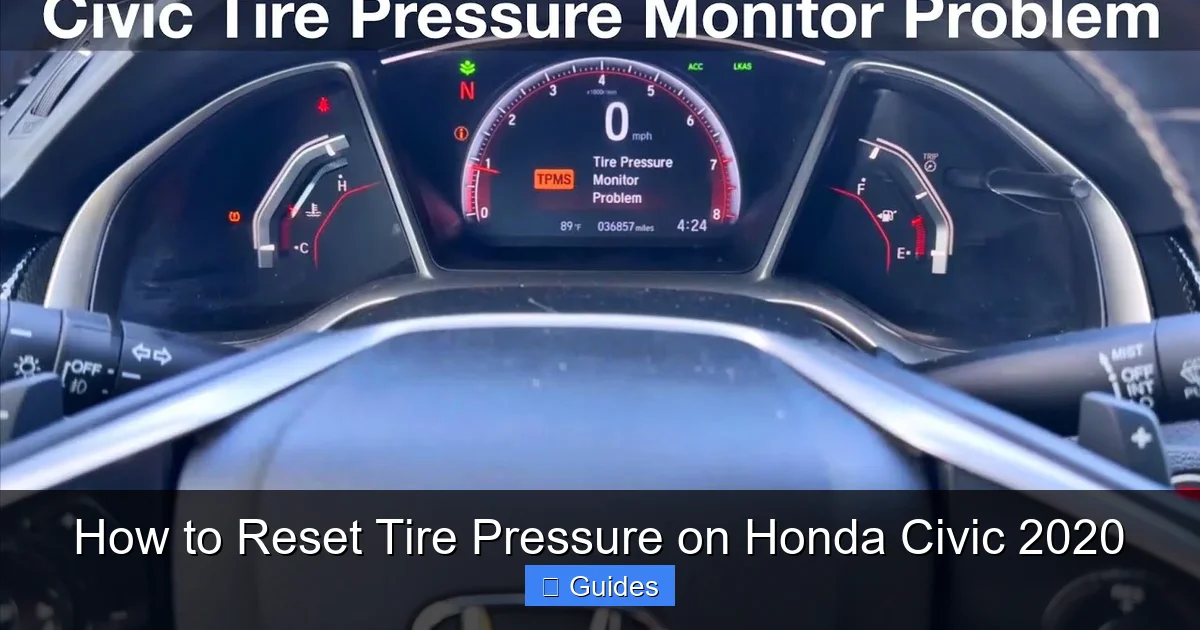
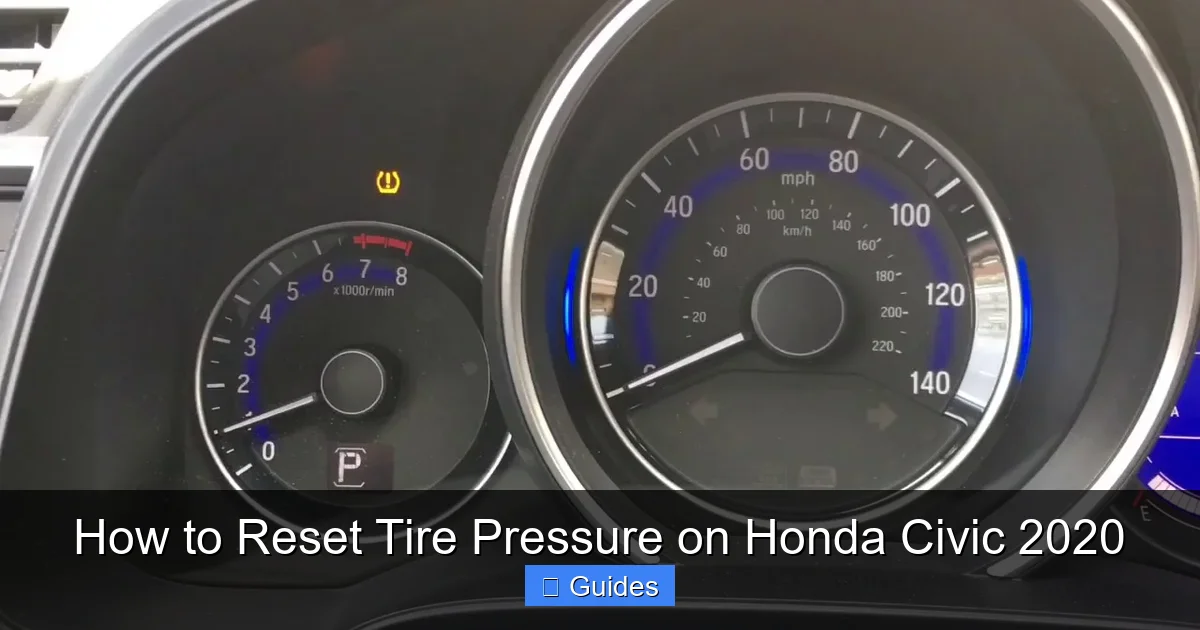
The TPMS warning light on your dashboard looks like a yellow exclamation point inside a U-shaped symbol (resembling a tire cross-section). When it illuminates, it means one or more tires are underinflated. But even after you’ve added air, the light may stay on until the system is reset. That’s because the car’s computer still “remembers” the low-pressure reading and needs to be told that the issue has been resolved.
It’s also worth noting that temperature changes can affect tire pressure. Cold weather causes air to contract, which can trigger the TPMS light even if your tires were properly inflated in warmer conditions. This is normal, and resetting the system after adjusting for temperature is a common practice.
When Should You Reset the Tire Pressure System?
Visual guide about How to Reset Tire Pressure on Honda Civic 2020
Image source: i.ytimg.com
Knowing when to reset the TPMS is just as important as knowing how. You don’t need to reset it every time you check your tires—only when the system has been triggered and the issue has been fixed. Here are the most common scenarios when a reset is necessary:
After Adding Air to Tires
If you’ve noticed the TPMS light on and added air to one or more tires to bring them up to the recommended pressure, a reset is needed. The system won’t automatically recognize the change until you manually reset it.
After Tire Rotation or Replacement
Whenever tires are removed, rotated, or replaced, the TPMS sensors may lose their calibration. Even if the pressure is correct, the system might still show a warning until it’s reset.
After a Seasonal Temperature Change
As mentioned earlier, cold weather can cause tire pressure to drop. If you’ve adjusted your tires for winter driving and the light is still on, a reset will clear the warning.
After Replacing a TPMS Sensor
If a sensor has failed and been replaced (a job best left to professionals), the new sensor will need to be registered with the car’s computer. This often requires a reset or reprogramming using a diagnostic tool.
After a Battery Disconnect
Disconnecting the car battery—whether for maintenance or replacement—can sometimes reset the car’s computer systems. In some cases, this may require a TPMS reset to restore proper function.
It’s important to note that simply turning the ignition on and off won’t reset the system. The process requires a specific sequence of steps, which we’ll cover in detail next.
Step-by-Step Guide to Reset Tire Pressure on Honda Civic 2020
Visual guide about How to Reset Tire Pressure on Honda Civic 2020
Image source: i.ytimg.com
Now that you understand why and when to reset the TPMS, let’s get into the actual process. Resetting the tire pressure on your 2020 Honda Civic is a simple procedure that takes less than five minutes. You don’t need any special tools—just your hands and a few minutes of your time.
Step 1: Check and Adjust Tire Pressure
Before resetting, make sure all four tires are inflated to the correct pressure. The recommended PSI for your 2020 Honda Civic can be found on a sticker inside the driver’s side door jamb. It’s usually around 32 PSI for normal driving conditions, but it may vary slightly depending on your trim level or tire size.
Use a reliable tire pressure gauge to check each tire. If any tire is underinflated, add air using a gas station air pump or a portable compressor. Be sure to check the spare tire as well if your model includes one—some TPMS systems monitor the spare.
Pro tip: Check tire pressure when the tires are cold (before driving or after the car has been parked for at least three hours). Heat from driving can increase pressure readings, leading to inaccurate adjustments.
Step 2: Turn the Ignition to the “ON” Position
Sit in the driver’s seat and turn the ignition key to the “ON” position—but do not start the engine. If you have a push-button start, press the “Start” button once without pressing the brake pedal. This will power up the dashboard and electronic systems without engaging the engine.
You should see all the warning lights briefly illuminate, including the TPMS light. This confirms the system is active and ready for the reset.
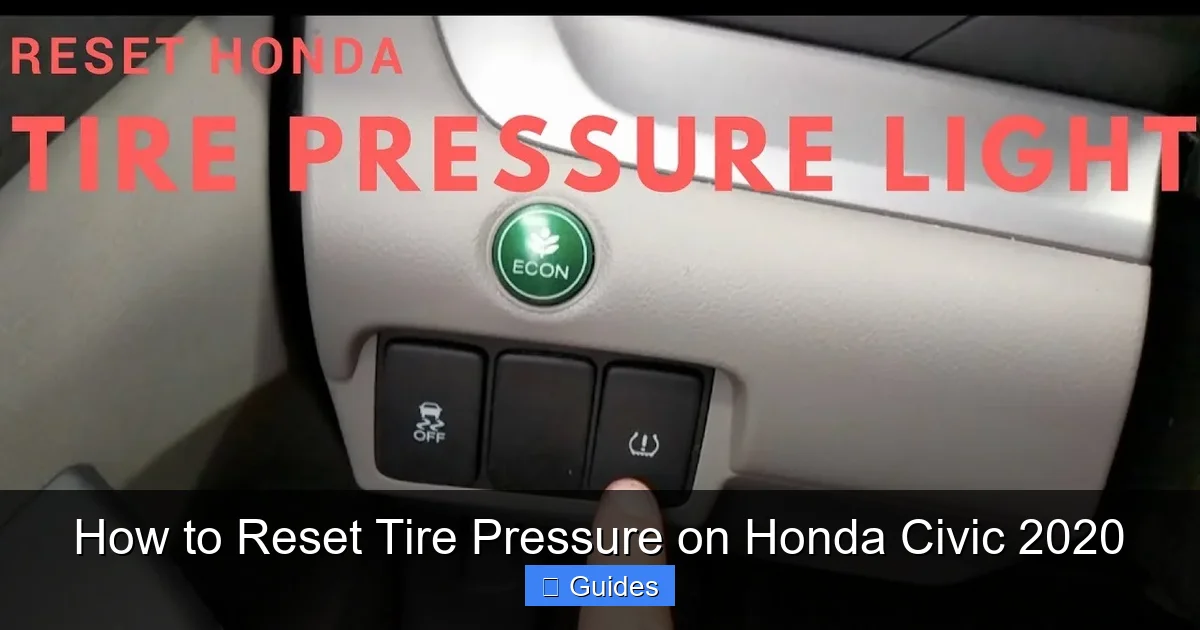
Step 3: Locate the TPMS Reset Button
The TPMS reset button is typically located under the dashboard, near the steering column, or sometimes in the glove compartment. It’s a small, unmarked button—often black or gray—that may be recessed to prevent accidental presses.
In most 2020 Honda Civics, you’ll find it on the lower left side of the dashboard, just above the footwell. You may need to crouch down or use a flashlight to spot it. Some models have a small diagram near the button indicating its function.
If you can’t find it, consult your owner’s manual. Honda provides a detailed diagram showing the location for your specific trim and model year.
Step 4: Press and Hold the TPMS Reset Button
Once you’ve located the button, press and hold it for about 3 to 5 seconds. You should see the TPMS warning light on the dashboard begin to flash. This indicates that the system is in reset mode.
Keep holding the button until the light stops flashing and stays on steadily—or in some cases, turns off completely. The exact behavior may vary slightly depending on your vehicle’s configuration.
If the light doesn’t flash, try releasing and pressing the button again. Make sure the ignition is still in the “ON” position and that you’re pressing the correct button.
Step 5: Turn Off the Ignition
After the light has flashed (or turned off), release the button and turn the ignition back to the “OFF” position. If you have a push-button start, press the “Start” button again to shut everything down.
Wait about 10 to 15 seconds before proceeding to the next step.
Step 6: Start the Engine and Drive
Now, start the engine normally. The TPMS light should either remain off or flash briefly and then turn off. This is normal and indicates the reset was successful.
To complete the process, drive the car for at least 10 to 15 minutes at a speed of 30 mph or higher. This allows the system to recalibrate and confirm that all tire pressures are within the normal range.
During this drive, avoid sudden braking or sharp turns. The system needs stable conditions to accurately read the sensor data.
After driving, check the dashboard. If the TPMS light remains off, the reset was successful. If it comes back on, double-check your tire pressures and repeat the process.
Troubleshooting Common TPMS Reset Issues
Even with the correct steps, sometimes the TPMS reset doesn’t work as expected. Here are some common issues and how to resolve them:
The TPMS Light Won’t Turn Off
If the light remains on after following the reset procedure, the most likely cause is that one or more tires are still underinflated. Recheck all tire pressures with a gauge and adjust as needed. Also, ensure the spare tire (if monitored) is properly inflated.
Another possibility is a faulty TPMS sensor. Over time, these sensors can fail due to battery depletion or damage. If the light persists after multiple resets and correct inflation, visit a Honda service center for diagnosis.
The Reset Button Doesn’t Respond
If pressing the button doesn’t cause the light to flash, make sure the ignition is in the “ON” position and not just in accessory mode. Also, confirm you’re pressing the correct button—some Civics have similar-looking buttons for other functions.
In rare cases, the button itself may be defective. If you suspect this, consult your owner’s manual or contact a Honda dealer.
The Light Flashes Continuously After Reset
A continuously flashing TPMS light usually indicates a system malfunction. This could be due to a weak sensor battery, interference, or a problem with the car’s computer. In this case, professional diagnosis is recommended.
TPMS Light Comes Back On After a Few Days
If the light returns shortly after a reset, it may be due to a slow leak in one of the tires. Check for nails, cracks, or valve stem damage. Also, consider seasonal temperature drops—recheck pressure in colder weather.
Tips for Maintaining Proper Tire Pressure
Resetting the TPMS is only part of the solution. To avoid frequent warnings and ensure optimal performance, follow these tire maintenance tips:
Check Tire Pressure Monthly
Make it a habit to check your tire pressure at least once a month. Use a digital or analog gauge for accuracy. Many gas stations have free air pumps with built-in gauges, but it’s better to use your own for consistency.
Adjust for Seasonal Changes
Tire pressure drops about 1 PSI for every 10°F decrease in temperature. In winter, check your tires more frequently and adjust as needed.
Don’t Overinflate
While underinflation is dangerous, overinflation can also cause problems—such as reduced traction, uneven tire wear, and a harsher ride. Always follow the recommended PSI, not the maximum listed on the tire sidewall.
Inspect Tires Regularly
Look for signs of wear, cracks, bulges, or embedded objects. Address any issues promptly to prevent flats or blowouts.
Rotate Tires Every 5,000 to 7,500 Miles
Regular rotation helps ensure even wear and extends tire life. After rotation, remember to reset the TPMS if the light comes on.
Keep the Spare Tire Inflated
If your Civic has a full-size spare, check its pressure periodically. A flat spare is useless in an emergency.
When to Visit a Honda Service Center
While most TPMS issues can be resolved at home, there are times when professional help is needed. Visit a Honda service center if:
– The TPMS light remains on after multiple resets and correct inflation.
– You suspect a sensor is faulty or has failed.
– The system shows inconsistent readings or error codes.
– You’ve recently replaced a tire or sensor and the system won’t recognize it.
Honda technicians have specialized tools to diagnose and reprogram TPMS sensors. They can also check for underlying issues like wheel damage or electrical problems.
Additionally, if you’re unsure about any part of the reset process, don’t hesitate to ask for help. It’s always better to be safe than sorry when it comes to vehicle safety systems.
Conclusion
Resetting the tire pressure on your 2020 Honda Civic is a simple but essential task that every owner should know how to do. With the right steps—checking pressure, locating the reset button, and driving to recalibrate—you can clear the TPMS warning light and ensure your tires are performing at their best.
Regular maintenance, including monthly pressure checks and seasonal adjustments, will help prevent future issues and keep your Civic running smoothly. And if you ever run into problems you can’t solve at home, don’t hesitate to reach out to a professional.
By taking care of your tires and understanding how the TPMS works, you’re not just maintaining your car—you’re protecting yourself, your passengers, and everyone else on the road. So the next time that little yellow light pops up, don’t panic. Just follow this guide, reset the system, and drive with confidence.
Frequently Asked Questions
How do I reset the tire pressure on a 2020 Honda Civic?
Turn the ignition to “ON,” locate the TPMS reset button (usually under the dashboard), press and hold it until the light flashes, then turn off the ignition and drive the car for 10–15 minutes to complete the reset.
The TPMS reset button is typically found under the dashboard on the lower left side, near the steering column. It’s a small, unmarked button that may require a flashlight to locate.
Why won’t my TPMS light turn off after adding air?
The light may stay on because the system hasn’t been reset. Even with correct pressure, the car’s computer needs to be manually reset to recognize the change.
Can I reset the TPMS without a special tool?
Yes, the 2020 Honda Civic allows you to reset the TPMS using the built-in reset button. No scan tools or dealership visit is required for a standard reset.
How often should I check my tire pressure?
Check your tire pressure at least once a month and before long trips. Also check it seasonally, especially in winter when cold weather can reduce pressure.
What if the TPMS light keeps coming back?
If the light returns after a reset, you may have a slow leak, a faulty sensor, or a temperature-related pressure drop. Recheck tire condition and consider professional diagnosis if the issue persists.

At CarLegit, we believe information should be clear, factual, and genuinely helpful. That’s why every guide, review, and update on our website is created with care, research, and a strong focus on user experience.