
Is your Jeep Wrangler’s traction control light stuck on? Don’t ignore it—this guide walks you through easy, step-by-step methods to reset the light safely. Whether it’s a temporary glitch or a sensor issue, we’ll help you diagnose and fix it without a costly trip to the mechanic.
In This Article
- 1 Key Takeaways
- 2 📑 Table of Contents
- 3 How to Reset Traction Control Light Jeep Wrangler
- 4 Understanding the Traction Control System in Your Jeep Wrangler
- 5 Simple Methods to Reset the Traction Control Light
- 6 Advanced Troubleshooting and Diagnostics
- 7 When to See a Mechanic
- 8 Preventing Future Traction Control Issues
- 9 Conclusion
- 10 Frequently Asked Questions
- 10.1 Why is my Jeep Wrangler’s traction control light on?
- 10.2 Can I drive my Jeep with the traction control light on?
- 10.3 How do I reset the traction control light without a scanner?
- 10.4 Will the light reset itself?
- 10.5 What does it mean if both the ABS and traction control lights are on?
- 10.6 How much does it cost to fix a traction control issue?
Key Takeaways
- Understand what the traction control light means: It indicates a problem with the vehicle’s stability or traction system, which can affect handling in slippery conditions.
- Common causes include wheel speed sensor issues, low tire pressure, or a faulty ABS module: Identifying the root cause helps prevent future warnings.
- Try a simple reset first: Turning the vehicle off and on or using the traction control button can clear temporary glitches.
- Use an OBD2 scanner for deeper diagnostics: This tool reads error codes and helps pinpoint electrical or sensor problems.
- Check tire condition and alignment: Worn or uneven tires can trigger false traction control alerts.
- When to see a mechanic: If the light persists after troubleshooting, professional diagnosis may be needed to avoid safety risks.
- Regular maintenance prevents issues: Inspecting sensors, brakes, and tires regularly keeps the system running smoothly.
📑 Table of Contents
How to Reset Traction Control Light Jeep Wrangler
Driving a Jeep Wrangler is all about freedom—open trails, rugged terrain, and the thrill of adventure. But when that little traction control light pops up on your dashboard, it can put a damper on your ride. You might wonder: Is it serious? Can I fix it myself? The good news is, in many cases, resetting the traction control light on your Jeep Wrangler is easier than you think.
The traction control system (TCS) is designed to help maintain grip and stability, especially on loose or slippery surfaces. When the system detects wheel slip—like when one tire spins faster than the others—it automatically applies brakes or reduces engine power to regain control. While this feature is essential for safety, the warning light doesn’t always mean a major mechanical failure. Sometimes, it’s just a temporary glitch caused by weather, terrain, or a minor sensor hiccup.
In this guide, we’ll walk you through everything you need to know about resetting the traction control light on your Jeep Wrangler. From simple fixes you can do in your driveway to more advanced troubleshooting, we’ve got you covered. Whether you’re a weekend warrior or a daily driver, understanding how this system works—and how to reset it—will keep you safe and confident behind the wheel.
Understanding the Traction Control System in Your Jeep Wrangler
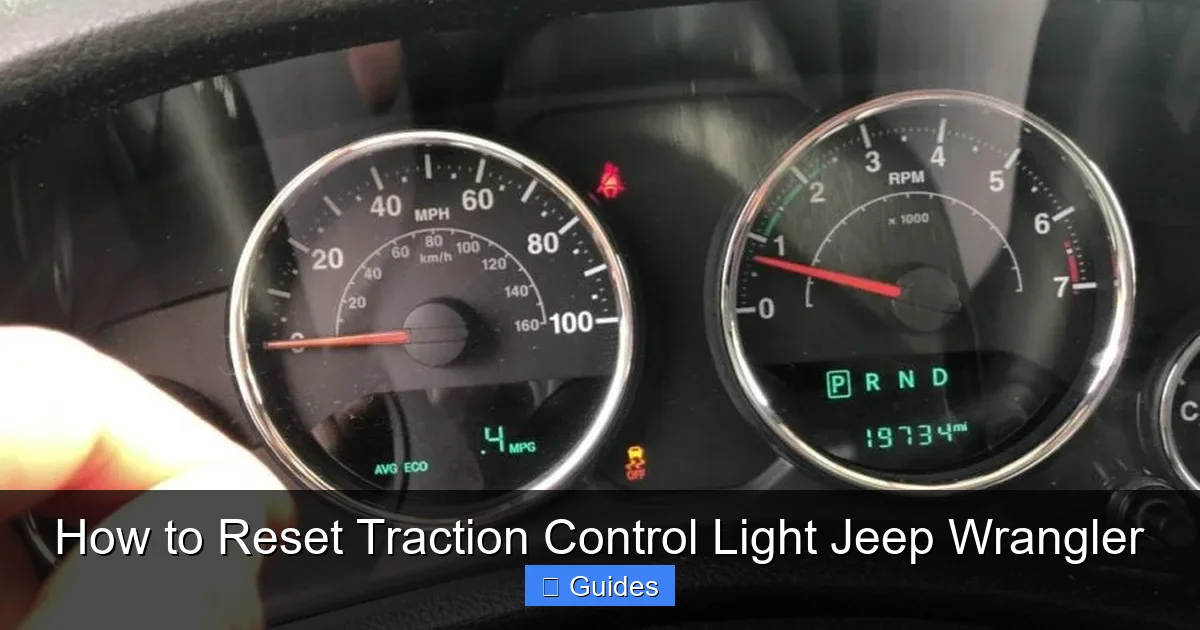
Visual guide about How to Reset Traction Control Light Jeep Wrangler
Image source: vehiclers.com
Before diving into the reset process, it’s important to understand what the traction control system actually does. Think of it as your Jeep’s built-in safety net. It works hand-in-hand with the anti-lock braking system (ABS) and uses wheel speed sensors to monitor how fast each tire is rotating. If one wheel starts spinning faster than the others—like when you’re stuck in mud or accelerating on ice—the system kicks in to prevent loss of control.
The traction control light, usually labeled “TCS” or “ESC” (Electronic Stability Control), illuminates when the system detects an issue or is actively intervening. It might flash briefly during normal operation, especially off-road, but if it stays on constantly, that’s a sign something needs attention.
There are two main types of traction control systems in modern Jeeps: the standard TCS and the more advanced ESC. The ESC goes a step further by also monitoring steering angle and vehicle direction, helping to prevent skidding or rollovers. Both systems rely on a network of sensors, including wheel speed sensors, a steering angle sensor, and a yaw rate sensor.
When one of these components malfunctions—or when the system gets confused by uneven tire wear, low tire pressure, or even a recent tire rotation—the light may come on. That’s why it’s crucial not to ignore it. While your Jeep will still drive, the safety benefits of traction control are compromised, which can be risky in wet, snowy, or off-road conditions.
How the System Works in Real-World Driving
Let’s say you’re driving up a snowy hill in your Wrangler. One of your rear wheels starts to spin because it’s lost traction. The wheel speed sensor detects this imbalance and sends a signal to the traction control module. The system then applies the brake to that spinning wheel and may reduce engine power slightly to help the other wheels grip the surface.
This all happens in milliseconds, and most of the time, you won’t even notice—except maybe a slight vibration in the brake pedal. But if the system can’t communicate properly with the sensors, or if a sensor is dirty or damaged, it can’t do its job. That’s when the warning light appears.
Another common scenario is after installing new tires or rotating them. If the tires are slightly different in size or wear pattern, the wheel speed sensors may detect inconsistent rotation speeds, triggering the light. This is especially true if you’ve recently switched to larger off-road tires without recalibrating the system.
Why the Light Might Come On
There are several reasons why the traction control light might illuminate on your Jeep Wrangler. Some are harmless and easy to fix, while others may require professional help. Here are the most common causes:
– **Low tire pressure:** Even a slight drop in pressure can cause one tire to rotate faster than the others, confusing the system.
– **Worn or uneven tires:** Tires with different tread depths can send conflicting signals to the sensors.
– **Dirty or damaged wheel speed sensors:** Dirt, mud, or corrosion can block sensor readings.
– **Faulty ABS module:** Since traction control relies on the ABS system, a problem here can trigger the light.
– **Recent tire changes or rotations:** The system may need time to adapt or may require a reset.
– **Electrical issues:** Loose wiring or a blown fuse can disrupt communication between components.
– **Off-road driving:** Aggressive terrain can temporarily confuse the system, especially if wheels are airborne.
Understanding these causes helps you approach the reset process with confidence. In many cases, the issue is minor and can be resolved with basic troubleshooting.
Simple Methods to Reset the Traction Control Light
Visual guide about How to Reset Traction Control Light Jeep Wrangler
Image source: jeepexplorer.com
If your traction control light is on, don’t panic. Start with the simplest solutions first. Many Jeep owners are surprised to learn that a quick reset can often clear the warning—no tools required.
Method 1: Turn the Vehicle Off and On
This might sound too easy, but it works more often than you’d think. The traction control system, like many electronic components in modern vehicles, can experience temporary glitches. Turning the vehicle off and letting it sit for a few minutes allows the system to reset.
Here’s how to do it:
1. Come to a complete stop and turn off the engine.
2. Wait at least 30 seconds—this gives the electronic control unit (ECU) time to power down fully.
3. Turn the ignition back on (but don’t start the engine yet).
4. Wait for the dashboard lights to cycle. You should see the traction control light come on briefly and then turn off.
5. Start the engine and drive normally for a few minutes.
If the light stays off, you’re good to go. This method is especially effective after off-road trips or in cold weather, when sensors might get temporarily confused.
Method 2: Use the Traction Control Button
Most Jeep Wranglers come equipped with a physical traction control button, usually located on the center console or dashboard. This button allows you to manually disable or enable the system.
To reset the light using this method:
1. Make sure the vehicle is running.
2. Press and hold the traction control button for 5–10 seconds.
3. You should see the traction control light flash or turn off.
4. Release the button and check if the light remains off.
Note: Some models may require you to press the button multiple times or follow a specific sequence. Refer to your owner’s manual if you’re unsure.
This method works well if the system was accidentally turned off or if it entered a fault mode. It’s a quick fix that doesn’t require any tools or technical knowledge.
Method 3: Drive Normally for a Few Miles
Sometimes, the traction control light comes on because the system detected a temporary issue—like a wheel spinning on ice or mud—and needs time to recalibrate. In these cases, simply driving normally for 10–15 minutes can allow the system to reset itself.
During this drive, avoid aggressive acceleration or braking. Let the vehicle operate under normal conditions so the sensors can re-sync. If the light turns off on its own, no further action is needed.
This method is particularly useful after off-roading or driving in harsh weather. The system may just need a “cool-down” period to return to normal operation.
Advanced Troubleshooting and Diagnostics
Visual guide about How to Reset Traction Control Light Jeep Wrangler
Image source: koala.sh
If the simple methods don’t work, it’s time to dig deeper. The traction control light may be signaling a real problem that requires more than a quick reset.
Check Tire Pressure and Condition
Start by inspecting your tires. Uneven pressure or wear can cause the wheel speed sensors to detect inconsistencies, triggering the light.
Use a tire pressure gauge to check all four tires. Compare the readings to the recommended PSI listed on the driver’s side door jamb. If one tire is significantly lower, inflate it to the correct level and see if the light turns off after driving.
Also, look for signs of uneven wear—such as cupping, feathering, or bald spots. These can indicate alignment issues or suspension problems that affect traction control performance.
If you’ve recently rotated your tires or installed new ones, make sure they’re all the same size and type. Mixing tire brands or sizes can confuse the system.
Inspect Wheel Speed Sensors
Wheel speed sensors are located near each wheel and are critical for traction control operation. They can become dirty, corroded, or damaged, especially if you drive off-road frequently.
To inspect them:
1. Lift the vehicle safely using jack stands.
2. Locate the sensor near each wheel hub—it’s usually a small black module with a wire leading to it.
3. Check for dirt, mud, or rust buildup. Clean gently with a soft brush and electrical cleaner.
4. Ensure the sensor is securely mounted and the wiring isn’t frayed or loose.
If a sensor appears damaged, it may need to be replaced. While this is a more advanced repair, some Jeep owners with mechanical experience can do it themselves. Otherwise, consult a mechanic.
Use an OBD2 Scanner
An OBD2 (On-Board Diagnostics) scanner is a handheld device that plugs into your Jeep’s diagnostic port—usually located under the dashboard near the steering column. It reads error codes stored in the vehicle’s computer, giving you insight into what’s causing the traction control light.
Here’s how to use one:
1. Turn off the engine and plug the scanner into the OBD2 port.
2. Turn the ignition to the “on” position (don’t start the engine).
3. Follow the scanner’s instructions to read the codes.
4. Look for codes related to traction control, ABS, or wheel speed sensors (e.g., C0200, C0201, etc.).
5. Clear the codes using the scanner’s reset function.
6. Start the engine and see if the light returns.
Many auto parts stores offer free code reading, so you don’t necessarily need to buy a scanner. However, owning one can save time and money in the long run.
Check the ABS Module and Fuses
Since traction control relies on the ABS system, a problem with the ABS module or a blown fuse can trigger the light.
Locate your Jeep’s fuse box—usually under the hood or inside the cabin. Check the owner’s manual for the specific fuse related to traction control or ABS. If it’s blown, replace it with one of the same amperage.
If the fuse is fine, the ABS module itself may be faulty. This is a more serious issue that typically requires professional diagnosis and repair. Symptoms include a constantly illuminated ABS light, loss of braking performance, or unusual noises from the wheels.
When to See a Mechanic
While many traction control issues can be resolved at home, some problems require expert attention. Don’t ignore the light if it persists after trying the above steps.
Signs You Need Professional Help
– The light stays on even after a reset and normal driving.
– You notice changes in braking performance or handling.
– The ABS light is also on.
– You hear grinding, clicking, or unusual noises from the wheels.
– The vehicle pulls to one side or vibrates during braking.
These could indicate a failing ABS module, damaged sensors, or internal brake issues. Continuing to drive with a malfunctioning traction control system can be dangerous, especially in adverse conditions.
A certified mechanic or Jeep dealership can perform a full diagnostic scan, inspect the braking system, and replace faulty components. While this may cost more than a DIY fix, it ensures your safety and prevents further damage.
Cost Considerations
The cost of repairing traction control issues varies widely. A simple sensor cleaning or fuse replacement might cost $50–$100. Replacing a wheel speed sensor could run $150–$300 per wheel. If the ABS module needs replacement, expect to pay $500–$1,500, including labor.
Regular maintenance can help avoid these expenses. Keep your tires properly inflated, clean sensors after off-road trips, and address warning lights promptly.
Preventing Future Traction Control Issues
The best way to deal with the traction control light is to prevent it from coming on in the first place. A little proactive care goes a long way.
Regular Maintenance Tips
– **Check tire pressure monthly:** Use a reliable gauge and adjust as needed.
– **Rotate tires every 5,000–7,500 miles:** This promotes even wear and helps the system function properly.
– **Inspect sensors after off-roading:** Clean mud and debris from wheel hubs and sensors.
– **Use quality tires:** Avoid mixing brands or sizes, and replace worn tires promptly.
– **Keep the OBD2 port accessible:** Make it easy to plug in a scanner if needed.
Seasonal Considerations
In winter, cold temperatures can cause tire pressure to drop, triggering the light. Check pressure more frequently during cold snaps.
In summer, off-roading and high temperatures can stress the braking system. After intense trails, inspect sensors and brakes for damage.
By staying on top of maintenance, you’ll reduce the chances of unexpected warnings and keep your Jeep running smoothly year-round.
Conclusion
Resetting the traction control light on your Jeep Wrangler doesn’t have to be stressful. In many cases, a simple restart, button press, or short drive is all it takes to clear the warning. Understanding how the system works—and what might trigger the light—helps you respond quickly and confidently.
Start with the basics: check tire pressure, clean sensors, and try a manual reset. If the light persists, use an OBD2 scanner to dig deeper. And when in doubt, don’t hesitate to consult a professional. Your safety is worth the investment.
Remember, the traction control system is there to protect you—especially when the road gets tough. By keeping it in good working order, you’ll enjoy every mile of your Jeep adventures with peace of mind.
Frequently Asked Questions
Why is my Jeep Wrangler’s traction control light on?
The light may come on due to low tire pressure, uneven tire wear, dirty sensors, or a temporary system glitch. It can also appear after off-roading or in slippery conditions.
Can I drive my Jeep with the traction control light on?
Yes, but it’s not recommended for long. The system helps maintain stability, so driving without it increases the risk of skidding or losing control in bad weather.
How do I reset the traction control light without a scanner?
Try turning the vehicle off for 30 seconds, using the traction control button, or driving normally for 10–15 minutes. These methods often clear temporary faults.
Will the light reset itself?
Sometimes, yes. If the issue was temporary—like a wheel spinning on ice—the light may turn off after normal driving allows the system to recalibrate.
What does it mean if both the ABS and traction control lights are on?
This usually indicates a problem with the ABS module or a shared sensor. It’s more serious and should be diagnosed by a mechanic to ensure safe braking.
How much does it cost to fix a traction control issue?
Costs vary from $50 for a fuse or sensor cleaning to over $1,000 for an ABS module replacement. Regular maintenance can help avoid expensive repairs.

At CarLegit, we believe information should be clear, factual, and genuinely helpful. That’s why every guide, review, and update on our website is created with care, research, and a strong focus on user experience.