
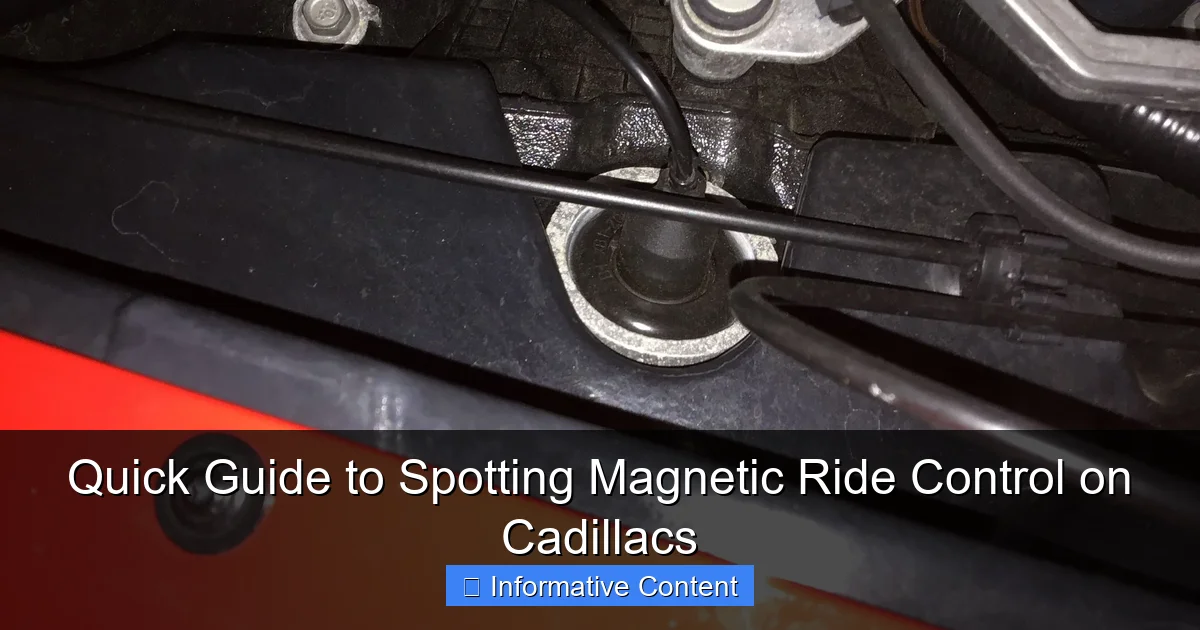
Featured image for How To Tell If My Cadillac Has Magnetic Ride Control
Image source: cimg8.ibsrv.net
The most definitive way to identify Magnetic Ride Control is by locating the specific “Magnetic Ride Control” badge on the vehicle’s rear trunk or fender. This innovative suspension is commonly featured on performance-oriented trims like the V-Series and higher luxury packages, providing an exceptionally smooth and responsive drive. You can also confirm its presence through the infotainment system, where a dedicated magnetic ride setting is typically accessible.
Picture this: you’re cruising down a less-than-perfect backroad, the kind that usually has you dodging potholes like they’re landmines. But in this Cadillac, you feel a firm, planted confidence. The bumps are there, but they’re muted, sophisticated—almost like the car read the road ahead and softened the blow before it even happened. You lean over to your passenger and say, “This thing rides amazing. It’s gotta have that magnetic suspension, right?”
That magical piece of engineering you’re feeling is likely Cadillac’s legendary Magnetic Ride Control. For over two decades, it’s been the secret sauce that transforms good luxury cars into great ones, earning a reputation as one of the finest adaptive damping systems in the world. But how can you be sure it’s actually there? Maybe you’re looking at a used car listing, peering at a vehicle on a lot, or just curious about the tech in your own driveway.
Spotting Magnetic Ride Control isn’t always as obvious as finding a sunroof or leather seats. It’s a hidden gem. This guide is your decoder ring. We’ll walk through the simple visual checks, the telltale model clues, and the definitive ways to confirm its presence, turning you from curious observer to informed expert.
In This Article
- 1 Key Takeaways
- 2 📑 Table of Contents
- 3 What is Magnetic Ride Control? The 10-Second Science Lesson
- 4 The Visual Inspection: What to Look For Underneath and Inside
- 5 Model and Trim: Which Cadillacs Typically Have It?
- 6 The Driving Experience: The Ultimate “Butt Dyno” Test
- 7 Definitive Verification: How to Be 100% Sure
- 8 Magnetic Ride Control: Key Model & Availability Snapshot
- 9 Owning It: What You Should Know
- 10 Conclusion: Your Road to Confident Identification
- 11 Frequently Asked Questions
- 11.1 How can I visually identify Magnetic Ride Control on a Cadillac?
- 11.2 Which Cadillac models typically come with Magnetic Ride Control?
- 11.3 Can I tell by the ride quality if a Cadillac has Magnetic Ride Control?
- 11.4 Are there specific badges for Magnetic Ride Control on Cadillacs?
- 11.5 How do I check the VIN to confirm Magnetic Ride Control?
- 11.6 What are the key suspension signs of Magnetic Ride Control?
Key Takeaways
- Look for a “Magnetic Ride Control” badge: Often found on the rear or sides of the vehicle.
- Check for selectable drive modes: Systems like Tour and Sport indicate adaptive suspension.
- Inspect the shock absorbers for wires: Magnetic shocks have electrical connectors for control.
- Review the window sticker or Monroney label: It lists Magnetic Ride Control if equipped.
- Decode the VIN online: Use Cadillac’s VIN decoder to confirm the suspension system.
- Consult the owner’s manual: Specifications section details the suspension type.
- Note the model year and trim: Magnetic Ride Control is standard on some high-end trims.
📑 Table of Contents
- What is Magnetic Ride Control? The 10-Second Science Lesson
- The Visual Inspection: What to Look For Underneath and Inside
- Model and Trim: Which Cadillacs Typically Have It?
- The Driving Experience: The Ultimate “Butt Dyno” Test
- Definitive Verification: How to Be 100% Sure
- Magnetic Ride Control: Key Model & Availability Snapshot
- Owning It: What You Should Know
- Conclusion: Your Road to Confident Identification
What is Magnetic Ride Control? The 10-Second Science Lesson
Before we become detectives, let’s quickly understand what we’re looking for. At its heart, Magnetic Ride Control is an incredibly fast-responding shock absorber system. Traditional shocks use fluid flowing through valves. Magnetic Ride shocks are filled with a special synthetic fluid that contains tiny iron particles.
The Magic is in the Fluid
When an electrical current is applied to this fluid, the iron particles align almost instantly, changing the fluid’s viscosity—essentially, how thick or thin it is. This happens in milliseconds, thousands of times per second. A network of sensors monitors wheel position, body motion, and steering input, sending data to a control module that constantly adjusts the current to each shock.
The Result? Two Cars in One
This millisecond adjustment means the suspension can be simultaneously soft for comfort and firm for control. Over a sharp bump, it can soften to absorb the impact. In a hard corner, it can firm up to minimize body roll. It’s this dual personality that makes it so special. Now, let’s find it.
The Visual Inspection: What to Look For Underneath and Inside
The most direct way to spot Magnetic Ride Control is a good old-fashioned look. You don’t need to be a mechanic, just observant.
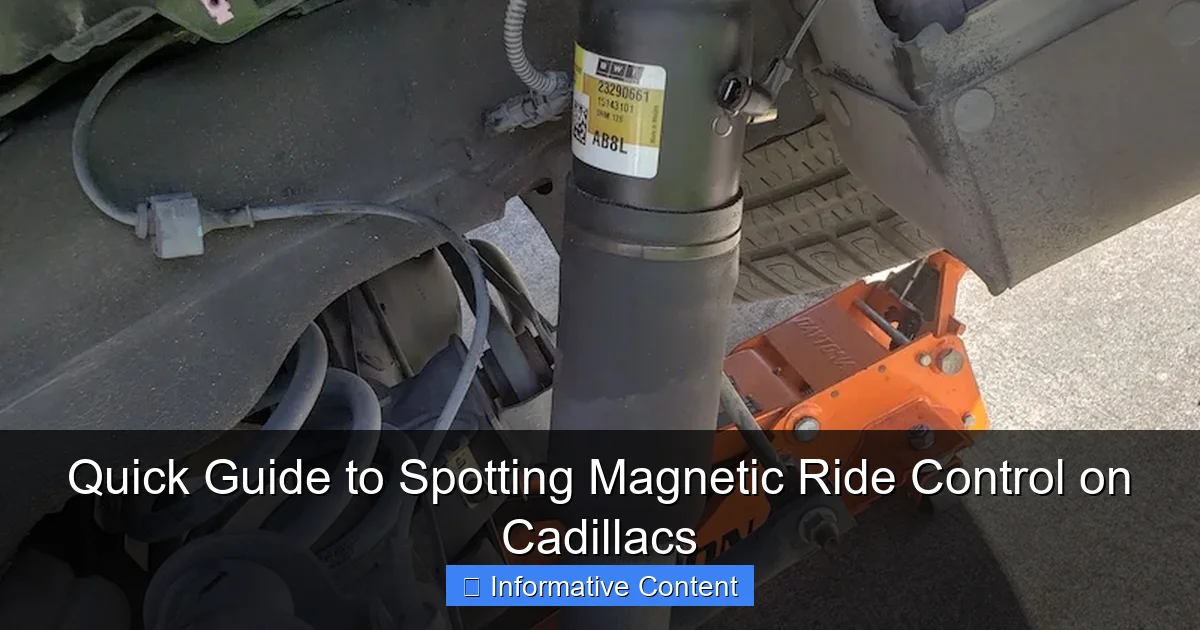
Visual guide about How To Tell If My Cadillac Has Magnetic Ride Control
Image source: blog.woohoosvcs.com
Examine the Shock Absorbers
Find a safe way to look at a wheel well or, if the car is lifted, the shock absorber itself. A shock with Magnetic Ride Control will have a distinctive feature: a single, thin wire or electrical connector leading into the shock body. This is the harness that delivers the controlling current to the magneto-rheological fluid.
- Look for: A black wire (usually in a protective loom) attached to the side of the shock absorber, near the top.
- Standard shock absorbers will have no wires at all—just a plain metal tube.
Pro Tip: The front shocks are often easier to see. Turn the steering wheel fully to one side to get a better view into the wheel well.
Check the Dashboard and Drive Mode Selector
Inside the cabin, technology this advanced always gives the driver some level of control. Get in the driver’s seat and look for the drive mode selector.
- Cars equipped with Magnetic Ride Control will often have selectable modes like Tour, Sport, and possibly Track or Snow/Ice.
- Some models, like the V-Series and Blackwing cars, have a dedicated “Magnetic Ride Control” button or a specific suspension adjustment within their performance interface.
- On the dashboard instrument cluster, you might see a graphic or message confirming the selected ride mode when you switch between them.
Model and Trim: Which Cadillacs Typically Have It?
While the visual check is definitive, knowing which models and years offered Magnetic Ride Control gives you a massive head start. It was often bundled with higher-performance or luxury-oriented trim levels.
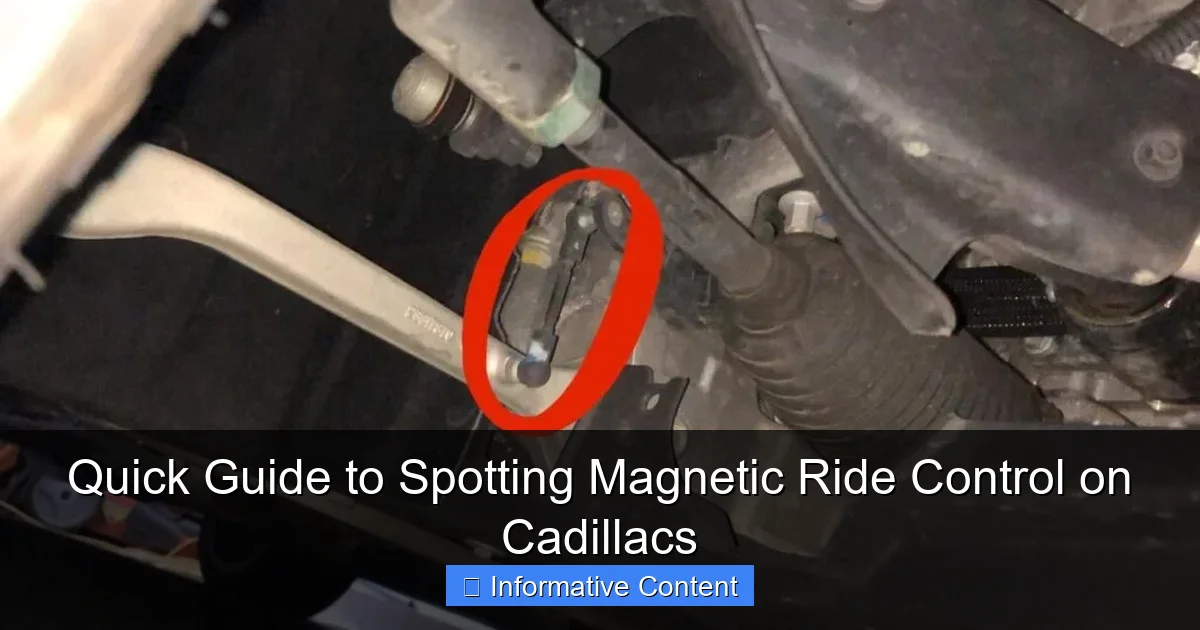
Visual guide about How To Tell If My Cadillac Has Magnetic Ride Control
Image source: thecarhow.com
The Prime Suspects (Models Known for Magnetic Ride Control)
Here’s a quick reference list of Cadillac models that very commonly featured Magnetic Ride Control, especially in their higher trims. This isn’t an exhaustive list for every year, but it points you in the right direction.
- CTS (especially V-Series & Premium Luxury trims): A flagship for the technology across its generations.
- ATS (especially V-Series & Premium trims): Brought the magic to the compact sport sedan segment.
- CT5 (Standard on most trims, including the phenomenal Blackwing): Continues the legacy with the latest generation 4.0 system.
- CT4 (Available on Premium Luxury and standard on V-Series & Blackwing): The compact sport sedan with big suspension tech.
- XT5 & XT6 (Available on Sport and Premium Luxury trims): Proving SUVs can have agile, responsive handling.
- Escalade (Available on Premium Luxury, Sport, and Platinum trims): Transforms the ride of a full-size luxury SUV.
- XTS (with the Vsport Performance Package): Offered a plush yet controlled experience.
The Critical Lesson: It’s About the Package, Not Just the Model
You cannot assume every Cadillac of a certain model has it. A base-level luxury trim might have conventional suspension, while the otherwise identical-looking car with the Sport Package or Premium Luxury trim next to it has Magnetic Ride Control. Always verify.
The Driving Experience: The Ultimate “Butt Dyno” Test
If you get the chance to drive the car, your own senses are powerful tools. The difference between a car with and without Magnetic Ride Control is often dramatic.
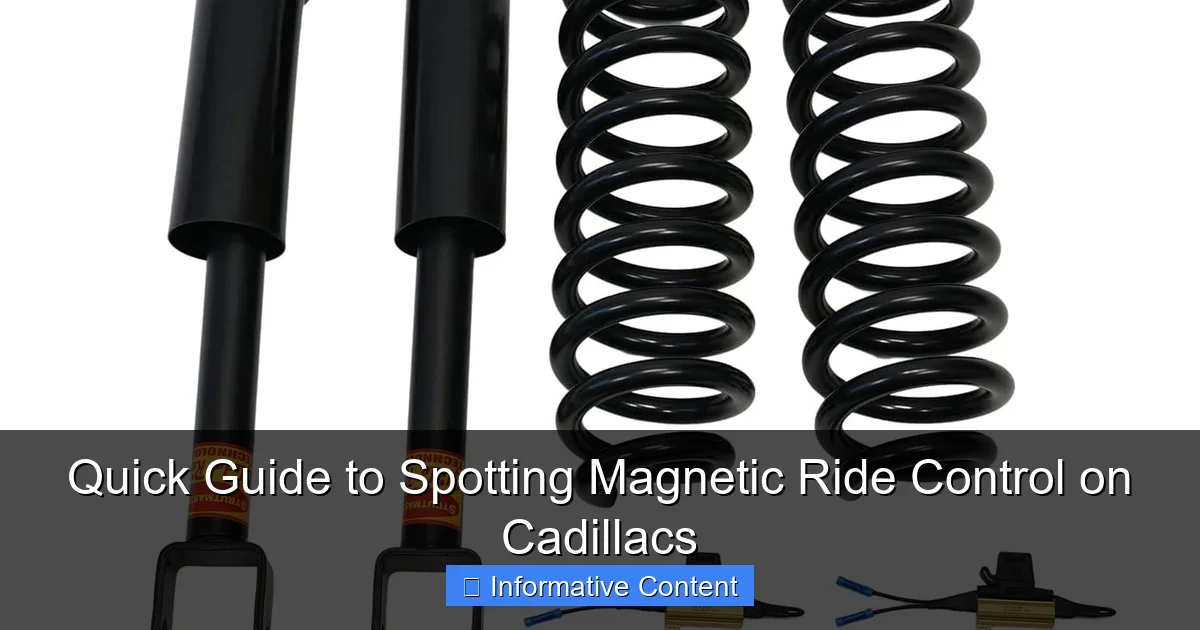
Visual guide about How To Tell If My Cadillac Has Magnetic Ride Control
Image source: cdn.shopify.com
Feel for the “Brick Wall” Test
Find a road with a single, sharp imperfection—like a tar strip, a small pothole, or a raised manhole cover. Drive over it at a moderate speed.
- With Magnetic Ride Control: You’ll hear a firm “thud” or “clunk,” but you’ll feel a sharp, quick, and well-damped motion in the seat. The impact is heard more than it’s felt.
- With conventional suspension: The same bump often transmits a louder, harsher, and more prolonged shock through the chassis and into the cabin.
Switch Between Driving Modes
If you confirmed the drive mode selector, try this. Find a stretch of smooth, winding road.
- Put the car in Tour mode. The steering should feel light, and the ride should be exceptionally smooth, soaking up minor cracks and ripples.
- Now, switch to Sport mode. You should feel an immediate change. The steering will typically weight up, the throttle response may sharpen, and most importantly, the body will feel tighter. The car will lean less in corners and feel more connected to the road.
If you feel a distinct, tangible difference in the ride quality and handling character between modes, you are almost certainly feeling Magnetic Ride Control at work.
Definitive Verification: How to Be 100% Sure
For a purchase decision, you need certainty. Here’s how to get it.
Decode the Vehicle Identification Number (VIN) and RPO Codes
This is the gold standard. Every GM vehicle has a list of Regular Production Option (RPO) codes on its Service Parts Identification sticker. This sticker is usually located in the glove compartment, on the inside of the spare tire cover, or on a door jamb.
- Find the sticker and look for the three-character code “F55.” This is the GM RPO code for Magnetic Ride Control, Suspension, Magnetic Selective Ride Control.
- You can also use a free online VIN decoder. Enter the full 17-digit VIN, and it should list major options, sometimes including the F55 code.
Use the MyCadillac App or Contact a Dealer
For newer models, if you have access to the vehicle’s credentials, the official MyCadillac app might list vehicle features. As a last resort, any Cadillac dealership’s service department can run the VIN and tell you precisely how the car was originally equipped.
Magnetic Ride Control: Key Model & Availability Snapshot
To help visualize the pattern of availability, here’s a simplified reference table. Remember, always check for the F55 RPO code for confirmation on a specific vehicle.
| Cadillac Model | Typical Trim / Package for Magnetic Ride Control | RPO Code to Look For |
|---|---|---|
| CTS (3rd Gen), ATS | V-Series, Premium Luxury, Performance Package | F55 |
| CT5, CT4 | Commonly standard or in Premium Luxury & Sport trims; Standard on V-Series/Blackwing | |
| XT5, XT6 | Sport Trim, Premium Luxury Trim | |
| Escalade | Sport, Premium Luxury Platinum, Diesel Engine Package | |
| XTS | Vsport Performance Package | |
| Older Models (STS, SRX) | Often in Performance Packages or top trims (varies by year) |
Owning It: What You Should Know
Spotting it is one thing. Living with it is another. Here’s the real-world scoop.
The Brilliant Benefits
Why go through all this trouble to find it? Because it offers an unparalleled balance. It delivers a serene, cloud-like ride on the highway that can transform into a taut, track-ready setup with the press of a button. It reduces pitch under braking, dive under acceleration, and roll in corners, all while improving tire contact for better safety in evasive maneuvers.
The Real-World Considerations
For all its brilliance, it’s a sophisticated system. The shock absorbers are significantly more expensive to replace than conventional ones. They are also integral to the vehicle’s stability and performance systems. Always have them serviced by a technician familiar with the system. The good news? They are famously durable, and many owners go well over 100,000 miles on the original shocks.
Conclusion: Your Road to Confident Identification
Identifying Magnetic Ride Control on a Cadillac is part detective work, part sensory experience. Start with the model and trim clues—if it’s a higher-performance or luxury trim, your odds are good. Then, do the visual check for that telltale wire on the shock absorber. Feel for that transformative difference between Tour and Sport modes on a test drive. And for absolute, cast-iron certainty, hunt down the F55 code on the RPO sticker.
Finding this technology means you’ve found a Cadillac operating at the peak of its engineering capabilities. It’s the difference between simply traveling and experiencing the road with a unique kind of intelligent grace. Whether you’re buying, selling, or just admiring, you now have the knowledge to spot one of the automotive world’s true technological marvels. Happy hunting, and enjoy that magic carpet ride.
Frequently Asked Questions
How can I visually identify Magnetic Ride Control on a Cadillac?
Look for shock absorbers with electrical wires connected to them, as Magnetic Ride Control uses electronically controlled dampers. These wires are usually visible near the struts or shocks when inspecting the suspension from underneath or with the wheel removed.
Which Cadillac models typically come with Magnetic Ride Control?
Magnetic Ride Control is common on performance and luxury trims like the CTS-V, CT5-V, Escalade, and XT6. It’s often standard on higher trims or available as an option across many Cadillac models from the past two decades.
Can I tell by the ride quality if a Cadillac has Magnetic Ride Control?
Yes, a Cadillac with Magnetic Ride Control will feel adaptively smooth over bumps yet firm during aggressive driving. The system adjusts instantly, so if the ride seems exceptionally balanced and responsive, it likely includes this feature.
Are there specific badges for Magnetic Ride Control on Cadillacs?
Cadillac doesn’t typically use external badges for Magnetic Ride Control, but you may find indications inside on drive mode selectors or infotainment screens. Look for settings like “Tour” or “Sport” that adjust suspension firmness, which often signal its presence.
How do I check the VIN to confirm Magnetic Ride Control?
Use online VIN decoders or provide the VIN to a Cadillac dealer for a detailed build sheet. The factory options list will specify if Magnetic Ride Control was installed, giving you a definitive answer.
What are the key suspension signs of Magnetic Ride Control?
Inspect for magnetorheological fluid shocks with electronic sensors and connectors on the dampers. Magnetic Ride Control components are distinguishable from standard shocks by their integrated wiring and unique assembly, often noted in service manuals.

At CarLegit, we believe information should be clear, factual, and genuinely helpful. That’s why every guide, review, and update on our website is created with care, research, and a strong focus on user experience.