
Key Sense on the Chrysler Pacifica is a helpful safety feature, but it can be turned off if you find it too restrictive. This guide walks you through the process clearly and simply, whether you’re using the Uconnect system or the physical key fob.
If you’ve recently driven a Chrysler Pacifica—or maybe you own one—you might have noticed something a little… chatty about your minivan. It beeps, flashes messages, and sometimes even slows down the radio when you’re driving. That’s Key Sense in action. Designed to promote safer driving habits, Key Sense monitors your behavior behind the wheel and steps in if it thinks you’re distracted, drowsy, or impaired. While that sounds great in theory, in practice, many Pacifica owners find the constant alerts annoying—especially on long road trips or when they’re already using hands-free calling or navigation.
The good news? You *can* turn off Key Sense. And it’s easier than you might think. Whether you’re tech-savvy or still figuring out how to pair your phone to Bluetooth, this guide will walk you through every step. We’ll cover what Key Sense actually does, why you might want to disable it, and—most importantly—how to do it safely and effectively. No jargon, no confusion. Just clear, simple instructions that work.
So if you’ve ever muttered, “Why is my minivan judging me?”—you’re not alone. Let’s dive in and show you how to take back control of your driving experience without sacrificing safety.
In This Article
- 1 Key Takeaways
- 2 📑 Table of Contents
- 3 What Is Key Sense on the Chrysler Pacifica?
- 4 Why You Might Want to Turn Off Key Sense
- 5 How to Turn Off Key Sense Using the Uconnect System
- 6 How to Turn Off Key Sense Using the Key Fob
- 7 Troubleshooting Common Issues
- 8 Safety Considerations When Disabling Key Sense
- 9 Final Thoughts
- 10 Frequently Asked Questions
- 10.1 Can I permanently disable Key Sense on my Chrysler Pacifica?
- 10.2 Will turning off Key Sense affect my warranty?
- 10.3 Does Key Sense work with Apple CarPlay or Android Auto?
- 10.4 Can I turn off Key Sense for just one driver?
- 10.5 What if my Pacifica doesn’t have a Key Sense option?
- 10.6 Is Key Sense the same as Driver Attention Monitor?
Key Takeaways
- What is Key Sense? A driver monitoring system that restricts vehicle functions if it detects distracted or impaired driving behavior.
- Why turn it off? Some drivers find the alerts intrusive, especially during long trips or when using hands-free devices.
- Turn off via Uconnect: Use the touchscreen menu under Settings > Safety & Security > Key Sense to disable it.
- Use the key fob method: Press and hold the Lock and Unlock buttons simultaneously for 5 seconds to toggle Key Sense off.
- It’s temporary: Key Sense may reactivate after a vehicle restart unless permanently disabled in settings.
- Check your model year: Features vary slightly between 2017–2023 Pacifica models—always verify your system version.
- Safety first: Disabling Key Sense reduces safety monitoring—only turn it off when necessary and responsibly.
📑 Table of Contents
What Is Key Sense on the Chrysler Pacifica?
Key Sense is a driver assistance feature introduced by Chrysler as part of its broader suite of safety technologies. It’s designed to help prevent distracted or impaired driving by monitoring how you interact with the vehicle. Think of it as a digital co-pilot that watches your habits and steps in when something seems off.
When Key Sense is active, it uses input from various sensors and systems in the Pacifica—like the steering wheel sensors, brake usage, speed, and even how often you touch the radio or climate controls—to assess your level of attention. If it detects patterns that suggest distraction (like erratic steering or infrequent braking), it may trigger alerts. These can include audible beeps, dashboard messages like “Pay Attention,” or even temporarily limiting non-essential functions like the infotainment system.
For example, imagine you’re driving down the highway, adjusting the GPS on your phone while the car is in motion. Key Sense might interpret that as a distraction and flash a warning on the screen. Or if you’re driving late at night and the system notices slower reaction times, it might reduce the volume of the radio to encourage you to focus.
While the intention behind Key Sense is noble—reducing accidents caused by inattention—it doesn’t always align with real-world driving. Many users report that the system is overly sensitive. It might flag normal behaviors, like briefly glancing at a passenger or reaching for a water bottle, as potentially dangerous. Over time, these repeated interruptions can become frustrating, leading drivers to seek ways to disable the feature.
It’s also worth noting that Key Sense is different from other safety systems like Forward Collision Warning or Lane Departure Alert. Those are designed to react to external hazards, while Key Sense focuses entirely on the driver’s behavior. This makes it more proactive but also more intrusive.
How Key Sense Works
Key Sense doesn’t rely on a single sensor. Instead, it uses a combination of inputs to build a picture of your driving behavior. Here’s a breakdown of what it monitors:
– **Steering input:** How often and how sharply you turn the wheel. Frequent small corrections might be normal, but sudden or erratic movements could trigger an alert.
– **Brake and accelerator use:** Patterns in how you press the pedals. Infrequent braking or sudden acceleration might be flagged.
– **Speed consistency:** Driving significantly below the speed limit or fluctuating speeds without clear reason.
– **Infotainment interaction:** How often you touch the screen, change radio stations, or adjust climate settings while driving.
– **Time of day:** The system may be more sensitive during nighttime hours, assuming fatigue is more likely.
All this data is processed in real time. If the system detects a pattern that matches known signs of distraction or impairment, it responds with escalating alerts. First, a visual warning appears on the dashboard. If no change is detected, an audible beep follows. In some cases, the system may temporarily disable certain features—like the radio or navigation—to reduce distractions.
One important thing to understand is that Key Sense doesn’t record video or audio. It doesn’t “watch” you through a camera. Instead, it analyzes driving patterns based on vehicle dynamics and user input. This makes it less invasive than some other driver monitoring systems, but still noticeable enough to annoy many users.
Why Chrysler Added Key Sense
Chrysler introduced Key Sense as part of its commitment to improving road safety. According to the National Highway Traffic Safety Administration (NHTSA), distracted driving contributes to thousands of accidents each year. By building in technology that encourages focused driving, automakers hope to reduce these incidents.
The Pacifica, being a family-oriented minivan, is especially suited for such features. It’s often used for long road trips, school runs, and carpools—situations where driver fatigue or distraction can be more common. Key Sense was designed to act as a gentle reminder, not a punishment. The idea is to nudge drivers back to full attention before a dangerous situation develops.
However, like many well-intentioned technologies, Key Sense doesn’t always work perfectly in practice. Its algorithms are based on generalized driving patterns, which means they don’t account for individual differences. A parent reaching into the back seat to hand a snack to a child might trigger an alert, even though the action is brief and safe. Similarly, a driver using voice commands to send a text might still get flagged because the system detects screen interaction.
These false positives are a major reason why so many Pacifica owners look for ways to turn off Key Sense. While the feature aims to help, it can sometimes feel more like a nagging backseat driver than a helpful assistant.
Why You Might Want to Turn Off Key Sense
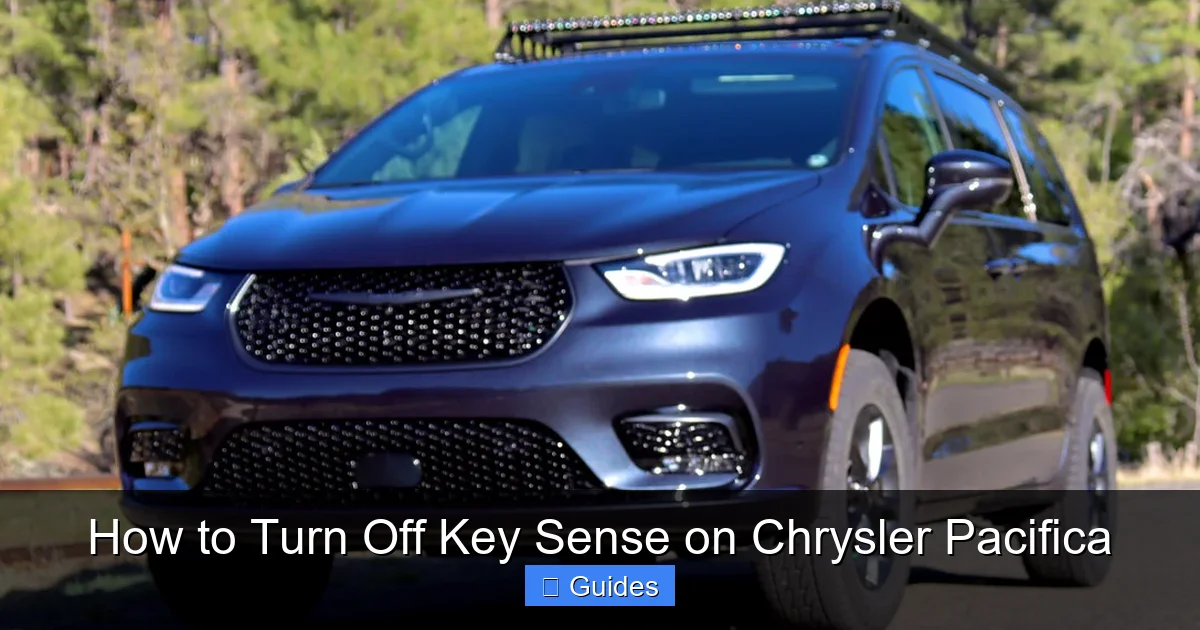
Visual guide about How to Turn Off Key Sense on Chrysler Pacifica
Image source: journeysoffroad.com
Let’s be honest—no one likes being told what to do, especially by their car. While Key Sense is meant to keep you safe, it can quickly become a source of frustration. Here are the most common reasons why Pacifica owners choose to disable it.
Frequent False Alerts
One of the biggest complaints about Key Sense is its tendency to trigger alerts during perfectly normal driving. For instance, if you’re driving on a winding road and making regular steering adjustments, the system might interpret that as erratic behavior. Or if you’re using voice commands to change the radio station, the system might still detect screen activity and sound an alarm.
These false positives can be distracting in themselves. Instead of helping you focus, they pull your attention away from the road. Over time, this can lead to “alert fatigue”—where you start ignoring warnings altogether, even when they might be legitimate.
Interference with Hands-Free Technology
Many modern drivers rely on hands-free systems like Apple CarPlay or Android Auto. These allow you to make calls, send messages, and navigate using voice commands. However, Key Sense doesn’t always recognize when you’re using these systems safely. It may still detect screen touches or audio changes and assume you’re distracted.
This creates a frustrating paradox: you’re trying to drive more safely by going hands-free, but your car is penalizing you for it. Some users report that Key Sense disables the infotainment system entirely during long drives, forcing them to pull over just to change the music.
Annoyance During Long Trips
Long-distance driving is where Key Sense tends to shine—and also where it becomes most annoying. On a multi-hour road trip, you might adjust your seat, reach for a snack, or briefly glance at a map. These normal actions can trigger repeated alerts, turning a relaxing drive into a stressful experience.
Imagine you’re driving cross-country with your family. The kids are in the back, the GPS is guiding you, and you’re enjoying some music. Then, out of nowhere, the dashboard flashes: “Pay Attention.” You haven’t done anything wrong—you’re just living your life. But now you’re second-guessing every move, worried about setting off another alert.
This kind of constant monitoring can take the joy out of driving. Instead of focusing on the journey, you’re focused on not triggering your car’s internal watchdog.
Privacy Concerns
While Key Sense doesn’t record video or audio, some drivers are still uneasy about the idea of their car monitoring their behavior. Even if the data isn’t stored or shared, the feeling of being watched can be unsettling.
This is especially true for drivers who share their Pacifica with family members or friends. You might not mind the system when you’re driving, but what about your teenager? Or your spouse? Do you really want your car judging how they drive?
For these reasons, many owners prefer to turn off Key Sense entirely, giving everyone in the family a consistent and unobstructed driving experience.
Personal Driving Style
Not all drivers are the same. Some are naturally more cautious, while others prefer a more relaxed approach. Key Sense is calibrated for a “typical” driver, but that doesn’t mean it fits everyone.
For example, a driver who frequently uses voice commands or prefers to adjust settings while driving might find Key Sense overly restrictive. Similarly, someone with a medical condition that affects their driving patterns (like Parkinson’s or epilepsy) might be unfairly flagged by the system.
In these cases, turning off Key Sense isn’t about ignoring safety—it’s about customizing the vehicle to fit your needs.
How to Turn Off Key Sense Using the Uconnect System
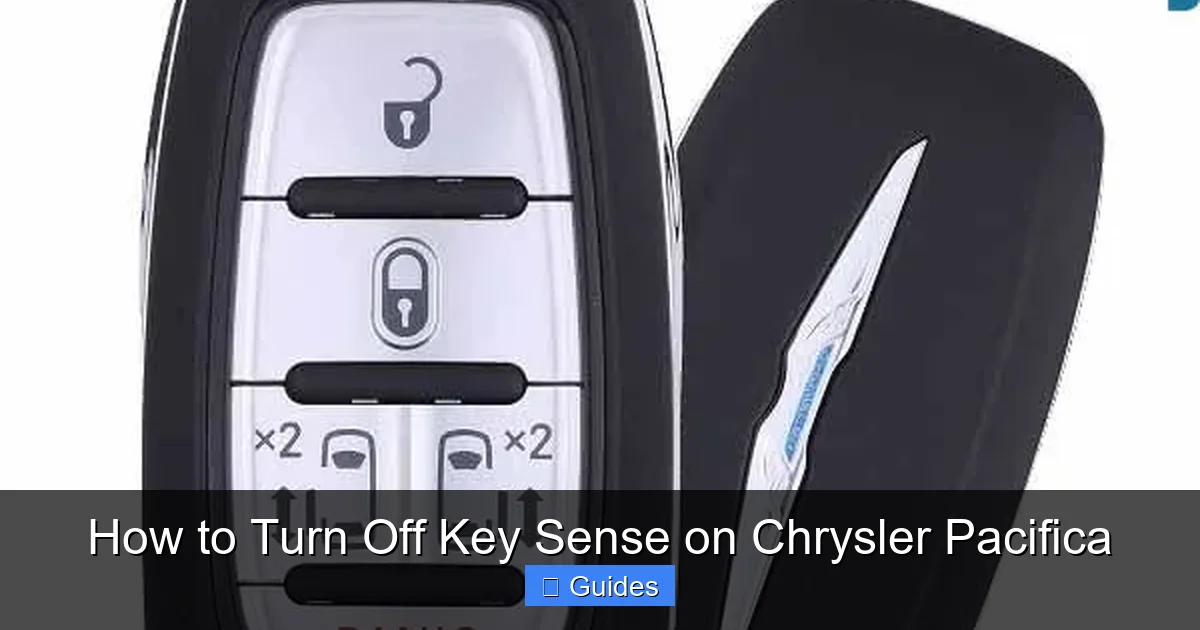
Visual guide about How to Turn Off Key Sense on Chrysler Pacifica
Image source: vtniceshop.com
The most reliable way to disable Key Sense on your Chrysler Pacifica is through the Uconnect infotainment system. This method gives you full control over the feature and allows you to turn it back on later if needed. Here’s how to do it step by step.
Step 1: Start Your Vehicle
First, make sure your Pacifica is turned on. You don’t need to be driving—just have the ignition in the “On” position. This ensures the Uconnect system is fully powered and responsive.
Step 2: Access the Main Menu
On the Uconnect touchscreen, tap the “Settings” icon. It usually looks like a gear or wrench and is located on the home screen. If you don’t see it, swipe left or right to find it.
In the Settings menu, scroll down and select “Safety & Security.” This section contains all the driver assistance and monitoring features, including Key Sense.
Step 4: Find Key Sense
Look for the “Key Sense” option. It may be listed under “Driver Assistance” or “Monitoring Systems,” depending on your model year and Uconnect version. Tap on it to open the settings.
Step 5: Toggle Key Sense Off
You’ll see a simple on/off switch. Slide it to the “Off” position. Some systems may ask for confirmation—tap “Yes” or “Disable” to proceed.
Step 6: Confirm the Change
Once disabled, the system should display a message confirming that Key Sense is off. You can exit the menu and continue driving.
Tips for Success
– If you can’t find the Key Sense option, check your owner’s manual or update your Uconnect system. Older versions may have slightly different menus.
– Some 2022 and 2023 Pacifica models require you to enter a PIN to change safety settings. If prompted, use the default PIN (usually 1234) or the one you set previously.
– Disabling Key Sense this way is usually permanent until you manually turn it back on. However, a vehicle restart may reset it on some models—check your settings after turning the car off and on again.
How to Turn Off Key Sense Using the Key Fob

Visual guide about How to Turn Off Key Sense on Chrysler Pacifica
Image source: transponderisland.com
If you can’t access the Uconnect menu—or just prefer a quicker method—you can also disable Key Sense using the key fob. This is a handy shortcut that works on most Pacifica models from 2017 to 2023.
Step 1: Stand Near Your Vehicle
Make sure you’re within a few feet of your Pacifica. The key fob needs to be in range for the system to recognize it.
Step 2: Press and Hold Lock and Unlock
On your key fob, press and hold both the Lock and Unlock buttons at the same time. Keep them pressed for about 5 seconds.
Step 3: Watch for Confirmation
After a few seconds, you should see the hazard lights flash once, and the horn may chirp. This indicates that Key Sense has been toggled off.
Step 4: Test the System
Enter the vehicle and start driving. Try interacting with the infotainment system or making steering adjustments. If Key Sense is off, you shouldn’t see any alerts.
Important Notes
– This method toggles Key Sense on and off. If it was already off, this will turn it back on.
– The key fob method may not work on all trims or model years. If nothing happens, try the Uconnect method instead.
– Some users report that the system reactivates after a few days. If this happens, use the Uconnect menu for a more permanent solution.
Troubleshooting Common Issues
Even with clear instructions, you might run into a few hiccups when trying to turn off Key Sense. Here are some common problems and how to fix them.
Key Sense Keeps Reactivating
If you’ve turned off Key Sense but it keeps coming back after restarting the vehicle, you’re not alone. This is a known issue on some Pacifica models. The system is designed to reset certain safety features after a power cycle.
To prevent this, make sure you disable Key Sense through the Uconnect menu—not just the key fob. The menu method is more permanent. Also, check for software updates. Chrysler has released patches that improve the stability of these settings.
Can’t Find the Key Sense Option
If the Key Sense setting isn’t visible in your Uconnect menu, your system might need an update. Older versions of Uconnect don’t always display all features clearly. Visit a Chrysler dealer or use the Uconnect website to download the latest software.
Alternatively, your Pacifica might not have Key Sense enabled by default. Not all trims include this feature. Check your owner’s manual or contact Chrysler support to confirm.
Key Fob Method Not Working
If pressing Lock and Unlock doesn’t trigger any response, try replacing the key fob battery. A weak battery can prevent the signal from reaching the vehicle. Also, make sure you’re holding the buttons long enough—some users only press for 2 or 3 seconds, which isn’t sufficient.
Alerts Still Appearing After Disabling
If you’ve turned off Key Sense but still see warnings, double-check that you disabled the correct feature. Some Pacificas have multiple monitoring systems, like Driver Attention Monitor or Lane Keep Assist. Make sure you’ve turned off Key Sense specifically, not just a similar-sounding option.
Safety Considerations When Disabling Key Sense
Before you turn off Key Sense, it’s important to understand the trade-offs. While the feature can be annoying, it does serve a safety purpose. Disabling it means you’re taking full responsibility for your attention behind the wheel.
Use Hands-Free Technology
If you disable Key Sense, make sure you’re using safe alternatives. Use voice commands for calls, texts, and navigation. Keep your phone mounted and out of reach to avoid temptation.
Take Regular Breaks
On long drives, pull over every two hours or so. Stretch, walk around, and give your mind a rest. Fatigue is a major cause of accidents, and no system can replace good habits.
Stay Aware of Your Surroundings
Without Key Sense to remind you, it’s up to you to stay focused. Avoid multitasking, keep your eyes on the road, and minimize distractions inside the vehicle.
Re-enable When Needed
Consider turning Key Sense back on for certain situations—like driving at night, in heavy traffic, or when you’re feeling tired. It’s a tool, and like any tool, it’s most useful when used wisely.
Final Thoughts
Key Sense on the Chrysler Pacifica is a double-edged sword. It’s designed to keep you safe, but it can also be a source of frustration. The good news is that you have options. Whether you use the Uconnect menu or the key fob shortcut, turning off Key Sense is straightforward and effective.
Just remember: disabling a safety feature doesn’t mean ignoring safety. It means taking control of your driving experience and making choices that work for you. Use technology to your advantage, but never let it replace good judgment.
So go ahead—turn off Key Sense, enjoy your drive, and take back the wheel.
Frequently Asked Questions
Can I permanently disable Key Sense on my Chrysler Pacifica?
Yes, you can disable Key Sense permanently using the Uconnect menu. However, some models may reactivate it after a vehicle restart, so check your settings periodically.
Will turning off Key Sense affect my warranty?
No, disabling Key Sense does not void your warranty. It’s a user-controlled feature, and Chrysler allows drivers to adjust safety settings as needed.
Does Key Sense work with Apple CarPlay or Android Auto?
Yes, but it may still trigger alerts if it detects screen interaction. Using voice commands can help reduce false alarms.
Can I turn off Key Sense for just one driver?
No, Key Sense applies to all drivers. There’s no way to assign it to a specific user profile at this time.
What if my Pacifica doesn’t have a Key Sense option?
Not all trims include Key Sense. Check your owner’s manual or contact Chrysler support to confirm if your model has the feature.
Is Key Sense the same as Driver Attention Monitor?
No, they’re different systems. Key Sense monitors driving behavior, while Driver Attention Monitor uses a camera to detect eye movement and head position.

At CarLegit, we believe information should be clear, factual, and genuinely helpful. That’s why every guide, review, and update on our website is created with care, research, and a strong focus on user experience.