
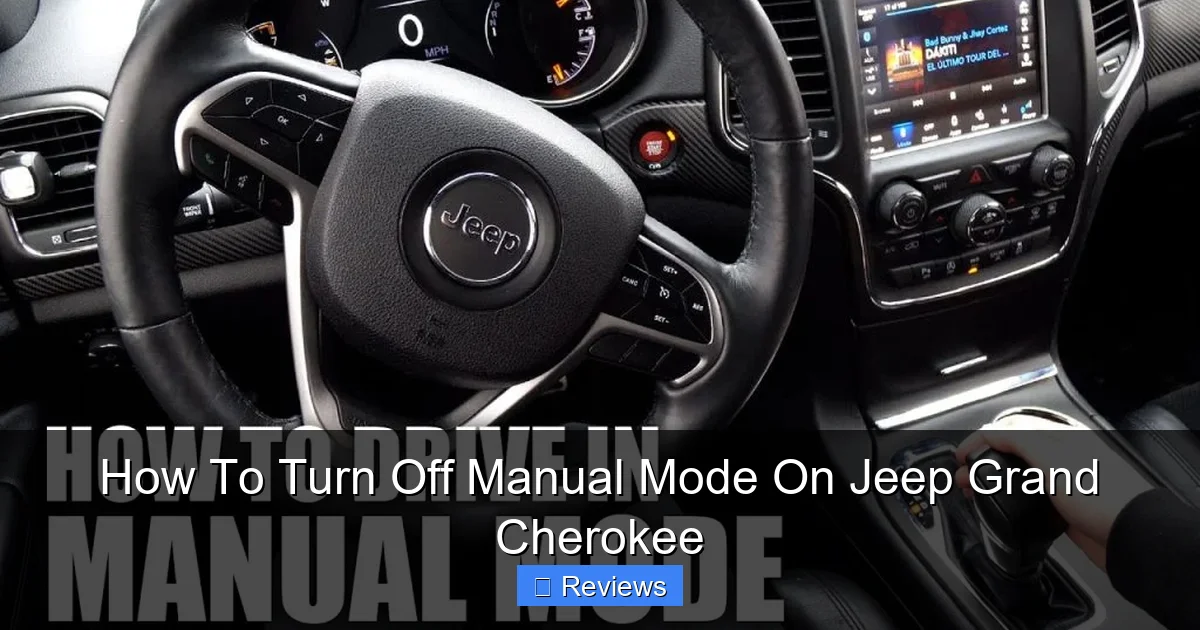
Featured image for how to turn off manual mode on jeep grand cherokee
Image source: jeepcarinfo.com
To turn off manual mode on your Jeep Grand Cherokee, simply move the gear selector back to the ‘D’ (Drive) position. This action immediately disengages Autostick or paddle shifter control, restoring fully automatic gear changes. Regain effortless driving convenience and let your Jeep handle the shifts.
The open road beckons, the powerful engine of your Jeep Grand Cherokee hums, and you’re cruising along, enjoying the ride. Suddenly, you notice something… different. The gear indicator on your dashboard isn’t showing a simple “D” for Drive, but rather a number, like “3” or “4.” You might feel a slight hesitation in acceleration or notice the engine revving higher than expected for your speed. Without realizing it, you’ve likely engaged the manual mode, often referred to as AutoStick or E-shifter manual control, a feature designed to give you greater command over your Jeep Grand Cherokee’s transmission.
For many Jeep Grand Cherokee owners, discovering manual mode can be a moment of slight confusion, especially if it was engaged unintentionally. While this feature offers an exhilarating, sportier driving experience by allowing you to manually shift gears, there are times when you simply want to revert to the ease and efficiency of the fully automatic transmission. Perhaps you’re in stop-and-go traffic, navigating a busy city, or simply prefer your vehicle to manage its own gears. Whatever the reason, knowing how to turn off manual mode on your Jeep Grand Cherokee is a fundamental skill that enhances your driving comfort and control. This comprehensive guide will walk you through everything you need to know to confidently disengage manual mode and get back to seamless automatic driving.
This article delves deep into the mechanics, methods, and nuances of managing your Jeep Grand Cherokee’s manual mode. We’ll explore how manual mode is engaged, the various straightforward techniques to turn it off, and offer practical tips to ensure a smooth transition back to automatic. Whether you’re a new Jeep owner just getting acquainted with your vehicle’s features or a seasoned driver looking for a refresher, understanding how to effectively turn off manual mode on Jeep Grand Cherokee models will empower you with greater mastery over your ride, ensuring every journey is as intuitive and enjoyable as it should be.
In This Article
- 1 Key Takeaways
- 2 Understanding Your Jeep Grand Cherokee’s Manual Mode (E-Shifter/Paddle Shifters)
- 3 The Primary Methods for Disengaging Manual Mode
- 4 Step-by-Step Guide to Disabling Manual Mode in Various Scenarios
- 5 Advanced Tips, Troubleshooting, and Best Practices
- 6 Reviewing the User Experience: Manual Mode’s Design and Disengagement
- 7 Data Table: Quick Reference for Manual Mode Disengagement
- 8 Conclusion
- 9 Frequently Asked Questions
- 9.1 How do I turn off manual mode on my Jeep Grand Cherokee?
- 9.2 What does “manual mode” mean in a Jeep Grand Cherokee and why would I use it?
- 9.3 My Jeep Grand Cherokee seems stuck in manual mode; what should I do?
- 9.4 Is there a dedicated button to exit manual mode on a Jeep Grand Cherokee?
- 9.5 Can I accidentally engage manual mode while driving my Jeep Grand Cherokee?
- 9.6 Will turning off my Jeep Grand Cherokee reset manual mode automatically?
Key Takeaways
- Understand ERS: Recognize Electronic Range Select (ERS) as “manual mode.”
- Return to Drive: Shift the gear selector back into the “D” position.
- Hold Paddle Shifter: Press and hold the right paddle shifter to exit.
- Restart Vehicle: A full stop and engine restart often resets the mode.
- Check Dash Display: Confirm “D” is visible on the instrument cluster.
- Avoid Accidental Engage: Be mindful of the gear lever’s left/right motion.
Understanding Your Jeep Grand Cherokee’s Manual Mode (E-Shifter/Paddle Shifters)
Before we dive into the specifics of how to turn off manual mode on your Jeep Grand Cherokee, it’s incredibly helpful to first understand what manual mode is, why it exists, and how it typically gets engaged. This foundational knowledge will make the process of disengaging it much clearer and help prevent accidental re-engagement in the future. The Jeep Grand Cherokee, renowned for its blend of rugged capability and refined comfort, often incorporates advanced transmission controls that can sometimes surprise drivers unfamiliar with their operation.
What is “Manual Mode” in a Grand Cherokee? (AutoStick or E-Shifter Manual Control)
Manual mode, often branded as “AutoStick” in older Chrysler/Jeep vehicles or simply “manual control” with the modern E-shifter and paddle shifters, is a semi-automatic transmission feature. It allows the driver to select specific gears manually, overriding the automatic transmission’s computer-controlled gear shifts. Instead of the vehicle’s system deciding when to upshift or downshift based on speed, throttle input, and engine load, you, the driver, gain direct control. This can be particularly useful for certain driving conditions, such as towing, descending steep hills (for engine braking), or spirited driving where you want to hold a gear longer for maximum power. While your primary goal here is to learn how to turn off manual mode, appreciating its purpose adds context.
How You Might Accidentally Engage It
Accidental engagement is one of the most common reasons drivers search for “how to turn off manual mode on Jeep Grand Cherokee.” There are two primary ways manual mode is engaged:
-
Via the E-Shifter (Gear Selector): On many newer Grand Cherokee models with the electronic shifter, simply pushing the gear selector lever left or right (sometimes forward or backward, depending on the specific model year and shifter design) from the “D” (Drive) position will activate manual mode. Each nudge will typically shift one gear up or down. A quick, unintentional bump of the lever can put you into manual mode without you even realizing it, often indicated by the gear display changing from “D” to a number (e.g., “1,” “2,” “3”).
-
Via Paddle Shifters: Many sportier trims or optional packages of the Jeep Grand Cherokee come equipped with paddle shifters mounted on the steering wheel. These are designed for quick, convenient gear changes. Pulling either the “+” (upshift) paddle or the “-” (downshift) paddle will immediately engage manual mode. It’s very easy to accidentally brush these paddles while turning the wheel or simply gripping it, leading to an unexpected shift into manual control.
The Benefits of Manual Mode (Why it exists, even if you want to turn it off)
Despite your immediate need to turn off manual mode, it’s worth noting its intended advantages:
- Enhanced Control: Provides the driver with direct control over gear selection, allowing for more precise acceleration or deceleration.
- Engine Braking: Useful for descending long, steep grades, as it allows the engine to help slow the vehicle, reducing brake wear.
- Performance Driving: Allows enthusiasts to hold gears longer for maximum power delivery, providing a more engaging driving experience.
- Towing: Can be beneficial when towing heavy loads, enabling the driver to maintain optimal power and reduce transmission hunting.
Identifying When You Are In Manual Mode (Dashboard Indicators, Gear Display)
The clearest indicator that you are in manual mode is the gear display on your instrument cluster. Instead of seeing “D” for Drive, you will typically see a number corresponding to the current gear (e.g., “1,” “2,” “3,” “4,” “5,” “6,” “7,” “8” – depending on your Grand Cherokee’s transmission). Some models might also display “M” next to the gear number. Pay close attention to this display. If you see a number instead of “D,” you are in manual mode and will need to follow the steps below to turn off manual mode.
The Primary Methods for Disengaging Manual Mode
Now that you understand what manual mode is and how you might have engaged it, let’s get to the core of the matter: how to turn off manual mode on your Jeep Grand Cherokee. Thankfully, the process is straightforward and designed to be intuitive, allowing you to return to the convenience of automatic driving with minimal effort. There are typically two main methods, with a third as a last resort, depending on your vehicle’s configuration and the situation.
Visual guide about how to turn off manual mode on jeep grand cherokee
Image source: driverlessrevolutions.com
Method 1: Returning to Drive (D) with the Gear Selector
This is often the most direct and universally applicable method for models equipped with an electronic gear selector (E-shifter). If you engaged manual mode by nudging the gear selector to the side, you can usually disengage it by returning the selector to its central “D” (Drive) position and holding it there briefly, or by simply selecting “D” again. The exact action can vary slightly by model year:
-
For E-Shifters (e.g., dial shifter, joystick-like shifter): If your Grand Cherokee has a traditional stick-like E-shifter, gently push or pull it back into the main “D” position. Some shifters require you to push it one additional time towards the “D” position and hold for a second or two. For dial shifters, simply ensure the dial is set to “D.”
-
For Manual Mode Engaged by Shifter Nudge: If you shifted into manual mode by nudging the lever left/right, simply push or pull it back into the normal “Drive” channel. The transmission will automatically revert to fully automatic operation. You should see the gear indicator on your dashboard change from a number (e.g., “3”) back to “D.”
This method is reliable for how to turn off manual mode when the primary engagement was through the shifter itself.
Method 2: Holding the “Up” Paddle Shifter (or “+” on the E-shifter)
This is the preferred and often quickest method if your Grand Cherokee is equipped with paddle shifters on the steering wheel, or if your E-shifter has a “+” position that primarily functions for upshifting.
-
Using Paddle Shifters: While driving, simply press and hold the “+” (upshift) paddle shifter, typically located on the right side of the steering wheel, for approximately 2-3 seconds. The transmission will then automatically revert to full automatic mode. The gear indicator will change from a number back to “D.” This is an elegant and quick way to disengage manual mode without needing to interact with the main gear selector.
-
Using the E-shifter’s “+” Nudge: Some E-shifter designs might allow you to hold the “+” position (the upshift nudge) for a few seconds to achieve the same result as holding a paddle shifter. Check your owner’s manual for specifics on your model year.
This method is specifically designed for quick exits from manual mode, particularly when it was engaged by paddle shifters. It’s a key technique for how to turn off manual mode seamlessly.
Method 3: Stopping and Restarting (as a last resort/reset)
While not the most convenient, turning the vehicle off and restarting it will always reset the transmission to its default automatic mode. This should be considered a last resort if, for some reason, the other methods aren’t working or if you’re completely unsure how to proceed. Obviously, this is only feasible when you are safely stopped and can turn off the engine.
- Procedure: Safely pull over, engage the parking brake, put the transmission in “P” (Park), turn off the engine, wait a few seconds, and then restart the vehicle. Upon restarting, the transmission will default back to “D” for Drive.
This method works because the vehicle’s control modules typically reset to default settings upon a full power cycle, including the transmission’s operating mode. It’s a failsafe for how to turn off manual mode.
Understanding the Transmission’s Logic (It wants to protect itself)
It’s important to remember that your Jeep Grand Cherokee’s transmission control module (TCM) is programmed with protective logic. Even in manual mode, it will prevent shifts that could damage the engine or transmission, such as downshifting into too low a gear at high speeds or over-revving. Similarly, when you attempt to turn off manual mode, the system ensures a smooth transition back to automatic, often selecting the most appropriate gear for your current speed and engine RPM. This intelligent design is there to safeguard your vehicle’s longevity and performance.
Step-by-Step Guide to Disabling Manual Mode in Various Scenarios
Knowing the general methods for how to turn off manual mode on your Jeep Grand Cherokee is one thing, but applying them effectively in real-world driving scenarios is another. Let’s break down the process for different situations you might encounter, ensuring you can confidently revert to automatic driving whenever needed.
Visual guide about how to turn off manual mode on jeep grand cherokee
Image source: vehicle-images.dealerinspire.com
Disengaging While Driving at Speed
This is perhaps the most common scenario where drivers realize they’re in manual mode and want to switch back. You’re on the highway, city streets, or a country road, and you notice the gear indicator showing a number instead of “D.”
-
Stay Calm and Assess: First, ensure you are in a safe driving situation. There’s no immediate danger from being in manual mode, as the transmission usually won’t allow you to severely over-rev or lug the engine. Simply note your current speed and the displayed gear.
-
For Paddle Shifters: If your Jeep Grand Cherokee has paddle shifters, the easiest way to turn off manual mode is to
-
For E-Shifter (Gear Selector): If you do not have paddle shifters, or if you prefer to use the main gear selector, gently nudge or push the gear selector back into its central “D” (Drive) position. On some models, you might need to push it slightly past the “D” detent and hold it for a second or two to confirm the return to automatic. Again, confirm the “D” indicator on your dash.
-
Observe the Transition: You might feel a subtle shift as the transmission takes over. This is normal. The vehicle’s computer will ensure a smooth, optimal gear selection for your current driving conditions. This is the core process for how to turn off manual mode while driving.
Disengaging When Stationary or at Low Speeds
Sometimes you might notice you’re in manual mode while stopped at a traffic light, in a parking lot, or moving very slowly. The steps are largely similar to driving at speed, but with perhaps even less urgency.
-
Check Your Gear: Confirm the digital gear display shows a number (e.g., “1” or “2”) instead of “D.”
-
Apply Method 1 or 2:
- Paddle Shifters: Press and hold the “+” paddle for 2-3 seconds.
- E-Shifter: Gently move the gear selector into the “D” position and hold briefly if necessary.
-
Confirm: The “D” should reappear on your dashboard, indicating you’re back in automatic mode. Even when stationary, the vehicle will usually reset to “D” and be ready to shift through all gears automatically as you accelerate. This confirms you have successfully turned off manual mode.
Addressing Persistent Manual Mode Engagement
In rare instances, you might find that manual mode seems to re-engage itself, or perhaps your initial attempt to disengage it doesn’t work as expected. This usually points to either user error or a minor system glitch.
-
Double-Check Actions: Ensure you are holding the “+” paddle for the full 2-3 seconds, or firmly placing the E-shifter in the “D” position. A quick tap might not be enough to override the manual setting.
-
Check for Accidental Touches: Are you inadvertently brushing the paddle shifters or the E-shifter as you drive? Pay attention to your hand placement, especially during turns or when adjusting the steering wheel. Sometimes, just a light touch is enough to re-engage manual mode.
-
Restart the Vehicle (if safe): If you’re safely parked and the issue persists, the safest bet is to perform the “Method 3” – turn the vehicle off, wait 10-15 seconds, and restart it. This often resolves minor electronic quirks. This is a reliable method for how to turn off manual mode if other ways fail.
When the Shift Lever Feels Stuck
Modern Jeep Grand Cherokee models with electronic shifters (E-shifters) do not have a direct mechanical link to the transmission. If the shift lever feels “stuck” and won’t move out of a manual gear selection, it’s almost certainly an electronic issue, not a mechanical one. This is rare for merely disengaging manual mode but can happen with other shifter operations.
-
Ensure Brake Pedal is Depressed: For any shift out of Park (P) or Neutral (N), the brake pedal must be firmly depressed. This interlock also applies when manipulating the E-shifter, even within Drive modes.
-
Check for Error Messages: Look for any warning lights or messages on your instrument cluster related to the transmission or shifter. These can provide clues.
-
Perform a System Reset: Turning the vehicle off and on again (as described in Method 3) is your best first step if the shifter feels unresponsive while trying to turn off manual mode.
-
Consult Your Owner’s Manual: Your specific Jeep Grand Cherokee owner’s manual will have detailed troubleshooting steps for shifter issues, including potential override procedures for electronic shifters in emergencies.
By understanding these scenarios and applying the correct techniques, you can confidently turn off manual mode on your Jeep Grand Cherokee whenever you desire, ensuring a smooth and predictable driving experience.
Advanced Tips, Troubleshooting, and Best Practices
Mastering how to turn off manual mode on your Jeep Grand Cherokee goes beyond just knowing the basic steps. It involves understanding prevention, recognizing potential issues, and adopting best practices for a seamless driving experience. This section dives into more nuanced aspects, providing you with a deeper understanding and practical advice.
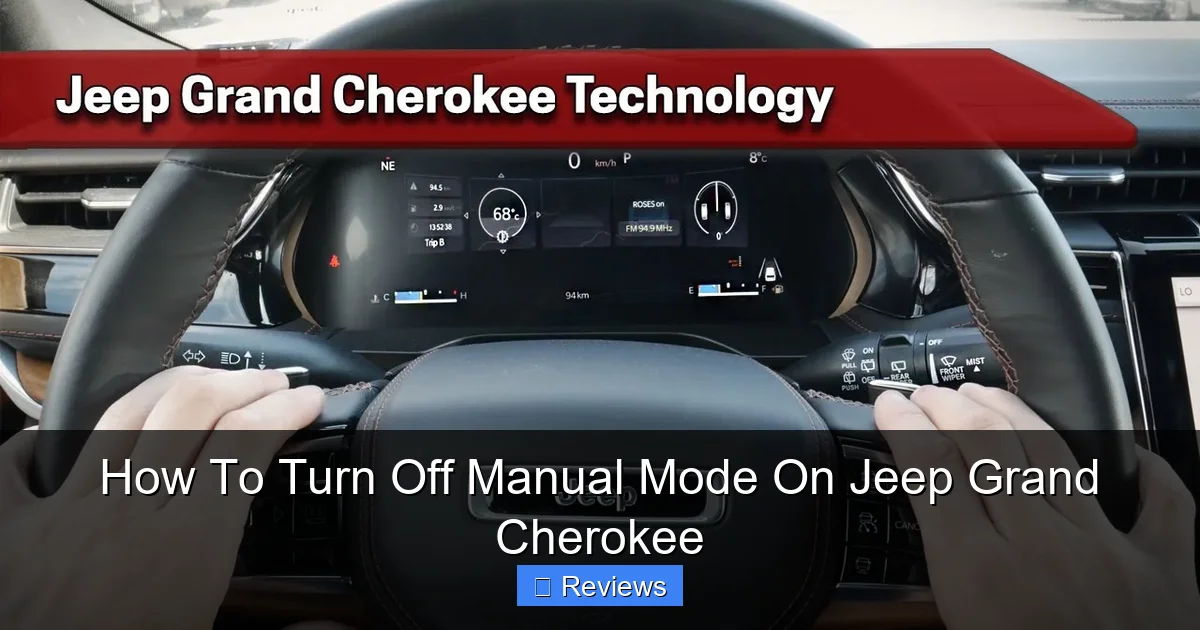
Visual guide about how to turn off manual mode on jeep grand cherokee
Image source: i.ytimg.com
Preventing Accidental Engagement
The best way to deal with manual mode is to avoid accidentally entering it in the first place. This is especially true if you seldom use the feature and prefer full automatic control.
-
Mind Your Hand Placement: If your Grand Cherokee has paddle shifters, be conscious of where your hands are positioned on the steering wheel, particularly during turns or when gesturing. Avoid gripping the wheel in a way that allows your fingers to inadvertently brush against the “+” or “-” paddles. A slight adjustment in your grip can make a big difference.
-
Awareness of E-Shifter Proximity: For vehicles with an E-shifter that allows side-to-side nudges for manual shifting, be mindful of its location. When reaching for other controls (e.g., climate, radio), ensure you don’t accidentally bump the shifter into its manual gate. This is a common cause of unintended manual mode activation.
-
Understand Default Settings: Most Jeep Grand Cherokees will default to automatic “D” mode upon startup. If you notice manual mode active immediately after starting, it might indicate a more persistent issue or that it wasn’t properly disengaged during the previous drive.
The Role of Drive Modes (Sport, Snow, etc.) and Manual Mode Interaction
Your Jeep Grand Cherokee likely offers various drive modes (e.g., Sport, Snow, Sand, Mud, Rock, Auto). It’s important to understand how these interact with manual mode.
-
Manual Mode Overrides Drive Mode Shifting: When you engage manual mode (via paddle shifters or the E-shifter), you temporarily override the automatic shifting logic of any selected drive mode. For instance, even if you’re in “Sport” mode, which typically holds gears longer, activating manual mode gives you explicit control over upshifts and downshifts.
-
Returning to Automatic: When you turn off manual mode (using the methods described earlier), the transmission will revert to the automatic shifting logic dictated by the currently selected drive mode (e.g., if you were in “Sport,” it will resume Sport mode’s automatic shifts). There isn’t usually a separate step required to exit a drive mode when disengaging manual mode; they operate in parallel.
-
Consider Your Desired Mode: If you engaged manual mode while in a specific drive mode and want to return to a different overall driving characteristic, you’ll first turn off manual mode, then select your desired drive mode (e.g., switch from Sport to Auto) using the Selec-Terrain dial or corresponding buttons.
What to Do If Manual Mode Won’t Turn Off (Potential Issues, Sensor Problems)
While extremely rare, if you find that manual mode persistently won’t disengage despite following the correct procedures, it could indicate a more significant issue.
-
Check for DTCs (Diagnostic Trouble Codes): If a problem with the transmission or shifter mechanism is preventing manual mode from disengaging, your Jeep Grand Cherokee’s onboard diagnostic system might log a Diagnostic Trouble Code (DTC) and illuminate a “Check Engine” light or a transmission warning light on your dash. If you have an OBD-II scanner, you can check for these codes.
-
Paddle Shifter or E-Shifter Sensor Malfunction: The paddle shifters and E-shifter rely on sensors to communicate your desired shifts to the transmission control module. A faulty sensor or wiring issue could prevent the system from registering your command to return to automatic mode. This is unlikely but possible.
-
Transmission Control Module (TCM) Glitch: The TCM is the brain of your transmission. A software glitch or a hardware fault within the TCM could lead to unexpected behavior, including getting stuck in manual mode. Performing the “off and on” reset can sometimes clear temporary glitches, but persistent issues indicate a deeper problem.
-
Wiring Issues: Damaged wiring between the shifter components and the TCM could also interfere with proper communication, leading to an inability to turn off manual mode.
When to Consult a Professional (Dealership, Mechanic)
If you’ve tried the standard methods and the “off and on” reset, and your Jeep Grand Cherokee remains stuck in manual mode or exhibits other abnormal shifting behavior, it’s time to consult a qualified professional.
-
Persistent Engagement: If you cannot consistently turn off manual mode, regardless of your actions.
-
Warning Lights: If any transmission-related warning lights or the “Check Engine” light illuminate.
-
Abnormal Shifting: If the vehicle is shifting harshly, slipping gears, or making unusual noises after manual mode disengagement attempts.
-
Unresponsive Controls: If the paddle shifters or E-shifter feel completely unresponsive.
A Jeep dealership or a reputable independent mechanic specializing in Chrysler/Jeep vehicles will have the diagnostic tools and expertise to pinpoint the exact cause of the problem and perform the necessary repairs. Do not ignore persistent transmission issues, as they can escalate into more costly repairs if left unaddressed. Understanding how to turn off manual mode is crucial, but recognizing when professional help is needed is equally important for maintaining your vehicle’s health.
Reviewing the User Experience: Manual Mode’s Design and Disengagement
As this category is “Reviews,” it’s pertinent to evaluate the design and user experience of the manual mode feature and, crucially, the ease of disengaging it in the Jeep Grand Cherokee. While the primary function of manual mode is to provide driver control, its overall implementation significantly impacts how users perceive and interact with this capability, especially when they want to turn off manual mode.
Ergonomics of Paddle Shifters and Gear Selector
The physical design of the controls plays a critical role in the user experience. Jeep Grand Cherokees typically offer either an E-shifter with a manual gate or steering wheel-mounted paddle shifters, or sometimes both.
-
Paddle Shifters: Generally, the paddle shifters on the Grand Cherokee are well-placed and intuitive. They are usually positioned just behind the steering wheel, making them accessible without removing hands from the wheel. The tactile feedback is usually satisfying, providing a clear indication when a shift input has been registered. The ease of engagement (a simple tap) is excellent for those who want quick control, but it also contributes to accidental engagement. The design choice to require a hold (2-3 seconds) of the “+” paddle to turn off manual mode is a thoughtful safety feature, preventing accidental disengagement during spirited driving.
-
E-Shifter: The electronic gear selector, whether a traditional-looking lever or a rotary dial, offers a different experience. For lever-style E-shifters, the manual gate (often a push to the left/right) can feel natural for those accustomed to traditional “AutoStick” systems. However, its proximity to other controls or even just the driver’s leg can lead to unintentional nudges. Rotary shifters typically require a deliberate turn to select “D,” making accidental engagement of a separate manual mode less likely if it’s not part of the primary dial. The process of returning the E-shifter to “D” to turn off manual mode is generally straightforward, though some users might initially find it slightly less immediate than the paddle shifter hold.
Overall, the ergonomics are well-considered for engagement, but the ease of accidental activation is a common complaint, hence the frequent need to know how to turn off manual mode.
Clarity of Dashboard Indicators
The visual feedback provided by the instrument cluster is paramount for drivers to understand their vehicle’s operational state.
-
Gear Display: The Jeep Grand Cherokee typically displays the current gear prominently in the digital instrument cluster. Switching from “D” to a specific number (e.g., “M3” or just “3”) is a clear and immediate indicator that manual mode is active. This is a strong point in the user experience, as it leaves little room for ambiguity once the driver knows what to look for.
-
Contextual Clues: While not a direct indicator, the change in driving feel (engine revs, hesitation in upshifting) provides additional contextual clues that can alert a driver to manual mode engagement, even before looking at the dash. This combination of visual and tactile feedback is effective in signaling the need to turn off manual mode.
Ease of Transition Between Modes
The transition from manual to automatic mode is generally smooth and well-managed by the Grand Cherokee’s transmission control unit.
-
Smooth Disengagement: When the appropriate action (holding “+” paddle or returning E-shifter to “D”) is taken, the transmission typically re-engages automatic mode seamlessly. There’s rarely a jarring shift or noticeable delay, contributing to a sense of confidence and control for the driver.
-
Intelligent Gear Selection: Upon reverting to automatic, the system intelligently selects the most appropriate gear based on speed, throttle input, and potentially the active drive mode. This prevents situations where the vehicle might suddenly jump to an inappropriate gear, which is crucial for safety and comfort when you turn off manual mode.
Potential for User Confusion
Despite its generally good design, manual mode in the Grand Cherokee can still lead to some user confusion, particularly for new owners or those unfamiliar with semi-automatic transmissions.
-
Unintentional Engagement: As noted, the primary source of confusion is accidental engagement, leading to the question of how to turn off manual mode. The ease of tapping a paddle or nudging a shifter means many drivers find themselves in manual mode without intending to.
-
Lack of “Off” Button: Unlike some other features, there isn’t a dedicated “manual mode OFF” button. The disengagement is context-sensitive (holding a paddle, repositioning the shifter), which can be less intuitive than a clear on/off switch for some users. However, this integrated approach is typical for modern vehicle controls.
-
Owner’s Manual Dependency: While the method is straightforward once known, it often requires a trip to the owner’s manual or an online search to discover the specific action for how to turn off manual mode, especially for the paddle shifter “hold” function.
In summary, the Jeep Grand Cherokee’s manual mode offers robust control, and its disengagement methods are effective. The primary area for improvement in the user experience is mitigating accidental engagement, which often prompts drivers to seek guides like this one to learn how to turn off manual mode.
Data Table: Quick Reference for Manual Mode Disengagement
To quickly summarize the methods for how to turn off manual mode on your Jeep Grand Cherokee, and to provide a concise reference, the following table outlines the actions, conditions, and expected outcomes.
| Disengagement Method | Control Used | Required Action | Conditions / Notes | Expected Dashboard Indicator |
|---|---|---|---|---|
| Primary (Paddle Shifters) | “+” (Upshift) Paddle Shifter | Press and |
Most effective if manual mode was engaged via paddles. Works while driving. | Changes from a number (e.g., “5”) to “D” (Drive). |
| Primary (E-Shifter) | Electronic Gear Selector (E-Shifter) | Nudge or push the E-shifter back into the central “D” (Drive) position; hold briefly if needed. | Most effective if manual mode was engaged via the E-shifter. Works while driving or stationary. | Changes from a number (e.g., “3”) to “D” (Drive). |
| Last Resort / Reset | Ignition Button / Key | Safely stop, shift to “P,” turn off engine, wait 10-15 seconds, then restart. | Use if other methods fail, or for troubleshooting persistent issues. Only when safely parked. | Defaults to “D” (Drive) upon restart. |
This table serves as a handy guide to quickly determine the best approach when you need to turn off manual mode on your Jeep Grand Cherokee. Always prioritize safe driving practices and refer to your owner’s manual for model-specific details if there are any discrepancies.
Conclusion
Navigating the various features of your Jeep Grand Cherokee enhances both your driving experience and your confidence behind the wheel. The manual mode, while offering exhilarating control for specific driving scenarios, can sometimes be engaged unintentionally, leading to a desire to revert to the vehicle’s intuitive automatic operation. Fortunately, as we’ve thoroughly explored, learning how to turn off manual mode on your Jeep Grand Cherokee is a straightforward process, achievable through a couple of simple, effective actions.
Whether you find yourself inadvertently in manual mode due to a brush against the paddle shifters or an accidental nudge of the E-shifter, the primary solutions involve either pressing and holding the “+” paddle for a few seconds or ensuring your electronic gear selector is firmly set back in the “D” (Drive) position. These methods are designed for seamless, immediate transitions, ensuring your Grand Cherokee smoothly shifts back to managing its own gears, allowing you to focus on the road ahead. In rare cases where a reset is needed, a simple power cycle of the vehicle will always restore the default automatic mode.
Ultimately, understanding how to turn off manual mode empowers you with full command over your Jeep Grand Cherokee’s transmission, letting you choose the driving style that best suits your current journey. By internalizing these steps and practicing a little awareness of your controls, you can effortlessly switch between dynamic manual control and the relaxed convenience of automatic driving, making every trip in your Grand Cherokee as enjoyable and stress-free as possible. Drive confidently, knowing you have mastered every aspect of your vehicle’s transmission capabilities.
Frequently Asked Questions
How do I turn off manual mode on my Jeep Grand Cherokee?
To exit manual mode, simply shift your gear selector from the “D” (Drive) position fully to the right into the manual gate, then back to the left into “D”. Some models might require you to hold it in the “D” position briefly or tap it again to confirm the exit from sequential shifting.
What does “manual mode” mean in a Jeep Grand Cherokee and why would I use it?
“Manual mode,” often referred to as AutoStick or sequential shifting, allows the driver to manually select gears using the shifter instead of the vehicle automatically changing them. This feature is useful for engine braking when descending steep hills, towing, or when you desire more control over RPMs during spirited driving.
My Jeep Grand Cherokee seems stuck in manual mode; what should I do?
First, ensure you are firmly pushing the gear selector from the manual gate back into the full “D” position. If that doesn’t work, try safely pulling over, putting the vehicle in Park, turning the engine off, waiting a few moments, and then restarting it to see if it resets to automatic mode.
Generally, there isn’t a single dedicated button to exit manual mode; rather, it’s typically controlled by the movement of your gear selector. Some higher trims might have paddle shifters, but returning the main gear selector to “D” is the universal method to revert to full automatic operation.
Can I accidentally engage manual mode while driving my Jeep Grand Cherokee?
Yes, it is possible to accidentally engage manual mode by inadvertently nudging the gear selector to the right, into the manual gate, while driving. Pay attention to the gear indicator on your dashboard; if you see “1,” “2,” or “S” instead of “D,” you’ve entered manual mode.
Will turning off my Jeep Grand Cherokee reset manual mode automatically?
Typically, turning off your Jeep Grand Cherokee and restarting it will reset the transmission to its default automatic “D” (Drive) mode. However, it’s always good practice to ensure the gear selector is fully in the “D” position before turning the vehicle off to prevent any confusion upon the next startup.

At CarLegit, we believe information should be clear, factual, and genuinely helpful. That’s why every guide, review, and update on our website is created with care, research, and a strong focus on user experience.