
Turning off the passenger restraint system in a BMW is sometimes necessary—like when installing a rear-facing child seat or troubleshooting a warning light. This guide walks you through the process safely, legally, and without damaging your vehicle’s safety systems.
In This Article
- 1 Key Takeaways
- 2 📑 Table of Contents
- 3 Understanding the BMW Passenger Restraint System
- 4 When and Why You Might Need to Disable the System
- 5 How to Turn Off the Passenger Restraint System in a BMW
- 6 Safety Tips and Best Practices
- 7 Troubleshooting Common Issues
- 8 Conclusion
- 9 Frequently Asked Questions
- 9.1 Can I permanently disable the passenger airbag in my BMW?
- 9.2 Will disabling the airbag affect my car insurance?
- 9.3 Why does my BMW keep showing an airbag warning light?
- 9.4 Can I use a rear-facing child seat without turning off the airbag?
- 9.5 Do all BMW models have a way to disable the passenger airbag?
- 9.6 What should I do if the airbag won’t turn back on?
Key Takeaways
- Understand why you might need to disable the system: Common reasons include installing a child seat, repairing sensors, or resolving persistent warning lights.
- Use the correct method for your BMW model: Procedures vary by year and trim—always check your owner’s manual or consult a professional.
- Never disable airbags permanently: Only turn off the system temporarily and reactivate it when safe to do so.
- Child safety seats require special attention: Rear-facing seats should only be used with the passenger airbag deactivated to prevent injury.
- Warning lights may indicate a fault: If the airbag light stays on, it could signal a sensor or wiring issue—not just a need to disable the system.
- Professional help is recommended for complex issues: If you’re unsure, visit a certified BMW technician to avoid accidental deployment or system damage.
- Legal and insurance implications exist: Modifying safety systems may affect coverage or compliance with local laws—check regulations first.
📑 Table of Contents
Understanding the BMW Passenger Restraint System
The passenger restraint system in a BMW is a sophisticated network designed to protect occupants during a collision. It includes airbags, seatbelt pretensioners, weight sensors, and electronic control units (ECUs) that work together to assess crash severity and deploy safety features accordingly. Unlike older vehicles with basic airbag systems, modern BMWs use smart technology to determine whether the passenger seat is occupied, how much the person weighs, and even their seating position.
This intelligence allows the car to decide whether to deploy the airbag, how forcefully, or whether to suppress it entirely—especially important when a child or small adult is seated. For example, if the system detects a rear-facing child seat, it may automatically disable the front passenger airbag to prevent injury from deployment. However, sometimes the system needs manual intervention, such as when you’re installing a child seat and the airbag warning light won’t turn off, or when you’re troubleshooting a fault.
Knowing how this system works is the first step in safely managing it. It’s not just about flipping a switch—it’s about understanding the signals your car is sending and responding appropriately. Missteps can lead to disabled safety features when they’re needed most, or worse, accidental airbag deployment during maintenance.
Components of the Restraint System
The passenger restraint system includes several key components:
– Front Passenger Airbag: Located in the dashboard, it deploys forward during a frontal collision.
– Seat Occupancy Sensor: Usually embedded in the seat cushion, it detects whether someone is sitting there and estimates their weight.
– Seatbelt Pretensioner: Tightens the seatbelt instantly during a crash to reduce slack.
– Airbag Control Module: The brain of the system, it processes data from sensors and decides whether to deploy airbags.
– Warning Lights: Located on the dashboard, they alert you to system faults or deactivation.
These parts communicate via the car’s CAN bus (Controller Area Network), a high-speed internal network. If one component fails or sends incorrect data, the entire system may behave unpredictably—like showing an airbag warning light even when everything seems fine.
Why the System Might Need to Be Turned Off
There are legitimate reasons to disable the passenger restraint system, but they should always be temporary and safety-driven. The most common scenario is installing a rear-facing child seat. Because airbags deploy with tremendous force—up to 200 mph—they can seriously injure or even kill a young child in a rear-facing seat. BMW, like other manufacturers, recommends deactivating the passenger airbag when using such seats.
Other reasons include:
– Sensor malfunctions: A faulty weight sensor might incorrectly detect a passenger, triggering warnings or preventing airbag deployment when needed.
– Seat repairs or replacements: If you’re working on the passenger seat, you may need to disable the system to avoid accidental deployment.
– Diagnostic troubleshooting: Mechanics often disable the system temporarily to test sensors or wiring.
– Medical conditions: In rare cases, a doctor may recommend disabling the airbag for health reasons, though this is highly unusual and should be documented.
It’s important to note that disabling the system should never be done casually. Airbags save lives—over 50,000 lives in the U.S. alone since 1987, according to the NHTSA. Turning them off without good reason increases risk.
When and Why You Might Need to Disable the System
Visual guide about How to Turn Off Passenger Restraint System Bmw
Image source: i.ytimg.com
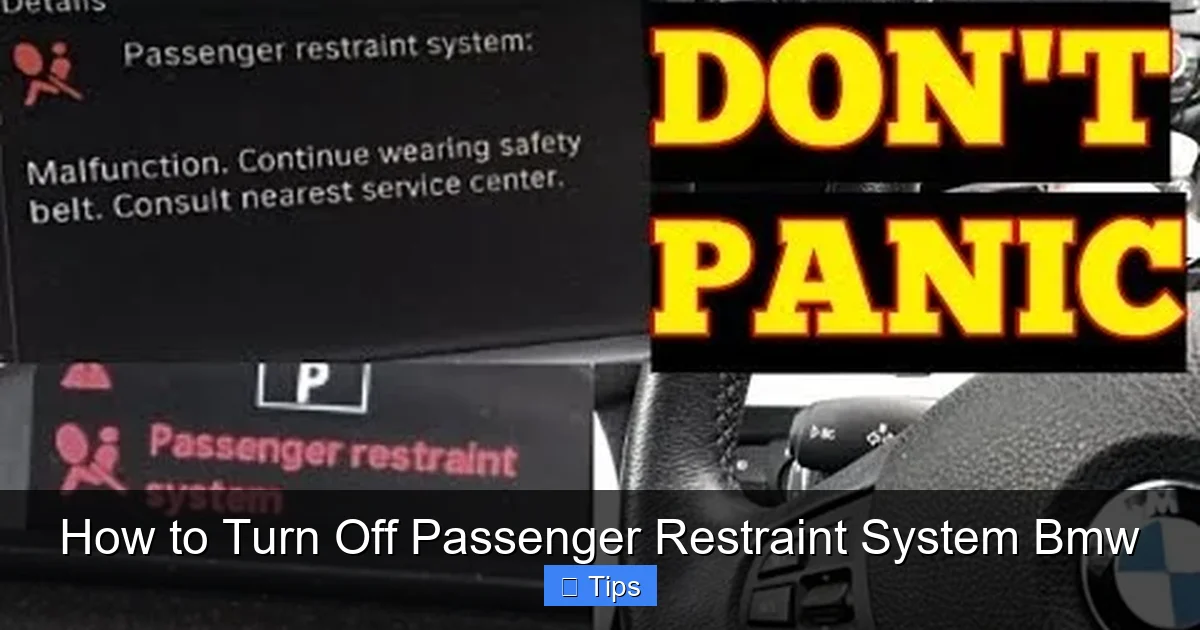
Let’s say you’ve just bought a rear-facing infant car seat and are ready to install it in your BMW’s front passenger seat. You buckle it in, but the airbag warning light stays on. You know the airbag could harm your baby if it deploys, so you need to turn it off. This is a textbook example of when disabling the passenger restraint system is not only appropriate but necessary.
Another common situation is when the airbag light comes on for no apparent reason. You’re not carrying a passenger, the seat is empty, yet the dashboard warns you of a fault. This could mean the seat sensor is dirty, damaged, or misaligned. In such cases, temporarily disabling the system can help you diagnose the issue without risking accidental deployment while you inspect the seat.
Child Safety and Airbag Risks
The National Highway Traffic Safety Administration (NHTSA) strongly advises against placing rear-facing child seats in front of an active airbag. The force of deployment can cause severe head and neck injuries to infants. BMW vehicles are equipped with a feature called the “Passenger Airbag Off” indicator, which illuminates when the system detects a child seat or when the airbag is manually deactivated.
If your BMW has a manual override switch (more on that later), you can use it to turn off the airbag when installing a child seat. However, always ensure the seat is properly secured with the seatbelt or LATCH system, and never place a rear-facing seat in the front unless absolutely necessary—most experts recommend using the back seat whenever possible.
Sensor Errors and False Warnings
Modern BMWs use capacitive or pressure-based sensors in the passenger seat to detect occupancy. These can sometimes give false readings. For example, placing a heavy object like a laptop bag or grocery bag on the seat might trick the system into thinking a passenger is present. This can trigger the airbag warning light or prevent the system from entering “safe” mode.
Dirt, moisture, or wear and tear can also affect sensor accuracy. If you’ve recently cleaned the seat with liquids or had upholstery work done, the sensor might need recalibration. In such cases, disabling the system temporarily allows you to clean or inspect the sensor without interference.
Legal and Insurance Considerations
Before disabling any safety system, check your local laws. In some regions, tampering with airbags is illegal unless done for legitimate safety reasons like child seat installation. Additionally, your car insurance policy may have clauses about modified safety systems. If an accident occurs and the airbag was disabled without justification, your claim could be denied.
Always document why you disabled the system—take photos, keep receipts for child seats, or get a note from a technician. This protects you in case of an audit or claim.
How to Turn Off the Passenger Restraint System in a BMW
Visual guide about How to Turn Off Passenger Restraint System Bmw
Image source: bmwrepairdubai.com
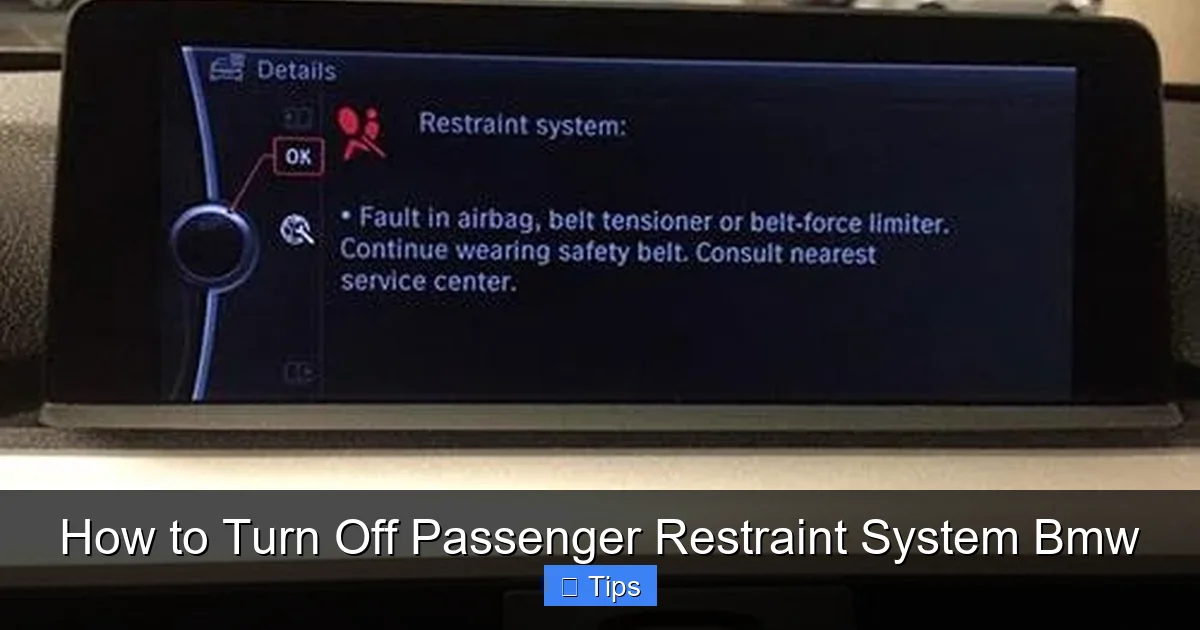
Now that we’ve covered the why, let’s get into the how. The method for turning off the passenger restraint system varies depending on your BMW’s model year and trim level. Some vehicles have a physical switch, while others require a diagnostic tool or menu navigation. Below are the most common methods.
Method 1: Using the Manual Override Switch (Older Models)
Some older BMW models (typically pre-2010) come with a physical key switch located on the passenger side of the dashboard, near the glove compartment. This switch allows you to manually enable or disable the front passenger airbag.
Here’s how to use it:
1. Locate the switch: It’s usually a small, key-operated toggle labeled “Airbag On/Off” or similar.
2. Insert the key: Use the same key that starts your car or a small flathead screwdriver if no key is required.
3. Turn to “Off”: Rotate the switch to the position that disables the airbag. A red indicator may appear.
4. Check the dashboard: The “Passenger Airbag Off” light should illuminate, confirming deactivation.
5. Reactivate when done: Turn the switch back to “On” once the child seat is removed or the issue is resolved.
Tip: Always keep the key in a safe place. If you lose it, you may need to visit a dealer to reactivate the airbag.
Method 2: Using iDrive Menu (Newer Models)
Most BMWs from 2010 onward use the iDrive system to manage safety settings. You can disable the passenger airbag through the vehicle’s infotainment menu.
Follow these steps:
1. Start the car: Turn the ignition to the “On” position (do not start the engine if you’re working on the seat).
2. Access iDrive: Press the iDrive controller to open the main menu.
3. Navigate to Vehicle Settings: Select “Vehicle Info” or “Settings,” then choose “Safety” or “Airbags.”
4. Select Passenger Airbag: Look for an option like “Front Passenger Airbag” or “Airbag Deactivation.”
5. Toggle to Off: Use the controller to disable the airbag. Confirm the selection.
6. Verify the light: The dashboard should show the “Passenger Airbag Off” indicator.
Note: Some models may require you to enter a PIN or confirm your action twice for safety.
Method 3: Using a BMW Diagnostic Tool (ISTA or INPA)
For advanced users or technicians, BMW’s official diagnostic software—such as ISTA (Integrated Service Technical Application) or the older INPA—can be used to disable the passenger restraint system. This method is typically used for troubleshooting or when the iDrive menu doesn’t offer the option.
Steps:
1. Connect the tool: Use a compatible OBD2 cable to link your laptop to the car’s diagnostic port (usually under the dashboard).
2. Launch the software: Open ISTA and select your vehicle model and year.
3. Access the Airbag Module: Navigate to the “Restraint Systems” or “Airbag” section.
4. Disable the Passenger Airbag: Follow the prompts to deactivate the system. You may need to enter a security code.
5. Save and exit: The change will be stored in the control module.
Warning: This method should only be used by trained professionals. Incorrect use can cause system errors or prevent airbags from working when needed.
Method 4: Disconnecting the Battery (Not Recommended)
Some people suggest disconnecting the car battery to reset the airbag system. While this can clear warning lights temporarily, it’s not a reliable or safe way to disable the passenger restraint system. Modern BMWs store fault codes and settings in non-volatile memory, so the system may revert to its previous state once power is restored.
Additionally, disconnecting the battery can reset other systems—like radio presets, navigation, and adaptive settings—and may trigger new warnings. It also doesn’t guarantee the airbag is truly disabled. Only use this method as a last resort and always reconnect the battery properly.
Safety Tips and Best Practices
Visual guide about How to Turn Off Passenger Restraint System Bmw
Image source: carmanualsonline.info
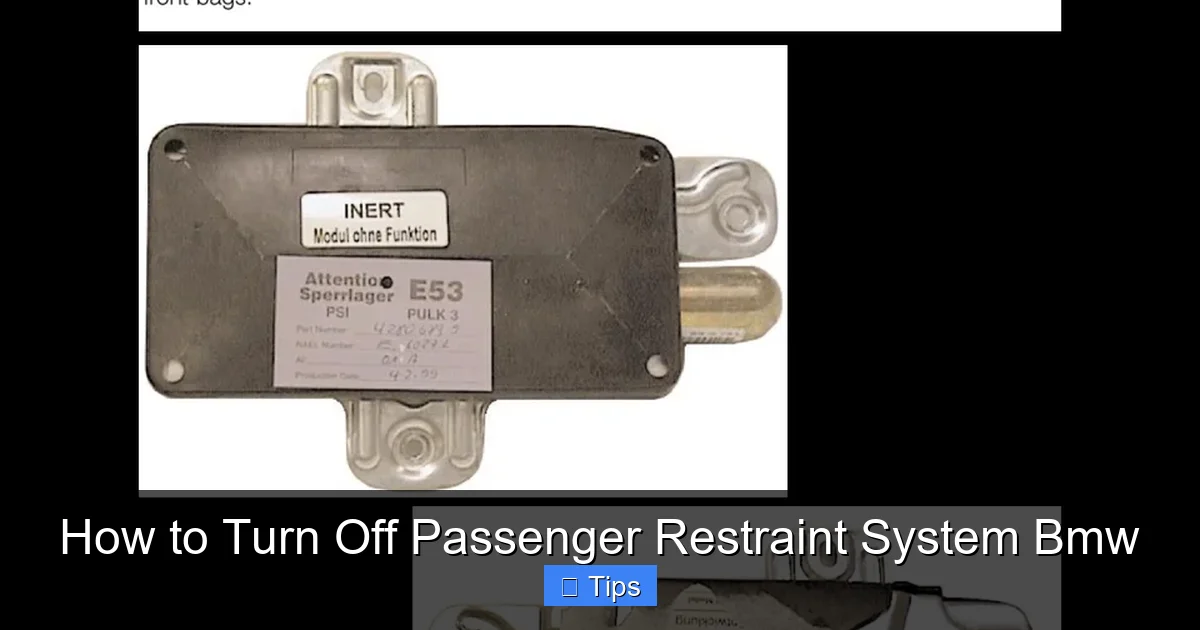
Disabling the passenger restraint system isn’t something to take lightly. Here are some best practices to keep you and your passengers safe.
Always Reactivate the Airbag
The most important rule: never leave the airbag disabled longer than necessary. Once the child seat is removed or the repair is complete, reactivate the system immediately. A disabled airbag offers no protection in a crash.
Set a reminder on your phone or leave a note on the dashboard to remind yourself to turn it back on.
Use the Back Seat When Possible
The safest place for a child is the back seat, away from front airbags. Even with the passenger airbag off, the front seat is riskier in a collision due to proximity to the dashboard and windshield. If you must use the front seat, ensure the passenger seat is moved as far back as possible.
Check the Child Seat Installation
Disabling the airbag doesn’t eliminate all risks. A poorly installed child seat can still cause injury. Use the seatbelt or LATCH system correctly, and ensure the seat doesn’t move more than one inch side-to-side or front-to-back when tugged.
Inspect Sensors Regularly
If you frequently disable the system, check the seat sensors for dirt, damage, or loose connections. Clean the seat cushion gently with a dry cloth, and avoid placing heavy objects on the seat when not in use.
Consult a Professional for Persistent Issues
If the airbag warning light keeps coming back, don’t keep disabling the system as a workaround. There may be an underlying fault—like a broken wire or faulty sensor—that needs repair. Visit a BMW service center for a proper diagnosis.
Troubleshooting Common Issues
Even with the correct procedure, you might run into problems. Here’s how to handle the most common ones.
Airbag Light Won’t Turn Off
If you’ve disabled the system but the warning light remains on, the car may still detect a fault. Try these steps:
– Restart the car and recheck the iDrive settings.
– Ensure the seat is completely empty and no objects are pressing on the sensor.
– Use a diagnostic tool to clear fault codes.
– If the light persists, have the sensor inspected.
System Reactivates Automatically
Some BMW models reactivate the airbag after a certain time or mileage. This is a safety feature to prevent long-term deactivation. If this happens, simply disable it again using the same method.
Child Seat Still Triggers Warnings
Some child seats are so heavy or wide that they trigger the occupancy sensor even with the airbag off. In this case, use a seatbelt lock or non-conductive mat under the seat to isolate the sensor. Never place anything metallic or conductive on the seat.
Error Codes After Reactivation
After turning the airbag back on, you might see a fault code. This is normal and usually clears after a few drive cycles. If it doesn’t, use a scanner to reset the system.
Conclusion
Knowing how to turn off the passenger restraint system in a BMW is a valuable skill—especially for parents, mechanics, or anyone dealing with sensor issues. But it’s not something to do without careful thought. The system exists to save lives, and disabling it should always be a temporary, safety-driven decision.
Whether you’re using a manual switch, the iDrive menu, or a diagnostic tool, follow the steps precisely and always reactivate the airbag when safe to do so. Keep your owner’s manual handy, and don’t hesitate to consult a BMW technician if you’re unsure.
Remember: safety isn’t just about following rules—it’s about understanding the technology that protects you and your loved ones. With the right knowledge, you can manage your BMW’s restraint system confidently and responsibly.
Frequently Asked Questions
Can I permanently disable the passenger airbag in my BMW?
No, you should never permanently disable the passenger airbag. It’s a critical safety feature designed to protect occupants in a crash. Only disable it temporarily—such as when using a rear-facing child seat—and always reactivate it afterward.
Will disabling the airbag affect my car insurance?
Possibly. Some insurance policies require all safety systems to be functional. Disabling the airbag without a valid reason could affect your coverage in the event of an accident. Always check with your insurer and document the reason for deactivation.
Why does my BMW keep showing an airbag warning light?
The light may indicate a faulty sensor, wiring issue, or system fault—not just a need to disable the airbag. Common causes include a damaged seat sensor, loose connections, or moisture in the seat cushion. A diagnostic scan can help identify the exact problem.
Can I use a rear-facing child seat without turning off the airbag?
No. The NHTSA and BMW strongly advise against placing a rear-facing child seat in front of an active airbag. The force of deployment can cause serious injury. Always disable the passenger airbag when using such seats in the front.
Do all BMW models have a way to disable the passenger airbag?
Most modern BMWs do, either through a physical switch, the iDrive menu, or a diagnostic tool. However, the method varies by model and year. Check your owner’s manual or consult a BMW dealer to confirm the correct procedure for your vehicle.
What should I do if the airbag won’t turn back on?
First, ensure you’re following the correct reactivation steps for your model. If the system still won’t enable, there may be a fault in the control module or sensors. Use a BMW diagnostic tool to check for error codes, or visit a certified technician for assistance.

At CarLegit, we believe information should be clear, factual, and genuinely helpful. That’s why every guide, review, and update on our website is created with care, research, and a strong focus on user experience.