
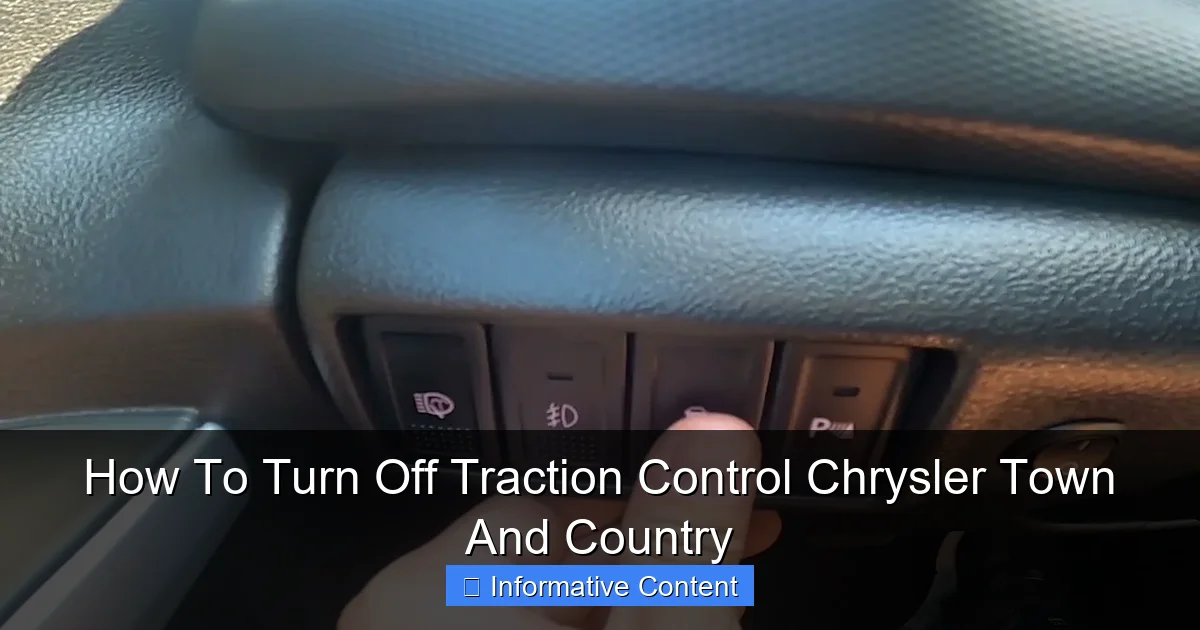
Featured image for how-to-turn-off-traction-control-chrysler-town-and-country
Image source: i.ytimg.com
To turn off traction control in a Chrysler Town & Country, press the dedicated TCS button on the dashboard. This is useful for extricating yourself from snow or mud, but remember disabling it reduces stability assistance for normal driving.
In This Article
- 1 Key Takeaways
- 2 📑 Table of Contents
- 3 How To Turn Off Traction Control Chrysler Town And Country: A Driver’s Guide
- 4 What Is Traction Control and Why Would You Turn It Off?
- 5 Method 1: The Traction Control Button (Most Common Method)
- 6 Method 2: Using the Instrument Panel Display Menu
- 7 Important Limitations and What “Off” Really Means
- 8 Troubleshooting: When It Won’t Turn Off
- 9 Safety First: When to Never Turn Off Traction Control
- 10 Chrysler Town and Country Traction Control Features by Model Year
- 11 Conclusion: Mastering Your Minivan’s Technology
- 12 Frequently Asked Questions
- 12.1 How do I turn off traction control in my Chrysler Town and Country?
- 12.2 Where is the traction control button located on a Chrysler Town and Country?
- 12.3 Why would I disable the traction control on my Chrysler Town and Country?
- 12.4 Can traction control be permanently turned off in a Chrysler Town and Country?
- 12.5 Is it safe to drive with traction control off in a Chrysler Town and Country?
- 12.6 Does the method to turn off traction control differ by Chrysler Town and Country model year?
Key Takeaways
- Locate the ESP/BAS button on your dashboard near the gear shifter.
- Press and hold the button for several seconds to disable the system.
- Confirm it’s off when the “ESP/BAS Off” light illuminates on the instrument cluster.
- Turn it off in specific conditions like deep snow, mud, or when using tire chains.
- Never disable it for normal driving; it’s a vital safety feature for stability.
- Re-enable traction control by simply pressing the ESP/BAS button again.
📑 Table of Contents
- How To Turn Off Traction Control Chrysler Town And Country: A Driver’s Guide
- What Is Traction Control and Why Would You Turn It Off?
- Method 1: The Traction Control Button (Most Common Method)
- Method 2: Using the Instrument Panel Display Menu
- Important Limitations and What “Off” Really Means
- Troubleshooting: When It Won’t Turn Off
- Safety First: When to Never Turn Off Traction Control
- Chrysler Town and Country Traction Control Features by Model Year
- Conclusion: Mastering Your Minivan’s Technology
How To Turn Off Traction Control Chrysler Town And Country: A Driver’s Guide
Let’s be honest. We’ve all been there. You’re in your trusty Chrysler Town and Country, ready to tackle the day. Maybe you’re dropping the kids off, heading to work, or starting a road trip. The road looks clear, but then you hit a patch of deep snow, thick mud, or a steep, gravelly driveway.
You press the gas, but instead of moving, you hear a strange chattering sound and feel the van hesitate. The dashboard has a little light that looks like a car with squiggly lines. Your van’s traction control system has jumped into action. For most driving, this is a lifesaver. But in certain sticky situations, you might need to take back full control.
That’s what this guide is for. I’m going to walk you through, step-by-step, how to turn off traction control Chrysler Town And Country. We’ll cover different model years, explain why you’d want to do it, and most importantly, talk about when you absolutely shouldn’t. Think of me as your friendly mechanic neighbor, here to help you understand your minivan a little better.
What Is Traction Control and Why Would You Turn It Off?
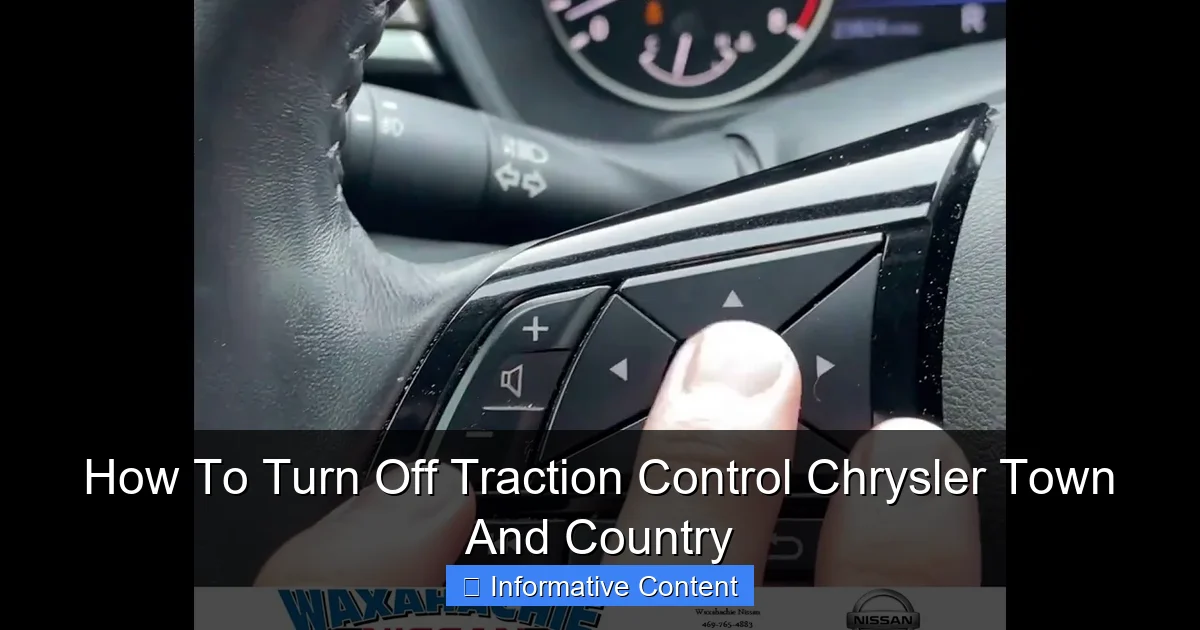
Before we touch any buttons, let’s understand what we’re dealing with. Traction control is like a very attentive co-pilot for your wheels. It uses sensors to monitor if one of your drive wheels (the ones that get power from the engine) is spinning faster than the others. That’s a sign it’s slipping, like on ice or loose gravel.
Visual guide about how-to-turn-off-traction-control-chrysler-town-and-country
Image source: i.ytimg.com
When it detects slip, the system does two main things: It briefly cuts engine power, and it can apply the brake to just the spinning wheel. This transfers power to the wheel that *does* have grip. It’s fantastic for preventing skids on wet roads and maintaining control.
So Why Disable This Helpful Feature?
There are a few specific scenarios where temporarily turning off traction control can be beneficial:
- Getting Unstuck from Deep Snow, Mud, or Sand: Sometimes, you need wheel spin to dig down and find traction or to “clean” the tires. If the system keeps cutting power, you might just rock back and forth, going nowhere.
- Driving on Loose Surfaces: On a steep gravel or dirt hill, a bit of controlled wheel spin can help you maintain momentum to climb it.
- Using Tire Chains: The system can interpret the slight slippage of chains as a loss of traction and react unnecessarily.
- Vehicle Rocking (Extreme Cases): If you’re profoundly stuck and need to “rock” the vehicle back and forth (Drive to Reverse, repeatedly), having the system off gives you more direct control.
Remember, this is always a temporary measure. As soon as you’re back on normal pavement, you should turn it back on.
Method 1: The Traction Control Button (Most Common Method)
This is the most straightforward way for many Town and Country models. Chrysler typically places a dedicated button for the traction control system (often called “Electronic Stability Control” or ESC).
Visual guide about how-to-turn-off-traction-control-chrysler-town-and-country
Image source: i.ytimg.com
Finding the Button and Using It
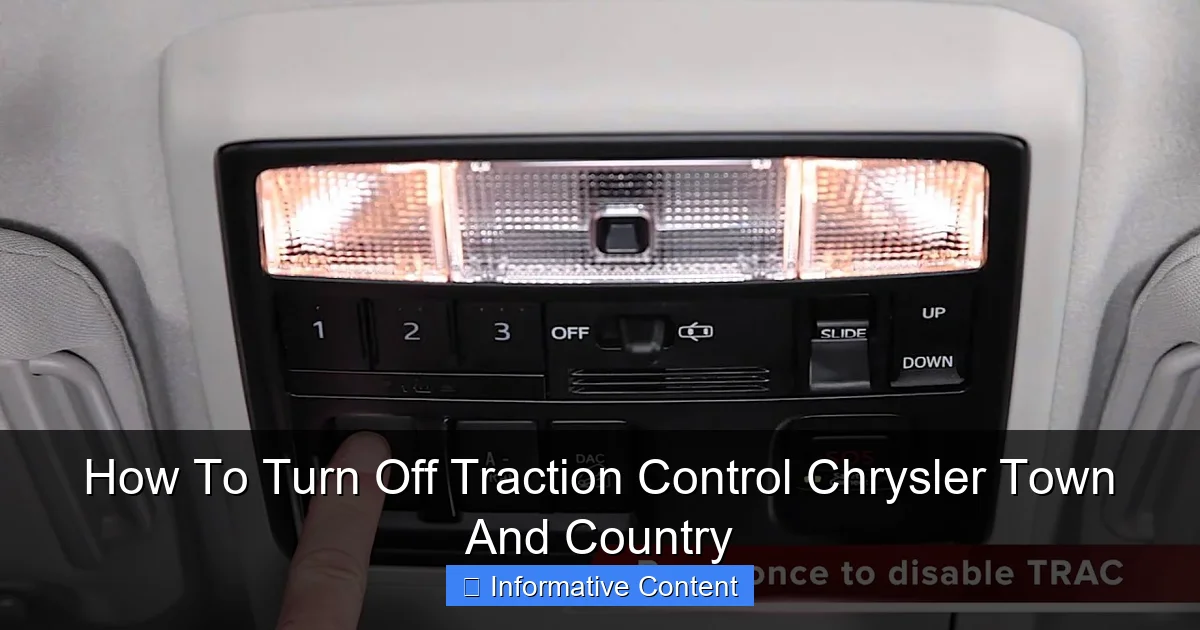
You’ll need to play a quick game of “I Spy” on your dashboard. Look for a button with an icon of a car with two squiggly lines underneath it, often near your climate controls or on the center console.
- Step 1: Ensure your van is on (the engine can be running, or you can be in the “ON” position without the engine started).
- Step 2: Locate the button with the traction control symbol.
- Step 3: Press and hold this button. You usually need to hold it for about 3-5 seconds.
- Step 4: Look at your instrument cluster. You should see two warning lights illuminate: One is the same traction control icon, and the other often says “ESC OFF” or shows a car with “OFF” underneath. This means the system is deactivated.
My Tip: In some model years, a short press might turn off “ESC Partial” (reduces intervention), and a long press turns it off fully. Try a long press first if a short one doesn’t give you the “ESC OFF” message.
Method 2: Using the Instrument Panel Display Menu
For some newer models of the Chrysler Town and Country (especially later years before it was discontinued), the settings might be tucked into a digital menu on your instrument cluster or Uconnect touchscreen.
Visual guide about how-to-turn-off-traction-control-chrysler-town-and-country
Image source: i.ytimg.com
If you don’t have a physical button, don’t panic. Your settings are likely in a menu.
- Step 1: Turn the ignition to the “ON” position.
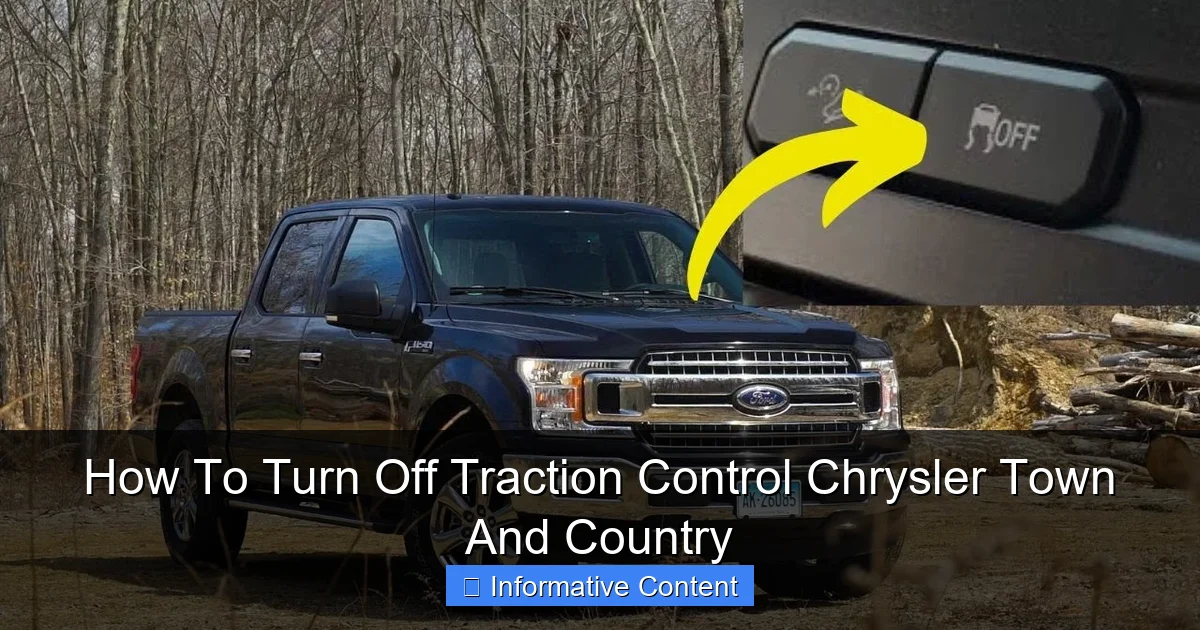
- Step 2: Look for buttons on your steering wheel, usually labeled with arrows or “Menu.”
- Step 3: Use these buttons to scroll through the driver information display menus between your speedometer and tachometer.
- Step 4: Look for an option called “Vehicle Settings,” “Safety & Driving Assistance,” or something similar.
- Step 5: Within that menu, find “Electronic Stability Control” or “Traction Control.”
- Step 6: Select it and choose “OFF.” You should see the confirmation light on your dashboard.
Important Note: The exact menu names and navigation can vary. Having your owner’s manual handy for this method is a huge help. It’s usually in your glovebox!
Important Limitations and What “Off” Really Means
Here’s a critical piece of information. In most Chrysler Town and Country vans, turning off the traction control does not turn off the entire stability system. This is a key safety feature.
Understanding the Different Systems
Think of it like this:
- Traction Control (TC): Manages wheel spin during acceleration. This is the part you can usually disable.
- Electronic Stability Control (ESC): A broader system that helps correct skids and loss of steering control by braking individual wheels. It works during cornering and sudden maneuvers.
When you press the button, you are typically only disabling the wheel-spin management part. The underlying stability control often remains active and will intervene if it detects a severe skid or rollover risk. This is by design for your safety. The system is smart and may even re-enable itself if it thinks you need it, or after you cycle the ignition off and on.
Troubleshooting: When It Won’t Turn Off
What if you press the button and nothing happens? Or the light flashes and comes back on? Let’s troubleshoot.
Common Issues and Fixes
- Check the ABS Light: If your Anti-lock Brake System (ABS) warning light is also on, there may be a fault in the system. The traction control relies on ABS wheel speed sensors. A fault here can disable your ability to turn TC on or off. This requires a mechanic’s diagnosis.
- Button Not Working: Try holding it longer. Ensure the van is in “Park” or “Neutral.” Consult your manual for the exact procedure for your model year.
- System Automatically Re-engages: Remember, the system may reactivate at higher speeds (often above 30-40 mph) for safety, or if it detects a severe maneuver. This is normal.
- Faulty Button or Sensor: In rare cases, the button itself could be faulty, or a wheel speed sensor could be dirty or broken.
If you suspect a deeper issue, a quick scan with an OBD-II code reader at an auto parts store can often point to the specific sensor causing trouble.
Safety First: When to Never Turn Off Traction Control
This is the most important section. Turning off traction control is a tool for specific, low-speed, off-road-type scenarios. You should never drive with it off during normal conditions.
High-Risk Driving Scenarios
Keep the system ON for:
- Wet or Icy Pavement: This is where it prevents spin-outs and helps you maintain directional control.
- Highway Driving: At higher speeds, the stability control component is crucial for emergency lane changes or avoiding obstacles.
- Heavy Rain or Standing Water: Hydroplaning risk is high, and the system helps manage it.
- Any time you’re unsure: If you’re not dealing with deep snow, mud, or sand, leave it on. It’s there to help.
Driving with it off on normal roads increases your risk of losing control, especially in a taller vehicle like a minivan. Your safety and the safety of your passengers is the top priority.
Chrysler Town and Country Traction Control Features by Model Year
This table gives you a general idea of what to expect. Always verify with your specific van’s owner’s manual.
| Model Year Range | Common Control Method | Notes & Tips |
|---|---|---|
| 2008 – 2010 | Physical Button | Look for the “ESC OFF” button on the center stack. A long press is typically required. |
| 2011 – 2015 | Physical Button | Button placement may vary. Often found near the gear shifter or climate controls. Check for an “ESC Off” message in the display. |
| 2016 – 2020 (Final Models) | Mix of Button & Menu | Later models may integrate the setting into the Uconnect touchscreen or instrument cluster menu. Physical button is still likely present. |
Conclusion: Mastering Your Minivan’s Technology
Knowing how to turn off traction control Chrysler Town And Country is about understanding your vehicle’s capabilities and using them wisely. It’s a simple process—usually a matter of finding and holding a button—but the knowledge of when and why to use it is powerful.
Think of it as a specialized tool in your driving toolkit. For 99% of your driving, let that helpful co-pilot do its job, keeping you safe on slick roads. But when you find yourself truly stuck or navigating a tricky loose surface, you now have the know-how to take temporary, manual control to get moving again.
Always, without exception, reactivate the system as soon as you’re back on firm ground. Your Chrysler Town and Country is a family vehicle packed with smart technology designed to protect you. Use this guide to work with that technology, not against it, and you’ll handle any road condition with greater confidence.
Frequently Asked Questions
How do I turn off traction control in my Chrysler Town and Country?
To turn off traction control in your Chrysler Town and Country, locate the traction control button usually on the dashboard or center console. Press and hold it until the traction control indicator light turns on, signaling that the system is deactivated.
The traction control button is typically found on the dashboard near the steering wheel or on the center console. For precise placement, check your owner’s manual as it can vary by model year and trim.
Why would I disable the traction control on my Chrysler Town and Country?
You might disable traction control in specific scenarios like being stuck in snow, mud, or sand, where allowing wheel spin can help free the vehicle. Remember, it’s best to reactivate it for normal driving to maintain optimal safety and stability.
Can traction control be permanently turned off in a Chrysler Town and Country?
No, traction control cannot be permanently disabled; it automatically reactivates each time you start the vehicle. This design ensures the safety feature is always available unless you manually toggle it off for temporary needs.
Is it safe to drive with traction control off in a Chrysler Town and Country?
Driving with traction control off is only recommended in controlled, low-traction situations where wheel slip is necessary. For regular road conditions, keep it on to prevent skidding and loss of control during acceleration.
Does the method to turn off traction control differ by Chrysler Town and Country model year?
Yes, the process may vary slightly between model years, so consulting your vehicle’s owner’s manual is essential. This ensures you follow the correct steps for your specific year and trim to properly disable the system.

At CarLegit, we believe information should be clear, factual, and genuinely helpful. That’s why every guide, review, and update on our website is created with care, research, and a strong focus on user experience.