
Turning on all wheel drive (AWD) in your Subaru Crosstrek is simple—because it’s always on. Unlike vehicles with part-time AWD systems, the Crosstrek features a full-time, always-active Symmetrical All-Wheel Drive system that works automatically without driver input.
In This Article
- 1 Key Takeaways
- 2 📑 Table of Contents
- 3 How to Turn on All Wheel Drive Subaru Crosstrek: The Truth About AWD
- 4 Understanding Subaru’s Symmetrical All-Wheel Drive System
- 5 X-MODE: Enhancing Off-Road and Low-Traction Performance
- 6 Common Misconceptions About Turning On AWD
- 7 Tips for Getting the Most Out of Your Crosstrek’s AWD
- 8 Real-World Examples: How AWD Helps in Everyday Driving
- 9 Conclusion: AWD That Works So You Don’t Have To
- 10 Frequently Asked Questions
Key Takeaways
- All wheel drive is always active: The Subaru Crosstrek comes with a full-time AWD system that’s always engaged—no need to manually turn it on.
- Uses Symmetrical AWD technology: This system delivers power evenly to all four wheels for better traction, stability, and control in all conditions.
- Automatic torque distribution: Sensors monitor wheel slip and adjust power distribution between front and rear axles in real time.
- X-MODE enhances off-road performance: Activate X-MODE for steep hills, snow, mud, or rough terrain to improve grip and control.
- No dashboard switch for AWD: There’s no button to “turn on” AWD—it’s always working behind the scenes.
- Regular maintenance ensures optimal performance: Keep tires, fluids, and sensors in good condition to maintain AWD efficiency.
- Great for all seasons: Whether it’s rain, snow, gravel, or dirt, your Crosstrek’s AWD keeps you safe and confident on the road.
📑 Table of Contents
- How to Turn on All Wheel Drive Subaru Crosstrek: The Truth About AWD
- Understanding Subaru’s Symmetrical All-Wheel Drive System
- X-MODE: Enhancing Off-Road and Low-Traction Performance
- Common Misconceptions About Turning On AWD
- Tips for Getting the Most Out of Your Crosstrek’s AWD
- Real-World Examples: How AWD Helps in Everyday Driving
- Conclusion: AWD That Works So You Don’t Have To
How to Turn on All Wheel Drive Subaru Crosstrek: The Truth About AWD
If you’re a new Subaru Crosstrek owner—or thinking about becoming one—you’ve probably heard about its legendary all-wheel drive (AWD) system. It’s one of the main reasons people choose Subaru over other compact SUVs. But here’s the thing: you don’t actually “turn on” all wheel drive in a Crosstrek. That’s right—there’s no switch, button, or lever you need to flip to activate it. The AWD system is always on, always working, and always ready to help you tackle rain, snow, mud, or gravel with confidence.
This might sound confusing at first, especially if you’ve driven other vehicles that require you to engage 4WD or AWD manually. But Subaru designed the Crosstrek with simplicity and safety in mind. The Symmetrical All-Wheel Drive system is a full-time, always-active setup. That means from the moment you start your car, power is being sent to all four wheels. No action required on your part. It’s like having a co-pilot for traction—quiet, efficient, and always alert.
So why do people ask, “How to turn on all wheel drive Subaru Crosstrek?” Often, it’s because they’re used to older 4WD systems or vehicles with selectable drive modes. Or maybe they’ve heard about X-MODE and assume it’s the same as turning on AWD. While X-MODE does enhance off-road performance, it’s not the same as activating AWD—because AWD is already active. Understanding how your Crosstrek’s drivetrain works will help you drive smarter, safer, and more confidently in any condition.
Understanding Subaru’s Symmetrical All-Wheel Drive System
Visual guide about How to Turn on All Wheel Drive Subaru Crosstrek
Image source: d3j90oc7d0p0ph.cloudfront.net
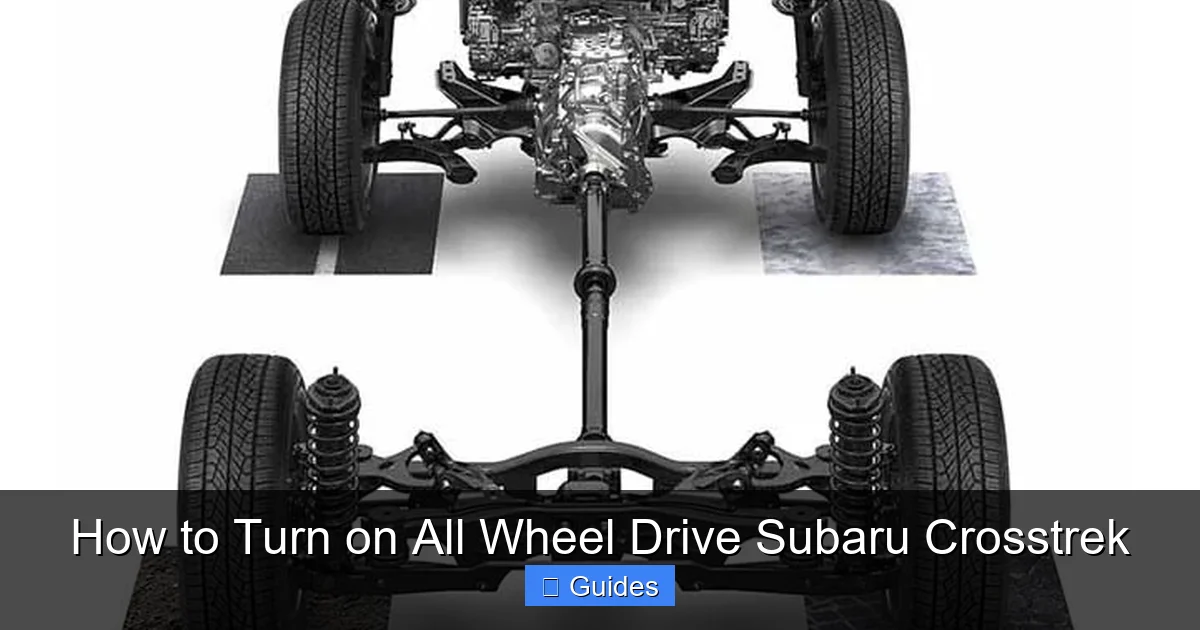
To truly appreciate why you don’t need to “turn on” AWD in your Crosstrek, it helps to understand how Subaru’s Symmetrical All-Wheel Drive system works. This isn’t just marketing jargon—it’s a well-engineered system that sets Subaru apart from many competitors.
What Makes Symmetrical AWD Different?
Unlike some AWD systems that are reactive—only sending power to the rear wheels when the front wheels slip—Subaru’s system is proactive. It continuously sends power to all four wheels, all the time. The “symmetrical” part refers to the balanced layout of the drivetrain. The engine sits low and centered, and the transmission and differential are aligned in a straight line. This creates a balanced weight distribution and smooth power delivery, which improves handling and reduces vibration.
This design also allows for better traction in slippery conditions. Whether you’re driving on wet pavement, light snow, or a gravel road, the system is already distributing torque where it’s needed most. There’s no delay waiting for wheel slip to be detected—because the system is always engaged.
How Power Is Distributed
Under normal driving conditions, the Crosstrek’s AWD system sends about 60% of the power to the front wheels and 40% to the rear. This front-biased setup helps with fuel efficiency and everyday drivability. But when the system detects wheel slip—say, one wheel starts to spin on ice or loose gravel—it automatically redirects more power to the wheels with the most grip.
This adjustment happens in milliseconds, thanks to a combination of sensors and a viscous coupling or electronically controlled clutch (depending on the model year). The system doesn’t wait for you to react—it reacts for you. That’s why many Crosstrek owners report feeling more stable and in control, even in unexpected weather or road conditions.
Benefits of Full-Time AWD
Having AWD always on means you’re never caught off guard. You don’t have to remember to flip a switch before a storm hits or before heading off-road. It’s like having all-season tires that adapt to the road automatically. This constant engagement also improves cornering stability, reduces understeer, and gives you more confidence when accelerating from a stop on slippery surfaces.
For example, imagine you’re pulling out of a snowy driveway. In a front-wheel-drive car, the front wheels might spin, and you’d struggle to gain traction. In a Crosstrek, power is instantly sent to the rear wheels if the front ones slip, helping you move forward smoothly. No drama, no delay.
X-MODE: Enhancing Off-Road and Low-Traction Performance

Visual guide about How to Turn on All Wheel Drive Subaru Crosstrek
Image source: fourwheeltrends.com
While the Crosstrek’s AWD system is always on, there is a feature you can activate to improve performance in challenging conditions: X-MODE. This is often confused with “turning on AWD,” but it’s actually an enhancement of the existing system.
What Is X-MODE?
X-MODE is an electronic off-road assist system designed to help you navigate steep hills, deep snow, mud, or rocky terrain. When activated, it adjusts the AWD system, throttle response, and braking to maximize traction and control. It’s like putting your Crosstrek into “off-road mode” to give you extra confidence when the going gets tough.
To activate X-MODE, simply press the X-MODE button on the center console (usually located near the gear shifter). You’ll see an indicator light on the dashboard confirming it’s on. On newer models, there may be two settings: X-MODE and X-MODE with Hill Descent Control (HDC), which automatically controls your speed when going down steep slopes.
When Should You Use X-MODE?
You don’t need X-MODE for everyday driving—your AWD system handles rain, light snow, and city streets just fine. But if you’re heading into the mountains, driving on unpaved forest roads, or dealing with deep snow or mud, X-MODE can make a big difference.
For example, if you’re climbing a steep, snowy hill, X-MODE will help prevent wheel spin by carefully managing power delivery. If you’re descending a rocky trail, Hill Descent Control will keep your speed steady so you don’t have to ride the brakes.
How X-MODE Works with AWD
X-MODE doesn’t replace AWD—it works with it. When activated, it tells the AWD system to prioritize rear-wheel traction and reduce throttle sensitivity. It also engages the brake-based traction control more aggressively, applying the brakes to individual wheels that are slipping. This helps the differential send more power to the wheels with grip.
Think of it this way: AWD is the foundation, and X-MODE is the upgrade. One is always there; the other is there when you need it most.
Common Misconceptions About Turning On AWD

Visual guide about How to Turn on All Wheel Drive Subaru Crosstrek
Image source: drivewaycanada.ca
Despite the simplicity of Subaru’s AWD system, many drivers still have questions or misunderstandings about how it works. Let’s clear up some of the most common myths.
Myth 1: You Need to Press a Button to Activate AWD
This is the biggest misconception. Unlike older 4WD systems or some SUVs with part-time AWD, the Crosstrek doesn’t have an “AWD on/off” switch. The system is always engaged. You don’t need to do anything to activate it—just start the car and drive.
If you’re looking for a button that says “AWD” or “4WD,” you won’t find one. The only related buttons are X-MODE and, on some models, a “Vehicle Dynamics Control” (VDC) button (which you should generally leave on).
Myth 2: AWD Means You Can Drive Anywhere
While AWD improves traction, it doesn’t make your Crosstrek indestructible. It won’t help you stop faster on ice (that’s what brakes and tires are for), and it won’t let you drive through deep water or extreme off-road terrain like a rock crawler. AWD helps you go forward, but it doesn’t replace good judgment, proper tires, or safe driving habits.
For example, AWD can help you accelerate on a snowy road, but it won’t prevent you from sliding into a ditch if you take a corner too fast. Always drive according to conditions.
Myth 3: You Can Turn Off AWD to Save Fuel
Some drivers think they can “turn off” AWD to improve gas mileage. But in the Crosstrek, that’s not possible—and not necessary. The system is designed to be efficient. Because it’s always on, there’s no extra mechanical drag like in part-time systems. In fact, Subaru’s AWD is one of the most fuel-efficient in its class.
Trying to disable AWD (which you can’t do anyway) wouldn’t save significant fuel. Instead, focus on driving habits: smooth acceleration, maintaining proper tire pressure, and reducing excess weight.
Myth 4: All AWD Systems Are the Same
Not all AWD systems are created equal. Some are front-wheel-drive-based and only send power to the rear when needed. Others are rear-wheel-drive-based. Subaru’s Symmetrical AWD is unique because it’s balanced, full-time, and designed for real-world conditions. It’s not just about power—it’s about stability, safety, and confidence.
Tips for Getting the Most Out of Your Crosstrek’s AWD
Now that you know your AWD is always on, here are some practical tips to ensure it performs at its best—no matter where you drive.
Keep Your Tires in Good Condition
Your AWD system relies on all four tires having similar grip levels. If one tire is worn or underinflated, it can confuse the system and reduce performance. Always maintain proper tire pressure and replace tires in sets of four (or at least match tread depth as closely as possible).
For winter driving, consider installing a full set of winter tires. They provide better grip in snow and ice than all-season tires, and your AWD system will work even more effectively with them.
Use X-MODE When Needed
Don’t forget about X-MODE when you’re heading off the beaten path. It’s easy to overlook, but it can make a big difference in low-traction situations. Just remember to turn it off when you return to paved roads—X-MODE is designed for slow, technical driving and isn’t meant for highway use.
Check Your Fluids Regularly
The AWD system depends on clean transmission and differential fluids. Follow your owner’s manual for service intervals—typically every 30,000 to 60,000 miles. Dirty or low fluid can reduce performance and lead to premature wear.
Drive Smoothly in Slippery Conditions
Even with AWD, sudden acceleration, hard braking, or sharp turns can cause loss of control. In snow, rain, or mud, ease into the gas, brake gently, and steer smoothly. Your AWD system will do the rest.
Know Your Limits
AWD helps you go, but it doesn’t help you stop or turn better. Always adjust your speed to match road conditions. If the weather is bad, slow down and give yourself extra space.
Real-World Examples: How AWD Helps in Everyday Driving
Let’s look at a few real-life scenarios where your Crosstrek’s AWD system makes a difference.
Scenario 1: Driving in the Rain
You’re commuting to work on a rainy morning. The roads are slick, and visibility is low. As you accelerate from a stoplight, your front wheels start to slip slightly. Thanks to the AWD system, power is instantly redirected to the rear wheels, helping you move forward smoothly. You don’t feel any wheel spin or loss of control—just steady, confident acceleration.
Scenario 2: Snowy Mountain Road
You’re driving up a snow-covered mountain pass. The road is narrow and winding, with patches of ice. Your Crosstrek grips the road well, but as you round a corner, one wheel starts to slip. The AWD system detects the slip and sends more power to the opposite wheel, keeping you on track. You feel stable and in control—no need to panic.
Scenario 3: Gravel Driveway
You’re pulling into your gravel driveway after a storm. The stones are loose, and the surface is uneven. Without AWD, your front wheels might spin, and you’d struggle to move forward. But in your Crosstrek, power is distributed to all four wheels, giving you the traction you need to get up the driveway without getting stuck.
Scenario 4: Off-Road Adventure
You’re exploring a forest trail with mud and rocks. You activate X-MODE, and the system adjusts for low traction. As you climb a steep, muddy incline, the system manages power and braking to keep you moving. When you descend, Hill Descent Control keeps your speed steady. You feel confident and capable—thanks to your always-on AWD and smart use of X-MODE.
Conclusion: AWD That Works So You Don’t Have To
So, how to turn on all wheel drive Subaru Crosstrek? The answer is simple: you don’t. The Crosstrek’s Symmetrical All-Wheel Drive system is always on, always working, and always ready to help you handle whatever the road throws your way. From rain-slicked highways to snowy mountain passes, your AWD system is there—quietly, efficiently, and effectively.
Understanding how it works helps you appreciate the engineering behind your vehicle. It also helps you drive more safely and confidently. Remember, AWD isn’t a magic solution—it’s a tool that works best when paired with good tires, proper maintenance, and smart driving habits.
And when you do need extra help—like on steep hills or in deep snow—X-MODE is there to enhance your AWD system. But for everyday driving, your Crosstrek’s AWD is already doing its job. So the next time someone asks how to turn on all wheel drive Subaru Crosstrek, you can smile and say, “It’s already on—and it’s been working this whole time.”
Frequently Asked Questions
Do I need to turn on AWD in my Subaru Crosstrek?
No, you don’t need to turn on AWD in your Subaru Crosstrek. The Symmetrical All-Wheel Drive system is full-time and always active. It works automatically without any driver input.
There is no button to activate AWD because it’s always on. The only related button is X-MODE, which enhances off-road performance but doesn’t turn AWD on or off.
What does X-MODE do in the Crosstrek?
X-MODE improves traction and control in low-grip conditions like snow, mud, or steep hills. It adjusts the AWD system, throttle response, and braking to help you navigate challenging terrain safely.
Can I turn off AWD to save fuel?
No, you cannot turn off AWD in the Crosstrek, and it’s not necessary. The system is designed to be fuel-efficient and doesn’t significantly impact gas mileage.
Does AWD help in snow and ice?
Yes, AWD improves traction in snow and ice by sending power to all four wheels. However, it doesn’t improve braking or cornering, so you should still drive carefully in winter conditions.
How often should I service the AWD system?
Follow your owner’s manual for service intervals, typically every 30,000 to 60,000 miles. This includes checking and replacing transmission and differential fluids to keep the AWD system running smoothly.

At CarLegit, we believe information should be clear, factual, and genuinely helpful. That’s why every guide, review, and update on our website is created with care, research, and a strong focus on user experience.