
Turning on fog lights in your Jeep Wrangler is simple once you know where to look and how the controls work. This guide covers every model year, from older TJ and JK to the latest JL and JT, with clear steps, safety tips, and troubleshooting advice to keep you driving safely in fog, rain, or snow.
Driving a Jeep Wrangler is all about freedom—the open trail, the mountain pass, the backroad adventure. But with that freedom comes responsibility, especially when weather turns nasty. Fog, heavy rain, snow, or blowing dust can reduce visibility to near zero in seconds. That’s when your fog lights become one of the most important safety features in your vehicle. Unlike high beams, which reflect off fog and make it harder to see, fog lights are designed to cut through low-visibility conditions by shining a wide, flat beam close to the ground. They help you see the road markings, curbs, and hazards without blinding oncoming traffic.
But here’s the catch: not every Jeep Wrangler owner knows how to turn on fog lights—or even if their Jeep has them. Some models come standard with fog lights, while others require an upgrade or are only available on higher trims. And the method to activate them? It changes depending on whether you’re driving a 2007 JK, a 2018 JL, or something in between. That’s why we’ve created this complete guide. Whether you’re a new Wrangler owner or a seasoned off-roader, this article will walk you through everything you need to know about turning on fog lights in your Jeep Wrangler—safely, correctly, and confidently.
In This Article
- 1 Key Takeaways
- 2 📑 Table of Contents
- 3 Understanding Jeep Wrangler Fog Lights: What They Are and Why They Matter
- 4 Do You Have Fog Lights? How to Check Your Jeep Wrangler Model
- 5 How to Turn On Fog Lights in Older Jeep Wranglers (TJ, JK Models)
- 6 How to Turn On Fog Lights in Newer Jeep Wranglers (JL and JT Models)
- 7 Common Problems and Troubleshooting Fog Light Issues
- 8 Upgrading Your Fog Lights: LED and Aftermarket Options
- 9 Safety and Legal Considerations for Using Fog Lights
- 10 Conclusion
- 11 Frequently Asked Questions
- 11.1 Can I turn on fog lights without headlights on?
- 11.2 Are fog lights standard on all Jeep Wrangler trims?
- 11.3 Why won’t my fog lights turn on even though the switch is pressed?
- 11.4 Can I install fog lights on a Jeep Wrangler that doesn’t have them?
- 11.5 Is it legal to use fog lights in clear weather?
- 11.6 Do LED fog lights work better than halogen?
Key Takeaways
- Fog lights improve visibility in low-visibility conditions like fog, heavy rain, snow, or dust storms by projecting a wide, low beam that illuminates the road without reflecting light back into your eyes.
- Fog lights are not standard on all Jeep Wrangler trims—check your vehicle’s equipment list or look for fog light bezels on the front bumper to confirm they’re installed.
- The control method varies by model year—older Wranglers (TJ, JK) use a rotary dial on the dashboard, while newer models (JL, JT) integrate fog light controls into the steering column stalk or touchscreen.
- Fog lights should only be used when necessary—using them in clear conditions can blind other drivers and may be illegal in some states.
- Proper maintenance ensures fog lights work when needed—regularly clean lenses, check bulb function, and inspect wiring to avoid failures during critical moments.
- If fog lights won’t turn on, check fuses, bulbs, and switches—common issues include blown fuses, burnt-out bulbs, or faulty relays, especially in older models.
- Upgrading to LED fog lights can enhance performance—modern LED bulbs offer brighter, whiter light, longer life, and lower power draw than traditional halogen bulbs.
📑 Table of Contents
- Understanding Jeep Wrangler Fog Lights: What They Are and Why They Matter
- Do You Have Fog Lights? How to Check Your Jeep Wrangler Model
- How to Turn On Fog Lights in Older Jeep Wranglers (TJ, JK Models)
- How to Turn On Fog Lights in Newer Jeep Wranglers (JL and JT Models)
- Common Problems and Troubleshooting Fog Light Issues
- Upgrading Your Fog Lights: LED and Aftermarket Options
- Safety and Legal Considerations for Using Fog Lights
- Conclusion
Understanding Jeep Wrangler Fog Lights: What They Are and Why They Matter
Fog lights are specialized automotive lighting designed to improve visibility in adverse weather conditions. They’re typically mounted low on the front bumper—sometimes integrated into the grille or housed in separate pods—and emit a broad, flat beam of light that hugs the road surface. This low-angle illumination helps drivers see the edge of the road, lane markings, and potential obstacles without the glare that high beams produce in fog or heavy precipitation.
In a Jeep Wrangler, fog lights are more than just a convenience—they’re a critical safety tool. Whether you’re navigating a foggy mountain descent, driving through a sudden downpour, or crossing a dusty desert trail, fog lights give you a clearer view of what’s directly ahead. They’re especially useful when standard headlights aren’t enough but high beams would be counterproductive. For example, in dense fog, high beams bounce off the water droplets and create a “wall of light” that makes it harder to see. Fog lights, by contrast, cut under that layer and illuminate the road surface, giving you better depth perception and reaction time.
It’s also worth noting that fog lights are not the same as driving lights or auxiliary lights. Driving lights are brighter and meant to supplement high beams in clear conditions, while auxiliary lights are often aftermarket additions used for off-roading. Fog lights are specifically engineered for low-visibility scenarios and are regulated by vehicle safety standards. In the U.S., they’re not required by law, but many states have specific rules about when and how they can be used. For instance, some states prohibit the use of fog lights in clear weather because they can dazzle other drivers. Always check your local regulations to avoid fines or unsafe driving practices.
Do You Have Fog Lights? How to Check Your Jeep Wrangler Model
Visual guide about How to Turn on Fog Lights Jeep Wrangler
Image source: jeepfixes.com
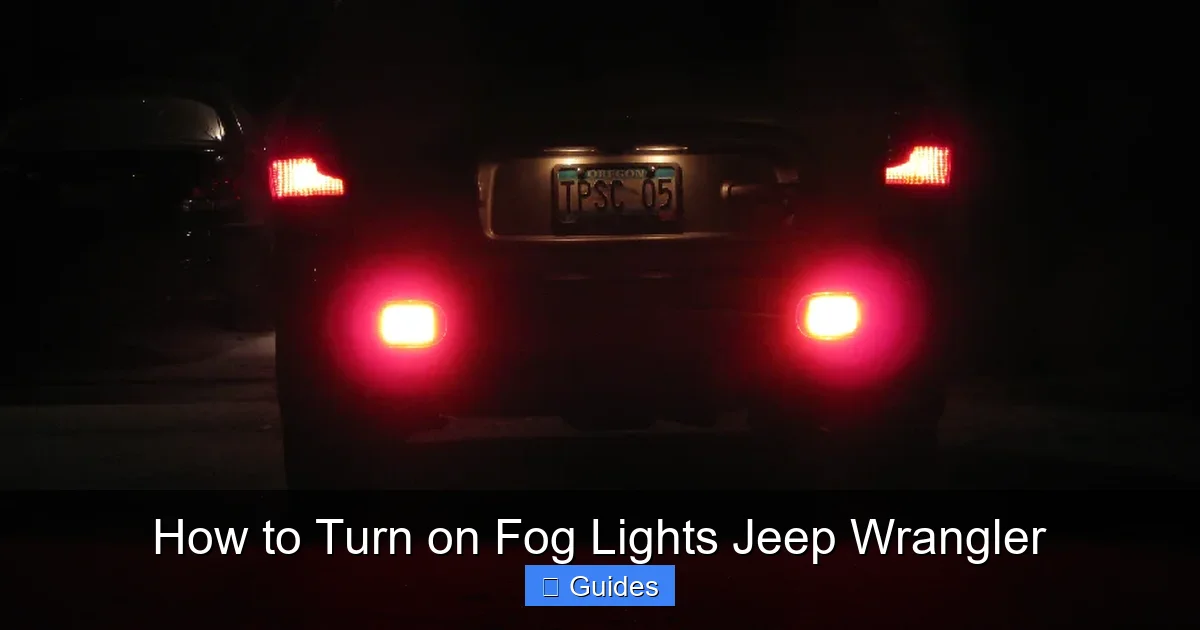
Before you can turn on your fog lights, you need to confirm that your Jeep Wrangler actually has them. Not all trims or model years come equipped with factory-installed fog lights. For example, base models like the Wrangler Sport (especially older versions) often lack fog lights, while higher trims like the Sahara, Rubicon, or Willys usually include them as standard. Even if your Jeep doesn’t have them from the factory, you may have added aftermarket fog lights during customization.
So how do you check? Start by looking at the front bumper. On most Wranglers, fog lights are housed in round or rectangular bezels located on either side of the grille, usually just below the headlights. If you see two small, covered lenses or empty housings with wiring behind them, there’s a good chance your Jeep is pre-wired for fog lights—even if the bulbs aren’t installed. You can also consult your owner’s manual or check the vehicle’s build sheet (often available online using your VIN). Many Jeep forums and enthusiast sites also have model-specific guides that list standard and optional equipment by year and trim.
Another way to verify is to look at the dashboard or steering column controls. If you see a fog light symbol—typically a lamp icon with horizontal lines radiating downward—on a switch or stalk, your Jeep likely supports fog lights. On newer models with touchscreen interfaces, the fog light option may appear in the lighting menu. If you’re still unsure, try turning the ignition to “on” (without starting the engine) and look for a fog light indicator on the instrument cluster when you activate the switch. No light? You might need to install fog lights or have the system enabled by a dealer or technician.
How to Turn On Fog Lights in Older Jeep Wranglers (TJ, JK Models)
Visual guide about How to Turn on Fog Lights Jeep Wrangler
Image source: jeepfixes.com
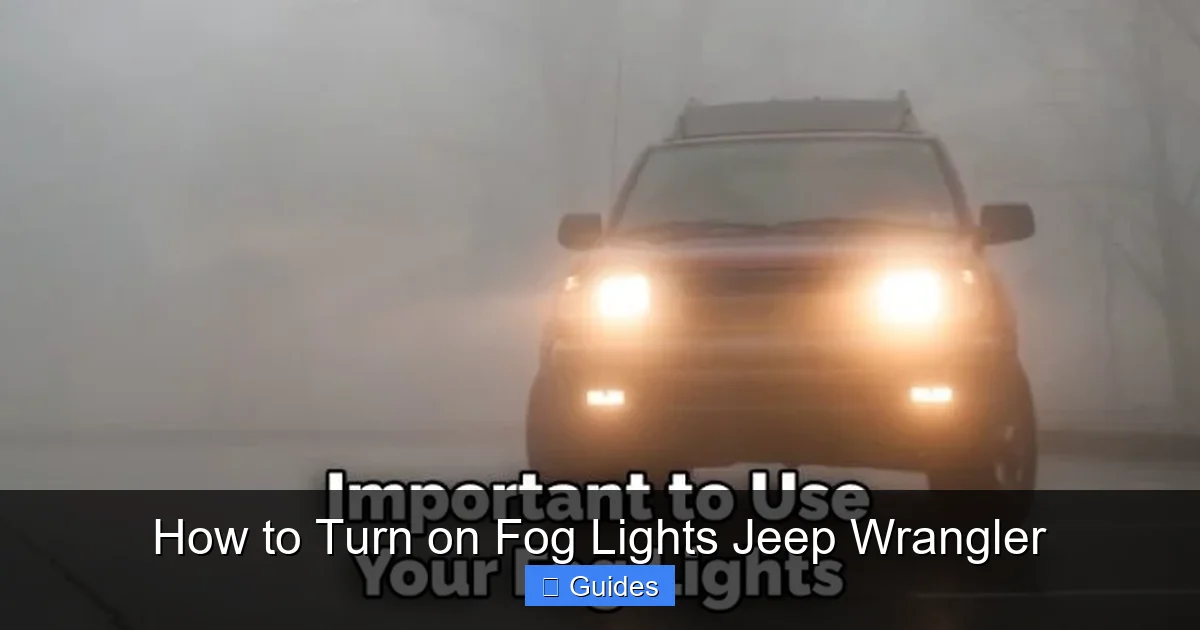
If you’re driving a Jeep Wrangler from the TJ (1997–2006) or JK (2007–2018) generation, turning on the fog lights is straightforward—but it requires knowing where the control is located. Unlike newer models, these Wranglers use a physical rotary dial on the dashboard to manage exterior lighting, including fog lights.
Step-by-Step: Activating Fog Lights on TJ and JK Models
Start by ensuring your headlights are on. Fog lights are designed to work in conjunction with low-beam headlights and will not operate if the main lights are off. Turn the headlight switch (usually a knob on the left side of the dashboard) to the “low beam” position. You’ll see the headlight indicator light up on your dashboard.
Next, locate the fog light control. On most TJ and JK models, this is a small, round button or dial located just below or to the side of the headlight switch. It’s often labeled with a fog light symbol—a lamp with three horizontal lines beneath it. Press the button once to turn on the front fog lights. You should see a green or amber indicator light on your dashboard confirming activation. Press it again to turn them off.
Some JK models (especially 2013 and newer) may have a slightly different setup. Instead of a separate button, the fog light function might be integrated into the headlight switch itself. In these cases, you’ll need to turn the headlight knob to the low beam position, then pull the knob outward slightly to activate the fog lights. This “pull-out” action engages the fog circuit, and the dashboard indicator will light up accordingly.
Tips for TJ and JK Owners
Always use fog lights only when visibility is reduced—typically below 300 feet. Using them in clear weather can blind other drivers and may violate traffic laws in your area. Also, remember that fog lights are not a substitute for high beams in open, clear conditions. They’re meant for specific low-visibility scenarios.
If your fog lights won’t turn on, check the fuse first. On most JK models, the fog light fuse is located in the Power Distribution Center under the hood—look for fuse number 39 (15A) or consult your owner’s manual. A blown fuse is a common issue, especially if the lights were recently replaced or if there was a short circuit. Replacing it with the correct amperage fuse usually resolves the problem.
Another tip: keep your fog light lenses clean. Mud, snow, and road grime can accumulate on the lenses, reducing their effectiveness. A quick wipe with a damp cloth and mild soap can make a big difference in light output. If you frequently drive off-road, consider installing protective grilles or covers to prevent damage from rocks and debris.
How to Turn On Fog Lights in Newer Jeep Wranglers (JL and JT Models)
Visual guide about How to Turn on Fog Lights Jeep Wrangler
Image source: jeepfixes.com
The Jeep Wrangler JL (2018–present) and Gladiator JT (2020–present) introduced a major redesign—not just in styling, but in technology and controls. One of the biggest changes is the shift from mechanical switches to electronic systems, including touchscreen interfaces and multi-function stalks. This means turning on fog lights in a newer Wrangler is a bit different than in older models.
Using the Steering Column Stalk (Most JL/JT Models)
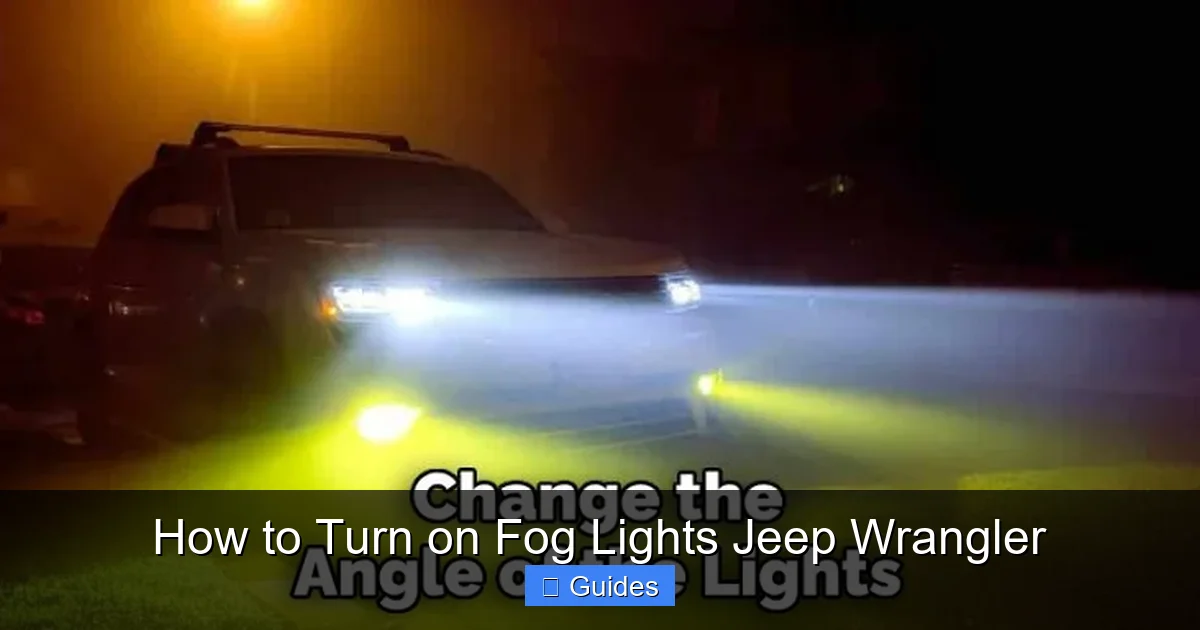
On most JL and JT Wranglers, the fog light control is integrated into the left-side steering column stalk—the same one used for turn signals and high beams. To activate the fog lights, first ensure your headlights are on (low beam). Then, pull the stalk toward you (the same motion used to flash high beams) and hold it for about one second. You’ll feel a slight click, and the fog lights should turn on. A green or amber icon will appear on the instrument cluster to confirm activation.
To turn them off, simply pull the stalk again or turn off the headlights. Some models allow you to toggle the fog lights on and off with repeated pulls, while others require you to turn the headlights off and back on to reset the system.
Using the Uconnect Touchscreen (Higher Trims)
On higher trims like the Sahara, Rubicon, or High Altitude, fog light control may also be available through the Uconnect infotainment system. To access it, tap the “Settings” icon on the home screen, then select “Vehicle” and “Lighting.” From there, you’ll find an option to enable or disable fog lights. This method is useful if the stalk control isn’t working or if you prefer using the touchscreen for all vehicle functions.
Keep in mind that the touchscreen method may not work if the vehicle is in motion—some systems disable certain controls while driving for safety reasons. Always try the stalk first when you need quick access.
Tips for JL and JT Owners
One advantage of newer Wranglers is improved fog light performance. Many JL models come with LED fog lights as standard, which are brighter, more energy-efficient, and longer-lasting than halogen bulbs. If your fog lights seem dim, check the bulbs—LEDs rarely burn out, but they can degrade over time.
Also, be aware that some JL models have automatic lighting systems. In these vehicles, the fog lights may activate automatically when the headlights are turned on and visibility sensors detect low-light conditions. You can usually override this feature through the Uconnect menu if you prefer manual control.
If your fog lights aren’t working, check the fuse box under the hood. The fog light fuse is typically labeled “FOG” and is a 15-amp mini-fuse. Replace it if necessary. If the fuse is fine, the issue could be a faulty relay, a bad switch, or a wiring problem—especially if the vehicle has been modified or exposed to water.
Common Problems and Troubleshooting Fog Light Issues
Even with proper use, fog lights can sometimes fail to work. When that happens, it’s important to diagnose the issue quickly—especially if you’re about to drive in poor weather. Here are the most common problems and how to fix them.
Blown Fuse
A blown fuse is the most frequent cause of fog light failure. Fuses protect the electrical system from overloads and can blow due to a short circuit, a faulty bulb, or even a power surge. To check the fuse, locate the fuse box—usually under the hood or inside the cabin near the driver’s side kick panel. Use the diagram on the fuse box cover to find the fog light fuse (often labeled “FOG” or “FOGL”). Pull it out and inspect the metal strip inside. If it’s broken or discolored, replace it with a fuse of the same amperage (typically 10A or 15A).
Burnt-Out Bulb
Fog light bulbs, especially halogen types, have a limited lifespan—usually 500 to 1,000 hours. If one or both fog lights are out, the bulb may simply be burnt out. To replace it, access the back of the fog light housing (usually through the wheel well or under the bumper), disconnect the wiring harness, and twist the bulb socket to remove it. Install a new bulb of the same type (e.g., H11 for many JK models) and reassemble.
Faulty Switch or Relay
If the fuse and bulbs are fine, the problem could be a bad switch or relay. The switch (whether a button, dial, or stalk) sends the signal to turn on the fog lights, while the relay acts as an electrical switch that powers the lights. A faulty relay may cause intermittent operation or no operation at all. Relays are usually located in the Power Distribution Center under the hood. Swap the fog light relay with a known working one (like the horn relay) to test it.
Wiring or Ground Issues
Corrosion, loose connections, or damaged wiring can prevent fog lights from working. This is especially common in older Wranglers that have been off-roaded or exposed to moisture. Inspect the wiring harness behind the fog lights for fraying, corrosion, or loose connectors. Clean any corrosion with electrical contact cleaner and ensure all connections are tight.
Aftermarket Installation Problems
If you’ve installed aftermarket fog lights, the issue could be related to improper wiring or a missing relay. Many aftermarket kits require a separate switch and relay to function correctly. Double-check the installation instructions and ensure all components are properly connected and grounded.
Upgrading Your Fog Lights: LED and Aftermarket Options
While factory fog lights are effective, many Jeep owners choose to upgrade for better performance, durability, or style. LED fog lights are a popular upgrade because they offer several advantages over traditional halogen bulbs.
Benefits of LED Fog Lights
LEDs produce a brighter, whiter light that more closely resembles daylight, improving visibility in fog, rain, and snow. They also consume less power, generate less heat, and last significantly longer—often 25,000 hours or more. This means fewer replacements and less downtime.
Many LED fog light kits are designed as direct replacements for factory bulbs, making installation easy. Some even come with built-in cooling fans or heat sinks to prevent overheating. Brands like KC HiLiTES, Rigid Industries, and Diode Dynamics offer high-quality LED fog light options compatible with most Wrangler models.
Installation Tips
When upgrading to LED fog lights, ensure the new bulbs are compatible with your vehicle’s electrical system. Some LEDs may cause a “bulb out” warning on the dashboard if they draw too little current. In these cases, you may need to install a load resistor or use CANbus-compatible LEDs.
Also, consider the beam pattern. Fog lights should emit a wide, flat beam—not a focused spotlight. Choose LEDs specifically designed for fog light use, not driving lights or off-road lights.
Aftermarket Fog Light Kits
If your Wrangler doesn’t have factory fog lights, you can install an aftermarket kit. These typically include two fog lights, a wiring harness, a switch, and mounting hardware. Installation involves mounting the lights to the bumper or grille, routing the wiring to the battery and switch, and connecting the relay. While it’s a DIY-friendly project, it’s best to follow the manufacturer’s instructions carefully and use proper electrical connectors to avoid shorts.
Safety and Legal Considerations for Using Fog Lights
Using fog lights correctly isn’t just about convenience—it’s about safety and legality. Misuse can endanger other drivers and result in fines.
When to Use Fog Lights
Only use fog lights when visibility is severely reduced—typically in fog, heavy rain, snow, or blowing dust. They should never be used in clear weather or as a substitute for high beams. In fact, using fog lights unnecessarily can blind oncoming drivers, especially on narrow or winding roads.
State and Local Laws
Laws regarding fog light use vary by state. Some states allow fog lights only when visibility is less than 500 feet, while others prohibit their use entirely in clear conditions. Always check your local regulations. For example, in California, fog lights can only be used when visibility is 500 feet or less, and they must be turned off when approaching other vehicles.
Best Practices
– Turn fog lights on only when needed and off as soon as conditions improve.
– Never use fog lights with high beams—this combination can create excessive glare.
– Keep lenses clean and free of dirt, ice, or snow.
– Regularly inspect bulbs, fuses, and wiring to ensure reliable operation.
Conclusion
Knowing how to turn on fog lights in your Jeep Wrangler is a small but essential skill that can make a big difference in your safety and confidence on the road. Whether you drive a classic TJ, a rugged JK, or a modern JL, the process is simple once you understand your vehicle’s specific controls and features. From checking for factory-installed lights to troubleshooting common issues and upgrading to better performance, this guide covers everything you need to stay prepared for low-visibility conditions.
Remember, fog lights are not just accessories—they’re vital tools for safe driving in challenging weather. Use them wisely, maintain them regularly, and always prioritize visibility and safety. With the right knowledge and a little care, your Jeep Wrangler will be ready to handle whatever the trail—or the weather—throws your way.
Frequently Asked Questions
Can I turn on fog lights without headlights on?
No, fog lights are designed to work only when the headlights are on. Most Jeep Wrangler models require low-beam headlights to be active before the fog lights will function. This is a safety feature to prevent misuse.
Are fog lights standard on all Jeep Wrangler trims?
No, fog lights are not standard on all trims. Base models like the Sport often lack them, while higher trims such as Sahara, Rubicon, and Willys typically include factory-installed fog lights. Always check your vehicle’s equipment list or inspect the front bumper.
Why won’t my fog lights turn on even though the switch is pressed?
Common causes include a blown fuse, burnt-out bulb, faulty relay, or wiring issue. Start by checking the fuse in the Power Distribution Center under the hood. If the fuse is fine, inspect the bulbs and wiring for damage or corrosion.
Can I install fog lights on a Jeep Wrangler that doesn’t have them?
Yes, you can install aftermarket fog lights on most Wrangler models. Many kits include everything needed for installation, but you may need to add a switch and relay. Some models are pre-wired, making the process easier.
Is it legal to use fog lights in clear weather?
In most states, no. Using fog lights in clear conditions can blind other drivers and is often illegal. Check your local traffic laws—many states restrict fog light use to low-visibility conditions only.
Do LED fog lights work better than halogen?
Yes, LED fog lights generally provide brighter, whiter light, last longer, and use less power than halogen bulbs. They’re a popular upgrade for improved visibility and durability, especially in harsh weather.

At CarLegit, we believe information should be clear, factual, and genuinely helpful. That’s why every guide, review, and update on our website is created with care, research, and a strong focus on user experience.