
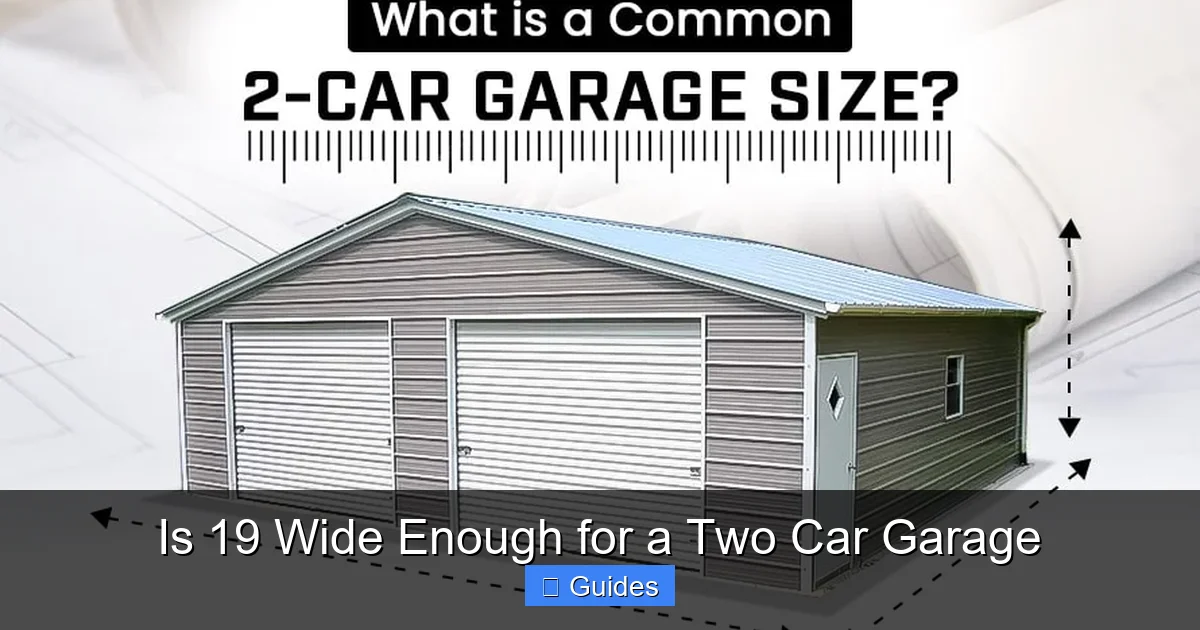
Wondering if a 19-foot-wide garage can comfortably fit two cars? While technically possible, space will be tight—especially when factoring in door openings, side mirrors, and storage. This guide breaks down real-world dimensions, layout options, and smart design tips to help you decide if a 19-foot garage is right for your home.
In This Article
- 1 Key Takeaways
- 2 📑 Table of Contents
- 3 Is 19 Wide Enough for a Two Car Garage? A Practical Look
- 4 Understanding Standard Garage Dimensions
- 5 Vehicle Size and the 19-Foot Reality Check
- 6 Design and Layout Tips for a 19-Foot Garage
- 7 Storage Challenges and Compromises
- 8 Building Codes and Permits
- 9 Resale Value and Market Appeal
- 10 Conclusion
- 11 Frequently Asked Questions
Key Takeaways
- Minimum width for two cars: Experts recommend at least 18–20 feet for a functional two-car garage, making 19 feet a borderline option.
- Vehicle size matters: Compact and midsize cars fit better in a 19-foot garage than large SUVs or trucks.
- Door width is critical: Standard 9-foot-wide garage doors leave only 1 foot of clearance per side—tight for opening car doors.
- Storage sacrifices are likely: You’ll need to minimize shelving or wall storage to avoid blocking vehicle access.
- Smart layout helps: Angled parking, overhead racks, and pull-through designs can maximize usability in tight spaces.
- Local building codes vary: Always check municipal requirements before finalizing garage plans.
- Future-proofing counts: Consider resale value—many buyers prefer wider garages, so a 19-foot width may limit appeal.
📑 Table of Contents
Is 19 Wide Enough for a Two Car Garage? A Practical Look
So, you’re planning a new garage—or maybe you’ve inherited one that’s 19 feet wide—and you’re wondering: can this really fit two cars? It’s a common question, especially in urban areas where lot sizes are shrinking and every square foot counts. The short answer? Yes, a 19-foot-wide garage *can* fit two vehicles, but it’s going to be tight. And “tight” means different things depending on your cars, your storage needs, and how much you value elbow room.
Let’s be real: most modern families own at least one larger vehicle—think SUVs, crossovers, or even pickup trucks. These aren’t the compact sedans of the 1990s. Add in side mirrors, door swing, and the need to actually get in and out of the car without scraping paint, and suddenly 19 feet starts feeling more like 17. But don’t panic just yet. With smart planning, creative storage, and realistic expectations, a 19-foot garage can work—especially if you’re willing to make some compromises.
In this guide, we’ll walk you through everything you need to know about building or using a 19-foot-wide two-car garage. We’ll cover standard garage dimensions, vehicle sizes, door configurations, storage solutions, and even resale considerations. Whether you’re a DIY homeowner, a contractor, or just curious, this article will help you make an informed decision.
Understanding Standard Garage Dimensions
Before we dive into whether 19 feet is enough, let’s talk about what “standard” really means when it comes to garage sizes. Garage dimensions aren’t one-size-fits-all—they vary based on region, vehicle trends, and local building codes. But there are general guidelines that most builders and architects follow.
What’s Considered a Standard Two-Car Garage?
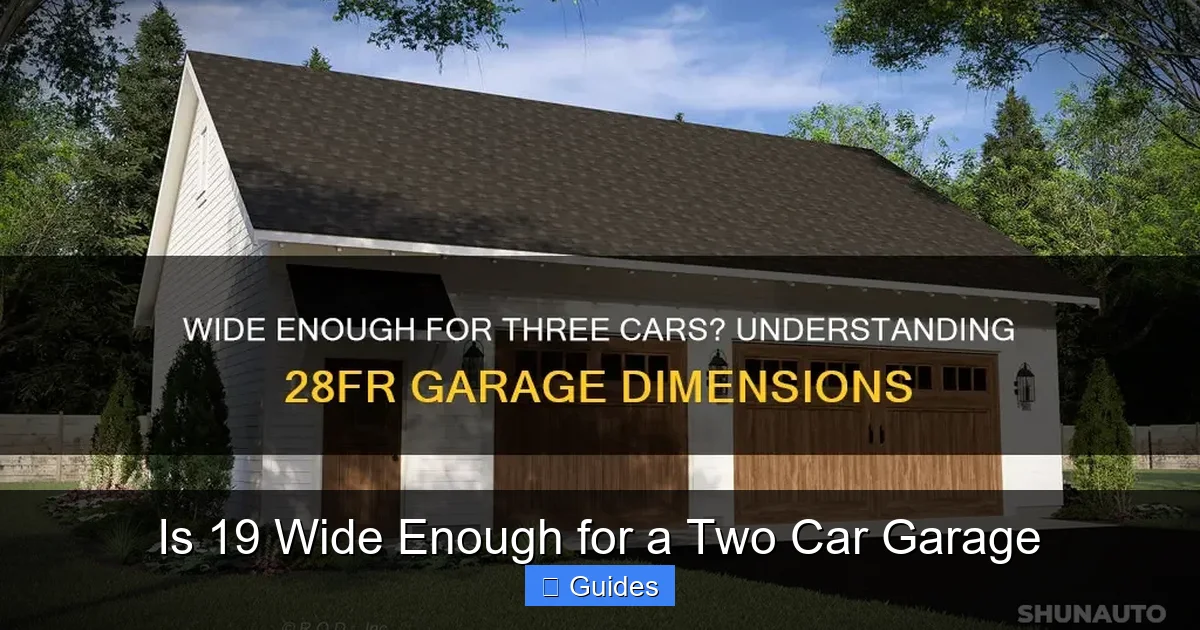
The typical recommendation for a comfortable two-car garage is 20 to 24 feet wide and 20 to 22 feet deep. This allows for two vehicles parked side by side with enough space to open doors, walk between cars, and store tools, bikes, or seasonal items. A 20-foot width is often seen as the minimum for true comfort, while 22–24 feet gives you room to breathe.
Visual guide about Is 19 Wide Enough for a Two Car Garage
Image source: shunauto.com
Now, where does 19 feet fit in? It’s just under that 20-foot threshold—right on the edge of what’s considered functional. To put it in perspective, a standard single-car garage is usually 12 feet wide. Double that, and you get 24 feet—the ideal for two cars. But 19 feet is only about 79% of that ideal width. That missing 5 feet makes a big difference in daily use.
How Door Width Affects Usability
One of the biggest factors in a 19-foot garage is the garage door. Most two-car garages use either one large 16-foot door or two 8-foot or 9-foot doors side by side. In a 19-foot-wide garage, two 9-foot doors are common—because 9 + 9 = 18, leaving just 1 foot of total wall space (6 inches on each side). That’s not much.
Why does this matter? Because that 6-inch gap on each side is all you have between the edge of the door and the wall. If your car’s side mirror sticks out even a few inches, you’re going to scrape it every time you pull in. And don’t forget—car doors need to swing open. A typical sedan door needs about 2.5 to 3 feet of clearance to open fully. With only 1 foot of space between cars in a 19-foot garage, you’re looking at doors hitting each other or the walls.
Depth Matters Too
While we’re focused on width, don’t ignore depth. A standard garage depth is 20 to 22 feet. This allows most vehicles to fit comfortably with room behind them for storage or walking space. If your garage is only 18 feet deep, you might find that longer vehicles (like trucks or SUVs) stick out into the driveway when parked.
In a 19-foot-wide garage, depth becomes even more important. If you’re tight on width, you’ll want every inch of depth to work for you. Consider pull-through garages (with doors on both ends) or deeper layouts to maximize usability. But again, this depends on your lot and budget.
Vehicle Size and the 19-Foot Reality Check
Now let’s talk about what’s actually going to park in that garage. Not all cars are created equal—and your vehicle choices will make or break the feasibility of a 19-foot-wide two-car setup.
Average Vehicle Widths
Here’s a quick breakdown of average widths for common vehicle types:
Visual guide about Is 19 Wide Enough for a Two Car Garage
Image source: shedsunlimited.b-cdn.net
- Compact cars (e.g., Honda Civic, Toyota Corolla): ~66–68 inches (5.5–5.7 feet)
- Midsize sedans (e.g., Toyota Camry, Honda Accord): ~70–72 inches (5.8–6 feet)
- Full-size sedans (e.g., Chevrolet Impala, Ford Taurus): ~73–75 inches (6.1–6.25 feet)
- SUVs and crossovers (e.g., Honda CR-V, Toyota RAV4): ~72–75 inches (6–6.25 feet)
- Large SUVs and trucks (e.g., Ford F-150, Chevrolet Tahoe): ~78–80 inches (6.5–6.7 feet)
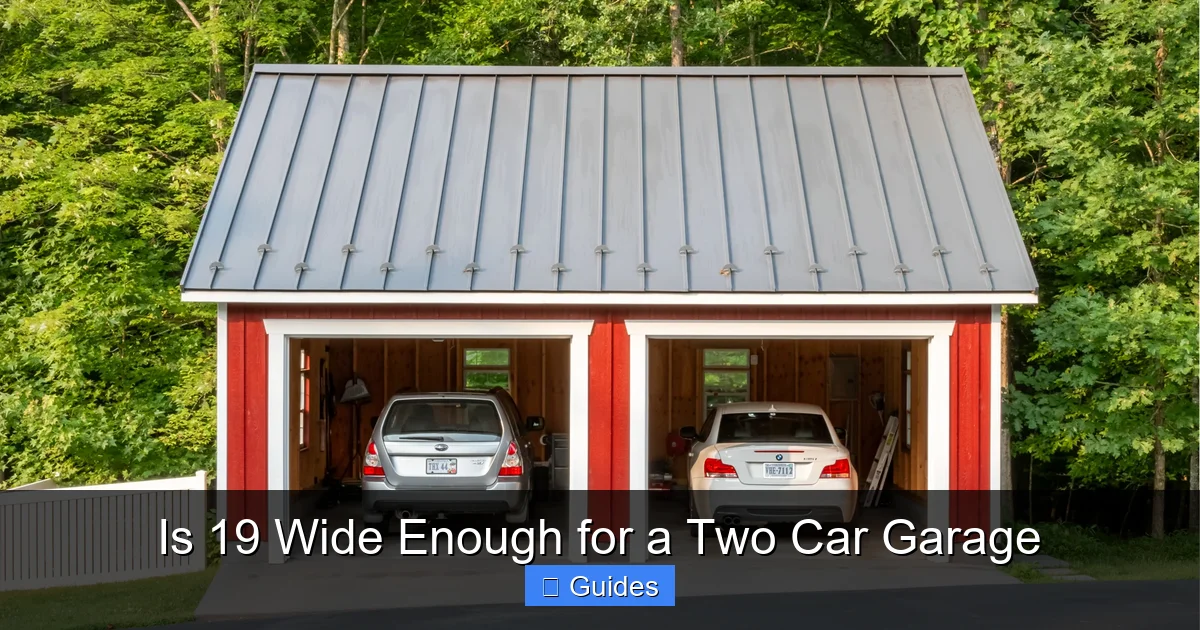
Now, let’s do the math. If you have two midsize sedans, each about 6 feet wide, that’s 12 feet total. Add in side mirrors (about 6–8 inches per side), and you’re looking at roughly 13.5 feet. That leaves 5.5 feet of space between the cars and the walls. Sounds okay, right? But wait—you also need space to open doors.
The Door Swing Dilemma
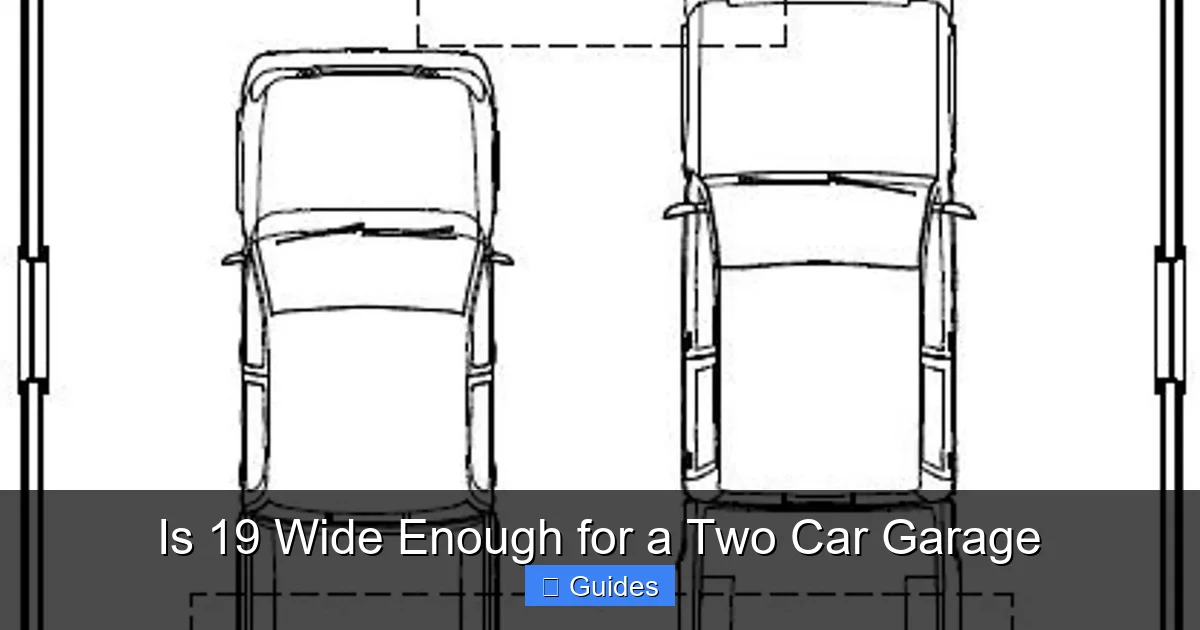
A typical car door needs about 2.5 to 3 feet of clearance to open fully. If you have two cars parked side by side in a 19-foot garage, the space between them is only about 1 foot (19 ft – 12 ft for cars – 1 ft for mirrors = 6 ft remaining, divided by 2 sides = 3 ft per side, minus 2 ft for door swing = 1 ft left). That’s not enough.
In practice, this means you’ll have to park very carefully—and even then, opening doors fully will be a challenge. One person might have to squeeze out, or you’ll need to park one car slightly ahead of the other to create staggered door access. It’s doable, but it’s not ideal.
Real-World Example: A Family with Two SUVs
Let’s say you have a family with two midsize SUVs—each about 6.2 feet wide with mirrors. That’s 12.4 feet total. Add in 1 foot for side clearance (6 inches per side), and you’re at 13.4 feet. That leaves 5.6 feet of space between the cars. But again, door swing eats up 5 feet of that (2.5 feet per side). You’re left with just 0.6 feet—about 7 inches—of actual walking space between the vehicles.
Now imagine one of those SUVs is a larger model, like a Ford Explorer or a Toyota Highlander. Suddenly, you’re over 6.5 feet per vehicle, and the math doesn’t work. You’ll be scraping mirrors, denting doors, or simply unable to park both cars inside.
Design and Layout Tips for a 19-Foot Garage
If you’re committed to a 19-foot-wide two-car garage, don’t despair. With smart design choices, you can make the most of the space you have. Here are some practical tips to maximize functionality.
Choose the Right Door Configuration
As mentioned earlier, two 9-foot doors are common in 19-foot garages. But consider alternatives:
Visual guide about Is 19 Wide Enough for a Two Car Garage
Image source: i.pinimg.com
- Two 8.5-foot doors: This gives you 2 feet of wall space (1 foot per side), which is slightly better for mirror clearance.
- One 16-foot door: While less common, a single wide door can make parking easier—no center post to worry about. But it requires more structural support and may not fit in all designs.
- Insulated or insulated doors: If you plan to use the garage as a workshop or storage area, insulated doors help regulate temperature and reduce noise.
Also, consider door style. Traditional sectional doors swing outward slightly when opening, which can interfere with side clearance. Consider high-lift or vertical-lift doors that go straight up, saving space.
Optimize Parking Layout
How you park can make a big difference. Try these strategies:
- Staggered parking: Park one car slightly ahead of the other. This gives the rear car more door clearance on one side.
- Angled parking: If your garage is deep enough, park at a slight angle (10–15 degrees). This can improve door access and make it easier to get in and out.
- Pull-through design: If your lot allows, add a rear door so you can drive through. This eliminates backing up and gives you more flexibility in parking.
For example, a homeowner in Denver with a 19×20 garage used staggered parking and installed overhead bike racks. They park their Honda Civic slightly ahead of their Toyota RAV4, allowing the RAV4’s larger door to open fully on the passenger side. It’s not perfect, but it works.
Maximize Vertical and Overhead Storage
When floor space is tight, go vertical. Install:
- Overhead storage racks: Great for seasonal items like holiday decorations, luggage, or camping gear.
- Wall-mounted shelves: Use sturdy brackets to hold tools, paint cans, or gardening supplies.
- Pegboard systems: Perfect for organizing tools and keeping them off the floor.
- Ceiling hoists: For heavy items like kayaks or bicycles.
Just be careful not to block vehicle access. Keep storage at least 7 feet high to avoid hitting car roofs or mirrors.
Use Multi-Functional Furniture
Consider fold-down workbenches, rolling tool carts, or wall-mounted cabinets that can be tucked away when not in use. This keeps the garage flexible for both parking and projects.
Storage Challenges and Compromises
Let’s be honest: a 19-foot garage isn’t going to double as a full workshop and storage unit. You’ll need to make some trade-offs.
Limited Wall Storage
With only 6–12 inches of wall space on each side, traditional shelving or cabinets aren’t practical. You’ll need to rely on overhead or rear-wall storage instead. This means sacrificing easy access to frequently used items.
No Room for a Workbench
If you’re a DIYer, a full-size workbench might not fit. Consider a fold-down bench or a rolling cart that can be stored in a corner when not in use.
Seasonal Rotation
You may need to rotate stored items seasonally. For example, store winter gear in the summer and vice versa. This keeps the garage functional year-round.
Building Codes and Permits
Before you finalize your garage plans, check local regulations.
Minimum Width Requirements
Some municipalities require a minimum garage width of 20 feet for two cars. Others allow 18 feet. Always consult your local building department.
Setback and Zoning Rules
Your garage must comply with setback requirements (distance from property lines) and zoning laws. A 19-foot garage might not meet requirements if it’s too close to a neighbor’s property.
Resale Value and Market Appeal
Finally, think about the future.
Buyer Expectations
Many homebuyers expect a 20+ foot wide garage. A 19-foot garage may be seen as a compromise, potentially affecting resale value.
Competitive Market
In areas with high demand for homes, a narrower garage could put your property at a disadvantage compared to homes with wider garages.
Conclusion
So, is 19 wide enough for a two car garage? The answer is: it depends. If you drive compact or midsize vehicles and are willing to make smart design choices, a 19-foot garage can work. But if you own large SUVs or trucks, or if you need ample storage and workspace, you’ll likely find it too cramped.
The key is to plan carefully—choose the right door configuration, optimize your layout, and prioritize vertical storage. And always check local building codes before breaking ground.
Ultimately, a 19-foot garage isn’t ideal, but it’s not impossible. With realistic expectations and creative solutions, you can make it functional for your household. Just remember: comfort and convenience come at a cost—and in this case, that cost is an extra foot or two of width.
Frequently Asked Questions
Can a 19-foot garage fit two SUVs?
It depends on the SUV size. Compact or midsize SUVs like a Honda CR-V or Toyota RAV4 might fit with careful parking, but larger models like a Ford Explorer or Chevrolet Tahoe will likely be too wide. Side mirrors and door clearance make a big difference.
What’s the minimum width for a two-car garage?
Experts recommend at least 18–20 feet for a functional two-car garage. While 18 feet is technically possible, 20 feet is considered the minimum for comfortable use with door clearance and storage.
Can I add storage to a 19-foot garage?
Yes, but focus on overhead and rear-wall storage. Avoid side shelving, as it will block vehicle access. Use ceiling racks, pegboards, and fold-down furniture to maximize space.
Are two 9-foot garage doors standard for a 19-foot garage?
Yes, two 9-foot doors are common in 19-foot garages, leaving about 6 inches of wall space on each side. This is tight, so consider 8.5-foot doors for better clearance.
Will a 19-foot garage hurt my home’s resale value?
It might. Many buyers prefer garages 20 feet or wider. A 19-foot garage could be seen as a compromise, especially in competitive markets.
Can I park two trucks in a 19-foot garage?
Unlikely. Most full-size trucks are over 6.5 feet wide with mirrors. Two trucks would require at least 20–22 feet of width for safe parking and door access.

At CarLegit, we believe information should be clear, factual, and genuinely helpful. That’s why every guide, review, and update on our website is created with care, research, and a strong focus on user experience.