
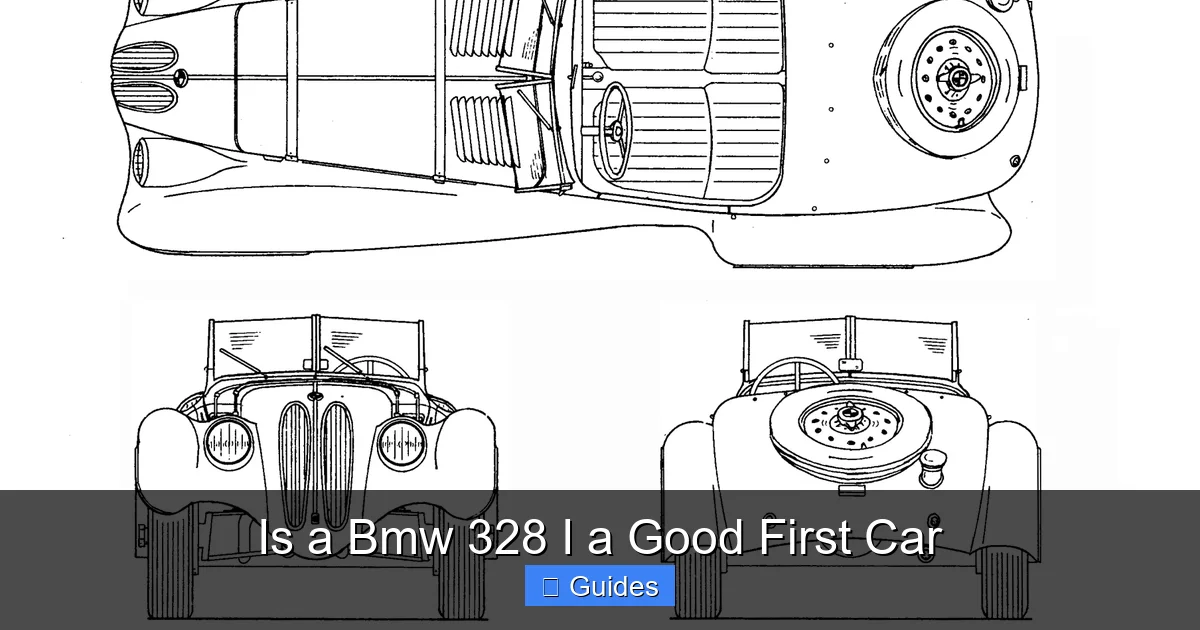
Choosing your first car is a big decision, and the BMW 328i offers style, performance, and luxury—but comes with higher costs and maintenance needs. While it’s a fun and engaging drive, new drivers should weigh reliability, insurance, and long-term expenses before committing.
So, you’re shopping for your first car—congratulations! It’s an exciting time, full of possibilities. You’ve probably scrolled through countless options: compact sedans, hatchbacks, maybe even a used SUV. But then you see it: a sleek, silver BMW 328i with that iconic kidney grille and a low, confident stance. It looks fast, feels premium, and has that unmistakable badge on the hood. You start wondering—could this be the one?
The BMW 328i has long been a favorite among driving enthusiasts. It blends luxury, performance, and everyday usability in a way few cars can match. For many, it represents the perfect entry point into the world of German engineering. But as a first car, especially for a new or young driver, it’s not a decision to take lightly. While the 328i offers a thrilling driving experience, it also comes with responsibilities and costs that might surprise first-time owners.
In this guide, we’ll dive deep into whether the BMW 328i is a good first car. We’ll look at performance, safety, reliability, costs, and real-world ownership experiences. Whether you’re a recent graduate, a young professional, or just someone who loves the idea of driving a BMW, this article will help you make an informed choice. Let’s find out if the 328i is the right fit for your first ride.
In This Article
- 1 Key Takeaways
- 2 📑 Table of Contents
- 3 Performance and Driving Experience
- 4 Cost of Ownership: What You Need to Know
- 5 Reliability and Common Issues
- 6 Safety Features and Ratings
- 7 Interior Quality and Daily Usability
- 8 Is It Worth It as a First Car?
- 9 Tips for Buying a Used BMW 328i
- 10 Conclusion
- 11 Frequently Asked Questions
Key Takeaways
- Performance and Driving Experience: The BMW 328i delivers a sporty, responsive ride with strong acceleration and precise handling, making it enjoyable for new drivers who love driving.
- Higher Ownership Costs: Compared to economy cars, the 328i has steeper insurance premiums, fuel costs, and maintenance expenses, which can strain a beginner’s budget.
- Reliability Concerns: Older models (especially pre-2012) may face issues with cooling systems, electronics, and turbos, requiring timely and often costly repairs.
- Safety Features Are Solid: Most 328i models come well-equipped with airbags, stability control, and strong crash-test ratings, offering good protection for new drivers.
- Depreciation and Resale Value: While BMWs depreciate faster than some rivals, well-maintained 328i models can still hold decent value if cared for properly.
- Fuel Efficiency Is Decent for a Luxury Car: With around 23–28 mpg combined, it’s not the most fuel-efficient option, but reasonable for a performance-oriented sedan.
- Best Suited for Budget-Conscious Enthusiasts: If you’re willing to invest time and money into maintenance, the 328i can be a rewarding first car—but it’s not ideal for those seeking low-cost, hassle-free ownership.
📑 Table of Contents
Performance and Driving Experience
One of the biggest draws of the BMW 328i is how it drives. This isn’t just a car—it’s an experience. From the moment you press the start button, you feel connected to the road. The engine hums with purpose, the steering is tight and responsive, and the suspension strikes a balance between comfort and sportiness.
Engine and Power Delivery
The 328i typically comes with a 2.0-liter turbocharged inline-4 engine, producing around 240 horsepower. That’s more than enough for daily commuting, highway merging, and the occasional spirited drive on back roads. The turbo kicks in early, giving you strong low-end torque, which means quick acceleration from a stop. You’ll notice this especially when pulling out into traffic or passing slower vehicles.
For a first-time driver, this kind of power can be both thrilling and intimidating. On one hand, it gives you confidence in merging and overtaking. On the other, it requires respect—especially if you’re not used to handling a car with this much grunt. But with modern traction and stability control systems, the 328i remains manageable even for less experienced drivers.
Handling and Ride Quality
BMW has always been known for its “Ultimate Driving Machine” philosophy, and the 328i lives up to that reputation. The car feels planted and balanced, with minimal body roll in corners. The steering is precise—there’s no vagueness or delay. Whether you’re navigating tight city streets or cruising on the highway, the 328i responds exactly how you expect it to.
The suspension is tuned for sportiness, but not so stiff that it becomes uncomfortable. On smooth roads, it’s smooth and composed. On rougher pavement, you’ll feel the bumps, but they’re well-damped and don’t shake the car apart. This balance makes the 328i enjoyable for daily driving, not just weekend fun.
Transmission Options
Most 328i models come with an 8-speed automatic transmission, which is smooth, quick-shifting, and efficient. It learns your driving style and adapts accordingly—whether you’re in stop-and-go traffic or pushing the car on a winding road. Some older models may have a 6-speed manual, which is a joy for driving purists but less practical for new drivers in heavy traffic.
The automatic is the better choice for a first car. It reduces driver workload and helps you focus on learning the basics of driving—lane discipline, signaling, and situational awareness—without worrying about clutch control.
Cost of Ownership: What You Need to Know
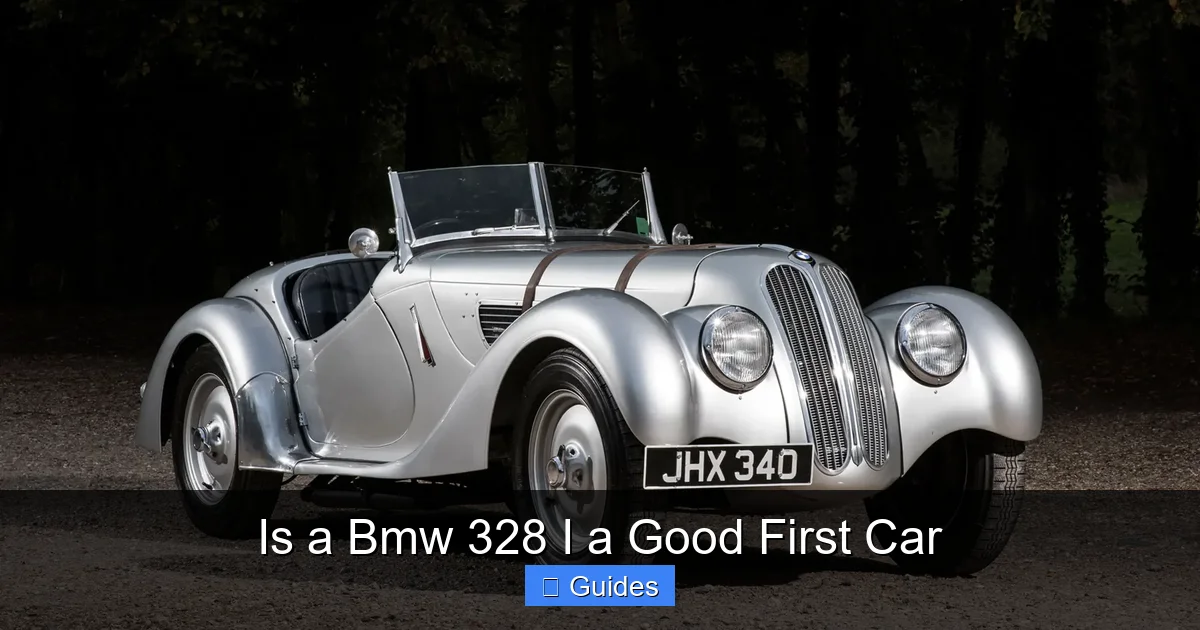
Visual guide about Is a Bmw 328 I a Good First Car
Image source: car-images.bauersecure.com
Now, let’s talk about the elephant in the room: money. The BMW 328i may look like a used car bargain at first glance, but ownership costs can add up quickly. As a first-time buyer, it’s crucial to understand not just the purchase price, but the long-term expenses.
Purchase Price and Depreciation
Used 328i models (especially from 2012–2016) can be found in the $12,000–$20,000 range, depending on mileage, condition, and location. That’s competitive for a luxury sedan with this level of performance. However, BMWs depreciate faster than many mainstream brands. A 328i might lose 50–60% of its value in the first five years.
This isn’t necessarily a dealbreaker, but it means you’ll get less back if you sell it later. If you plan to keep the car for 5–7 years, depreciation matters less. But if you’re thinking of upgrading in a few years, you might lose more money than expected.
Insurance Costs
Insurance is one of the biggest hidden costs for new drivers—especially when driving a luxury or performance car. The 328i is classified as a premium vehicle, and insurers know these cars are more expensive to repair and more likely to be driven aggressively.
For a young or inexperienced driver, insurance premiums can be significantly higher than for a Honda Civic or Toyota Corolla. Expect to pay 20–50% more, depending on your age, location, and driving record. Shopping around and bundling policies can help, but don’t be surprised if your monthly bill is steep.
Fuel Economy
The 328i gets around 23–28 miles per gallon combined, depending on driving style and model year. That’s not bad for a car with this much power, but it’s not great either. If you do a lot of city driving, you’ll be filling up more often than with a hybrid or compact car.
At current gas prices, that could mean $40–$60 per week for fuel, depending on your commute. Over a year, that’s $2,000–$3,000 just in gas. For a first-time car owner on a tight budget, this can be a real strain.
Maintenance and Repairs
This is where the 328i can get expensive. BMWs are engineered for performance, but that often means more complex systems and higher repair costs. Common issues include:
- Water pump and thermostat failures (especially in N20 engines)
- Turbocharger problems (leaks, wastegate issues)
- Electrical glitches (window regulators, infotainment system)
- Oil leaks from valve covers or oil filters
Routine maintenance—oil changes, brake pads, tires—costs more than on a Toyota or Honda. An oil change at a BMW dealer can run $150–$200, compared to $50–$80 at an independent shop. Brake jobs can cost $400–$600 per axle.
That said, if you stay on top of maintenance and use quality parts, many of these issues can be avoided. Finding a trusted independent mechanic who specializes in BMWs can save you hundreds over dealer prices.
Reliability and Common Issues
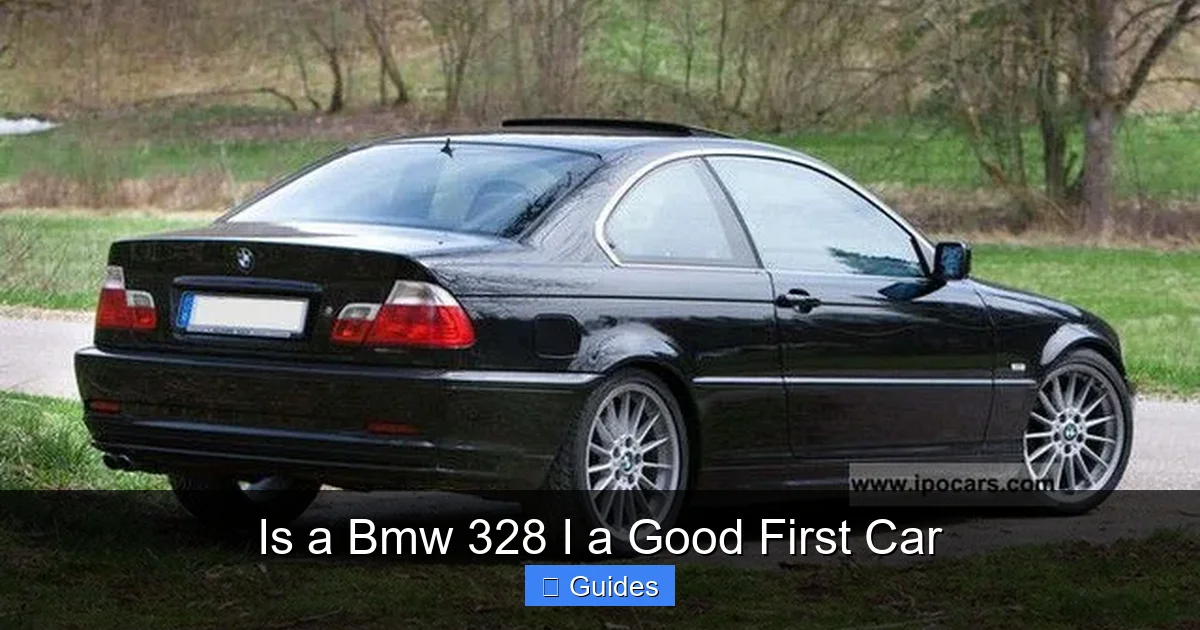
Visual guide about Is a Bmw 328 I a Good First Car
Image source: ipocars.com
No car is perfect, and the 328i is no exception. While it’s generally reliable when well-maintained, there are some known issues to watch out for—especially in older models.
Engine Concerns
The N20 engine (used from 2012–2016) is powerful and efficient, but it has a few weak points. The water pump is electric and prone to failure around 60,000–80,000 miles. When it fails, it can overheat the engine and cause serious damage. Replacing it costs $800–$1,200.
The timing chain is another concern. In some cases, it can stretch or fail prematurely, leading to expensive engine repairs. BMW issued a technical service bulletin (TSB) about this, and some models were covered under warranty extensions. If you’re buying a used 328i, check if the timing chain has been inspected or replaced.
Electrical and Infotainment Problems
Modern BMWs are packed with technology, and that can lead to glitches. The iDrive system, while intuitive, can freeze or reboot unexpectedly. Window regulators often fail, causing windows to drop or not roll up. Sunroofs may leak or get stuck.
These issues aren’t catastrophic, but they’re annoying and costly to fix. A new window regulator can cost $300–$500 per door. Infotainment repairs can run even higher.
Suspension and Steering
The 328i’s sport-tuned suspension is great for handling, but components wear out faster than on softer suspensions. Control arms, bushings, and struts may need replacement around 80,000–100,000 miles. These repairs can cost $500–$1,000 per corner.
Steering racks can also develop leaks or electrical issues, especially in colder climates. A new rack can cost $1,500–$2,500.
How to Minimize Risk
The best way to avoid these problems is to buy a well-maintained example with a full service history. Look for cars that have had regular oil changes, timing chain inspections, and cooling system checks. A pre-purchase inspection (PPI) by a BMW specialist is worth every penny—typically $100–$150, but it could save you thousands.
Safety Features and Ratings
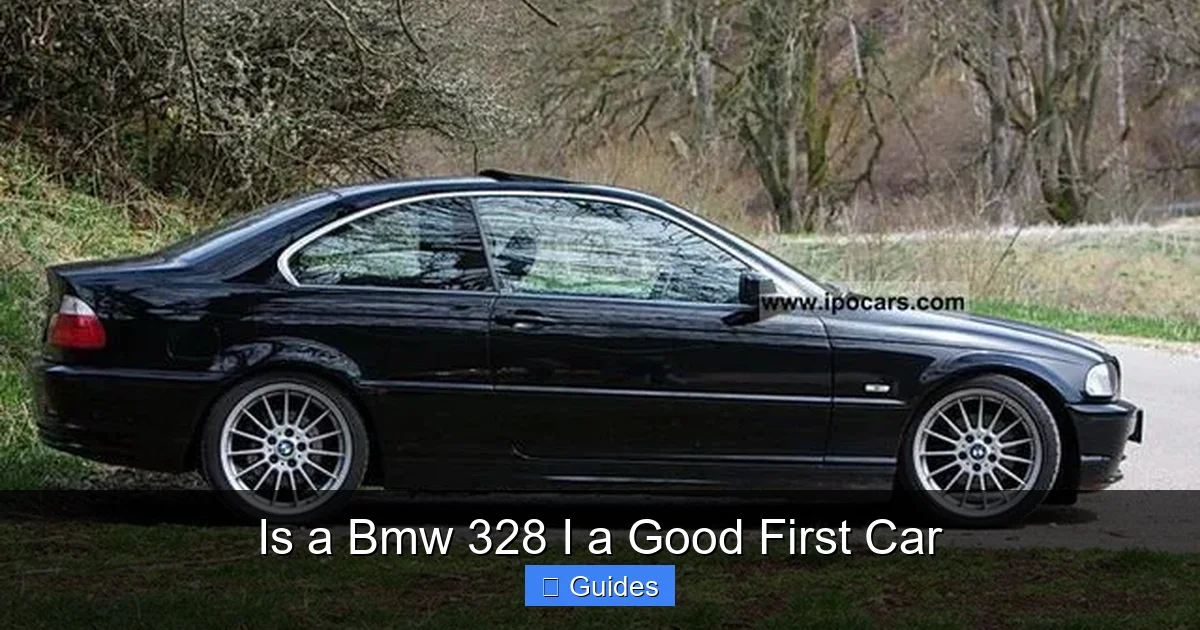
Visual guide about Is a Bmw 328 I a Good First Car
Image source: ipocars.com
Safety is a top priority for any first car, and the 328i scores well in this area. It’s not just about airbags—it’s about how the car protects you in a crash and helps you avoid one in the first place.
Crash Test Ratings
The 328i has earned strong ratings from the National Highway Traffic Safety Administration (NHTSA) and the Insurance Institute for Highway Safety (IIHS). It typically gets 4 or 5 stars overall, with top marks for frontal and side impact protection. The roof strength is also rated “Good,” which helps in rollover scenarios.
Standard Safety Equipment
Even base models come well-equipped. Standard features usually include:
- Six airbags (front, side, curtain)
- Electronic stability control (ESC)
- Anti-lock brakes (ABS)
- Traction control
- Adaptive headlights (on some models)
Higher trims may add blind-spot monitoring, lane departure warning, and forward collision warning. These features are especially helpful for new drivers who are still building confidence on the road.
Real-World Safety
The 328i’s low center of gravity and responsive handling help it avoid accidents. In emergency maneuvers, it stays stable and predictable. The brakes are strong and fade-resistant, even after repeated hard stops.
That said, the car’s performance can be a double-edged sword. It’s easy to drive faster than intended, especially on open roads. New drivers should take a defensive driving course to learn how to handle the car’s capabilities safely.
Interior Quality and Daily Usability
Beyond performance and safety, you’ll spend a lot of time inside the 328i. So how does it hold up as a daily driver?
Comfort and Materials
The interior is where BMW shines. Even in base trim, the 328i feels premium. Soft-touch plastics, real aluminum trim, and well-bolstered seats create a cabin that’s both stylish and comfortable. The seats offer good support for long drives, and the driving position is excellent—low, sporty, and ergonomic.
Rear seat space is decent for a compact luxury sedan. Two adults can sit comfortably, though taller passengers may find headroom tight. The trunk holds about 13 cubic feet—enough for groceries, luggage, or a weekend trip.
Technology and Infotainment
The iDrive system is intuitive once you get used to it. The central knob controls navigation, audio, and phone functions. Later models include Apple CarPlay (sometimes as a subscription), Bluetooth, and a premium sound system.
The instrument cluster is clear and easy to read, with a digital display that shows trip info, fuel economy, and navigation prompts. Some drivers find the menu system a bit cluttered, but it’s not a dealbreaker.
Noise and Ride Comfort
Road and wind noise are well-controlled, especially in newer models with acoustic glass. The ride is firm but not harsh—perfect for drivers who want a sporty feel without sacrificing comfort.
One downside: the run-flat tires (common on BMWs) provide peace of mind if you get a flat, but they offer a firmer ride and can be expensive to replace ($200–$300 per tire).
Is It Worth It as a First Car?
So, after all this, should you buy a BMW 328i as your first car? The answer depends on your priorities, budget, and willingness to maintain a premium vehicle.
If you’re passionate about driving, value performance and luxury, and can afford the higher costs, the 328i can be a fantastic choice. It’s engaging, safe, and stylish—everything you’d want in a first car if you’re a driving enthusiast.
But if your main concerns are low cost, minimal hassle, and maximum reliability, you might be better off with a Toyota Camry, Honda Accord, or Mazda3. These cars are cheaper to insure, easier to maintain, and just as practical—without the stress of potential BMW-specific issues.
Ultimately, the 328i is a great first car—if you’re ready for the responsibility. It rewards careful ownership with an unforgettable driving experience. But it punishes neglect with expensive repairs and headaches.
Tips for Buying a Used BMW 328i
If you’ve decided to go for it, here are some tips to help you find a good one:
- Get a Pre-Purchase Inspection (PPI): Always have a BMW specialist check the car before buying. They’ll spot hidden issues and give you peace of mind.
- Check Service History: Look for records of regular oil changes, timing chain inspections, and cooling system maintenance.
- Avoid High-Mileage Examples: Try to find a 328i under 80,000 miles. Beyond that, repair costs tend to rise.
- Consider Certified Pre-Owned (CPO): BMW CPO cars come with extended warranties and thorough inspections, though they cost more.
- Negotiate Based on Condition: Use any found issues as leverage to lower the price.
- Join a BMW Forum: Communities like Bimmerpost or Reddit’s r/BMW can offer advice, maintenance tips, and owner experiences.
Conclusion
The BMW 328i is a compelling choice for a first car—especially if you love driving. It offers a blend of performance, luxury, and everyday usability that few rivals can match. The driving experience is engaging, the interior is premium, and the safety features are solid.
But it’s not without its challenges. Higher insurance, fuel, and maintenance costs mean it’s not the most budget-friendly option. Reliability can be a concern if the car hasn’t been well cared for. And the performance, while thrilling, requires maturity and responsibility from a new driver.
If you’re willing to invest the time and money, the 328i can be a rewarding and enjoyable first car. But if you’re looking for something simple, reliable, and low-cost, you might want to consider other options.
In the end, the 328i isn’t just a car—it’s a statement. And as a first car, it says you’re ready to drive something special. Just make sure you’re ready for what comes with it.
Frequently Asked Questions
Is a BMW 328i expensive to insure for a new driver?
Yes, insurance for a BMW 328i is typically 20–50% higher than for a mainstream sedan like a Honda Civic. This is due to the car’s classification as a luxury performance vehicle, higher repair costs, and increased risk profile for young drivers.
How reliable is a used BMW 328i?
The 328i is generally reliable if well-maintained, but older models (especially 2012–2016) can have issues with the water pump, timing chain, and electrical systems. A full service history and pre-purchase inspection are essential.
Can a first-time driver handle a BMW 328i?
Yes, with proper training and maturity. The 328i has strong safety features and stability control, but its performance requires respect. New drivers should consider a defensive driving course.
What’s the average maintenance cost for a BMW 328i?
Routine maintenance costs 20–30% more than average. An oil change runs $100–$200, brake jobs $400–$600 per axle, and major repairs (like water pump or turbo) can exceed $1,000.
Is the BMW 328i fuel-efficient?
It gets 23–28 mpg combined, which is decent for a performance sedan but not as efficient as hybrids or compact cars. City driving will reduce mileage significantly.
Should I buy a BMW 328i as my first car?
It can be a great choice if you love driving and can afford the higher costs. But if budget and low maintenance are top priorities, a Toyota or Honda might be a better fit.

At CarLegit, we believe information should be clear, factual, and genuinely helpful. That’s why every guide, review, and update on our website is created with care, research, and a strong focus on user experience.