
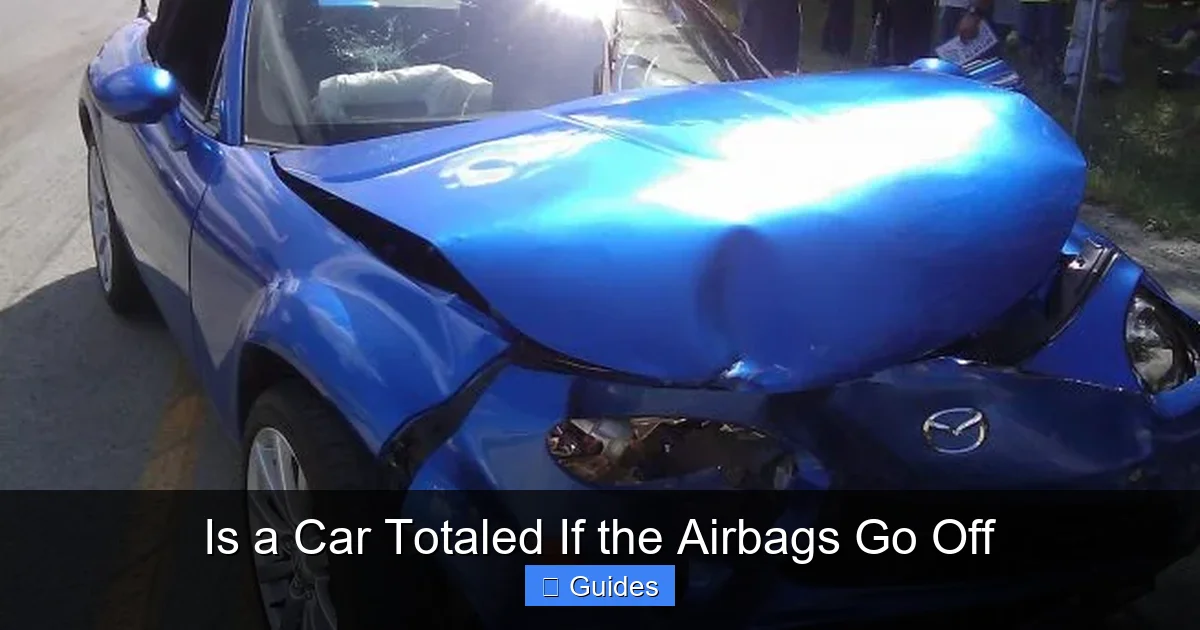
Airbag deployment doesn’t automatically mean your car is totaled, but it significantly increases the likelihood. Insurance companies assess repair costs, safety risks, and structural damage to decide if a vehicle is beyond economical repair. Understanding this process helps you make informed decisions after an accident.
In This Article
- 1 Key Takeaways
- 2 📑 Table of Contents
- 3 Is a Car Totaled If the Airbags Go Off?
- 4 What Happens When Airbags Deploy?
- 5 How Insurance Companies Determine if a Car Is Totaled
- 6 Why Airbag Deployment Increases the Chance of a Total Loss
- 7 Can a Car Be Repaired After Airbags Deploy?
- 8 What to Do If Your Airbags Deploy
- 9 State Laws and Regulations
- 10 Frequently Asked Questions (FAQs)
- 11 Final Thoughts
- 12 Frequently Asked Questions
Key Takeaways
- Airbag deployment doesn’t guarantee a total loss: While serious, it’s just one factor insurers consider when evaluating a vehicle’s condition.
- Insurance companies use a total loss threshold: If repair costs exceed a certain percentage of the car’s value (usually 70–80%), it’s declared totaled.
- Structural damage plays a major role: Even with airbags deployed, if the frame or safety systems are compromised, the car may be unsafe to repair.
- Replacement airbags are expensive: New airbags, sensors, and recalibration can cost thousands, pushing repair bills over the threshold.
- State laws vary: Some states have specific rules about when a vehicle must be declared a total loss, especially after airbag deployment.
- You may still owe money on a totaled car: If you have a loan or lease, gap insurance can help cover the difference between the payout and what you owe.
- Salvage value matters: Even totaled cars have value—insurers often sell them to recyclers or rebuilders to recover costs.
📑 Table of Contents
- Is a Car Totaled If the Airbags Go Off?
- What Happens When Airbags Deploy?
- How Insurance Companies Determine if a Car Is Totaled
- Why Airbag Deployment Increases the Chance of a Total Loss
- Can a Car Be Repaired After Airbags Deploy?
- What to Do If Your Airbags Deploy
- State Laws and Regulations
- Frequently Asked Questions (FAQs)
- Final Thoughts
Is a Car Totaled If the Airbags Go Off?
You’re driving down the road, minding your own business, when—BAM!—a sudden collision sends your car spinning. In an instant, the airbags explode from the steering wheel and dashboard, filling the cabin with white dust. Your heart races. You’re shaken, but alive. Then the questions start: Is my car totaled? Will the insurance company just write it off? Can it even be safe to drive again?
It’s a scenario no one wants to face, but it happens more often than you might think. Airbag deployment is one of the most dramatic signs of a serious accident, and it naturally raises concerns about the vehicle’s future. But here’s the truth: **airbags going off doesn’t automatically mean your car is totaled**. However, it does dramatically increase the chances—especially when combined with other damage.
In this guide, we’ll walk you through everything you need to know about what happens when airbags deploy, how insurance companies decide whether a car is totaled, and what your options are after an accident. Whether you’re dealing with a recent crash or just want to be prepared, this article will give you the clarity and confidence to navigate the aftermath.
What Happens When Airbags Deploy?
Airbags are designed to save lives. They’re part of your vehicle’s Supplemental Restraint System (SRS), working alongside seatbelts to reduce the risk of injury during a collision. When sensors detect a sudden deceleration—like in a front-end crash—they trigger the airbags to inflate in milliseconds, cushioning occupants from impact.
But deployment isn’t just a safety feature—it’s also a sign that the accident was severe enough to activate the car’s most critical protective systems. This tells insurers and mechanics that the vehicle likely sustained significant force, which could mean hidden damage beyond what’s visible.
How Airbags Work
Modern vehicles have multiple airbags: front, side, curtain, and even knee airbags. Each is triggered by specific sensors that measure speed, angle, and impact force. When a crash occurs, these sensors send signals to the airbag control module, which decides which bags to deploy and when.
For example, a low-speed fender bender might not trigger airbags at all. But a high-speed frontal collision? That’s almost certain to set them off. The system is smart, but it’s also sensitive—once deployed, airbags cannot be reused. They must be replaced, along with the sensors and sometimes the entire steering wheel or dashboard components.
Immediate Aftermath of Deployment
Right after the airbags go off, you’ll notice a few things:
– A loud bang or popping sound
– White powder (from the sodium azide used to inflate the bags)
– Possible smoke or burning smell (normal, but alarming)
– Reduced visibility due to dust
It’s important to stay calm. Airbags are designed to deploy quickly and forcefully—this is normal. But once the dust settles, you’ll need to assess the damage. Even if the car seems drivable, there could be serious underlying issues.
How Insurance Companies Determine if a Car Is Totaled
So, how do insurers decide whether your car is totaled after airbags deploy? It’s not as simple as checking a box that says “airbags = total loss.” Instead, they follow a detailed process based on cost, safety, and regulations.
The Total Loss Threshold
Every state has a **total loss threshold (TLT)**—a percentage of the car’s actual cash value (ACV) that, if exceeded by repair costs, means the vehicle is declared a total loss. This threshold typically ranges from 70% to 85%, depending on your location.
For example, if your car is worth $10,000 and the estimated repairs cost $8,000, and your state’s TLT is 80%, the insurer will likely total the car because $8,000 is 80% of $10,000.
But here’s where airbags come in: replacing a driver’s side airbag alone can cost $1,000–$2,500. Add in the passenger airbag, side airbags, sensors, wiring, and recalibration, and you’re easily looking at $3,000–$5,000 in airbag-related repairs. That’s before factoring in any structural or mechanical damage.
Actual Cash Value vs. Repair Costs
Insurers calculate your car’s ACV based on its age, mileage, condition, and local market prices. Then they compare that to the estimated repair cost from a certified mechanic or body shop.
Let’s say you drive a 2018 Honda Civic with 60,000 miles. Its ACV might be around $14,000. If the repair estimate comes in at $11,000—mostly due to airbag replacement and front-end damage—and your state’s TLT is 75%, the insurer will likely total the car because $11,000 is about 79% of $14,000.
But if the same car only needs $8,000 in repairs, it might be worth fixing—even with airbags deployed.
Structural and Safety Considerations
Beyond cost, insurers also consider whether the car can be safely repaired. Airbag deployment often indicates that the vehicle’s crumple zones absorbed significant impact. If the frame is bent, the suspension is damaged, or the safety systems are compromised, the car may be deemed unsafe—even if repairs are technically possible.
For instance, if the front frame rails are crushed, realigning them perfectly is nearly impossible. Even minor misalignments can affect handling, braking, and future crash performance. In such cases, insurers may declare the car a total loss for safety reasons, regardless of cost.
Why Airbag Deployment Increases the Chance of a Total Loss
Now that you understand the basics, let’s dive deeper into why airbags going off makes a total loss more likely.
High Cost of Airbag Replacement
Airbags aren’t just plastic bags—they’re complex safety systems. Each one includes:
– The airbag module (the bag itself)
– Inflator mechanism
– Crash sensors
– Wiring harness
– Control module
Replacing all of this isn’t cheap. Here’s a rough breakdown:
– Driver’s side airbag: $1,000–$2,500
– Passenger side airbag: $1,200–$3,000
– Side airbags: $800–$2,000 each
– Curtain airbags: $1,000–$2,500
– Sensor recalibration: $200–$500
And that’s just the airbags. You may also need a new steering wheel, dashboard, or seat covers if they were damaged during deployment.
Hidden Damage Behind the Scenes
Airbags deploy when sensors detect a severe impact. That same impact could have damaged:
– The engine or transmission mounts
– The radiator or cooling system
– The suspension and steering components
– The electrical system
Even if these parts aren’t visibly broken, they may have internal damage that only shows up later. Mechanics often recommend replacing certain components preventively after a major crash—adding to the repair bill.
Recalibration Is Required
Modern cars rely on precise sensor alignment for safety systems like airbags, ABS, and electronic stability control. After a crash, these systems must be recalibrated using specialized tools. This process can take hours and cost hundreds of dollars.
If the recalibration fails or the sensors are damaged beyond repair, the car may not be safe to drive—even if everything else is fixed.
Example: A Real-World Scenario
Imagine a 2020 Toyota Camry is rear-ended at high speed. The impact triggers the side airbags and causes damage to the rear bumper, trunk, and suspension. The repair estimate comes in at $9,500. The car’s ACV is $18,000. With a TLT of 75%, the threshold is $13,500. Since $9,500 is below that, the insurer might approve repairs.
But now imagine the same car is hit head-on. The front airbags deploy, the radiator is crushed, and the frame is slightly bent. The repair estimate jumps to $14,200. Now, $14,200 is 79% of $18,000—above the 75% threshold. The car is totaled.
In both cases, airbags deployed, but the extent of other damage made the difference.
Can a Car Be Repaired After Airbags Deploy?
Yes—sometimes. But it depends on several factors.
When Repairs Make Sense
A car may be worth repairing if:
– The damage is mostly cosmetic
– The frame is undamaged or can be safely straightened
– The airbag system can be fully restored
– The repair cost is below the total loss threshold
For example, a minor side-impact collision that triggers side airbags but leaves the frame intact might be repairable. The insurer will still require a thorough inspection, but the car could be restored to safe driving condition.
When Repairs Are Risky or Impossible
However, there are situations where repairs aren’t advisable:
– The frame is severely bent or cracked
– Multiple airbags deployed, indicating high-force impact
– The vehicle has flood or fire damage
– The car is older or has high mileage
In these cases, even if repairs are technically possible, the risk of future safety issues or hidden problems makes a total loss the smarter choice.
Salvage and Rebuilt Titles
If your car is repaired after being declared a total loss, it may receive a **rebuilt title**. This means it was once totaled but has since been restored to roadworthy condition. Rebuilt titles can affect resale value and insurance rates, so it’s important to disclose this history if you sell the car.
Some people choose to buy rebuilt-title vehicles because they’re cheaper—but they come with risks. Always get a pre-purchase inspection and check the vehicle history report.
What to Do If Your Airbags Deploy
If you’re in an accident and your airbags go off, here’s what to do next.
1. Ensure Safety First
– Check yourself and passengers for injuries
– Call 911 if needed
– Move to a safe location if possible
– Turn on hazard lights
2. Document the Scene
– Take photos of the damage, including the deployed airbags
– Get contact info from other drivers and witnesses
– Note the time, location, and weather conditions
3. Contact Your Insurance Company
Report the accident as soon as possible. Most insurers have 24/7 claims lines. Provide them with the details and photos.
4. Get a Professional Inspection
Even if the car seems drivable, have it towed to a repair shop for a full inspection. Don’t try to drive it yourself—there could be hidden damage that makes it unsafe.
5. Understand Your Options
Once the insurer assesses the damage, you’ll receive a repair estimate or a total loss declaration. If it’s totaled, you’ll get a payout based on the ACV. If it’s repairable, you can choose where to have it fixed (though some insurers may require approved shops).
6. Consider Gap Insurance
If you owe more on your car than it’s worth, gap insurance can cover the difference. This is especially important if your car is totaled shortly after purchase.
State Laws and Regulations
Total loss rules vary by state, so it’s important to know your local laws.
Total Loss Thresholds by State
Some states use a fixed percentage (e.g., 75%), while others use a “total loss formula” that considers both repair cost and salvage value. A few states, like California, require a total loss if the repair cost plus salvage value exceeds the ACV.
For example:
– Texas: 100% of ACV (very high threshold)
– Florida: 80%
– New York: 75%
– Illinois: Total loss formula
Check your state’s Department of Motor Vehicles (DMV) website for specifics.
Airbag-Specific Regulations
Some states have additional rules about airbag replacement. For instance, in California, all airbag replacements must be performed by a certified technician, and the work must be documented. Using counterfeit or recycled airbags is illegal and can result in fines.
Frequently Asked Questions (FAQs)
Does airbag deployment always mean a car is totaled?
No, airbag deployment doesn’t automatically total a car. It depends on the extent of other damage, repair costs, and your state’s total loss threshold. However, it significantly increases the likelihood.
Visual guide about Is a Car Totaled If the Airbags Go Off
Image source: fanglawfirm.com
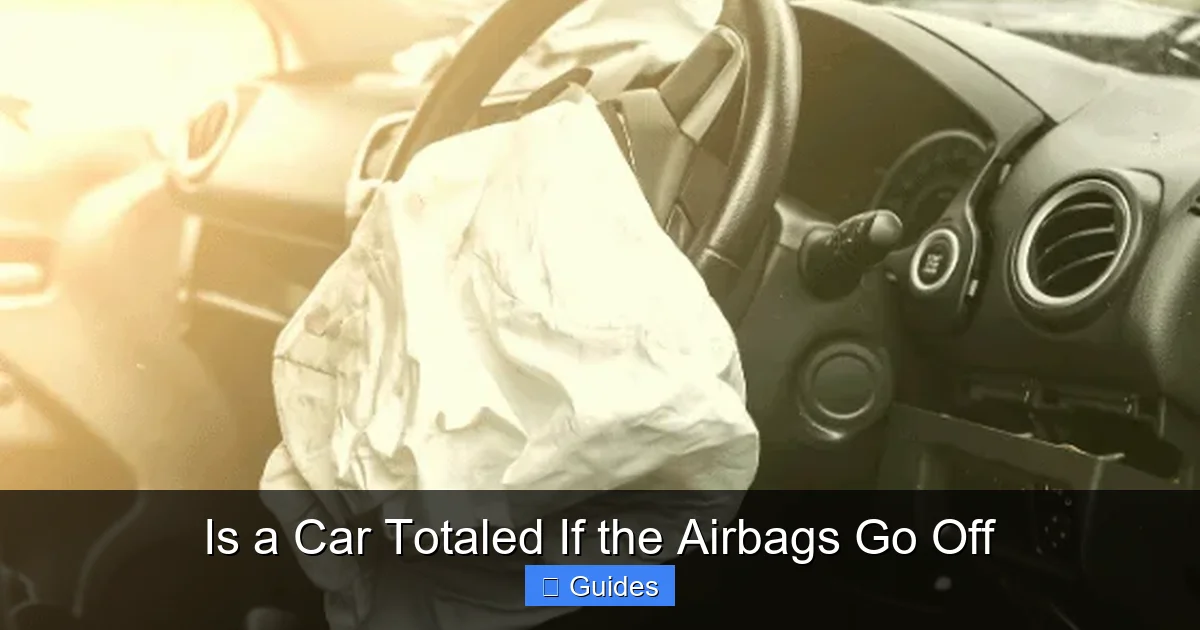
Visual guide about Is a Car Totaled If the Airbags Go Off
Image source: hiqualityautobody.com

Visual guide about Is a Car Totaled If the Airbags Go Off
Image source: tractionlife.com
How much does it cost to replace airbags?
Replacing airbags can cost anywhere from $1,000 to $5,000 or more, depending on the number of bags deployed and the vehicle model. This includes parts, labor, and recalibration.
Can I drive my car after airbags deploy?
It’s not recommended. Even if the car seems drivable, there could be hidden damage to the frame, suspension, or safety systems. Have it inspected by a professional before driving.
Will my insurance pay for a rental car?
Most comprehensive and collision policies include rental reimbursement, but only if you have that coverage. Check your policy or ask your agent.
What happens to a totaled car?
Insurance companies usually sell totaled cars to salvage yards or rebuilders. You may have the option to buy it back as a salvage vehicle, but it will have a salvage title.
Is it safe to buy a car with deployed airbags that was repaired?
It can be safe if the repairs were done correctly by certified professionals and the car has a rebuilt title. Always get a pre-purchase inspection and check the vehicle history.
Final Thoughts
Airbag deployment is a serious event—but it doesn’t automatically spell the end for your car. While it often pushes repair costs over the edge, especially when combined with structural damage, each case is unique. Insurance companies weigh multiple factors, including cost, safety, and state laws, before declaring a vehicle totaled.
The key is to stay informed and act quickly. Document the damage, contact your insurer, and get a professional assessment. If your car is totaled, understand your payout and consider gap insurance if you’re upside down on your loan. If it’s repairable, make sure the work is done right to ensure your safety on the road.
At the end of the day, airbags did their job—they protected you. Now it’s up to you to make smart decisions about what comes next. Whether your car is fixed or replaced, the most important thing is that you’re safe and prepared for whatever the road throws your way.
Frequently Asked Questions
What is Is A Car Totaled If The Airbags Go Off?
Is A Car Totaled If The Airbags Go Off is an important topic with many practical applications.

At CarLegit, we believe information should be clear, factual, and genuinely helpful. That’s why every guide, review, and update on our website is created with care, research, and a strong focus on user experience.