
Choosing your first car is a big decision, and the Nissan 350Z might catch your eye with its sleek looks and thrilling performance. But while it’s fun to drive, it comes with trade-offs in comfort, cost, and practicality that new drivers should seriously consider.
So, you’ve just gotten your license—or maybe you’re helping a teen pick out their first set of wheels—and you’ve spotted a Nissan 350Z at a local dealership or online listing. It looks fast, sounds mean, and turns heads wherever it goes. But before you sign on the dotted line, ask yourself: *Is a Nissan 350Z a good first car?*
The short answer? It depends—but mostly, probably not. Don’t get us wrong: the 350Z is an icon. Launched in 2002 as the successor to the beloved 300ZX, this rear-wheel-drive coupe brought affordable Japanese performance to the masses. With a throaty V6 engine, sharp steering, and a design that still turns heads two decades later, it’s easy to see why so many new drivers dream of owning one. But passion shouldn’t override practicality—especially when you’re just starting out on the road.
In this guide, we’ll break down everything you need to know about choosing the Nissan 350Z as your first car. We’ll cover performance, cost of ownership, safety, daily usability, and alternatives. By the end, you’ll have a clear picture of whether this sporty coupe fits your lifestyle—or if you’d be better off with something a little more forgiving (and wallet-friendly).
In This Article
- 1 Key Takeaways
- 2 📑 Table of Contents
- 3 Performance and Driving Experience
- 4 Cost of Ownership: What You’re Really Paying For
- 5 Practicality and Daily Usability
- 6 Safety Considerations
- 7 Who Might Actually Benefit from a 350Z as a First Car?
- 8 Better Alternatives for First-Time Buyers
- 9 Final Verdict: Should You Buy a Nissan 350Z as Your First Car?
- 10 Frequently Asked Questions
- 10.1 Is the Nissan 350Z reliable for a first-time buyer?
- 10.2 How much does it cost to insure a Nissan 350Z for a new driver?
- 10.3 Can a beginner learn to drive manual in a 350Z?
- 10.4 Does the 350Z have airbags and basic safety features?
- 10.5 What’s the average fuel economy of a Nissan 350Z?
- 10.6 Are there any Nissan 350Z models better suited for first-time owners?
Key Takeaways
- Performance vs. Practicality: The 350Z delivers exciting power and handling, but its two-seater layout and limited cargo space make it less practical for daily errands or passengers.
- Higher Ownership Costs: Insurance, fuel, maintenance, and tires are more expensive than average, which can strain a new driver’s budget.
- Manual Transmission Challenges: Most 350Zs come with a manual gearbox, which can be tough for beginners still mastering clutch control and shifting.
- Safety Features Are Dated: Lacking modern driver aids like automatic emergency braking or blind-spot monitoring, it may not offer the safety net newer cars provide.
- Great for Enthusiasts, Not Necessity: If you’re passionate about driving and willing to accept compromises, the 350Z can be a rewarding first car—but it’s not ideal for everyone.
- Depreciation and Resale: While values have stabilized, older models may require more repairs as they age, affecting long-term value.
- Alternative Options Exist: Consider more balanced first cars like the Honda Civic Si or Mazda MX-5 Miata if you want sportiness without extreme trade-offs.
📑 Table of Contents
Performance and Driving Experience
If there’s one thing the Nissan 350Z does exceptionally well, it’s delivering an engaging driving experience. Under the hood sits a 3.5-liter VQ35DE V6 engine that produces between 287 and 300 horsepower, depending on the model year and trim. Paired with a standard six-speed manual transmission (or an optional five-speed automatic on early models), the 350Z launches from 0 to 60 mph in just over five seconds—plenty quick for a naturally aspirated engine of its era.
Handling and Road Feel
The 350Z was built with driving purists in mind. Its near-perfect 53/47 front-to-rear weight distribution, stiff chassis, and responsive steering make it a joy on twisty back roads or open highways. Unlike many modern cars that feel numb or over-assisted, the 350Z communicates road texture and grip levels clearly through the steering wheel. For someone who loves the *feel* of driving, this is a huge plus.
But that same responsiveness can be a double-edged sword for new drivers. The car’s rear-wheel-drive layout means it’s more prone to oversteer—especially in wet or slippery conditions. Without proper throttle control, a sudden acceleration out of a corner can cause the rear tires to lose traction, leading to a spin. This isn’t necessarily dangerous if you know how to catch it, but for someone still learning car control, it can be intimidating—or worse, lead to a crash.
Manual Transmission: Fun or Frustrating?
Most 350Zs come equipped with a manual transmission, which adds to the car’s driver-focused appeal. Shifting through the gears yourself gives you more control over power delivery and engine braking, which can enhance both performance and fuel efficiency when done right.
However, mastering a manual takes time—and patience. Stalling at stoplights, jerky takeoffs, and missed shifts are common for beginners. While learning to drive stick can be rewarding, doing so in a 300-horsepower sports car adds unnecessary pressure. Imagine trying to parallel park on a hill while managing clutch, brake, and gas—all while hoping you don’t roll into the car behind you. It’s doable, but it’s not ideal for someone still building confidence behind the wheel.
That said, if you’re committed to learning manual and want a car that rewards skill, the 350Z’s gearbox is smooth and precise. Just be prepared for a steeper learning curve than you’d face in an automatic compact car.
Cost of Ownership: What You’re Really Paying For

Visual guide about Is a Nissan 350z a Good First Car
Image source: vehicleqanda.com
Let’s talk money—because owning a 350Z isn’t cheap, even if the purchase price seems reasonable. Used models typically range from $8,000 to $18,000 depending on year, mileage, and condition, which might seem affordable compared to newer sports cars. But that’s only the beginning.
Insurance Premiums
Insurance companies see the 350Z as a high-risk vehicle—and they’re not wrong. It’s a fast, two-door coupe often driven by younger enthusiasts, which translates to higher accident and theft rates in their eyes. As a new driver, you’re already in a high-premium category. Add a sporty car like the 350Z, and your monthly insurance bill could easily double—or even triple—compared to a sedan like a Toyota Camry or Honda Accord.
For example, a 19-year-old male with a clean record might pay around $250–$400 per month to insure a 350Z, versus $120–$200 for a more modest first car. That’s $1,500–$2,400 extra per year just for coverage.
Fuel Economy
The 350Z isn’t known for frugality. EPA estimates hover around 17 mpg city and 24 mpg highway for manual models—decent for a performance car, but not great for daily commuting. If you drive 12,000 miles a year at $3.50 per gallon, you’re looking at roughly $2,400 annually in fuel costs. Compare that to a 35-mpg compact car, which would cost under $1,200 for the same distance.
Maintenance and Repairs
Nissan’s VQ-series engines are generally reliable, but the 350Z’s high-revving nature means components wear faster than in economy cars. Common issues include:
– **Clutch wear**: Aggressive driving or frequent stop-and-go traffic can burn through clutches quickly. Replacing one costs $800–$1,500.
– **Suspension wear**: Stiff springs and performance-oriented dampers degrade faster. Expect to replace shocks, bushings, or sway bars every 60,000–80,000 miles.
– **Brake upgrades**: Stock brakes are adequate, but many owners upgrade to larger rotors and pads for track use—adding hundreds to maintenance costs.
– **Tires**: The 350Z uses wide, low-profile tires (often 225/50R17 or 245/45R18). These wear faster and cost significantly more than standard all-season tires—$600–$1,000 for a full set.
And because the 350Z is a niche vehicle, parts can be harder to find and more expensive than for mainstream models. Labor rates at specialty shops also tend to be higher.
Depreciation and Resale Value
Here’s some good news: after years of steep depreciation, 350Z values have largely stabilized. Well-maintained examples, especially manual coupes and rare editions like the Track or Nismo models, are even appreciating among collectors. That means if you buy wisely and keep up with maintenance, you might recoup most of your investment when it’s time to sell.
But this only applies if you avoid common pitfalls—like neglecting oil changes, ignoring warning lights, or modifying the car excessively. Poorly maintained 350Zs can become money pits, and their resale value plummets accordingly.
Practicality and Daily Usability
Visual guide about Is a Nissan 350z a Good First Car
Image source: i.ytimg.com
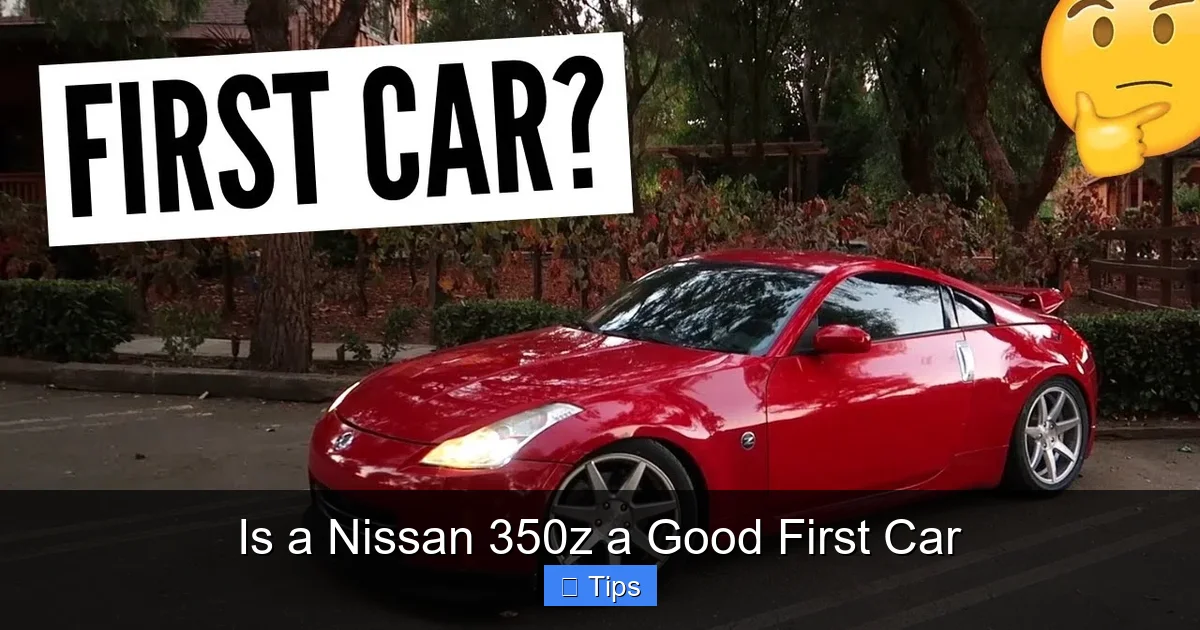
Now let’s address the elephant in the room: the 350Z is a two-seater with minimal cargo space. There’s no back seat, no folding rear seats, and a tiny trunk that holds maybe one small suitcase or a few grocery bags. If you plan to drive friends around, transport sports gear, or run weekend errands, you’ll quickly feel the limitations.
Interior Comfort and Features
The cabin is driver-centric, with supportive bucket seats and a low seating position that enhances the sporty feel. But it’s also cramped. Tall drivers may find headroom tight, and passengers—well, there aren’t any. Rear visibility is poor due to the sloping roofline and small rear window, making parking and lane changes more challenging.
Early models (2003–2006) have spartan interiors with basic audio systems and minimal tech. Later years (2007–2009) added features like Bluetooth, navigation, and upgraded sound systems—but even then, they’re outdated by today’s standards. No Apple CarPlay, Android Auto, or advanced infotainment here.
Climate control is manual on base trims, and rear defrost is absent—a minor annoyance in colder climates. Noise levels are also high; road and wind noise are noticeable at highway speeds, which can make long drives tiring.
Parking and Maneuverability
With a long hood and wide stance, the 350Z isn’t the easiest car to park in tight urban spaces. Its turning radius is decent but not exceptional, and the lack of parking sensors or a rearview camera (standard on most new cars) means you’ll rely heavily on mirrors and judgment—skills new drivers are still developing.
Parallel parking? Possible, but stressful. Backing out of a crowded lot? You’ll need to crane your neck. These aren’t dealbreakers, but they add friction to everyday driving that more practical cars eliminate.
Safety Considerations
Visual guide about Is a Nissan 350z a Good First Car
Image source: eskipaper.com
Safety should be a top priority for any first car—and here, the 350Z shows its age.
Crash Test Ratings and Structural Integrity
The 350Z earned acceptable to good ratings in NHTSA crash tests when it was new, with four stars for frontal crash and five stars for side impact (for driver). However, these tests were conducted over a decade ago using older protocols. Modern cars benefit from stronger materials, better crumple zones, and advanced safety engineering that simply didn’t exist in the early 2000s.
More importantly, the 350Z lacks nearly all the active safety features now considered standard:
– No automatic emergency braking
– No lane departure warning
– No blind-spot monitoring
– No adaptive cruise control
– No rear cross-traffic alert
These systems act as a safety net for inexperienced drivers, helping prevent common mistakes like rear-end collisions or drifting out of lanes. Without them, you’re relying entirely on your own awareness and reaction time—which, let’s be honest, isn’t always perfect when you’re still learning.
Visibility and Blind Spots
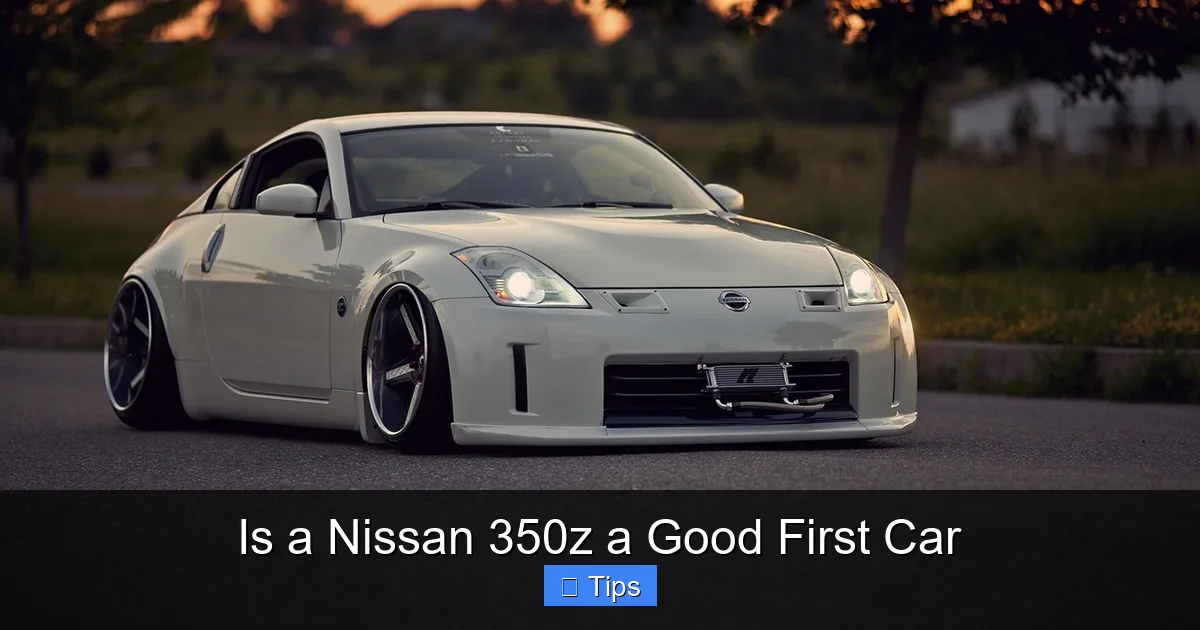
The 350Z’s design prioritizes aerodynamics and style over visibility. Thick A-pillars obstruct side views, and the rear window is small, creating significant blind spots. Changing lanes requires extra caution, especially in heavy traffic.
Additionally, the car sits low to the ground, which can make it harder to see over trucks or SUVs at intersections. This isn’t unique to the 350Z—many sports cars share this trait—but it’s worth noting for new drivers who may not yet anticipate these challenges.
Who Might Actually Benefit from a 350Z as a First Car?
Despite the drawbacks, there are scenarios where the 350Z could work as a first car—if you’re realistic about the trade-offs.
The Driving Enthusiast
If you’re passionate about cars, love working on engines, and view driving as a hobby—not just transportation—the 350Z can be incredibly rewarding. It teaches car control, mechanical sympathy, and the joy of driving analog. Many professional drivers and mechanics started with similar cars because they forced them to learn quickly.
Just be prepared to invest time (and money) into maintenance, and consider taking a defensive driving course to build confidence.
The Second Driver or Weekend Car
If you already have access to a practical family car for daily use, the 350Z could serve as a fun weekend or hobby vehicle. This setup lets you enjoy the driving experience without sacrificing utility during the week.
Budget-Conscious Buyers Who Do Their Homework
Some buyers find well-maintained, low-mileage 350Zs for under $12,000. If you’re mechanically inclined (or have a trusted mechanic), you can keep costs down by doing basic maintenance yourself. Just avoid modified examples—they often hide underlying issues and increase insurance premiums.
Better Alternatives for First-Time Buyers
Before committing to a 350Z, consider these more balanced options that offer sporty driving without the extreme compromises:
– **Honda Civic Si**: Affordable, reliable, fuel-efficient, and available with a manual. Offers back seats and decent cargo space.
– **Mazda MX-5 Miata**: Even smaller than the 350Z, but incredibly fun, easy to drive, and cheaper to insure and maintain. Great for learning car control.
– **Subaru WRX**: All-wheel drive adds confidence in bad weather, and it’s more practical with four doors and a usable back seat.
– **Toyota 86 / Subaru BRZ**: Modern rear-wheel-drive coupes with better safety features, fuel economy, and reliability than the 350Z.
These cars deliver much of the driving excitement with far fewer headaches—making them smarter choices for most new drivers.
Final Verdict: Should You Buy a Nissan 350Z as Your First Car?
So, is a Nissan 350Z a good first car? For the average new driver—the answer is likely no. It’s expensive to insure and maintain, impractical for daily life, and lacks the safety nets modern drivers rely on. Its performance traits, while thrilling, can be overwhelming for someone still mastering basic car control.
But if you’re a dedicated driving enthusiast with a solid support system (a knowledgeable friend, a good mechanic, and a realistic budget), the 350Z can be a memorable and rewarding first car. Just go in with your eyes wide open.
Remember: your first car doesn’t have to be your dream car. It just needs to get you from point A to point B safely, reliably, and affordably—while helping you build the skills and confidence to eventually earn that dream machine.
Frequently Asked Questions
Is the Nissan 350Z reliable for a first-time buyer?
The 350Z is generally reliable if well-maintained, but its high-performance components wear faster than economy cars. New drivers may struggle with unexpected repair costs if they’re not prepared for regular upkeep.
How much does it cost to insure a Nissan 350Z for a new driver?
Insurance for a 350Z can cost $250–$400+ per month for a young or new driver, significantly more than for sedans or hatchbacks due to its sporty image and higher risk profile.
Can a beginner learn to drive manual in a 350Z?
Yes, but it’s challenging. The 350Z’s clutch is firm and the engine has strong low-end torque, which can make smooth takeoffs difficult for beginners. A less powerful manual car is usually a better learning platform.
Does the 350Z have airbags and basic safety features?
Yes, it has dual front airbags and side airbags (on later models), along with ABS. However, it lacks modern driver-assist technologies like automatic braking or lane-keeping aid.
What’s the average fuel economy of a Nissan 350Z?
The 350Z averages about 17 mpg in the city and 24 mpg on the highway with a manual transmission—decent for a V6 sports car but costly for daily commuting.
Are there any Nissan 350Z models better suited for first-time owners?
Later models (2007–2009) have slightly better interiors and features, but all share the same core traits. The base coupe (non-Nismo) is the most budget-friendly and least modified, making it a slightly better choice for newcomers.

At CarLegit, we believe information should be clear, factual, and genuinely helpful. That’s why every guide, review, and update on our website is created with care, research, and a strong focus on user experience.