
Gap insurance can be a smart financial safety net for used car buyers—especially if you’re financing with a small down payment or rolling negative equity into a new loan. However, it’s not always necessary, and its value depends on your car’s depreciation rate, loan terms, and personal financial situation.
In This Article
- 1 Key Takeaways
- 2 📑 Table of Contents
- 3 Is Gap Insurance Worth It on a Used Car? A Complete Guide
- 4 What Is Gap Insurance and How Does It Work?
- 5 Why Depreciation Makes Gap Insurance Important for Used Cars
- 6 When Is Gap Insurance Worth It for a Used Car?
- 7 When Might Gap Insurance Not Be Worth It?
- 8 How Much Does Gap Insurance Cost for a Used Car?
- 9 Tips for Deciding If Gap Insurance Is Right for You
- 10 Final Thoughts: Is Gap Insurance Worth It on a Used Car?
- 11 Frequently Asked Questions
- 11.1 What exactly does gap insurance cover?
- 11.2 Can I buy gap insurance after purchasing a used car?
- 11.3 Does gap insurance cover leased used cars?
- 11.4 Is gap insurance refundable if I pay off my loan early?
- 11.5 Can I have gap insurance with a high-mileage used car?
- 11.6 What happens if I sell my car before the loan is paid off?
Key Takeaways
- Gap insurance covers the “gap” between your car’s actual cash value and what you owe on your loan if the vehicle is totaled or stolen. This is especially useful for used cars that lose value quickly.
- It’s most beneficial for buyers with low down payments, long loan terms, or who roll over negative equity from a previous vehicle. These factors increase the risk of owing more than the car is worth.
- Gap insurance is often included in lease agreements but usually optional for financed used cars. Always ask your lender or dealer if it’s offered.
- You can typically cancel gap insurance once your loan balance drops below the car’s value. This helps avoid paying for unnecessary coverage.
- Not all used cars need gap insurance—especially older models with slower depreciation. Evaluate your car’s make, model, and market value before deciding.
- Gap insurance is usually cheaper when purchased through your lender, but third-party providers may offer better rates. Shop around to compare costs and terms.
- Always read the fine print—some policies have exclusions or limitations. Know what’s covered and what’s not before signing up.
📑 Table of Contents
- Is Gap Insurance Worth It on a Used Car? A Complete Guide
- What Is Gap Insurance and How Does It Work?
- Why Depreciation Makes Gap Insurance Important for Used Cars
- When Is Gap Insurance Worth It for a Used Car?
- When Might Gap Insurance Not Be Worth It?
- How Much Does Gap Insurance Cost for a Used Car?
- Tips for Deciding If Gap Insurance Is Right for You
- Final Thoughts: Is Gap Insurance Worth It on a Used Car?
Is Gap Insurance Worth It on a Used Car? A Complete Guide
Buying a used car can be a smart financial move. You avoid the steep depreciation that hits new vehicles in their first few years, and you often get more car for your money. But even though you’re saving upfront, there are still risks—especially if you’re financing the purchase. One of the biggest concerns? What happens if your car is totaled or stolen before you’ve paid off the loan?
That’s where gap insurance comes in. It’s designed to protect you from owing money on a car you no longer have. But is gap insurance worth it on a used car? The answer isn’t always straightforward. It depends on your loan terms, how much you’re putting down, the car’s depreciation rate, and your personal financial situation.
In this guide, we’ll break down everything you need to know about gap insurance for used cars. We’ll explain how it works, when it makes sense, and when you might be better off skipping it. By the end, you’ll have the tools to decide whether gap insurance is a smart investment for your next used car purchase.
What Is Gap Insurance and How Does It Work?
Visual guide about Is Gap Insurance Worth It on a Used Car
Image source: exoticcarhacks.com
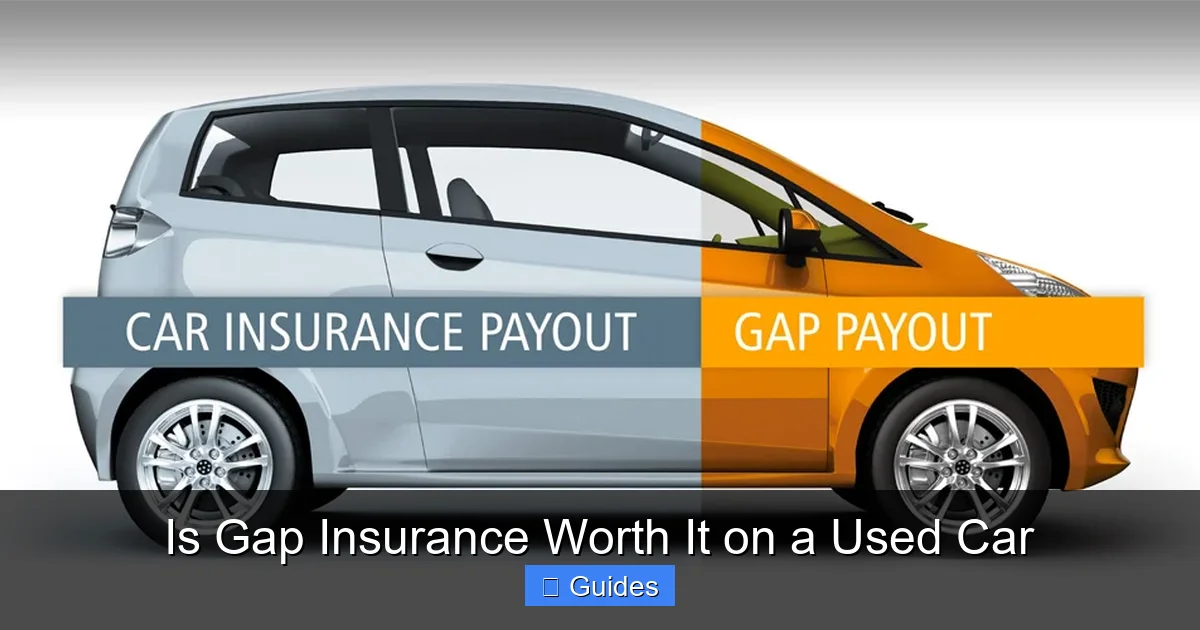
Gap insurance—short for Guaranteed Asset Protection insurance—is a type of coverage that pays the difference between what your car is worth and what you still owe on your loan or lease if the vehicle is declared a total loss. This “gap” can be significant, especially in the early years of ownership when depreciation is steep.
Let’s say you buy a used car for $25,000 with a $2,000 down payment and finance the remaining $23,000 over five years. A year later, the car is totaled in an accident. At that point, the car might only be worth $18,000 according to your auto insurance company’s valuation. Your standard auto insurance will pay you $18,000—the actual cash value (ACV) of the car. But you still owe $21,000 on your loan. That leaves you with a $3,000 gap.
That’s where gap insurance steps in. If you have it, the policy will cover that $3,000 difference, so you’re not stuck paying out of pocket. Without it, you’d have to come up with the extra money yourself—or worse, default on the loan.
How Gap Insurance Differs from Standard Auto Insurance
It’s important to understand that gap insurance doesn’t replace your regular auto insurance. Instead, it works alongside it. Your standard policy covers damage, theft, and liability, but it only pays the car’s current market value—not what you owe. Gap insurance fills in that financial hole.
Think of it like a safety net. Your auto insurance handles the claim and pays the ACV. Gap insurance then kicks in to cover the remaining loan balance, up to the policy limit. This can save you thousands of dollars in a worst-case scenario.
When Does Gap Insurance Pay Out?
Gap insurance only pays out under specific conditions:
- The vehicle is declared a total loss (totaled) by your auto insurer.
- The car is stolen and not recovered.
- Your loan or lease balance exceeds the car’s ACV at the time of the loss.
It does not cover mechanical failures, regular wear and tear, or damage that doesn’t result in a total loss. Also, most policies require that you have comprehensive and collision coverage on your standard auto policy—gap insurance won’t work without it.
Why Depreciation Makes Gap Insurance Important for Used Cars
Visual guide about Is Gap Insurance Worth It on a Used Car
Image source: oremtoyota.com
Depreciation is the silent killer of car value. Even used cars lose value over time, and some models depreciate faster than others. This is where gap insurance becomes especially relevant for used car buyers.
How Fast Do Used Cars Lose Value?
While new cars can lose 20–30% of their value in the first year, used cars still depreciate—just at a slower rate. On average, a used car loses about 15–20% of its value each year for the first few years. Luxury brands, high-mileage vehicles, and models with poor reliability ratings tend to drop in value faster.
For example, a three-year-old SUV that originally sold for $35,000 might now be worth $22,000. If you financed $25,000 to buy it, you’re already upside-down—owing more than the car is worth. If it’s totaled six months later, the gap could be even larger.
The Risk of Being “Upside-Down” on Your Loan
Being “upside-down” or “underwater” means you owe more on your car loan than the vehicle is worth. This is common with used cars, especially if you:
- Made a small down payment (less than 10–20%).
- Have a long loan term (60 months or more).
- Rolled negative equity from a previous car into the new loan.
- Bought a car with high mileage or known reliability issues.
If your car is totaled while you’re upside-down, you’re responsible for paying the difference unless you have gap insurance. That’s why understanding your loan-to-value ratio is crucial.
Example: The Real Cost of Being Underwater
Let’s look at a real-world scenario. Maria buys a used 2020 Honda Accord for $22,000. She puts down $1,500 and finances $20,500 over 60 months. Six months later, the car is totaled in a flood. Her insurance company values the car at $18,500 based on its condition and market data.
Maria’s standard auto insurance pays $18,500. But she still owes $19,800 on her loan. That leaves a gap of $1,300. Without gap insurance, Maria has to pay that amount out of pocket. With gap insurance, the policy covers it—freeing her from financial stress during an already difficult time.
When Is Gap Insurance Worth It for a Used Car?
Visual guide about Is Gap Insurance Worth It on a Used Car
Image source: lazyinsure.com
Gap insurance isn’t always necessary. But in certain situations, it can be a lifesaver. Here’s when it’s most likely worth the cost.
You Made a Small Down Payment
If you put less than 10–20% down on your used car, you’re more likely to be upside-down early in the loan. A small down payment means you’re financing a larger portion of the car’s value, increasing the risk of owing more than it’s worth.
For example, putting $1,000 down on a $20,000 car means you’re financing 95% of the purchase price. Even a modest depreciation of 15% in the first year could leave you underwater.
You Have a Long Loan Term
Longer loan terms (60, 72, or even 84 months) mean you’re paying off the loan slowly while the car loses value quickly. This mismatch increases the chance of being underwater for a significant portion of the loan.
A 72-month loan might seem manageable with lower monthly payments, but it also means you’ll owe more than the car is worth for years. Gap insurance can protect you during that vulnerable period.
You Rolled Over Negative Equity
If you traded in a car you still owed money on and rolled that negative equity into your new loan, you started your financing already underwater. This is a red flag for needing gap insurance.
Say you owed $5,000 more than your trade-in was worth. You roll that $5,000 into a new $25,000 loan, so you’re really financing $30,000 for a $25,000 car. Without gap insurance, you’re at high risk of owing more than the car’s value if it’s totaled.
You’re Buying a High-Depreciation Vehicle
Some used cars lose value faster than others. Luxury brands (like BMW, Mercedes, or Cadillac), electric vehicles (which can depreciate quickly due to battery concerns), and models with poor resale value (like某些 domestic brands or discontinued models) are more likely to create a gap.
Research the car’s depreciation rate before buying. Websites like Kelley Blue Book (KBB) and Edmunds provide resale value estimates that can help you assess risk.
You’re Financing Through a Dealership
Dealerships often offer gap insurance as an add-on during the financing process. While convenient, these policies can be more expensive than third-party options. Still, if you’re already at risk of being underwater, the peace of mind may be worth the cost.
Just be sure to compare prices. Some credit unions and insurance companies offer standalone gap insurance at lower rates.
When Might Gap Insurance Not Be Worth It?
Gap insurance isn’t always necessary. In some cases, it’s an unnecessary expense. Here’s when you might skip it.
You Made a Large Down Payment
If you put 20% or more down, you’re less likely to be upside-down—even with depreciation. A larger down payment reduces your loan balance and gives you more equity from day one.
For example, putting $5,000 down on a $25,000 car means you’re only financing $20,000. Even with 15% depreciation in the first year, you’d still owe less than the car is worth.
You Have a Short Loan Term
Shorter loan terms (36 or 48 months) mean you’re paying off the loan faster than the car is depreciating. This reduces the risk of being underwater.
If you can afford higher monthly payments, a shorter term not only saves on interest but also lowers the need for gap insurance.
You’re Buying an Older, Low-Depreciation Car
Older used cars—especially those over 5 years old—tend to depreciate more slowly. Once a car has already lost most of its value, the gap between loan balance and market value is smaller.
For example, a 7-year-old Toyota Camry with 80,000 miles might only lose 5–10% of its value per year. If you finance it responsibly, you’re less likely to owe more than it’s worth.
You Can Afford to Pay the Gap Out of Pocket
If you have emergency savings or can comfortably cover a few thousand dollars in unexpected expenses, gap insurance might not be necessary. It’s a form of risk management—if you can absorb the risk, you might not need the coverage.
However, consider the emotional and financial stress of losing a car and still owing money. For many, the peace of mind is worth the cost.
Your Loan Balance Is Already Below the Car’s Value
Once you’ve paid down your loan so that you owe less than the car is worth, gap insurance becomes unnecessary. At that point, you have equity in the vehicle, and a total loss wouldn’t leave you with a financial gap.
Most gap insurance policies allow you to cancel once your loan balance drops below the car’s ACV. Check your policy terms to see if this option is available.
How Much Does Gap Insurance Cost for a Used Car?
The cost of gap insurance varies depending on the provider, your loan amount, and the car’s value. On average, it ranges from $200 to $700 for the entire loan term—often added to your monthly payment or paid upfront.
Factors That Affect the Cost
- Loan amount: Higher loan balances typically mean higher gap insurance premiums.
- Car type: Luxury or high-depreciation vehicles may cost more to insure.
- Provider: Dealerships often charge more than credit unions or independent insurers.
- Loan term: Longer terms may increase the cost due to higher risk exposure.
Where to Buy Gap Insurance
You can purchase gap insurance from several sources:
- Dealerships: Convenient but often the most expensive option.
- Auto lenders: Banks and credit unions may offer competitive rates.
- Insurance companies: Some insurers sell standalone gap policies.
- Third-party providers: Companies like Endurance or Protect My Car offer gap coverage.
Always compare quotes before deciding. A $500 policy from a dealer might cost $300 from a credit union—saving you $200 over the life of the loan.
Can You Cancel Gap Insurance?
Yes—most gap insurance policies allow cancellation once your loan balance is less than the car’s value. This usually happens after 2–3 years, depending on your loan terms and depreciation.
Check your policy for cancellation terms. Some require a written request, and you may need to provide proof of the car’s current value. Canceling early can save you money on unnecessary coverage.
Tips for Deciding If Gap Insurance Is Right for You
Making the right choice about gap insurance requires a bit of research and self-assessment. Here are some practical tips to help you decide.
Calculate Your Loan-to-Value Ratio
Your loan-to-value (LTV) ratio compares how much you owe to how much the car is worth. A high LTV (above 100%) means you’re upside-down.
To calculate it:
- Find your current loan balance (check your lender’s website or statement).
- Estimate your car’s current market value (use KBB or Edmunds).
- Divide the loan balance by the car’s value.
For example: $22,000 loan ÷ $20,000 car value = 1.1 (or 110% LTV). You’re 10% underwater.
If your LTV is above 100%, gap insurance is worth considering.
Review Your Loan Terms
Look at your down payment, interest rate, and loan term. A small down payment, high interest, or long term increases your risk. If any of these apply, gap insurance may be a smart move.
Research the Car’s Depreciation
Use tools like KBB’s “5-Year Cost to Own” or Edmunds’ True Cost to Own to see how much the car is expected to lose in value. High depreciation = higher risk = stronger case for gap insurance.
Ask About Refunds and Cancellation
Before buying, ask if the policy is refundable and under what conditions you can cancel. A flexible policy gives you more control over your coverage.
Don’t Assume It’s Included
Gap insurance is not automatically included in most used car loans. You usually have to opt in. Always ask your lender or dealer if it’s offered and what it costs.
Final Thoughts: Is Gap Insurance Worth It on a Used Car?
So, is gap insurance worth it on a used car? The answer depends on your situation. If you’re financing with a small down payment, have a long loan term, or are rolling over negative equity, gap insurance can provide valuable protection against financial loss.
It’s not a one-size-fits-all solution. For buyers with large down payments, short loan terms, or older, stable-value vehicles, it may be an unnecessary expense. The key is to assess your risk, understand your loan terms, and compare costs.
Remember, gap insurance isn’t about avoiding responsibility—it’s about managing risk. It’s a tool to protect your financial stability in the event of a total loss. If the cost fits your budget and the peace of mind is worth it, it could be one of the smartest decisions you make when buying a used car.
Take the time to evaluate your options, read the fine print, and make an informed choice. Your future self will thank you.
Frequently Asked Questions
What exactly does gap insurance cover?
Gap insurance covers the difference between your car’s actual cash value and the amount you still owe on your loan or lease if the vehicle is totaled or stolen. It only pays out after your standard auto insurance has settled the claim.
Can I buy gap insurance after purchasing a used car?
It depends on the provider. Some lenders and insurers allow you to add gap insurance within a short window after purchase (usually 30–60 days), but many require it to be purchased at the time of financing. Check with your lender or insurer.
Does gap insurance cover leased used cars?
Yes, gap insurance is often included in lease agreements for both new and used cars. However, if it’s not, you can usually purchase it separately. Always confirm with your leasing company.
Is gap insurance refundable if I pay off my loan early?
Some policies are refundable, especially if you pay off your loan before the term ends. Check your policy terms—many allow partial refunds for unused coverage, but there may be administrative fees.
Can I have gap insurance with a high-mileage used car?
Yes, but some providers may limit coverage or charge higher premiums for high-mileage vehicles. Be sure to disclose the mileage when applying and compare quotes from multiple providers.
What happens if I sell my car before the loan is paid off?
If you sell the car and pay off the loan, gap insurance becomes unnecessary. Most policies allow you to cancel and receive a refund for the unused portion, though terms vary by provider.

At CarLegit, we believe information should be clear, factual, and genuinely helpful. That’s why every guide, review, and update on our website is created with care, research, and a strong focus on user experience.