

Using foam on a car polisher can deliver excellent results when done right. It’s ideal for beginners and pros alike, offering control, safety, and versatility across paint correction stages. But is it always the best option? Let’s find out.
In This Article
- 1 Key Takeaways
- 2 📑 Table of Contents
- 3 Is It Best to Use Foam on Car Polisher?
- 4 Why Foam Pads Are a Popular Choice
- 5 Types of Foam Pads and Their Uses
- 6 How to Use Foam Pads Correctly
- 7 Pros and Cons of Using Foam on a Car Polisher
- 8 When to Use Foam vs. Other Pads
- 9 Tips for Getting the Best Results with Foam
- 10 Conclusion
- 11 Frequently Asked Questions
Key Takeaways
- Foam pads are beginner-friendly: They offer forgiveness and reduce the risk of burning paint, making them perfect for those new to machine polishing.
- Great for light to moderate correction: Foam excels at removing light swirls, oxidation, and water spots without aggressive cutting.
- Available in multiple densities: Soft, medium, and firm foams allow you to match the pad to your polish and paint condition.
- Less heat buildup: Foam generates less friction than wool or microfiber, protecting delicate clear coats.
- Easy to clean and maintain: Most foam pads can be washed and reused multiple times with proper care.
- Not ideal for heavy defects: For deep scratches or severe oxidation, more aggressive pads like microfiber or wool may be needed.
- Pair with the right polish: Foam works best with diminishing abrasives that break down as they work.
📑 Table of Contents
Is It Best to Use Foam on Car Polisher?
So, you’ve got a car polisher in your garage, and you’re ready to give your ride that showroom shine. But now you’re stuck on a big question: Should I use a foam pad? It’s a common dilemma, especially for first-timers. You’ve probably seen YouTube videos with people using all kinds of pads—foam, microfiber, wool—and you’re wondering which one actually works best.
Let’s be honest: foam pads are everywhere. They’re affordable, widely available, and come in all shapes and sizes. But popularity doesn’t always mean superiority. The real answer depends on your car’s paint condition, your skill level, and what kind of finish you’re after.
In this guide, we’ll dive deep into the world of foam pads for car polishers. We’ll explore why foam is a favorite among detailers, when it shines (and when it doesn’t), and how to use it like a pro. Whether you’re buffing out light swirls or prepping for a ceramic coating, this article will help you decide if foam is the right tool for the job.
Why Foam Pads Are a Popular Choice
Visual guide about Is It Best to Use Foam on Car Polisher
Image source: garagespot.com
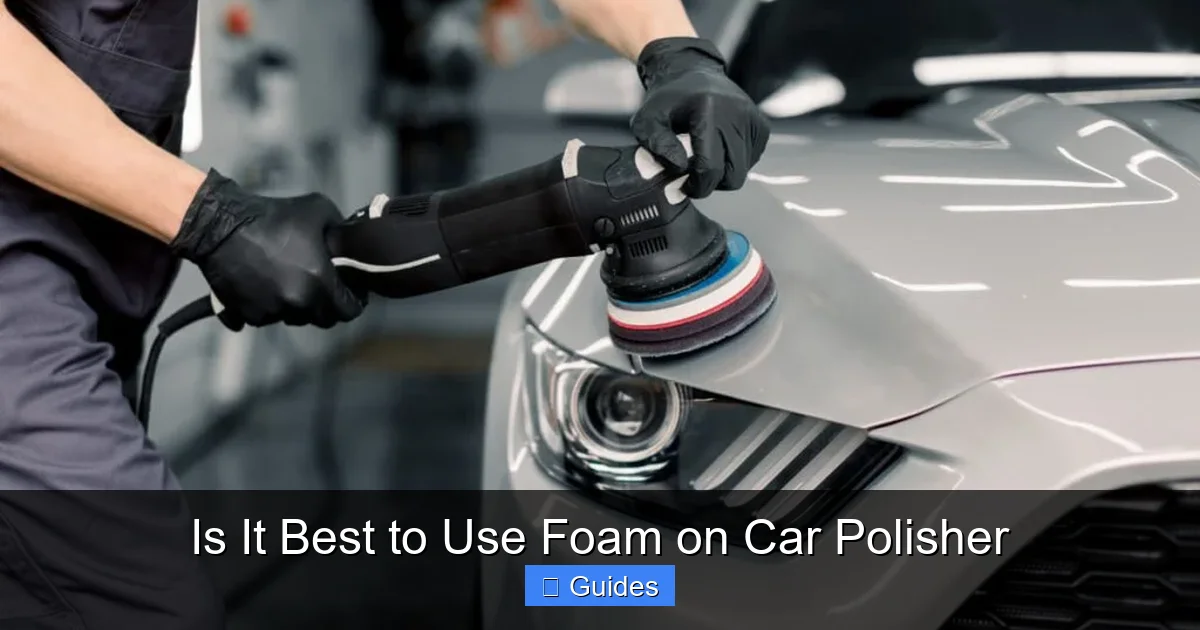
Foam pads have become the go-to choice for many car enthusiasts and professional detailers—and for good reason. They strike a balance between performance, safety, and ease of use that few other materials can match.
One of the biggest advantages of foam is its forgiving nature. Unlike wool or microfiber pads, which can cut aggressively and generate a lot of heat, foam pads are softer and more controlled. This makes them ideal for beginners who are still learning the ropes of machine polishing. If you accidentally press too hard or move too slowly, a foam pad is less likely to burn through your clear coat.
Another reason foam is so popular is its versatility. You can find foam pads in a wide range of densities—soft, medium, and firm—each designed for different tasks. Soft foams are great for finishing and applying waxes or sealants. Medium foams work well for light polishing and paint correction. Firm foams can handle heavier cutting when paired with the right compound.
Foam also tends to hold polish better than some alternatives. The porous structure absorbs and releases polish evenly, which helps maintain consistent cutting action across the pad’s surface. This means you get more uniform results with less effort.
And let’s not forget about cleanup. Foam pads are relatively easy to clean with mild soap and water. Many can be reused multiple times, which makes them cost-effective in the long run. Just make sure to rinse them thoroughly after each use and let them air dry to prevent mold or breakdown.
Foam vs. Other Pad Materials
To really understand where foam stands, it helps to compare it to other common pad materials.
Wool pads, for example, are known for their aggressive cutting power. They’re often used in industrial settings or for heavy correction on older vehicles. But wool generates a lot of heat and can be unforgiving—especially on modern, thin clear coats. If you’re not careful, you can easily create holograms or burn the paint.
Microfiber pads sit somewhere in the middle. They offer more cutting ability than foam but are still safer than wool. They’re great for moderate correction and can handle deeper swirls. However, they tend to wear out faster and can be harder to clean.
Then there are hybrid pads, which combine materials—like foam with microfiber strands—to get the best of both worlds. These are gaining popularity, but they’re often more expensive and may not be necessary for everyday use.
So where does foam fit in? It’s the safest, most user-friendly option for most car owners. It won’t give you the fastest correction on heavily damaged paint, but it’s perfect for maintaining a clean, glossy finish on a regular basis.
Types of Foam Pads and Their Uses
Visual guide about Is It Best to Use Foam on Car Polisher
Image source: diy-ideas.oss-accelerate.aliyuncs.com
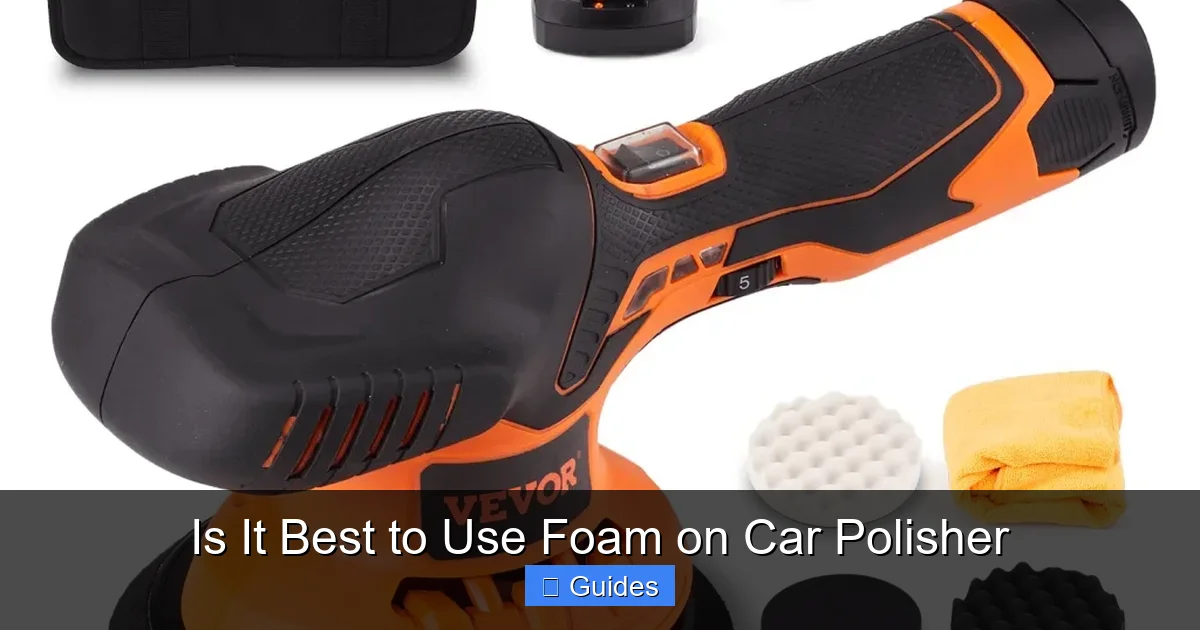
Not all foam pads are created equal. In fact, the type of foam you choose can make or break your polishing results. Let’s break down the main categories and what each one is best suited for.
Soft Foam Pads
Soft foam pads are the gentlest option available. They’re typically made from closed-cell foam, which means they don’t absorb as much polish but provide a very smooth, even finish. These pads are ideal for final polishing steps, applying waxes, sealants, or ceramic coatings.
Because they generate minimal heat and have little cutting ability, soft foams are perfect for delicate paints or cars that are already in good condition. Think of them as the “finishing touch” pad—great for enhancing gloss and depth without risking damage.
A common use case is after you’ve corrected the paint with a more aggressive pad. You’ll switch to a soft foam with a fine polish to refine the finish and remove any micro-marring left behind. This step is crucial if you’re planning to apply a ceramic coating, as any imperfections will show through.
Medium Foam Pads
Medium-density foam pads are the workhorses of the polishing world. They offer a good balance between cutting power and safety, making them suitable for a wide range of tasks. These pads are often used with light to medium polishes to remove swirl marks, light oxidation, and water spots.
They’re a great starting point for beginners because they’re forgiving but still effective. If you’re unsure about your paint’s condition or your own skill level, a medium foam pad is a safe bet.
Many detailers keep a set of medium foams on hand for routine maintenance. For example, if you wash your car weekly and notice some light haze or minor scratches, a quick pass with a medium foam and a fine polish can restore the shine without needing heavy correction.
Firm Foam Pads
Firm foam pads are the most aggressive of the foam family. They’re made from open-cell foam, which allows them to hold more polish and deliver more cutting action. These pads are used with heavier compounds to tackle moderate to severe defects like deep swirls, scratches, and oxidation.
While still safer than wool or microfiber, firm foams require more skill and caution. They can generate more heat and may leave behind micro-marring if not followed up with a finishing step.
Firm foams are best used on older vehicles or cars with thicker clear coats. If you’re dealing with a brand-new car with thin paint, you might want to skip the firm foam unless absolutely necessary.
Specialty Foam Pads
Beyond the standard densities, there are also specialty foam pads designed for specific tasks. For example:
– Finishing Foam Pads: Extra soft and fine, used with ultra-fine polishes for a mirror-like finish.
– Cutting Foam Pads: Firmer and more aggressive, often used with heavy compounds for deep correction.
– Hybrid Foam Pads: Combine foam with other materials (like microfiber) for enhanced performance.
– Foam Applicator Pads: Smaller, softer pads used for applying waxes, sealants, or coatings by hand or machine.
Choosing the right foam pad is all about matching the tool to the task. Don’t try to use a finishing pad for heavy correction—it won’t work. And don’t use a cutting pad for wax application—you’ll waste product and risk damage.
How to Use Foam Pads Correctly
Visual guide about Is It Best to Use Foam on Car Polisher
Image source: ourhometools.com
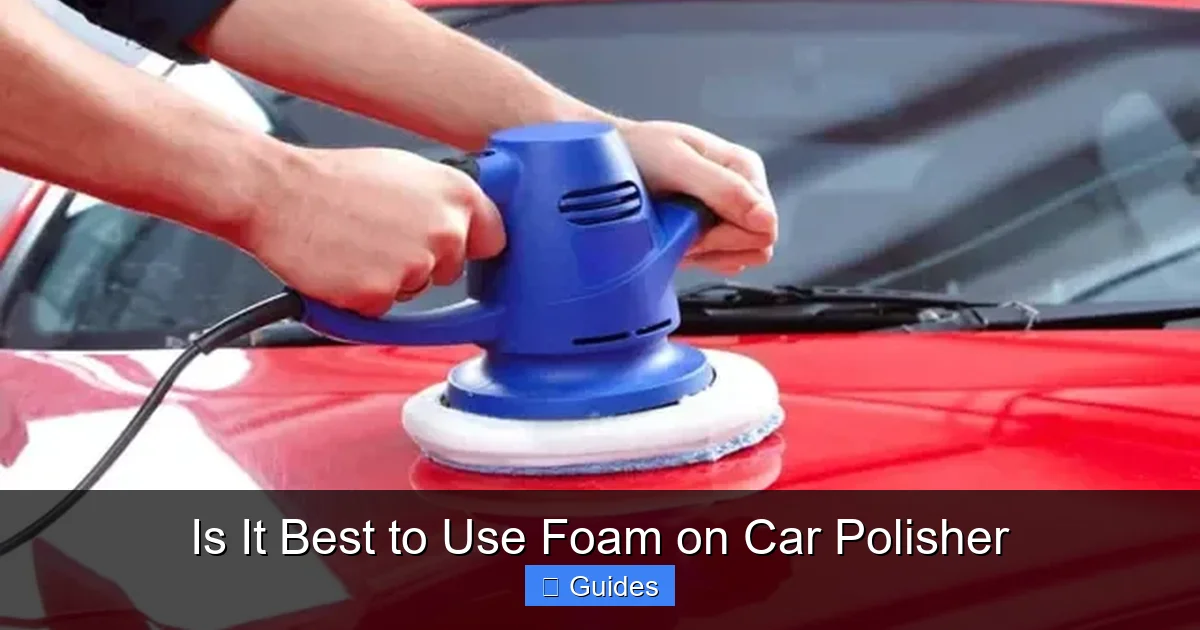
Using a foam pad on a car polisher isn’t just about slapping it on and going to town. There’s a right way—and a wrong way—to do it. Follow these steps to get the best results while protecting your paint.
Step 1: Choose the Right Pad and Polish
Start by assessing your car’s paint. Are there light swirls? Deep scratches? Oxidation? Your answer will determine which foam pad and polish to use.
For light defects, go with a medium foam pad and a fine polish. For heavier issues, use a firm foam with a cutting compound. Always pair your pad with a compatible polish—don’t use a heavy compound on a soft pad, or you’ll get poor results.
Step 2: Prep the Pad and Paint
Before you begin, make sure both the pad and the paint are clean. Wash and dry the car thoroughly to remove dirt and debris. Any particles left on the surface can cause scratches during polishing.
Next, prep the foam pad. If it’s new, fluff it up by hand to open the pores. If it’s been used, clean it and let it dry completely. A damp or dirty pad won’t hold polish properly.
Apply a small amount of polish to the pad—about the size of a quarter is usually enough. Don’t over-saturate it. You can always add more if needed.
Step 3: Set the Polisher Speed
Most dual-action (DA) polishers work best between 3,000 and 6,000 orbits per minute (OPM). Start on a lower speed (around 3,500 OPM) to work the polish into the paint, then increase to 4,500–5,500 OPM for correction.
Rotary polishers require more caution. Start at a low speed (around 1,200 RPM) and work your way up. Never use high speeds on thin or delicate paint.
Step 4: Work in Small Sections
Divide the car into manageable sections—like one panel at a time. Work in 2×2 foot areas for best control.
Hold the polisher flat against the surface and move it slowly in overlapping passes. Use light to medium pressure—let the polish and pad do the work. Don’t press down hard; that can cause uneven results or heat buildup.
Keep the pad moving at all times. Lingering in one spot can create swirls or burn the paint.
Step 5: Wipe and Inspect
After polishing a section, wipe it clean with a microfiber towel. Inspect the results under good lighting. If swirls or defects remain, you may need to repeat the process with a more aggressive pad or compound.
Once you’re satisfied, move on to the next section. Always work from the top down—roof, hood, fenders, doors, etc.—to avoid dripping polish on already-finished areas.
Step 6: Clean and Store the Pad
After use, rinse the foam pad thoroughly with warm water and a mild detergent. Squeeze out excess water and let it air dry completely. Store it in a clean, dry place to extend its life.
Never leave a used pad sitting with dried polish—it can harden and ruin the foam.
Pros and Cons of Using Foam on a Car Polisher
Like any tool, foam pads have their strengths and weaknesses. Let’s take a balanced look at what makes them great—and where they fall short.
Advantages of Foam Pads
– Beginner-Friendly: Foam pads are forgiving and reduce the risk of paint damage, making them ideal for those new to machine polishing.
– Versatile: Available in multiple densities for different tasks—from light finishing to moderate correction.
– Low Heat Generation: Foam creates less friction than wool or microfiber, protecting thin clear coats.
– Easy to Clean: Most foam pads can be washed and reused multiple times with proper care.
– Consistent Results: The even structure of foam helps distribute polish uniformly for smooth, predictable outcomes.
– Affordable: Foam pads are generally less expensive than microfiber or hybrid options.
Disadvantages of Foam Pads
– Limited Cutting Power: Foam isn’t ideal for deep scratches or severe oxidation. You’ll need more aggressive pads for heavy correction.
– Can Load Up: Foam pads can become clogged with polish residue, reducing effectiveness over time.
– Less Durable: While reusable, foam pads wear out faster than some alternatives, especially with heavy use.
– May Leave Micro-Marring: Firm foams, in particular, can leave fine scratches that require a follow-up polish to remove.
– Not Ideal for All Finishes: On very soft or ceramic-coated paints, even foam can be too aggressive if used incorrectly.
When to Use Foam vs. Other Pads
So, when should you reach for a foam pad—and when should you consider something else?
Use Foam When:
– You’re a beginner learning machine polishing.
– Your car has light to moderate swirls or water spots.
– You’re applying wax, sealant, or ceramic coating.
– You’re working on modern cars with thin clear coats.
– You want a safe, controlled polishing experience.
Consider Other Pads When:
– You’re dealing with deep scratches, heavy oxidation, or severe swirls (use microfiber or wool).
– You need fast correction on older, thicker paint (wool may be better).
– You’re a professional detailer working on high-end vehicles (hybrid pads offer precision).
– You’re polishing in hot conditions where heat buildup is a concern (microfiber may run cooler).
The key is to match the pad to the job. Don’t force a foam pad to do something it’s not designed for. And don’t avoid foam just because it’s “basic”—it’s often the perfect tool for the task.
Tips for Getting the Best Results with Foam
Even with the right pad, technique makes all the difference. Here are some pro tips to help you get flawless results every time.
Use the Right Polish
Foam pads work best with diminishing abrasives—polishes that start coarse and break down into finer particles as you work. These are safer and more effective on modern paints.
Avoid using heavy compounds with soft foams, or you’ll get poor cutting and wasted product.
Work in the Shade
Polishing in direct sunlight can cause the polish to dry too quickly, making it hard to work. It also increases the risk of heat buildup. Always work in a shaded or indoor area.
Keep the Pad Clean
Check your pad frequently during use. If it starts to look clogged or glazed, stop and clean it. You can use a pad cleaning brush or rinse it under water.
A clean pad performs better and lasts longer.
Don’t Rush
Polishing takes time. Rushing through sections can lead to missed spots, uneven results, or damage. Take your time and focus on one area at a time.
Follow Up with a Finishing Step
Even if you use a firm foam for correction, always follow up with a soft foam and fine polish to refine the finish. This removes micro-marring and enhances gloss.
Test on a Small Area First
If you’re unsure about your paint’s condition or the pad’s aggressiveness, test on a small, inconspicuous area first. This helps you avoid surprises.
Conclusion
So, is it best to use foam on a car polisher? The short answer is: yes—for most people and most situations.
Foam pads offer a safe, effective, and user-friendly way to polish your car. They’re perfect for beginners, great for maintenance, and versatile enough to handle a wide range of tasks. Whether you’re removing light swirls, applying wax, or prepping for a coating, foam can deliver excellent results when used correctly.
That said, foam isn’t a one-size-fits-all solution. For heavy correction, you may need to step up to microfiber or wool. And for ultra-fine finishing, specialty pads might be worth the investment.
But for the average car owner who wants a clean, shiny ride without the risk of damage, foam is hard to beat. It’s affordable, easy to use, and delivers consistent performance. Just remember to choose the right density, pair it with the right polish, and follow proper technique.
In the end, the best pad is the one that helps you achieve your goals safely and effectively. And for many, that pad is foam.
Frequently Asked Questions
Can I use a foam pad on a rotary polisher?
Yes, foam pads can be used on rotary polishers, but extra caution is needed. Rotary polishers generate more heat and can be less forgiving than dual-action models. Start at a low speed and use light pressure to avoid burning the paint.
How often should I clean my foam pad?
Clean your foam pad after every use. Rinse it thoroughly with water and mild soap to remove polish residue. Let it air dry completely before storing. Regular cleaning extends the pad’s life and ensures consistent performance.
Can I use the same foam pad for compounding and finishing?
It’s not recommended. Using the same pad for both cutting and finishing can transfer abrasive particles and reduce effectiveness. Use separate pads—one for compounding and one for finishing—to get the best results.
Do foam pads work on ceramic-coated cars?
Yes, but with caution. Use a soft or medium foam pad with a fine polish to maintain the coating. Avoid aggressive compounds or firm pads, as they can damage the ceramic layer.
How long do foam pads last?
With proper care, a foam pad can last 5–10 uses. However, this depends on the polish used, the condition of the paint, and how well the pad is cleaned. Replace the pad when it becomes hard, cracked, or loses its shape.
Can I use foam pads by hand?
Yes, foam applicator pads are designed for hand use and are great for applying waxes, sealants, and coatings. However, machine polishing with a foam pad on a polisher is far more effective for paint correction.

At CarLegit, we believe information should be clear, factual, and genuinely helpful. That’s why every guide, review, and update on our website is created with care, research, and a strong focus on user experience.