
Charging your Tesla at lower amps can reduce heat and stress on the battery, potentially extending its lifespan. However, it also means slower charging times, which may not suit everyone’s lifestyle. The best approach depends on your driving habits, charging setup, and long-term goals for battery health.
In This Article
- 1 Key Takeaways
- 2 📑 Table of Contents
- 3 Is It Better to Charge Tesla at Lower Amps?
- 4 Understanding Amps, Volts, and Charging Speed
- 5 Battery Health and the Impact of Charging Speed
- 6 Home Charging: Why Lower Amps Often Win
- 7 When Higher Amps Make Sense
- 8 Tips for Smart Charging Habits
- 9 Long-Term Battery Longevity: What the Data Shows
- 10 Conclusion: Finding Your Charging Sweet Spot
- 11 Frequently Asked Questions
Key Takeaways
- Lower amps reduce heat buildup: Slower charging generates less heat, which helps preserve battery health over time.
- Faster charging isn’t always better: High amperage can stress the battery, especially if used daily or in hot climates.
- Home charging favors lower amps: Overnight charging at 20–30 amps is ideal for daily use and battery longevity.
- Use higher amps strategically: Reserve fast charging (40+ amps) for road trips or when you need a quick top-up.
- Wall Connector settings matter: Adjust your Tesla Wall Connector to match your typical needs and electrical capacity.
- Battery management systems help: Tesla’s built-in systems protect the battery, but smart charging habits enhance their effectiveness.
- Balance convenience and care: The goal is to charge efficiently without sacrificing long-term battery performance.
📑 Table of Contents
- Is It Better to Charge Tesla at Lower Amps?
- Understanding Amps, Volts, and Charging Speed
- Battery Health and the Impact of Charging Speed
- Home Charging: Why Lower Amps Often Win
- When Higher Amps Make Sense
- Tips for Smart Charging Habits
- Long-Term Battery Longevity: What the Data Shows
- Conclusion: Finding Your Charging Sweet Spot
Is It Better to Charge Tesla at Lower Amps?
So you’ve got your Tesla—sleek, silent, and seriously fun to drive. But now you’re wondering: how should you charge it? Specifically, is it better to charge Tesla at lower amps? It’s a question that pops up a lot among new and experienced EV owners alike. After all, your car’s battery is its heart, and you want to keep it healthy for as long as possible.
Let’s be honest—charging an electric car isn’t as simple as plugging in your phone. There are amps, volts, kilowatts, and all sorts of technical terms that can make your head spin. But don’t worry. We’re going to break it all down in plain English. Whether you’re charging at home with a Wall Connector, using a standard outlet, or hitting up a Supercharger on a road trip, understanding amp levels can make a big difference in how your Tesla performs over time.
The short answer? Yes, charging at lower amps can be better—but not always. It depends on your situation. If you’re someone who mostly drives short distances and charges overnight, lower amps might be perfect. But if you’re constantly on the go and need a quick charge, higher amps might be more practical. The key is finding the right balance between convenience and battery care.
Understanding Amps, Volts, and Charging Speed
Visual guide about Is It Better to Charge Tesla at Lower Amps
Image source: lh5.googleusercontent.com
Before we dive into whether lower amps are better, let’s make sure we’re all on the same page about what “amps” actually means. In simple terms, amps (or amperes) measure the amount of electrical current flowing into your Tesla’s battery. The more amps, the faster the battery charges—up to a point.
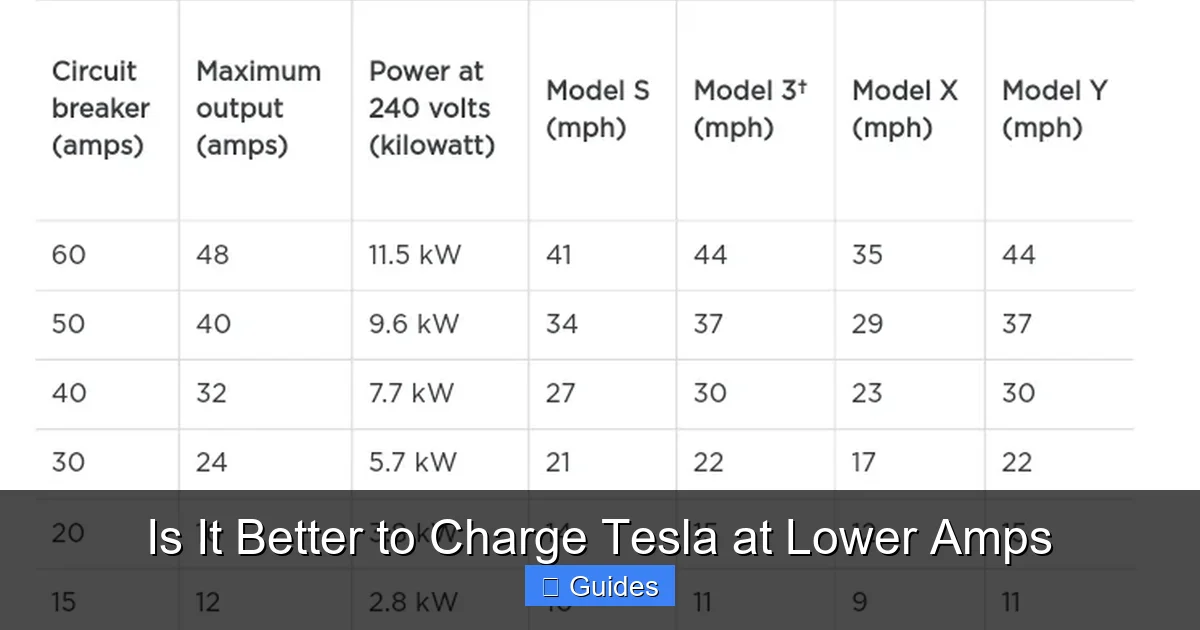
Think of it like water flowing through a hose. Amps are like the water pressure—the higher the pressure, the more water comes out per second. Volts, on the other hand, are like the size of the hose. Together, amps and volts determine the total power (measured in watts) that’s delivered to your car. For example, a 240-volt circuit delivering 30 amps provides 7,200 watts (or 7.2 kW) of power.
Most home charging setups for Tesla use a 240-volt circuit, which is why they’re called Level 2 chargers. A standard NEMA 14-50 outlet, often found in garages, can deliver up to 32 amps. Tesla’s Wall Connector can go even higher—up to 48 amps—if your electrical panel supports it. But just because you *can* charge at 48 amps doesn’t mean you always *should*.
How Amps Affect Charging Time
Let’s look at some real-world examples. Say you have a Tesla Model 3 with a 75 kWh battery and it’s at 20% charge. That means you need to add about 60 kWh to get it back to 80%—a common charging range to preserve battery health.
– At 20 amps (4.8 kW): It would take roughly 12.5 hours to add 60 kWh.
– At 32 amps (7.6 kW): That drops to about 7.9 hours.
– At 48 amps (11.5 kW): You’re looking at just over 5 hours.
So clearly, higher amps mean faster charging. But speed isn’t the only factor. Heat is a big one. When you charge quickly, the battery heats up. And heat is the enemy of lithium-ion batteries. Over time, excessive heat can degrade the battery, reducing its capacity and lifespan.
The Role of Voltage and Circuit Capacity
Voltage matters too. Most home EV chargers run on 240 volts, which is double the standard 120-volt household outlet. That’s why a 240-volt, 30-amp circuit can charge your Tesla much faster than a regular wall outlet.
But here’s the catch: your home’s electrical panel has a limited capacity. If you’re already running the AC, oven, and washing machine, adding a 48-amp charger might overload the system. That’s why many Tesla owners install a dedicated circuit for their Wall Connector—and often set it to a lower amp limit, like 30 or 32 amps, to stay safe and avoid tripping breakers.
Battery Health and the Impact of Charging Speed

Visual guide about Is It Better to Charge Tesla at Lower Amps
Image source: laney.co.uk
Now let’s talk about the heart of the matter: your Tesla’s battery. Lithium-ion batteries, like the ones in your phone or laptop, don’t like extreme conditions. High heat, deep discharges, and fast charging can all contribute to wear and tear over time.
When you charge at high amps, the battery cells heat up. This heat accelerates chemical reactions inside the battery, which can lead to degradation. Think of it like running a marathon at full speed every day—your body (or battery) will eventually wear out faster.
Studies and real-world data from Tesla owners show that frequent fast charging—especially at high amps—can reduce battery capacity over time. One analysis by Recurrent Auto found that Teslas charged primarily at Superchargers (which use very high amps) showed slightly faster degradation than those charged mostly at home at lower rates.
But here’s the good news: Tesla’s battery management system (BMS) is incredibly smart. It monitors temperature, voltage, and current in real time, and it adjusts charging speed to protect the battery. So even if you plug in at 48 amps, the car might slow down the charge if the battery gets too hot.
Heat: The Silent Battery Killer
Heat is the number one enemy of battery longevity. When you charge quickly, especially in hot weather, the battery temperature rises. If it gets too high, the BMS will reduce charging speed to cool things down. That’s why you might notice your Tesla charging slower on a scorching summer day—even if you’ve set it to high amps.
Charging at lower amps generates less heat. This gives the battery time to stay within a safe temperature range, reducing stress on the cells. Over thousands of charge cycles, this can make a noticeable difference in how long your battery lasts.
For example, if you charge at 20 amps overnight, the battery stays cool and charges gently. But if you come home from a long drive and plug in at 48 amps, the battery might already be warm from driving, and the fast charge adds more heat on top. That’s a double whammy.
Depth of Discharge and Charging Habits
Another factor is how low you let your battery get before charging. Letting it drop below 10% regularly can stress the battery. Similarly, charging to 100% every day isn’t ideal. Tesla recommends keeping your daily charge limit between 50% and 80% for regular use, and only charging to 100% when you need the extra range for a trip.
When you combine shallow discharges (like 30% to 70%) with lower amp charging, you’re giving your battery the gentlest possible treatment. This is the gold standard for long-term health.
Home Charging: Why Lower Amps Often Win
Visual guide about Is It Better to Charge Tesla at Lower Amps
Image source: i.ytimg.com
If you’re charging at home—which most Tesla owners do—lower amps are often the smarter choice. Here’s why.
First, you probably don’t need ultra-fast charging at home. Unless you’re driving 200+ miles every day, a 20- to 30-amp charge overnight is more than enough to top up your battery. Most people drive less than 40 miles a day, so even a 20-amp charge (about 5 miles of range per hour) will fully recharge your car while you sleep.
Second, home charging is consistent. You’re not rushing. You’re not stressed about finding a charger. You can afford to take your time. And that’s exactly what your battery wants.
Setting Up Your Wall Connector for Optimal Charging
The Tesla Wall Connector is one of the best home charging options. It’s sleek, reliable, and can deliver up to 48 amps. But you don’t have to max it out.
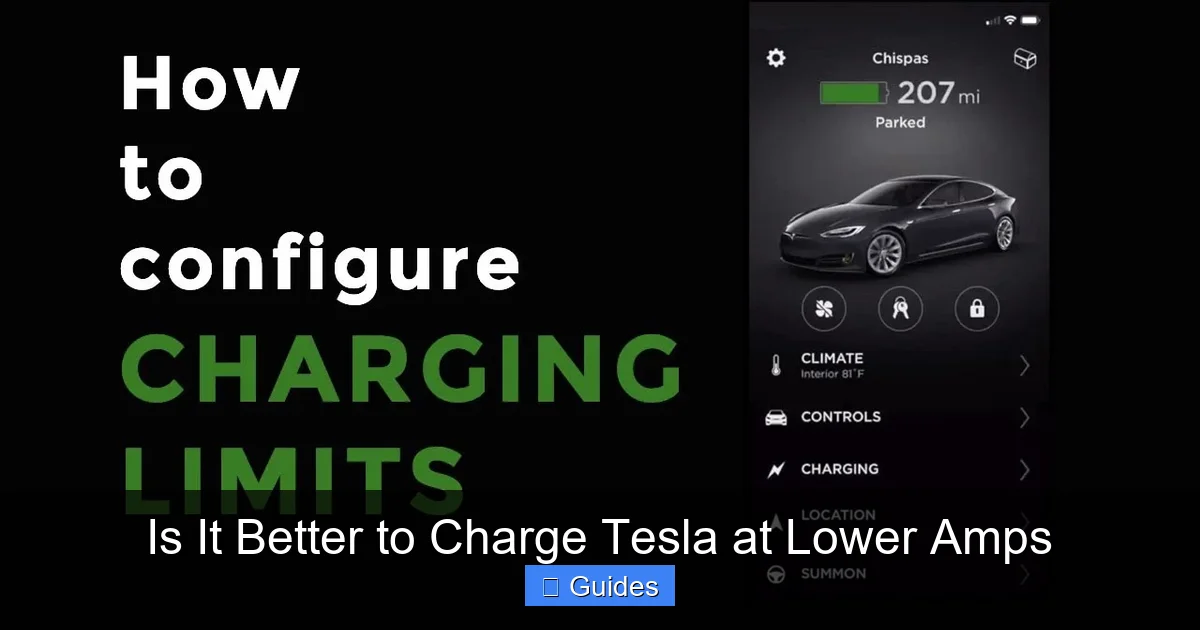
When you install the Wall Connector, you can set the maximum amp draw in the Tesla app or on the device itself. For most homes, 30 or 32 amps is a sweet spot. It’s fast enough to recharge overnight, but not so fast that it generates excess heat.
If your electrical panel can’t handle 32 amps, don’t sweat it. A 20- or 24-amp setting still works great. In fact, some experts recommend 20 amps as the ideal for daily charging. It’s gentle on the battery, reduces heat, and is plenty fast for overnight use.
Using a NEMA 14-50 Outlet
Many Tesla owners start with a NEMA 14-50 outlet—the same kind used for electric dryers. It delivers up to 32 amps at 240 volts. That’s a solid middle ground.
But here’s a tip: if you’re using a mobile connector with a 14-50 adapter, make sure the adapter is rated for the amps you’re drawing. A cheap or worn-out adapter can overheat, especially at high amps. And never use an extension cord—Tesla strongly advises against it.
If you’re only charging a few times a week, 32 amps is fine. But if you’re plugging in every night, consider dialing it back to 24 or 20 amps in the car’s charging settings. It’s a small change that can pay off in battery life.
When Higher Amps Make Sense
Okay, so lower amps are great for battery health—but that doesn’t mean you should never use higher amps. There are times when faster charging is not just convenient, but necessary.
Road Trips and Supercharging
When you’re on a long drive, you need speed. That’s where Tesla’s Supercharger network shines. These stations deliver up to 250 kW—that’s hundreds of amps—and can add 200 miles of range in 15 minutes.
But here’s the thing: Superchargers are designed for occasional use. Tesla engineers have optimized them to minimize battery stress, even at high speeds. The car preconditions the battery (cooling or heating it) before charging, and the BMS manages the flow carefully.
So while Supercharging isn’t something you’d want to do every day, it’s perfectly safe for road trips. In fact, avoiding it when you need it could be worse—running your battery too low or getting stranded is far more damaging than a few fast charges.
Emergency Top-Ups
Sometimes life happens. You forget to plug in overnight. You take an unexpected detour. You’re running late. In those cases, a quick charge at higher amps is totally fine.
Tesla’s navigation system even helps by suggesting Supercharger stops and estimating how long you’ll need to charge. It’s smart, convenient, and designed with real-world use in mind.
The key is balance. If 90% of your charging is at home at lower amps, and 10% is fast charging for trips or emergencies, your battery will be just fine.
High-Amp Home Charging: When It’s Worth It
There are a few scenarios where higher amps at home make sense. If you drive a lot—say, 150+ miles a day—and only have a few hours to charge, 40 or 48 amps might be necessary. Similarly, if you have multiple EVs and share a charger, faster charging helps everyone get back on the road.
But even then, consider setting a lower default and bumping it up only when needed. Many Tesla owners use the “Scheduled Charging” feature to start charging at a lower rate and increase it closer to departure time. It’s a great way to balance speed and battery care.
Tips for Smart Charging Habits
Now that you know the pros and cons of different amp levels, here are some practical tips to help you charge smarter.
Use the Tesla App to Monitor and Adjust
The Tesla app is your best friend when it comes to charging. You can see your current charge level, adjust the charging limit, and even set a departure time so your car is ready when you are.
One underrated feature is “Charge on Solar” (if you have solar panels). It lets you charge only when your panels are producing excess energy—great for saving money and reducing grid impact.
Enable Scheduled Charging
If your electricity rates are lower at night (time-of-use billing), scheduled charging can save you money. Set your car to start charging at 11 p.m., for example, when rates drop. You can also combine this with a lower amp setting to keep things gentle.
Avoid Charging in Extreme Temperatures
Hot garages and cold driveways aren’t ideal for charging. If possible, park in a shaded or insulated area. Tesla’s BMS helps, but extreme temps still add stress.
In cold weather, precondition your battery before charging. This warms it up so it can accept a charge more efficiently. You can do this from the app while you’re still inside.
Don’t Obsess Over 100%
Unless you’re going on a trip, there’s no need to charge to 100%. In fact, keeping it between 50% and 80% is better for longevity. Set your daily charge limit in the car’s settings and only bump it up when needed.
Long-Term Battery Longevity: What the Data Shows
So what does real-world data say about charging habits and battery life? Several studies and owner surveys have looked at this.
A 2022 study by Geotab analyzed over 5,000 EVs and found that battery degradation was minimal—around 2.3% per year on average. The study also noted that frequent fast charging had a small but measurable impact on degradation, especially in hot climates.
Another analysis by Tesla itself (from their 2020 Impact Report) showed that most vehicles retained over 90% of their battery capacity after 200,000 miles. That’s impressive, and it shows that Tesla’s engineering is doing a lot of the heavy lifting.
But individual habits still matter. Owners who primarily charge at home at moderate speeds tend to see slightly better long-term results. It’s not a huge difference, but over 10+ years, it can add up.
The Bottom Line on Battery Life
Your Tesla’s battery is built to last. With proper care, it should easily outlive the car itself. Charging at lower amps helps, but it’s just one piece of the puzzle. Avoiding deep discharges, not leaving the car at 100% for weeks, and parking in moderate temperatures all contribute to longevity.
And remember: Tesla offers an 8-year battery warranty with a minimum capacity retention (usually 70%). If your battery degrades faster than that, you’re covered. So even in the worst case, you’re protected.
Conclusion: Finding Your Charging Sweet Spot
So, is it better to charge Tesla at lower amps? The answer is: it depends—but often, yes.
For most people, charging at 20–30 amps at home is the best balance of speed, convenience, and battery care. It’s gentle on the battery, reduces heat, and is more than fast enough for daily use. Reserve higher amps for road trips, emergencies, or when you’re short on time.
The key is to charge with intention. Don’t just plug in and forget it. Use the Tesla app, adjust your settings, and think about how your habits affect your battery over time. Small changes—like lowering your amp setting or avoiding 100% charges—can make a big difference in the long run.
At the end of the day, your Tesla is designed to be driven, not babied. Enjoy the ride. Charge smart. And rest easy knowing that with a little mindfulness, your battery will keep delivering miles of silent, emissions-free driving for years to come.
Frequently Asked Questions
Does charging at lower amps extend Tesla battery life?
Yes, charging at lower amps reduces heat and stress on the battery, which can help preserve its capacity over time. While Tesla’s battery management system protects the battery, gentler charging habits support long-term health.
Can I charge my Tesla at 15 amps?
Yes, you can charge at 15 amps using a standard 120-volt outlet, but it’s very slow—adding only about 3–4 miles of range per hour. It’s fine for occasional use, but not practical for daily charging unless you drive very little.
Is it safe to charge at 48 amps every day?
It’s safe in terms of Tesla’s design, but daily high-amp charging can generate more heat and stress the battery over time. It’s better to reserve 48 amps for when you need a quick charge and use lower amps for regular overnight charging.
Should I unplug my Tesla every night?
No, you don’t need to unplug it every night. Tesla recommends leaving it plugged in when possible, especially if you use scheduled charging or need preconditioning. The car manages power draw and won’t overcharge.
Does Supercharging damage the battery?
Occasional Supercharging is safe and designed for long trips. Frequent use may contribute to slightly faster degradation, but Tesla’s systems minimize risk. For daily charging, home charging at lower amps is preferable.
How do I change the charging amps on my Tesla?
You can adjust the charging current in the car’s touchscreen under Controls > Charging > Amperage Limit. You can also set it in the Tesla app under the charging screen. Choose a level that matches your electrical setup and needs.

At CarLegit, we believe information should be clear, factual, and genuinely helpful. That’s why every guide, review, and update on our website is created with care, research, and a strong focus on user experience.