
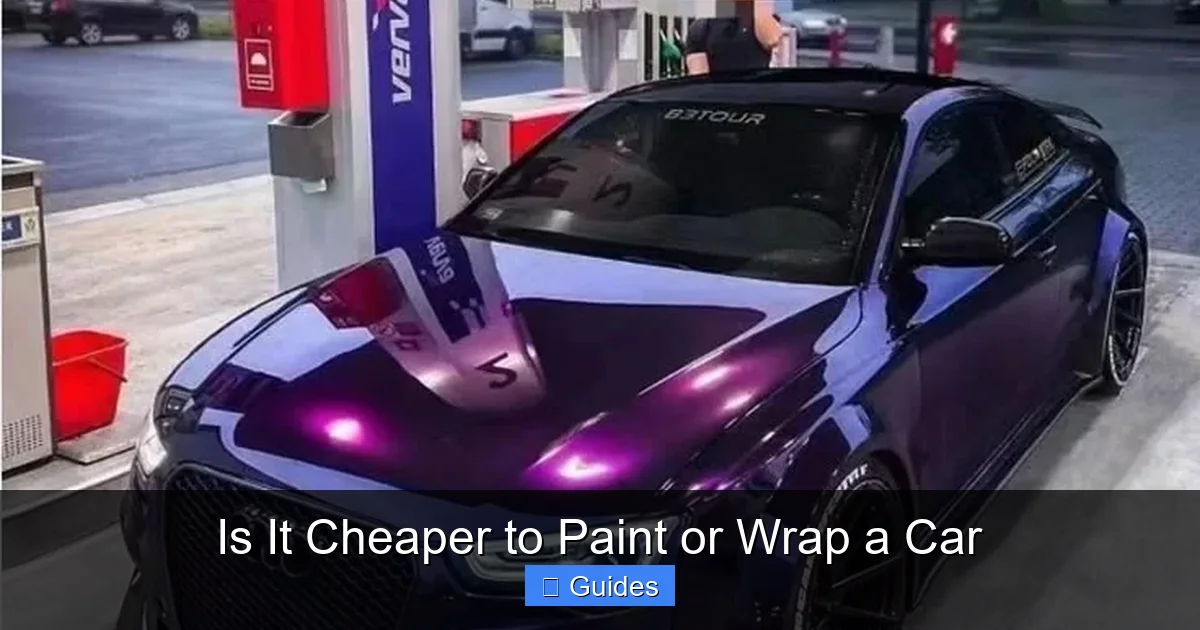
Choosing between a car paint job and a vehicle wrap depends on your budget, timeline, and goals. While painting is often more expensive upfront, wrapping offers a cost-effective, reversible way to change your car’s look with less downtime.
In This Article
- 1 Key Takeaways
- 2 📑 Table of Contents
- 3 Is It Cheaper to Paint or Wrap a Car? A Complete Guide
- 4 Understanding Car Painting: The Classic Makeover
- 5 Understanding Car Wrapping: The Modern Alternative
- 6 Cost Comparison: Paint vs. Wrap
- 7 Customization and Aesthetic Options
- 8 Durability and Longevity
- 9 Installation Time and Convenience
- 10 Resale Value and Practical Considerations
- 11 Conclusion: So, Is It Cheaper to Paint or Wrap a Car?
- 12 Frequently Asked Questions
Key Takeaways
- Car wraps are generally cheaper than full paint jobs: A full wrap typically costs $2,500–$5,000, while a high-quality paint job can range from $3,000–$10,000 or more.
- Wraps are faster to install: Most wraps take 3–5 days, compared to 1–2 weeks for a professional paint job.
- Paint offers a more permanent and seamless finish: A well-done paint job blends perfectly with the car’s body and can increase resale value.
- Wraps protect your original paint: Vinyl wraps shield the factory paint from UV rays, scratches, and minor dings.
- Customization is easier with wraps: You can choose from hundreds of colors, textures, and finishes—including matte, gloss, chrome, and color-shifting options.
- Wraps are reversible: You can remove a wrap to reveal the original paint underneath, making it ideal for leased vehicles or temporary style changes.
- Long-term maintenance differs: Paint requires regular waxing and touch-ups, while wraps need gentle cleaning and occasional reapplication of protective coatings.
📑 Table of Contents
- Is It Cheaper to Paint or Wrap a Car? A Complete Guide
- Understanding Car Painting: The Classic Makeover
- Understanding Car Wrapping: The Modern Alternative
- Cost Comparison: Paint vs. Wrap
- Customization and Aesthetic Options
- Durability and Longevity
- Installation Time and Convenience
- Resale Value and Practical Considerations
- Conclusion: So, Is It Cheaper to Paint or Wrap a Car?
Is It Cheaper to Paint or Wrap a Car? A Complete Guide
So you’ve been eyeing that sleek matte black look or dreaming of a bold racing stripe down the side of your ride. You’re ready for a change—but now you’re stuck on the big question: Is it cheaper to paint or wrap a car?
It’s a common dilemma for car enthusiasts, daily drivers, and even business owners using vehicles for branding. Both painting and wrapping can transform your car’s appearance, but they come with different costs, timelines, and long-term implications. The good news? You don’t have to guess. With the right information, you can make a smart, budget-friendly decision that fits your lifestyle and goals.
In this guide, we’ll break down everything you need to know about car painting versus car wrapping. We’ll compare costs, durability, customization options, installation time, and maintenance. Whether you’re looking to refresh your personal vehicle or rebrand a fleet, this article will help you decide which option gives you the best value for your money.
Understanding Car Painting: The Classic Makeover
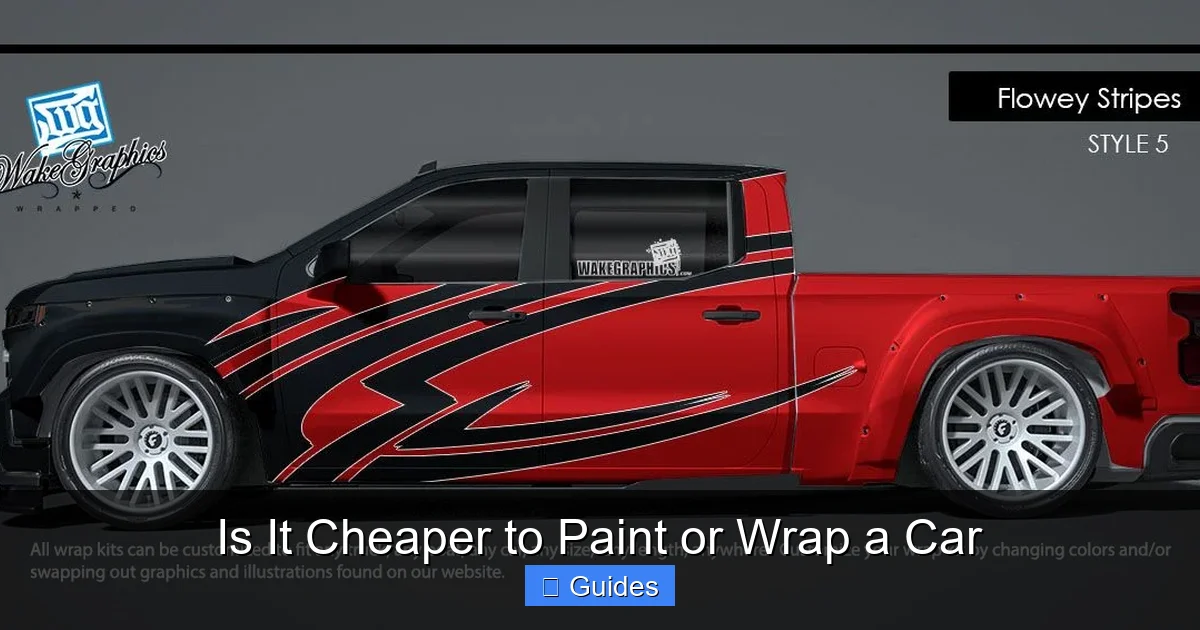
Visual guide about Is It Cheaper to Paint or Wrap a Car
Image source: i.pinimg.com
Let’s start with the traditional route: a full or partial car paint job. Painting a car has been the go-to method for changing a vehicle’s color for decades. It’s a permanent solution that, when done right, can make your car look brand new—or even better than new.
What Is a Car Paint Job?
A car paint job involves stripping the existing paint (or preparing the surface), applying primer, base coat, and clear coat, and then polishing the finish. It’s a multi-step process that requires skill, precision, and time. Professional painters use spray booths, high-quality materials, and advanced techniques to ensure a smooth, durable finish.
There are different levels of paint jobs:
– Basic: A simple repaint using standard materials. Good for covering up wear but may not last as long.
– Mid-tier: Higher-quality paint and better prep work. Offers a nicer finish and improved durability.
– High-end: Custom colors, multiple layers, color-matching, and extensive surface prep. This is what you’d see on luxury or show cars.
Cost of Painting a Car
So, how much does it cost to paint a car? The price varies widely based on the quality, size of the vehicle, and location.
On average:
– A basic paint job: $300–$1,000 (often done by small shops or DIY kits—but results can be uneven).
– A mid-tier professional job: $1,500–$4,000.
– A high-end, show-quality paint job: $5,000–$10,000+.
For example, repainting a compact sedan might cost $2,500 at a reputable shop, while a full custom paint job on an SUV with metallic flakes and pearl finishes could easily exceed $7,000.
Keep in mind, these prices usually don’t include bodywork. If your car has dents, rust, or scratches, you’ll need repairs first—adding $500–$2,000 or more to the total.
Pros and Cons of Car Painting
Let’s look at the advantages and drawbacks.
Pros:
– Permanent and seamless finish.
– Increases resale value if done professionally.
– Can be customized with unique colors and effects (like candy apple red or metallic blue).
– No risk of peeling or bubbling over time.
Cons:
– Expensive, especially for high-quality work.
– Takes 1–2 weeks to complete.
– Not reversible—once you paint it, you’re stuck with it (unless you repaint again).
– Risk of color mismatch if not done by an expert.
– Environmental concerns: paint involves solvents and VOCs (volatile organic compounds).
Understanding Car Wrapping: The Modern Alternative
Visual guide about Is It Cheaper to Paint or Wrap a Car
Image source: elmersautobody.com
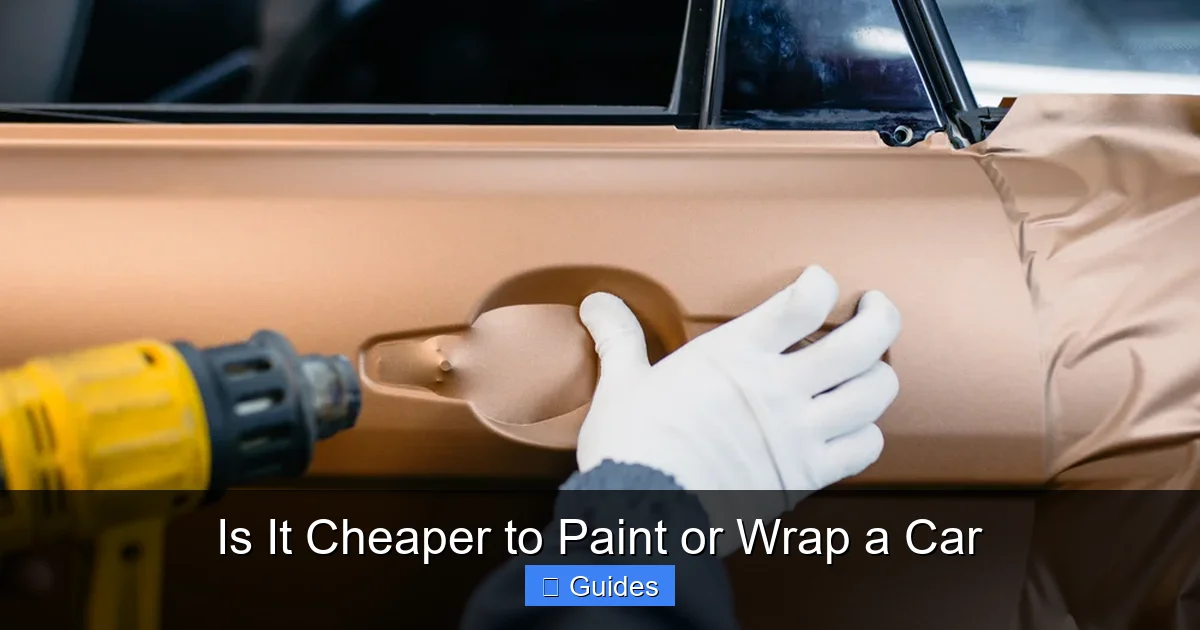
Now let’s talk about the newer, trendier option: car wrapping. A vehicle wrap uses large sheets of adhesive vinyl to cover your car’s exterior. It’s like giving your car a temporary skin that can be removed or replaced.
What Is a Car Wrap?
A car wrap is a thin, durable vinyl film applied over your car’s original paint. It comes in a variety of colors, textures, and finishes—gloss, matte, satin, chrome, carbon fiber, and even color-shifting “chameleon” vinyl.
The process involves:
1. Cleaning and prepping the car’s surface.
2. Measuring and cutting the vinyl to fit each panel.
3. Applying the vinyl using heat and pressure to mold it around curves and edges.
4. Trimming excess material and sealing seams.
Professional installers use tools like heat guns, squeegees, and knifes to ensure a smooth, bubble-free finish.
Cost of Wrapping a Car
So, is it cheaper to wrap a car than to paint it? In most cases, yes.
Here’s a general cost breakdown:
– Partial wrap (hood, roof, mirrors): $500–$1,500.
– Full wrap (entire car): $2,500–$5,000.
– High-end wraps (chrome, custom prints, color-shifting): $5,000–$8,000+.
For example, wrapping a Honda Civic might cost around $3,000, while wrapping a full-size truck could run $4,500–$6,000 due to the larger surface area.
Compared to painting, wraps are often 20–50% cheaper for a full transformation. And since they don’t require bodywork or sanding, you save on prep costs.
Pros and Cons of Car Wrapping
Let’s weigh the benefits and limitations.
Pros:
– More affordable than a high-quality paint job.
– Faster installation—usually 3–5 days.
– Protects original paint from UV rays, scratches, and minor damage.
– Fully reversible—remove it to reveal the factory paint.
– Endless customization: textures, patterns, graphics, and branding options.
– Great for leased vehicles or temporary style changes.
Cons:
– Not as durable as paint—typically lasts 5–7 years.
– Can peel or bubble if poorly installed or exposed to extreme conditions.
– May not adhere well to damaged or rusty surfaces.
– Resale value impact is neutral—some buyers prefer original paint.
– Removal can be tricky and may require professional help.
Cost Comparison: Paint vs. Wrap
Visual guide about Is It Cheaper to Paint or Wrap a Car
Image source: cdn.shopify.com
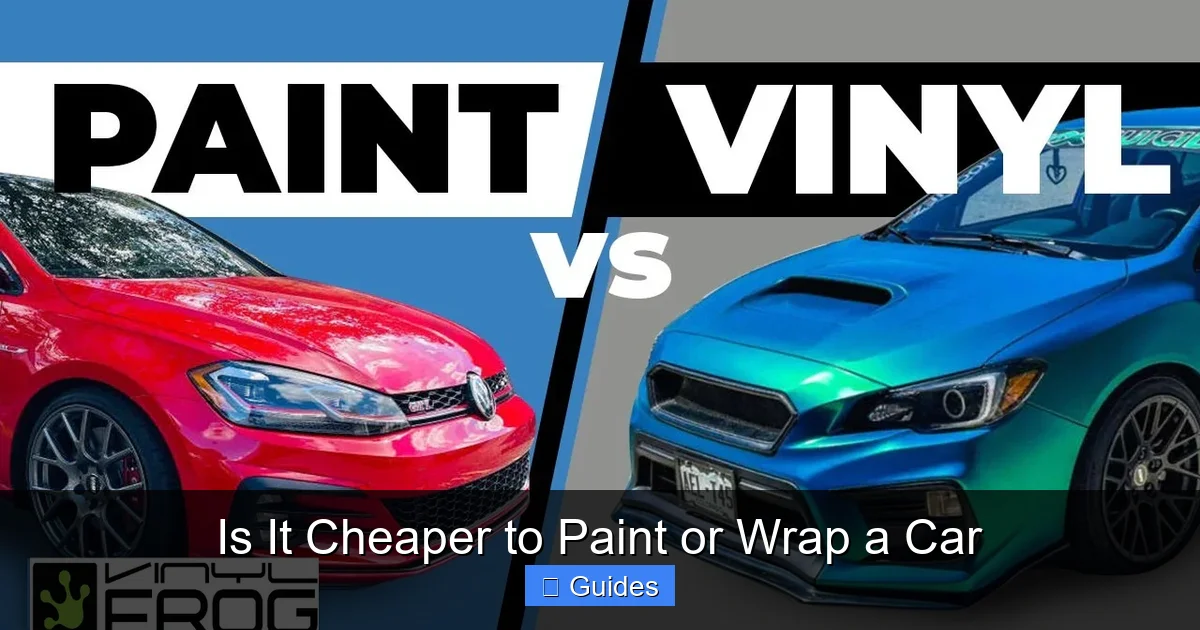
Now for the million-dollar question: Which is cheaper—painting or wrapping a car? Let’s put the numbers side by side.
Upfront Costs
| Option | Average Cost (Full Job) | Timeframe |
|——–|————————–|———|
| Basic Paint Job | $300–$1,000 | 1–2 weeks |
| Mid-Tier Paint Job | $1,500–$4,000 | 1–2 weeks |
| High-End Paint Job | $5,000–$10,000+ | 2–3 weeks |
| Partial Wrap | $500–$1,500 | 1–2 days |
| Full Wrap | $2,500–$5,000 | 3–5 days |
| Premium Wrap (Chrome, etc.) | $5,000–$8,000 | 5–7 days |
As you can see, a full wrap is often cheaper than a mid-tier or high-end paint job. Even premium wraps are usually less expensive than custom paint.
But cost isn’t the only factor. Let’s look at long-term value.
Long-Term Value and Maintenance
Painting is a long-term investment. A quality paint job can last 10+ years with proper care. But it requires regular waxing, touch-ups for chips, and protection from the elements.
Wrapping, on the other hand, typically lasts 5–7 years. After that, the vinyl may fade, crack, or peel. However, you can rewrap the car for a fresh look—often at a lower cost than repainting.
Maintenance also differs:
– Paint: Wash regularly, wax every 3–6 months, avoid automatic car washes with brushes.
– Wrap: Use mild soap and soft cloths, avoid harsh chemicals, reapply protective coatings every 6–12 months.
One hidden benefit of wrapping? It protects your original paint. If you plan to sell the car later, having the factory paint intact can boost resale value—even if the wrap is removed.
Hidden Costs to Consider
Don’t forget about these often-overlooked expenses:
– Bodywork: Paint jobs often require dent repair and sanding. Wraps need a clean surface but won’t fix dents.
– Color matching: Paint shops charge extra for custom colors. Wraps can be custom-printed, but complex designs cost more.
– Removal: Removing a wrap costs $300–$800. Repainting over a wrap is not recommended—it must be removed first.
– Insurance: Some insurers may charge more for wrapped vehicles, especially if they’re used for advertising.
Customization and Aesthetic Options
When it comes to style, both options offer unique advantages.
Paint: The Classic Look
Paint gives you a seamless, factory-finish look. It’s ideal if you want a clean, professional appearance. You can choose from thousands of colors, including metallics, pearls, and custom mixes.
However, paint has limitations:
– Textures are limited (mostly gloss, satin, or matte).
– Complex designs (like flames or graphics) require airbrushing—expensive and time-consuming.
– Once applied, changes are costly.
Wrap: The Creative Freedom
Wraps win when it comes to creativity. You can get:
– Matte black, satin silver, or gloss white.
– Chrome, brushed metal, or carbon fiber finishes.
– Custom graphics, logos, or full-body advertisements.
– Color-shifting vinyl that changes hue in the light.
For example, a small business might wrap their van with a bold logo and contact info for $3,000—far cheaper than painting and easier to update later.
Car enthusiasts love wraps for trying out bold looks without commitment. Want to test out a racing stripe? Wrap it. Tired of red? Switch to blue in a week.
Real-Life Example: The Daily Driver vs. The Show Car
Let’s say you own a 2018 Toyota Camry. You want a fresh look but don’t want to spend a fortune.
– Option 1: Paint
You go to a reputable shop for a mid-tier paint job in deep blue. Cost: $3,500. Time: 10 days. Result: Beautiful, permanent finish. But if you ever want to change colors, you’re looking at another $3,000+.
– Option 2: Wrap
You choose a matte navy blue wrap with a subtle carbon fiber accent on the hood. Cost: $3,200. Time: 4 days. Result: Stunning, modern look. In 5 years, you can remove it and sell the car with original paint intact.
In this case, the wrap is slightly cheaper, faster, and more flexible.
Durability and Longevity
How long will your new look last?
Paint: Built to Last
A high-quality paint job, when maintained, can last 10–15 years. It’s resistant to fading, chipping, and weather damage—especially with ceramic coatings.
But paint can scratch, chip, and oxidize over time. Touch-ups are possible, but color matching is tricky.
Wrap: Temporary but Tough
Modern vinyl wraps are surprisingly durable. High-quality 3M or Avery Dennison films can withstand sun, rain, and minor impacts.
However, wraps are more vulnerable to:
– Peeling at edges (especially on door handles or mirrors).
– Fading in intense sunlight (though UV-resistant films help).
– Damage from automatic car washes or abrasive cleaners.
With proper care, a wrap can last 5–7 years. Some last even longer in mild climates.
Which Holds Up Better?
If you live in a sunny, hot area (like Arizona or Florida), paint may fade faster unless protected. Wraps with UV protection can actually preserve the original paint better.
In snowy or salty regions, wraps can trap moisture underneath if not sealed properly—leading to rust. Paint, when sealed with clear coat, is more resistant.
Ultimately, both options can last years with care. But paint has the edge in long-term durability.
Installation Time and Convenience
Time is money—and convenience matters.
Paint: The Waiting Game
A full paint job takes time. Here’s a typical timeline:
– Day 1–2: Disassembly and sanding.
– Day 3–5: Priming and painting.
– Day 6–7: Clear coating and drying.
– Day 8–10: Reassembly and polishing.
That’s 1–2 weeks without your car. If the shop is busy, it could take longer.
Wrap: Quick and Clean
Wrapping is much faster:
– Day 1: Prep and cleaning.
– Day 2–3: Vinyl application.
– Day 4: Final touches and inspection.
Most wraps are done in 3–5 days. Some shops offer same-day partial wraps.
And since no chemicals or fumes are involved, you can often pick up your car and drive it home the same day it’s finished.
Which Is More Convenient?
If you need your car back quickly—say, for work or family use—wrapping is the clear winner. It’s also less disruptive: no sanding dust, no paint smell, and no need to store parts.
Resale Value and Practical Considerations
Thinking about selling your car someday? Your choice matters.
Paint and Resale Value
A professional paint job can increase resale value—if it’s high quality and matches buyer preferences. But a bad paint job (bubbles, orange peel, color mismatch) can hurt value.
Original factory paint is often preferred by buyers, especially on luxury or classic cars.
Wrap and Resale Value
A wrap doesn’t change the car’s value directly. But if it protects the original paint, you can remove it and reveal a well-preserved finish—boosting appeal.
However, some buyers are wary of wrapped cars, thinking they’re hiding damage. Be transparent: show photos of the original paint and provide wrap removal service if needed.
Practical Tips for Decision-Making
Ask yourself:
– How long do I plan to keep the car?
– Do I want to change the look again in a few years?
– Is my car leased or financed?
– Do I need branding or graphics?
– What’s my budget?
If you answered “yes” to flexibility, branding, or leasing—wrap is likely the better choice. If you want a permanent, high-end finish and plan to keep the car long-term, paint may be worth the investment.
Conclusion: So, Is It Cheaper to Paint or Wrap a Car?
The short answer? Yes, it’s usually cheaper to wrap a car than to paint it—especially for a full transformation.
A full wrap typically costs $2,500–$5,000, while a quality paint job ranges from $3,000–$10,000+. Wraps are also faster to install, easier to customize, and protect your original paint.
But cost isn’t the only factor. Paint offers a permanent, seamless finish that can increase resale value and last over a decade. Wraps are ideal for temporary changes, branding, or protecting factory paint—but they require more maintenance and may need replacement every 5–7 years.
Ultimately, the best choice depends on your budget, timeline, and goals. If you want a quick, affordable makeover with endless style options, go with a wrap. If you’re investing in a long-term upgrade and want a flawless finish, paint is the way to go.
Whichever you choose, make sure to hire a reputable professional. A poorly done paint job or wrap can cost more in the long run. Do your research, read reviews, and ask for portfolios.
Your car is more than transportation—it’s a reflection of you. Whether you paint it or wrap it, make it count.
Frequently Asked Questions
Is it cheaper to wrap or paint a car?
Generally, yes—wrapping a car is cheaper than painting it. A full wrap typically costs $2,500–$5,000, while a high-quality paint job can range from $3,000–$10,000 or more. Wraps also take less time and require less prep work.
How long does a car wrap last?
A high-quality car wrap can last 5–7 years with proper care. Factors like climate, washing habits, and sun exposure affect longevity. Using UV-protective films and gentle cleaning methods can extend its life.
Can you paint over a car wrap?
No, you should not paint over a wrap. The vinyl must be completely removed first, as paint won’t adhere properly to the adhesive layer. Attempting to paint over a wrap can lead to peeling and uneven results.
Does a car wrap damage the original paint?
No, a professionally installed wrap protects the original paint from UV rays, scratches, and minor damage. When removed correctly, it reveals the factory paint underneath—often in better condition than unwrapped cars.
Can I wash my car after a wrap?
Yes, but wait at least 48 hours after installation. Use mild soap, a soft cloth or sponge, and avoid high-pressure washes or automatic car washes with brushes, which can lift the edges of the vinyl.
Is a car wrap worth it for resale value?
A wrap itself doesn’t increase resale value, but it can protect the original paint, which does. If you remove the wrap before selling and show the well-preserved factory finish, it can make your car more appealing to buyers.

At CarLegit, we believe information should be clear, factual, and genuinely helpful. That’s why every guide, review, and update on our website is created with care, research, and a strong focus on user experience.