
The Nissan Silvia S14 is not street-legal for direct import and registration in the United States under standard 25-year import law. This iconic 1990s Japanese sports car fails to meet US federal safety and emissions standards for its model years. However, a federally registered S14 can be legally driven if it was imported under previous exemptions or modified to meet compliance standards, making ownership a complex but possible achievement for dedicated enthusiasts.
In This Article
- 1 Key Takeaways
- 2 📑 Table of Contents
- 3 Is the Nissan Silvia S14 Legal for US Roads
- 4 The Core Issue: Why the S14 Was Never Sold Here
- 5 The Legal Pathways to Ownership
- 6 The Risky Business of “Gray Market” and Illegal Imports
- 7 What to Look for When Buying an S14 in the US
- 8 Life with a US-Legal Nissan Silvia S14
- 9 Data at a Glance: Nissan Silvia S14 US Import Timeline
- 10 Final Thoughts: Is the Dream Worth the Effort?
- 11 Frequently Asked Questions
- 11.1 Is the Nissan Silvia S14 street legal in the US?
- 11.2 Can you legally import an S14 Silvia?
- 11.3 What is the 25-year rule for the Nissan Silvia S14?
- 11.4 Are there any legal S14 models in the USA?
- 11.5 What are the main reasons the S14 isn’t US legal?
- 11.6 Can I buy a Nissan Silvia S14 that is already in the US?
Key Takeaways
- It is not federally legal to import: The S14 fails 25-year import rule.
- Legal import requires specific exemptions: Use Show & Display or a Registered Importer.
- State registration is a separate challenge: Federal compliance comes first.
- Consider a major restoration for legality: Use a substantial number of US-spec parts.
- Verify all documentation meticulously: Avoid illegal “gray market” vehicles.
- Purchasing a pre-imported car is risky: Ensure it has proper federal release.
📑 Table of Contents
- Is the Nissan Silvia S14 Legal for US Roads
- The Core Issue: Why the S14 Was Never Sold Here
- The Legal Pathways to Ownership
- The Risky Business of “Gray Market” and Illegal Imports
- What to Look for When Buying an S14 in the US
- Life with a US-Legal Nissan Silvia S14
- Data at a Glance: Nissan Silvia S14 US Import Timeline
- Final Thoughts: Is the Dream Worth the Effort?
Is the Nissan Silvia S14 Legal for US Roads
Let’s talk about a car that’s a legend in the drifting world and a dream for many enthusiasts. I’m talking about the Nissan Silvia S14. You’ve seen it in videos, sliding perfectly around corners with that iconic silhouette. Maybe you’ve played as one in a racing game. The desire to own one is real. But then comes the big, looming question that stops many dreams in their tracks: is the Nissan Silvia S14 legal to drive on US roads?
The short answer is a classic “it depends.” It’s not a simple yes or no. The journey to legally own and drive an S14 in America is a maze of regulations, paperwork, and patience. It’s a path walked by dedicated fans who are willing to jump through some serious hoops. If you’re one of those people, or just curious about how it all works, you’re in the right place. We’re going to break it all down, from the frustrating “why not” to the hopeful “how to.”
Think of this as a friendly guide from someone who’s been deep in the research rabbit hole. We’ll navigate the 25-year rule, explore the few legal pathways, and talk about what life is really like with a federally illegal car. Buckle up; it’s going to be an informative ride.
The Core Issue: Why the S14 Was Never Sold Here
To understand the legality, you first need to know the history. The Nissan Silvia S14 was produced from 1993 to 1999. During that entire time, Nissan never officially sold it in the United States market. They offered us the 240SX, which shared a platform and looked somewhat similar, but was a different beast under the hood.
The US-market 240SX came with a naturally aspirated KA24DE engine. The Japanese Domestic Market (JDM) Silvia S14, however, was blessed with the SR20DET—a turbocharged, intercooled, dual-overhead-cam powerhouse that became a tuning icon. This fundamental difference is a big part of why the S14 is so coveted and why it’s in this legal gray area.
The 25-Year Import Rule: Your Golden Ticket
This is the most important regulation for any JDM enthusiast. Enforced by the National Highway Traffic Safety Administration (NHTSA) and the Environmental Protection Agency (EPA), the “25-Year Rule” states that a vehicle not originally manufactured to meet US safety and emissions standards can be legally imported once it is at least 25 years old from its date of manufacture.
What does this mean for the S14? Let’s break it down by model years:
- 1993-1994 Models (S14 Zenki): These are now fully legal for import and registration in all 50 states. They’ve crossed the 25-year threshold.
- 1995-1996 Models: Also in the clear. You can import these without federal restrictions.
- 1997-1998 Models (S14 Kouki): The highly sought-after Kouki models with the updated, aggressive front end became legal starting in 2022 (for 1997) and 2023 (for 1998).
- 1999 Models (Final Year): These will become eligible for import in 2024.
So, if the car is 25 years old, you can bypass the crash testing and emissions certification it never had. It’s considered a “classic” or “antique” vehicle in the eyes of federal law.
The Legal Pathways to Ownership
Assuming you’re looking at an S14 that is at least 25 years old, you have a clear federal path. But the process isn’t as simple as buying it and putting it on a boat. Here are the steps and considerations for the legal route.
1. Using a Registered Importer (RI)
This is the safest and most recommended method. A Registered Importer is a company specifically licensed by the NHTSA to modify vehicles to conform to US standards. For a 25-year-old car, their role is more about handling the mountains of paperwork and logistics.
A good RI will:
- Help you find and purchase the vehicle in Japan.
- Handle all export/import documentation (Bill of Lading, Customs forms, etc.).
- Ensure the vehicle is properly cleaned and cleared by US Customs and Border Protection (CBP).
- Arrange delivery to your door.
They are your expert guides through a complex process. Their fee is worth the peace of mind.
2. State-Level Registration: The Final Hurdle
Clearing federal customs is one thing. Getting a title, plates, and registration from your state’s Department of Motor Vehicles (DMV) is another. This is where many people hit a snag.
States have different requirements. Some states, like Florida and Texas, are generally more lenient with imported vehicles as long as you have the federal customs paperwork (HS-7 form) showing it’s exempt. Others, like California, have their own strict emissions rules (CARB) that can be a challenge even for 25-year-old cars.
Practical Tip: Before you spend a dime, call your local DMV or county tax office. Ask them specifically, “What do I need to title and register a 25-year-old vehicle imported from Japan?” Get the requirements in writing if you can. This step can save you a massive headache.
The Risky Business of “Gray Market” and Illegal Imports
Now, let’s talk about the cars you might see for sale that are under 25 years old. How are they here? Often, it’s through methods that are not compliant with federal law.
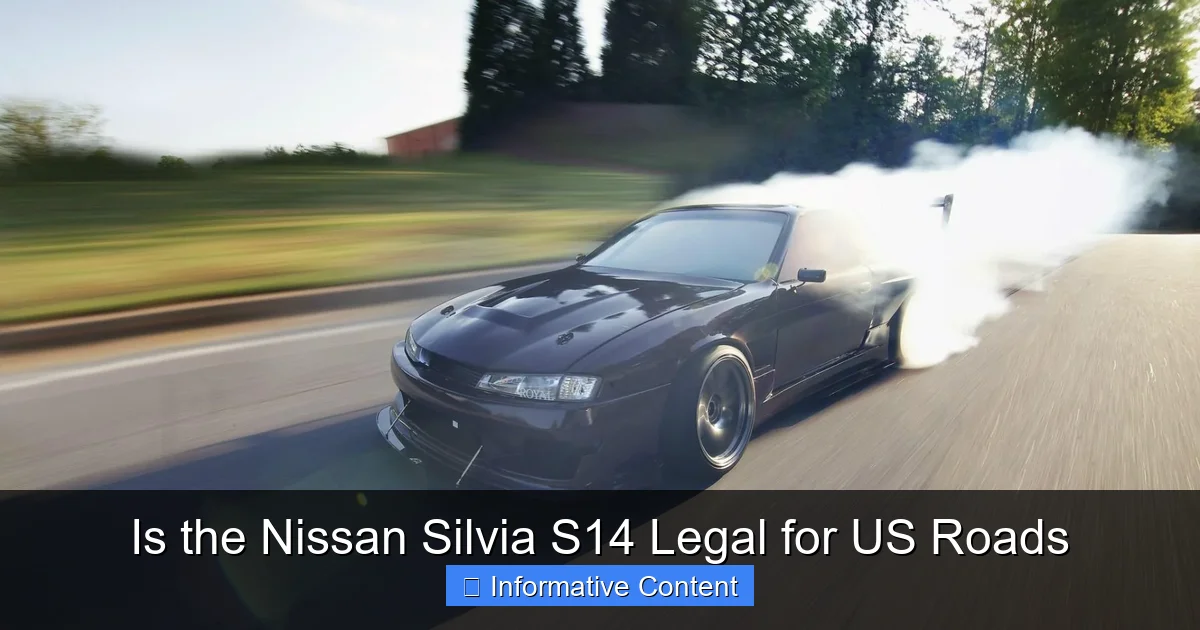
Visual guide about Nissan Silvia S14 legality US
Image source: wallpapercave.com
Common Illegal Import Methods
- “Parts Car” Scam: The car is imported as “parts” or “off-road use only” to avoid compliance, then reassembled and titled fraudulently, often using a swapped VIN from a US-market 240SX.
- Canadian Import Loophole: Some try to import a younger car through Canada, where the import rule is 15 years, and then bring it into the US. This does not exempt it from US 25-year rule. CBP knows this trick.
- Fake VINs/Title Washing: This is outright fraud and a serious federal crime.
Owning a car brought in this way is extremely risky. The consequences aren’t just a slap on the wrist.
The Real Consequences of Getting Caught
If federal authorities (NHTSA, EPA, CBP) discover a non-compliant vehicle, they can and will seize it. The owner is typically given two options:
- Export the Vehicle: You have to pay to ship it back to its country of origin, losing all the money you spent.
- Destroy the Vehicle: Yes, they will crush it. You will watch your dream car get turned into a cube, with no compensation.
On top of that, you could face hefty fines. It’s simply not worth the risk for a temporary thrill.
What to Look for When Buying an S14 in the US
You’re ready to buy a legal, 25-year-old S14. Here’s how to be a smart shopper and avoid scams.
Critical Documentation Checklist
Do not buy a JDM import without verifying these documents:
- Original Japanese Export Certificate (JEVIC or ASEW): This is the car’s birth certificate from Japan, showing its auction grade and history.
- US Customs Form HS-7: This is the “Entry of Motor Vehicles” form. Box 1 should be checked, stating the vehicle is over 25 years old and exempt. This is your federal proof of legal entry.
- Bill of Lading: From the shipping company.
- A Clean, US Title: The title should match the VIN on the car (located on the firewall in the engine bay and on the door jamb). Be wary of titles from states known for being lax.
Practical Inspection Tips
Beyond paperwork, the car itself needs scrutiny. Rust is the #1 enemy of these cars. Check the frame rails, strut towers, rear wheel arches, and under the spare tire. Assume any modification was done for drifting, which means hard use. Check for crash damage, wiring hack jobs, and the overall health of the SR20DET (compression test is ideal). Buying from a reputable importer or a known enthusiast can provide more confidence than a random online listing.
Life with a US-Legal Nissan Silvia S14
So you’ve done everything right. You have a legally imported S14 in your driveway. What’s it actually like?
The Joys and The Headaches
The Good: You own a piece of JDM history. The driving experience is raw, connected, and immensely rewarding. The tuning potential is vast, and the community is fantastic. You’ll get thumbs-ups everywhere you go.
The Challenges: Parts are not at your local AutoZone. You’ll rely on specialty importers, online retailers, and sometimes waiting for parts to ship from Japan. While the SR20DET is robust, finding a specialist mechanic who knows it well can be tough. You become your own best mechanic.
Insurance and Value Considerations
Insuring a legally imported S14 is easier than an illegal one, but you still need to shop around. Agreed-value insurance from a company like Hagerty or Grundy is highly recommended for classic/modified cars. As for value, a clean, legally imported S14—especially a Kouki model—has seen its value appreciate significantly. It’s an investment as much as a hobby car.
Data at a Glance: Nissan Silvia S14 US Import Timeline
This table summarizes the key dates for legal federal importation under the 25-Year Rule.
| Model Year | Generation / Nickname | Became Federally Legal for Import | Key Identifying Feature |
|---|---|---|---|
| 1993-1994 | S14 (Zenki) | 2018-2019 | Round, softer front headlights |
| 1995-1996 | S14 (Zenki) | 2020-2021 | Round, softer front headlights |
| 1997-1998 | S14 (Kouki) | 2022-2023 | Angular, aggressive front headlights |
| 1999 | S14 (Kouki – Final) | 2024 | Angular headlights, final year model |
Final Thoughts: Is the Dream Worth the Effort?
The Nissan Silvia S14 is absolutely legal for US roads—if you follow the rules. The 25-year rule is your friend, not your enemy. It provides a clear, legal pathway to ownership for these amazing cars. The process requires research, patience, and a careful attention to paperwork, but the reward is unparalleled.
Choosing to go the legal route means you can sleep soundly knowing your car won’t be taken away. You can enjoy it, modify it, and be a part of the community with pride. The illegal shortcuts might seem tempting for an instant gratification, but they come with a cloud of anxiety and the very real risk of total loss.
If the S14 is your dream car, start planning. Save your money, research reputable importers, and get ready for the day your desired model year crosses that 25-year line. Owning a legal piece of JDM history is one of the most satisfying feelings for a car enthusiast. It’s a testament to your passion and your patience. Drive safe, and enjoy the slide.
Frequently Asked Questions
Is the Nissan Silvia S14 street legal in the US?
No, the Nissan Silvia S14 is not street legal for direct import and registration in the US in its original, unmodified form. This is because it was never manufactured to comply with US Federal Motor Vehicle Safety Standards (FMVSS) and EPA emissions regulations for its model years.
Can you legally import an S14 Silvia?
Yes, you can physically import an S14, but making it legally drivable on public roads is a separate, complex process. To achieve legality, the vehicle must undergo costly modifications by a registered importer to meet FMVSS and EPA requirements, or it must qualify under the 25-year import rule.
What is the 25-year rule for the Nissan Silvia S14?
The 25-year rule is a provision that allows vehicles not originally compliant with US standards to be imported without modification once they are 25 years or older from their date of manufacture. For the S14 (produced 1993-1998), all model years are now eligible for legal import under this exemption.
Are there any legal S14 models in the USA?
Legally registered S14 models in the USA are typically those that have been imported under the 25-year rule, or rare versions that were federalized at great expense. Some may also be “grey market” cars registered in certain states with less stringent inspection processes, though this can be risky.
What are the main reasons the S14 isn’t US legal?
The primary barriers are safety and emissions standards. The S14 lacks mandated features like US-spec airbags, side-impact protection, and specific lighting. Its engine also was not certified by the EPA for emissions in the American market during its production run.
Can I buy a Nissan Silvia S14 that is already in the US?
Yes, you can purchase an S14 already located in the US, but you must verify its legal import status before buying. Ensure it has proper import documentation (HS-7 form) and EPA/DOT release, or that it is a 1998 or older model (now 25+ years old) to guarantee it can be legally registered.

At CarLegit, we believe information should be clear, factual, and genuinely helpful. That’s why every guide, review, and update on our website is created with care, research, and a strong focus on user experience.