
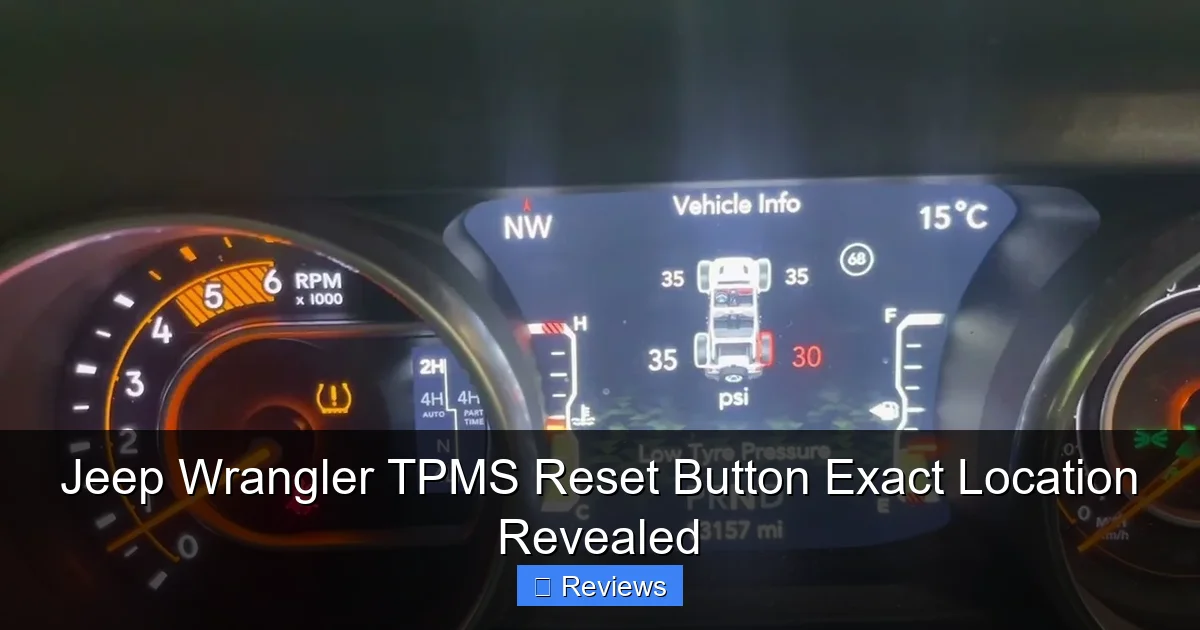
Featured image for where is the tpms reset button on a jeep wrangler
Image source: i.ytimg.com
Forget searching for a mysterious TPMS reset button in your Jeep Wrangler; this article reveals there isn’t one in the conventional sense! Instead, the Tire Pressure Monitoring System often recalibrates automatically after driving a short distance with corrected tire pressures, or through specific prompts within the vehicle’s Uconnect system for certain models. Understanding this crucial procedure simplifies TPMS management and avoids unnecessary frustration for Wrangler owners.
The open road, the rugged trails, the unparalleled sense of freedom – owning a Jeep Wrangler is an experience unlike any other. However, even the most adventurous journeys can be interrupted by something as seemingly trivial, yet critically important, as a lit warning light on your dashboard. For many Wrangler owners, few lights are as perplexing or persistently frustrating as the Tire Pressure Monitoring System (TPMS) light. It glows orange, a silent but insistent alarm, often leading to a frantic search for that elusive “TPMS reset button.”
You’ve checked your tire pressures, perhaps even topped them off, but the light stubbornly remains. You’ve scoured the owner’s manual, peered under the steering column, and even contemplated the depths of your glove compartment, all in pursuit of that magical button that promises to make the warning disappear. The truth, for many modern Jeep Wrangler models, is a bit more nuanced than a simple push-button fix. This leads to widespread confusion and often, unnecessary trips to the dealership.
This comprehensive guide is designed to cut through the mystery surrounding your Jeep Wrangler’s TPMS system. We’re going to reveal the exact methods for dealing with that persistent light, debunk common myths about a dedicated TPMS reset button, and provide you with all the practical knowledge you need to confidently manage your tire pressure monitoring system. By the end of this deep dive, you’ll understand not just where to look (or not to look) for a button, but how your Wrangler’s TPMS truly operates and how to keep it functioning optimally for endless adventures.
In This Article
- 1 Key Takeaways
- 2 Understanding Your Jeep Wrangler’s TPMS System
- 3 The Myth of the Dedicated TPMS Reset Button in Jeep Wranglers
- 4 The Primary Method: Driving Your Jeep Wrangler to Reset TPMS
- 5 Advanced TPMS Reset Procedures and Considerations for Jeep Wranglers
- 6 Diagnosing Persistent TPMS Light Issues on Your Jeep Wrangler
- 7 Jeep Wrangler TPMS Characteristics by Generation
- 8 Conclusion
- 9 Frequently Asked Questions
- 9.1 Is there a physical TPMS reset button on my Jeep Wrangler?
- 9.2 How do I reset the TPMS light on my Jeep Wrangler if there’s no button?
- 9.3 Where can I find the TPMS reset button if my Jeep Wrangler does have one?
- 9.4 Why is my Jeep Wrangler’s TPMS light still on after I’ve adjusted tire pressure?
- 9.5 Does the TPMS reset procedure vary by Jeep Wrangler model year?
- 9.6 Do I need a special tool to reset the TPMS on my Jeep Wrangler?
Key Takeaways
- Modern Wranglers: Most lack a physical TPMS reset button.
- Automatic Relearn: Drive over 15 MPH for 10-20 minutes to reset.
- Older Jeeps: Check under the dash or glove box for a button.
- Uconnect System: Reset or view TPMS status via your infotainment screen.
- Persistent Warning: Seek professional diagnostics for stubborn TPMS light issues.
- Sensor Change: New TPMS sensors often require professional programming or relearn.
Understanding Your Jeep Wrangler’s TPMS System
Before we dive into the specifics of resetting your Jeep Wrangler’s TPMS light, it’s crucial to understand what the system is, how it works, and why it’s so important. This foundational knowledge will empower you to diagnose issues more effectively and avoid common pitfalls.
What is TPMS and Why is it Important?
TPMS stands for Tire Pressure Monitoring System. It’s a vital safety feature mandated in all new vehicles sold in the United States since 2007, including every Jeep Wrangler produced since then. Its primary purpose is to continuously monitor the air pressure inside your vehicle’s tires and alert you if the pressure in one or more tires drops significantly below the manufacturer’s recommended level.
The importance of TPMS cannot be overstated, especially for a vehicle like the Jeep Wrangler, which is often subjected to varying terrains and driving conditions:
- Enhanced Safety: Properly inflated tires are crucial for safe driving. Underinflated tires can lead to increased stopping distances, reduced vehicle control, and a higher risk of tire blowouts, particularly at highway speeds. TPMS provides an early warning, allowing you to address the issue before it becomes a dangerous situation.
- Improved Fuel Efficiency: Tires that are not properly inflated create more rolling resistance, forcing your engine to work harder and consume more fuel. Maintaining correct tire pressure, as indicated by your TPMS, can significantly improve your Wrangler’s fuel economy.
- Extended Tire Lifespan: Underinflation causes uneven wear on your tires, specifically on the outer edges of the tread. Overinflation, conversely, causes wear in the center. Both scenarios shorten the lifespan of your expensive tires. TPMS helps you ensure even wear and maximize the life of your tires.
- Optimal Vehicle Performance: Correct tire pressure is essential for optimal handling, braking, and overall performance, whether you’re cruising on the highway or navigating challenging off-road trails in your Jeep Wrangler.
How TPMS Works in a Jeep Wrangler
Most modern Jeep Wrangler models utilize a “direct TPMS” system. This means there’s a small, battery-powered sensor located inside each tire, usually integrated into the valve stem or strapped to the wheel. These sensors continuously measure the individual air pressure and temperature of each tire.
- Data Transmission: The sensors transmit this data wirelessly via radio frequency (RF) signals to a central receiver or control module (often the Body Control Module, BCM, or Powertrain Control Module, PCM) in your Jeep Wrangler.
- Processing and Alerting: The vehicle’s computer compares the received pressure readings to the factory-recommended pressure settings. If any tire’s pressure falls below a predetermined threshold (typically 25% below the recommended PSI), or if there’s a significant pressure differential between tires, the system triggers the TPMS warning light on your dashboard.
- Dashboard Light and Messages: The TPMS light typically illuminates as a solid orange indicator shaped like a flat tire with an exclamation point. On some Jeep Wrangler models equipped with an Electronic Vehicle Information Center (EVIC) or Uconnect screen, you might also receive specific messages indicating which tire is low or if there’s a system malfunction. If the light flashes upon startup and then stays solid, it usually indicates a system malfunction rather than just low tire pressure.
Common Reasons the TPMS Light Comes On
Understanding why your Jeep Wrangler’s TPMS light illuminates is the first step toward resolving the issue:
- Low Tire Pressure: This is by far the most common reason. A tire could have a slow leak, be underinflated after a cold snap (as air pressure drops in cold temperatures), or simply need a top-off.
- Temperature Changes: Significant drops in ambient temperature can cause the air pressure in your tires to decrease. This is a common trigger for the TPMS light during seasonal changes.
- Tire Rotation or Replacement: While usually self-correcting, sometimes after a tire rotation or replacement, the Jeep Wrangler’s TPMS system needs to “relearn” the new positions of the sensors. This can sometimes cause the light to stay on temporarily.
- Faulty TPMS Sensor: These sensors are battery-powered, and like all batteries, they eventually die (typically after 5-10 years). A sensor can also be physically damaged during tire mounting/dismounting, or simply fail electronically. When a sensor fails, the light will illuminate, sometimes after flashing initially.
- Aftermarket Wheels/Tires: If you’ve recently upgraded your Jeep Wrangler with non-OEM wheels or tires that don’t have compatible TPMS sensors, or if the sensors weren’t properly programmed, the light will stay on.
- Improper Inflation After Service: Sometimes, after tire service (e.g., a flat repair), tires might not be inflated to the correct PSI, or the TPMS system wasn’t properly addressed, causing the light to remain on.
The Myth of the Dedicated TPMS Reset Button in Jeep Wranglers
This is where much of the confusion lies. Many owners, based on experiences with older vehicles or different makes, expect to find a physical TPMS reset button. Let’s set the record straight for your Jeep Wrangler.
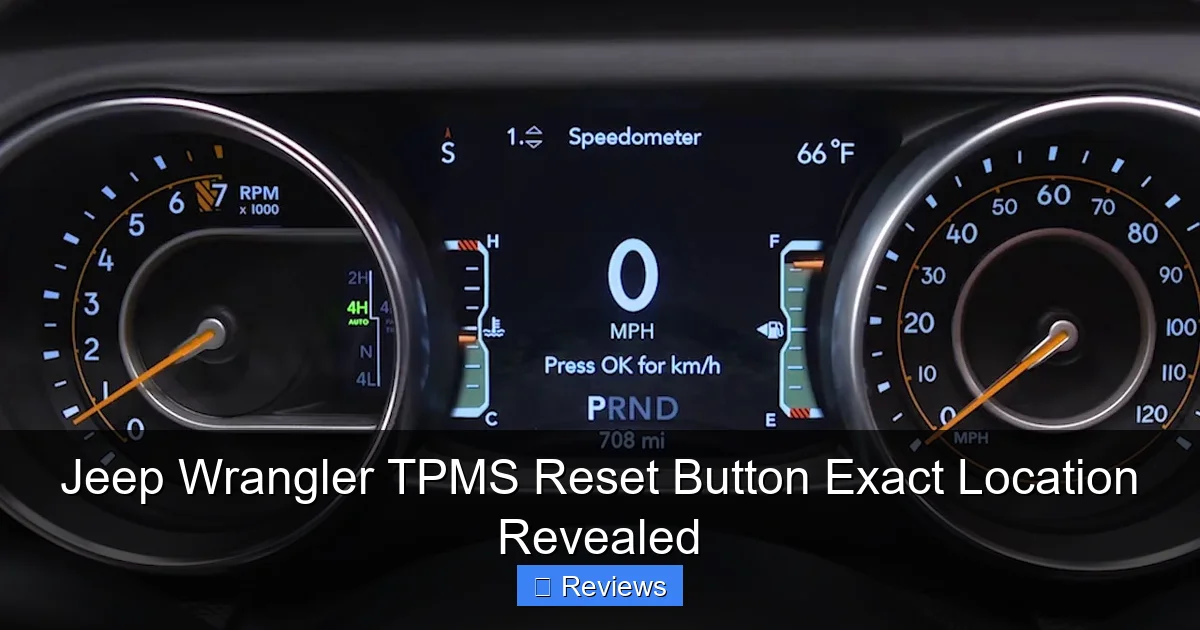
Visual guide about where is the tpms reset button on a jeep wrangler
Image source: i.ytimg.com
Debunking the Common Belief
For a significant number of modern Jeep Wrangler models, particularly those from the JK (2007-2018) and JL (2018-present) generations, there is generally no dedicated physical TPMS reset button that you can simply press to turn off the light. This is a crucial piece of information that often surprises owners.
In the early days of TPMS, some manufacturers did include a physical button. This button typically performed a basic reset, clearing the warning light until the system detected an issue again. However, as TPMS technology evolved, manufacturers opted for more sophisticated, automated, or scan-tool-dependent reset procedures. This shift was largely due to the integration of TPMS into the vehicle’s broader electronic systems and the desire for more robust, less user-error-prone methods.
Where Owners Often Look (and Don’t Find It)
If you’ve been on a quest for the mythical TPMS reset button in your Jeep Wrangler, you’ve likely looked in all the usual places:
- Under the Dashboard: Many vehicles that do have a physical reset button place it low on the dashboard, often to the left of the steering wheel.
- In the Glove Compartment: Some manufacturers integrate small buttons or switches into the glove box.
- Near the Steering Column: Buttons for various auxiliary functions are frequently found here.
- Under the Driver’s Seat: A less common, but still sometimes speculated, location.
While these are common spots for a TPMS reset button in other vehicles, for most modern Jeep Wranglers, you won’t find one here, or anywhere else, for TPMS purposes.
The “Automatic” Reset Philosophy
The absence of a physical TPMS reset button on your Jeep Wrangler doesn’t mean the system can’t be reset. It simply means the process is handled differently. Modern Jeep Wrangler TPMS systems are largely designed to be “self-learning” or to require a specific drive cycle to reset. The vehicle’s computer is sophisticated enough to monitor sensor data and, once conditions are met (like correct tire pressure and driving), it will automatically extinguish the warning light.
This “automatic” approach minimizes the need for manual intervention for simple low-pressure scenarios. However, for more complex situations involving new sensors or aftermarket wheels, specialized tools or professional assistance might be necessary to “tell” the system about the changes.
The Primary Method: Driving Your Jeep Wrangler to Reset TPMS
Since there isn’t a readily available TPMS reset button on most Jeep Wranglers, the primary and most effective method for resetting the TPMS light after addressing low tire pressure is simply to drive the vehicle. This is often referred to as the “drive cycle” method.
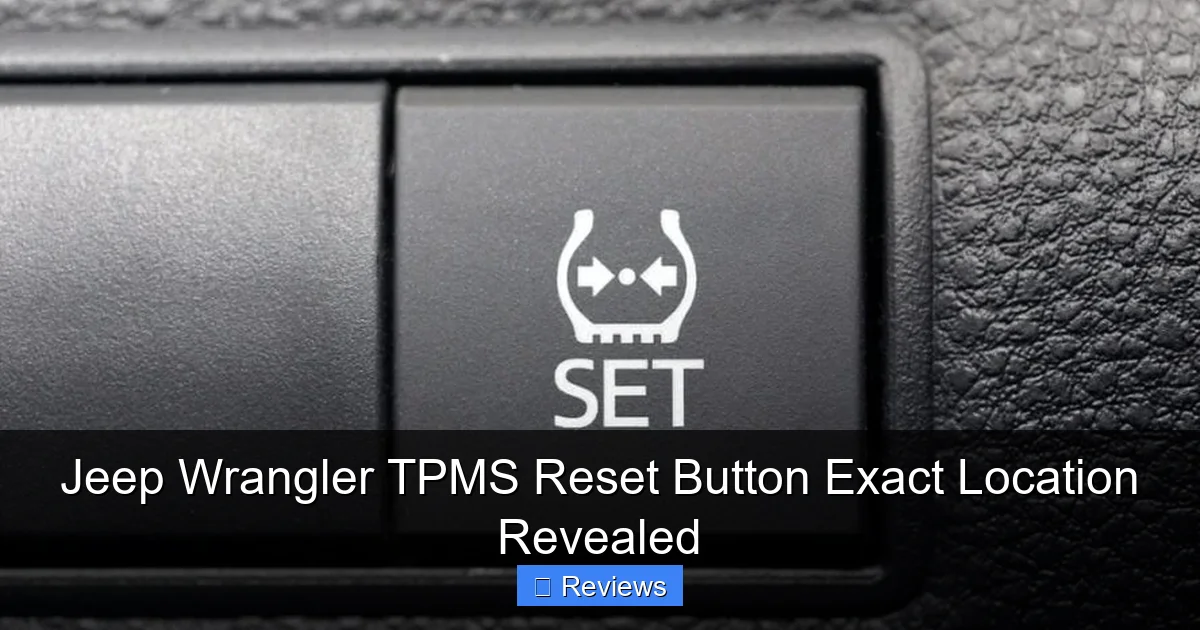
Visual guide about where is the tpms reset button on a jeep wrangler
Image source: mechanicbase.com
The “Drive Cycle” Method Explained
The drive cycle is the standard procedure for the Jeep Wrangler’s TPMS system to re-learn tire pressures and confirm that all issues have been resolved. The vehicle’s control module needs to receive consistent, correct pressure readings from all four (and sometimes five, if the spare is monitored) TPMS sensors while the vehicle is in motion.
Why does it work this way? The sensors only transmit data periodically, and the vehicle’s system often requires sustained input to confirm stability and accuracy. Driving at a certain speed for a period ensures the sensors are actively transmitting and the receiver is consistently picking up their signals, allowing the system to verify that tire pressures are within the acceptable range.
Step-by-Step Guide to the Drive Cycle Reset
Follow these steps carefully to perform a TPMS reset on your Jeep Wrangler using the drive cycle method:
- Inflate All Tires to Recommended PSI: This is the absolute first and most critical step. Using an accurate tire pressure gauge, check the pressure in all four of your main road tires. Inflate them to the PSI recommended by Jeep, which can typically be found on a sticker inside your driver’s side door jamb or in your owner’s manual. Do NOT rely solely on the dashboard readings if they are present, always cross-reference with a manual gauge. If your Jeep Wrangler monitors the spare tire’s pressure (common on some models), ensure it’s also correctly inflated. Even a slight discrepancy can prevent the system from resetting.
- Ensure Consistent Pressure: Once all tires are at the correct PSI, double-check them. If the ambient temperature has changed drastically, re-check after a short period. Consistency is key.
- Start Your Jeep Wrangler: Turn on your vehicle and observe the TPMS light. It will likely still be illuminated.
- Drive Your Vehicle: The next step is to drive your Jeep Wrangler. The exact speed and duration can vary slightly by model year, but a general guideline is to drive at a speed of 15-20 mph (or sometimes higher, up to 50 mph) for a continuous period of 10-20 minutes. It’s important to maintain a relatively consistent speed during this period. Avoid stop-and-go traffic if possible, as continuous motion helps the system re-learn.
- Observe the TPMS Light: During or after the drive cycle, the TPMS warning light should extinguish on its own. It might not happen immediately after 10-20 minutes; sometimes it takes a bit longer, or a few drive cycles over subsequent days.
Practical Tip: A highway drive is often ideal for this procedure, as it allows you to maintain the necessary speed consistently without frequent stops. If the light remains on after a full drive cycle, repeat the process. Sometimes, especially after a significant pressure drop, it might take two or three drive cycles for the system to fully reset.
Troubleshooting the Drive Cycle Method
If you’ve followed the steps for the drive cycle and your Jeep Wrangler’s TPMS light remains stubbornly illuminated, consider these troubleshooting tips:
- Recheck All Tire Pressures: Don’t just assume they’re correct. Even a small discrepancy can prevent the system from resetting. Use a different, trusted gauge if you have doubts about yours.
- Check Your Spare Tire: On some Jeep Wrangler models (especially newer ones), the spare tire also has a TPMS sensor. If its pressure is low, the light will remain on. Ensure it’s inflated to its recommended PSI.
- Consider Ambient Temperature: If you inflated your tires in a warm garage and then immediately drove out into freezing temperatures, the pressure could drop enough to re-trigger the light. Monitor pressure fluctuations due to temperature.
- Ensure Sufficient Drive Time/Speed: Make sure you’re truly driving at the required speed for the full duration. Sometimes short bursts aren’t enough.
- Battery Disconnect (Use with Caution): As a last resort, for some older JK models, temporarily disconnecting the negative battery terminal for 15-30 minutes can sometimes clear some error codes, including TPMS. However, this can also reset other vehicle settings (radio presets, clock, learned driving habits), so proceed with caution. This is rarely necessary for just a low-pressure TPMS light.
- Suspect a Faulty Sensor: If the light still doesn’t go off after multiple drive cycles with confirmed correct pressures, you likely have a faulty TPMS sensor or another system issue.
Advanced TPMS Reset Procedures and Considerations for Jeep Wranglers
While the drive cycle method handles most low-pressure scenarios, certain situations, especially those involving tire changes or system malfunctions, may require more advanced procedures or specialized tools. This is where the concept of a “TPMS reset button” truly gives way to more technical solutions for your Jeep Wrangler.
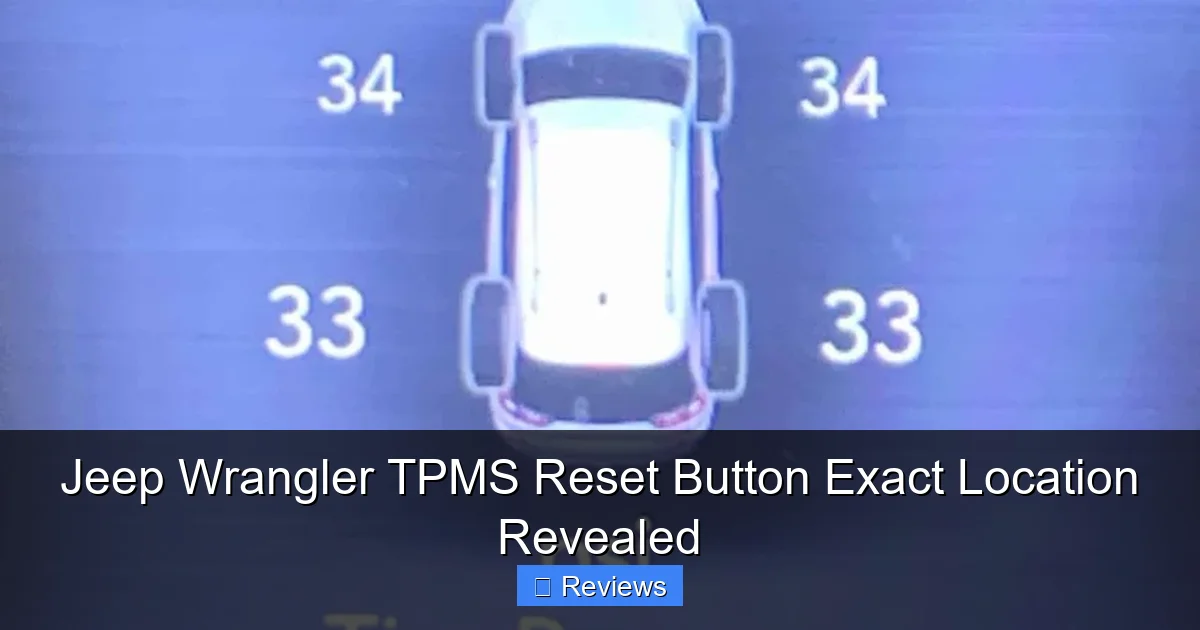
Visual guide about where is the tpms reset button on a jeep wrangler
Image source: tpmsreset.com
After Tire Rotation or Replacement
When you rotate your tires or replace one or more of them, the Jeep Wrangler’s TPMS system might need a moment to re-learn the new locations of the sensors. While the drive cycle often resolves this automatically, sometimes the system can get temporarily confused.
- Initial Confusion: The vehicle’s computer assigns a specific ID to each sensor and expects it to be at a particular wheel position (e.g., front left). When you rotate tires, the sensors change positions.
- Self-Correction: Most modern Jeep Wranglers are designed to eventually figure out the new sensor locations through the drive cycle. The system monitors the RF signals and usually re-maps them after a certain amount of driving.
- When it Doesn’t Self-Correct: If the light persists after several drive cycles following a rotation, it could indicate a sensor issue or a need for a manual relearn via a scan tool.
When Upgrading Wheels and Tires (Aftermarket)
This is arguably the most common scenario where Jeep Wrangler owners encounter persistent TPMS issues beyond simple low pressure. Upgrading to aftermarket wheels and larger tires often means installing new TPMS sensors or dealing with different pressure thresholds.
- New Sensors Required: If your new aftermarket wheels don’t come with TPMS sensors, or if you’re replacing old sensors, you’ll need new ones compatible with your Jeep Wrangler. It’s crucial to get sensors that operate on the correct frequency for your vehicle (e.g., 315 MHz or 433 MHz, depending on your model year and region).
- TPMS Programming Tool / Relearn Tool: This is where a dedicated “TPMS reset button” truly becomes irrelevant. When new sensors are installed, your Jeep Wrangler’s computer doesn’t know their unique IDs. A specialized TPMS programming tool (also known as a relearn tool or activation tool) is required to “wake up” the new sensors and transmit their IDs to the vehicle’s computer. The process often involves putting the vehicle into a “relearn mode” (which might involve a sequence of turning the ignition on/off, but not a physical button) and then activating each sensor individually with the tool.
- Lower PSI Thresholds (Especially for JL Wranglers): Many Jeep Wrangler JL owners who run larger, aftermarket tires at lower pressures (e.g., 30 PSI instead of the factory 36-38 PSI for a softer ride and better off-road traction) will find their TPMS light constantly illuminated. The factory default setting expects higher pressures. To avoid this, the vehicle’s TPMS module often needs to be reprogrammed to a lower pressure threshold. This usually requires a specialized scan tool (like the AEV ProCal SNAP, Tazer Mini/Lite, or similar programmers) that plugs into the OBD-II port. These tools allow you to adjust the desired tire pressure threshold in the vehicle’s computer, effectively “resetting” the TPMS trigger point without a physical TPMS reset button.
Using a TPMS Relearn Tool (When Necessary)
A TPMS relearn tool is a handheld electronic device that communicates with your TPMS sensors. It’s essential when:
- You install new TPMS sensors.
- You rotate tires and the system doesn’t self-correct.
- You replace a faulty sensor.
These tools are relatively inexpensive for basic models and can be purchased by DIY enthusiasts. More advanced versions are used by professional mechanics. The tool usually works by sending a signal to each sensor, prompting it to transmit its ID to the vehicle. The process varies but typically involves:
- Putting the Jeep Wrangler into “TPMS relearn mode” (refer to your owner’s manual or the tool’s instructions for the specific sequence, as there is no physical button for this).
- Using the tool to activate each sensor, starting from a specific wheel (e.g., front left, then front right, rear right, rear left).
- Confirming successful relearn, often by a horn chirp or dashboard message.
For lowering pressure thresholds on JLs, a different type of programmer (e.g., AEV ProCal, Tazer) is required, which interfaces directly with the vehicle’s computer via the OBD-II port to modify settings.
Dealer-Specific Scanners (wiTECH)
For the most complex TPMS issues, or when generic tools fail, dealerships have proprietary diagnostic tools, such as the wiTECH system for Stellantis (Jeep) vehicles. These advanced scanners can:
- Read specific TPMS diagnostic trouble codes (DTCs) that generic OBD-II scanners might miss.
- Manually register new sensor IDs into the vehicle’s computer.
- Perform deeper system resets and reconfigurations that are not accessible to standard aftermarket tools.
- Diagnose issues with the TPMS control module itself.
If you’ve tried all other methods and your Jeep Wrangler’s TPMS light remains on, a visit to a dealership or a reputable shop with advanced diagnostic capabilities might be necessary.
Diagnosing Persistent TPMS Light Issues on Your Jeep Wrangler
Sometimes, simply adding air or performing a drive cycle isn’t enough to turn off the TPMS light on your Jeep Wrangler. When the light persists, it’s time to dig deeper and diagnose potential underlying problems beyond simple low pressure. Understanding these issues will help you address them effectively, especially since there’s no magic TPMS reset button to fix them.
Beyond Simple Pressure Adjustments
If you’ve meticulously checked and adjusted all tire pressures (including the spare, if monitored), performed the recommended drive cycle multiple times, and the TPMS light stubbornly refuses to extinguish, it’s a strong indicator that the issue is not just low tire pressure. The flashing TPMS light upon startup (and then staying solid) is a definitive sign of a system malfunction, not just low pressure.
This situation often points to a component failure within the TPMS itself, or a communication issue that prevents the system from functioning correctly. It’s important not to ignore a persistent TPMS light, as it’s indicating a potential safety concern, even if the tires appear visibly inflated.
Faulty TPMS Sensor
This is one of the most common reasons for a persistent TPMS light after ruling out low pressure. TPMS sensors are robust but not invincible. They can fail due to several reasons:
- Dead Battery: Each sensor has a small, non-replaceable battery designed to last typically 5-10 years. Once the battery dies, the sensor stops transmitting data, and the system registers a fault. Symptoms include the light flashing upon startup and then staying solid, or a specific tire reading showing “—” or not updating.
- Physical Damage: Sensors can be damaged during tire mounting or dismounting, by road debris, or even during aggressive off-roading if the tire bead shifts significantly.
- Internal Electronic Failure: Like any electronic component, the sensor can simply fail internally due to manufacturing defects or wear and tear.
Replacement Considerations: If a sensor is faulty, it needs to be replaced. This involves:
- Removing the tire from the wheel.
- Replacing the sensor with a new, compatible unit (ensure correct frequency for your Jeep Wrangler).
- Re-mounting and balancing the tire.
- Programming the new sensor: The vehicle’s computer needs to learn the ID of the new sensor. This typically requires a TPMS relearn tool or a professional scan tool to register the new sensor with your Jeep Wrangler’s TPMS system. Remember, there’s no manual TPMS reset button for this.
TPMS Module Malfunction
Less common than a faulty sensor, but still a possibility, is a malfunction of the TPMS control module itself. This module is the central brain of the system, receiving signals from the sensors and communicating with the vehicle’s main computer. If the module fails, it won’t be able to process sensor data or communicate properly, leading to a persistent TPMS light.
- Symptoms: The light will often flash upon startup and then stay solid. You might receive generic TPMS malfunction messages on your EVIC or Uconnect screen.
- Diagnosis: Diagnosing a faulty TPMS module usually requires an advanced scan tool that can communicate directly with the module and retrieve specific diagnostic trouble codes.
- Repair: Replacing the TPMS module is a more involved repair and typically requires professional service.
Wiring Issues
While less frequent, damage to the wiring harness that connects the TPMS module to the vehicle’s electrical system, or to the antenna/receiver components, can also cause problems. Rodent damage, physical abrasions from off-road debris, or corrosion can interrupt communication within the system.
- Symptoms: Can be intermittent or constant TPMS light, sometimes accompanied by other electrical gremlins depending on the affected harness.
- Diagnosis: This often requires a thorough visual inspection of wiring and continuity testing with a multimeter, typically performed by a skilled technician.
Environmental Factors
While we’ve touched on temperature changes causing temporary low pressure, extreme environmental conditions can sometimes cause other transient issues:
- Electromagnetic Interference: Very rarely, strong electromagnetic fields from external sources can temporarily interfere with the TPMS sensor signals, though this is uncommon and usually fleeting.
- Radio Frequency Interference: Other wireless devices operating on similar frequencies (though unlikely in modern vehicles with shielded systems) could theoretically cause brief interference.
These environmental factors are generally not a cause for a persistent TPMS light unless there’s an underlying hardware vulnerability in the system. The primary environmental factor to consistently watch for is temperature-induced pressure drops, which are easily remedied with air and a drive cycle, not a TPMS reset button.
In summary, if your Jeep Wrangler’s TPMS light remains on after verifying correct tire pressures and performing the drive cycle, it’s time to consider a component failure. A diagnostic scan with a specialized tool is often the next step to pinpoint the exact cause, whether it’s a dead sensor battery, a damaged sensor, or a more complex system issue.
Jeep Wrangler TPMS Characteristics by Generation
Understanding the nuances of the TPMS system across different Jeep Wrangler generations can be incredibly helpful for owners. While the core principle of direct TPMS remains, specific details and common considerations can vary.
Below is a data table summarizing key TPMS characteristics for popular Jeep Wrangler generations, highlighting relevant information that might impact how you address your TPMS reset procedures.
| Generation/Model Year Range | TPMS System Type | Sensor Frequency | Default Pressure Threshold (Approx.) | Common Reset Method | Special Considerations & Advanced Options |
|---|---|---|---|---|---|
| JK / JKU (2007-2018) |
Direct TPMS (Valve-stem mounted sensors) |
315 MHz | 35-38 PSI | Drive Cycle |
|
| JL / JLU (2018-Present) |
Direct TPMS (Valve-stem mounted sensors) |
433 MHz | 36-39 PSI | Drive Cycle |
|
| Gladiator (JT) (2020-Present) |
Direct TPMS (Valve-stem mounted sensors) |
433 MHz | 36-39 PSI | Drive Cycle |
|
Note: Always consult your specific Jeep Wrangler owner’s manual for the most accurate and up-to-date information regarding your vehicle’s TPMS system, recommended tire pressures, and reset procedures. Sensor frequencies can sometimes vary by region or specific vehicle configurations.
Conclusion
Navigating the intricacies of your Jeep Wrangler’s TPMS system can initially seem daunting, especially when the persistent warning light prompts a search for a non-existent “TPMS reset button.” However, as we’ve thoroughly explored, understanding the underlying technology and procedures empowers you to address most TPMS-related issues with confidence.
The core takeaway is clear: for most modern Jeep Wrangler models, there isn’t a simple physical TPMS reset button. Instead, the system relies on an intelligent, self-learning process primarily engaged through a specific “drive cycle.” This method, which involves ensuring correct tire pressures and then driving your Wrangler for a period at a certain speed, is the go-to solution for clearing the TPMS light after a simple pressure correction.
Beyond the drive cycle, remember that aftermarket modifications, faulty sensors, or system malfunctions will necessitate more advanced solutions. Whether it’s employing a TPMS relearn tool to program new sensor IDs, using an OBD-II programmer to adjust pressure thresholds for larger tires, or diagnosing a deeper electrical issue, each scenario has a specific, effective approach.
Your Jeep Wrangler’s TPMS is a critical safety feature designed to protect you and optimize your vehicle’s performance. Never ignore a persistent TPMS warning light. By following the guidance provided in this comprehensive post, you’re now equipped to understand, diagnose, and resolve most TPMS issues. When in doubt, always refer to your Jeep Wrangler’s owner’s manual or consult a certified professional. Keep your tires properly inflated, your TPMS system in check, and enjoy the adventures that await you, on or off the beaten path!
Frequently Asked Questions
Many modern Jeep Wranglers, especially JK and JL generations, do not have a dedicated physical TPMS reset button. The system typically recalibrates automatically after driving at sufficient speeds for a period, or it’s managed through the Uconnect infotainment system or instrument cluster menus.
For most Jeep Wranglers without a physical button, you’ll generally need to drive the vehicle at speeds above 15-20 mph for 10-20 minutes to allow the system to self-recalibrate. If this doesn’t work, ensure all tires are correctly inflated to the recommended PSI and check your owner’s manual for specific instructions on using the Uconnect system or instrument cluster menu to initiate a reset.
On some older Jeep Wrangler models (pre-JK), a TPMS reset button might be located beneath the steering column, often near the brake pedal, or occasionally inside the glove compartment. However, this is less common for newer generations, which rely more on automatic resets or menu-driven options within the vehicle’s computer system.
Why is my Jeep Wrangler’s TPMS light still on after I’ve adjusted tire pressure?
Even after adjusting tire pressure, the TPMS light may remain illuminated for a short period. You often need to drive your Jeep Wrangler for a continuous period (e.g., 10-20 minutes above 15-20 mph) to give the system enough time to detect the new pressures and reset automatically. If the light persists after driving, there might be a faulty sensor or another issue requiring professional diagnosis.
Does the TPMS reset procedure vary by Jeep Wrangler model year?
Yes, the TPMS reset procedure can differ significantly across different Jeep Wrangler model years and generations. Older models might have a simple physical button, while newer JK and especially JL models usually rely on automatic driving cycles or resets performed through the vehicle’s infotainment system or instrument cluster. Always refer to your owner’s manual for the most accurate instructions for your specific year and trim.
Do I need a special tool to reset the TPMS on my Jeep Wrangler?
Generally, you do not need a special tool to perform a basic TPMS reset on your Jeep Wrangler, especially for routine recalibrations after adjusting tire pressure. The system is designed to reset automatically by driving or through the vehicle’s internal menus. However, if a sensor needs to be replaced or reprogrammed, or if the system requires a deep diagnostic, specialized TPMS scan tools might be used by technicians.

At CarLegit, we believe information should be clear, factual, and genuinely helpful. That’s why every guide, review, and update on our website is created with care, research, and a strong focus on user experience.