
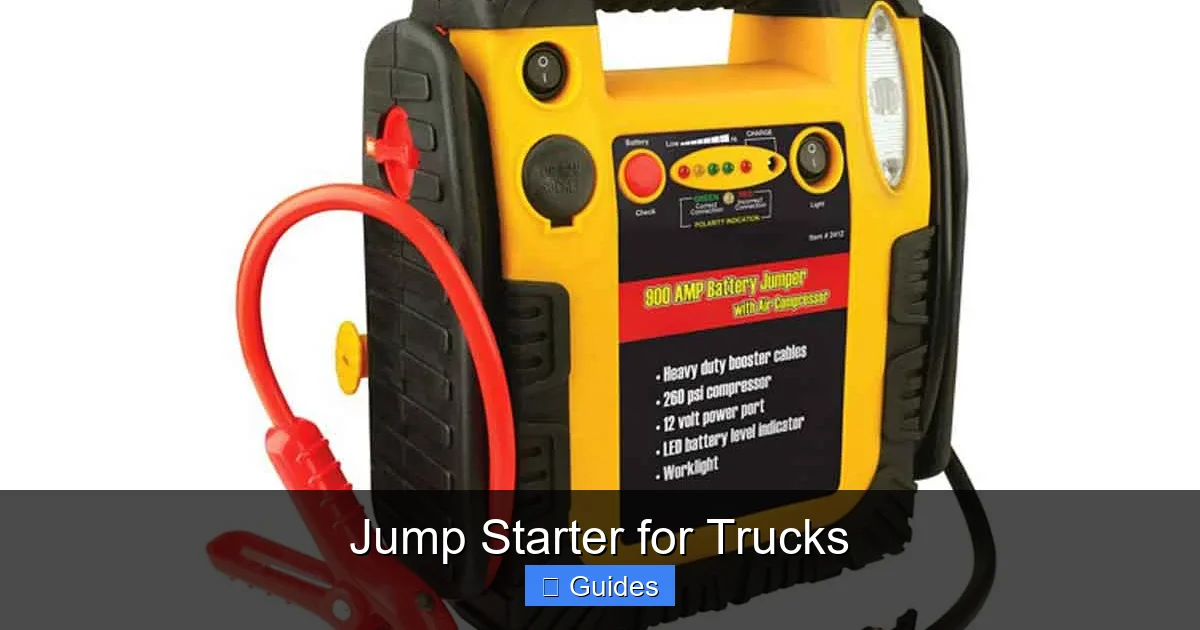
A jump starter for trucks is a must-have tool for anyone driving heavy-duty vehicles, especially in cold weather or remote areas. Unlike standard car jump starters, truck-specific models deliver higher cranking amps to power large diesel engines. With the right jump starter, you can avoid costly towing fees and get your rig running in minutes—no second vehicle needed.
In This Article
- 1 Key Takeaways
- 2 📑 Table of Contents
- 3 What Is a Jump Starter for Trucks?
- 4 Key Features to Look for in a Truck Jump Starter
- 5 Top Jump Starters for Trucks in 2024
- 6 How to Use a Jump Starter for Trucks Safely
- 7 Maintenance and Care Tips
- 8 Common Mistakes to Avoid
- 9 Conclusion
- 10 Frequently Asked Questions
- 10.1 Can a regular car jump starter work on a truck?
- 10.2 How long does a truck jump starter take to recharge?
- 10.3 Can I use a jump starter in cold weather?
- 10.4 How many times can a jump starter be used on one charge?
- 10.5 Is it safe to leave a jump starter connected while driving?
- 10.6 Do jump starters work on 24V truck systems?
Key Takeaways
- Higher Power Output: Truck jump starters deliver 1000+ peak amps to handle large diesel engines, unlike standard car models.
- Portable and Self-Contained: No need for another vehicle—these devices store power and let you jump-start independently.
- Battery Compatibility Matters: Choose a jump starter compatible with 12V and 24V systems, common in commercial and heavy-duty trucks.
- Safety Features Are Crucial: Look for reverse polarity protection, spark-proof clamps, and overload safeguards to prevent damage.
- Additional Functions Add Value: Many models include USB ports, LED lights, and air compressors for roadside emergencies.
- Regular Maintenance Extends Life: Charge your jump starter every 3–6 months to ensure it’s ready when needed.
- Invest in Quality: A reliable jump starter is cheaper than repeated towing calls—don’t skimp on performance.
📑 Table of Contents
What Is a Jump Starter for Trucks?
Imagine you’re hauling a full load across state lines, and your truck won’t start. The battery’s dead, and there’s no other vehicle in sight. That’s where a jump starter for trucks comes in. Unlike traditional jumper cables that require a second vehicle, a truck jump starter is a standalone, battery-powered device that gives your engine the boost it needs to fire up.
These devices are built specifically for heavy-duty vehicles like semi-trucks, dump trucks, RVs, and large pickups. They pack significantly more power than standard car jump starters—often delivering 1000 to 4000 peak amps—to handle the high-compression diesel engines found in most commercial trucks. With built-in safety features and portable designs, they’re essential gear for long-haul drivers, fleet managers, and anyone who relies on their truck for work or travel.
How Does a Truck Jump Starter Work?
A jump starter for trucks works by storing electrical energy in an internal lithium-ion or lead-acid battery. When your truck’s battery is dead, you connect the jump starter’s heavy-duty clamps to the battery terminals—positive to positive, negative to negative—and turn on the device. It then delivers a powerful surge of current to crank the engine.
Most modern jump starters use smart technology to detect the correct polarity and prevent sparks or short circuits. Once the engine starts, you disconnect the clamps and let the truck’s alternator recharge its own battery. The jump starter itself can be recharged via a wall outlet, car charger, or even a solar panel in some advanced models.
Why Trucks Need Specialized Jump Starters
Not all jump starters are created equal. A standard car jump starter might work for a small sedan, but it won’t cut it for a diesel-powered truck. Truck engines are larger, have higher compression ratios, and require more cranking power to start—especially in cold weather.
For example, a typical diesel truck engine might need 800 to 1200 cold cranking amps (CCA) just to turn over. A regular jump starter might only deliver 300–600 peak amps, which isn’t enough. That’s why truck-specific jump starters are designed with higher amp outputs, robust internal batteries, and durable construction to withstand the demands of heavy-duty use.
Key Features to Look for in a Truck Jump Starter
Choosing the right jump starter for trucks can feel overwhelming with so many options on the market. But focusing on a few key features will help you make a smart decision. Here’s what to prioritize when shopping.
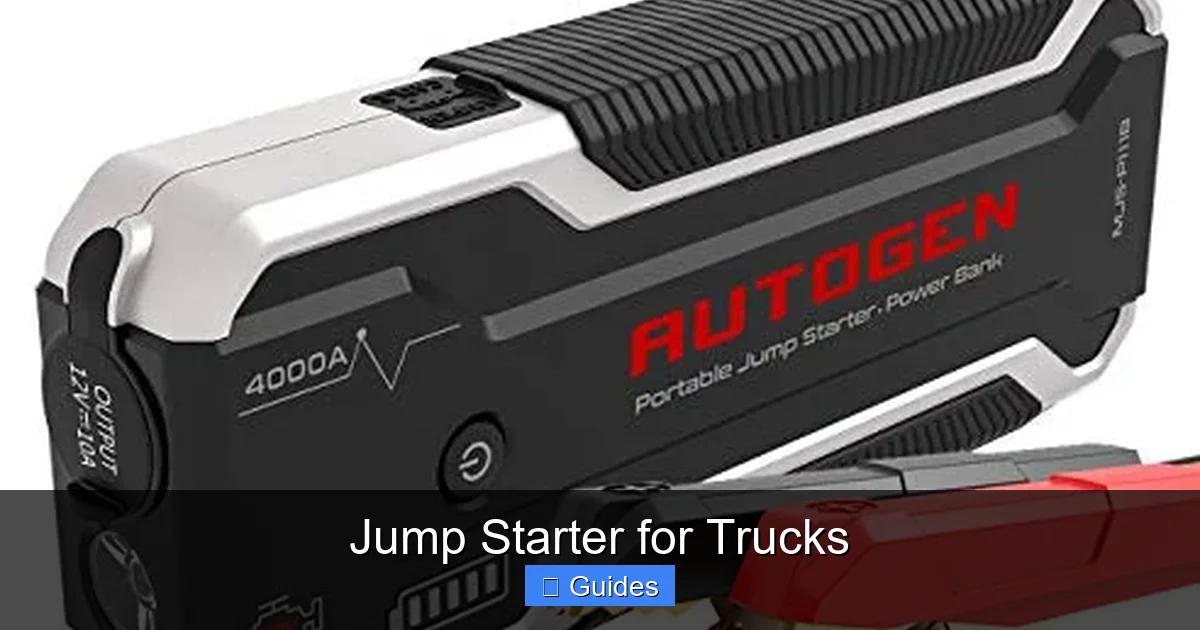
Visual guide about Jump Starter for Trucks
Image source: bestof.info
Peak and Cranking Amps
The most important spec is the peak amperage. This tells you how much power the jump starter can deliver in a burst. For trucks, look for a minimum of 1000 peak amps, but 2000–4000 is ideal for larger diesel engines. Also check the cranking amps (CA) and cold cranking amps (CCA)—these indicate performance at room temperature and in cold conditions, respectively.
For example, the NOCO Boost HD GB150 delivers 3000 peak amps and can jump-start vehicles up to 9.0L gas and 7.0L diesel engines. That’s more than enough for most pickup trucks and light commercial rigs. Meanwhile, the Jump-N-Carry JNC660 offers 1700 peak amps and is a favorite among fleet operators for its reliability.
Battery Type and Capacity
Most modern jump starters use lithium-ion batteries because they’re lightweight, charge quickly, and hold a charge longer. However, some heavy-duty models still use AGM (absorbent glass mat) lead-acid batteries for extra durability and higher surge capacity.
Capacity is measured in ampere-hours (Ah). A higher Ah rating means the jump starter can deliver more power over time. For trucks, aim for at least 18Ah. This ensures you can get multiple jump starts on a single charge, which is helpful if you’re in a remote area or dealing with a weak battery that needs several attempts.
Voltage Compatibility
Most trucks run on 12V systems, but some larger commercial vehicles use 24V systems. Make sure your jump starter supports the voltage of your truck. Many high-end models offer dual-voltage capability, allowing you to switch between 12V and 24V modes. This is especially useful if you operate multiple types of vehicles.
For instance, the Clore Automotive Jump-N-Carry JNC770R includes a 24V mode and delivers 2500 peak amps, making it perfect for heavy-duty trucks and construction equipment. Always double-check your vehicle’s electrical system before purchasing.
Safety Features
Safety should never be an afterthought. A good jump starter for trucks includes multiple protections to prevent accidents and damage. Look for:
- Reverse Polarity Protection: Alerts you if the clamps are connected incorrectly.
- Spark-Proof Technology: Prevents sparks when connecting or disconnecting.
- Overload and Short-Circuit Protection: Shuts off power if there’s a surge or fault.
- Overheating Protection: Automatically turns off if the device gets too hot.
These features not only protect your truck’s electrical system but also keep you safe during use. Many premium models also include audible and visual alerts (like beeps or LED indicators) to guide you through the process.
Portability and Build Quality
Even though trucks are big, you still want a jump starter that’s easy to carry and store. Look for a compact design with a comfortable handle and durable casing. Rubberized grips and reinforced corners help protect the device from drops and vibrations.
Weight matters too. A jump starter weighing 10–15 pounds is manageable for most people, but some heavy-duty models can weigh over 20 pounds. If you’re frequently on the road, consider a lighter lithium-ion model. For shop use or fleet operations, a heavier AGM model might be worth the extra durability.
Additional Functions
Many jump starters for trucks come with bonus features that add real value during emergencies. These include:
- USB Charging Ports: Power your phone, GPS, or tablet while on the road.
- 12V DC Outlet: Run small devices like air compressors or coolers.
- LED Flashlight: Built-in lights with strobe or SOS modes for nighttime use.
- Air Compressor: Some models include a built-in pump to inflate tires—handy for off-road or long-haul trips.
For example, the DEWALT DXAEJ14 jump starter includes a 12V air compressor, two USB ports, and a bright LED light. It’s a great all-in-one solution for drivers who want more than just a jump start.
Top Jump Starters for Trucks in 2024
With so many options available, it helps to know which models stand out. Here are some of the best jump starters for trucks based on performance, reliability, and user reviews.
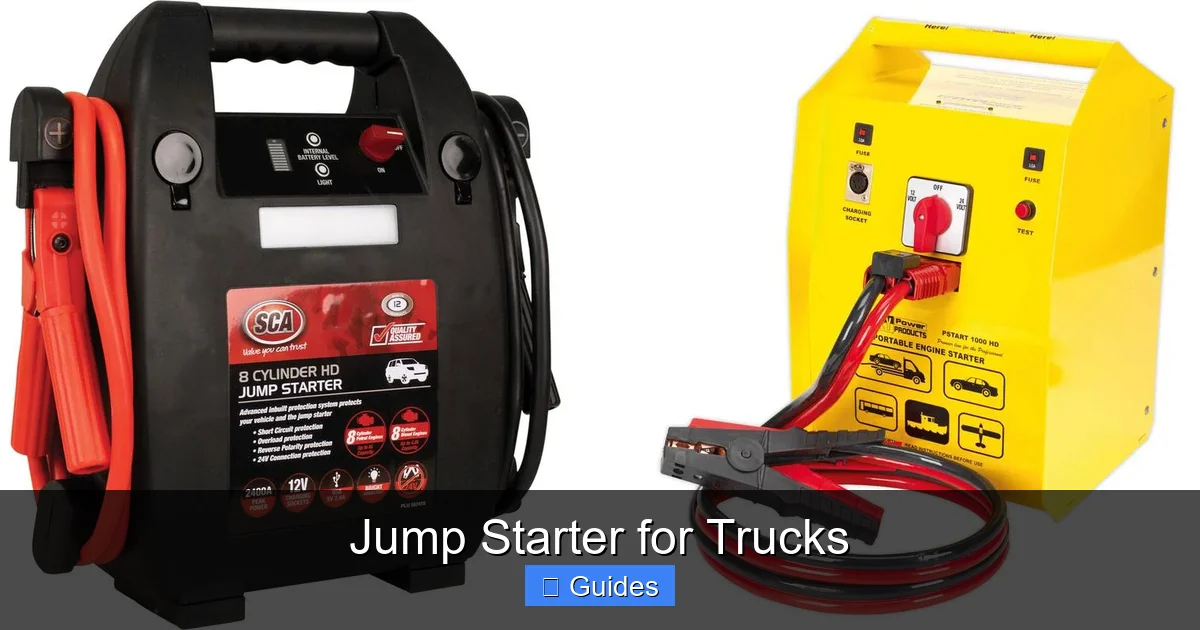
Visual guide about Jump Starter for Trucks
Image source: docerp.s3.amazonaws.com
1. NOCO Boost HD GB150
This lithium-ion jump starter delivers 3000 peak amps and can handle engines up to 9.0L gas and 7.0L diesel. It’s compact, lightweight (just 2.4 lbs), and features ultra-safe technology with spark-proof clamps and reverse polarity protection. It also includes a USB port and a bright LED flashlight. Perfect for pickup trucks, RVs, and light commercial vehicles.
2. Jump-N-Carry JNC660
A classic in the industry, the JNC660 uses a heavy-duty AGM battery and delivers 1700 peak amps. It’s built like a tank, with industrial-grade clamps and a rugged casing. While it’s heavier (about 18 lbs), it’s ideal for fleet use and extreme conditions. It also has a built-in voltmeter to check battery health.
3. Clore Automotive JNC770R
Designed for heavy-duty trucks, this model offers 2500 peak amps and dual 12V/24V compatibility. It’s a favorite among truckers and mechanics for its reliability and power. The large, easy-to-read display shows voltage and charging status, and it includes multiple safety features. Great for semi-trucks and construction equipment.
4. DEWALT DXAEJ14
This multi-tool jump starter includes a 1000-amp jump starter, 12V air compressor, and USB charging ports. It’s perfect for drivers who want an all-in-one emergency kit. The compressor can inflate tires up to 160 PSI, and the LED light has three modes. Ideal for off-road adventures and long-haul trips.
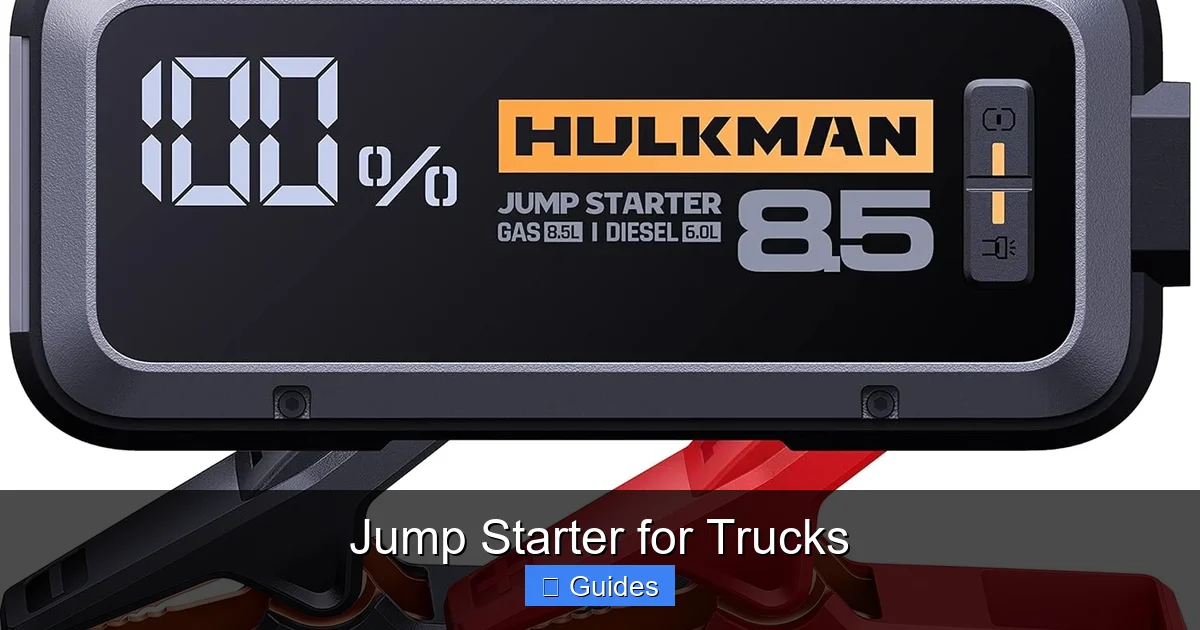
5. Hulkman Alpha85
A newer player in the market, the Hulkman Alpha85 delivers 2000 peak amps and supports up to 8.5L gas and 8.0L diesel engines. It features a large LCD screen, fast charging via USB-C, and a built-in flashlight. It’s also very portable at just 3.3 lbs, making it a great choice for modern truck owners.
How to Use a Jump Starter for Trucks Safely
Using a jump starter for trucks is simple, but safety is key. Follow these steps to ensure a successful and safe jump start every time.
Visual guide about Jump Starter for Trucks
Image source: m.media-amazon.com
Step 1: Prepare the Vehicle
Turn off the ignition and all electrical accessories (lights, radio, AC). Make sure the truck is in park (or neutral for manual transmissions) and the parking brake is engaged. Open the hood and locate the battery. Clean any corrosion from the terminals with a wire brush if necessary.
Step 2: Connect the Clamps
Attach the red (positive) clamp to the positive terminal of the dead battery. Then attach the black (negative) clamp to a grounded metal surface on the engine block—never to the negative battery terminal. This reduces the risk of sparks near the battery, which can emit flammable gases.
Step 3: Power On the Jump Starter
Turn on the jump starter and wait a few seconds for it to initialize. Some models will display battery voltage or run a self-check. If the device has a “boost” or “start” mode, activate it now.
Step 4: Start the Engine
Turn the ignition key and attempt to start the truck. If it doesn’t start immediately, wait 30–60 seconds before trying again. Most jump starters can deliver multiple attempts on a single charge.
Step 5: Disconnect and Recharge
Once the engine is running, disconnect the clamps in reverse order: black first, then red. Turn off the jump starter and store it safely. Drive the truck for at least 20–30 minutes to allow the alternator to recharge the battery. Recharge the jump starter as soon as possible.
Safety Tips
- Never touch the clamps together while connected to a battery.
- Don’t use a jump starter in rain or snow unless it’s rated for outdoor use.
- Keep the device away from children and pets.
- Store in a cool, dry place and recharge every 3–6 months.
Maintenance and Care Tips
A jump starter for trucks is an investment, and proper care ensures it lasts for years. Here’s how to keep it in top condition.
Regular Charging
Even when not in use, lithium-ion batteries slowly lose charge. To prevent deep discharge, recharge your jump starter every 3–6 months. Most models have an indicator light or display that shows battery level. If the charge drops below 50%, plug it in.
Clean the Clamps and Ports
Dirt, grease, and corrosion can interfere with connections. Wipe the clamps and charging ports with a dry cloth regularly. Avoid using water or solvents unless specified by the manufacturer.
Store Properly
Keep the jump starter in a dry, temperature-controlled environment. Extreme heat or cold can damage the internal battery. If you’re storing it for winter, make sure it’s fully charged—cold temperatures reduce battery performance.
Check for Damage
Inspect the cables, clamps, and casing for cracks, fraying, or wear. If you notice any damage, stop using the device and contact the manufacturer. Don’t attempt to repair it yourself.
Update Firmware (If Applicable)
Some smart jump starters allow firmware updates via USB or app. Check the manufacturer’s website periodically for updates that improve performance or safety features.
Common Mistakes to Avoid
Even experienced drivers make errors when using jump starters. Avoid these common pitfalls to stay safe and protect your equipment.
Using the Wrong Jump Starter
Don’t assume a car jump starter will work for your truck. Diesel engines need more power. Using an underpowered device can damage the jump starter or fail to start the engine.
Incorrect Clamp Connection
Connecting the clamps backward can cause sparks, damage electronics, or even explode the battery. Always double-check: red to positive, black to ground.
Ignoring Safety Alerts
If the jump starter beeps, flashes, or displays an error, stop and read the manual. It might be detecting reverse polarity, low charge, or a fault in the battery.
Overusing the Device
Most jump starters can handle 3–5 starts per charge. If your truck won’t start after several attempts, there may be a deeper issue—like a faulty alternator or starter motor. Don’t keep trying; call a mechanic.
Storing Without Charge
A dead jump starter is useless when you need it most. Make charging part of your routine, especially before long trips or winter months.
Conclusion
A jump starter for trucks is more than just a convenience—it’s a lifeline when you’re stranded with a dead battery. Whether you’re a long-haul driver, fleet operator, or weekend adventurer, having a reliable, high-powered jump starter can save you time, money, and stress.
When choosing a model, focus on peak amps, voltage compatibility, safety features, and additional functions like USB ports or air compressors. Invest in quality, maintain it properly, and always follow safety guidelines. With the right jump starter in your cab, you’ll never have to worry about being stuck with a dead truck battery again.
Frequently Asked Questions
Can a regular car jump starter work on a truck?
Most car jump starters don’t deliver enough power for truck engines, especially diesel ones. They typically provide 300–600 peak amps, while trucks often need 1000+ amps. Using an underpowered device may fail to start the engine or damage the jump starter.
How long does a truck jump starter take to recharge?
Recharge time varies by model and battery type. Lithium-ion jump starters usually charge in 2–4 hours via a wall outlet. AGM models may take 6–12 hours. Some support fast charging or solar input for quicker turnaround.
Can I use a jump starter in cold weather?
Yes, but cold reduces battery performance. Look for a jump starter with high cold cranking amps (CCA) and store it in a warm place when possible. Many models are designed to work in temperatures as low as -4°F (-20°C).
How many times can a jump starter be used on one charge?
Most truck jump starters can deliver 3–5 successful starts on a full charge, depending on engine size and battery condition. Larger engines or weak batteries may reduce the number of attempts.
Is it safe to leave a jump starter connected while driving?
No. Always disconnect the jump starter once the engine is running. Leaving it connected can overload the device or damage the truck’s electrical system. The alternator will recharge the battery while driving.
Do jump starters work on 24V truck systems?
Only if the jump starter is specifically designed for 24V systems. Many heavy-duty models offer dual 12V/24V modes. Check the product specs before purchasing to ensure compatibility with your vehicle.

At CarLegit, we believe information should be clear, factual, and genuinely helpful. That’s why every guide, review, and update on our website is created with care, research, and a strong focus on user experience.