
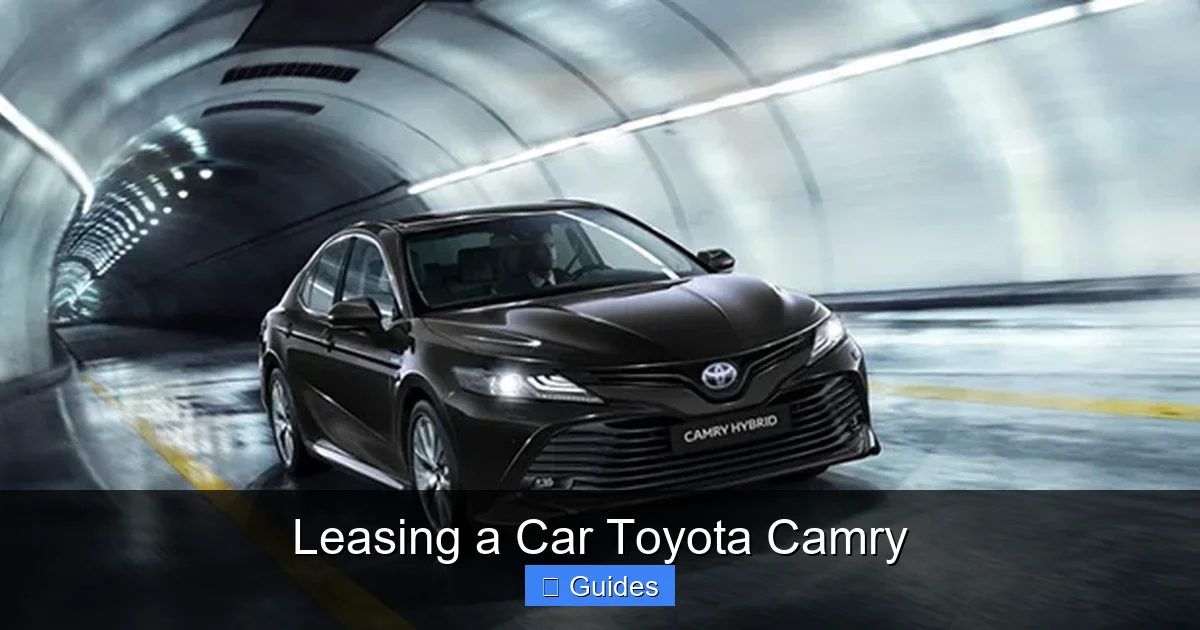
Leasing a Toyota Camry offers lower monthly payments, warranty coverage, and the chance to drive a new vehicle every few years. It’s a smart choice if you want reliability, fuel efficiency, and the latest tech without the long-term commitment of ownership.
In This Article
- 1 Key Takeaways
- 2 📑 Table of Contents
- 3 Why Leasing a Toyota Camry Makes Sense
- 4 How Car Leasing Works (And Why It Fits the Camry)
- 5 Cost Breakdown: What to Expect When Leasing a Toyota Camry
- 6 Pros and Cons of Leasing a Toyota Camry
- 7 Tips for Getting the Best Toyota Camry Lease Deal
- 8 End-of-Lease Options: What Happens After 36 Months?
- 9 Final Thoughts: Is Leasing a Toyota Camry Right for You?
- 10 Frequently Asked Questions
- 10.1 How much does it cost to lease a Toyota Camry per month?
- 10.2 Can I negotiate a Toyota Camry lease deal?
- 10.3 What happens if I go over my mileage limit?
- 10.4 Is it better to lease or buy a Toyota Camry?
- 10.5 Do I need full coverage insurance when leasing a Camry?
- 10.6 Can I end my Toyota Camry lease early?
Key Takeaways
- Lower Monthly Payments: Leasing a Toyota Camry typically costs less per month than buying, freeing up your budget for other expenses.
- Warranty Protection: Most leases fall within the manufacturer’s warranty period, so repairs are usually covered.
- Drive New Every Few Years: Leasing lets you upgrade to a new Camry every 2–4 years with the latest safety and tech features.
- Mileage and Wear Limits: Leases come with mileage caps (usually 10,000–15,000 miles/year) and rules about vehicle condition—exceeding them can result in fees.
- No Equity Build-Up: Unlike buying, leasing doesn’t build ownership value, so you won’t have an asset at the end of the term.
- Tax and Fee Considerations: Some states offer tax savings on leases, but you’ll still pay acquisition fees, down payments, and other charges upfront.
- Ideal for Predictable Drivers: If you drive under 12,000 miles a year and keep cars in good shape, leasing a Toyota Camry could be a great fit.
📑 Table of Contents
- Why Leasing a Toyota Camry Makes Sense
- How Car Leasing Works (And Why It Fits the Camry)
- Cost Breakdown: What to Expect When Leasing a Toyota Camry
- Pros and Cons of Leasing a Toyota Camry
- Tips for Getting the Best Toyota Camry Lease Deal
- End-of-Lease Options: What Happens After 36 Months?
- Final Thoughts: Is Leasing a Toyota Camry Right for You?
Why Leasing a Toyota Camry Makes Sense
Let’s be honest—nobody wants to deal with car payments that stretch out for six or seven years. If you’re looking for a reliable, comfortable, and fuel-efficient sedan without the long-term financial burden of ownership, leasing a Toyota Camry might be the perfect solution. The Camry has long been a favorite among drivers for its smooth ride, strong resale value, and reputation for lasting well over 200,000 miles. But instead of buying one outright, leasing gives you access to all those benefits with lower monthly costs and less hassle.
Leasing a car isn’t just for luxury brands or business executives. In fact, mainstream models like the Toyota Camry are among the most popular vehicles to lease because they hold their value well and come with strong factory warranties. When you lease a Camry, you’re essentially paying for the vehicle’s depreciation during the lease term—not the full price. That means your monthly payment is significantly lower than if you were financing a purchase. Plus, since most leases last 24 to 36 months, you’ll always be driving a nearly new car with the latest safety features, infotainment systems, and fuel-efficient engines.
How Car Leasing Works (And Why It Fits the Camry)
Before diving into the specifics of leasing a Toyota Camry, it helps to understand how leasing actually works. Think of it like renting a car—but for a much longer period, usually two to four years. You agree to pay a set monthly amount based on how much the car is expected to lose in value (depreciation) during that time. At the end of the lease, you return the vehicle to the dealership (assuming you haven’t exceeded mileage limits or caused excessive wear), and you’re free to walk away or lease another new car.
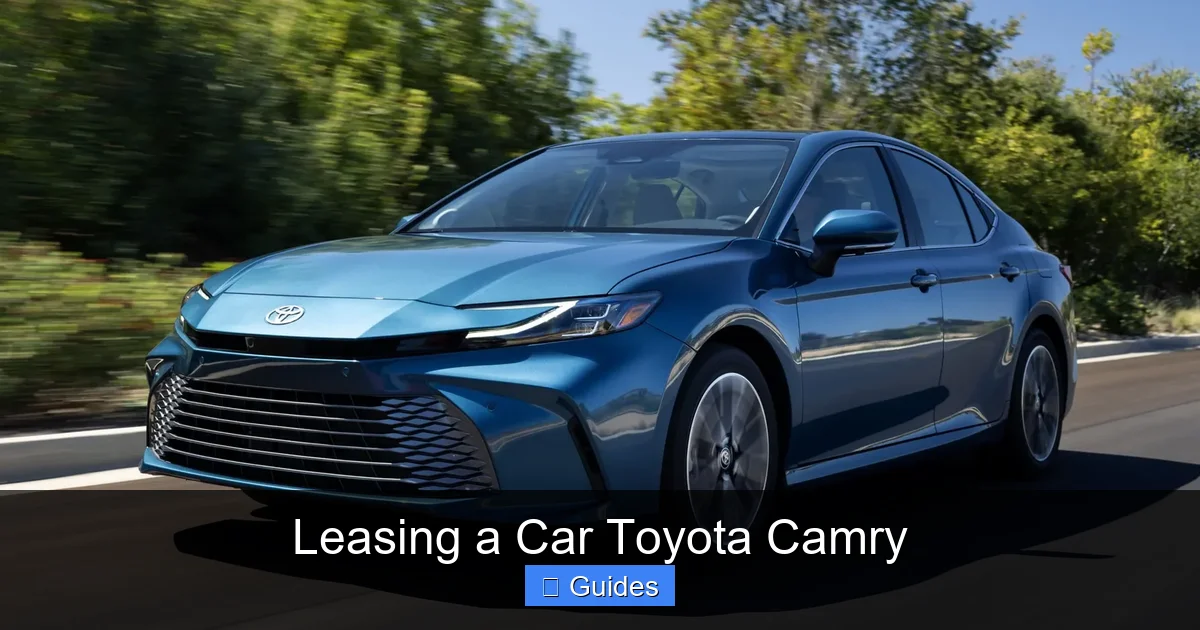
Visual guide about Leasing a Car Toyota Camry
Image source: topgear.com
Key Components of a Lease Agreement
Every lease has three main factors that determine your monthly payment:
- Capitalized Cost: This is the negotiated price of the car—similar to the purchase price if you were buying. The lower this number, the lower your monthly payment.
- Residual Value: This is the estimated value of the car at the end of the lease. Toyota Camrys typically have high residual values (often 55–65% after 36 months), which keeps lease payments low.
- Money Factor: This is the lease equivalent of an interest rate. It’s usually a small decimal (like 0.00250), which translates to about 6% APR. Multiply it by 2,400 to get a rough APR estimate.
Your monthly payment is calculated by taking the difference between the capitalized cost and residual value (the depreciation), dividing it by the lease term, and then adding finance charges and taxes.
Why the Camry Is a Great Lease Candidate
The Toyota Camry shines in the leasing world because of its strong resale value and low maintenance costs. Toyota vehicles consistently rank at the top of reliability studies, meaning they depreciate more slowly than many competitors. That slow depreciation translates directly into lower lease payments. Additionally, the Camry comes standard with Toyota Safety Sense™, a suite of advanced driver-assistance features like automatic emergency braking, lane departure warning, and adaptive cruise control—features that are not only safer but also help maintain the car’s condition over time.
Cost Breakdown: What to Expect When Leasing a Toyota Camry
One of the biggest appeals of leasing a Toyota Camry is affordability. But it’s important to understand all the costs involved so there are no surprises. While your monthly payment will likely be $50–$150 less than a comparable loan payment, you’ll still need to budget for upfront fees, insurance, and potential end-of-lease charges.
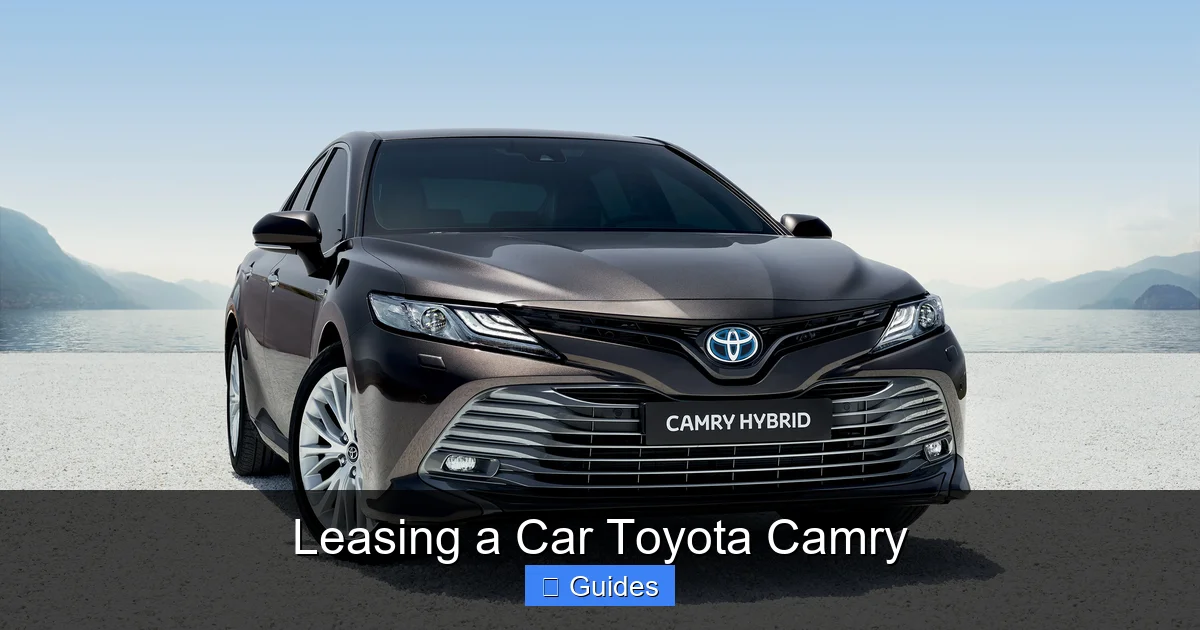
Visual guide about Leasing a Car Toyota Camry
Image source: hdcarwallpapers.com
Typical Monthly Payment Range
As of 2024, leasing a new Toyota Camry (LE or SE trim) typically ranges from $299 to $449 per month for a 36-month lease with 10,000–12,000 miles per year. Higher trims like the XLE or XSE may cost $450–$550/month. These estimates assume a modest down payment (sometimes called a “cap cost reduction”) of $2,000–$3,000. Some promotional leases may offer $0 down, but that usually increases the monthly payment.
Upfront Costs to Budget For
When you sign a lease, you’ll likely pay several fees at signing:
- Acquisition Fee: $595–$895 (sometimes negotiable or waived in promotions)
- Down Payment: Optional, but reduces monthly payments
- First Month’s Payment: Due at signing
- Security Deposit: Often waived for qualified lessees
- Taxes and Registration: Varies by state
For example, a common “due at signing” amount might be around $3,000, including the first month’s payment, acquisition fee, and taxes.
Insurance and Maintenance Costs
Leasing doesn’t eliminate insurance—in fact, lenders require full coverage (comprehensive and collision) with low deductibles, which can increase your premium slightly compared to owning an older car. However, since the Camry is known for reliability and comes with a 3-year/36,000-mile basic warranty (plus a 5-year/60,000-mile powertrain warranty), you’ll rarely face unexpected repair bills during the lease term. Routine maintenance like oil changes and tire rotations are often covered under ToyotaCare, a complimentary maintenance plan included with new vehicles for the first 2 years or 25,000 miles.
Pros and Cons of Leasing a Toyota Camry
Like any financial decision, leasing has its advantages and drawbacks. Whether it’s right for you depends on your driving habits, budget, and long-term goals.

Visual guide about Leasing a Car Toyota Camry
Image source: hdcarwallpapers.com
Top Benefits of Leasing
- Lower Monthly Payments: You’re only paying for depreciation, not the entire vehicle.
- Warranty Coverage: Most repairs are covered during the lease term.
- Latest Technology: Drive a new Camry every few years with updated infotainment, safety, and efficiency features.
- No Trade-In Hassle: Simply return the car at the end—no need to sell or negotiate with private buyers.
- Potential Tax Advantages: In some states, you only pay sales tax on the monthly payment, not the full vehicle price.
Common Drawbacks to Consider
- Mileage Restrictions: Exceeding your annual limit (e.g., 12,000 miles) can cost $0.15–$0.25 per extra mile.
- Wear and Tear Fees: Significant dents, stains, or mechanical issues may result in charges at return.
- No Ownership: You don’t build equity, and payments stop once the lease ends.
- Early Termination Fees: Ending a lease early can be expensive—often equivalent to several months of payments.
- Customization Limits: You can’t modify the car (e.g., lift kits, aftermarket stereos) without risking penalties.
Who Should (and Shouldn’t) Lease a Camry
Leasing a Toyota Camry is ideal if you:
- Drive less than 12,000 miles per year
- Prefer driving a new car every 2–4 years
- Want lower monthly payments and minimal repair worries
- Don’t plan to keep the car long-term
On the flip side, leasing may not be best if you:
- Put high mileage on your vehicle (e.g., long commutes or road trips)
- Like to customize or modify your car
- Plan to keep the car for 5+ years (buying may save money long-term)
- Want to build equity or use the car as an asset
Tips for Getting the Best Toyota Camry Lease Deal
Just because leasing offers lower payments doesn’t mean you should accept the first offer you see. With a little strategy, you can save hundreds—or even thousands—over the life of your lease.
Negotiate the Capitalized Cost
The most important number in your lease is the capitalized cost (the price of the car). Dealers often quote a high “sticker price” but expect negotiation. Research the invoice price (what the dealer paid) using tools like Edmunds or Kelley Blue Book, and aim to negotiate below MSRP. Even a $1,000 reduction can lower your monthly payment by $25–$30 over 36 months.
Time Your Lease Right
End-of-year sales (November–January) and new model-year launches (late summer) are prime times to find lease specials. Toyota often offers promotional lease deals with reduced money factors, waived acquisition fees, or cash incentives. Signing a lease during these periods can significantly reduce your cost.
Watch the Money Factor
Don’t let dealers hide the money factor in fine print. Ask for it directly and convert it to an APR (multiply by 2,400). If it’s above 5–6%, consider shopping around or waiting for a better promotion. A lower money factor means less interest paid over the lease term.
Consider a Higher Residual Value Trim
Some Camry trims hold their value better than others. The base LE and mid-level SE often have higher residual percentages than fully loaded XSE models. Choosing a slightly lower trim with essential features can result in a lower monthly payment without sacrificing much in comfort or performance.
Avoid Excess Upfront Payments
While putting money down lowers your monthly payment, it also increases your risk if the car is totaled or stolen. Instead of a large down payment, consider rolling any equity from a trade-in into the new lease or using a “walk-away” lease structure where you pay only monthly fees.
End-of-Lease Options: What Happens After 36 Months?
When your Toyota Camry lease ends, you typically have three choices: return the car, buy it, or lease a new one.
Return the Vehicle
This is the most common option. Before returning, schedule a pre-inspection with the dealer to identify any excess wear or mileage overages. Clean the car thoroughly—interior and exterior—to avoid detailing fees. Most dealers allow minor wear (like small door dings), but large scratches, upholstery stains, or tire wear beyond normal may incur charges.
Purchase the Car
If you’ve fallen in love with your Camry, you can buy it at its residual value (pre-determined in your lease contract). This price is often lower than market value, especially if the car has held its value well. You’ll need to pay taxes, registration, and possibly a purchase option fee, but it could be a smart move if you plan to keep driving it long-term.
Lease a New Toyota
Many lessees choose to roll into a new lease—sometimes even upgrading to a newer Camry or switching to a RAV4 or Highlander. Dealers often offer loyalty incentives or waive fees for returning customers. Just remember: you’ll start the cycle again with new mileage limits and potential upfront costs.
Final Thoughts: Is Leasing a Toyota Camry Right for You?
Leasing a Toyota Camry isn’t just about driving a reliable sedan—it’s about making a smart financial choice that aligns with your lifestyle. If you value predictability, lower monthly expenses, and the joy of driving a nearly new car every few years, leasing could be a great fit. The Camry’s strong resale value, excellent warranty coverage, and fuel-efficient engines (including hybrid options) make it one of the most lease-friendly vehicles on the market.
That said, leasing isn’t for everyone. If you’re a high-mileage driver, love customizing your ride, or plan to keep a car for a decade, buying might save you money in the long run. But for city commuters, families needing a dependable daily driver, or anyone who enjoys upgrading to the latest tech without the hassle of selling, leasing a Toyota Camry offers a compelling blend of affordability, comfort, and peace of mind.
Before signing, always read the fine print, compare multiple offers, and ask questions. With the right approach, leasing a Toyota Camry can be a smooth, stress-free way to enjoy one of America’s most trusted sedans—without breaking the bank.
Frequently Asked Questions
How much does it cost to lease a Toyota Camry per month?
Monthly payments for a leased Toyota Camry typically range from $299 to $449 for a 36-month term, depending on the trim, down payment, and mileage allowance. Higher trims or lower mileage limits may increase the cost.
Can I negotiate a Toyota Camry lease deal?
Yes! You can negotiate the capitalized cost (price of the car), money factor (interest rate), and even some fees. Research invoice pricing and shop around at multiple dealerships to get the best offer.
What happens if I go over my mileage limit?
Most Toyota Camry leases allow 10,000–15,000 miles per year. Exceeding this limit usually results in a charge of $0.15–$0.25 per additional mile, which is billed when you return the vehicle.
Is it better to lease or buy a Toyota Camry?
Leasing is better if you want lower payments, drive under 12,000 miles/year, and prefer driving a new car every few years. Buying is better if you plan to keep the car long-term, drive high mileage, or want to build equity.
Do I need full coverage insurance when leasing a Camry?
Yes. Lease agreements require comprehensive and collision insurance with low deductibles (usually $500 or less) to protect the lender’s asset. This is more coverage than state minimums.
Can I end my Toyota Camry lease early?
Ending a lease early is possible but usually expensive. You may owe several months of payments plus an early termination fee. Some dealers offer lease transfer programs to reduce costs.

At CarLegit, we believe information should be clear, factual, and genuinely helpful. That’s why every guide, review, and update on our website is created with care, research, and a strong focus on user experience.