
Choosing between leasing and financing a car depends on your financial goals, driving habits, and long-term plans. This guide breaks down everything you need to know—from monthly costs and mileage limits to ownership and customization—so you can make the smartest decision for your situation.
In This Article
- 1 Key Takeaways
- 2 📑 Table of Contents
- 3 Leasing Vs Financing a Car: Which Is Right for You?
- 4 What Is Car Leasing?
- 5 What Is Car Financing?
- 6 Leasing vs Financing: A Side-by-Side Comparison
- 7 Who Should Lease a Car?
- 8 Who Should Finance a Car?
- 9 Tips for Making the Right Choice
- 10 Final Thoughts: Leasing vs Financing a Car
- 11 Frequently Asked Questions
Key Takeaways
- Leasing offers lower monthly payments and access to newer vehicles more frequently, but you don’t own the car and face mileage restrictions.
- Financing builds equity over time and allows full ownership once the loan is paid off, but typically comes with higher monthly payments.
- Leasing is ideal for drivers who want the latest tech and safety features every few years and don’t mind not owning their vehicle.
- Financing suits those who drive a lot, want to customize their car, or plan to keep it long-term.
- Early termination fees and wear-and-tear charges are common in leases, while financed cars can be sold or traded in at any time.
- Your credit score, down payment, and driving habits significantly impact which option is more cost-effective.
- Always read the fine print—whether leasing or financing—to avoid unexpected fees or penalties.
📑 Table of Contents
Leasing Vs Financing a Car: Which Is Right for You?
Buying a car is one of the biggest financial decisions most people make—right after purchasing a home. But before you even step onto a dealership lot, you’re faced with a critical choice: should you lease or finance your next vehicle? It’s a question that trips up even seasoned car shoppers, and for good reason. Both options have their perks and pitfalls, and what works for your neighbor might not work for you.
At first glance, leasing and financing might seem like two sides of the same coin. After all, both involve making regular payments to use a car. But dig a little deeper, and the differences become clear—and they matter. Leasing is like renting a car for an extended period, usually two to three years, with the option to return it at the end. Financing, on the other hand, means you’re taking out a loan to buy the car outright, and once you’ve made all the payments, it’s yours to keep, sell, or trade in.
So how do you decide? The answer depends on your lifestyle, budget, driving habits, and long-term goals. Maybe you love driving the latest models with cutting-edge tech and don’t want the hassle of selling a car later. Or perhaps you’re a high-mileage driver who values ownership and wants to build equity. This guide will walk you through every aspect of leasing vs financing a car, so you can make an informed decision with confidence.
What Is Car Leasing?

Visual guide about Leasing Vs Financing a Car
Image source: otford.sfo2.digitaloceanspaces.com
Leasing a car is essentially a long-term rental agreement. Instead of buying the vehicle, you pay for its depreciation during the lease term, plus interest and fees. At the end of the lease—typically 24 to 36 months—you return the car to the dealership, though you may have the option to buy it.
One of the biggest draws of leasing is the lower monthly payment. Because you’re only paying for the car’s loss in value during the lease period (not the full price), your out-of-pocket costs are usually significantly less than with a loan. For example, leasing a $40,000 SUV might cost $450 per month, while financing the same vehicle could run $650 or more, depending on the loan term and interest rate.
Leasing also gives you access to newer, more advanced vehicles more frequently. Since most leases last two to three years, you can upgrade to a new model every few years without the headache of selling or trading in your old car. This is especially appealing if you enjoy having the latest infotainment systems, safety features, or hybrid/electric technology.
How Leasing Works: A Step-by-Step Breakdown
When you lease a car, the dealership calculates your monthly payment based on three main factors: the car’s capitalized cost (similar to the purchase price), the residual value (what the car is expected to be worth at the end of the lease), and the money factor (the lease’s interest rate).
Here’s how it typically works:
– You negotiate the capitalized cost of the vehicle, just like you would when buying.
– The leasing company estimates the car’s residual value—say, 60% of its original price after three years.
– The difference between the capitalized cost and the residual value is the amount you’re financing—this is called the depreciation.
– You pay interest (the money factor) on that depreciation, plus any fees (acquisition fee, disposition fee, etc.).
– At the end of the lease, you return the car, assuming it’s in good condition and within the mileage limit.
For example, if you lease a $35,000 car with a 60% residual value after three years, you’re essentially paying for $14,000 in depreciation ($35,000 – $21,000), plus interest and fees. That’s why lease payments are lower than loan payments for the same vehicle.
Pros and Cons of Leasing
Like any financial decision, leasing has its advantages and drawbacks. Let’s break them down.
Pros:
– Lower monthly payments: You’ll typically pay less per month than with a loan.
– Lower down payment: Many leases require little or no down payment.
– Warranty coverage: Most leases fall within the manufacturer’s warranty period, so repairs are usually covered.
– Drive newer cars: You can upgrade every few years with the latest features.
– No resale hassle: Simply return the car at the end of the lease.
Cons:
– No ownership: You don’t build equity—you’re essentially renting.
– Mileage limits: Most leases cap mileage at 10,000 to 15,000 miles per year. Exceeding this can result in hefty fees (e.g., $0.25 per mile).
– Wear-and-tear charges: You may be charged for excessive damage beyond “normal use.”
– Early termination fees: Ending a lease early can cost thousands.
– Customization restrictions: You can’t modify the car without risking penalties.
What Is Car Financing?
Visual guide about Leasing Vs Financing a Car
Image source: blog-cdn.el.olx.com.pk
Financing a car means taking out a loan to purchase the vehicle. You make monthly payments over a set term—usually 36 to 72 months—and once the loan is paid off, the car is yours. Unlike leasing, financing builds equity: every payment brings you closer to full ownership.
Financing is the most common way people buy cars. It’s straightforward: you agree on a price, put down a down payment (if any), and finance the rest through a bank, credit union, or dealership. Interest rates vary based on your credit score, loan term, and the type of vehicle.
One of the biggest benefits of financing is that you own the car outright once the loan is paid. That means you can drive as many miles as you want, customize the vehicle, sell it, or trade it in whenever you choose. There are no mileage penalties or wear-and-tear fees—what you do with the car is up to you.
How Car Financing Works
When you finance a car, the lender loans you the money to buy it, and you repay that amount plus interest over time. The total cost includes the principal (the amount borrowed), interest, and any fees.
Here’s a simple example:
– You buy a $30,000 car with a $5,000 down payment.
– You finance $25,000 at a 5% interest rate over 60 months.
– Your monthly payment would be around $472.
– Over the life of the loan, you’ll pay about $3,300 in interest.
The longer the loan term, the lower your monthly payment—but the more interest you’ll pay overall. A 72-month loan might reduce your monthly payment by $50, but you could end up paying thousands more in interest.
Pros and Cons of Financing
Pros:
– Ownership: Once the loan is paid, the car is yours.
– No mileage limits: Drive as much as you want without penalties.
– Customization freedom: Modify the car however you like.
– Equity building: You can sell or trade in the car at any time.
– Potentially lower long-term cost: If you keep the car beyond the loan term, you’ll have no car payment.
Cons:
– Higher monthly payments: Loan payments are typically higher than lease payments.
– Larger down payment: Many lenders require 10–20% down.
– Depreciation: Cars lose value quickly—often 20% in the first year.
– Repair costs after warranty: Once the warranty expires, you’re responsible for maintenance.
– Risk of being “upside down”: You might owe more than the car is worth early in the loan.
Leasing vs Financing: A Side-by-Side Comparison
Visual guide about Leasing Vs Financing a Car
Image source: squareyards.ca
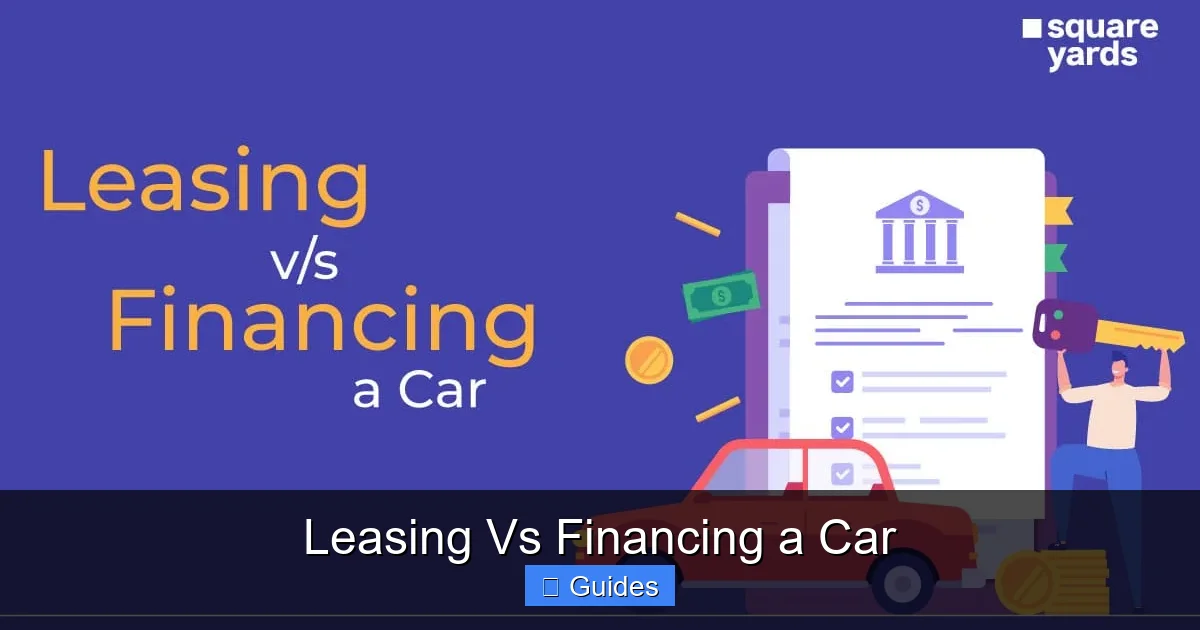
To help you visualize the differences, let’s compare leasing and financing across key factors.
Monthly Payments
Leasing usually wins when it comes to lower monthly payments. Because you’re only paying for depreciation, not the full value of the car, your out-of-pocket cost is typically 20–30% less than a loan payment for the same vehicle. For example, a $40,000 sedan might cost $400/month to lease but $550/month to finance over 60 months.
However, this advantage comes with trade-offs. While your monthly payment is lower, you’re not building equity. You’re essentially paying to use the car, not own it.
Ownership and Equity
This is where financing clearly shines. With a loan, every payment increases your ownership stake in the vehicle. After five years, that car is yours—free and clear. You can keep driving it, sell it, or trade it in.
With leasing, you have no equity. At the end of the term, you return the car and walk away (unless you choose to buy it). You’re always making payments, and you never truly “own” the vehicle.
Mileage and Usage
Leasing comes with strict mileage limits—usually 10,000 to 15,000 miles per year. If you exceed this, you’ll pay a per-mile fee, often $0.15 to $0.25. For high-mileage drivers (e.g., commuters or road-trippers), this can add up quickly.
Financing has no such restrictions. Drive 20,000 miles a year? No problem. The car is yours to use as you see fit.
Customization and Modifications
Want to install a custom sound system, lift kit, or performance exhaust? Go for it—if you finance. Leased vehicles must be returned in near-original condition. Any modifications may need to be reversed, or you could face charges.
End-of-Term Options
With a lease, your options are limited: return the car, buy it at the residual value, or lease a new one. There’s no flexibility beyond that.
With financing, you have full control. Sell it privately for top dollar, trade it in, or keep it for another 100,000 miles. The choice is yours.
Long-Term Cost
This is where things get tricky. Leasing may cost less per month, but you’re always paying. If you lease a car every three years for 15 years, you’ll never stop making payments.
Financing, while more expensive upfront, can be cheaper in the long run—especially if you keep the car after the loan is paid off. For example, a $30,000 car financed over five years might cost $35,000 total. If you drive it for 10 years, your average annual cost drops to $3,500. A lessee paying $400/month for 10 years would spend $48,000—and still not own a car.
Who Should Lease a Car?
Leasing isn’t for everyone—but it’s a great fit for certain drivers.
Tech Enthusiasts and Early Adopters
If you love having the latest features—like adaptive cruise control, wireless Apple CarPlay, or electric vehicle advancements—leasing lets you upgrade every few years without the hassle of selling.
Low-Mileage Drivers
If you drive less than 12,000 miles a year, leasing makes sense. You won’t hit mileage limits, and you’ll benefit from lower payments.
Business Owners (for Tax Benefits)
In some cases, businesses can deduct lease payments as a business expense. Consult a tax professional to see if leasing offers tax advantages for your situation.
Those Who Hate Car Maintenance
Since most leases fall within the warranty period, you’re covered for repairs. No surprise $1,000 transmission job out of pocket.
Who Should Finance a Car?
Financing is the better choice for many drivers—especially those who value ownership and long-term savings.
High-Mileage Drivers
If you drive more than 15,000 miles a year, leasing will cost you in overage fees. Financing lets you drive freely.
Long-Term Owners
If you plan to keep a car for 7–10 years, financing is almost always cheaper. Once the loan is paid, you have years of no payments ahead.
Customizers and DIYers
Want to lift your truck, tint your windows, or upgrade the engine? Financing gives you the freedom to personalize your ride.
People Building Credit
Making consistent, on-time loan payments can improve your credit score—something leasing doesn’t offer as effectively.
Tips for Making the Right Choice
Still unsure? Here are some practical tips to help you decide.
Assess Your Driving Habits
Track your annual mileage for a year. If it’s under 12,000, leasing might work. Over 15,000? Lean toward financing.
Calculate Total Cost of Ownership
Don’t just compare monthly payments. Use online calculators to estimate total costs over 5–7 years, including insurance, maintenance, and depreciation.
Check Your Credit Score
A higher credit score means better interest rates on loans and lower money factors on leases. Know where you stand before shopping.
Negotiate the Capitalized Cost
Whether leasing or financing, always negotiate the vehicle’s price. A lower price means lower payments in both cases.
Read the Fine Print
Lease agreements are full of details—mileage limits, wear-and-tear guidelines, early termination fees. Don’t skip the fine print.
Consider Gap Insurance
If you finance or lease, gap insurance covers the difference between what you owe and the car’s value if it’s totaled. Highly recommended for new cars.
Final Thoughts: Leasing vs Financing a Car
There’s no one-size-fits-all answer to the leasing vs financing debate. The best choice depends on your personal circumstances, financial goals, and driving habits.
If you value lower monthly payments, enjoy driving new cars every few years, and don’t mind not owning your vehicle, leasing could be the way to go. It’s ideal for low-mileage drivers, tech lovers, and those who want to avoid long-term commitments.
On the other hand, if you drive a lot, want to build equity, customize your car, or keep it for the long haul, financing is likely the better option. Yes, the payments are higher, but you’ll own the car outright—and potentially save money over time.
The key is to look beyond the monthly payment and consider the total cost, your lifestyle, and your future plans. Whether you choose to lease or finance, make sure you’re making a decision that aligns with your financial well-being and driving needs.
Remember: a car is a tool, not an investment. Choose the option that gives you the most value—not just today, but for years to come.
Frequently Asked Questions
Is it better to lease or finance a car?
It depends on your needs. Leasing offers lower payments and newer cars but no ownership. Financing builds equity and allows full use but costs more monthly. Consider your mileage, budget, and long-term goals.
Can you negotiate a lease?
Yes! You can negotiate the capitalized cost, money factor, and even the residual value. A lower price means lower payments, just like with financing.
What happens at the end of a lease?
You can return the car, buy it at the residual value, or lease a new one. Be aware of mileage limits and wear-and-tear charges when returning.
Do you build equity when leasing?
No. Leasing is like renting—you pay for use, not ownership. You don’t build equity, and the car isn’t yours at the end of the term.
Can you pay off a lease early?
Yes, but it often comes with early termination fees. Check your lease agreement for penalties before making extra payments.
Is leasing cheaper than financing?
Leasing usually has lower monthly payments, but over time, financing can be cheaper—especially if you keep the car after the loan is paid off.

At CarLegit, we believe information should be clear, factual, and genuinely helpful. That’s why every guide, review, and update on our website is created with care, research, and a strong focus on user experience.