
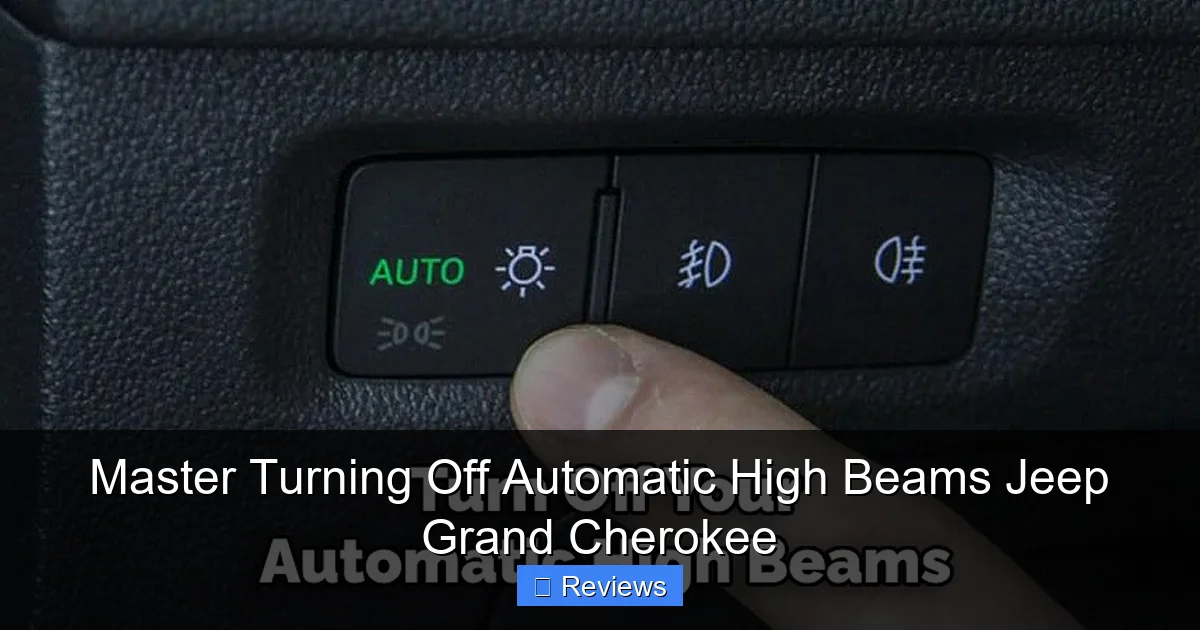
Featured image for how to turn off automatic high beams jeep grand cherokee
Image source: jeepfixes.com
Effortlessly disable your Jeep Grand Cherokee’s automatic high beams primarily through its Uconnect infotainment system. This straightforward adjustment allows drivers to take manual control, preventing unwanted bright light activation and enhancing nighttime driving precision. Easily customize your illumination preferences for a more comfortable and courteous journey.
Welcome, fellow Jeep Grand Cherokee enthusiasts and drivers who appreciate having full control over their vehicle’s sophisticated features! In the modern automotive landscape, vehicles are increasingly equipped with advanced technologies designed to enhance safety, convenience, and the overall driving experience. One such innovation that has become a staple in many premium vehicles, including your beloved Jeep Grand Cherokee, is the Automatic High Beam (AHB) system. This intelligent feature promises to lighten your load by automatically managing your high beams, ensuring optimal visibility without blinding oncoming traffic.
While the concept of your Jeep Grand Cherokee’s automatic high beams adjusting themselves might sound like a dream come true for many, there are situations where drivers prefer, or even need, to take manual command. Perhaps you frequently navigate roads with peculiar lighting conditions, encounter highly reflective signs that trick the system, or simply prefer the traditional control over your headlights. Whatever your reason, understanding how to effectively manage and, crucially, how to turn off the automatic high beams in your Jeep Grand Cherokee is an invaluable skill. This comprehensive guide is designed to empower you with the knowledge to master this particular aspect of your vehicle, ensuring you can tailor your driving experience to your precise preferences and conditions.
Navigating the various settings and controls in a technologically advanced vehicle like the Jeep Grand Cherokee can sometimes feel like a puzzle. From the infotainment system to the physical stalk controls, knowing where to look and what to do can make all the difference. This post will delve deep into the intricacies of your Jeep’s automatic high beams, review its functionality, provide clear, step-by-step instructions for deactivation, and offer practical tips to enhance your nighttime driving. Get ready to gain complete mastery over your lighting system and ensure every journey in your Jeep Grand Cherokee is as comfortable and controlled as you desire.
In This Article
- 1 Key Takeaways
- 2 Understanding Your Jeep Grand Cherokee’s Automatic High Beam System
- 3 The Primary Methods for Disabling Automatic High Beams
- 4 Advanced Tips and Troubleshooting for Automatic High Beams
- 5 Enhancing Your Driving Experience Beyond Automatic High Beams
- 6 A Comparative Look at Automatic High Beam Systems
- 7 Data Table: Understanding Automatic High Beam Control Methods
- 8 Conclusion: Mastering Your Jeep Grand Cherokee’s Automatic High Beams
- 9 Frequently Asked Questions
- 9.1 Can I permanently disable the automatic high beams feature on my Jeep Grand Cherokee?
- 9.2 How do I temporarily turn off automatic high beams if they engage at the wrong time in my Jeep Grand Cherokee?
- 9.3 Why might someone want to turn off automatic high beams on their Jeep Grand Cherokee?
- 9.4 Where can I find the setting to turn off automatic high beams in my Jeep Grand Cherokee’s Uconnect system?
- 9.5 How do I know if my Jeep Grand Cherokee is equipped with automatic high beams?
- 9.6 Does turning off automatic high beams affect other lighting features in my Jeep Grand Cherokee?
Key Takeaways
- Locate the headlight stalk on your Jeep’s left steering column.
- Momentarily push the stalk forward to disable automatic high beams.
- Observe the dashboard indicator (headlight with “A”) for status change.
- Permanently disable via Uconnect settings for lasting control.
- Navigate to “Settings” > “Lights” to find the relevant option.
- Toggle “Automatic High Beams” off within the Uconnect system.
Understanding Your Jeep Grand Cherokee’s Automatic High Beam System
Before we dive into the “how-to,” it’s essential to grasp what the automatic high beams system in your Jeep Grand Cherokee actually is, how it functions, and why it might sometimes need to be overridden. This knowledge forms the foundation for effective control and troubleshooting.
What Are Automatic High Beams (AHB)?
The automatic high beam system, often referred to as AHB, is a sophisticated safety and convenience feature found in many contemporary vehicles, including most recent models of the Jeep Grand Cherokee. At its core, AHB utilizes a forward-facing camera, typically mounted near the rearview mirror, to detect light sources in front of your vehicle. This camera constantly scans the road ahead for various indicators:
- Oncoming Headlights: The system identifies the headlights of vehicles approaching you.
- Rear Taillights: It recognizes the taillights of vehicles you are following.
- Ambient Light: It assesses the general illumination level of the surroundings, such as streetlights in urban areas or the absence thereof in rural settings.
- Reflective Surfaces: In some cases, highly reflective signs or guardrails can also influence the system’s decisions.
Based on this continuous analysis, the AHB system automatically switches between your vehicle’s low beams and high beams. When the road ahead is dark and clear of other traffic, it activates the high beams for maximum visibility. As soon as it detects oncoming headlights, taillights, or sufficient ambient light, it seamlessly dips back to low beams, preventing you from dazzling other drivers. The primary goal of the automatic high beams is to enhance nighttime visibility for the driver while maintaining courtesy and safety for other road users.
Benefits and Drawbacks of AHB in Your Jeep Grand Cherokee
Like any advanced technological feature, the automatic high beams in your Jeep Grand Cherokee come with their own set of advantages and potential disadvantages. Reviewing these can help you understand why you might want to keep or disable the feature.
Benefits:
- Enhanced Safety: By providing optimal illumination when safe to do so, AHB helps drivers spot potential hazards, pedestrians, and wildlife sooner, especially on dark, unlit roads.
- Reduced Driver Fatigue: The system handles the tedious task of manually switching between high and low beams, allowing the driver to focus more on the road and less on light management.
- Convenience: It’s simply one less thing to worry about during nighttime driving, especially during long journeys or on frequently changing road conditions.
Drawbacks:
- Unintended Activations/Deactivations: The camera-based system can sometimes be “fooled.” It might activate high beams when it shouldn’t (e.g., mistaking a reflective sign for a distant vehicle, or being slow to react to oncoming traffic), or dip to low beams prematurely.
- Dazzling Other Drivers: In situations where the system misjudges an oncoming vehicle’s distance or presence, it can inadvertently flash other drivers, leading to frustration and potential safety hazards. This is a common reason why drivers seek to turn off automatic high beams.
- Specific Environmental Challenges: Heavy rain, dense fog, snow, or a dirty windshield can obstruct the forward-facing camera, impairing the system’s ability to accurately detect light sources and leading to erratic behavior.
- Personal Preference: Many drivers simply prefer manual control, feeling more secure when they are solely responsible for managing their vehicle’s lighting.
Identifying Your AHB System
Knowing if your Jeep Grand Cherokee is equipped with automatic high beams is usually straightforward. Most models from 2014 onwards, especially those with advanced safety packages, will have this feature. When the AHB system is active, you’ll typically see a specific indicator light on your instrument cluster. This light often resembles a headlight icon with an “A” inside or diagonal lines and an “A.” This “A” signifies that the automatic function for the high beams is engaged. Understanding this indicator is crucial for confirming when the system is on or off.
The Primary Methods for Disabling Automatic High Beams
Now that we understand the feature, let’s get to the core of the matter: how to effectively turn off the automatic high beams in your Jeep Grand Cherokee. There are typically two main approaches, one via the headlight stalk for temporary deactivation, and another through the Uconnect infotainment system for a more persistent setting.
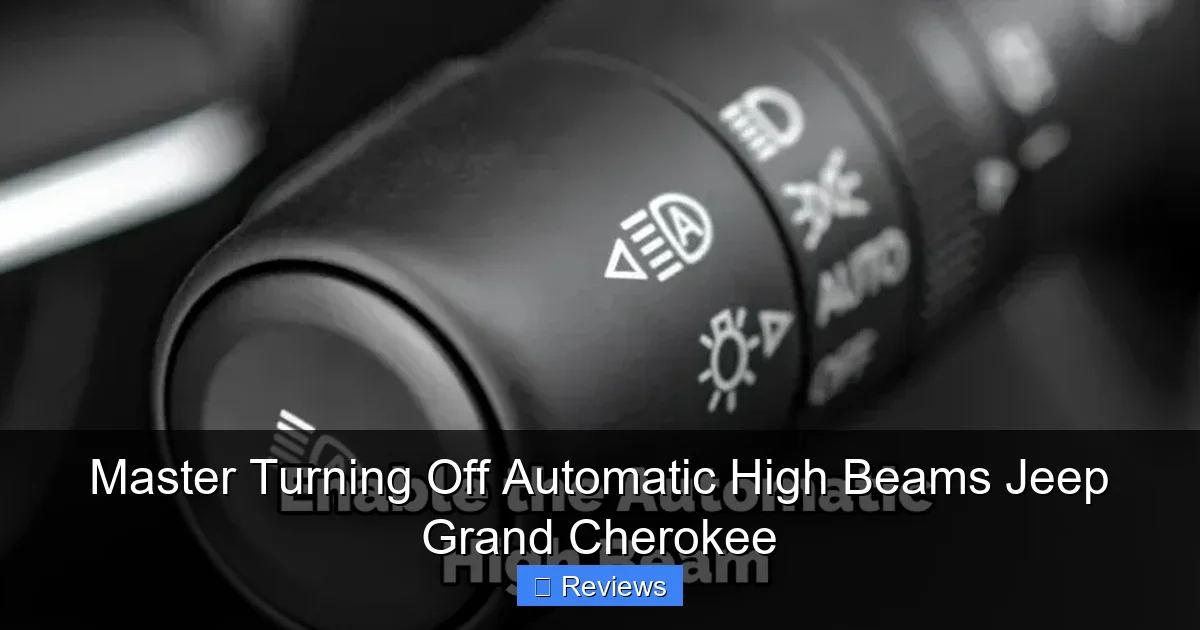
Visual guide about how to turn off automatic high beams jeep grand cherokee
Image source: jeepfixes.com
Disabling via the Headlight Stalk (Most Common Method)
This is the quickest and most intuitive way to temporarily override the automatic high beams in your Jeep Grand Cherokee. This method is universal across almost all models equipped with AHB.
Step-by-Step Instructions:
- Ensure Headlights are in “Auto” Mode: For the automatic high beams to activate, your headlight switch (usually a rotary dial on your dashboard or a setting on the stalk) must be set to “Auto.” If your headlights are set to “Off” or “On” (low beams), the AHB system won’t engage.
- Activate Automatic High Beams (If Not Already On): Drive your Jeep Grand Cherokee in dark conditions. The AHB system will likely engage, and you’ll see the AHB indicator light (often a headlight with an “A”) illuminate on your instrument cluster.
- Push the Headlight Stalk Forward (Like Activating Manual High Beams): The key action here is to push the headlight stalk (the lever on the left side of your steering column) forward, away from you, as you would to manually turn on your high beams.
- Observe the Indicator Light: When you push the stalk forward while AHB is active, the AHB indicator light on your dashboard should turn OFF. Simultaneously, the standard blue high beam indicator light (a headlight icon with straight horizontal lines) will illuminate, indicating that your high beams are now manually activated and will stay on until you pull the stalk back or turn off your lights.
Important Note: This method typically provides a temporary override. When you turn off your Jeep Grand Cherokee and restart it, the automatic high beams system often defaults back to its “on” state if your headlight switch is set to “Auto.” This means you might need to repeat this process during each night drive if you prefer constant manual control. For a more permanent solution, you’ll need the Uconnect system.
Deactivating Through the Uconnect Infotainment System
For a more persistent deactivation of the automatic high beams, your Jeep Grand Cherokee’s Uconnect infotainment system is the place to go. This allows you to toggle the feature off in the vehicle’s settings, so it won’t automatically revert to being active every time you start the car. The exact menu path might vary slightly depending on your Uconnect version (e.g., Uconnect 8.4, 10.1, or newer generations) and the model year of your Jeep Grand Cherokee.
General Step-by-Step Instructions (Applicable to most recent Grand Cherokee models):
- Start Your Vehicle: Ensure your Jeep Grand Cherokee is running or in accessory mode.
- Access the Uconnect Touchscreen: Navigate to the main screen of your Uconnect system.
- Tap “Settings”: Look for an icon or button labeled “Settings.” This is usually represented by a gear icon.
- Select “Lights” or “Lighting”: Within the Settings menu, you’ll find various categories. Tap on “Lights” or “Lighting.”
- Locate “Automatic High Beams” or “High Beam Assist”: Scroll through the lighting options until you find “Automatic High Beams,” “Auto High Beams,” “High Beam Assist,” or a similar label.
- Toggle the Feature Off: You will typically see a checkbox or a toggle switch next to this option. Tap it to deselect or switch it to the “Off” position.
- Confirm (If Prompted): Some systems might ask you to confirm your selection.
Once you’ve turned off automatic high beams through Uconnect, the system should remain disabled even after you turn off and restart your Jeep Grand Cherokee. To re-enable it, simply follow the same steps and toggle the feature back on.
Specifics for Different Model Years and Uconnect Versions:
- Jeep Grand Cherokee WK2 (e.g., 2014-2021 models): These typically feature the Uconnect 8.4-inch system. The path described above (Settings > Lights > Automatic High Beams) is generally accurate.
- Jeep Grand Cherokee WL (e.g., 2022+ models): Newer models often come with the Uconnect 5 system, featuring larger screens (8.4, 10.1, or 10.25 inches). While the core logic remains the same, the visual interface and exact button placements might be slightly different. Always look for “Settings,” then “Lights” or “Vehicle,” then within that, look for “High Beam Control” or “Automatic High Beams.”
Always refer to your Jeep Grand Cherokee’s owner’s manual for the most accurate and specific instructions pertaining to your exact model year and trim level, as Uconnect software updates can also subtly change menu layouts.
Advanced Tips and Troubleshooting for Automatic High Beams
While the methods above should successfully turn off automatic high beams in most scenarios, sometimes technology can be stubborn. Here are some advanced tips and troubleshooting steps to consider if you encounter issues or want to optimize your experience.
Visual guide about how to turn off automatic high beams jeep grand cherokee
Image source: jeepfixes.com
When AHB Doesn’t Respond to Disabling Commands
Occasionally, you might find that the automatic high beams in your Jeep Grand Cherokee aren’t behaving as expected, even after attempting to disable them. This could be due to a minor glitch or other factors.
- Software Glitch/System Reset: Like any computer system, Uconnect can sometimes experience minor software hiccups. A simple “reboot” of the vehicle’s electronics can often resolve this. Try turning off your Jeep Grand Cherokee, opening and closing the driver’s door, and then restarting the vehicle. This sequence sometimes resets certain modules.
- Check Headlight Switch Position: Double-check that your main headlight switch is not somehow overriding your Uconnect setting. If it’s on “Auto,” and you’ve turned AHB off in Uconnect, it should stay off. If you suspect an issue, try cycling the headlight switch through all positions (Off, Auto, Parking Lights, On) a few times.
- Battery Disconnection (Last Resort): For persistent electronic issues, disconnecting the vehicle’s negative battery terminal for 10-15 minutes can sometimes perform a deeper reset of all modules. This should only be done if you’re comfortable working with car batteries and understand the implications (e.g., losing radio presets, resetting other electronic settings). Consult your owner’s manual or a professional if unsure.
Environmental Factors Affecting AHB Performance
Even if you prefer to keep your automatic high beams on, it’s crucial to understand how environmental conditions can impact their functionality. This knowledge can also help explain why the system might behave erratically, prompting you to disable it.
- Dirty Windshield: The forward-facing camera for the AHB system relies on a clear view. A dirty, smudged, or bug-splattered windshield (especially the area in front of the rearview mirror) can significantly impair its ability to detect light sources accurately. Regularly clean your windshield, both inside and out.
- Inclement Weather: Heavy rain, dense fog, and snowfall can confuse the AHB camera. The moisture and particles in the air can scatter light, making it difficult for the system to distinguish between genuine light sources (headlights/taillights) and environmental reflections or glare. In such conditions, it’s often safer and more courteous to manually control your high beams or disable automatic high beams entirely.
- Reflective Surfaces and Signs: Highly reflective road signs, guardrails, or even wet pavement can sometimes reflect enough light back to the camera to trick the system into dipping to low beams, even when there’s no actual oncoming traffic. This is a common complaint and a key reason drivers want to turn off automatic high beams.
Calibrating or Resetting the System (If Applicable)
In rare instances, if your automatic high beams system is consistently malfunctioning (e.g., never turning on, always staying on, or flashing erratically even after software resets), it might require a recalibration of the forward-facing camera. This is typically not something a driver can do at home and requires specialized diagnostic tools available at a Jeep dealership or a qualified service center. They can perform a diagnostic scan, check for error codes, and recalibrate the camera if necessary. Software updates, often released by the manufacturer, can also resolve known bugs or improve the performance of your Jeep Grand Cherokee’s automatic high beams system.
Dealer Assistance and Software Updates
If you’ve tried all the methods to turn off automatic high beams and your system still isn’t behaving as expected, or if you suspect a deeper issue, don’t hesitate to contact your Jeep dealership. Modern vehicles rely heavily on integrated electronic systems, and sometimes a professional diagnosis is the most efficient solution. Additionally, inquire about any available software updates for your Uconnect system and vehicle modules. Manufacturers frequently release updates that can enhance performance, fix bugs, and improve the reliability of features like automatic high beams.
Enhancing Your Driving Experience Beyond Automatic High Beams
Mastering the automatic high beams is just one step in fully understanding and customizing your Jeep Grand Cherokee for optimal driving. Let’s explore broader aspects of lighting control and night driving practices.
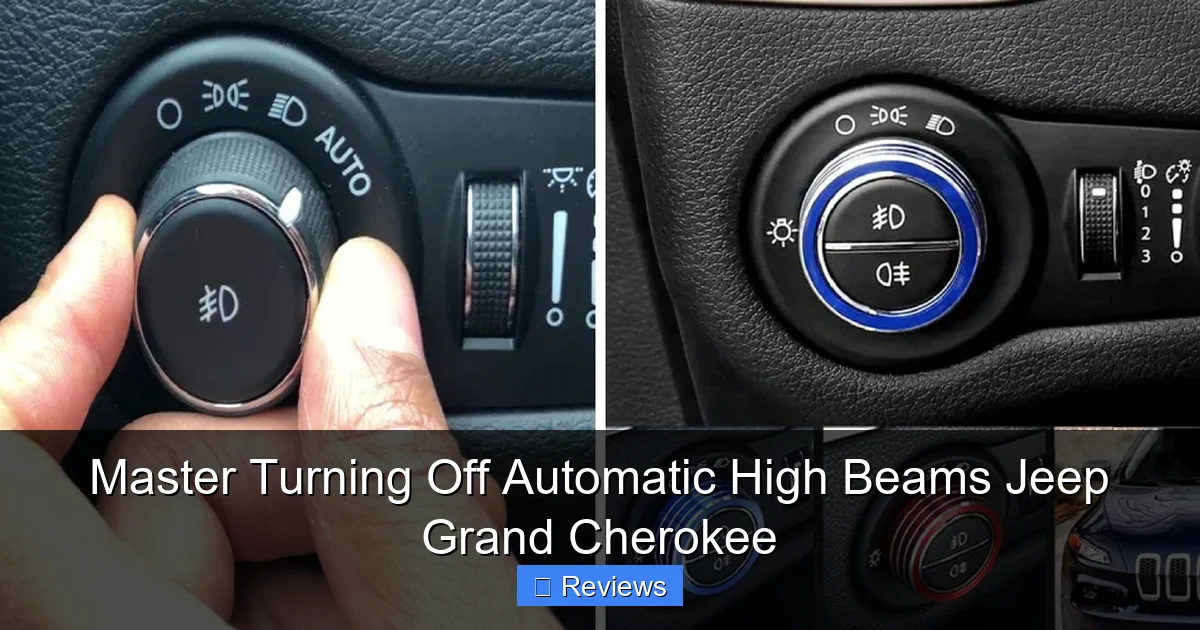
Visual guide about how to turn off automatic high beams jeep grand cherokee
Image source: jeepfixes.com
Understanding Your Headlight Controls
Beyond the automatic features, knowing your traditional headlight controls is fundamental. Your Jeep Grand Cherokee typically offers several options on its headlight stalk or rotary dial:
- Off: All lights are off (except possibly daytime running lights, depending on local regulations).
- Auto: The vehicle automatically turns on low beams when ambient light drops. This is the mode where automatic high beams will activate if enabled in Uconnect.
- Parking Lights: Activates front parking lights, taillights, and sometimes side marker lights.
- On (Low Beams): Manually turns on your low beam headlights, taillights, and other exterior marker lights. The automatic high beams will generally not activate in this mode unless explicitly pushed forward for manual high beams.
- Manual High Beams: Pushing the stalk forward (or sometimes pulling it back for a flash-to-pass function) will manually engage high beams. If AHB is on and in “Auto” mode, pushing the stalk forward will temporarily disable automatic high beams and activate manual high beams.
Familiarize yourself with these modes to ensure you always have the right illumination for the conditions, regardless of whether you decide to use automatic high beams.
Best Practices for Night Driving
Even with advanced features, driver vigilance remains paramount. Here are some timeless tips for safe and comfortable night driving:
- Clean Your Windshield Regularly: Not just for the AHB camera, but for your own visibility. A clean windshield reduces glare and improves clarity.
- Adjust Your Mirrors: Properly adjusted mirrors can help reduce glare from following vehicles’ headlights. Many Jeep Grand Cherokee models also feature auto-dimming rearview and side mirrors, which significantly enhance comfort.
- Reduce Interior Lighting: Dim your dashboard lights and infotainment screen to avoid distracting glare and allow your eyes to better adjust to the darkness outside.
- Slow Down: Night driving inherently reduces visibility. Adjust your speed to ensure you can stop within the range of your headlights.
- Look Away from Oncoming Headlights: If an oncoming vehicle’s high beams are blinding, gently shift your gaze to the right edge of your lane to avoid direct glare.
- Know When to Use High Beams Manually: If you’ve chosen to turn off automatic high beams, remember the responsibility is entirely yours. Use high beams on unlit roads when no other traffic is present, and dim them promptly for oncoming vehicles or when following another car.
Customizing Your Jeep’s Lighting Preferences
Your Jeep Grand Cherokee offers a suite of customizable lighting options beyond just high beams. Take some time to explore the “Settings” > “Lights” menu within your Uconnect system. You might find options for:
- Daytime Running Lights (DRL): Configure whether these are on, off, or automatic.
- Headlight Delay/Follow-Me-Home Lighting: How long your headlights stay on after you turn off the vehicle.
- Approach Lighting: Lights that illuminate when you unlock your vehicle.
- Fog Lights: While usually a physical button, understanding their optimal use (low visibility, not just for aesthetics) is key.
By exploring and customizing these features, you can truly personalize your Jeep Grand Cherokee’s lighting system to suit your individual needs and driving habits, whether or not you utilize the automatic high beams.
A Comparative Look at Automatic High Beam Systems
While this guide focuses on the Jeep Grand Cherokee, it’s insightful to briefly consider how its automatic high beams system stands in the broader automotive context. Understanding its design philosophy can further clarify why drivers might seek to manage or disable it.
How Jeep’s System Stacks Up
The automatic high beams system in the Jeep Grand Cherokee is generally considered competent and reliable within its class. It employs a common camera-based detection method, similar to many other manufacturers. Jeep’s implementation prioritizes driver convenience and safety, aiming to provide superior illumination when appropriate. However, like all such systems, it operates based on algorithms and camera input, making it susceptible to the limitations discussed earlier (e.g., environmental factors, highly reflective surfaces). From a user’s perspective, the ease of deactivation – both temporarily via the stalk and permanently via Uconnect – is a significant advantage, giving drivers the flexibility to choose when and how they want this feature active. This flexibility is a key differentiator, as some vehicles make disabling AHB more cumbersome.
Future of Automotive Lighting
The evolution of automotive lighting goes beyond simple automatic high beams. Technologies like Adaptive Driving Beams (ADB) or “Matrix LED” headlights are becoming more prevalent, especially in luxury and advanced vehicles. These systems don’t just switch between high and low beams; they can precisely shape the high beam pattern by selectively dimming or shutting off individual LEDs within the headlight array. This allows for continuous high beam use without dazzling other drivers, as the system can create “tunnels” of darkness around oncoming or preceding vehicles. While not yet universally standard on all Jeep Grand Cherokee trims, such advancements represent the next frontier in intelligent lighting, potentially reducing the need for drivers to manually intervene or disable features like automatic high beams, as the system becomes even more sophisticated and less prone to errors.
For now, however, understanding and controlling your current Jeep Grand Cherokee’s automatic high beams remains a crucial skill for personalized and safe driving.
Data Table: Understanding Automatic High Beam Control Methods
To summarize the different ways to control your Jeep Grand Cherokee’s automatic high beams, here’s a helpful table outlining the methods, their effects, and key considerations.
| Control Method | Effect on Automatic High Beams (AHB) | Permanence | Ideal Use Case | Notes & Considerations |
|---|---|---|---|---|
| Headlight Stalk (Push Forward) | Temporarily deactivates AHB; manually engages high beams. | Temporary (resets on vehicle restart) | Quick override for specific situations (e.g., reflective signs, misbehavior). | AHB indicator light turns OFF, manual high beam indicator turns ON. Requires headlights to be in “Auto” mode initially. |
| Uconnect Infotainment System (Settings > Lights) | Permanently disables AHB until re-enabled through Uconnect. | Persistent (remains off across restarts) | Long-term preference for manual control of high beams. | Menu path may vary slightly by Uconnect version/model year. AHB indicator light will not appear when headlights are in “Auto” mode. |
| Headlight Rotary Dial (Switch from “Auto” to “On”) | Prevents AHB from engaging; headlights remain on low beam. | Persistent (as long as dial is not on “Auto”) | Driving in areas with sufficient street lighting or when AHB is not desired. | This turns off the “Auto” headlight function entirely, meaning you manually control low beams. |
| Vehicle Restart (after stalk override) | AHB typically re-engages if the headlight dial is on “Auto” and AHB is enabled in Uconnect. | Resets temporary overrides | Understanding system default behavior. | Crucial for understanding why stalk override isn’t permanent. |
This table serves as a quick reference for managing your Jeep Grand Cherokee’s automatic high beams, helping you choose the best method for your immediate needs or long-term preferences.
Conclusion: Mastering Your Jeep Grand Cherokee’s Automatic High Beams
In conclusion, the automatic high beams system in your Jeep Grand Cherokee is a testament to modern automotive ingenuity, designed to enhance safety and convenience during nighttime driving. However, as with any advanced technology, the true mastery lies not just in its use, but in the driver’s ability to control and customize it according to personal preference and specific driving conditions. Whether you find the feature to be a brilliant assistant or an occasional nuisance, you now possess the knowledge to fully manage it.
We’ve explored the inner workings of your Jeep Grand Cherokee’s automatic high beams, reviewed its benefits and potential drawbacks, and, most importantly, provided clear, actionable steps to turn it off, both temporarily via the headlight stalk and persistently through the Uconnect infotainment system. From understanding dashboard indicators to troubleshooting common issues and embracing best practices for night driving, this guide aims to make you the ultimate commander of your vehicle’s illumination.
Empowered with this information, you can confidently navigate any road, knowing you have complete control over your Jeep Grand Cherokee’s lighting. Whether you choose to embrace the automated convenience or opt for traditional manual control, the road ahead is yours to illuminate, precisely how you like it. Drive safely, drive smart, and enjoy the journey in your expertly controlled Jeep Grand Cherokee.
Frequently Asked Questions
Can I permanently disable the automatic high beams feature on my Jeep Grand Cherokee?
Yes, you can typically disable the automatic high beams feature permanently through the Uconnect infotainment system settings. This allows you to have full manual control over your high beams without the system automatically engaging them.
How do I temporarily turn off automatic high beams if they engage at the wrong time in my Jeep Grand Cherokee?
To temporarily override the automatic high beams, simply push the turn signal stalk forward as if you were manually turning on your high beams. This action will deactivate the automatic system until you turn off and restart your vehicle, or until you push the stalk forward again.
Why might someone want to turn off automatic high beams on their Jeep Grand Cherokee?
Owners often choose to disable automatic high beams for various reasons, such as frequently driving on unlit roads with many reflective signs or in areas with intermittent street lighting that confuses the sensor. It also provides more control in specific driving situations where the automatic system might engage inappropriately.
Where can I find the setting to turn off automatic high beams in my Jeep Grand Cherokee’s Uconnect system?
The setting for automatic high beams is typically found within the “Settings” menu of your Uconnect system, usually under “Lights,” “Safety & Driving Assistance,” or “Driver Assist” options. Look for a checkbox or toggle labeled “Auto High Beams” or “SmartBeam.”
How do I know if my Jeep Grand Cherokee is equipped with automatic high beams?
Your Jeep Grand Cherokee likely has automatic high beams if you see a symbol on your dashboard that looks like a headlight with an “A” inside when the system is active, or if you notice your high beams engaging and disengaging on their own in appropriate dark conditions. You can also check your owner’s manual for specific feature details.
Does turning off automatic high beams affect other lighting features in my Jeep Grand Cherokee?
No, disabling the automatic high beams feature only affects the automatic control of your high beams and does not impact other lighting functions. Your low beams, fog lights, and turn signals will continue to operate normally.

At CarLegit, we believe information should be clear, factual, and genuinely helpful. That’s why every guide, review, and update on our website is created with care, research, and a strong focus on user experience.