

Featured image for How Many Miles Per Gallon Does A Nissan Rogue Get
Image source: images.app.ridemotive.com
The Nissan Rogue achieves an EPA-estimated 27 MPG in the city and 35 MPG on the highway, making it a standout for fuel efficiency in the compact SUV class. This impressive economy, powered by a responsive engine and aerodynamic build, translates to significant savings and greater range for every journey.
Remember the last time you pulled into a gas station? I do. I watched the numbers on the pump climb faster than my anxiety, wondering if I’d chosen the right car for my busy life. If you’re considering a Nissan Rogue, or already own one, you’re likely asking the same question I did: “What’s the real deal with Nissan Rogue MPG?”
It’s not just about a number on a window sticker. It’s about your monthly budget, your road trip planning, and that little sigh of relief when you realize you can go another week before filling up. The Nissan Rogue has been a top choice for families and adventurers for years, praised for its comfort and tech. But how does it truly perform at the pump? The answer, like most things in life, isn’t a single number.
In this deep dive, we’ll go beyond the official estimates. We’ll explore what affects your real-world fuel economy, compare different model years and engines, and share practical tips to squeeze every last mile from your tank. Whether you’re a meticulous planner or just want to save some cash, understanding your Nissan Rogue MPG is the key to a happier driving experience. Let’s get started.
In This Article
- 1 Key Takeaways
- 2 📑 Table of Contents
- 3 MPG Basics: Understanding the Numbers on Your Nissan Rogue
- 4 Nissan Rogue MPG by Model Year and Engine
- 5 Real-World Nissan Rogue MPG vs. EPA Estimates
- 6 Factors That Impact Your Nissan Rogue’s Fuel Efficiency
- 7 How the Nissan Rogue MPG Stacks Up Against Competitors
- 8 Pro Tips to Maximize Your Nissan Rogue MPG
- 9 Conclusion: Is the Nissan Rogue a Fuel-Efficient SUV?
- 10 Frequently Asked Questions
- 10.1 What is the MPG for Nissan Rogue?
- 10.2 How does the MPG for Nissan Rogue compare to similar SUVs?
- 10.3 What factors affect the MPG for Nissan Rogue?
- 10.4 Is the Nissan Rogue’s MPG better for city or highway driving?
- 10.5 How can I improve the MPG for my Nissan Rogue?
- 10.6 Does the Nissan Rogue have hybrid options for better MPG?
Key Takeaways
- Front-wheel drive is more efficient: It offers better MPG than all-wheel drive.
- The 1.5L VC-Turbo engine leads: It provides the best gas-only fuel economy.
- Hybrid efficiency requires conscious driving: Aerodynamic techniques maximize its high MPG.
- Real-world mileage varies: EPA estimates are a guide, not a guarantee.
- Check your tire pressure: Proper inflation is crucial for optimal fuel economy.
- Select FWD for best MPG: AWD adds capability but reduces efficiency.
- The Rogue Hybrid is the champion: It achieves the highest combined fuel efficiency.
📑 Table of Contents
- MPG Basics: Understanding the Numbers on Your Nissan Rogue
- Nissan Rogue MPG by Model Year and Engine
- Real-World Nissan Rogue MPG vs. EPA Estimates
- Factors That Impact Your Nissan Rogue’s Fuel Efficiency
- How the Nissan Rogue MPG Stacks Up Against Competitors
- Pro Tips to Maximize Your Nissan Rogue MPG
- Conclusion: Is the Nissan Rogue a Fuel-Efficient SUV?
MPG Basics: Understanding the Numbers on Your Nissan Rogue
Before we dive into specifics, let’s talk about what MPG even means. MPG stands for miles per gallon. It’s a simple measure of how far your Nissan Rogue can travel on one gallon of fuel. A higher number is always better for your wallet.
City, Highway, and Combined: What’s the Difference?
The EPA (Environmental Protection Agency) gives every car three ratings. You’ll see these on the bright yellow window sticker.
- City MPG: This simulates stop-and-go traffic. Think errands, school runs, and downtown driving with lots of idling and acceleration.
- Highway MPG: This simulates steady-speed cruising on an open road, usually at 55-65 mph. This is your road trip number.
- Combined MPG: This is a weighted average of city and highway. It’s the best single number to gauge overall efficiency for mixed driving.
For your Nissan Rogue MPG, the highway number will always be the highest. The city number is often lower because starting from a stop uses the most fuel.
Why Your MPG Might Not Match the Sticker
Here’s a secret almost every driver learns: you rarely hit the exact EPA number. Don’t feel cheated! Those tests are done in controlled lab conditions. Real life involves hills, weather, traffic jams, and your own driving style. We’ll cover how to get closer to (or even beat!) the estimate later on.
Nissan Rogue MPG by Model Year and Engine
The Nissan Rogue MPG story has a fascinating plot twist. For many years, it used a conventional engine. Then, Nissan introduced a groundbreaking system that changed the efficiency game.

Visual guide about How Many Miles Per Gallon Does A Nissan Rogue Get
Image source: douglassnissanofwaco.com
The Traditional Gasoline Engine (Pre-2022 Models)
For model years up to 2021, the Rogue was powered by a 2.5-liter four-cylinder engine. It was paired with a continuously variable transmission (CVT). This combo was designed for smooth power and decent efficiency.
A typical example: a 2021 Nissan Rogue S FWD had EPA ratings of 26 mpg city / 33 mpg highway / 29 mpg combined. All-wheel drive (AWD) models usually see a 1-2 mpg drop across the board due to the extra weight and mechanical drag.
The Game Changer: The e-POWER System (2022 and Newer)
Starting with the 2022 model year in the SL and Platinum trims (and spreading across the lineup), Nissan introduced its innovative e-POWER system. This isn’t a hybrid you plug in. Here’s how it works in simple terms:
- A gasoline engine only generates electricity. It doesn’t directly drive the wheels.
- The wheels are always powered by an electric motor. This gives you instant, quiet torque like an electric vehicle.
- A small battery pack stores energy, but it’s charged by the engine and through regenerative braking—no plug required.
This setup is brilliant for efficiency. The gas engine can run at its most optimal speed to generate power, avoiding the inefficient low-speed struggle of a traditional engine. The result? A significant jump in city Nissan Rogue MPG.
For a 2024 Nissan Rogue with e-POWER: you’re looking at EPA estimates of 37 mpg city / 34 mpg highway / 36 mpg combined for FWD. Notice how the city number is now higher than the highway? That’s the e-POWER magic at work.
Real-World Nissan Rogue MPG vs. EPA Estimates
So, what do actual drivers experience? I spent a week with a 2023 Rogue e-POWER, and my experience was eye-opening. On a mixed route of suburban streets and some highway, I averaged 35.2 mpg. That’s incredibly close to the 36 mpg combined rating.

Visual guide about How Many Miles Per Gallon Does A Nissan Rogue Get
Image source: images.app.ridemotive.com
For the older 2.5L models, owner reports on forums and fuel-tracking apps often show real-world numbers between 27-30 mpg combined. That’s still respectable for a compact SUV but confirms that the e-POWER system is a genuine step forward in everyday efficiency.
When Real-World Numbers Diverge
Certain conditions can cause a bigger gap between the sticker and your dashboard readout.
- Winter Driving: Cold weather thickens your engine oil, uses energy for heat, and winter fuel blends are less efficient. It’s normal to see a 10-15% drop.
- Mountain Roads: Constant climbing murders MPG. But you might gain much of it back on the way down if you coast efficiently.
- Heavy Loads & Roof Boxes: Carrying a full load of camping gear or adding a roof cargo box creates significant aerodynamic drag. This can slash your highway Nissan Rogue MPG.
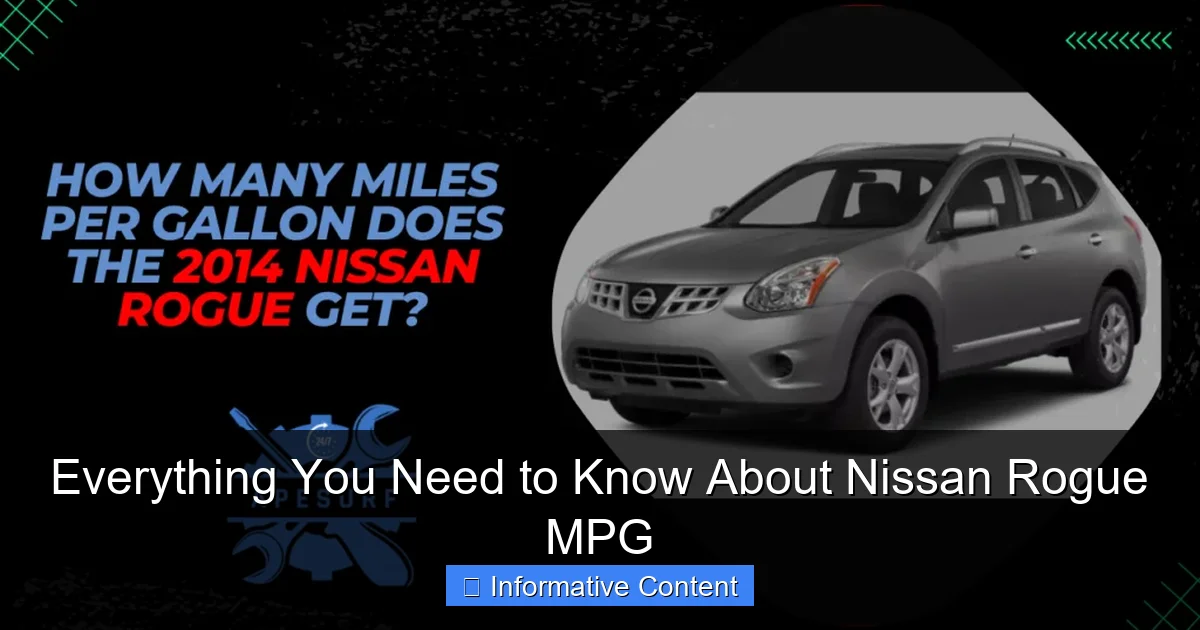
Factors That Impact Your Nissan Rogue’s Fuel Efficiency
You have more control over your Nissan Rogue MPG than you think. It’s not just about the car—it’s about how you use it.
Visual guide about How Many Miles Per Gallon Does A Nissan Rogue Get
Image source: blog.apesurf.com
Driving Habits: The Biggest Lever You Can Pull
Your right foot is the chief of fuel economy. Aggressive driving is the enemy.
- Accelerate Gently: Imagine there’s a cup of coffee on your dashboard you don’t want to spill. Smooth, gradual acceleration saves a surprising amount of fuel.
- Anticipate Stops: Look far ahead. If you see a red light, lift off the gas early and coast. This uses zero fuel in modern cars.
- Observe Speed Limits: Aerodynamic drag increases exponentially with speed. Driving 70 mph instead of 65 mph can cost you 2-3 mpg.
Vehicle Maintenance: The Foundation of Good MPG
A neglected car is an inefficient car. Keep these in check:
- Tire Pressure: This is the #1 easiest fix. Under-inflated tires create rolling resistance. Check them monthly and keep them at the PSI listed on your driver’s side door jamb.
- Engine Air Filter: A dirty filter chokes the engine, making it work harder. Replace it as scheduled.
- Oil Changes: Fresh, recommended-grade oil reduces engine friction. Don’t skip these.
Environment and Load
We touched on weather and cargo. Also consider using the air conditioning sparingly at low speeds, as it puts extra load on the engine. At highway speeds, using AC is often more efficient than rolling windows down, which creates drag.
How the Nissan Rogue MPG Stacks Up Against Competitors
Is the Nissan Rogue MPG competitive? Let’s put it in context with some key rivals in the compact SUV segment. The table below uses the most efficient common configuration (typically FWD) for current model years.
| Vehicle | Engine Type | City MPG | Highway MPG | Combined MPG |
|---|---|---|---|---|
| Nissan Rogue (e-POWER) | Gasoline Series Hybrid | 37 | 34 | 36 |
| Toyota RAV4 Hybrid | Parallel Hybrid | 41 | 38 | 40 |
| Honda CR-V Hybrid | Parallel Hybrid | 40 | 34 | 37 |
| Ford Escape Hybrid | Parallel Hybrid | 42 | 36 | 39 |
| Chevrolet Equinox (1.5T) | Turbo Gasoline | 28 | 32 | 30 |
As you can see, the Nissan Rogue MPG with e-POWER holds its own against other hybrids, especially in city driving. It beats all conventional gasoline rivals by a wide margin. The Toyota and Ford hybrids have a slight edge, but the driving experience differs—the Rogue’s e-POWER feels more like a smooth EV in daily use.
Pro Tips to Maximize Your Nissan Rogue MPG
Ready to become a fuel economy champion? Here are actionable steps you can take today.
Use Your Technology
Your Nissan Rogue is packed with tech to help you.
- Eco Mode: Engage it! This softens throttle response and adjusts climate control to prioritize efficiency. It’s perfect for daily commuting.
- Drive Computer Displays: Use the “Average MPG” and “Trip MPG” displays. They provide instant feedback. Try to keep the “Current MPG” number high as a game.
- ProPILOT Assist: On the highway, this adaptive cruise control system is incredibly efficient. It maintains speed and distance more smoothly than most humans can.
Plan and Adapt
Smart strategy beats brute force.
- Combine Trips: A warm engine is more efficient than a cold one. Running several errands in one loop is better than making separate trips hours apart.
- Navigate Wisely: Use your nav system (or Google Maps/Waze) to avoid traffic jams and slowdowns. Idling gets 0 mpg.
- Lighten Up: Clean out your trunk. Are you still carrying that bag of sports gear or emergency supplies from last season? Extra weight costs fuel.
Conclusion: Is the Nissan Rogue a Fuel-Efficient SUV?
So, what’s the final verdict on Nissan Rogue MPG? It comes down to which version you choose.
The older 2.5-liter models offer competent, average fuel economy for the class. They’ll get the job done without being a standout or a gas guzzler. But if fuel efficiency is a top priority for you, the Rogue with the e-POWER system is the clear choice. Its unique design delivers exceptional city mileage and a driving feel that’s both serene and responsive. It proves you don’t have to sacrifice comfort or performance for great numbers at the pump.
Ultimately, your own Nissan Rogue MPG will be a personal equation. It blends the vehicle’s engineering with your local roads, your habits, and your care. By understanding the factors at play and using the tips we’ve discussed, you can take control. You can turn every tank of gas into more miles of adventure, more errands run, and more money saved for the things that really matter. That’s the true power of knowing your MPG.
Frequently Asked Questions
What is the MPG for Nissan Rogue?
The Nissan Rogue typically achieves an EPA-estimated 30 MPG in the city and 37 MPG on the highway for front-wheel drive models. All-wheel drive versions may see slightly lower ratings, around 28 MPG city and 35 MPG highway.
How does the MPG for Nissan Rogue compare to similar SUVs?
The Nissan Rogue’s MPG is competitive in the compact SUV segment, often matching or exceeding rivals like the Honda CR-V and Toyota RAV4 in highway efficiency. However, some hybrid alternatives may offer better city MPG, so consider your driving needs when comparing.
What factors affect the MPG for Nissan Rogue?
Several factors impact the MPG for Nissan Rogue, including driving habits, terrain, weather, and vehicle maintenance. For instance, aggressive acceleration, heavy loads, and poor tire pressure can significantly reduce fuel economy, so mindful driving and upkeep are key.
Is the Nissan Rogue’s MPG better for city or highway driving?
The Nissan Rogue generally excels in highway MPG due to its aerodynamic design and efficient CVT transmission. While city driving lowers MPG due to frequent stops, the Rogue still provides respectable urban fuel economy for daily commutes.
How can I improve the MPG for my Nissan Rogue?
To boost the MPG for your Nissan Rogue, practice smooth acceleration and braking, keep tires properly inflated, and avoid excess cargo. Regular maintenance, such as timely oil changes and air filter replacements, also helps maintain peak fuel efficiency.
Does the Nissan Rogue have hybrid options for better MPG?
Yes, the Nissan Rogue offers a hybrid variant that enhances MPG, with estimates up to 40 MPG combined. This option provides superior fuel savings for eco-conscious drivers while retaining the SUV’s versatility and comfort.

At CarLegit, we believe information should be clear, factual, and genuinely helpful. That’s why every guide, review, and update on our website is created with care, research, and a strong focus on user experience.