
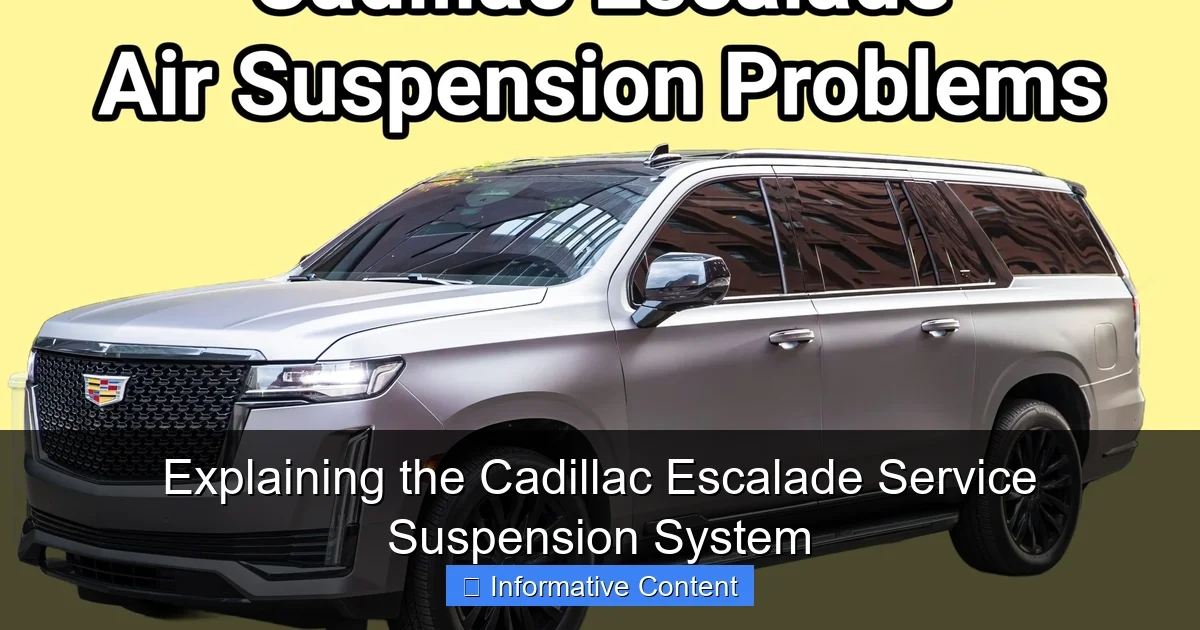
Featured image for What Does Service Suspension System Mean On A Cadillac Escalade
Image source: mylemon.com
The “Service Suspension System” warning on a Cadillac Escalade signals a critical fault in its air suspension or damping components, requiring immediate attention. Ignoring this alert risks compromised safety, ride comfort, and handling, potentially leading to costly repairs. Prompt professional service is essential to restore the vehicle’s optimal performance and protection.
You’re cruising down the highway in your Cadillac Escalade. The ride is smooth, commanding, everything you love about your luxury SUV. Then, out of nowhere, a message flashes on your dashboard: “Service Suspension System.” Your heart sinks a little. What does that mean? Is it safe to drive? Is your wallet about to take a serious hit?
If this has happened to you, take a deep breath. You’re not alone. The “Service Suspension System” warning is one of the most common, and often most misunderstood, alerts on modern Escalades. It doesn’t necessarily mean catastrophic failure is imminent. Instead, it’s your Escalade’s sophisticated brain telling you it has detected an issue with one of its most advanced features.
Think of it like your body sending you a pain signal. It doesn’t automatically mean you need major surgery; it means something is off and needs attention. In this blog post, we’re going to demystify that warning light. We’ll walk through what the system does, why the warning comes on, what you should do next, and how to keep it happy. By the end, you’ll feel informed and ready to tackle this issue head-on, without the panic.
In This Article
- 1 Key Takeaways
- 2 📑 Table of Contents
- 3 What is the Service Suspension System on a Cadillac Escalade?
- 4 Common Culprits: What Triggers the Service Suspension Warning?
- 5 What to Do When the Warning Light Comes On: A Step-by-Step Guide
- 6 Understanding the Potential Costs and Repair Options
- 7 How to Prevent Future Service Suspension System Warnings
- 8 Living with the Cadillac Escalade Service Suspension System
- 9 Frequently Asked Questions
- 9.1 What does “Service Suspension System” mean on a Cadillac Escalade?
- 9.2 Why is my Cadillac Escalade showing a “Service Suspension System” warning?
- 9.3 How do I fix the “Service Suspension System” message on my Escalade?
- 9.4 Is it safe to drive with the “Service Suspension System” light on?
- 9.5 What causes the “Service Suspension System” warning to appear on an Escalade?
- 9.6 Can I reset the “Service Suspension System” warning myself?
Key Takeaways
- Meaning: It signals a fault in the air suspension system.
- Action: Address the warning immediately for safety.
- Common Causes: Check for air spring leaks or compressor failure.
- Diagnosis: Use professional tools to pinpoint the exact issue.
- Repair: Seek expert service due to system complexity.
- Consequence: Ignoring it risks costly damage and unsafe driving.
- Prevention: Regular maintenance can help prevent sudden failures.
📑 Table of Contents
- What is the Service Suspension System on a Cadillac Escalade?
- Common Culprits: What Triggers the Service Suspension Warning?
- What to Do When the Warning Light Comes On: A Step-by-Step Guide
- Understanding the Potential Costs and Repair Options
- How to Prevent Future Service Suspension System Warnings
- Living with the Cadillac Escalade Service Suspension System
What is the Service Suspension System on a Cadillac Escalade?
First things first, let’s talk about what we’re actually dealing with. The “Service Suspension System” warning refers to the health of your Escalade’s electronically controlled suspension. This isn’t the old-fashioned spring-and-shock setup your grandpa’s truck had. Modern Escalades, especially from 2007 onward, use a high-tech system designed to give you the best of both worlds: a cloud-like comfortable ride and sharp, controlled handling.
The main players in this system are magnetic ride control sensors and often an air suspension system. Magnetic ride control uses a special fluid inside the shocks. This fluid contains tiny metal particles. When an electrical current is applied, these particles align almost instantly, changing the fluid’s viscosity and, therefore, the shock’s firmness. The result? The car can adjust its damping thousands of times per second, reacting to every bump and corner before you even feel it.
Many models pair this with an air suspension. Instead of traditional coil springs, air springs (essentially tough rubber bladders) hold the vehicle up. An air compressor fills these springs to adjust ride height. This gives you that iconic “Escalade crouch” when parked and can raise the vehicle for off-road capability or lower it at highway speeds for better aerodynamics and handling. The “Service Suspension System” warning means the computer monitoring all these components has found a fault it can’t correct on its own.
The Brain Behind the Brawn: The Suspension Control Module
Overseeing this symphony of technology is the Suspension Control Module (SCM). This computer constantly receives data from a network of height sensors, accelerometers, and wheel speed sensors. It compares this data to what it expects. If a sensor reports the left rear corner is two inches too low, or a shock isn’t responding correctly, the SCM logs a fault and illuminates the warning message. It’s a smart system trying to tell you it needs help.
Common Culprits: What Triggers the Service Suspension Warning?
So, what actually goes wrong? The warning is a symptom, and the causes can range from simple and inexpensive to more complex. Let’s break down the most frequent offenders.
Visual guide about What Does Service Suspension System Mean On A Cadillac Escalade
Image source: s19526.pcdn.co
1. The Usual Suspect: A Leaky Air Spring
If your Escalade has air suspension, this is the number one cause. The air springs are made of reinforced rubber and can develop cracks or leaks over time, especially in areas with harsh weather or salty roads. You might notice the car sagging in one corner overnight or hear the compressor running frequently to maintain height. A single leaking air spring will trigger the warning as the system struggles to keep the vehicle level.
2. A Tired or Faulty Air Compressor
The air compressor is the heart of the air suspension system. It has to work hard, especially if there’s a small leak. Over time, the compressor motor can wear out, or its internal dryer (which removes moisture from the air) can fail. A failing compressor may get very hot, become excessively loud, or simply stop working, leading to a gradual sag and the service warning.
3. Sensor Failures
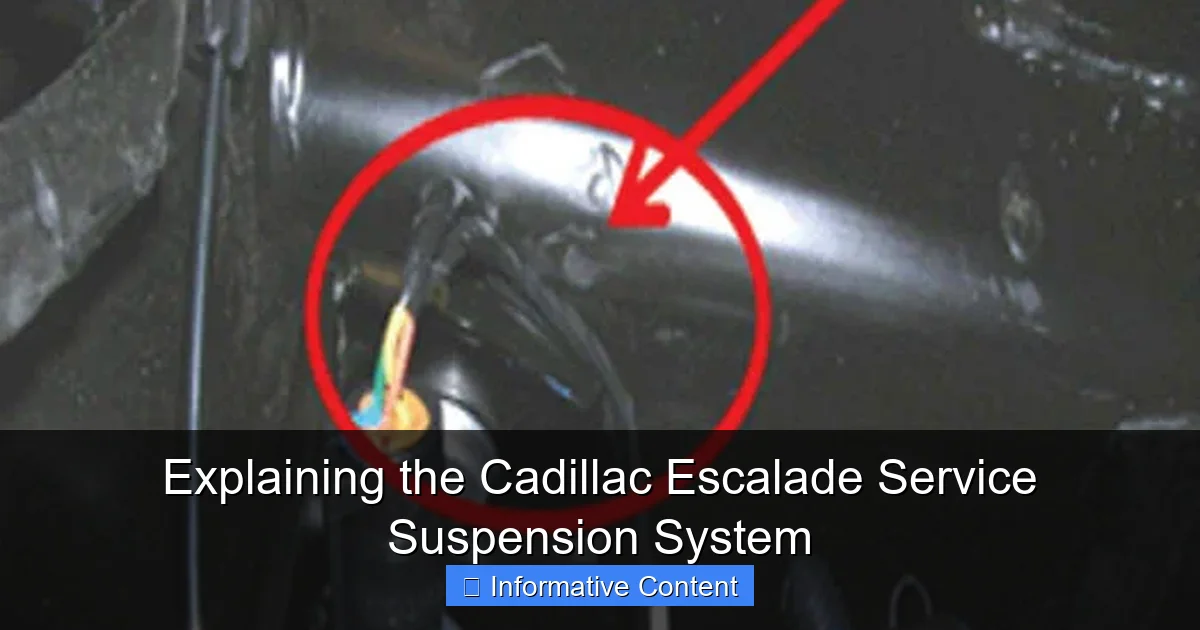
Your Escalade relies on multiple ride height sensors, typically one at each wheel. These small sensors can fail internally, get damaged, or their wiring can corrode. If the SCM gets an implausible signal (like “left front wheel is 6 inches in the air”) or no signal at all from a sensor, it will trigger the warning. Often, this causes the system to default to a safe, firm ride mode.
4. Magnetic Ride Shock Issues
While generally robust, the magnetic shocks themselves can fail. The internal seals can leak the special magneto-rheological fluid, or the electrical components inside can malfunction. A failed shock will usually cause a noticeably rougher ride on that corner and trigger a fault code.
5. Electrical Gremlins
Like any modern vehicle, wiring issues are a possibility. A chafed wire, a corroded connector, or a blown fuse can disrupt communication between the SCM and a suspension component. These can be the trickiest to diagnose but are sometimes simpler to fix than replacing a major component.
What to Do When the Warning Light Comes On: A Step-by-Step Guide
Seeing the message doesn’t mean you need to pull over immediately and call a tow truck. Here’s a practical, calm approach to take.
Visual guide about What Does Service Suspension System Mean On A Cadillac Escalade
Image source: miro.medium.com
Step 1: Assess the Immediate Situation
First, notice how the car is driving. Does it feel normal? Is it leaning to one side? Is the ride extremely bouncy or harsh? If the vehicle drives and handles normally, it is likely safe to drive cautiously to your destination or to a repair shop. However, if the car is sagging badly, leaning, or the ride is dangerously unstable, you should stop driving and seek assistance. Safety first, always.
Step 2: Perform a Simple Visual Check
When parked on level ground, walk around your Escalade. Does one corner look lower than the others? Listen. With the engine running, can you hear the air compressor running continuously for more than a minute or two? That’s a strong sign of an air leak. These simple observations can give you valuable clues to relay to your mechanic.
Step 3: Get the Codes Read
This is the most critical step. The “Service Suspension System” message is generic. To know the specific issue, you need to read the diagnostic trouble codes (DTCs) stored in the SCM. A generic OBD-II scanner from an auto parts store often won’t read these chassis-specific codes. You’ll need a more advanced scanner or a visit to a mechanic or dealership. The code (like “C0660 – Right Front Height Sensor Circuit”) will point directly to the suspected component.
Step 4: Seek Professional Diagnosis
Armed with the codes, consult a trusted professional. This could be a Cadillac dealership, an independent shop specializing in European/American luxury cars, or a suspension specialist. A good technician won’t just read the code and replace the part. They will perform live data tests, visual inspections, and electrical tests to confirm the root cause before any repairs. This can save you from replacing a good part.
Understanding the Potential Costs and Repair Options
Let’s talk about the elephant in the room: cost. Repairs for the service suspension system vary widely. Being informed helps you have a productive conversation with your repair shop.
Visual guide about What Does Service Suspension System Mean On A Cadillac Escalade
Image source: i.ytimg.com
For a single leaking air spring, replacement is common. You can opt for a new OEM air spring from GM or explore aftermarket options. Some owners, facing repeated air spring issues, choose a coil spring conversion kit. This permanently replaces the air springs with traditional coil springs. It’s often a more affordable, permanent fix, but you will lose the automatic ride height adjustment and self-leveling features. For some, the trade-off for reliability and lower cost is worth it.
A failing air compressor replacement is a more involved job. Always replace the dryer assembly with the compressor. Ignoring a failing dryer can send moisture into the new compressor and the entire air line system, leading to rapid failure.
Magnetic shock replacement is typically done in pairs (both front or both rear) to maintain balanced handling. These are specialty parts and are among the more expensive components on the list.
A Quick Cost Comparison Guide
Here’s a simplified table to give you a general idea of component-level repair costs (parts only, labor extra). Prices can vary based on model year, source of parts (OEM vs. aftermarket), and your location.
| Component | Typical Part Cost Range (Approx.) | Notes |
|---|---|---|
| Single Air Spring (OEM) | $300 – $600 | Often replaced in pairs if age/mileage is high. |
| Air Compressor & Dryer Kit | $400 – $800 | Quality aftermarket kits can be a good value. |
| Ride Height Sensor | $100 – $250 | Relatively straightforward repair. |
| Single Magnetic Shock | $500 – $900+ | Replaced in pairs; high-performance part. |
| Full Coil Conversion Kit (Front & Rear) | $600 – $1,200 | Eliminates future air spring/compressor issues. |
Labor can add several hundred dollars to any of these jobs, depending on shop rates and complexity. Getting multiple estimates is always a wise move.
How to Prevent Future Service Suspension System Warnings
An ounce of prevention is worth a pound of cure, especially with complex automotive systems. While you can’t prevent every failure, these habits can extend the life of your Escalade’s suspension.
- Mind the Load: Avoid consistently exceeding the vehicle’s maximum payload rating. Constant heavy loads put extra strain on the air compressor and springs.
- Be Kind with Height Adjustments: Use the manual raise/lower functions sparingly. Let the system do its job automatically. Frequently cycling the compressor manually can increase wear.
- Wash the Undercarriage: If you live in a snowy area with road salt, regularly rinsing the undercarriage can help prevent corrosion of air lines, sensors, and electrical connections.
- Listen to Your Car: That new humming sound from the rear? The car sitting slightly lower in the morning? Address small cues early before they turn into a full warning light.
- Regular System Checks: During routine maintenance, ask your mechanic to do a visual inspection of the air springs, compressor, and related components for early signs of wear or leaks.
Living with the Cadillac Escalade Service Suspension System
The magnetic ride control and air suspension on your Escalade are engineering marvels. They provide an unparalleled blend of luxury and capability that defines the driving experience. Like any advanced technology, they require understanding and can be costly to repair.
The key takeaway is not to fear the “Service Suspension System” message. See it as a diagnostic starting point. By understanding what the system does, what commonly fails, and how to approach the repair, you move from a state of panic to a state of empowered ownership. Whether you choose an OEM repair to restore full functionality or opt for a coil conversion for long-term simplicity, the choice is now an informed one.
Your Cadillac Escalade is built to be commanding, comfortable, and capable. Keeping its suspension system healthy is a big part of maintaining that legendary character for years and miles to come. So the next time that light comes on, you’ll know it’s just your truck’s way of asking for a little attention.
Frequently Asked Questions
What does “Service Suspension System” mean on a Cadillac Escalade?
The “Service Suspension System” message is a dashboard warning indicating the vehicle’s computer has detected a fault in the adaptive suspension system. This system manages ride height and comfort using components like air springs and electronic dampers, so the alert signals a need for inspection or repair to maintain optimal performance.
Why is my Cadillac Escalade showing a “Service Suspension System” warning?
This warning often triggers due to issues such as leaking air springs, a failing compressor, or faulty sensors within the suspension system. Electrical problems or wear over time can also cause it, prompting immediate diagnosis to prevent further damage to the Escalade’s ride quality and safety features.
How do I fix the “Service Suspension System” message on my Escalade?
Fixing this typically requires a professional diagnosis with a scan tool to identify specific error codes. Common repairs involve replacing air springs, fixing leaks, or addressing compressor or sensor failures, so it’s best to consult a Cadillac dealership or specialized technician for accurate service.
Is it safe to drive with the “Service Suspension System” light on?
Driving with this light on can be unsafe as it may indicate reduced suspension functionality, affecting handling and stability, especially on uneven roads. While short, cautious trips might be possible, prompt service is recommended to avoid potential accidents or costly repairs.
What causes the “Service Suspension System” warning to appear on an Escalade?
Common causes include air spring leaks, compressor failures, sensor malfunctions, or issues with the air lines in the adaptive suspension. Environmental factors like moisture or road salt can accelerate wear, leading to these faults that trigger the service warning on your Escalade.
Can I reset the “Service Suspension System” warning myself?
You might temporarily reset it by disconnecting the battery, but this won’t resolve the underlying problem if a fault persists. The warning will likely reappear until the root cause is fixed, so professional diagnosis and repair are essential for a long-term solution.

At CarLegit, we believe information should be clear, factual, and genuinely helpful. That’s why every guide, review, and update on our website is created with care, research, and a strong focus on user experience.