
Choosing between a Maserati and a Lotus isn’t just about speed—it’s about what kind of driving experience you want. Maserati offers Italian luxury and grand touring comfort, while Lotus delivers raw, lightweight performance and razor-sharp handling. Your decision hinges on priorities: daily usability, emotional thrill, budget, and long-term ownership costs.
So, you’re standing at a crossroads—literally. On one side, the sleek, roaring presence of a Maserati. On the other, the nimble, focused silhouette of a Lotus. Both are icons of automotive passion, but they come from very different schools of thought. One whispers luxury and grandeur; the other shouts precision and purity. The question isn’t just “Which is faster?” It’s “Which one fits *your* life?”
Let’s be real: buying a sports car isn’t like picking out a new pair of shoes. This is a big decision—financially, emotionally, and logistically. You’re not just buying horsepower; you’re buying an experience. And when it comes to Maserati vs. Lotus, the experiences couldn’t be more different. Maserati wraps you in Italian leather and surrounds you with a symphony of engine notes, perfect for cruising coastal highways or turning heads at a rooftop bar. Lotus, on the other hand, strips away the extras to deliver a raw, unfiltered connection between you and the asphalt. It’s like choosing between a five-star dinner and a perfectly cooked steak at a roadside diner—both delicious, but for very different reasons.
So how do you decide? It all comes down to what you value most: comfort or control, status or sensation, daily drivability or weekend thrills. In this guide, we’ll break down every angle—performance, design, cost, maintenance, and lifestyle fit—so you can make the right choice with confidence. Whether you’re dreaming of a Maserati Ghibli or a Lotus Emira, we’ve got you covered.
In This Article
Key Takeaways
- Performance Philosophy: Maserati focuses on powerful, smooth grand touring with V6 or V8 engines, while Lotus emphasizes lightweight engineering and track-focused agility.
- Driving Experience: Lotus cars feel alive and connected to the road—ideal for enthusiasts who love precision. Maserati offers a refined, luxurious ride suited for long drives and style.
- Interior & Comfort: Maserati interiors feature premium leather, wood trim, and advanced tech. Lotus cabins are minimalist, functional, and built for performance over pampering.
- Price & Ownership Costs: Maseratis are more expensive upfront and costlier to maintain. Lotuses are cheaper to buy and run but may lack modern amenities.
- Resale Value: Maserati models often depreciate faster due to high maintenance concerns. Lotus holds value better among collectors and driving purists.
- Practicality: Maserati offers more space, better infotainment, and daily usability. Lotus is a weekend warrior—fun but not ideal for everyday commuting.
- Brand Image: Maserati = status, elegance, and Italian flair. Lotus = engineering purity, racing heritage, and driver engagement.
📑 Table of Contents
Performance: Power vs. Precision
When it comes to performance, Maserati and Lotus take two very different roads to speed. Maserati leans into brute force and smooth delivery. Most of their models—like the Ghibli, Quattroporte, or MC20—are powered by turbocharged V6 or V8 engines that produce anywhere from 345 to over 600 horsepower. The sound? Pure Italian opera. The acceleration? Blistering. The MC20, for example, hits 60 mph in under 3 seconds, thanks to its twin-turbo V6 and carbon fiber construction. But here’s the thing: Maserati isn’t just about straight-line speed. It’s about how that power feels—effortless, refined, and always in control.
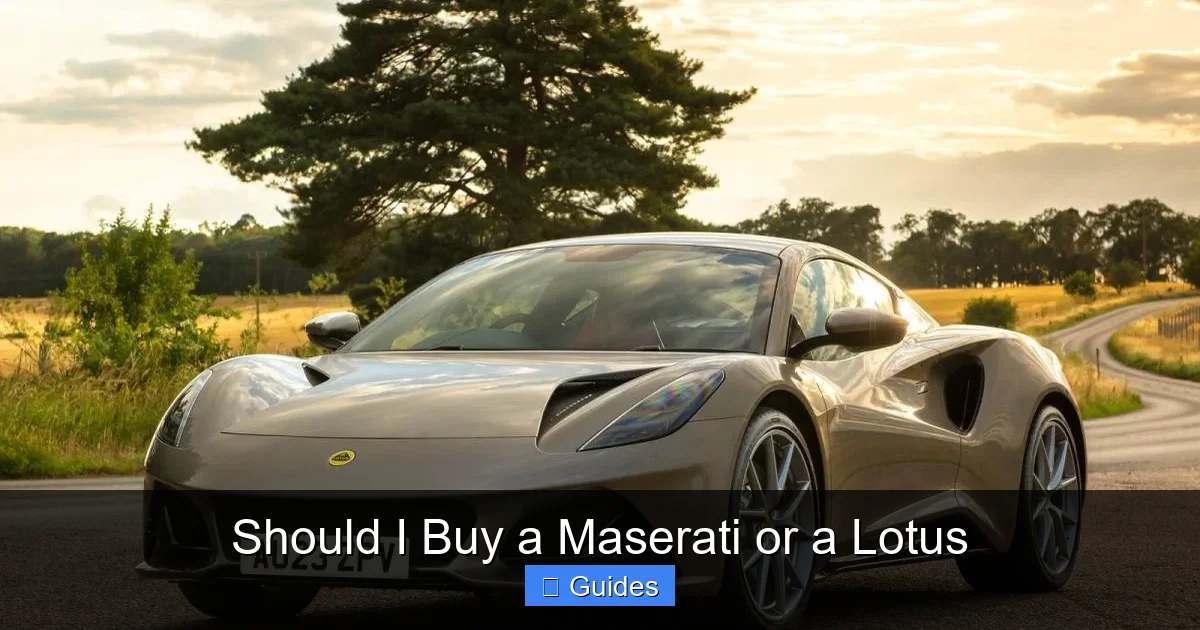
Lotus, by contrast, believes that less is more. Their philosophy centers on the “simplify, then add lightness” mantra coined by founder Colin Chapman. The Lotus Emira, their latest halo car, uses a supercharged 3.5L V6 or a turbocharged 2.0L inline-4, producing around 400 or 360 horsepower respectively. On paper, that’s less than many Maseratis. But because the Emira weighs under 3,200 pounds—hundreds less than a Ghibli—it feels incredibly quick. The power-to-weight ratio is where Lotus shines. It’s not about how much power you have; it’s about how efficiently you use it.
Handling and Driving Dynamics
This is where Lotus pulls ahead—literally. The Emira’s double-wishbone suspension, low center of gravity, and near-perfect weight distribution make it feel like an extension of your nervous system. Turn into a corner, and the car rotates with surgical precision. There’s no body roll, no hesitation. It’s pure feedback. You feel every bump, every camber change, every whisper of grip. For track days or twisty mountain roads, the Lotus is in its element.
Maserati, while no slouch, is built for a different kind of driving. The Ghibli handles well for a luxury sedan, but it’s tuned more for comfort than razor-sharp response. The steering is heavier, the suspension softer. It’s not that it can’t corner—it can—but it doesn’t *want* to. It prefers long, sweeping curves and open highways. The MC20 is a different story. With its mid-engine layout and advanced aerodynamics, it’s a legitimate supercar that can hang with Ferraris and Lamborghinis on the track. But even then, it’s still wrapped in a layer of refinement that Lotus simply doesn’t offer.
Transmission and Drivetrain
Maserati typically uses an 8-speed automatic transmission across its lineup. It’s smooth, responsive, and well-suited to both city driving and high-speed cruising. Some models offer paddle shifters, but the auto does most of the work. The Quattro all-wheel-drive system (available on select models) adds confidence in wet or snowy conditions—something Lotus can’t match.
Lotus, especially in the Emira, offers a choice: a 6-speed manual or an 8-speed automatic with paddle shifters. The manual is a joy—short throws, crisp engagement, and a clutch that talks to your foot. It’s a dying art, and Lotus keeps it alive. The automatic is quick, but purists will always prefer the manual for that direct connection. And yes, the Emira is rear-wheel drive only—no all-wheel drive here. That means it’s more playful in the corners, but also less forgiving in bad weather.
Design and Interior: Luxury vs. Minimalism
Visual guide about Should I Buy a Maserati or a Lotus
Image source: content.carlelo.com
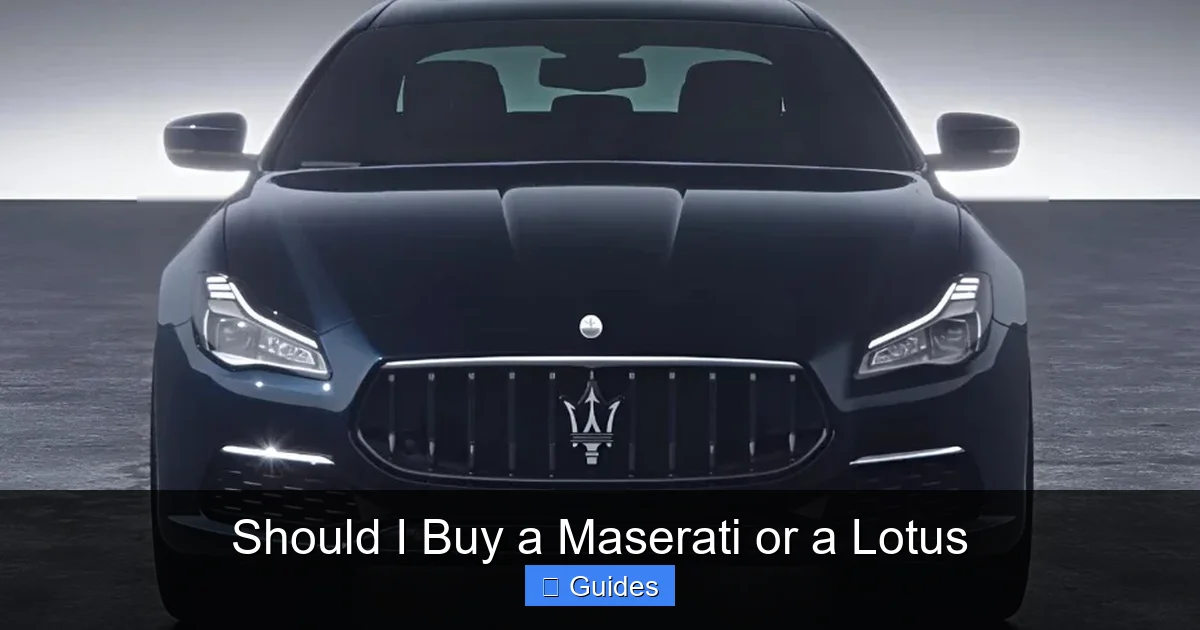
Step inside a Maserati, and you’re greeted by a wave of Italian craftsmanship. Soft Nappa leather, real wood or carbon fiber trim, and metal accents everywhere. The seats are plush, the dashboard is driver-focused, and the ambient lighting sets a mood. The Ghibli’s cabin feels like a high-end lounge on wheels. Even the MC20, while more performance-oriented, still offers premium materials and a sense of occasion. It’s not just a car—it’s a statement.
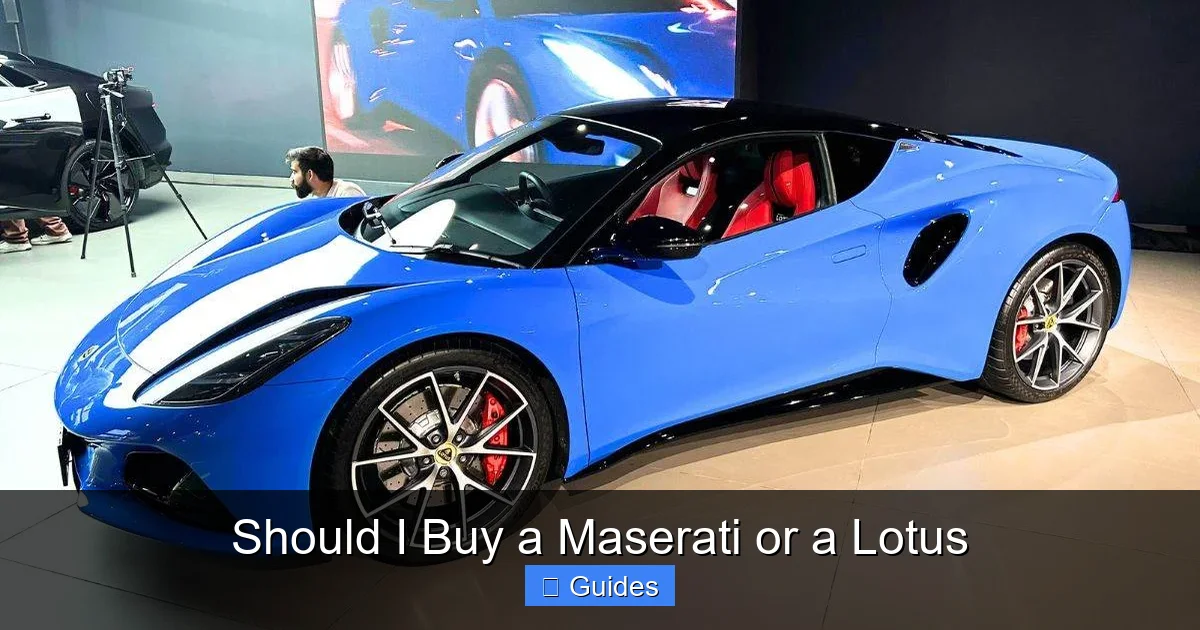
Lotus takes the opposite approach. The Emira’s interior is functional, driver-centric, and refreshingly honest. There’s no fake wood or excessive chrome. The seats are supportive but firm, the steering wheel is small and grippy, and the controls are simple and intuitive. The digital instrument cluster is clear, and the infotainment screen (usually an 11-inch touchscreen) is modern but not flashy. It’s a place to drive, not to relax. Some might call it sparse; others call it focused.
Technology and Infotainment
Maserati has made strides in tech, but it’s still playing catch-up. The latest models feature a 10.1-inch touchscreen with Apple CarPlay, Android Auto, and a premium sound system (often by Bowers & Wilkins or Sonus Faber). The interface is improved but can still feel a bit laggy compared to German rivals. The Quattroporte even offers a rear-seat entertainment system—perfect for chauffeuring clients or kids.
Lotus, with the Emira, finally stepped into the modern age. The infotainment system is powered by a version of Android Automotive, which means it’s fast, responsive, and regularly updated over the air. Navigation, voice control, and smartphone integration work seamlessly. It’s not as luxurious as Maserati’s setup, but it’s more user-friendly and future-proof. Plus, the lack of clutter means fewer distractions—just you and the road.
Practicality and Space
Here’s where Maserati wins hands down. The Ghibli and Quattroporte are four-door sedans with usable back seats and a decent trunk. You can actually use them for family trips, grocery runs, or business meetings. The MC20 is a two-seater with a small frunk (front trunk), but it’s still more practical than most supercars.
Lotus? Not so much. The Emira is a two-seater with minimal storage. The trunk is small, and there’s no back seat. It’s a weekend toy, not a daily driver. If you need to carry more than a backpack and a change of clothes, you’re out of luck. That said, for a pure driving machine, that’s part of the charm. No compromises.
Cost of Ownership: Upfront Price and Long-Term Expenses
Visual guide about Should I Buy a Maserati or a Lotus
Image source: cdni.autocarindia.com
Let’s talk money—because this is where things get real. A new Maserati Ghibli starts around $75,000, while the MC20 begins at over $210,000. A Lotus Emira starts at about $90,000 for the base model, but can climb to $110,000 with options. So upfront, they’re in the same ballpark—though Maserati offers more variety across price points.
But the real difference shows up in ownership costs. Maserati has a reputation for expensive maintenance. Parts are pricey, labor rates are high, and reliability can be hit-or-miss. Oil changes alone can cost $300–$500. Major services? Easily over $2,000. And if something breaks—like the transmission or suspension—you’re looking at thousands more. Extended warranties are almost a necessity.
Lotus, while not perfect, is generally more reliable and cheaper to maintain. The Emira uses proven Toyota and Mercedes-Benz components (like the engine and transmission), which are widely available and less costly to repair. Routine maintenance is simpler, and the lightweight design reduces wear on brakes and tires. That said, Lotus dealerships are fewer and farther between, so you might need to travel for service.
Fuel Economy
Neither brand is known for efficiency, but Lotus has the edge. The Emira’s smaller engines and lighter weight mean better fuel economy—around 20–25 mpg combined, depending on the engine. The Maserati Ghibli gets about 18–22 mpg, while the MC20 drops to 15–18 mpg. If you’re driving daily, those numbers add up.
Insurance and Depreciation
Insurance for both will be high—sports cars always are. But Maserati tends to be more expensive to insure due to higher repair costs and theft risk. Depreciation is another factor. Maserati models can lose 50% of their value in the first three years. Lotus holds value better, especially limited editions or well-maintained examples. Among collectors, a clean Emira or Evora can even appreciate over time.
Lifestyle Fit: Daily Driver or Weekend Warrior?
Visual guide about Should I Buy a Maserati or a Lotus
Image source: cdni.autocarindia.com
This might be the most important question: How do you plan to use the car?
If you want a car you can drive every day—to work, to dinner, on road trips—Maserati is the better choice. The Ghibli or Quattroporte offer comfort, space, and tech that make daily use enjoyable. The ride is smooth, the seats are supportive, and the sound system is great for podcasts or music. Plus, the four doors mean you can actually carry passengers.
Lotus is a different beast. The Emira is loud, stiff, and unforgiving on rough roads. The clutch is heavy in traffic, and the visibility isn’t great. It’s not built for stop-and-go commutes. But on a sunny Saturday morning, with the top down (if it’s a convertible) and a twisty road ahead? Nothing beats it. It’s a car for driving enthusiasts who live for the experience, not the convenience.
Emotional Appeal and Brand Identity
Let’s not ignore the emotional side. Maserati is glamour, heritage, and Italian passion. It’s James Bond meets Dolce & Gabbana. Driving one feels like you’re in a movie. Lotus, on the other hand, is about purity. It’s the underdog that beat Ferrari at its own game. It’s Colin Chapman’s legacy of innovation and simplicity. Owning a Lotus is like being part of a secret club—one that values skill over status.
Which One Should You Buy?
So, should you buy a Maserati or a Lotus? The answer depends on you.
Choose Maserati if:
– You want a luxurious, comfortable car you can drive daily.
– You value style, sound, and Italian flair.
– You’re okay with higher maintenance costs for the sake of prestige.
– You need space for passengers or luggage.
Choose Lotus if:
– You’re a driving enthusiast who loves precision and feedback.
– You want a lightweight, agile car for weekends or track days.
– You prefer simplicity over luxury and don’t mind a spartan interior.
– You’re looking for better long-term value and lower running costs.
And remember: you don’t have to pick just one. Many enthusiasts own both—a Maserati for the weekdays and a Lotus for the weekends. But if you’re choosing one, be honest about your priorities. Are you buying a car to impress, or to drive?
Final Thoughts
At the end of the day, both Maserati and Lotus make extraordinary cars. They just serve different purposes. Maserati is the grand tourer—elegant, powerful, and perfect for making an entrance. Lotus is the pure driver’s car—light, sharp, and thrilling in a way few others can match.
Your choice isn’t about which is better. It’s about which is better *for you*. So take a test drive. Feel the steering. Listen to the engine. Sit in the seat. Let the car talk to you. And when you find the one that makes your heart race and your mind clear—that’s the one to buy.
Frequently Asked Questions
Is a Maserati or Lotus faster?
On paper, many Maseratis have higher top speeds and quicker 0–60 times due to larger engines. However, the Lotus Emira often feels faster in real-world driving because of its lightweight design and superior handling. It’s more about how the car uses its power than raw horsepower.
Which is more reliable, Maserati or Lotus?
Lotus generally has better reliability, especially with the Emira’s use of proven Toyota and Mercedes components. Maserati has improved in recent years but still faces higher repair costs and more frequent maintenance issues.
Can you drive a Lotus every day?
Technically yes, but it’s not ideal. The stiff suspension, loud cabin, and limited space make it better suited for weekends or short trips. Maserati is far more practical for daily use.
Do Maseratis hold their value?
Not particularly. Maserati models tend to depreciate quickly, often losing half their value in the first few years. Lotus holds value better, especially among collectors and driving enthusiasts.
Which has better handling, Maserati or Lotus?
Lotus wins hands down. Its focus on lightweight construction, balanced weight distribution, and track-tuned suspension gives it a massive advantage in cornering and driver feedback.
Is the Lotus Emira worth the price?
For driving purists, absolutely. The Emira offers a rare blend of modern tech, manual transmission option, and pure driving dynamics. It’s one of the last true driver’s cars on the market.

At CarLegit, we believe information should be clear, factual, and genuinely helpful. That’s why every guide, review, and update on our website is created with care, research, and a strong focus on user experience.