
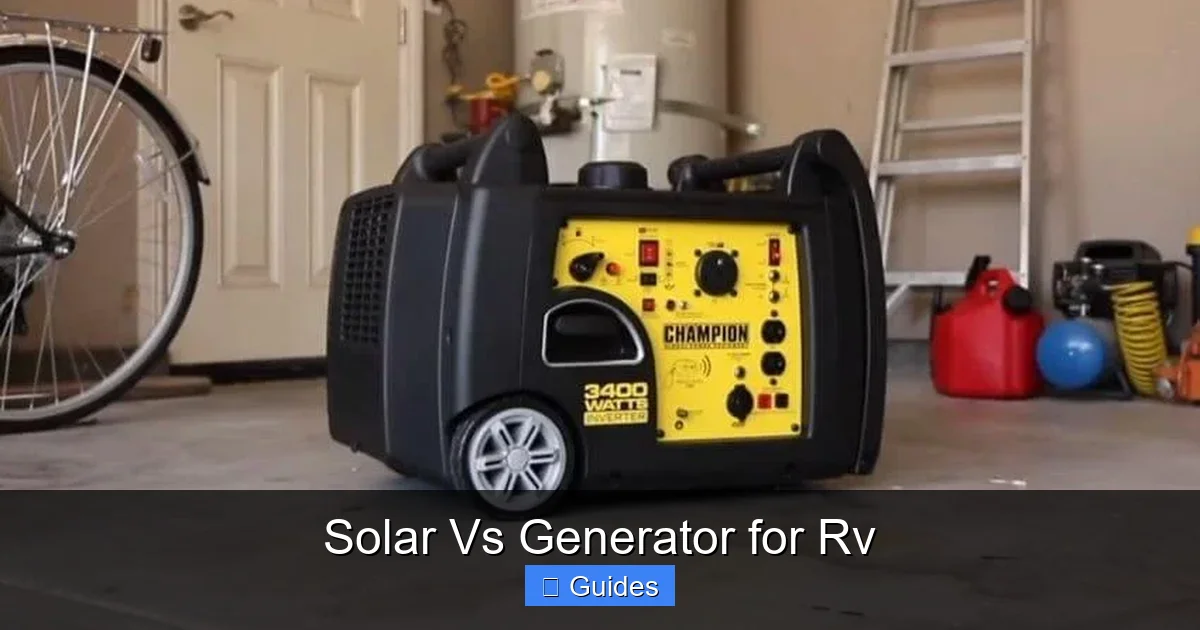
Choosing between solar and a generator for your RV can make or break your off-grid adventures. This guide breaks down the key differences, costs, performance, and lifestyle fit so you can power your travels with confidence.
In This Article
- 1 Key Takeaways
- 2 📑 Table of Contents
- 3 Introduction: Powering Your RV Adventure
- 4 How Solar Power Works for RVs
- 5 How Generators Work for RVs
- 6 Solar vs Generator: Cost Comparison
- 7 Performance and Reliability: Which Powers Your RV Better?
- 8 Lifestyle and Practical Considerations
- 9 Hybrid Systems: The Best of Both Worlds
- 10 Conclusion: Which Is Right for You?
- 11 Frequently Asked Questions
Key Takeaways
- Solar is quiet, eco-friendly, and low-maintenance: Ideal for boondocking and long-term off-grid living with minimal noise and zero fuel costs.
- Generators provide instant, high-output power: Best for heavy appliances like air conditioners or when you need quick charging in cloudy conditions.
- Solar has higher upfront costs but saves money long-term: Initial investment pays off over time with no fuel or frequent maintenance expenses.
- Generators require fuel, regular upkeep, and produce noise: Ongoing costs and noise can be drawbacks, especially in quiet campgrounds.
- Hybrid systems offer the best of both worlds: Combining solar with a generator gives flexibility and reliability for diverse travel needs.
- Your power needs and travel style dictate the best choice: Weekend campers may prefer generators, while full-time RVers often lean toward solar.
- Battery storage is critical for both systems: High-quality lithium batteries maximize efficiency and runtime, regardless of your power source.
📑 Table of Contents
- Introduction: Powering Your RV Adventure
- How Solar Power Works for RVs
- How Generators Work for RVs
- Solar vs Generator: Cost Comparison
- Performance and Reliability: Which Powers Your RV Better?
- Lifestyle and Practical Considerations
- Hybrid Systems: The Best of Both Worlds
- Conclusion: Which Is Right for You?
Introduction: Powering Your RV Adventure
So, you’ve got your RV packed, the map is out, and you’re ready to hit the open road. But before you roll out, there’s one big decision that can shape your entire travel experience: how will you power your rig?
Whether you’re a weekend warrior escaping the city or a full-time nomad exploring national parks, reliable power is essential. You need lights, a fridge, your phone charged, maybe even a coffee maker to start the morning right. But when you’re boondocking in the desert or parked in a remote forest, hookups aren’t an option. That’s where the solar vs generator for RV debate comes in.
Both solar panels and generators can keep your RV running off the grid, but they work in very different ways. Solar harnesses the sun’s energy quietly and cleanly, while generators burn fuel to produce instant power. Each has its strengths, weaknesses, and ideal use cases. The right choice depends on your travel style, budget, energy needs, and how much peace and quiet you value.
In this guide, we’ll walk you through everything you need to know about solar and generators for RVs. We’ll compare costs, performance, maintenance, noise levels, and real-world usability. By the end, you’ll have a clear picture of which system—or combination—fits your lifestyle best.
How Solar Power Works for RVs
Visual guide about Solar Vs Generator for Rv
Image source: batterygeneratorhub.com
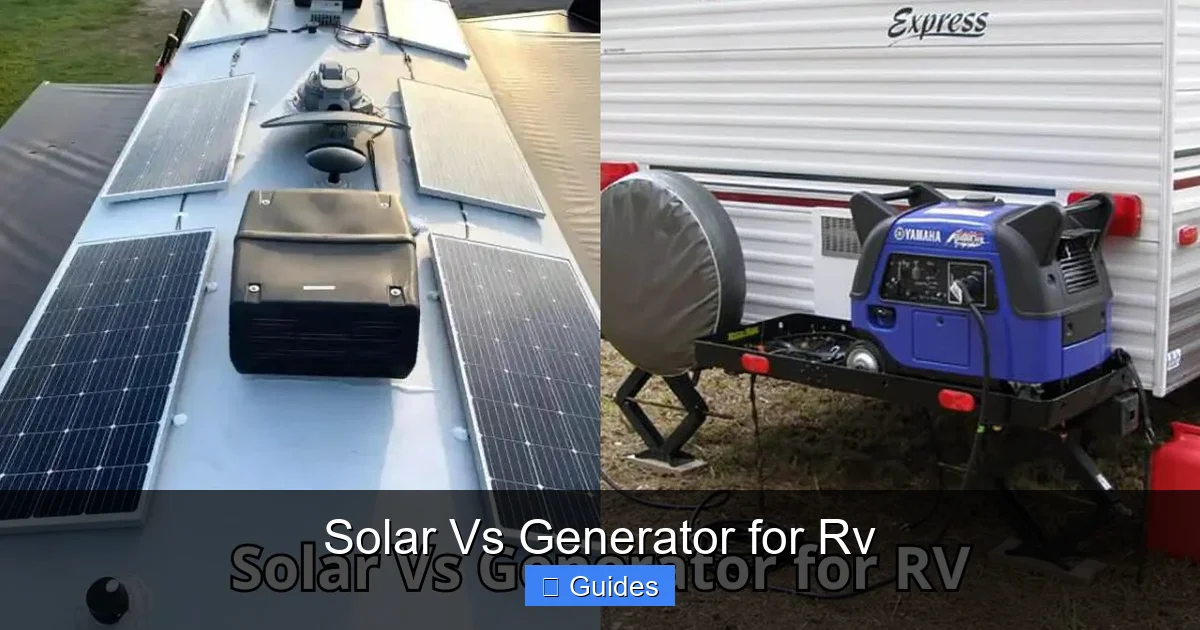
Solar power for RVs is a clean, renewable energy solution that converts sunlight into electricity. It’s become increasingly popular among RVers, especially those who enjoy boondocking or long-term off-grid travel. But how does it actually work?
At the heart of a solar setup are photovoltaic (PV) panels, usually mounted on the roof of your RV. These panels absorb sunlight and convert it into direct current (DC) electricity. That electricity then flows to a charge controller, which regulates the voltage and prevents overcharging your batteries. From there, the power is stored in your RV’s battery bank—typically lithium or AGM batteries—until you need it.
When you turn on a light, run the fridge, or charge your laptop, the stored energy is drawn from the batteries. If you have an inverter, it converts the DC power into alternating current (AC), which powers standard household appliances like microwaves, TVs, or coffee makers.
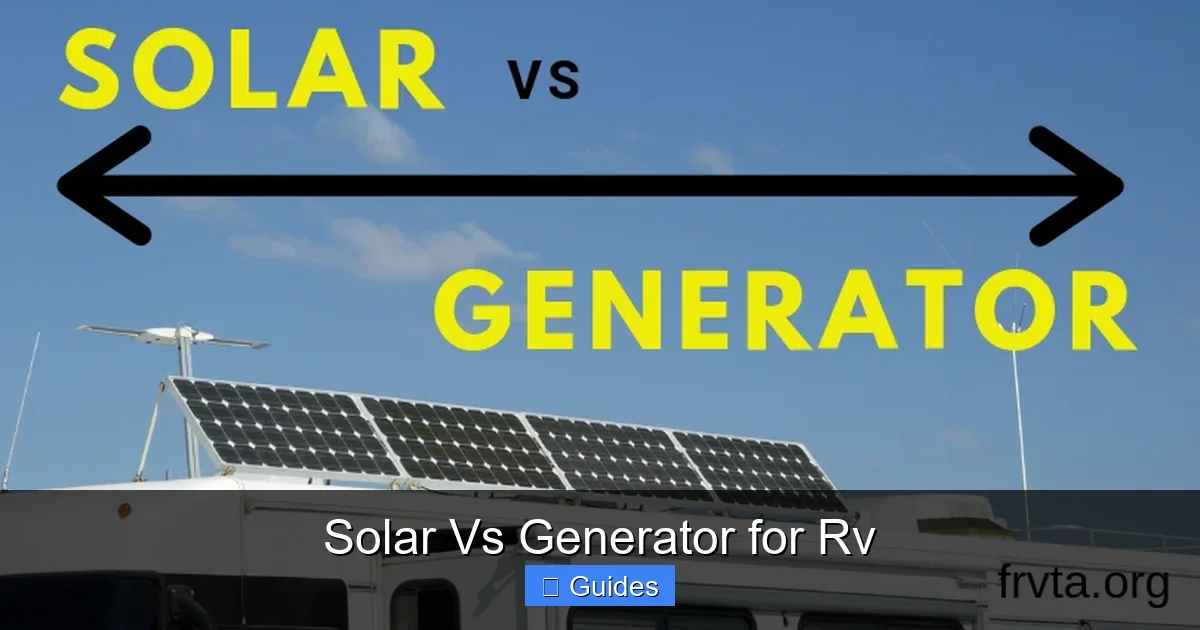
One of the biggest advantages of solar is its scalability. You can start small—say, with a 200-watt kit—and expand over time. Many RVers begin with just enough to run lights and charge devices, then add more panels and batteries as their needs grow. For example, a weekend camper might get by with 400 watts, while a full-time traveler with an air conditioner might install 1,000 watts or more.
Solar also shines in sunny climates. If you’re traveling through the Southwest, Florida, or Southern California, you’ll likely generate plenty of power even with a modest setup. But in cloudy or forested areas, output can drop significantly. That’s why many solar users pair their system with a generator or rely on battery storage to cover low-sun days.
Types of Solar Panels for RVs
Not all solar panels are created equal. The three main types used on RVs are monocrystalline, polycrystalline, and thin-film.
Monocrystalline panels are the most efficient and durable, making them the top choice for most RVers. They perform well in low-light conditions and take up less space, which is crucial on a rooftop. While they’re more expensive upfront, their long lifespan (25+ years) and high output justify the cost for many.
Polycrystalline panels are slightly less efficient and a bit cheaper, but they still offer solid performance. They’re a good middle-ground option if you’re on a tighter budget and have ample roof space.
Thin-film panels are lightweight and flexible, which makes them easy to install on curved surfaces. However, they’re much less efficient and require a lot more space. They’re rarely used on RVs unless weight is a major concern.
For most RVers, monocrystalline panels are the way to go. They offer the best balance of efficiency, durability, and space usage.
Solar System Components You Need
A complete solar setup isn’t just panels. You’ll need several key components to make the system work:
– Solar panels: Capture sunlight and generate electricity.
– Charge controller: Protects batteries from overcharging. MPPT controllers are more efficient than PWM and worth the extra cost.
– Battery bank: Stores energy for use at night or on cloudy days. Lithium batteries (like LiFePO4) are lighter, last longer, and allow deeper discharges than AGM.
– Inverter: Converts DC power to AC for household appliances. Choose a pure sine wave inverter for sensitive electronics.
– Wiring and fuses: Ensure safe and efficient power flow.
– Monitoring system: Tracks solar input, battery levels, and usage. Helpful for managing energy.
A typical 400-watt solar kit might include four 100-watt panels, an MPPT charge controller, and basic wiring. But for serious off-grid living, you’ll likely need a larger battery bank and a 2,000-watt inverter or higher.
How Generators Work for RVs
Visual guide about Solar Vs Generator for Rv
Image source: frvta.org
Generators are the traditional go-to for RV power, especially when solar isn’t enough or practical. They work by burning fuel—usually gasoline, propane, or diesel—to generate electricity. This power can either run appliances directly or charge your RV’s batteries.
Most RVs come with a built-in generator, often fueled by propane or gasoline. These are convenient because they’re integrated into the system and can power everything from the air conditioner to the microwave with the flip of a switch. Portable generators are also popular, especially for smaller rigs or as backups. They’re lightweight, easy to store, and can be used for other purposes like powering tools at a campsite.
One of the biggest advantages of generators is their ability to produce high amounts of power quickly. Need to run a 15,000 BTU air conditioner? A generator can handle that easily. Solar systems, even large ones, often struggle with high-demand appliances unless you have a massive battery bank and inverter.
Generators also work regardless of weather. If it’s been cloudy for three days and your solar panels aren’t producing, a generator can recharge your batteries in an hour or two. This reliability makes them a favorite among RVers who travel in unpredictable climates or need consistent power.
However, generators come with trade-offs. They’re noisy—often producing 50–70 decibels, similar to a vacuum cleaner or loud conversation. This can be disruptive in quiet campgrounds or national parks with noise restrictions. They also require fuel, which adds ongoing costs and the hassle of refilling tanks or carrying gas cans.
Maintenance is another consideration. Generators need regular oil changes, air filter replacements, and occasional tune-ups. If you’re not mechanically inclined, this can be a downside. And if something breaks down in the middle of nowhere, repairs can be expensive and time-consuming.
Types of RV Generators
There are several types of generators to choose from, each with its own pros and cons:
– Built-in generators: Installed in your RV, often powered by propane or gasoline. They’re convenient and powerful but can be expensive to repair and take up space.
– Portable gasoline generators: Affordable and widely available. Models like the Honda EU2200i are popular for their quiet operation and reliability. However, they require you to carry and store gasoline, which can be a safety concern.
– Portable propane generators: Cleaner burning and quieter than gasoline models. Propane is also safer to store and doesn’t degrade over time. But propane generators are less common and can be harder to find.
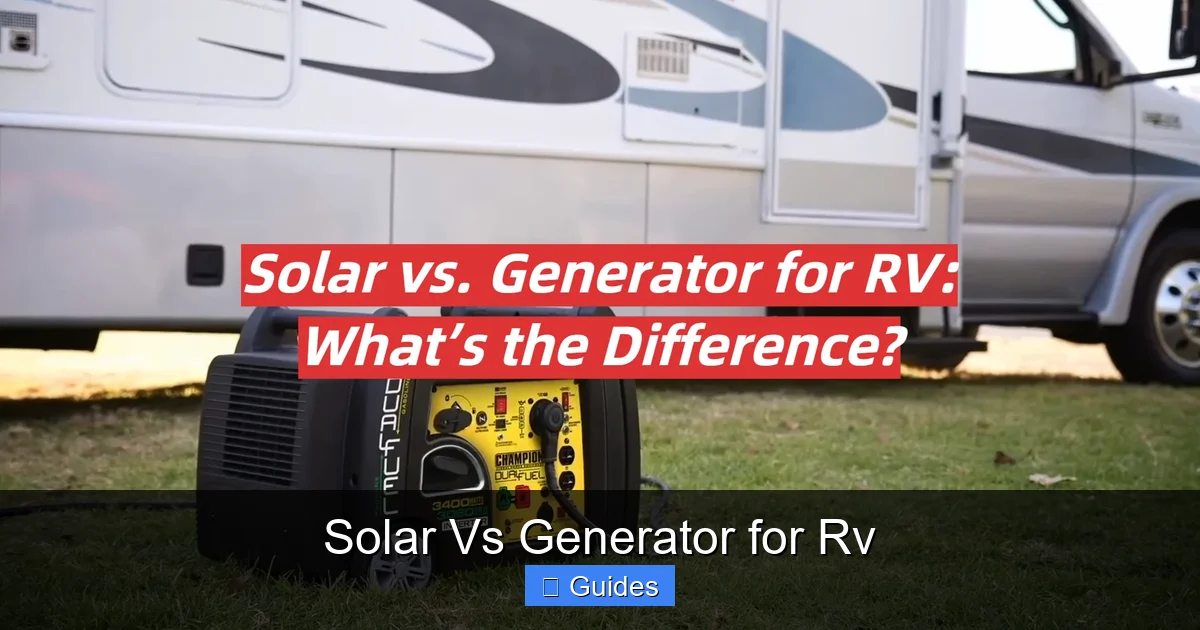
– Inverter generators: A subtype of portable generators that produce cleaner, more stable power. They’re ideal for sensitive electronics like laptops and phones. They’re also quieter and more fuel-efficient than conventional generators.
For most RVers, a quiet inverter generator like the Yamaha EF2000iSv2 or the Champion 3800-Watt Dual Fuel is a great choice. They offer a good balance of power, noise level, and fuel efficiency.
Generator Fuel Types and Efficiency
The type of fuel your generator uses affects cost, availability, and performance.
Gasoline is the most common and easiest to find, but it has a short shelf life (3–6 months) and can gum up the engine if left sitting. It’s also less efficient than other fuels.
Propane burns cleaner, lasts indefinitely in storage, and is often already available in your RV’s tank. It’s a great option if you’re already using propane for your furnace or fridge. However, propane generators may produce slightly less power and can be bulkier.
Diesel is used in larger RVs and towables. It’s efficient and long-lasting, but diesel generators are heavy, noisy, and expensive.
Dual-fuel generators, which can run on both gasoline and propane, offer flexibility. You can switch fuels based on availability and cost, which is helpful on long trips.
Solar vs Generator: Cost Comparison
Visual guide about Solar Vs Generator for Rv
Image source: rvprofy.com
When deciding between solar and a generator, cost is a major factor. But it’s not just about the initial price tag—you need to consider long-term expenses, too.
Upfront Costs
Solar systems have a higher upfront cost. A basic 400-watt solar kit with panels, charge controller, and wiring might cost $800–$1,200. Add a lithium battery bank (around $1,000–$2,000) and a quality inverter ($300–$800), and you’re looking at $2,500–$4,000 for a solid setup.
Generators, on the other hand, are generally cheaper to buy. A portable inverter generator like the Honda EU2200i costs around $1,000–$1,300. Built-in generators can range from $2,000 to $5,000, depending on power output and features.
So, at first glance, generators seem more affordable. But that’s only part of the story.
Long-Term Costs
Solar has minimal ongoing costs. Once installed, there’s no fuel to buy, and maintenance is almost nonexistent—just occasional cleaning of the panels. Over five years, your total cost might only increase by a few hundred dollars for replacements or upgrades.
Generators, however, come with recurring expenses. Fuel costs add up quickly, especially if you run the generator daily. For example, running a 2,000-watt generator for 4 hours a day on gasoline could cost $15–$25 per day, depending on fuel prices. Over a month, that’s $450–$750 just in gas.
Maintenance is another hidden cost. Oil changes, spark plug replacements, and carburetor cleanings can cost $100–$300 per year. And if the generator breaks down, repairs can run into the hundreds.
When you factor in fuel and maintenance, solar often becomes the more economical choice over time—especially for full-time RVers or those who boondock frequently.
Resale Value and Lifespan
Solar panels can last 25–30 years with little degradation. Batteries may need replacing every 5–10 years, depending on type and usage. But overall, a well-maintained solar system holds its value and can even increase your RV’s resale price.
Generators typically last 5–10 years with regular use. After that, they may need major repairs or replacement. And because they’re mechanical, they’re more prone to wear and tear.
Performance and Reliability: Which Powers Your RV Better?
When it comes to performance, solar and generators serve different needs. It’s not about which is “better” overall—it’s about which is better for your situation.
Power Output and Appliance Compatibility
Generators win when it comes to raw power. A 3,500-watt generator can easily run a 15,000 BTU air conditioner, microwave, and coffee maker all at once. Solar systems, even large ones, often can’t match that kind of surge demand unless you have a massive battery bank and a high-capacity inverter.
For example, a 1,000-watt solar array might generate 4–5 kilowatt-hours on a sunny day—enough to run lights, a fridge, and charge devices. But it won’t power an air conditioner unless you have at least 300–400 amp-hours of lithium batteries and a 3,000-watt inverter.
If you rely heavily on high-wattage appliances, a generator might be necessary. But if you’re energy-conscious and use efficient appliances (like a 12V fridge or LED lights), solar can handle most of your needs.
Weather and Environmental Factors
Solar is highly dependent on sunlight. On cloudy days, output can drop by 50–80%. In winter or at higher latitudes, shorter days and lower sun angles reduce production. If you’re traveling in the Pacific Northwest or Alaska, solar may not be reliable year-round.
Generators, by contrast, work in any weather. Rain, snow, or fog won’t stop them from producing power. This makes them a better choice for unpredictable climates or emergency backup.
However, solar has the edge in environmental impact. It produces zero emissions, no noise, and no fuel waste. Generators burn fossil fuels, emit CO2, and contribute to air and noise pollution.
Reliability and Backup Options
Both systems can fail, but for different reasons. Solar can underperform due to shading, dirt on panels, or battery issues. Generators can fail from mechanical problems, fuel contamination, or lack of maintenance.
That’s why many RVers choose a hybrid approach: solar for daily use and a small generator as backup. This gives you the quiet, clean power of solar with the reliability of a generator when needed.
Lifestyle and Practical Considerations
Your travel style plays a huge role in deciding between solar and a generator.
Boondocking and Off-Grid Living
If you love remote camping, solar is often the best choice. It’s quiet, doesn’t require fuel stops, and lets you stay off-grid for weeks. Many boondockers swear by solar because it aligns with the peaceful, self-sufficient lifestyle.
Generators can be a liability in quiet zones or dispersed camping areas where noise is frowned upon. Some national forests and BLM lands have noise restrictions, and fellow campers may not appreciate the constant drone of a generator.
RV Parks and Hookups
If you mostly stay in RV parks with electrical hookups, you may not need either system. But having solar or a generator gives you flexibility. If the power goes out, you’re still covered.
Solar is especially useful in parks with partial shade or limited hookups. You can run your fridge and lights on solar while using shore power for high-demand appliances.
Noise and Neighbor Relations
Noise is a big differentiator. Solar is silent—once it’s installed, you’ll never hear it working. Generators, even quiet inverter models, produce noticeable noise. This can disturb wildlife, other campers, and your own peace.
If you value quiet mornings and peaceful evenings, solar is the clear winner.
Maintenance and Ease of Use
Solar requires almost no maintenance. Wipe the panels clean a few times a year, check connections, and monitor battery levels. That’s it.
Generators need regular upkeep: oil changes, air filter checks, fuel stabilizer, and occasional test runs. If you’re not handy, this can be a hassle.
Solar is also easier to use day-to-day. Just set it and forget it. Generators require you to start them, monitor fuel, and shut them down.
Hybrid Systems: The Best of Both Worlds
Many RVers are discovering that the best solution isn’t solar or generator—it’s both.
A hybrid system combines solar panels with a small generator. You use solar for daily power needs and run the generator only when necessary—like on cloudy days, when charging batteries quickly, or running high-demand appliances.
This approach gives you the quiet, clean efficiency of solar with the reliability and power of a generator. It’s especially popular among full-time RVers and those who travel in varied climates.
For example, you might have a 600-watt solar array and a 2,000-watt inverter generator. On sunny days, solar powers everything. On overcast days, you run the generator for an hour to top off the batteries. This reduces fuel use, noise, and wear on the generator.
Some advanced systems even include automatic transfer switches that start the generator when battery levels drop below a certain point. This adds convenience and ensures you never run out of power.
Conclusion: Which Is Right for You?
So, solar vs generator for RV—which should you choose?
There’s no one-size-fits-all answer. It depends on your budget, travel style, energy needs, and personal preferences.
If you’re a weekend camper who mostly stays in parks, a small generator might be all you need. It’s affordable, powerful, and easy to use.
If you’re a full-time RVer or love boondocking, solar is likely the better long-term investment. It’s quiet, eco-friendly, and saves money over time.
And if you want maximum flexibility, consider a hybrid system. You get the best of both worlds—clean solar power with generator backup when needed.
No matter which path you choose, the key is to understand your power needs and plan accordingly. Start small if you’re new, and expand as you learn what works for you.
The freedom of the open road is even better when you’re powered up and ready for anything.
Frequently Asked Questions
Can I run my RV air conditioner on solar?
Yes, but it requires a large solar array (1,000+ watts), a high-capacity lithium battery bank (300+ amp-hours), and a 3,000-watt or higher inverter. Most RVers use a generator for AC unless they have a robust solar setup.
How long does it take to charge RV batteries with solar?
It depends on sunlight and system size. A 400-watt solar array might fully charge a 200Ah lithium battery in 4–6 hours on a sunny day. Cloudy weather can double or triple that time.
Do I need a generator if I have solar?
Not necessarily, but a small generator can be a useful backup for cloudy days or high power demands. Many solar users keep a generator for emergencies or occasional use.
Are solar panels worth it for occasional RV use?
If you only camp a few times a year, a generator may be more practical. But even occasional users can benefit from solar for lights, charging, and running small appliances without noise or fuel.
Can I install solar panels myself?
Yes, many RVers install their own solar systems. Kits come with instructions, and online tutorials are widely available. However, if you’re not comfortable with wiring, hiring a professional is safer.
What’s the quietest generator for an RV?
Inverter generators like the Honda EU2200i or Yamaha EF2000iSv2 are among the quietest, producing around 50–57 decibels—about as loud as a normal conversation.

At CarLegit, we believe information should be clear, factual, and genuinely helpful. That’s why every guide, review, and update on our website is created with care, research, and a strong focus on user experience.