

Featured image for What Should The Tire Pressure Be On A Hyundai Sonata
Image source: warningsigns.net
Maintaining the correct tire pressure—typically 33 PSI for most Hyundai Sonata models—is a critical safety and performance factor. Properly inflated tires ensure optimal handling, braking, and fuel efficiency while preventing premature wear. Make checking your tire pressure a monthly ritual to protect your investment and your safety on every journey.
In This Article
- 1 Key Takeaways
- 2 📑 Table of Contents
- 3 Find Your Hyundai Sonata Tire Pressure for Safety
- 4 The Absolute Basics: What is Tire Pressure and Why Does it Matter?
- 5 Where to Find Your Sonata’s Correct Tire Pressure
- 6 How to Check and Adjust Your Tire Pressure Like a Pro
- 7 Seasonal Shifts and Special Situations
- 8 The Real Cost of Getting It Wrong
- 9 Building Your Simple Tire Pressure Maintenance Schedule
- 10 Conclusion: Safety, Savings, and Peace of Mind
- 11 Frequently Asked Questions
- 11.1 What is the recommended tire pressure for a Hyundai Sonata?
- 11.2 How often should I check my Hyundai Sonata’s tire pressure?
- 11.3 Does tire pressure affect fuel efficiency in a Hyundai Sonata?
- 11.4 Where can I find the tire pressure information for my Hyundai Sonata?
- 11.5 What happens if my Hyundai Sonata’s tire pressure is too low?
- 11.6 Can I use the same tire pressure for all seasons in my Hyundai Sonata?
Key Takeaways
- Check the placard: Find the recommended PSI on your driver’s side door jamb sticker.
- Monitor monthly: Regularly check pressure to ensure optimal performance and safety.
- Use a quality gauge: Accurate tools provide reliable readings for proper inflation.
- Adjust for conditions: Tire pressure changes with temperature; check when cold.
- Maintain for safety: Correct pressure reduces blowout risks and improves handling.
- Improve fuel efficiency: Properly inflated tires enhance gas mileage and save money.
📑 Table of Contents
- Find Your Hyundai Sonata Tire Pressure for Safety
- The Absolute Basics: What is Tire Pressure and Why Does it Matter?
- Where to Find Your Sonata’s Correct Tire Pressure
- How to Check and Adjust Your Tire Pressure Like a Pro
- Seasonal Shifts and Special Situations
- The Real Cost of Getting It Wrong
- Building Your Simple Tire Pressure Maintenance Schedule
- Conclusion: Safety, Savings, and Peace of Mind
Find Your Hyundai Sonata Tire Pressure for Safety
Let’s be honest. When was the last time you thought about your tires? I don’t mean when you got a new set or had a flat. I mean just a regular Tuesday, walking to your car. For most of us, tires are out of sight, out of mind. We trust them to do their job. But here’s a little secret I learned the hard way: those four black circles are the single most critical safety feature on your car. And their health depends almost entirely on one simple thing—air.
I remember driving my previous car, a trusty old sedan, for months. The steering felt a little heavy, the ride was a bit rough, and my gas mileage? Not great. I blamed the car’s age. Then, one chilly morning, a warning light popped on. I finally checked the tire pressure. All four were dangerously low. After inflating them to the correct PSI, it was like driving a new car. The steering was light, bumps were softer, and I gained back several miles per gallon. I had been driving in a compromised state, risking a blowout, and wasting money—all because I ignored a basic five-minute task.
Your Hyundai Sonata is a brilliant machine. It’s engineered for comfort, efficiency, and safety. But all that advanced engineering—the stability control, the precise handling, the fuel-efficient engine—relies on a solid foundation. That foundation is your tires, at the correct Hyundai Sonata tire pressure. Getting this right isn’t just about avoiding a flat; it’s about unlocking your car’s full potential and protecting everyone inside. Let’s dive in and make this simple, safe, and routine.
The Absolute Basics: What is Tire Pressure and Why Does it Matter?
Think of your tire as a balloon. Under-inflated, it’s soft, bulgy, and weak. Over-inflated, it’s rock-hard, brittle, and ready to pop. Tire pressure, measured in PSI (pounds per square inch), is about finding the perfect middle ground. For your Sonata, this “Goldilocks zone” is specified by the engineers who designed it.
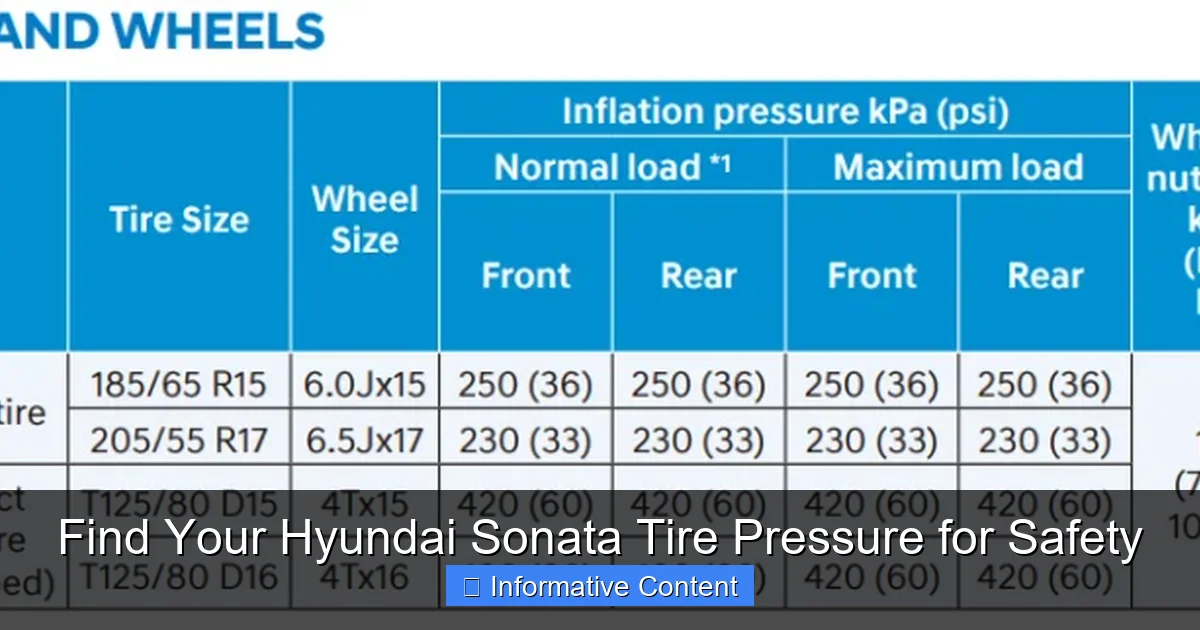
Visual guide about What Should The Tire Pressure Be On A Hyundai Sonata
Image source: warningsigns.net
Driving on incorrect tire pressure is a triple threat. It hurts your safety, your wallet, and your car.
Safety is the Non-Negotiable
Your tires are your only contact with the road. Proper inflation ensures that contact patch—the part of the tire actually touching the pavement—is optimal. Under-inflation causes the sidewalls to flex excessively. This builds up heat, which is the number one cause of tire blowouts at highway speeds. It also reduces stability in corners and increases stopping distances. Over-inflation reduces that contact patch, making it harder for your tires to grip the road, especially in wet or icy conditions.
Your Wallet Will Feel the Difference
This was my biggest shock. The U.S. Department of Energy states that for every 1 PSI drop in pressure across all four tires, you lose about 0.2% in fuel economy. That might sound small, but if your tires are 5 PSI low (a very common occurrence), you’re losing 1% of your gas mileage. Over a year of driving, that’s a full tank of gas or more, wasted. Under-inflated tires also wear out much faster, especially on the edges, forcing you to replace them sooner.
Ride Quality and Performance
Your Sonata is known for its smooth, quiet ride. Under-inflated tires feel sluggish and can make the car wander. Over-inflated tires transmit every single bump and crack in the road directly to your seat, making the ride harsh and noisy. Correct Hyundai Sonata tire pressure gives you the comfortable, responsive, and quiet drive the car was designed for.
Where to Find Your Sonata’s Correct Tire Pressure
This is the most important step, and so many people get it wrong. Do not look at the tire itself! The number molded on the tire’s sidewall (e.g., “Max Press 51 PSI”) is the maximum pressure the tire can hold, not the recommended pressure for your car.
Visual guide about What Should The Tire Pressure Be On A Hyundai Sonata
Image source: vehiclefreak.com
Hyundai’s engineers have determined the perfect pressure for your specific Sonata’s weight, handling, and load capacity. You’ll find this official number in two places.
Your Driver’s Side Door Jamb (The Tire and Loading Information Label)
This is your primary source. Open the driver’s door and look on the door frame or the central pillar (the B-pillar). You’ll see a yellow and white sticker. This label lists the recommended tire pressure for your car’s front and rear tires. It often shows two numbers: one for normal loads and a higher one for when the car is fully loaded with passengers and cargo. Always use the “normal” load rating for everyday driving.
Your Owner’s Manual
Your glove box holds the backup plan. The owner’s manual will have a section on tires that reiterates the recommended PSI. It’s a great resource for understanding tire rotation patterns and other maintenance schedules too.
Pro Tip: Check your pressure at least once a month and always before a long trip. Tire pressure should be checked when the tires are “cold,” meaning the car has been parked for at least three hours or driven less than a mile. Driving heats up the tires and the air inside, giving a falsely high pressure reading.
How to Check and Adjust Your Tire Pressure Like a Pro
Don’t worry, this isn’t a mechanical exam. With a few simple tools, you can do this in your driveway in 10 minutes. Here’s my simple, step-by-step routine.
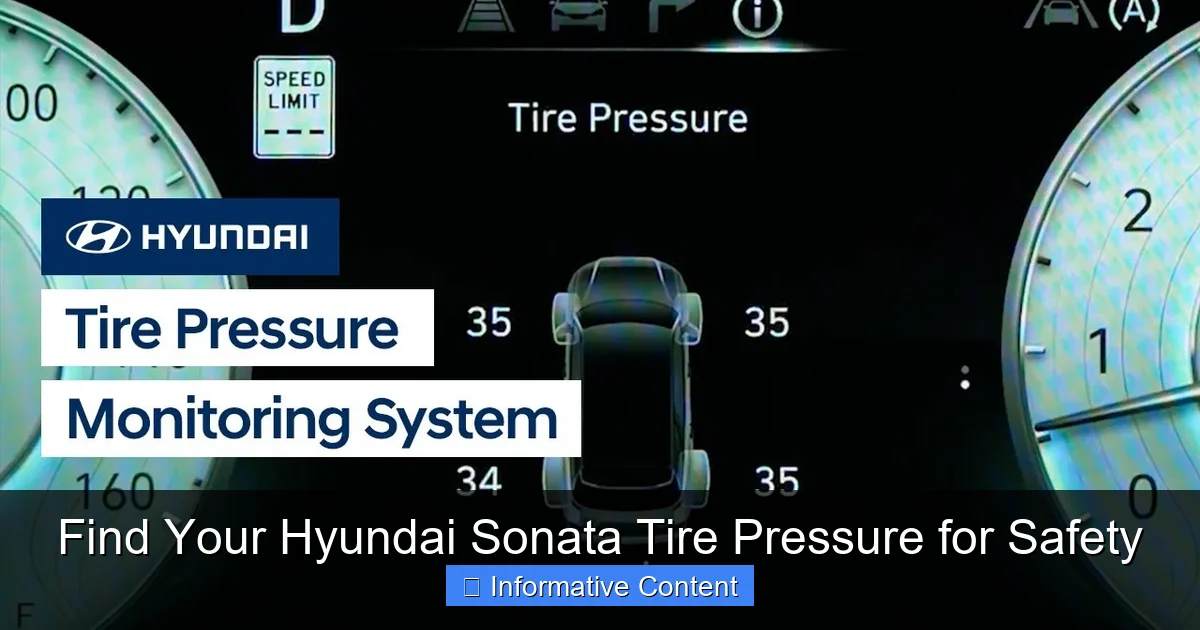
Visual guide about What Should The Tire Pressure Be On A Hyundai Sonata
Image source: hyundaihowtos.com
Gather Your Tools
- A Quality Tire Pressure Gauge: This is key. The pencil-style gauges are cheap but less accurate. I recommend a digital tire gauge. They’re easy to read and very reliable. Keep it in your glove box.
- An Air Source: Many gas stations have air pumps, but they often require coins and can be poorly maintained. For about $30-$50, you can buy a portable air compressor that plugs into your car’s 12-volt outlet (cigarette lighter). It’s one of the best investments I’ve ever made for car care.
The Step-by-Step Process
- Find your “cold” pressure target from the door jamb sticker. Let’s say it’s 35 PSI.
- Unscrew the valve stem cap on the first tire. Put it in your pocket so you don’t lose it.
- Press your gauge firmly onto the valve stem. You’ll hear a quick hiss. The gauge will show the current pressure.
- Compare the reading to your target. If it’s low, use your air compressor to add air in short bursts, checking frequently with the gauge. If it’s high, briefly press the center pin in the valve stem with your gauge or a small tool to release air, checking as you go.
- Replace the valve stem cap tightly. This little cap keeps dirt and moisture out of the valve core.
- Repeat for all four tires. Don’t forget your spare tire if your Sonata has a full-size one! It loses pressure over time too.
Seasonal Shifts and Special Situations
Air isn’t static. It expands when hot and contracts when cold. This simple law of physics means your Hyundai Sonata tire pressure needs a little extra attention as seasons change.
The Fall and Winter Pressure Drop
For every 10°F drop in ambient temperature, tire pressure decreases by about 1 PSI. When a crisp fall morning turns into a deep winter freeze, you can easily lose 5 PSI or more. That sudden drop is why your TPMS (Tire Pressure Monitoring System) light often comes on during the first cold snap. It’s not a system error—it’s a reminder. Check and inflate your tires more frequently in cold weather to the recommended “cold” pressure.
Summer Heat and Long Drives
In summer, the opposite happens. Heat from the road and friction from driving can increase tire pressure. This is normal. Do not “bleed” air from hot tires to get back to the door jamb number. You will end up under-inflating them when they cool down. Check pressure in the morning when tires are cold and adjust then.
Loading Up for a Road Trip
Planning a vacation with a full car of people and luggage? Check your door jamb sticker again. It may list a higher tire pressure for Hyundai Sonata vehicles under “full load” conditions. Inflating to this higher PSI (usually 3-5 PSI more) helps the tire better support the extra weight and maintain its shape for safety. Remember to reset them to the normal “cold” pressure when you unload.
The Real Cost of Getting It Wrong
Let’s make the consequences crystal clear. Ignoring tire pressure isn’t just a minor oversight; it has direct, measurable impacts.
Under-Inflation: The Silent Killer
- Increased Risk of Blowout: Excessive flexing generates heat, which can weaken the tire’s internal structure until it fails.
Poor Handling: The car feels sloppy, with delayed steering response and reduced stability in emergency maneuvers.
Rapid and Uneven Wear: The outer edges of the tread wear down much faster than the center. I had to replace a set of tires 10,000 miles early because of this.
Higher Fuel Consumption: More rolling resistance means your engine works harder.
Over-Inflation: The Harsh Reality
- Reduced Traction: The center of the tread bulges out, reducing the tire’s contact with the road. This is especially dangerous in rain or snow.
Vulnerability to Damage: An over-inflated tire is less flexible and more susceptible to damage from potholes or road debris.
Harsh, Uncomfortable Ride: Every bump and crack is transmitted directly into the cabin.
Center Tread Wear: The middle of the tire wears down prematurely.
Your Sonata’s Tire Pressure Monitoring System (TPMS)
Your car has a built-in helper. When the TPMS light (it looks like a flat tire with an exclamation point) comes on and stays on, it means one or more tires is significantly under-inflated. A flashing light indicates a system fault. This system is a great warning, but it’s not a substitute for monthly checks. The light often doesn’t trigger until you’re 25% below the recommended pressure, which is already in the danger zone.
Building Your Simple Tire Pressure Maintenance Schedule
Consistency is everything. Make tire pressure part of your regular life. Here’s an easy schedule to follow.
Monthly
Pick a day—like the first Saturday of the month. Grab your gauge and check all four tires and the spare when they are cold. This is your most important habit.
Seasonally
When you feel that first big temperature swing in fall and spring, do an extra check. Adjust pressures to the recommended cold PSI.
Before Any Long Trip
Always verify pressures and adjust for load if needed. It’s part of the pre-trip check alongside fluids and wipers.
After a Significant Impact
Hit a nasty pothole or curb? Check the pressure and the tire’s condition for bulges or cuts.
Reference Data: Common Hyundai Sonata Tire Pressure Settings
The table below provides general guidance based on common Sonata trims and model years. ALWAYS confirm with your own door jamb sticker.
| Model Year Range | Common Trim/Engine | Typical Front Tire PSI (Cold) | Typical Rear Tire PSI (Cold) | Notes |
|---|---|---|---|---|
| 2020 – Present | Most Trims (e.g., SE, SEL, Limited) | 35 PSI | 35 PSI | Often uses a uniform pressure for all four tires. Check sticker for 18″ vs. 19″ wheels. |
| 2015 – 2019 | 4-Cylinder Models | 33 PSI | 33 PSI | Common setup for standard loads. |
| 2015 – 2019 | Fully Loaded (Passengers & Cargo) | 36 PSI | 36 PSI | Higher pressure as indicated on the door sticker for load. |
| Older Models | V6 Engine Trims | 32 PSI (Front), 30 PSI (Rear) | 30 PSI | Some performance setups had staggered pressures. Vital to check your specific label. |
Conclusion: Safety, Savings, and Peace of Mind
Taking care of your Hyundai Sonata tire pressure is the ultimate act of responsible ownership. It’s not a complex mechanical task reserved for experts. It’s a simple, five-minute habit that pays you back a hundred times over.
You gain enhanced safety for yourself and your loved ones. You save real money on gas and tires. And you get to experience your Sonata exactly as its engineers intended—smooth, responsive, and efficient. That little bit of air is what connects all the advanced technology in your car to the road beneath you. Make that connection a strong one.
So, the next time you walk up to your Sonata, give those tires a quick glance. Then, this weekend, grab a gauge and spend a few minutes with them. Your car, your wallet, and most importantly, your peace of mind will thank you for miles and miles to come.
Frequently Asked Questions
What is the recommended tire pressure for a Hyundai Sonata?
The recommended tire pressure for a Hyundai Sonata is usually between 32 to 35 PSI, but always refer to your owner’s manual or the driver’s side door jamb sticker for the exact specs. Proper inflation ensures safety, improves handling, and extends tire life.
How often should I check my Hyundai Sonata’s tire pressure?
Check your Hyundai Sonata’s tire pressure at least once a month and before long trips. Regular checks are crucial as pressure changes with temperature fluctuations, helping maintain optimal performance and safety.
Does tire pressure affect fuel efficiency in a Hyundai Sonata?
Yes, tire pressure directly impacts fuel efficiency in your Hyundai Sonata. Under-inflated tires increase rolling resistance, lowering gas mileage, while over-inflation can cause uneven wear and reduce traction.
Where can I find the tire pressure information for my Hyundai Sonata?
You can locate the tire pressure information for your Hyundai Sonata on a sticker inside the driver’s side door jamb or in the owner’s manual. This sticker specifies the manufacturer’s recommended PSI for front and rear tires.
What happens if my Hyundai Sonata’s tire pressure is too low?
If your Hyundai Sonata’s tire pressure is too low, it can lead to poor handling, accelerated tire wear, and a higher risk of blowouts. Low pressure also decreases fuel economy and compromises vehicle safety.
Can I use the same tire pressure for all seasons in my Hyundai Sonata?
While the recommended tire pressure for your Hyundai Sonata is generally stable, adjust slightly for extreme seasons. In cold weather, pressure may drop, so check and inflate as needed, but avoid over-inflation during hot months.

At CarLegit, we believe information should be clear, factual, and genuinely helpful. That’s why every guide, review, and update on our website is created with care, research, and a strong focus on user experience.