
The Hyundai Tucson offers a diverse lineup of models designed to suit every lifestyle and budget. From the efficient gas-powered trims to the eco-friendly hybrid and plug-in hybrid versions, each model delivers modern tech, safety, and comfort in a stylish compact SUV package.
In This Article
- 1 Key Takeaways
- 2 📑 Table of Contents
- 3 Introduction to the Hyundai Tucson Lineup
- 4 Understanding the Hyundai Tucson Trim Levels
- 5 Gas-Powered Tucson Models: Performance and Efficiency
- 6 Hyundai Tucson Hybrid: Efficiency Meets Performance
- 7 Hybrid Electric Tucson Plug-In: The Best of Both Worlds
- 8 Safety, Technology, and Warranty Across All Models
- 9 Conclusion: Finding the Right Hyundai Tucson for You
- 10 Frequently Asked Questions
- 10.1 What are the different models of Hyundai Tucson?
- 10.2 Is the Hyundai Tucson hybrid worth it?
- 10.3 Can the Hyundai Tucson plug-in hybrid run on electric only?
- 10.4 Does the Hyundai Tucson come with all-wheel drive?
- 10.5 What safety features come standard on the Hyundai Tucson?
- 10.6 How long is the warranty on a Hyundai Tucson?
Key Takeaways
- Multiple Powertrains Available: The Tucson comes in gas, hybrid, and plug-in hybrid models, giving buyers flexibility in fuel efficiency and performance.
- Four Main Trim Levels: SE, SEL, XRT, and Limited offer increasing levels of luxury, technology, and capability.
- Hybrid and PHEV Options: The Tucson Hybrid and Plug-in Hybrid provide excellent fuel economy and reduced emissions without sacrificing power.
- Advanced Safety Features: Every model includes Hyundai SmartSense, a suite of driver-assist technologies like forward collision warning and lane-keeping assist.
- Spacious and Tech-Forward Interior: Even base models come with an intuitive infotainment system, Apple CarPlay, Android Auto, and generous cargo space.
- All-Wheel Drive Availability: AWD is optional on most trims, enhancing traction and confidence in challenging weather conditions.
- Strong Warranty Coverage: Hyundai backs the Tucson with a 5-year/60,000-mile basic warranty and 10-year/100,000-mile powertrain warranty.
📑 Table of Contents
- Introduction to the Hyundai Tucson Lineup
- Understanding the Hyundai Tucson Trim Levels
- Gas-Powered Tucson Models: Performance and Efficiency
- Hyundai Tucson Hybrid: Efficiency Meets Performance
- Hybrid Electric Tucson Plug-In: The Best of Both Worlds
- Safety, Technology, and Warranty Across All Models
- Conclusion: Finding the Right Hyundai Tucson for You
Introduction to the Hyundai Tucson Lineup
The Hyundai Tucson has long been a favorite in the compact SUV segment, and for good reason. It strikes a perfect balance between practicality, style, and value. Whether you’re a daily commuter, a weekend adventurer, or a growing family, the Tucson offers something for everyone. Over the years, Hyundai has refined the Tucson into a sophisticated, feature-rich vehicle that competes strongly with rivals like the Toyota RAV4, Honda CR-V, and Mazda CX-5.
What sets the Tucson apart is its diverse range of models. Unlike some competitors that offer only a few engine and trim options, Hyundai provides a full spectrum of choices—from budget-friendly base models to high-tech, eco-conscious hybrids. This flexibility allows buyers to find a Tucson that matches their driving needs, fuel preferences, and lifestyle demands. In this guide, we’ll break down the different models of Hyundai Tucson, exploring each trim level, powertrain option, and key features so you can make an informed decision.
Understanding the Hyundai Tucson Trim Levels
The Hyundai Tucson is available in four main trim levels: SE, SEL, XRT, and Limited. Each trim builds upon the previous one, adding more features, technology, and comfort. While all trims share the same bold exterior design and spacious interior, the differences become more pronounced as you move up the lineup. Let’s take a closer look at what each trim offers.

Visual guide about What Are the Different Models of Hyundai Tucson
Image source: media.drivingelectric.com
The SE: Entry-Level Value with Modern Essentials
The SE is the starting point of the Tucson lineup and is ideal for buyers who want a reliable, well-equipped SUV without breaking the bank. Despite being the base model, the SE doesn’t skimp on essentials. It comes standard with an 8-inch touchscreen infotainment system, Apple CarPlay, Android Auto, and a 6-speaker audio system. You also get Hyundai’s SmartSense safety suite, which includes forward collision-avoidance assist, lane-keeping assist, driver attention warning, and high beam assist.
Under the hood, the SE is powered by a 2.5-liter four-cylinder engine that delivers 187 horsepower and 178 lb-ft of torque. It’s paired with an 8-speed automatic transmission and front-wheel drive (FWD) as standard, with all-wheel drive (AWD) available as an option. While the SE lacks some of the premium features found in higher trims, it’s a solid choice for city driving and everyday errands. For example, a college student or young professional looking for a dependable first car might find the SE perfectly adequate.
The SEL: Balanced Features and Comfort
Stepping up to the SEL trim adds a noticeable upgrade in comfort and convenience. The SEL includes everything from the SE, plus a host of desirable features like dual-zone automatic climate control, heated front seats, and a power-adjustable driver’s seat. The exterior gets a more refined look with 17-inch alloy wheels and LED daytime running lights.
The SEL also introduces more advanced tech, such as Hyundai’s Blue Link connected services, which offer remote start, vehicle locator, and emergency assistance via smartphone app. Safety is enhanced with blind-spot collision warning and rear cross-traffic collision warning. For families or commuters who spend a lot of time in traffic, these features add peace of mind and convenience.
Mechanically, the SEL uses the same 2.5-liter engine as the SE, but it’s tuned for slightly better responsiveness. AWD is still optional, making it a good pick for those in regions with mild winters or occasional rain. The SEL strikes a sweet spot between affordability and features, making it one of the most popular trims in the lineup.
The XRT: Rugged Style and Capability
For buyers who want a more adventurous look and added utility, the XRT trim delivers. The XRT stands out with its rugged exterior styling, including unique 18-inch wheels, black cladding, roof rails, and a distinctive front grille. It’s designed to appeal to outdoor enthusiasts who want a vehicle that looks ready for off-the-beaten-path adventures—even if most of their driving is on paved roads.
Inside, the XRT includes all the features of the SEL, plus a few extras like a leather-wrapped steering wheel and shift knob. It also comes standard with AWD, which enhances traction on slippery or uneven surfaces. The XRT is perfect for someone who enjoys weekend camping trips or mountain drives and wants a vehicle that can handle light off-roading with confidence.
One practical example: imagine driving up a gravel road to a remote lake for fishing. The XRT’s AWD and higher ground clearance (compared to some competitors) give it an edge in such situations. While it doesn’t have a low-range transfer case like a true off-roader, it’s more than capable for light-duty adventures.
The Limited: Top-Tier Luxury and Technology
The Limited trim is where the Tucson truly shines as a premium compact SUV. It includes all the features of the lower trims and adds a long list of high-end amenities. The interior is upgraded with genuine leather seating, heated and ventilated front seats, a heated steering wheel, and a 10.25-inch digital instrument cluster. The infotainment system grows to a 10.25-inch touchscreen with navigation, and the audio system is upgraded to a premium Bose setup with 12 speakers.
Safety and driver assistance reach new heights in the Limited. It adds features like highway driving assist, which combines adaptive cruise control and lane-centering for semi-autonomous highway driving. There’s also a surround-view camera system, parking distance warning, and safe exit assist. These features make long drives less tiring and parking in tight spaces much easier.
The Limited also offers the most customization options, including a panoramic sunroof, ambient interior lighting, and a hands-free smart liftgate. With AWD standard, the Limited is ideal for buyers who want a luxurious, tech-packed SUV that can handle all seasons and road conditions. It’s a great choice for professionals or families who prioritize comfort and advanced safety.
Gas-Powered Tucson Models: Performance and Efficiency
The majority of Hyundai Tucson models are powered by a 2.5-liter four-cylinder gasoline engine. This engine is used across all trim levels and delivers a balanced mix of power and fuel economy. It produces 187 horsepower and 178 lb-ft of torque, which is competitive in the compact SUV class. The engine is paired with an 8-speed automatic transmission that shifts smoothly and responds well to driver input.
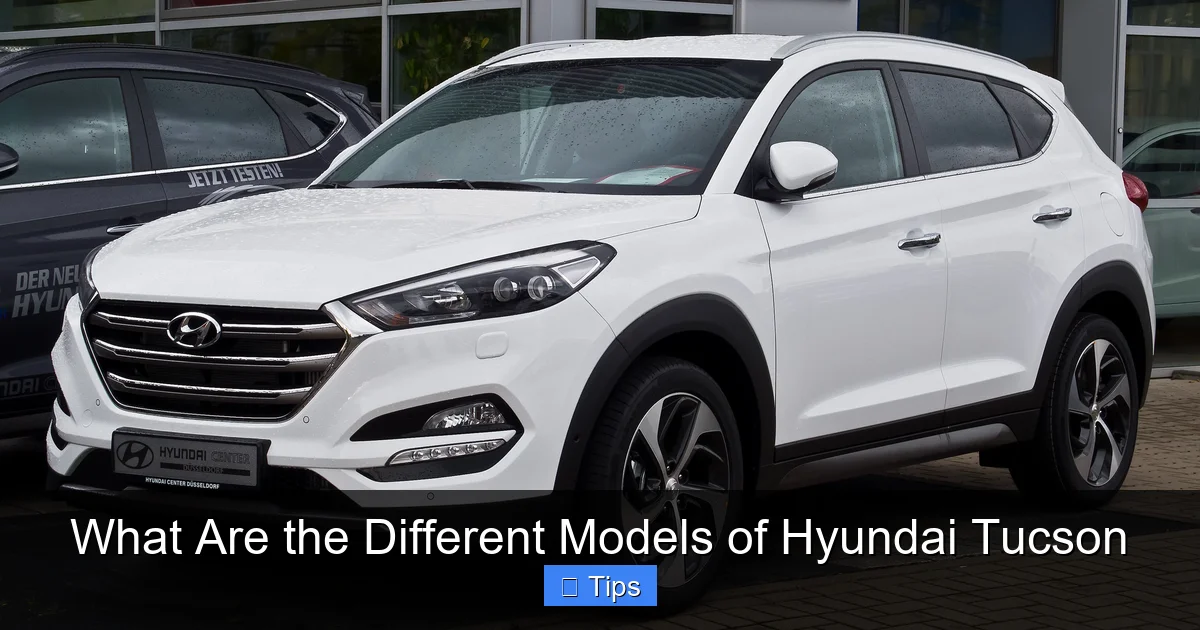
Visual guide about What Are the Different Models of Hyundai Tucson
Image source: quikr.com
Engine Specifications and Driving Experience
The 2.5-liter engine is tuned for everyday driving, offering enough power for highway merging and passing without feeling underpowered. While it’s not the most thrilling engine in terms of acceleration, it’s more than adequate for most drivers. The transmission does a good job of keeping the engine in its optimal power range, and there’s minimal lag when you press the accelerator.
Fuel economy is a strong point for the gas-powered Tucson. With FWD, it achieves an EPA-estimated 26 mpg in the city and 33 mpg on the highway. Opting for AWD reduces those numbers slightly to 24 mpg city and 29 mpg highway—still impressive for an SUV with this level of space and features. For comparison, a typical daily commute of 30 miles would cost less than $5 in gas, making the Tucson an economical choice over time.
Front-Wheel Drive vs. All-Wheel Drive
Front-wheel drive is standard on most gas-powered Tucson models, which helps keep the price down and improves fuel efficiency. FWD is perfectly suitable for drivers in warm or mild climates who rarely encounter snow or ice. It provides good traction on dry and wet roads and is lighter than AWD, contributing to better mileage.
All-wheel drive, however, is available on all trims and is standard on the XRT and Limited. AWD improves grip in slippery conditions, such as rain, snow, or gravel. It works by sending power to all four wheels when needed, which can prevent wheel spin and improve stability. For example, if you live in a region with frequent winter storms, AWD can make a significant difference in safety and confidence behind the wheel.
One tip: if you’re considering AWD, factor in the slight reduction in fuel economy and the higher upfront cost. But for many buyers, the added peace of mind is worth it. Hyundai’s AWD system is also intelligent—it only engages when necessary, so you don’t sacrifice efficiency during normal driving.
Hyundai Tucson Hybrid: Efficiency Meets Performance
For buyers looking to reduce their carbon footprint and save on fuel, the Hyundai Tucson Hybrid is an excellent option. It combines a 1.6-liter turbocharged four-cylinder engine with an electric motor to deliver both power and efficiency. The hybrid system produces a combined 226 horsepower, which is significantly more than the gas-only model, while still achieving impressive fuel economy.
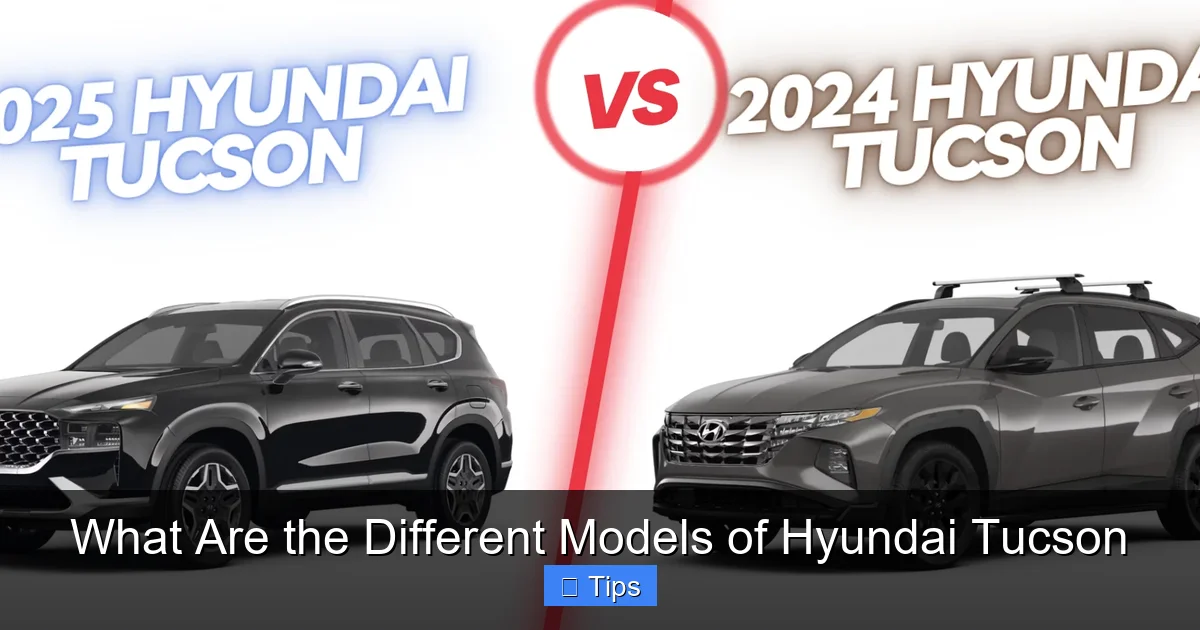
Visual guide about What Are the Different Models of Hyundai Tucson
Image source: southshorehyundai.com
How the Hybrid System Works
The Tucson Hybrid uses a parallel hybrid system, meaning both the gasoline engine and electric motor can power the wheels. During low-speed driving or stop-and-go traffic, the electric motor does most of the work, reducing engine use and saving fuel. At higher speeds or during acceleration, the gasoline engine kicks in to provide additional power. The system switches seamlessly between the two, so you barely notice the transition.
A lithium-ion polymer battery stores energy generated during braking (regenerative braking) and uses it to power the electric motor. This not only improves efficiency but also reduces wear on the brake pads. The hybrid system is paired with a 6-speed automatic transmission, which is tuned for smooth, quiet operation.
Fuel Economy and Environmental Benefits
The Tucson Hybrid achieves an EPA-estimated 38 mpg in the city and 38 mpg on the highway—making it one of the most fuel-efficient SUVs in its class. That’s a big improvement over the gas model’s 26/33 mpg. Over the course of a year, a hybrid Tucson could save hundreds of dollars in fuel costs, especially for drivers with long commutes or frequent city driving.
Beyond the savings, the hybrid reduces emissions and dependence on fossil fuels. For environmentally conscious buyers, this is a major advantage. The hybrid also qualifies for federal and state tax incentives in some regions, which can lower the effective purchase price.
Trim Levels and Features in the Hybrid Lineup
The Tucson Hybrid is available in SEL and Limited trims. The SEL Hybrid includes many of the same features as the gas SEL, such as heated seats, dual-zone climate control, and blind-spot monitoring. The Limited Hybrid adds luxury touches like leather seats, a Bose audio system, and a panoramic sunroof.
One practical example: a family of four who drives 15,000 miles a year could save over $400 annually in fuel costs by choosing the hybrid over the gas model. Over five years, that’s more than $2,000 in savings—money that could go toward vacations, home improvements, or college funds.
Hybrid Electric Tucson Plug-In: The Best of Both Worlds
The Hyundai Tucson Plug-in Hybrid (PHEV) takes efficiency a step further by offering a larger battery that can be charged externally. This allows for short all-electric driving, making it ideal for urban commuters or those with short daily drives. The PHEV combines the same 1.6-liter turbo engine with a more powerful electric motor and a 13.8 kWh battery.
Electric-Only Range and Charging
The Tucson PHEV can travel up to 33 miles on electric power alone, according to EPA estimates. That’s enough to cover most daily commutes without using any gasoline. For example, if you drive 25 miles round-trip to work, you could go days without visiting a gas station—just plug in at home overnight.
Charging is simple: use a standard 120-volt household outlet for Level 1 charging (about 6–8 hours for a full charge) or a 240-volt Level 2 charger for faster results (around 2.5 hours). Many homeowners install a Level 2 charger in their garage for convenience. Public charging stations are also widely available in urban areas.
Performance and Driving Modes
The PHEV delivers a combined 261 horsepower, making it the most powerful Tucson model. It can accelerate from 0 to 60 mph in about 7.5 seconds—faster than both the gas and hybrid versions. The vehicle offers multiple driving modes: Eco, Sport, and EV mode. In EV mode, it runs purely on electricity until the battery is depleted, then switches to hybrid mode.
This flexibility is a major advantage. On weekends, you can enjoy the performance of a sporty SUV. On weekdays, you can drive silently and efficiently through the city. The PHEV is perfect for someone who wants the environmental benefits of an electric vehicle but still needs the range and flexibility of a gasoline engine for longer trips.
Tax Credits and Incentives
One of the biggest benefits of the PHEV is eligibility for federal tax credits. As of 2024, the Tucson PHEV qualifies for up to $6,540 in federal incentives, depending on battery size and assembly location. Some states and local utilities also offer additional rebates, which can reduce the purchase price significantly. Be sure to check current incentives when shopping, as they can change.
Safety, Technology, and Warranty Across All Models
No matter which Tucson model you choose, you’ll get a high level of safety and technology. Hyundai has made advanced driver-assist features standard across the lineup, ensuring that even the base SE is well-equipped.
Hyundai SmartSense: Standard Safety Suite
Hyundai SmartSense includes features like forward collision-avoidance assist, lane-keeping assist, driver attention warning, and high beam assist. Higher trims add blind-spot monitoring, rear cross-traffic alert, and safe exit warning. The Limited trim goes further with highway driving assist and a surround-view camera.
These features have earned the Tucson top safety ratings from the IIHS and NHTSA. In crash tests, it received “Good” ratings across the board, and it’s been named a Top Safety Pick+ by the IIHS when equipped with certain headlights and front crash prevention.
Infotainment and Connectivity
All Tucson models come with an intuitive infotainment system. The base SE has an 8-inch screen, while higher trims upgrade to 10.25 inches. Apple CarPlay and Android Auto are standard, allowing seamless smartphone integration. The Limited trim adds navigation, wireless device charging, and a premium Bose audio system.
Hyundai’s Blue Link system offers remote start, vehicle diagnostics, and emergency assistance via smartphone. You can even pre-condition the cabin temperature before you get in—perfect for hot summer days or cold winter mornings.
Warranty and Reliability
Hyundai backs the Tucson with one of the best warranties in the industry: a 5-year/60,000-mile basic warranty and a 10-year/100,000-mile powertrain warranty. This coverage applies to all models, including hybrids and PHEVs. It’s a strong statement of confidence in the vehicle’s durability and gives buyers peace of mind.
Reliability ratings from J.D. Power and Consumer Reports are consistently high, with the Tucson scoring above average in owner satisfaction and dependability.
Conclusion: Finding the Right Hyundai Tucson for You
The Hyundai Tucson offers a model for nearly every need and budget. Whether you prioritize fuel efficiency, luxury, or capability, there’s a Tucson that fits. The SE is perfect for value-conscious buyers, while the Limited delivers premium comfort and tech. The hybrid and PHEV models are ideal for eco-friendly drivers who want to save on fuel and reduce emissions.
When choosing your Tucson, consider your driving habits, climate, and lifestyle. Do you need AWD for snowy winters? Are you looking to minimize fuel costs? Do you want the latest in safety and infotainment? Answering these questions will help you narrow down the options.
Ultimately, the different models of Hyundai Tucson make it one of the most versatile and appealing SUVs on the market. With its bold design, advanced features, and strong warranty, it’s a smart choice for anyone in the market for a reliable, stylish compact SUV.
Frequently Asked Questions
What are the different models of Hyundai Tucson?
The Hyundai Tucson is available in four main trim levels: SE, SEL, XRT, and Limited. It also comes in three powertrain options: gas-only, hybrid, and plug-in hybrid (PHEV). Each model offers a unique blend of features, performance, and efficiency.
Is the Hyundai Tucson hybrid worth it?
Yes, the Tucson Hybrid is worth it if you want better fuel economy and lower emissions. It delivers 38 mpg combined and 226 horsepower, making it efficient and powerful. The fuel savings over time can offset the higher initial cost.
Can the Hyundai Tucson plug-in hybrid run on electric only?
Yes, the Tucson PHEV can travel up to 33 miles on electric power alone. This makes it ideal for short commutes. Once the battery is depleted, it switches to hybrid mode, using both the gasoline engine and electric motor.
Does the Hyundai Tucson come with all-wheel drive?
All-wheel drive is optional on most gas and hybrid models and standard on the XRT and Limited trims. AWD improves traction in rain, snow, and off-road conditions, making it a good choice for drivers in harsh climates.
What safety features come standard on the Hyundai Tucson?
All Tucson models come with Hyundai SmartSense, including forward collision warning, lane-keeping assist, and driver attention warning. Higher trims add blind-spot monitoring, rear cross-traffic alert, and highway driving assist.
How long is the warranty on a Hyundai Tucson?
The Hyundai Tucson comes with a 5-year/60,000-mile basic warranty and a 10-year/100,000-mile powertrain warranty. This applies to all models, including hybrids and plug-in hybrids, and is one of the best in the industry.

At CarLegit, we believe information should be clear, factual, and genuinely helpful. That’s why every guide, review, and update on our website is created with care, research, and a strong focus on user experience.