
Understanding the warning lights on a Nissan Altima is crucial for maintaining your vehicle’s performance and safety. This guide breaks down each light, what it means, and the steps you should take when one appears on your dashboard.
In This Article
- 1 Key Takeaways
- 2 📑 Table of Contents
- 3 Introduction to Nissan Altima Warning Lights
- 4 Understanding Your Dashboard: How Warning Lights Work
- 5 Common Warning Lights on a Nissan Altima and What They Mean
- 6 What to Do When a Warning Light Appears
- 7 Preventing Warning Lights: Maintenance Tips for Your Nissan Altima
- 8 When to Seek Professional Help
- 9 Conclusion
- 10 Frequently Asked Questions
- 10.1 What does a flashing check engine light mean on a Nissan Altima?
- 10.2 Can I drive my Altima with the tire pressure light on?
- 10.3 Why is my brake warning light on if the parking brake is off?
- 10.4 How often should I check my Nissan Altima’s fluids?
- 10.5 Can a loose gas cap trigger a warning light?
- 10.6 Is it safe to drive with the airbag light on?
Key Takeaways
- Warning lights signal potential issues: They alert you to problems ranging from minor maintenance needs to serious mechanical failures.
- Not all lights are emergencies: Some, like the tire pressure light, are easy fixes, while others require immediate attention.
- Check your owner’s manual: It’s the best source for model-specific details and recommended actions.
- Don’t ignore flashing or red lights: These often indicate urgent problems that could damage your car or compromise safety.
- Use the OBD-II scanner: A diagnostic tool can help identify the cause of check engine or other warning lights.
- Regular maintenance prevents issues: Keeping up with oil changes, tire rotations, and inspections reduces the chance of warning lights.
- Know when to visit a mechanic: If a light stays on or you’re unsure, professional help is the safest choice.
📑 Table of Contents
- Introduction to Nissan Altima Warning Lights
- Understanding Your Dashboard: How Warning Lights Work
- Common Warning Lights on a Nissan Altima and What They Mean
- What to Do When a Warning Light Appears
- Preventing Warning Lights: Maintenance Tips for Your Nissan Altima
- When to Seek Professional Help
- Conclusion
Introduction to Nissan Altima Warning Lights
You’re driving your Nissan Altima down the highway, enjoying the smooth ride, when suddenly—a light flashes on your dashboard. Your heart skips a beat. Is it serious? Should you pull over? What does it even mean?
Don’t panic. Warning lights on your Nissan Altima are designed to keep you informed and safe. They act like your car’s way of communicating with you, alerting you to everything from low tire pressure to engine trouble. While some lights are simple reminders, others signal urgent issues that need immediate attention.
Understanding these warning lights isn’t just about avoiding a breakdown—it’s about protecting your safety, extending your car’s lifespan, and saving money on costly repairs. In this guide, we’ll walk you through the most common warning lights on a Nissan Altima, what they mean, and what you should do when they appear. Whether you’re a new Altima owner or have been driving one for years, this information will help you stay confident behind the wheel.
Understanding Your Dashboard: How Warning Lights Work
Before diving into specific lights, it’s important to understand how your Nissan Altima’s dashboard system works. Modern vehicles, including the Altima, use a network of sensors and computers to monitor everything from engine performance to brake function. When a sensor detects an issue, it sends a signal to the vehicle’s computer, which then illuminates a corresponding warning light on your dashboard.
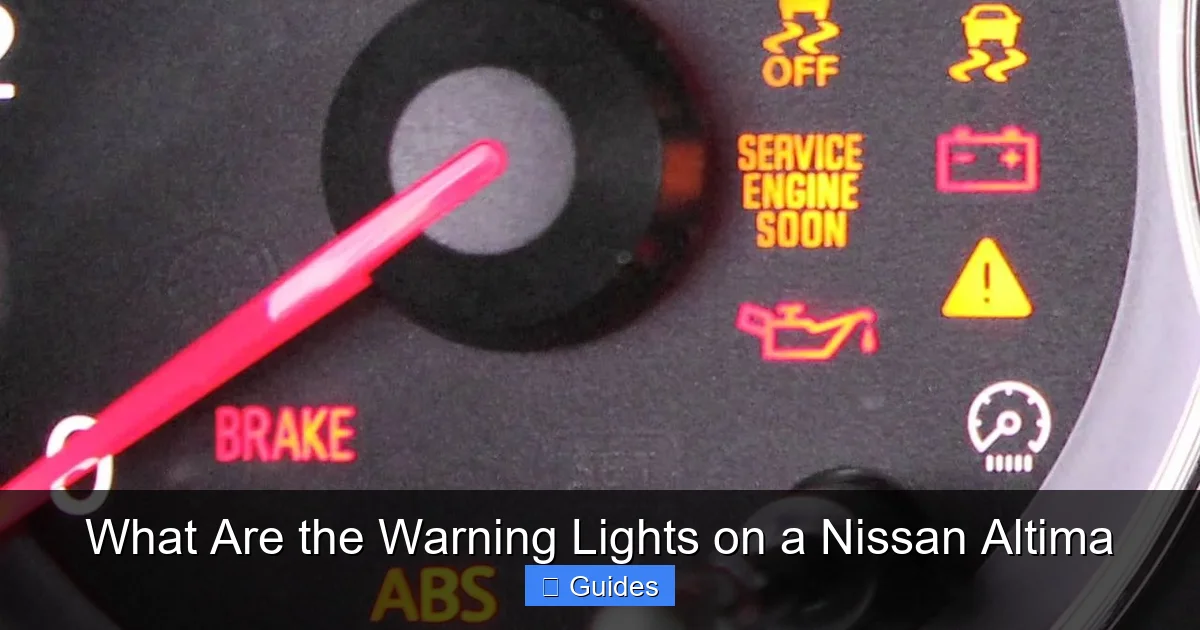
Visual guide about What Are the Warning Lights on a Nissan Altima
Image source: i.ytimg.com
Types of Warning Lights
Not all warning lights are created equal. They vary in color and urgency, which helps you quickly assess the situation:
- Green or Blue Lights: These are informational. They indicate that a system is active, like your headlights or cruise control. No action is needed—just awareness.
- Yellow or Amber Lights: These are cautionary. They suggest a problem that should be checked soon, but it’s not an emergency. Examples include the check engine light or tire pressure warning.
- Red Lights: These are urgent. A red light means stop what you’re doing and address the issue immediately. Ignoring a red light can lead to serious damage or safety risks.
Flashing vs. Solid Lights
Another key detail is whether the light is solid or flashing. A solid light usually means the system has detected a fault but isn’t in immediate danger. A flashing light, especially on the check engine or traction control system, often indicates a more severe problem that requires prompt attention.
For example, a flashing check engine light could mean your engine is misfiring, which can damage the catalytic converter if ignored. In such cases, it’s best to reduce speed and get your car to a mechanic as soon as possible.
The Role of the On-Board Diagnostics (OBD-II) System
Your Nissan Altima is equipped with an OBD-II system, a standardized diagnostic tool used in all vehicles since 1996. This system continuously monitors emissions, engine performance, and other critical functions. When a problem is detected, it stores a diagnostic trouble code (DTC), which can be read using an OBD-II scanner.
Many auto parts stores offer free code readings, or you can purchase an affordable scanner for home use. While the code won’t always tell you the exact fix, it gives you a starting point for diagnosing the issue.
Common Warning Lights on a Nissan Altima and What They Mean
Now that you understand how warning lights work, let’s look at the most common ones you might see on your Nissan Altima. We’ll cover what each light means, why it might appear, and what steps you should take.
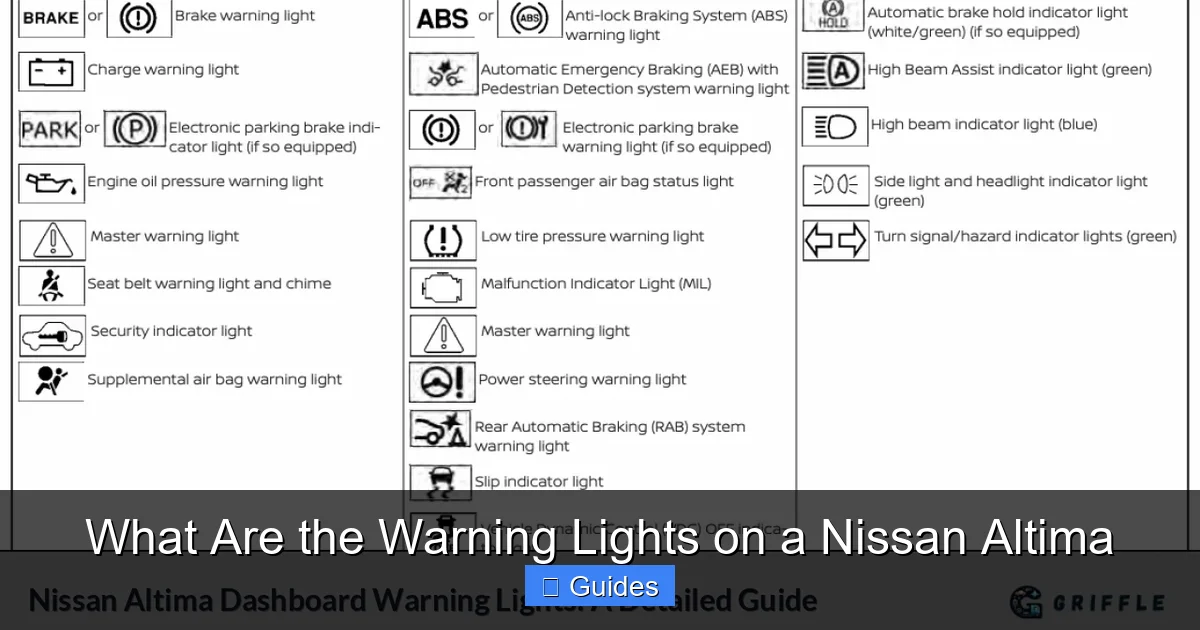
Visual guide about What Are the Warning Lights on a Nissan Altima
Image source: griffle.com
Check Engine Light
The check engine light is one of the most feared—and misunderstood—warning lights. It looks like a small engine outline and can be yellow or orange. When it comes on, it means the OBD-II system has detected a problem with the engine, emissions, or fuel system.
Common causes include a loose gas cap, faulty oxygen sensor, or catalytic converter issues. In some cases, it could be something as simple as a misfiring spark plug. However, because the light can indicate anything from minor to serious problems, it’s best not to ignore it.
If the light is solid, you can usually continue driving, but schedule a diagnostic check within a few days. If it’s flashing, pull over safely and call for assistance. Continuing to drive with a flashing check engine light can cause expensive damage.
Tire Pressure Monitoring System (TPMS) Light
The TPMS light looks like a horseshoe with an exclamation point inside. It alerts you when one or more tires are significantly underinflated. Proper tire pressure is essential for safety, fuel efficiency, and tire longevity.
This light often comes on in cold weather, as tire pressure drops with temperature. Check your tire pressure using a gauge and inflate them to the recommended PSI, which you can find on the driver’s side door jamb or in your owner’s manual.
If the light stays on after inflating the tires, there may be a sensor issue or a slow leak. Visit a tire shop for a professional inspection.
Brake System Warning Light
The brake warning light is red and looks like a circle with an exclamation point or the word “BRAKE.” It can mean several things: your parking brake is engaged, brake fluid is low, or there’s a problem with the brake system itself.
First, make sure the parking brake is fully released. If the light remains on, check your brake fluid level. Low fluid could indicate a leak, which is a serious safety concern. Do not drive if the brake light is on and you suspect a leak—have your car towed to a mechanic.
Battery/Charging System Light
This light looks like a battery with a plus and minus sign. It means your car’s charging system isn’t working properly. The alternator may not be generating enough power to charge the battery, or the battery itself could be failing.
If this light comes on while driving, your car will eventually lose power and stall. Turn off non-essential electronics (like the radio or AC) and head to the nearest service station. Have the battery and alternator tested immediately.
Oil Pressure Warning Light
The oil pressure light looks like an old-fashioned oil can with a drip. It indicates that oil pressure is too low, which can lead to engine damage due to lack of lubrication.
Pull over as soon as it’s safe and turn off the engine. Check the oil level using the dipstick. If it’s low, add oil. If the level is fine but the light remains on, there could be a pump failure or blockage. Do not restart the engine—call for a tow.
ABS (Anti-lock Braking System) Light
The ABS light looks like “ABS” in a circle or a square. It means there’s a problem with the anti-lock braking system, which prevents wheels from locking during hard stops.
Your regular brakes will still work, but you lose the safety benefit of ABS. This light often comes on due to a faulty wheel speed sensor or low brake fluid. Have it checked by a professional, especially if you drive in wet or slippery conditions.
Airbag/SRS Light
The airbag light looks like a person with a deployed airbag. It means there’s a fault in the Supplemental Restraint System (SRS), which includes airbags and seatbelt pretensioners.
If this light is on, your airbags may not deploy in a crash. Common causes include a faulty sensor, wiring issue, or a problem with the airbag module. This is a serious safety concern—have it diagnosed and repaired immediately.
Traction Control/VDC Light
The Vehicle Dynamic Control (VDC) light looks like a car with squiggly lines under it. It indicates an issue with the traction control system, which helps maintain stability during slippery conditions.
If the light is on, the system may be disabled or malfunctioning. This doesn’t affect normal driving but reduces safety in rain, snow, or ice. Have it checked, especially before driving in adverse weather.
What to Do When a Warning Light Appears
Seeing a warning light can be stressful, but knowing how to respond can make all the difference. Here’s a step-by-step guide to help you stay calm and take the right action.
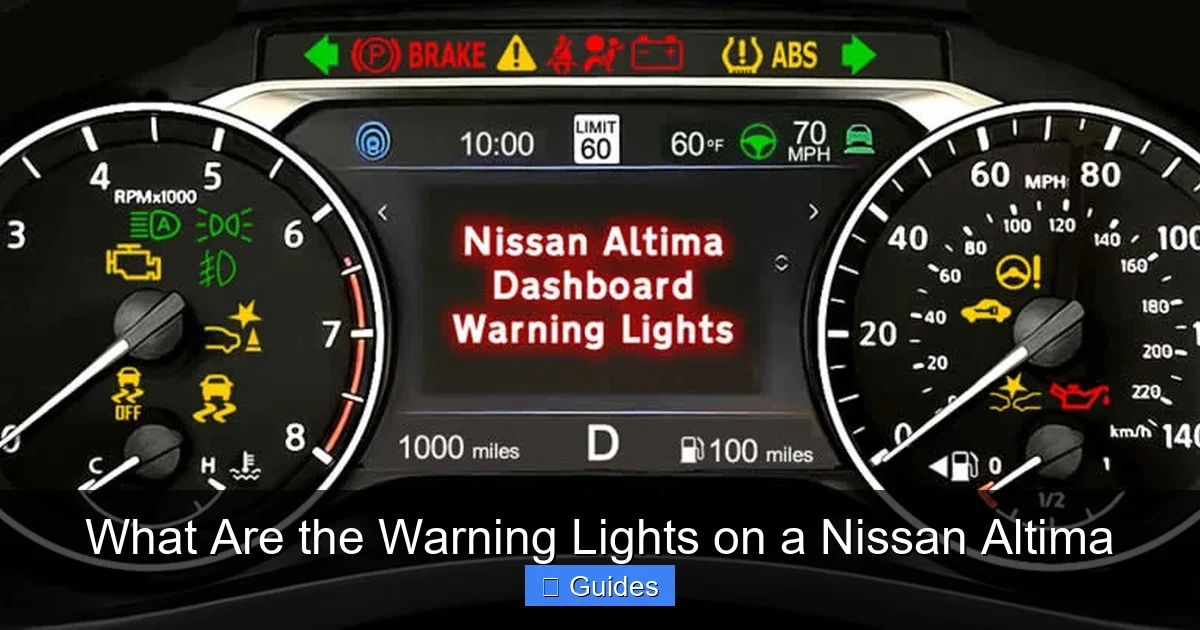
Visual guide about What Are the Warning Lights on a Nissan Altima
Image source: dash-lights.com
Stay Calm and Assess the Situation
First, don’t panic. Most warning lights don’t mean your car is about to explode. Take a deep breath and focus on safely pulling over if needed. Use your mirrors and signal before changing lanes or stopping.
Check the Color and Pattern
Look at the color and whether the light is solid or flashing. A red or flashing light means stop immediately. A yellow or solid light means you can usually continue driving, but you should address the issue soon.
Consult Your Owner’s Manual
Your Nissan Altima’s owner’s manual is your best friend. It contains detailed explanations of every warning light, along with recommended actions. Keep it in your glove compartment for easy access.
Perform Basic Checks
For some lights, you can do a quick fix yourself. For example:
- If the gas cap light is on, tighten or replace the cap.
- If the tire pressure light is on, check and inflate your tires.
- If the oil light is on, check the oil level and top it off if needed.
These simple steps can resolve many common issues.
Use an OBD-II Scanner
If the check engine light or another diagnostic light is on, use an OBD-II scanner to read the trouble code. Many auto parts stores offer free scans, or you can buy a basic scanner for under $50. The code will give you a clue about the problem, such as “P0420” for a catalytic converter issue.
Know When to Call a Mechanic
Some problems require professional help. If you’re unsure what the light means, if it’s red or flashing, or if basic checks don’t resolve the issue, it’s time to visit a trusted mechanic. Ignoring a serious warning can lead to costly repairs or unsafe driving conditions.
Preventing Warning Lights: Maintenance Tips for Your Nissan Altima
The best way to deal with warning lights is to prevent them from coming on in the first place. Regular maintenance is key to keeping your Nissan Altima running smoothly and avoiding unexpected dashboard alerts.
Follow the Maintenance Schedule
Nissan provides a recommended maintenance schedule in your owner’s manual. It outlines when to change oil, rotate tires, replace filters, and inspect critical systems. Sticking to this schedule helps catch problems early.
For example, changing your oil every 5,000 to 7,500 miles (depending on driving conditions) prevents sludge buildup and keeps the engine lubricated. This reduces the chance of the oil pressure or check engine light coming on.
Check Fluids Regularly
Low or dirty fluids are a common cause of warning lights. Make it a habit to check:
- Engine oil
- Coolant
- Brake fluid
- Transmission fluid
- Power steering fluid
Top off fluids as needed and replace them according to the maintenance schedule.
Inspect Tires Monthly
Tire pressure drops naturally over time and with temperature changes. Check your tire pressure at least once a month and before long trips. Use a reliable gauge and inflate to the recommended PSI.
Also, inspect tires for wear, cracks, or embedded objects. Uneven wear could indicate alignment issues, which can trigger the TPMS or traction control light.
Replace Worn Parts Promptly
Components like spark plugs, oxygen sensors, and brake pads wear out over time. Replacing them before they fail prevents warning lights and improves performance.
For example, a failing oxygen sensor can trigger the check engine light and reduce fuel efficiency. Replacing it during routine maintenance keeps your engine running cleanly.
Keep the Battery in Good Condition
A weak battery or corroded terminals can cause the charging system light to come on. Clean the terminals regularly and have the battery tested every two years. Most auto shops offer free battery checks.
Use Quality Fuel and Parts
Using low-quality fuel or aftermarket parts can lead to engine problems and warning lights. Stick to reputable gas stations and OEM (original equipment manufacturer) or high-quality aftermarket parts for repairs.
When to Seek Professional Help
While many warning lights can be resolved with simple fixes, some require expert diagnosis and repair. Here’s when you should definitely visit a mechanic:
- The light is red or flashing.
- You’re unsure what the light means.
- Basic checks don’t resolve the issue.
- You notice other symptoms, like strange noises, smells, or performance issues.
- The light comes on repeatedly after being reset.
Ignoring a serious warning can lead to engine damage, brake failure, or unsafe driving conditions. When in doubt, it’s always better to be safe than sorry.
Choose a certified Nissan service center or a trusted independent mechanic with experience in Japanese vehicles. They’ll have the right tools and knowledge to diagnose and fix the problem correctly.
Conclusion
Warning lights on your Nissan Altima are more than just annoying dashboard symbols—they’re vital communication tools that help you maintain your car’s health and safety. From the check engine light to the tire pressure monitor, each one serves a purpose and deserves your attention.
By understanding what these lights mean and how to respond, you can prevent minor issues from becoming major problems. Regular maintenance, quick checks, and knowing when to seek help are the keys to keeping your Altima running smoothly for years to come.
So the next time a light pops up, don’t panic. Take a breath, assess the situation, and take the right action. Your car—and your peace of mind—will thank you.
Frequently Asked Questions
What does a flashing check engine light mean on a Nissan Altima?
A flashing check engine light indicates a severe engine problem, such as a misfire, that can damage the catalytic converter. You should pull over safely and have the car towed to a mechanic.
Can I drive my Altima with the tire pressure light on?
You can drive short distances with the TPMS light on, but it’s unsafe and reduces fuel efficiency. Inflate your tires to the recommended PSI as soon as possible.
Why is my brake warning light on if the parking brake is off?
The brake light may be on due to low brake fluid, a worn brake pad sensor, or a problem with the brake system. Check the fluid level and have it inspected if it’s low.
How often should I check my Nissan Altima’s fluids?
Check engine oil and tire pressure monthly. Other fluids like coolant and brake fluid should be checked every few months or during routine maintenance.
Can a loose gas cap trigger a warning light?
Yes, a loose or damaged gas cap can trigger the check engine light by allowing fuel vapors to escape. Tighten or replace the cap and the light should turn off after a few drives.
Is it safe to drive with the airbag light on?
No, it’s not safe. The airbag light means your airbags may not deploy in a crash. Have the SRS system diagnosed and repaired immediately.

At CarLegit, we believe information should be clear, factual, and genuinely helpful. That’s why every guide, review, and update on our website is created with care, research, and a strong focus on user experience.