
A car battery can drain for many reasons, from simple mistakes like leaving headlights on to more complex electrical problems. Understanding these causes helps you avoid unexpected breakdowns and extend your battery’s life. Regular maintenance and awareness are key to keeping your vehicle reliable.
In This Article
- 1 Key Takeaways
- 2 📑 Table of Contents
- 3 What Can Cause a Car Battery to Drain
- 4 Common Human Errors That Drain Your Battery
- 5 Parasitic Drain: The Silent Battery Killer
- 6 Battery Age and Condition
- 7 Environmental Factors: Heat and Cold
- 8 Alternator and Charging System Issues
- 9 Driving Habits and Battery Drain
- 10 Electrical Connections and Maintenance
- 11 Conclusion
- 12 Frequently Asked Questions
- 12.1 Why does my car battery keep dying even after I jump-start it?
- 12.2 Can a bad alternator drain a new battery?
- 12.3 How long can a car battery last without driving?
- 12.4 Is it safe to leave a dash cam plugged in all the time?
- 12.5 Can extreme heat really damage a car battery?
- 12.6 How do I know if my battery is too old to hold a charge?
Key Takeaways
- Leaving lights or accessories on: Forgetting to turn off headlights, interior lights, or electronics can quickly drain a battery, especially if the car isn’t started for hours.
- Parasitic drain: Small electrical devices or faulty wiring can slowly pull power from the battery even when the engine is off, leading to a dead battery over time.
- Old or weak battery: Car batteries typically last 3–5 years; an aging battery loses its ability to hold a charge and is more prone to draining.
- Extreme temperatures: Both extreme cold and heat can reduce battery efficiency and accelerate wear, increasing the risk of unexpected drainage.
- Faulty alternator: If the alternator isn’t charging the battery properly while driving, the battery will eventually drain, even if it was fully charged.
- Short, infrequent drives: Frequent short trips don’t give the alternator enough time to recharge the battery, leading to gradual power loss.
- Loose or corroded connections: Poor electrical contact at the battery terminals can prevent proper charging and cause voltage drops that mimic a drained battery.
📑 Table of Contents
- What Can Cause a Car Battery to Drain
- Common Human Errors That Drain Your Battery
- Parasitic Drain: The Silent Battery Killer
- Battery Age and Condition
- Environmental Factors: Heat and Cold
- Alternator and Charging System Issues
- Driving Habits and Battery Drain
- Electrical Connections and Maintenance
- Conclusion
What Can Cause a Car Battery to Drain
Picture this: It’s Monday morning, you’re running late for work, and you hop into your car—only to find it won’t start. The engine clicks, the dashboard lights flicker, and your heart sinks. You’re not alone. A dead car battery is one of the most common reasons people get stranded, and it often happens when you least expect it.
But why does this keep happening? What can cause a car battery to drain so quickly, even when everything seemed fine the night before? The truth is, there are many factors at play—some obvious, others hidden. From simple oversights like leaving your headlights on to more complex electrical issues, understanding the root causes can save you time, money, and stress.
In this guide, we’ll walk you through the most common reasons your car battery might be draining. We’ll cover everything from human error to mechanical failures, and give you practical tips to prevent it from happening again. Whether you’re a new driver or a seasoned road warrior, knowing what to look for can make all the difference.
Common Human Errors That Drain Your Battery
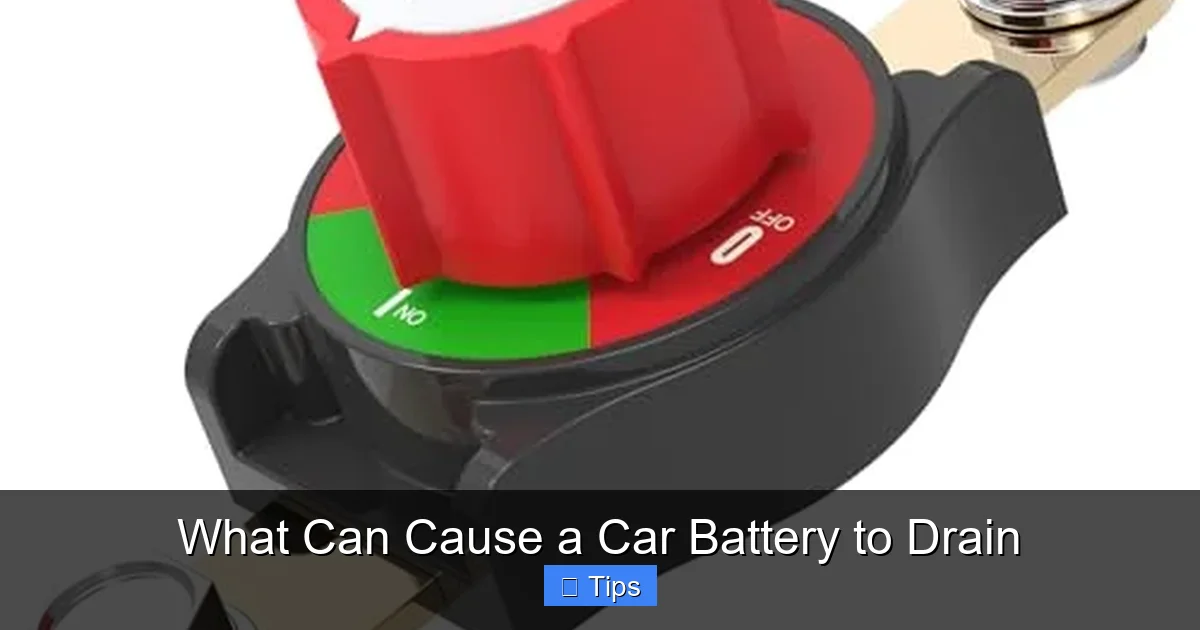
Visual guide about What Can Cause a Car Battery to Drain
Image source: compressorlab.com
Sometimes, the reason your car battery dies is as simple as forgetting to turn something off. These everyday mistakes are easy to make, especially when you’re in a rush or distracted. But they can have a big impact on your battery’s health.
Leaving Headlights or Interior Lights On
One of the most frequent causes of a drained battery is leaving your headlights on overnight. It happens to the best of us—maybe you were unloading groceries, talking to a neighbor, or just forgot to flip the switch. Modern cars often have automatic lights that turn off when you exit, but not all vehicles have this feature. If yours doesn’t, a single night with the headlights on can completely drain a standard 12-volt battery.
Interior lights are another sneaky culprit. Dome lights, trunk lights, or even glove compartment lights can stay on if a door isn’t fully closed or a switch gets stuck. These lights may seem small, but they draw power continuously. Over several hours, that adds up.
Tip: Make it a habit to do a quick visual check before walking away from your car. Look at the dashboard—if any lights are still glowing, investigate. Some drivers even place a sticky note on the dashboard as a reminder.
Using Electronics Without the Engine Running
We’ve all been there: waiting in the car with the engine off, streaming music, using the GPS, or charging our phones. While convenient, using electronics like the radio, air conditioning, or infotainment system without the engine running puts a direct load on the battery.
The alternator only charges the battery when the engine is on. So if you’re parked and using power-hungry devices, you’re essentially borrowing energy from the battery with no way to pay it back until you start the car again.
For example, playing music at high volume for 30 minutes with the engine off can drain a significant amount of charge—especially in older vehicles or those with weak batteries.
Tip: Limit the use of electronics when the engine is off. If you need to wait somewhere, consider turning off non-essential systems or using a portable power bank for your phone instead.
Faulty Door Switches or Trunk Latches
Sometimes, the problem isn’t that you left a light on—it’s that a light won’t turn off. A malfunctioning door switch can trick your car into thinking a door is still open, keeping interior lights illuminated even when all doors are shut. The same goes for the trunk or hood. If the latch sensor is faulty, the car may keep the trunk light on indefinitely.
This kind of drain is often subtle. You might not notice the light at night, especially if it’s dim or in a hard-to-see spot. But over time, it can kill your battery.
Tip: If your battery keeps dying and you can’t find an obvious cause, check all door and trunk switches. Listen for lights that stay on when they shouldn’t, or use a multimeter to test for parasitic drain.
Parasitic Drain: The Silent Battery Killer
Visual guide about What Can Cause a Car Battery to Drain
Image source: howstereo.com
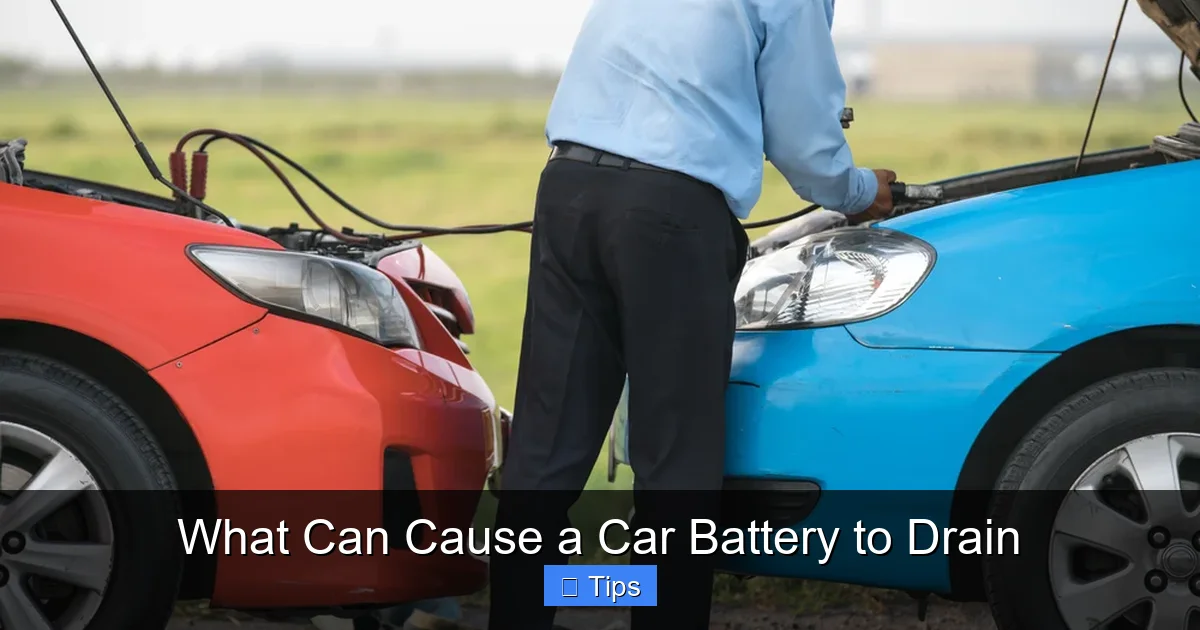
Not all battery drains are caused by something you can see or hear. Parasitic drain happens when small electrical components continue to draw power from the battery even when the car is off. This is normal to a degree—modern cars have clocks, alarms, and computers that need a small amount of power. But when the draw is too high, it can slowly kill your battery.
What Is Parasitic Drain?
Parasitic drain refers to the small but continuous electrical load placed on your battery when the vehicle is not running. Think of it like a slow leak in a tire—it doesn’t happen fast, but over time, it adds up.
In a healthy car, parasitic drain should be minimal—usually less than 50 milliamps (mA). That’s enough to keep the clock running and the security system active, but not enough to drain the battery in a day or two.
However, if a component like a faulty relay, malfunctioning module, or stuck accessory continues to draw power, the drain can exceed 100 mA or more. At that rate, a fully charged battery could be dead in 24 to 48 hours.
Common Sources of Parasitic Drain
Several components can cause excessive parasitic drain:
– Faulty alternator diode: A bad diode in the alternator can allow current to flow backward, draining the battery even when the engine is off.
– Malfunctioning control modules: Modern cars have dozens of computers (ECUs) that manage everything from the engine to the infotainment system. If one gets stuck in an active state, it can draw power continuously.
– Aftermarket electronics: Devices like dash cams, GPS trackers, or stereo systems that are improperly wired can create a constant drain.
– Stuck relays or switches: A relay that fails to open can keep a circuit active, powering components like the fuel pump or interior lights.
Example: A driver installed a dash cam that was supposed to turn off when the car was parked. But due to a wiring error, it stayed on 24/7. Within three days, the battery was completely dead.
How to Detect Parasitic Drain
Detecting parasitic drain requires a bit of detective work. The most reliable method is using a multimeter to measure the current draw between the negative battery terminal and the cable.
Here’s a simplified process:
1. Turn off the car and remove the key.
2. Disconnect the negative battery cable.
3. Set your multimeter to measure DC current (amps).
4. Connect the multimeter in series between the battery terminal and the cable.
5. Read the current draw.
If the reading is above 50 mA, you likely have a parasitic drain. To find the source, you can pull fuses one by one while monitoring the multimeter. When the current drops significantly, you’ve found the problematic circuit.
Tip: If you’re not comfortable doing this yourself, take your car to a mechanic or auto electrician. They have the tools and expertise to diagnose and fix parasitic drain quickly.
Battery Age and Condition
Visual guide about What Can Cause a Car Battery to Drain
Image source: poweringsolution.com
Even if you do everything right, your battery won’t last forever. Like any component, car batteries wear out over time. An old or weak battery is much more likely to drain unexpectedly, even under normal conditions.
How Long Do Car Batteries Last?
On average, a car battery lasts between 3 and 5 years. However, this can vary based on climate, driving habits, and maintenance. In hot climates, batteries tend to degrade faster due to increased chemical activity and evaporation of electrolyte. In cold climates, the battery has to work harder to start the engine, which can shorten its lifespan.
Signs your battery is aging:
– Slow engine crank (the engine turns over slowly when starting)
– Dim headlights or interior lights
– Frequent need for jump-starts
– Swollen or bloated battery case (a sign of overheating)
If your battery is more than 3 years old and you’re experiencing any of these issues, it’s time to consider a replacement.
Why Old Batteries Drain Faster
As batteries age, their internal plates degrade and sulfate builds up on the electrodes. This reduces the battery’s ability to hold a charge. A new battery might hold 12.6 volts when fully charged, but an old one might only reach 12.0 volts—even after a full night of charging.
This lower voltage means less reserve power. So even a small drain—like leaving a light on for an hour—can be enough to prevent the car from starting.
Tip: Have your battery tested annually, especially if it’s over 3 years old. Most auto parts stores offer free battery testing. If the test shows low capacity or high internal resistance, replace the battery before it leaves you stranded.
Environmental Factors: Heat and Cold
Weather plays a bigger role in battery health than many people realize. Both extreme heat and cold can cause a car battery to drain more quickly or fail unexpectedly.
The Impact of Cold Weather
Cold temperatures slow down the chemical reactions inside the battery, reducing its ability to deliver power. At 0°F (-18°C), a battery can lose up to 60% of its cranking power. This is why cars often struggle to start on frigid winter mornings.
But cold weather doesn’t just affect starting—it also increases the risk of drainage. If your battery is already weak, the added strain of cold weather can push it over the edge. Plus, people tend to use more electrical accessories in winter (heated seats, defrosters, etc.), which further drains the battery.
Tip: In winter, park in a garage if possible. Use a battery blanket or trickle charger to keep the battery warm and maintain its charge.
The Dangers of Extreme Heat
While cold weather reduces battery performance, heat accelerates wear and tear. Temperatures above 90°F (32°C) can cause the electrolyte in the battery to evaporate, leading to internal damage and reduced lifespan.
Heat also increases the rate of sulfation—the buildup of lead sulfate crystals on the plates—which permanently reduces battery capacity. In hot climates, batteries often fail sooner than the typical 3–5 year lifespan.
Tip: Park in the shade or use a sunshade to reduce under-hood temperatures. Regularly check the battery’s fluid level (if it’s a serviceable type) and top it off with distilled water if needed.
Alternator and Charging System Issues
Your battery doesn’t work alone—it relies on the alternator to recharge while the engine is running. If the alternator isn’t doing its job, the battery will eventually drain, no matter how new or well-maintained it is.
How the Alternator Works
The alternator is a small generator driven by a belt connected to the engine. When the engine runs, the alternator produces electricity to power the car’s systems and recharge the battery. A healthy alternator should output between 13.5 and 14.5 volts.
If the alternator fails or underperforms, the battery has to pick up the slack. Over time, this extra load will drain the battery completely.
Signs of a Failing Alternator
– Dim or flickering headlights (especially at idle)
– Battery warning light on the dashboard
– Electrical issues (power windows moving slowly, radio cutting out)
– A dead battery that keeps coming back, even after a jump-start
Example: A driver noticed their headlights were dimming at stoplights. They assumed it was a battery issue and replaced it. But the new battery died within a week. A mechanic later found the alternator was only putting out 12 volts—far below the required level.
Testing the Alternator
You can test the alternator with a multimeter. With the engine running, measure the voltage across the battery terminals. It should read between 13.5 and 14.5 volts. If it’s below 13 volts, the alternator isn’t charging properly.
Tip: If you suspect alternator issues, get it checked immediately. Driving with a failing alternator can leave you stranded and may damage other electrical components.
Driving Habits and Battery Drain
How you drive can also affect your battery’s health. Short, infrequent trips are one of the most overlooked causes of battery drain.
The Problem with Short Trips
Every time you start your car, the battery delivers a large burst of power to crank the engine. The alternator then recharges the battery while driving. But if your trips are short—like driving to the store and back—the alternator doesn’t have enough time to fully recharge the battery.
Over time, this creates a deficit. The battery is constantly being drained more than it’s recharged, leading to gradual power loss.
Example: Someone who only drives 5 minutes to work and 5 minutes back home may never fully recharge their battery. After a week of this, the battery could be significantly depleted.
Solutions for Short-Distance Drivers
– Take longer drives occasionally to allow the battery to recharge.
– Use a smart battery charger or maintainer to top off the charge.
– Avoid using high-power accessories (like heated seats or defrosters) during short trips.
Tip: If you mostly drive short distances, consider investing in a battery maintainer. These devices plug into a wall outlet and keep your battery at full charge when the car isn’t in use.
Electrical Connections and Maintenance
Even the best battery can’t perform well if the connections are loose or corroded. Poor electrical contact increases resistance, which can prevent proper charging and cause voltage drops.
Loose or Corroded Terminals
Battery terminals can loosen over time due to vibration. Corrosion—a white, green, or blue powdery substance—can also build up on the terminals, acting as an insulator.
Both issues reduce the flow of electricity between the battery and the car’s electrical system. This can make it harder to start the car and may mimic the symptoms of a dead battery.
Tip: Inspect your battery terminals every few months. Clean corrosion with a mixture of baking soda and water, and tighten loose connections with a wrench.
Regular Maintenance Tips
– Check battery voltage monthly (should be 12.6V or higher when off).
– Clean terminals and cables.
– Ensure the battery is securely mounted to prevent vibration damage.
– Replace old or damaged cables.
Conclusion
So, what can cause a car battery to drain? As we’ve seen, the reasons range from simple oversights—like leaving your lights on—to more complex issues like parasitic drain or a failing alternator. Environmental factors, driving habits, and battery age all play a role too.
The good news? Most of these problems are preventable. By staying aware of your car’s electrical system, performing regular maintenance, and addressing issues early, you can avoid the frustration of a dead battery.
Remember: your car battery is the heart of your vehicle’s electrical system. Treat it well, and it will keep you moving. Ignore it, and you might find yourself stuck on the side of the road.
Take a few minutes this week to check your battery terminals, test your voltage, and review your driving habits. A little attention now can save you a lot of trouble later.
Frequently Asked Questions
Why does my car battery keep dying even after I jump-start it?
This could indicate a deeper issue like a failing alternator, parasitic drain, or an old battery. A jump-start only provides temporary power—if the root cause isn’t fixed, the battery will drain again.
Can a bad alternator drain a new battery?
Yes. If the alternator isn’t charging the battery while driving, even a brand-new battery will eventually die. Always test the alternator if you’re replacing a battery repeatedly.
How long can a car battery last without driving?
A fully charged battery can typically last 2–4 weeks without driving, depending on temperature and parasitic drain. However, older batteries or those in extreme climates may die sooner.
Is it safe to leave a dash cam plugged in all the time?
It depends on the model and wiring. Hardwired dash cams with parking mode can cause parasitic drain if not installed correctly. Use a fuse tap with a low-current cutoff to prevent battery drain.
Can extreme heat really damage a car battery?
Yes. Heat accelerates chemical reactions and causes electrolyte evaporation, leading to internal damage and reduced lifespan. Batteries in hot climates often fail sooner.
How do I know if my battery is too old to hold a charge?
Signs include slow engine cranking, dim lights, frequent jump-starts, and a battery older than 3–5 years. A professional load test can confirm if it’s time for a replacement.

At CarLegit, we believe information should be clear, factual, and genuinely helpful. That’s why every guide, review, and update on our website is created with care, research, and a strong focus on user experience.