

Leasing a car doesn’t require perfect credit, but your score plays a big role in approval and terms. Most lenders prefer a credit score of 660 or higher, though some accept lower scores with higher costs. Understanding how credit impacts leasing helps you prepare and negotiate better deals.
In This Article
- 1 Key Takeaways
- 2 📑 Table of Contents
- 3 What Credit Score Is Needed to Lease a Car?
- 4 Understanding Credit Scores and Car Leasing
- 5 Minimum Credit Score Requirements by Lender Type
- 6 How Lenders Evaluate Your Credit Beyond the Score
- 7 Tips to Improve Your Chances of Leasing with a Lower Credit Score
- 8 Real-Life Examples: Leasing with Different Credit Scores
- 9 Final Thoughts: Leasing a Car with Any Credit Score
- 10 Frequently Asked Questions
- 10.1 Can I lease a car with a 600 credit score?
- 10.2 What is the lowest credit score to lease a car?
- 10.3 Will leasing a car help build my credit?
- 10.4 Can I lease a car with no credit history?
- 10.5 Do all dealerships check your credit when leasing?
- 10.6 What happens if my credit score drops after leasing?
Key Takeaways
- Minimum credit score for leasing: Most dealerships and leasing companies look for a score of at least 620, but 660+ is ideal for better rates and terms.
- Higher scores mean better deals: A score above 700 often qualifies you for lower monthly payments, reduced fees, and manufacturer incentives.
- Subprime leasing is possible: If your score is below 620, you can still lease, but expect higher interest rates and stricter requirements.
- Credit history matters too: Lenders review payment history, debt-to-income ratio, and recent credit inquiries—not just the number.
- Improving your score helps: Paying down debt, correcting errors, and avoiding new credit applications can boost your score before applying.
- Down payments can offset low credit: A larger upfront payment reduces risk for lenders and may help you get approved with a lower score.
- Shop around: Different leasing companies have different standards—compare offers to find the best fit for your credit profile.
📑 Table of Contents
- What Credit Score Is Needed to Lease a Car?
- Understanding Credit Scores and Car Leasing
- Minimum Credit Score Requirements by Lender Type
- How Lenders Evaluate Your Credit Beyond the Score
- Tips to Improve Your Chances of Leasing with a Lower Credit Score
- Real-Life Examples: Leasing with Different Credit Scores
- Final Thoughts: Leasing a Car with Any Credit Score
What Credit Score Is Needed to Lease a Car?
So, you’re thinking about leasing a car—maybe it’s your first time, or maybe you’re switching from buying to leasing for more flexibility. One of the first questions that pops into your mind is probably: “What credit score do I need to lease a car?” It’s a smart question, because your credit score doesn’t just affect whether you get approved—it also influences how much you’ll pay each month, what kind of vehicle you can get, and whether you’ll qualify for special deals or incentives.
The good news? You don’t need a perfect credit score to lease a car. Unlike some myths suggest, leasing isn’t only for people with flawless credit. But it’s true that your credit score plays a major role in the leasing process. Lenders—whether they’re banks, credit unions, or captive finance companies like Toyota Financial or Ford Credit—use your credit score to assess how risky it is to lease you a vehicle. The higher your score, the more confident they are that you’ll make your monthly payments on time.
In this guide, we’ll break down exactly what credit score you need to lease a car, how lenders evaluate your credit, and what you can do if your score isn’t quite where you want it to be. We’ll also cover tips to improve your chances of approval and how to get the best possible lease deal, no matter your credit situation.
Understanding Credit Scores and Car Leasing
Visual guide about What Credit Score Is Needed to Lease a Car
Image source: carleases.org
Before diving into the numbers, let’s make sure we’re on the same page about what a credit score actually is. In the U.S., most lenders use FICO® Scores, which range from 300 to 850. These scores are calculated based on several factors, including your payment history, amounts owed, length of credit history, credit mix, and new credit inquiries. The higher your score, the better your creditworthiness in the eyes of lenders.
When it comes to leasing a car, your credit score is one of the most important pieces of information a leasing company will review. But it’s not the only one. Lenders also look at your income, employment history, debt-to-income ratio, and whether you’ve leased or financed a car before. Still, your credit score is often the first filter—if it’s too low, you might not even make it to the next step.
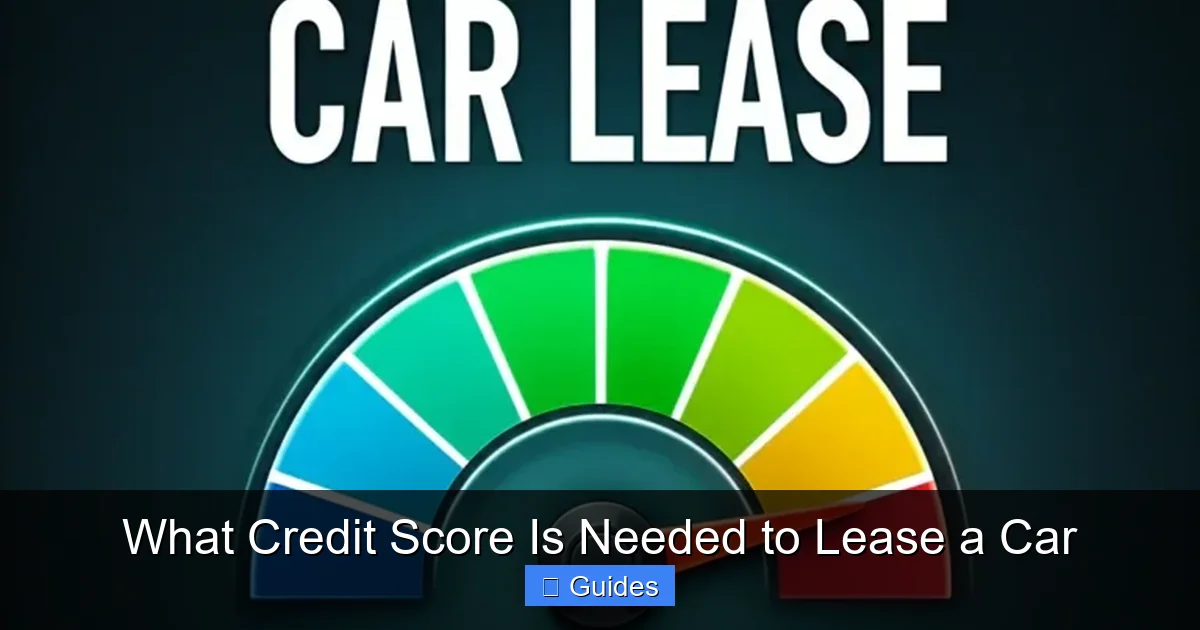
So, what’s the magic number? While there’s no universal cutoff, most leasing companies categorize applicants into credit tiers. These tiers help determine your interest rate (called the “money factor” in leasing), down payment requirements, and eligibility for promotions. Here’s a general breakdown:
– Excellent (720–850): You’ll qualify for the best rates, lowest money factors, and access to manufacturer lease deals.
– Good (660–719): You’ll likely be approved with competitive terms, though not always the absolute best.
– Fair (620–659): You can still lease, but expect higher interest rates and possibly a larger down payment.
– Poor (580–619): Approval is possible, but you’ll pay significantly more and may face stricter terms.
– Very Poor (Below 580): Leasing becomes difficult, but not impossible—especially with a co-signer or large down payment.
Keep in mind that these ranges can vary by lender. Some dealerships work with subprime lenders who specialize in high-risk borrowers, while others only accept applicants with strong credit. That’s why it’s important to know your score before you start shopping.
Why Credit Matters in a Car Lease
You might be wondering: “Why does my credit score matter so much for a lease? I’m not borrowing a huge amount like with a loan.” It’s a fair question. After all, when you lease, you’re only paying for the vehicle’s depreciation during the lease term, plus fees and interest—not the full value of the car.
But here’s the thing: leasing companies are still taking on risk. If you stop making payments, they have to repossess the car, which costs time and money. A lower credit score signals a higher chance of missed payments, so lenders charge more to offset that risk. That’s why your credit score directly affects your monthly payment.
For example, let’s say you’re leasing a $30,000 car for 36 months with a residual value of $18,000 (meaning the car is expected to be worth $18,000 at the end of the lease). The depreciation is $12,000. If your credit score is excellent, your money factor might be 0.0015 (equivalent to about 3.6% APR). But if your score is fair, that money factor could jump to 0.0030 (about 7.2% APR). Over 36 months, that difference could cost you hundreds—or even thousands—of extra dollars.
Minimum Credit Score Requirements by Lender Type

Visual guide about What Credit Score Is Needed to Lease a Car
Image source: i4.ytimg.com
Not all leasing companies have the same credit standards. Where you apply matters just as much as your score. Let’s look at the typical credit score requirements based on the type of lender.
Manufacturer Captive Finance Companies
These are the finance arms of car brands—like Honda Financial Services, BMW Financial Services, or GM Financial. They often offer the most attractive lease deals, including low or even $0 down promotions and special rates for qualified lessees.
For these companies, a credit score of 700 or higher is usually ideal. Many require at least 660 to qualify for their best offers. If your score is between 620 and 659, you might still be approved, but you could be excluded from promotional rates or required to make a larger down payment.
Some manufacturers also have “lease pull-ahead” programs or loyalty incentives for returning customers, which can help offset a lower score if you’ve leased with them before.
Traditional Banks and Credit Unions
Banks and credit unions tend to be more conservative. They often require a minimum score of 660 to 700 for leasing, especially if you don’t have an existing relationship with them. However, if you’re a member of a credit union, you might get more flexibility—some even offer leasing programs for members with scores as low as 600.
The advantage of going through a bank or credit union is that you might be able to pre-qualify without a hard credit check, which helps you shop around without hurting your score.
Subprime and Specialty Leasing Companies
If your credit score is below 620, don’t lose hope. There are lenders who specialize in working with people who have poor or limited credit. These companies often advertise “lease with bad credit” or “no credit check leasing,” but be cautious.
While they may approve you with a score as low as 500 to 580, the trade-offs can be steep. You’ll likely face:
– Higher money factors (sometimes double or triple the rate of prime borrowers)
– Larger down payments (sometimes $2,000–$5,000 or more)
– Shorter lease terms
– Limited vehicle selection
– Mandatory GPS tracking or payment monitoring devices
These leases can be a lifeline if you need a car now, but they’re not ideal for long-term savings. Use them as a stepping stone to rebuild your credit, then refinance or lease again with better terms later.
Dealerships and Third-Party Leasing Brokers
Many dealerships work with multiple lenders, including prime, near-prime, and subprime financing sources. This means they can often find a lease option for almost anyone—even with a low credit score.
When you apply at a dealership, they’ll typically run your credit and then submit your application to several lenders to see who will approve you. This “shotgunning” approach increases your chances of approval, but it can also result in multiple hard inquiries on your credit report, which may temporarily lower your score.
To avoid this, ask the dealer to limit the number of lenders they contact, or get pre-approved elsewhere first.
How Lenders Evaluate Your Credit Beyond the Score

Visual guide about What Credit Score Is Needed to Lease a Car
Image source: leasesacar.com
Your credit score is important, but it’s not the whole story. Leasing companies look at your full credit profile to assess risk. Here’s what else they consider:
Payment History
This is the biggest factor in your credit score—and for good reason. Lenders want to see that you’ve paid your bills on time in the past. Late payments, especially recent ones, can be a red flag. Even a single 30-day late payment on a credit card can hurt your chances of getting a good lease deal.
If you’ve had past issues, don’t panic. Lenders often weigh recent behavior more heavily. If you’ve been making on-time payments for the last 12–24 months, that can help offset older mistakes.
Debt-to-Income Ratio (DTI)
Your DTI compares your monthly debt payments to your gross monthly income. For example, if you earn $5,000 a month and pay $1,500 in debt (car loan, credit cards, student loans, etc.), your DTI is 30%.
Most leasing companies prefer a DTI below 40%, though some may accept up to 50% if you have strong credit or a large down payment. A high DTI suggests you might struggle to afford another monthly payment, even if your credit score is decent.
Length of Credit History
Lenders like to see a long, stable credit history. If you’re new to credit or only have a few accounts, it can be harder to get approved—even with a decent score. This is because there’s less data to predict your future behavior.
If you’re in this situation, consider becoming an authorized user on a family member’s credit card or opening a secured credit card to build history.
Recent Credit Inquiries
Every time you apply for credit, a hard inquiry appears on your report. Too many inquiries in a short period can make lenders nervous—it might look like you’re in financial trouble or overextending yourself.
Try to limit credit applications in the 6–12 months before leasing. If you’re shopping for rates, do it within a short window (usually 14–45 days) so multiple inquiries count as one.
Credit Mix
Having a mix of credit types—like credit cards, an auto loan, and a mortgage—can help your score. It shows you can manage different kinds of debt responsibly. If you only have credit cards, that’s not necessarily bad, but adding an installment loan (like a personal loan or auto loan) could help over time.
Tips to Improve Your Chances of Leasing with a Lower Credit Score
If your credit score isn’t where you’d like it to be, don’t give up. There are steps you can take to improve your chances of leasing a car—even with less-than-perfect credit.
Check Your Credit Report for Errors
Mistakes happen. According to the Federal Trade Commission, about 1 in 5 people have an error on their credit report that could lower their score. Common errors include:
– Accounts that aren’t yours
– Late payments that were actually on time
– Incorrect balances or credit limits
You’re entitled to a free credit report from each of the three major bureaus (Equifax, Experian, and TransUnion) once a year at AnnualCreditReport.com. Review them carefully and dispute any inaccuracies. Correcting errors can boost your score quickly.
Pay Down Existing Debt
Your credit utilization ratio—the amount of credit you’re using compared to your total limit—accounts for about 30% of your FICO score. Keeping it below 30% is good, but under 10% is even better.
If you have credit card balances, focus on paying them down before applying for a lease. Even reducing a $5,000 balance to $3,000 can make a noticeable difference in your score.
Make On-Time Payments
This one’s simple but crucial. Set up automatic payments or calendar reminders to ensure you never miss a due date. Even one late payment can drop your score by 50–100 points.
If you’ve missed payments in the past, start building a positive history now. Consistent on-time payments over 6–12 months can significantly improve your credit profile.
Consider a Co-Signer
If your score is too low to qualify on your own, a co-signer with strong credit can help. The co-signer agrees to take responsibility for the lease if you can’t make payments. This reduces the lender’s risk and can lead to better terms.
Just remember: the co-signer’s credit will be affected if you miss payments, so only use this option if you’re confident you can manage the lease responsibly.
Make a Larger Down Payment
A bigger down payment—sometimes called a “cap cost reduction”—lowers the amount you’re financing and reduces the lender’s risk. This can help offset a lower credit score.
For example, putting $3,000 down on a $30,000 car reduces the amount financed to $27,000. That’s less risk for the lender, which might make them more willing to approve you—even with a score in the 600s.
Keep in mind that a larger down payment also lowers your monthly payment, which can help with affordability.
Shop Around and Get Pre-Approved
Don’t settle for the first offer you get. Different lenders have different standards, so it pays to compare. Get pre-approved by a bank or credit union before visiting a dealership. This gives you leverage and helps you avoid high-pressure sales tactics.
When you have a pre-approval letter, you can focus on negotiating the price of the car—not the financing. This often leads to better overall deals.
Rebuild Your Credit First (If Time Allows)
If you’re not in a rush, consider waiting a few months to improve your credit before leasing. Even small improvements can make a big difference.
For example, raising your score from 620 to 660 could move you from the “fair” to the “good” tier, unlocking better rates and lower payments. Use that time to pay down debt, correct errors, and avoid new credit applications.
Real-Life Examples: Leasing with Different Credit Scores
Let’s look at a few real-world scenarios to see how credit scores affect leasing outcomes.
Example 1: Excellent Credit (740)
Sarah has a 740 credit score, a stable job, and a low debt-to-income ratio. She applies to lease a new Honda Accord. She’s approved immediately with a money factor of 0.0012 (about 2.9% APR), no down payment required, and qualifies for a $500 manufacturer incentive. Her monthly payment is $320.
Example 2: Good Credit (680)
Mike has a 680 score but a few late payments from two years ago. He’s approved, but his money factor is 0.0020 (about 4.8% APR). He’s asked to put $1,500 down and doesn’t qualify for the incentive. His monthly payment is $380.
Example 3: Fair Credit (630)
Lisa has a 630 score and high credit card debt. She’s approved through a subprime lender with a money factor of 0.0035 (about 8.4% APR). She must put $3,000 down and accept a shorter 24-month lease. Her monthly payment is $450.
Example 4: Poor Credit (590)
James has a 590 score and a recent bankruptcy. He’s approved only after putting $4,500 down and agreeing to a GPS tracker in the car. His money factor is 0.0050 (about 12% APR), and his monthly payment is $520.
These examples show how your credit score directly impacts your lease terms. The better your credit, the more you save.
Final Thoughts: Leasing a Car with Any Credit Score
So, what credit score is needed to lease a car? The short answer is: it depends. While most lenders prefer a score of 660 or higher, you can still lease with a lower score—especially if you’re willing to pay more or make a larger down payment.
The key is to understand your credit profile, know your options, and take steps to improve your situation if needed. Whether you have excellent credit or are rebuilding, there’s a lease out there for you. The more prepared you are, the better deal you’ll get.
Remember, leasing isn’t just about getting behind the wheel—it’s about doing it smartly. By focusing on your credit, shopping around, and negotiating wisely, you can drive away in a great car without breaking the bank.
Frequently Asked Questions
Can I lease a car with a 600 credit score?
Yes, you can lease a car with a 600 credit score, but it may be more difficult and expensive. You’ll likely face higher interest rates, larger down payments, and fewer vehicle options. Working with a subprime lender or making a significant down payment can improve your chances.
What is the lowest credit score to lease a car?
Some lenders may approve leases for scores as low as 500, but these deals often come with high fees, strict terms, and expensive monthly payments. A score below 580 is considered very poor and will limit your options significantly.
Will leasing a car help build my credit?
Yes, leasing can help build your credit if you make all payments on time. The leasing company typically reports your payment history to credit bureaus, which can improve your score over time. Just be sure to avoid late or missed payments.
Can I lease a car with no credit history?
It’s possible, but challenging. Lenders may require a co-signer, a large down payment, or proof of stable income. Building a small credit history first—such as with a secured credit card—can increase your chances of approval.
Do all dealerships check your credit when leasing?
Yes, almost all dealerships will run a credit check when you apply to lease a car. This is a hard inquiry that can temporarily lower your score, so it’s wise to limit applications and get pre-approved beforehand.
What happens if my credit score drops after leasing?
Your lease terms are locked in at signing, so a drop in your credit score won’t affect your current lease. However, it could impact your ability to lease another car in the future or qualify for lease-end options like buying the vehicle.

At CarLegit, we believe information should be clear, factual, and genuinely helpful. That’s why every guide, review, and update on our website is created with care, research, and a strong focus on user experience.