
Owning a Jeep isn’t just about driving a rugged vehicle—it’s a lifestyle statement. It reflects a love for adventure, a spirit of independence, and a no-limits attitude toward life’s challenges.
In This Article
- 1 Key Takeaways
- 2 📑 Table of Contents
- 3 What Does a Jeep Say About Your Personality?
- 4 The Adventure-Seeking Spirit
- 5 Independence and Self-Reliance
- 6 Resilience and Toughness
- 7 Community and Camaraderie
- 8 Authenticity and Simplicity
- 9 Environmental Consciousness
- 10 Playfulness and Humor
- 11 Conclusion: More Than Just a Vehicle
- 12 Frequently Asked Questions
Key Takeaways
- Adventure-Seeking Spirit: Jeep owners often crave exploration, off-roading, and outdoor experiences beyond the paved road.
- Independence and Self-Reliance: Driving a Jeep signals a preference for autonomy, problem-solving, and doing things your own way.
- Resilience and Toughness: The rugged design mirrors a personality that embraces challenges and thrives under pressure.
- Community and Camaraderie: Jeep culture fosters strong social bonds, with owners often forming tight-knit groups and sharing experiences.
- Authenticity and Simplicity: Many Jeep drivers value practicality, minimalism, and staying true to themselves over flashy appearances.
- Environmental Consciousness: A growing number of Jeep owners are eco-aware, choosing models like the Wrangler 4xe for sustainability.
- Playfulness and Humor: The quirky, customizable nature of Jeeps often attracts people with a lighthearted, fun-loving outlook.
📑 Table of Contents
What Does a Jeep Say About Your Personality?
So, you drive a Jeep. Maybe it’s a classic Wrangler with the top off, bouncing down a dirt trail. Or perhaps it’s a sleek new Grand Cherokee, cruising the highway with quiet confidence. Either way, that vehicle says something—not just about your taste in cars, but about who you are.
Jeeps have a reputation. They’re not just vehicles; they’re symbols. From the dusty trails of Moab to the city streets of Brooklyn, Jeeps stand out. They’re bold, boxy, and unapologetically rugged. And people who choose them? They tend to share certain traits. It’s not about being rich or famous. It’s about attitude.
This isn’t a scientific study—more like a friendly chat over coffee about what your ride might reveal. Because let’s be honest: the car you drive often reflects your values, your lifestyle, and even your sense of humor. And when it comes to Jeeps, the story gets even more interesting.
The Adventure-Seeking Spirit
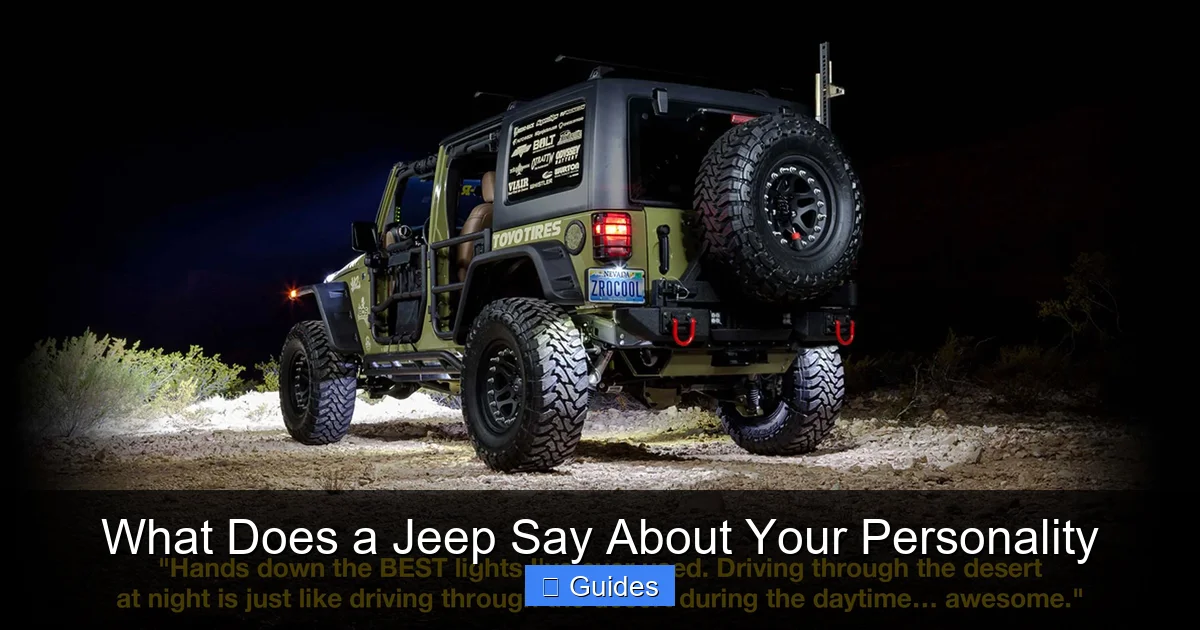
Visual guide about What Does a Jeep Say About Your Personality
Image source: cdn.shopify.com
If you drive a Jeep, chances are you’re not the type to stay inside all weekend. You crave movement. You want to see what’s over the next hill, down the next trail, or around the next bend. That’s the heart of the Jeep personality: a deep-rooted love for adventure.
Born to Explore
Jeep owners often have a wanderlust that can’t be satisfied with just a weekend trip. They’re the ones who say, “Let’s take the scenic route,” even when there’s a highway right there. They’re drawn to national parks, mountain trails, desert dunes, and coastal backroads. For them, the journey is just as important as the destination.
Take Sarah, a 34-year-old graphic designer from Colorado. She bought her first Jeep Wrangler after a solo road trip through Utah. “I realized I didn’t want to just see the world—I wanted to feel it,” she says. “The Jeep let me get off the beaten path, literally. I could go where other cars couldn’t.”
That’s the magic of a Jeep. It’s not just a mode of transportation; it’s a tool for discovery. And people who drive them often see life the same way—full of possibilities, waiting to be explored.
Off-Roading as a Lifestyle
Off-roading isn’t just a hobby for many Jeep owners—it’s a passion. Whether it’s rock crawling in Arizona or mudding in Louisiana, these drivers thrive on challenges. They enjoy the thrill of navigating rough terrain, testing their skills, and pushing their vehicle (and themselves) to the limit.
And it’s not just about the adrenaline. Off-roading builds confidence. Every trail conquered is a small victory. It teaches patience, problem-solving, and resilience. These are traits that often carry over into other areas of life.
Plus, there’s something deeply satisfying about getting your hands dirty. Jeep owners often enjoy the mechanical side of their vehicles—tinkering with lift kits, upgrading tires, or installing winches. It’s a hands-on approach to life, where you fix things yourself instead of relying on others.
Independence and Self-Reliance

Visual guide about What Does a Jeep Say About Your Personality
Image source: img.buzzfeed.com
Jeeps are built to go anywhere, often without help. That same spirit of independence tends to show up in the people who drive them. They’re not afraid to go it alone.
Do It Yourself Mentality
Jeep owners often have a strong DIY streak. They don’t wait for someone else to solve a problem. If something breaks, they’ll try to fix it. If they want to customize their ride, they’ll roll up their sleeves and get to work.
This self-reliance isn’t just practical—it’s empowering. It reflects a mindset that values competence and control. These drivers don’t like being dependent on others. They prefer to handle things on their own terms.
And it’s not just about mechanics. This independence shows up in career choices, relationships, and lifestyle decisions. Jeep drivers often choose paths that allow freedom—freelancing, remote work, or living in rural areas where they can set their own pace.
Non-Conformity and Individuality
Jeeps stand out. They’re not like every other SUV on the road. And people who drive them often appreciate that uniqueness. They don’t follow the crowd. They make their own choices.
This might mean dressing in outdoor gear even on casual days. Or choosing a career in environmental science over a corporate job. Or simply refusing to apologize for being different.
Jeep owners often value authenticity over popularity. They’d rather be true to themselves than fit in. And that’s a powerful trait. In a world that often pressures people to conform, driving a Jeep can be a quiet act of rebellion.
Resilience and Toughness

Visual guide about What Does a Jeep Say About Your Personality
Image source: img.buzzfeed.com
Jeeps are tough. They’re built to handle mud, snow, rocks, and rough weather. And the people who drive them? They tend to be just as resilient.
Embracing Challenges
Life isn’t always smooth. There are setbacks, obstacles, and rough patches. But Jeep owners often face them head-on. They don’t shy away from difficulty. Instead, they see it as part of the journey.
This resilience comes from experience. Maybe they’ve gotten stuck in the mud and had to winch their way out. Or driven through a snowstorm with nothing but a roof rack and determination. These moments build character.
And it’s not just about physical toughness. Emotional resilience matters too. Jeep drivers often have a strong sense of perseverance. They keep going, even when things get hard.
Mental Toughness and Problem-Solving
Driving a Jeep—especially off-road—requires quick thinking. You have to read the terrain, adjust your speed, and make split-second decisions. That kind of mental agility translates to everyday life.
Jeep owners often approach problems with a calm, practical mindset. They don’t panic. They assess, adapt, and act. Whether it’s a flat tire in the middle of nowhere or a tough decision at work, they handle it with grit and grace.
This mental toughness is one reason why many Jeep drivers thrive in high-pressure jobs—emergency services, construction, or outdoor guiding. They’re used to thinking on their feet.
Community and Camaraderie
You might think driving a rugged, independent vehicle would make someone solitary. But the opposite is often true. Jeep owners are known for their strong sense of community.
The Jeep Wave
Ever seen two Jeeps pass each other on the road and the drivers wave? That’s the “Jeep wave”—a small gesture that says, “I see you. We’re part of the same tribe.”
It’s more than just a friendly hello. It’s a sign of recognition. A shared understanding. Jeep owners often feel a bond with others who drive the same vehicle, even if they’ve never met.
This sense of belonging is powerful. It creates instant connections. At Jeep events, trail rides, or even gas stations, strangers become friends over a shared passion.
Group Adventures and Events
Jeep culture is full of group activities. From local meetups to national rallies like “Jeep Jamboree USA,” owners love to gather. They share stories, swap tips, and explore together.
These events aren’t just about driving. They’re about friendship. Many Jeep owners form lifelong bonds through these experiences. They become like family.
And it’s not just about fun. The community offers support. Need advice on a repair? Someone’s got your back. Planning a trip? You’ll get recommendations. This network of trust and cooperation is one of the most rewarding parts of Jeep ownership.
Authenticity and Simplicity
In a world of sleek, high-tech SUVs, Jeeps stand out for their simplicity. They’re not loaded with every gadget imaginable. They’re practical, functional, and honest.
Less Is More
Many Jeep owners prefer a minimalist approach. They value function over form. A Jeep doesn’t need leather seats or a 12-inch touchscreen to be great. It just needs to work—reliably, every time.
This mindset often extends beyond the vehicle. These drivers might live in smaller homes, wear practical clothing, or avoid unnecessary expenses. They focus on what matters: experiences, relationships, and freedom.
It’s not about being anti-technology. It’s about choosing what adds value. If a feature doesn’t serve a purpose, they’d rather skip it. That’s a refreshing perspective in a consumer-driven world.
Staying True to Yourself
Jeep drivers often resist trends. They don’t buy a Jeep because it’s popular. They buy it because it fits who they are. That kind of self-awareness is rare—and admirable.
They’re not trying to impress anyone. They’re not chasing status. They’re living authentically. And that confidence is contagious.
Whether they’re hiking in the mountains or grabbing coffee in town, Jeep owners carry themselves with quiet pride. They know who they are—and they don’t need a luxury badge to prove it.
Environmental Consciousness
You might not expect it, but many Jeep owners care deeply about the planet. In fact, the brand has made big strides in sustainability—and its drivers are taking notice.
The Rise of the Electric Jeep
With the introduction of the Wrangler 4xe, Jeep entered the hybrid market. This plug-in hybrid combines off-road capability with lower emissions. And many owners are excited about it.
For environmentally conscious drivers, this is a game-changer. They can still explore the wilderness—without leaving a heavy carbon footprint. It’s a way to enjoy adventure while protecting the places they love.
And it’s not just about the 4xe. Many Jeep owners practice Leave No Trace principles. They pack out their trash, stay on designated trails, and respect wildlife. They understand that their freedom to explore depends on preserving nature.
Sustainable Living and Outdoor Ethics
Jeep culture often overlaps with environmentalism. These drivers are frequently involved in conservation efforts, trail maintenance, or outdoor education. They see themselves as stewards of the land.
This mindset reflects a deeper value: responsibility. They know their actions have consequences. And they choose to act with care.
It’s a reminder that toughness and tenderness can coexist. You can be rugged and still be kind to the planet.
Playfulness and Humor
Let’s not forget: Jeeps are fun. They’re quirky, customizable, and full of personality. And the people who drive them? They often have a great sense of humor.
Customization and Creativity
Jeeps are like blank canvases. Owners add lift kits, custom paint, funny bumper stickers, and even rooftop tents. Some even name their Jeeps—like “Mudskipper” or “Rocky.”
This creativity shows a playful side. These drivers enjoy expressing themselves. They don’t take life too seriously. They know how to laugh—at themselves, at the situation, at the absurdity of it all.
And that humor is contagious. Jeep events are often filled with laughter, pranks, and lighthearted competition. It’s a community that knows how to have a good time.
Embracing the Quirks
Let’s be real: Jeeps aren’t perfect. They can be noisy. The ride isn’t always smooth. Gas mileage? Not great. But owners embrace these flaws. They see them as part of the charm.
That attitude—laughing at the imperfections—is a sign of emotional maturity. It means you can enjoy life, even when things aren’t ideal. And that’s a rare and valuable skill.
Conclusion: More Than Just a Vehicle
So, what does a Jeep say about your personality? A lot, actually.
It says you’re adventurous. You’re independent. You’re resilient. You value community, authenticity, and fun. You care about the planet. And you’re not afraid to be yourself.
Of course, not every Jeep owner fits this mold perfectly. People are complex. But there’s a common thread—a spirit of freedom, courage, and connection.
Driving a Jeep isn’t just about getting from point A to point B. It’s about the journey. The people you meet. The places you see. The version of yourself you become along the way.
And maybe, just maybe, it’s about waving at a stranger on the highway and feeling a little less alone in the world.
Because at the end of the day, a Jeep isn’t just a vehicle. It’s a reflection of who you are—and who you want to be.
Frequently Asked Questions
What personality traits are common among Jeep owners?
Jeep owners often share traits like adventure-seeking, independence, resilience, and a strong sense of community. They tend to value authenticity, enjoy outdoor activities, and have a playful, down-to-earth attitude.
Do Jeep drivers really wave at each other?
Yes! The “Jeep wave” is a real and beloved tradition. When two Jeep drivers pass each other, they often give a quick wave as a sign of recognition and camaraderie within the Jeep community.
Are Jeep owners environmentally conscious?
Many are. With models like the Wrangler 4xe and a strong outdoor culture, Jeep drivers often practice sustainable habits, support conservation, and follow Leave No Trace principles.
Not at all. While Jeeps symbolize independence, their owners are often very social. They form tight-knit communities, attend group events, and enjoy shared adventures with fellow enthusiasts.
Do Jeep owners customize their vehicles?
Absolutely. Customization is a big part of Jeep culture. Owners often add lift kits, new tires, custom paint, and personalized accessories to make their Jeeps unique and functional.
Can driving a Jeep reflect someone’s values?
Yes. Choosing a Jeep often reflects values like freedom, simplicity, resilience, and a love for nature. It’s less about status and more about living authentically and embracing adventure.

At CarLegit, we believe information should be clear, factual, and genuinely helpful. That’s why every guide, review, and update on our website is created with care, research, and a strong focus on user experience.