
The wrench light on a Mazda typically signals an issue with the engine, transmission, or emissions system—often related to maintenance or a fault in the vehicle’s computer systems. It’s not always urgent, but ignoring it can lead to bigger problems. This guide breaks down what the light means, common causes, and how to respond safely.
In This Article
- 1 Key Takeaways
- 2 📑 Table of Contents
- 3 What Does a Wrench Light Mean on a Mazda?
- 4 Understanding the Wrench Light: More Than Just a Warning
- 5 Common Causes of the Wrench Light on a Mazda
- 6 How to Respond When the Wrench Light Comes On
- 7 Preventing the Wrench Light: Maintenance Tips
- 8 When to Seek Professional Help
- 9 Conclusion
- 10 Frequently Asked Questions
- 10.1 Can I still drive my Mazda if the wrench light is on?
- 10.2 Is the wrench light the same as the check engine light?
- 10.3 How much does it cost to fix a wrench light issue?
- 10.4 Will the wrench light go away on its own?
- 10.5 Can a bad battery cause the wrench light to come on?
- 10.6 Do I need a Mazda dealership to fix the wrench light?
Key Takeaways
- The wrench light usually indicates a powertrain or engine management issue. It’s often triggered by the vehicle’s onboard diagnostics detecting a problem with the engine, transmission, or emissions.
- It’s different from the check engine light. While both relate to engine performance, the wrench light is more specific to Mazda’s i-ACTIVSENSE and SKYACTIV systems.
- Common causes include low oil levels, faulty sensors, or transmission problems. Simple fixes like topping off fluids can sometimes resolve it.
- You may still drive short distances, but avoid long trips. Continuing to drive with the light on can damage critical components.
- Use an OBD2 scanner to read error codes. This helps pinpoint the exact issue before visiting a mechanic.
- Regular maintenance prevents many wrench light triggers. Staying on top of oil changes, air filter replacements, and scheduled service reduces risk.
- Visit a certified Mazda technician for accurate diagnosis. They have access to manufacturer-specific tools and software.
📑 Table of Contents
What Does a Wrench Light Mean on a Mazda?
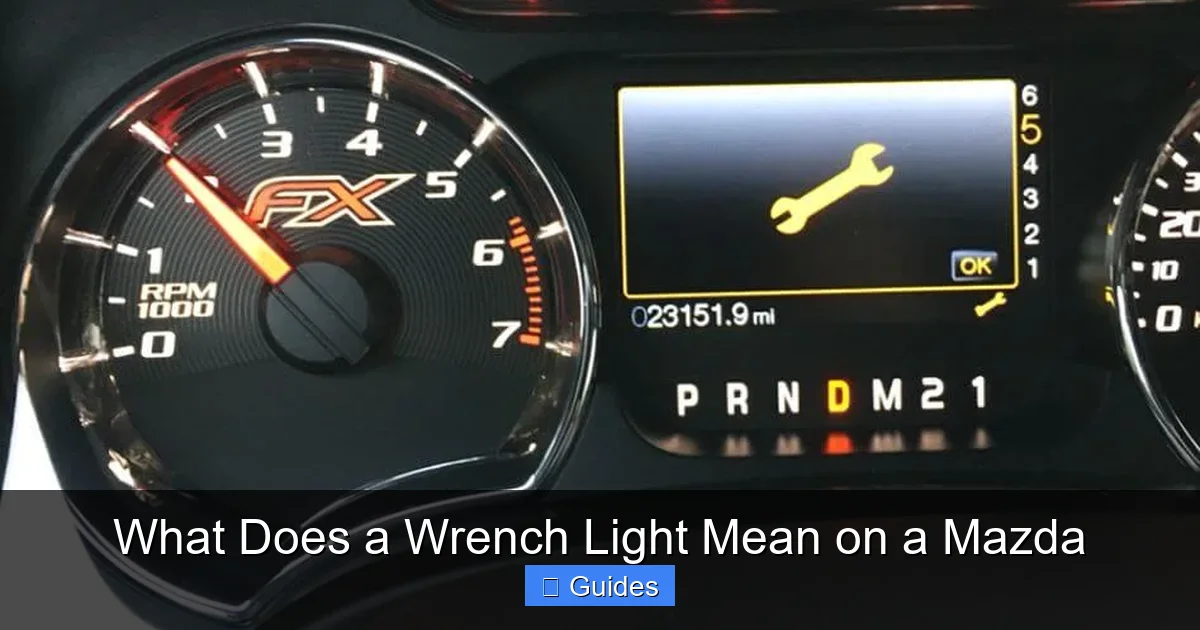
If you’re driving your Mazda and suddenly see a yellow or orange wrench icon flash or stay lit on your dashboard, it’s natural to feel a little concerned. Unlike the more common check engine light, the wrench light is specific to Mazda vehicles and can be a bit mysterious if you’re not familiar with it. But don’t panic—this light is your car’s way of saying, “Hey, something needs attention.” Understanding what it means and how to respond can save you time, money, and potential headaches down the road.
The wrench light is part of Mazda’s advanced vehicle monitoring system. It’s designed to alert you to issues that affect the powertrain—essentially the engine, transmission, and related components that deliver power to your wheels. While it’s not always a sign of immediate danger, it’s definitely a signal that something isn’t operating as it should. Ignoring it could lead to reduced performance, lower fuel efficiency, or even more serious mechanical problems.
In this guide, we’ll walk you through everything you need to know about the wrench light on a Mazda. From what it means and why it comes on, to how you can troubleshoot it at home and when it’s time to see a professional. Whether you drive a Mazda3, CX-5, or MX-5 Miata, this information applies across most modern Mazda models. Let’s get into the details so you can drive with confidence.
Understanding the Wrench Light: More Than Just a Warning
Visual guide about What Does a Wrench Light Mean on a Mazda
Image source: koala.sh
The wrench light on a Mazda is more than just a random warning symbol—it’s a direct message from your vehicle’s onboard computer. This light is part of Mazda’s i-ACTIVSENSE suite of safety and diagnostic technologies, which monitor various systems in real time. When the computer detects an anomaly in the engine, transmission, or emissions control, it triggers the wrench light to alert the driver.
Unlike the check engine light, which can indicate a wide range of issues from a loose gas cap to a failing catalytic converter, the wrench light is more focused. It typically points to problems within the powertrain or engine management systems. This includes issues with fuel delivery, ignition timing, transmission shifting, or electronic control modules. In some cases, it may also appear if the vehicle’s adaptive learning system detects a change in driving patterns or performance.
One key thing to remember is that the wrench light is not always urgent. It can come on due to a minor issue like low engine oil or a temporary sensor glitch. However, it’s never something you should ignore completely. Even if your car seems to be running fine, the underlying problem could worsen over time. Think of the wrench light as your car’s way of saying, “I need a check-up.”
How the Wrench Light Differs from Other Dashboard Warnings
It’s easy to confuse the wrench light with other dashboard symbols, especially the check engine light. But they serve different purposes. The check engine light (often labeled “Check Engine” or “Malfunction Indicator Lamp”) is a general warning that something in the engine or emissions system needs attention. It can be triggered by anything from a faulty oxygen sensor to a misfiring cylinder.
The wrench light, on the other hand, is more specific to Mazda’s engineering. It’s often linked to the SKYACTIV technology used in modern Mazdas, which includes advanced engine and transmission designs. When the wrench light appears, it’s usually because the vehicle’s computer has detected a fault in the SKYACTIV-G engine, SKYACTIV-Drive transmission, or related control systems.
Another difference is how the lights behave. The check engine light may flash or stay solid, with a flashing light indicating a severe issue like a misfire that could damage the catalytic converter. The wrench light typically stays solid, though it may flash in rare cases of serious transmission problems. If it’s flashing, pull over safely and contact a mechanic immediately.
When the Wrench Light Is Not a Cause for Panic
Not every time the wrench light comes on means you’re facing a major repair bill. In fact, many drivers experience this light due to routine maintenance needs. For example, if your oil level is low or your oil hasn’t been changed in a long time, the engine control unit (ECU) may trigger the wrench light as a precaution. Similarly, a dirty air filter or clogged fuel injector can cause performance issues that the system flags with this warning.
In some cases, the light may appear after a software update or battery disconnect. Modern Mazdas rely heavily on electronic systems, and a sudden power loss can cause the computer to lose calibration data. This can trigger warning lights even if nothing is physically wrong with the car. In these situations, the light may go away after a few drive cycles or a simple reset.
That said, it’s always better to investigate than assume. Even if your car feels fine, a diagnostic scan can reveal hidden issues before they become serious. Think of the wrench light as an early warning system—your car’s way of giving you a heads-up so you can address problems while they’re still manageable.
Common Causes of the Wrench Light on a Mazda
Visual guide about What Does a Wrench Light Mean on a Mazda
Image source: donotdpfdelete.green
Now that you know what the wrench light generally means, let’s look at the most common reasons it appears. Understanding these causes can help you troubleshoot at home and decide whether you can fix it yourself or need professional help.
Low Engine Oil Level or Poor Oil Quality
One of the top reasons the wrench light comes on is low engine oil. Mazda’s SKYACTIV engines are precision-tuned and rely on proper lubrication to function smoothly. If the oil level drops too low—or if the oil is old and degraded—the engine may not receive adequate protection. This can lead to increased friction, overheating, and potential damage.
The vehicle’s oil pressure sensor monitors the oil level and pressure. If it detects a problem, it sends a signal to the ECU, which may trigger the wrench light. This is especially common if you’ve missed an oil change or driven long distances without checking your oil.
To check your oil, park on level ground, turn off the engine, and wait a few minutes for the oil to settle. Pull out the dipstick, wipe it clean, reinsert it, and check the level. It should be between the “Low” and “Full” marks. Also, look at the oil’s color and consistency. If it’s dark, gritty, or smells burnt, it’s time for a change.
Faulty or Dirty Sensors
Modern Mazdas are packed with sensors that monitor everything from engine temperature to airflow and fuel mixture. When one of these sensors fails or becomes dirty, it can send incorrect data to the ECU, causing the wrench light to come on.
Common culprits include the mass airflow (MAF) sensor, oxygen (O2) sensor, and throttle position sensor. A dirty MAF sensor, for example, can cause rough idling, poor acceleration, and reduced fuel economy. Cleaning it with a specialized MAF cleaner can often resolve the issue.
O2 sensors monitor the exhaust gases to help the engine adjust the air-fuel ratio. If they fail, the engine may run rich or lean, triggering the wrench light. These sensors typically last 60,000 to 100,000 miles, but they can fail early due to contamination or wear.
Transmission Issues
The wrench light is also linked to the transmission, especially in models with the SKYACTIV-Drive automatic transmission. Problems like slipping gears, delayed shifting, or harsh engagement can trigger the light. These issues may stem from low transmission fluid, a faulty solenoid, or internal wear.
Unlike engine oil, transmission fluid isn’t always easy to check at home. Some Mazda models don’t even have a dipstick. If you suspect a transmission issue, it’s best to have it inspected by a professional. Driving with low or degraded transmission fluid can cause irreversible damage.
Emissions System Problems
The emissions system plays a big role in engine performance and environmental compliance. If components like the catalytic converter, EGR valve, or EVAP system aren’t working properly, the wrench light may appear.
For example, a clogged EGR valve can cause rough idling and increased emissions. A faulty EVAP purge valve can lead to fuel vapor leaks, which the system detects and flags. These issues often require diagnostic tools to pinpoint, but they’re usually repairable without major expense.
Battery or Electrical Issues
Even something as simple as a weak battery or loose connection can trigger the wrench light. Mazda’s electronic systems are sensitive to voltage fluctuations. If the battery is old, the alternator is failing, or there’s a corroded ground wire, the ECU may interpret this as a system fault.
If the light comes on after jump-starting the car or replacing the battery, it may just need time to relearn driving patterns. However, if the light persists, have your battery and charging system tested.
How to Respond When the Wrench Light Comes On
Visual guide about What Does a Wrench Light Mean on a Mazda
Image source: americanworthy.com
Seeing the wrench light can be unsettling, but knowing how to respond can make all the difference. Here’s a step-by-step guide to help you handle the situation safely and effectively.
Stay Calm and Assess the Situation
First, don’t panic. The wrench light doesn’t always mean your car is about to break down. Pay attention to how the car is running. Is it idling roughly? Is there a loss of power? Are you hearing unusual noises? If the car feels normal, you may be able to drive it short distances to a repair shop. But if you notice performance issues, pull over safely and call for assistance.
Check Basic Fluids and Components
Before heading to a mechanic, do a quick visual inspection. Check your engine oil level and condition. Look for leaks under the car. Inspect the air filter—if it’s dirty, replace it. These simple steps can resolve the issue in some cases.
Also, make sure the gas cap is tight. A loose or damaged gas cap can cause the EVAP system to trigger warning lights. Tighten it and see if the light goes off after a few drive cycles.
Use an OBD2 Scanner to Read Error Codes
The most effective way to diagnose the wrench light is by reading the trouble codes stored in your car’s computer. An OBD2 (On-Board Diagnostics) scanner can connect to your Mazda’s diagnostic port (usually under the dashboard) and retrieve specific error codes.
These codes will tell you exactly which system is affected—such as P0171 (system too lean) or P0700 (transmission control system malfunction). Many auto parts stores offer free code reading, or you can buy an affordable scanner for home use.
Once you have the code, you can research the issue online or take it to a mechanic with precise information. This saves time and helps avoid unnecessary repairs.
Reset the Light (If Appropriate)
After addressing the underlying issue, you may need to reset the wrench light. Some problems resolve on their own after a few drive cycles, but others require a manual reset. You can do this with an OBD2 scanner or by disconnecting the battery for 10–15 minutes (though this may reset other settings like radio presets).
Note: Resetting the light without fixing the problem won’t help. The light will likely come back on if the issue persists.
Visit a Certified Mazda Technician
If you’re unable to identify or fix the problem, or if the light comes back after resetting, it’s time to see a professional. Certified Mazda technicians have access to specialized tools and manufacturer-specific diagnostic software. They can perform a thorough inspection and ensure repairs are done correctly.
While independent shops can also help, Mazda dealerships are best equipped to handle complex issues related to SKYACTIV and i-ACTIVSENSE systems.
Preventing the Wrench Light: Maintenance Tips
The best way to deal with the wrench light is to prevent it from coming on in the first place. Regular maintenance is key to keeping your Mazda running smoothly and avoiding unexpected warnings.
Follow the Scheduled Maintenance Plan
Mazda provides a detailed maintenance schedule in your owner’s manual. Stick to it. This includes oil changes every 7,500 to 10,000 miles (depending on driving conditions), air filter replacements, and transmission fluid changes. Skipping these services increases the risk of sensor failures and system malfunctions.
Use High-Quality Fluids and Parts
Always use the recommended oil type (usually 0W-20 full synthetic for SKYACTIV engines) and genuine or high-quality aftermarket parts. Cheap fluids or filters can degrade faster and cause performance issues.
Keep Sensors Clean
Dirt and debris can accumulate on sensors like the MAF and O2 sensors. Periodically inspect and clean them as needed. Avoid using harsh chemicals—stick to cleaners designed for automotive sensors.
Monitor Your Driving Habits
Aggressive driving, frequent short trips, and towing heavy loads can put extra stress on your engine and transmission. These habits may contribute to early wear and trigger warning lights. Drive smoothly and allow the engine to warm up in cold weather.
Address Warning Lights Promptly
Even if the wrench light seems minor, don’t ignore it. Early diagnosis and repair can prevent small issues from becoming major problems. Think of it as preventive healthcare for your car.
When to Seek Professional Help
While some wrench light issues can be resolved at home, others require expert attention. Here’s when you should definitely see a mechanic:
– The light is flashing (indicating a serious transmission problem).
– The car is shaking, stalling, or losing power.
– You’ve checked fluids and sensors, but the light remains on.
– The OBD2 scanner shows multiple or complex error codes.
– You’re unsure about the cause or how to fix it.
Don’t wait until the problem gets worse. A timely visit to a qualified technician can save you from costly repairs and keep your Mazda in top condition.
Conclusion
The wrench light on a Mazda is a valuable diagnostic tool that helps protect your vehicle from serious damage. While it can be alarming the first time it appears, understanding what it means and how to respond puts you in control. From low oil levels to sensor malfunctions, many causes are preventable with regular maintenance and attention to detail.
By staying informed, using diagnostic tools, and knowing when to seek help, you can keep your Mazda running smoothly for years to come. Remember: the wrench light isn’t a death sentence for your car—it’s a call to action. Listen to it, respond wisely, and your Mazda will thank you with reliable performance and peace of mind.
Frequently Asked Questions
Can I still drive my Mazda if the wrench light is on?
Yes, you can usually drive short distances if the car feels normal, but avoid long trips. Continuing to drive with the light on can cause further damage. Have the issue diagnosed as soon as possible.
Is the wrench light the same as the check engine light?
No, they’re different. The check engine light is a general warning for engine or emissions issues, while the wrench light is specific to Mazda’s powertrain and SKYACTIV systems.
How much does it cost to fix a wrench light issue?
Costs vary widely. Simple fixes like an oil change or sensor cleaning may cost $50–$150. More complex issues like transmission repairs can run $500 or more. Diagnosis is often the first step.
Will the wrench light go away on its own?
Sometimes, yes—especially if it was triggered by a temporary glitch or low oil. But if the underlying issue isn’t fixed, the light will likely return. Don’t rely on it disappearing without action.
Can a bad battery cause the wrench light to come on?
Yes, a weak or failing battery can cause voltage fluctuations that confuse the car’s computer, triggering the wrench light. Have your battery and charging system tested if this happens.
Do I need a Mazda dealership to fix the wrench light?
Not necessarily, but a certified Mazda technician has the best tools and knowledge for complex issues. Independent shops can handle many problems, especially with an OBD2 code to guide them.

At CarLegit, we believe information should be clear, factual, and genuinely helpful. That’s why every guide, review, and update on our website is created with care, research, and a strong focus on user experience.