
Auto LSD (Limited Slip Differential) on a Toyota Tundra is a smart traction control system that automatically sends power to the wheel with the most grip when one wheel starts to slip. This feature enhances stability, improves off-road capability, and helps during towing or driving on slippery surfaces—all without driver input.
If you’ve ever looked at the specs of a Toyota Tundra—especially the TRD Off-Road or TRD Pro models—you might have come across the term “Auto LSD.” At first glance, it sounds like technical jargon straight out of a mechanic’s manual. But don’t worry, it’s not as complicated as it seems. In fact, Auto LSD is one of those quiet heroes in your truck that works behind the scenes to keep you moving, even when the road (or lack thereof) gets tough.
So, what does Auto LSD actually mean on a Toyota Tundra? Simply put, it stands for Automatic Limited Slip Differential. This system is designed to improve traction by automatically detecting when one rear wheel is slipping and then redirecting power to the wheel that still has grip. Unlike older mechanical limited slip differentials that used clutches or gears, the Tundra’s Auto LSD uses the truck’s brake system and electronic sensors to simulate that same effect—without any input from you. It’s like having a smart assistant in your drivetrain that knows exactly when to step in and help.
You might be wondering why this matters. Well, imagine you’re driving up a snowy hill, and one of your rear wheels hits a patch of ice. Without Auto LSD, that wheel could spin uselessly while the other does all the work—or worse, lose traction completely. But with Auto LSD, the system senses the slip and applies gentle brake pressure to the spinning wheel. This tricks the differential into sending more power to the wheel with traction, helping you keep moving forward smoothly. It’s especially useful when off-roading, towing, or driving in wet or muddy conditions.
Now, let’s dive deeper into how this system works, where you’ll find it, and why it’s such a valuable feature for Tundra owners.
In This Article
- 1 Key Takeaways
- 2 📑 Table of Contents
- 3 What Is Auto LSD and How Does It Work?
- 4 Where Is Auto LSD Found on the Toyota Tundra?
- 5 When and How Does Auto LSD Activate?
- 6 Auto LSD vs. Other Traction Systems in the Tundra
- 7 Benefits of Auto LSD for Tundra Owners
- 8 Tips for Getting the Most Out of Auto LSD
- 9 Conclusion
- 10 Frequently Asked Questions
Key Takeaways
- Auto LSD stands for Automatic Limited Slip Differential: It’s a factory-installed system that improves traction by redirecting power to the wheel with better grip when slippage is detected.
- It works automatically: Unlike manual locking differentials, Auto LSD activates on its own, so you don’t need to flip a switch or engage it manually.
- Great for off-road and slippery conditions: Whether you’re driving on mud, snow, gravel, or wet roads, Auto LSD helps maintain forward momentum.
- Different from a locking differential: Auto LSD doesn’t fully lock the wheels together but uses brake intervention to simulate limited slip action.
- Common on TRD Off-Road and TRD Pro trims: Most Tundras with the TRD package come equipped with Auto LSD, though availability may vary by model year.
- Improves towing and hauling safety: By reducing wheel spin, it helps maintain control when pulling heavy loads up hills or on uneven terrain.
- Requires no maintenance: The system is electronic and hydraulic-based, so there’s no fluid to change or parts to service regularly.
📑 Table of Contents
What Is Auto LSD and How Does It Work?
Auto LSD, or Automatic Limited Slip Differential, is a traction-enhancing feature found on many Toyota Tundra models, particularly those equipped with the TRD (Toyota Racing Development) Off-Road or TRD Pro packages. Unlike a traditional mechanical limited slip differential that uses physical components like clutches or gears to distribute torque, the Tundra’s Auto LSD relies on the vehicle’s existing brake system and electronic control unit (ECU) to manage wheel slip.
Here’s how it works in simple terms: When the truck’s sensors detect that one rear wheel is spinning faster than the other (a sign of loss of traction), the Auto LSD system automatically applies the brake to the slipping wheel. This braking action creates resistance, which forces the differential to send more power to the wheel that still has grip. The result? Better forward momentum and improved stability, especially in low-traction situations.
Think of it like this: if you’re walking on ice and one foot starts to slip, your body naturally shifts weight to the foot that’s still stable. Auto LSD does something similar for your truck—it “shifts” power to the wheel that can actually help you move forward.
The Role of the Brake System in Auto LSD
You might be wondering, “Why use the brakes instead of a mechanical differential?” Great question. The answer lies in simplicity, cost, and integration. By using the existing brake system, Toyota avoids the need for additional mechanical parts under the truck, which reduces weight and complexity. Plus, it allows the system to work seamlessly with other safety features like ABS (Anti-lock Braking System) and Vehicle Stability Control (VSC).
When Auto LSD activates, it doesn’t slam on the brakes. Instead, it applies just enough pressure to slow the spinning wheel—usually in short, controlled pulses. This mimics the effect of a mechanical limited slip differential without the wear and tear. And because it’s electronic, it can react in milliseconds, often before the driver even notices a loss of traction.
Auto LSD vs. Mechanical Limited Slip Differential
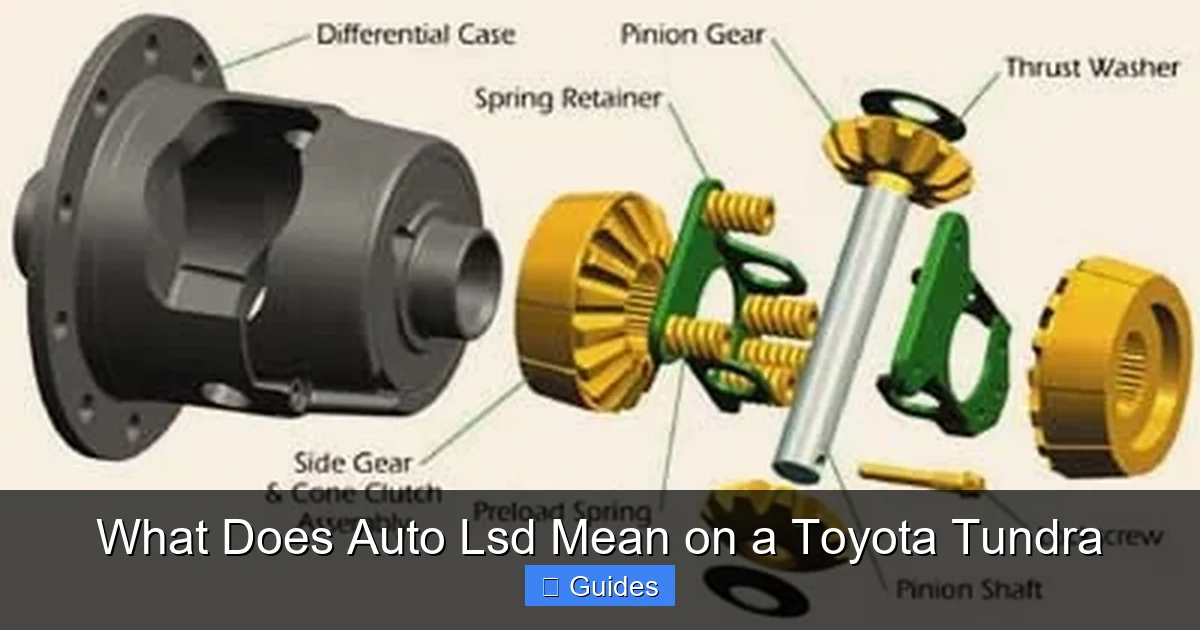
It’s important to understand that Auto LSD is not the same as a traditional mechanical limited slip differential (LSD). A mechanical LSD uses physical components—like clutch packs or gear sets—to physically link the two rear wheels together, ensuring they rotate at similar speeds. This provides consistent torque distribution but can be harsher on drivetrain components and may require maintenance.
In contrast, Auto LSD is a brake-based system. It doesn’t physically lock the wheels together. Instead, it uses brake intervention to simulate limited slip action. This makes it smoother and quieter, but slightly less aggressive than a full mechanical LSD. For most drivers—especially those who use their Tundra for daily driving, light off-roading, or towing—Auto LSD provides more than enough traction assistance.
Where Is Auto LSD Found on the Toyota Tundra?
Visual guide about What Does Auto Lsd Mean on a Toyota Tundra
Image source: roadsumo.com
Auto LSD is not standard on every Toyota Tundra. It’s typically included as part of the TRD Off-Road or TRD Pro packages, which are designed for drivers who want enhanced off-road capability without sacrificing on-road comfort. If you’re shopping for a used or new Tundra, checking for these packages is the easiest way to confirm whether Auto LSD is equipped.
TRD Off-Road Package
The TRD Off-Road package is one of the most popular upgrades for Tundra buyers who plan to take their truck beyond paved roads. In addition to Auto LSD, this package often includes features like:
– Skid plates for underbody protection
– All-terrain tires
– Multi-Terrain Select (MTS) system
– Crawl Control (in newer models)
– Upgraded suspension components
Auto LSD is a core part of this package because it directly supports the truck’s off-road performance. Whether you’re climbing rocky trails, navigating muddy paths, or driving through deep snow, Auto LSD helps maintain traction when one wheel loses grip.
TRD Pro Package
The TRD Pro is the top-tier off-road trim for the Tundra, built for serious adventurers. It includes everything in the TRD Off-Road package, plus additional performance upgrades like:
– FOX internal bypass shocks
– TRD-tuned front springs
– Aggressive all-terrain or mud-terrain tires
– Unique exterior styling
Like the Off-Road package, the TRD Pro comes standard with Auto LSD. In fact, it’s one of the key features that make the TRD Pro so capable in extreme conditions. Whether you’re rock crawling in Moab or hauling gear through a forest trail, Auto LSD gives you confidence that your truck can handle the challenge.
Availability by Model Year
Auto LSD has been available on the Toyota Tundra for many years, but its availability can vary depending on the model year and trim level. For example:
– 2007–2013 Tundras: Auto LSD was commonly included with the TRD Off-Road package.
– 2014–2021 Tundras: The feature remained standard on TRD Off-Road and TRD Pro trims.
– 2022 and newer Tundras: With the introduction of the redesigned third-generation Tundra, Auto LSD continues to be a key feature in off-road-focused trims.
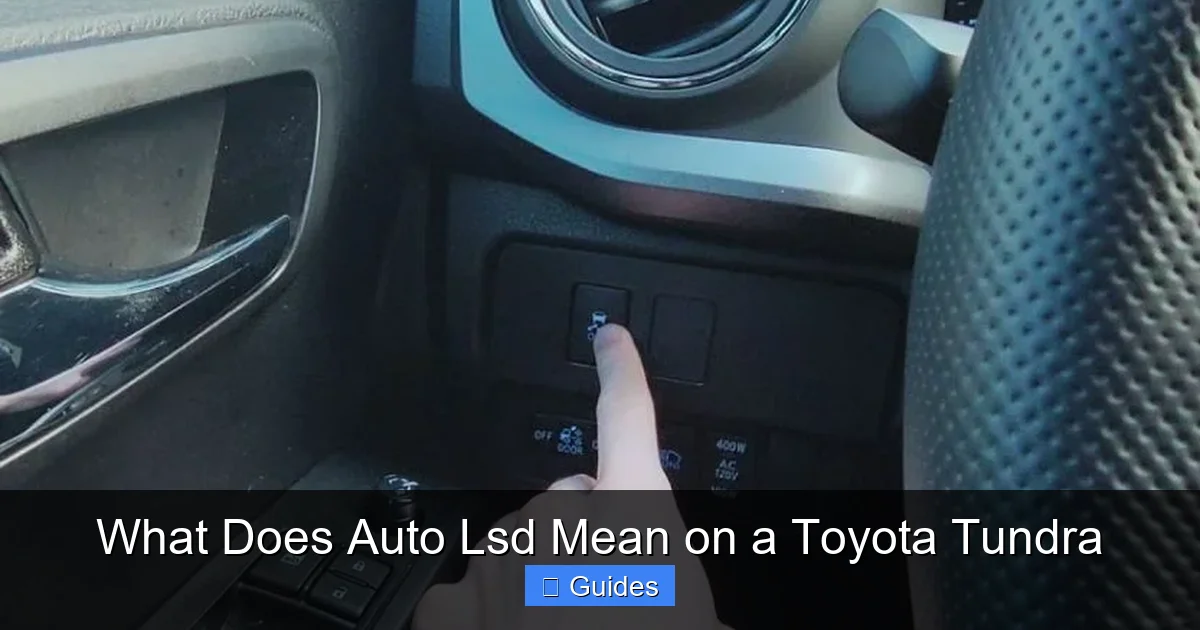
If you’re unsure whether a specific Tundra has Auto LSD, check the window sticker, owner’s manual, or look for the “Auto LSD” button on the dashboard (more on that later). You can also ask a Toyota dealer to run a VIN check for confirmation.
When and How Does Auto LSD Activate?
Visual guide about What Does Auto Lsd Mean on a Toyota Tundra
Image source: tundraheadquarters.com
One of the best things about Auto LSD is that it works automatically—no buttons to press, no switches to flip. The system is always monitoring wheel speed through the ABS sensors. When it detects a significant difference in speed between the two rear wheels (indicating slippage), it springs into action.
Common Scenarios Where Auto LSD Helps
Auto LSD is most useful in situations where traction is limited. Here are some real-world examples:
– **Driving on snow or ice:** If one rear wheel hits a patch of black ice, Auto LSD applies the brake to that wheel and sends power to the one with grip, helping you maintain control.
– **Off-roading on loose terrain:** On gravel, sand, or mud, it’s common for one wheel to lose traction. Auto LSD keeps the truck moving forward by balancing power delivery.
– **Towing up a hill:** When pulling a heavy trailer or boat up an incline, one wheel might slip due to weight transfer. Auto LSD helps prevent wheel spin and improves stability.
– **Exiting a driveway or parking lot:** Wet leaves, oil slicks, or gravel can cause one wheel to spin. Auto LSD reduces the chance of getting stuck.
How to Know When Auto LSD Is Working
You might not always notice when Auto LSD activates, and that’s by design—it’s meant to be seamless. However, there are a few signs:
– You may feel a slight pulsing in the brake pedal if the system is applying brake pressure to a spinning wheel.
– The traction control light on the dashboard might flash briefly, indicating that the system is intervening.
– You’ll notice smoother acceleration and less wheel spin, especially when starting from a stop on slippery surfaces.
In some Tundra models, there’s also a physical “Auto LSD” button on the dashboard. Pressing this button doesn’t activate the system—it actually turns it off. This is useful in situations where you want to allow wheel spin, such as when rocking the truck out of deep mud or snow. When the button is pressed, the system is disabled, and the indicator light turns on. To reactivate Auto LSD, simply press the button again.
Auto LSD vs. Other Traction Systems in the Tundra
The Toyota Tundra comes with several traction and stability systems, and it’s easy to get them confused. Let’s break down how Auto LSD compares to other features like:
– **Rear Differential Lock (Rear Diff Lock)**
– **Vehicle Stability Control (VSC)**
– **Traction Control System (TRAC)**
– **Multi-Terrain Select (MTS)**
Auto LSD vs. Rear Differential Lock
This is a common point of confusion. While both systems improve traction, they work very differently.
– **Auto LSD:** Uses brake intervention to simulate limited slip. It’s automatic, always on (unless manually disabled), and works best at lower speeds and in moderate off-road conditions.
– **Rear Differential Lock:** Physically locks the two rear wheels together, forcing them to rotate at the same speed. This is ideal for extreme off-roading, like rock crawling or deep mud, where maximum traction is needed.
The Rear Diff Lock is typically found only on the TRD Pro trim and must be engaged manually (usually via a dashboard button). It’s more aggressive than Auto LSD and should only be used in low-traction, low-speed situations. Using it on dry pavement can damage the drivetrain.
Auto LSD vs. VSC and TRAC
Vehicle Stability Control (VSC) and Traction Control System (TRAC) are broader safety systems that help prevent skidding and loss of control. They work by reducing engine power and applying brakes to individual wheels when instability is detected.
Auto LSD, on the other hand, is specifically focused on rear-wheel traction. It doesn’t reduce engine power—it only manages how power is distributed between the rear wheels. In fact, Auto LSD often works in conjunction with VSC and TRAC to provide a complete safety net.
Auto LSD and Multi-Terrain Select
On newer Tundras with the TRD Off-Road or TRD Pro packages, you’ll also find Multi-Terrain Select (MTS). This system allows you to choose different driving modes (like Mud & Sand, Loose Rock, or Mogul) that adjust throttle response, traction control, and other settings for optimal performance.
Auto LSD works alongside MTS. For example, in Mud & Sand mode, the system may allow slightly more wheel slip before intervening, while in Loose Rock mode, it may engage more aggressively to maintain traction.
Benefits of Auto LSD for Tundra Owners
So, why should you care about Auto LSD? If you’re a Tundra owner—or considering buying one—this feature offers several real-world benefits that go beyond just off-roading.
Improved Off-Road Performance
For drivers who enjoy exploring trails, Auto LSD is a game-changer. It allows the Tundra to keep moving even when one wheel loses grip, reducing the chances of getting stuck. Whether you’re crossing a stream, climbing a rocky incline, or driving through deep snow, Auto LSD gives you the confidence to tackle challenges you might otherwise avoid.
Enhanced Safety in Everyday Driving
You don’t need to be an off-road enthusiast to benefit from Auto LSD. In everyday situations—like driving on wet roads, icy driveways, or gravel parking lots—this system helps prevent wheel spin and improves stability. That means safer starts, smoother acceleration, and better control in unexpected conditions.
Better Towing and Hauling Capability
If you use your Tundra to tow a trailer, boat, or camper, Auto LSD can make a big difference. When pulling a heavy load up a hill or on a slippery surface, one rear wheel might lose traction due to weight transfer. Auto LSD helps maintain grip, reducing the risk of fishtailing or losing control.
No Maintenance Required
Unlike mechanical limited slip differentials, which may require special fluids or periodic servicing, Auto LSD is entirely electronic and hydraulic. There are no clutches to wear out or gears to maintain. As long as your brake system is in good condition, Auto LSD will continue to work reliably for the life of the vehicle.
Peace of Mind
At the end of the day, Auto LSD is about confidence. Knowing that your truck has a system working quietly in the background to keep you moving—no matter the conditions—is invaluable. Whether you’re commuting to work, heading out on a weekend adventure, or towing gear for a family trip, Auto LSD helps ensure you get there safely.
Tips for Getting the Most Out of Auto LSD
While Auto LSD is designed to work automatically, there are a few things you can do to maximize its effectiveness:
– **Keep your tires in good condition:** Worn or mismatched tires can reduce traction and make it harder for Auto LSD to do its job. Regularly check tire pressure and tread depth.
– **Use the right tire type:** All-terrain or mud-terrain tires work best with Auto LSD, especially for off-road use.
– **Don’t disable it unnecessarily:** Unless you’re in a situation where wheel spin is needed (like deep mud), keep Auto LSD enabled for optimal traction.
– **Understand its limits:** Auto LSD is not a substitute for cautious driving. In extreme conditions, you may still need to use low-range 4WD or engage the rear differential lock (if equipped).
Conclusion
Auto LSD on the Toyota Tundra is a smart, reliable, and highly useful feature that enhances traction, safety, and off-road capability. By automatically detecting wheel slip and redirecting power to the wheel with grip, it helps drivers maintain control in a wide range of conditions—from snowy roads to rocky trails.
Whether you’re towing a heavy load, exploring the great outdoors, or just commuting on a rainy day, Auto LSD works quietly in the background to keep your Tundra moving forward. It’s one of those features that you might not think about—until you really need it. And when you do, you’ll be glad it’s there.
So, the next time you see “Auto LSD” listed in your Tundra’s specs, you’ll know exactly what it means—and why it’s such a valuable part of your truck’s DNA.
Frequently Asked Questions
What does Auto LSD stand for on a Toyota Tundra?
Auto LSD stands for Automatic Limited Slip Differential. It’s a traction control system that automatically detects when one rear wheel is slipping and applies brake pressure to redirect power to the wheel with better grip.
Is Auto LSD the same as a locking differential?
No, Auto LSD is not the same as a locking differential. Auto LSD uses brake intervention to simulate limited slip action, while a locking differential physically locks the two rear wheels together. Locking differentials are more aggressive and typically found only on TRD Pro models.
Can I turn off Auto LSD on my Tundra?
Yes, you can turn off Auto LSD by pressing the “Auto LSD” button on the dashboard. This is useful in situations where you need wheel spin, such as when rocking the truck out of deep mud or snow. Press the button again to reactivate it.
Does Auto LSD require maintenance?
No, Auto LSD does not require regular maintenance. It uses the truck’s existing brake system and electronic controls, so there are no fluids to change or mechanical parts to service.
Which Tundra trims come with Auto LSD?
Auto LSD is typically included on Tundra models equipped with the TRD Off-Road or TRD Pro packages. It’s not standard on all trims, so check the vehicle’s specifications or window sticker to confirm.
How does Auto LSD help when towing?
Auto LSD helps prevent wheel spin when towing heavy loads, especially on inclines or slippery surfaces. By maintaining traction on both rear wheels, it improves stability and reduces the risk of fishtailing or losing control.

At CarLegit, we believe information should be clear, factual, and genuinely helpful. That’s why every guide, review, and update on our website is created with care, research, and a strong focus on user experience.