
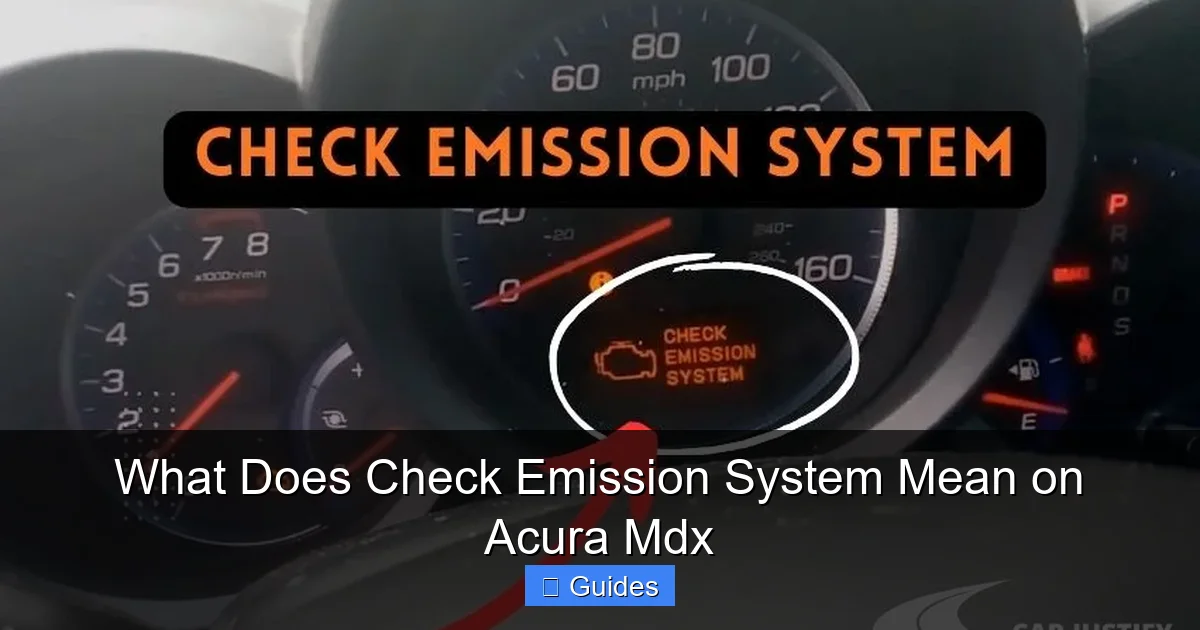
The “Check Emission System” warning on your Acura MDX signals a potential issue with the vehicle’s emissions control components. This alert doesn’t always mean a major repair—it could be a loose gas cap or a faulty sensor—but it should never be ignored to avoid performance issues or environmental harm.
In This Article
- 1 Key Takeaways
- 2 📑 Table of Contents
- 3 Understanding the “Check Emission System” Warning on Your Acura MDX
- 4 What Triggers the “Check Emission System” Light?
- 5 How to Diagnose the Problem
- 6 How to Fix Common Emission System Issues
- 7 How to Reset the “Check Emission System” Light
- 8 Preventing Future Emission System Warnings
- 9 Conclusion
- 10 Frequently Asked Questions
- 10.1 What does “Check Emission System” mean on an Acura MDX?
- 10.2 Can I drive my Acura MDX with the “Check Emission System” light on?
- 10.3 How much does it cost to fix the “Check Emission System” warning?
- 10.4 Will the “Check Emission System” light turn off by itself?
- 10.5 Do I need a mechanic to fix this, or can I do it myself?
- 10.6 How do I reset the “Check Emission System” light after repairs?
Key Takeaways
- Common Causes: Loose or damaged gas cap, faulty oxygen (O2) sensor, catalytic converter issues, or EVAP system leaks.
- Don’t Ignore It: Driving with this warning can reduce fuel efficiency, increase emissions, and potentially damage the engine or catalytic converter.
- Scan for Codes: Use an OBD2 scanner to retrieve diagnostic trouble codes (DTCs) and pinpoint the exact issue.
- DIY Fixes Possible: Tightening the gas cap or replacing a sensor may resolve the problem without a mechanic.
- Professional Help Recommended: Complex issues like catalytic converter failure require expert diagnosis and repair.
- Reset After Repair: Clear the warning light using a scanner or by disconnecting the battery after fixing the issue.
- Preventive Maintenance: Regular inspections and timely part replacements help avoid future emission system warnings.
📑 Table of Contents
Understanding the “Check Emission System” Warning on Your Acura MDX
You’re cruising down the highway in your Acura MDX, enjoying the smooth ride and quiet cabin, when suddenly—a yellow or amber warning light pops up on your dashboard. It says “Check Emission System.” Your first reaction might be panic. Is something seriously wrong? Will it cost thousands to fix? Can you even drive the car?
The good news? In many cases, the “Check Emission System” warning isn’t a sign of imminent engine failure. But it’s also not something you should ignore. This alert is part of your vehicle’s onboard diagnostics (OBD2) system, designed to monitor the performance of components that control harmful emissions. When the system detects a problem—whether minor or major—it triggers this warning to prompt you to take action.
Your Acura MDX is equipped with a sophisticated emissions control system that includes sensors, valves, hoses, and mechanical parts working together to reduce pollutants like carbon monoxide, hydrocarbons, and nitrogen oxides. When any of these components malfunction or operate outside normal parameters, the vehicle’s computer logs a fault and illuminates the warning light. The goal is simple: protect the environment, maintain fuel efficiency, and ensure your vehicle meets emissions standards.
What Triggers the “Check Emission System” Light?
Several issues can cause the “Check Emission System” warning to appear on your Acura MDX. Some are quick and inexpensive to fix, while others may require more involved repairs. Understanding the most common triggers can help you respond quickly and appropriately.

Visual guide about What Does Check Emission System Mean on Acura Mdx
Image source: vehiclefreak.com
1. Loose or Damaged Gas Cap
This is, by far, the most common cause—and the easiest to fix. The gas cap seals the fuel system, preventing fuel vapors from escaping into the atmosphere. If it’s loose, cracked, or missing, the vehicle’s evaporative emissions (EVAP) system detects a leak and triggers the warning.
For example, after filling up your MDX, you might have forgotten to tighten the cap all the way. Even a slight gap can cause the system to detect a vapor leak. In cold weather, plastic caps can become brittle and develop tiny cracks that aren’t visible to the naked eye.
Tip: Always twist the gas cap until you hear it click three times. If the light comes on shortly after refueling, check the cap first.
2. Faulty Oxygen (O2) Sensor
The oxygen sensor monitors the amount of unburned oxygen in the exhaust gases. It helps the engine control unit (ECU) adjust the air-fuel mixture for optimal combustion and lower emissions. A failing O2 sensor can send incorrect data, leading to poor fuel economy, rough idling, and increased emissions.
On the Acura MDX, there are typically two O2 sensors—one before the catalytic converter (upstream) and one after (downstream). If either fails, the ECU may detect an imbalance and trigger the warning.
Example: You notice your MDX is getting fewer miles per gallon than usual, and the “Check Emission System” light appears. A scan tool reveals a code like P0135 (O2 Sensor Heater Circuit Malfunction), pointing to a faulty upstream sensor.
3. Catalytic Converter Problems
The catalytic converter reduces harmful exhaust gases by converting them into less toxic substances. Over time, it can become clogged or damaged due to engine misfires, oil contamination, or excessive fuel entering the exhaust system.
A failing catalytic converter often causes reduced engine performance, a sulfur-like “rotten egg” smell, and increased emissions. If the O2 sensors detect abnormal readings downstream of the converter, the system may flag it as inefficient.
Note: Replacing a catalytic converter is expensive—often $1,000 or more—so it’s important to rule out other causes first. Frequent misfires or driving with a rich fuel mixture can damage the converter prematurely.
4. EVAP System Leaks
The evaporative emissions control system captures fuel vapors from the gas tank and routes them to the engine to be burned. If there’s a leak in the system—such as a cracked hose, faulty purge valve, or damaged charcoal canister—the ECU will detect it and trigger the warning.
Common EVAP-related trouble codes include P0442 (small leak detected) or P0455 (large leak detected). These can often be diagnosed with a smoke test, which pressurizes the system to locate leaks.
Tip: Check all EVAP hoses under the hood for cracks, loose connections, or signs of wear. Even a pinhole-sized leak can cause the system to fail.
5. Mass Airflow (MAF) Sensor Issues
The MAF sensor measures the amount of air entering the engine, helping the ECU calculate the correct fuel delivery. A dirty or malfunctioning MAF sensor can cause incorrect air-fuel ratios, leading to increased emissions and poor performance.
While a faulty MAF sensor typically triggers a separate “Check Engine” light, it can also affect emissions and contribute to the “Check Emission System” warning, especially if the ECU detects inconsistent data across multiple sensors.
DIY Fix: Cleaning the MAF sensor with a specialized spray cleaner can sometimes restore proper function. Avoid touching the delicate wire inside.
How to Diagnose the Problem
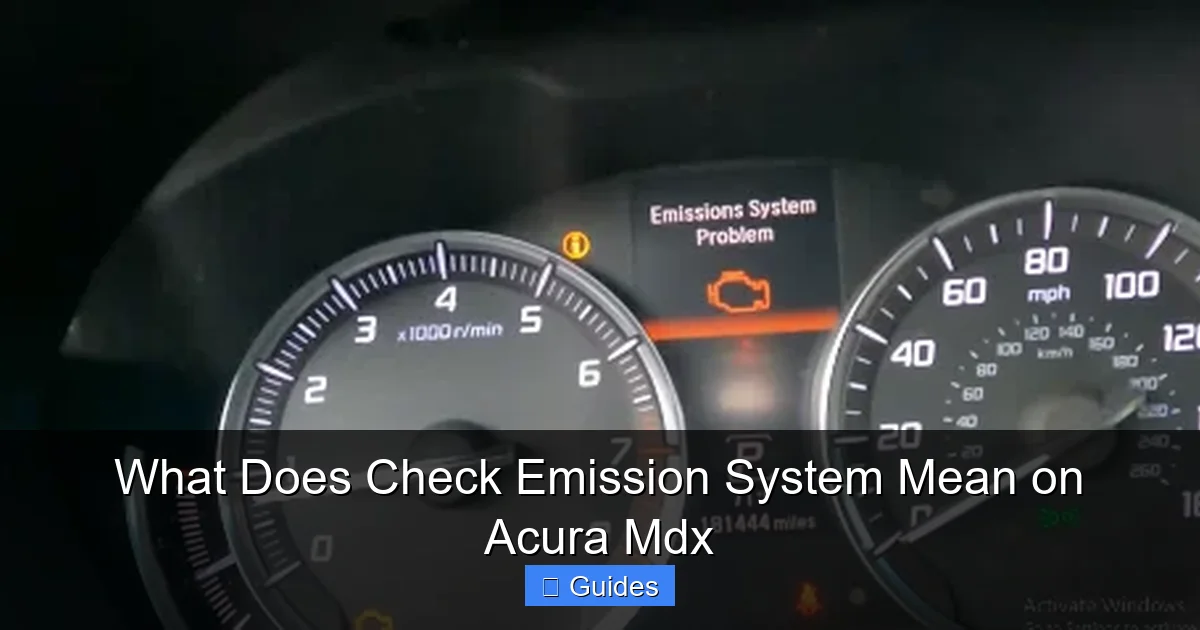
Once the “Check Emission System” light appears, the first step is diagnosis. Modern vehicles like the Acura MDX store diagnostic trouble codes (DTCs) that point to the specific issue. These codes can be read using an OBD2 scanner, which plugs into the diagnostic port usually located under the dashboard near the driver’s seat.
Visual guide about What Does Check Emission System Mean on Acura Mdx
Image source: thekpv.com
Using an OBD2 Scanner
An OBD2 scanner is a small, handheld device that communicates with your vehicle’s computer. You can buy one for as little as $20–$50, or borrow one from an auto parts store (many offer free code reading).
To use it:
- Turn off the engine and locate the OBD2 port (typically under the steering column).
- Plug in the scanner and turn the ignition to the “ON” position (do not start the engine).
- Follow the scanner’s prompts to retrieve the stored codes.
- Write down the codes (e.g., P0420, P0171) and look them up online or in a repair manual.
Common Codes Related to Emissions
Here are a few DTCs you might encounter and what they mean:
- P0420: Catalyst System Efficiency Below Threshold (Bank 1) – Often indicates a failing catalytic converter.
- P0135: O2 Sensor Heater Circuit Malfunction (Bank 1, Sensor 1) – Points to a faulty upstream oxygen sensor.
- P0442: EVAP System Small Leak Detected – Suggests a minor leak in the fuel vapor system.
- P0455: EVAP System Large Leak Detected – Could be a loose gas cap or major hose rupture.
- P0171: System Too Lean (Bank 1) – May be caused by a vacuum leak or faulty MAF sensor.
When to See a Mechanic
While some issues can be resolved at home, others require professional tools and expertise. If the scanner shows a code related to the catalytic converter, complex EVAP leaks, or multiple sensor failures, it’s best to consult a certified technician.
Additionally, if the warning light is flashing (not just illuminated), it may indicate a severe misfire that could damage the catalytic converter. In this case, reduce driving and seek immediate service.
How to Fix Common Emission System Issues
Once you’ve identified the problem, the next step is fixing it. Many emission-related issues on the Acura MDX can be resolved with basic tools and a little know-how.
Visual guide about What Does Check Emission System Mean on Acura Mdx
Image source: carjustify.com
Fixing a Loose or Faulty Gas Cap
This is the easiest fix of all. Simply remove the gas cap, inspect it for cracks or wear, and reinstall it securely. Turn the cap until you hear it click three times. Then, drive the vehicle for a few days. The warning light should turn off after the system runs a self-test and confirms the leak is sealed.
If the cap is damaged, replace it with an OEM (original equipment manufacturer) or high-quality aftermarket cap. Avoid cheap, universal caps—they may not seal properly.
Replacing an Oxygen Sensor
O2 sensors typically last 60,000 to 100,000 miles. If yours is faulty, replacement is straightforward but requires some mechanical skill.
Steps:
- Locate the sensor (usually on the exhaust manifold or downpipe).
- Disconnect the electrical connector.
- Use an O2 sensor socket and wrench to remove the old sensor.
- Install the new sensor and reconnect the wiring.
- Clear the code with an OBD2 scanner.
Tip: Apply anti-seize compound to the threads of the new sensor (if not pre-applied) to prevent seizing in the future.
Cleaning or Replacing the MAF Sensor
A dirty MAF sensor can cause inaccurate readings. Cleaning it is often effective:
- Remove the sensor from the air intake tube.
- Spray it with MAF cleaner (do not use water or compressed air).
- Let it dry completely before reinstalling.
If cleaning doesn’t resolve the issue, replacement may be necessary. Use a genuine Acura part or a reputable aftermarket brand.
Addressing EVAP System Leaks
Small leaks can sometimes be fixed by replacing cracked hoses or tightening connections. For larger leaks, a smoke test is the most effective diagnostic method. This involves introducing smoke into the EVAP system and watching for leaks.
Common leak points include:
- Fuel filler neck gasket
- EVAP canister vent valve
- Purge solenoid
- Hoses near the gas tank
If you’re not comfortable performing these repairs, a mechanic with EVAP testing equipment can quickly locate and fix the issue.
How to Reset the “Check Emission System” Light
After fixing the underlying problem, you’ll want to clear the warning light. There are a few ways to do this:
Using an OBD2 Scanner
The most reliable method is to use an OBD2 scanner. After repairs, plug in the scanner, navigate to the “Clear Codes” or “Reset” option, and confirm. The light should turn off immediately.
Disconnecting the Battery
If you don’t have a scanner, you can reset the system by disconnecting the negative terminal of the battery for 10–15 minutes. This clears the ECU’s memory. However, this method may also reset radio presets, clock settings, and adaptive transmission learning, so use it as a last resort.
Driving Cycle Reset
In some cases, the light will turn off on its own after the vehicle completes several drive cycles without detecting the fault. A drive cycle typically involves:
- Starting the engine cold
- Driving at varying speeds
- Stopping and restarting the engine
- Letting the vehicle idle
This process can take a few days, depending on driving habits. However, if the issue persists, the light will return.
Preventing Future Emission System Warnings
While some emission issues are unavoidable, regular maintenance can reduce the risk of future warnings.
Regular Inspections
Have your Acura MDX inspected annually or every 12,000 miles. A technician can check the condition of the gas cap, O2 sensors, EVAP hoses, and catalytic converter.
Use Quality Fuel
Low-quality or contaminated fuel can lead to carbon buildup, sensor fouling, and increased emissions. Stick to reputable gas stations and consider using a fuel system cleaner every 3,000–5,000 miles.
Avoid Short Trips
Frequent short trips prevent the engine and emissions system from reaching optimal operating temperature, which can lead to moisture buildup and sensor degradation. Try to combine errands into longer drives when possible.
Address Check Engine Lights Promptly
Ignoring a “Check Engine” light can lead to cascading failures. For example, a misfiring cylinder can dump unburned fuel into the exhaust, damaging the catalytic converter. Fix issues as soon as they arise.
Follow the Maintenance Schedule
Refer to your owner’s manual for Acura’s recommended service intervals. Replace spark plugs, air filters, and PCV valves on time to keep the engine running cleanly.
Conclusion
The “Check Emission System” warning on your Acura MDX is your vehicle’s way of saying, “Hey, something’s not right with how I’m managing emissions.” While it can be alarming, it’s often a minor issue like a loose gas cap or a dirty sensor. By understanding the common causes, using an OBD2 scanner to diagnose the problem, and taking prompt action, you can resolve most issues quickly and affordably.
Ignoring the warning, however, can lead to reduced fuel efficiency, higher emissions, and costly repairs down the road. Whether you tackle the fix yourself or consult a professional, addressing the problem early ensures your MDX continues to run smoothly, cleanly, and efficiently. With proper care and attention, you can keep your Acura MDX—and the environment—in great shape for years to come.
Frequently Asked Questions
What does “Check Emission System” mean on an Acura MDX?
It means the vehicle’s onboard diagnostics system has detected a problem with one or more components of the emissions control system. This could range from a loose gas cap to a failing oxygen sensor or catalytic converter.
Can I drive my Acura MDX with the “Check Emission System” light on?
You can drive short distances, but it’s not recommended for long. Ignoring the warning may reduce fuel efficiency, increase emissions, and potentially damage the catalytic converter or engine.
How much does it cost to fix the “Check Emission System” warning?
Costs vary widely. A gas cap replacement may cost $20–$50, while a new O2 sensor could be $100–$300. Catalytic converter replacement can exceed $1,000, including labor.
Will the “Check Emission System” light turn off by itself?
Sometimes, if the issue is temporary (like a loose gas cap that’s been tightened), the light may turn off after a few drive cycles. However, if the problem persists, the light will remain on or return.
Do I need a mechanic to fix this, or can I do it myself?
Simple fixes like tightening the gas cap or replacing an O2 sensor can be done at home with basic tools. Complex issues like EVAP leaks or catalytic converter problems are best handled by a professional.
How do I reset the “Check Emission System” light after repairs?
Use an OBD2 scanner to clear the codes, or disconnect the battery for 10–15 minutes. The light should turn off once the system confirms the issue is resolved.

At CarLegit, we believe information should be clear, factual, and genuinely helpful. That’s why every guide, review, and update on our website is created with care, research, and a strong focus on user experience.